Julia Stoschek Foundation
September 12, 2024 – April 27, 2025
Review by Caterina Avataneo
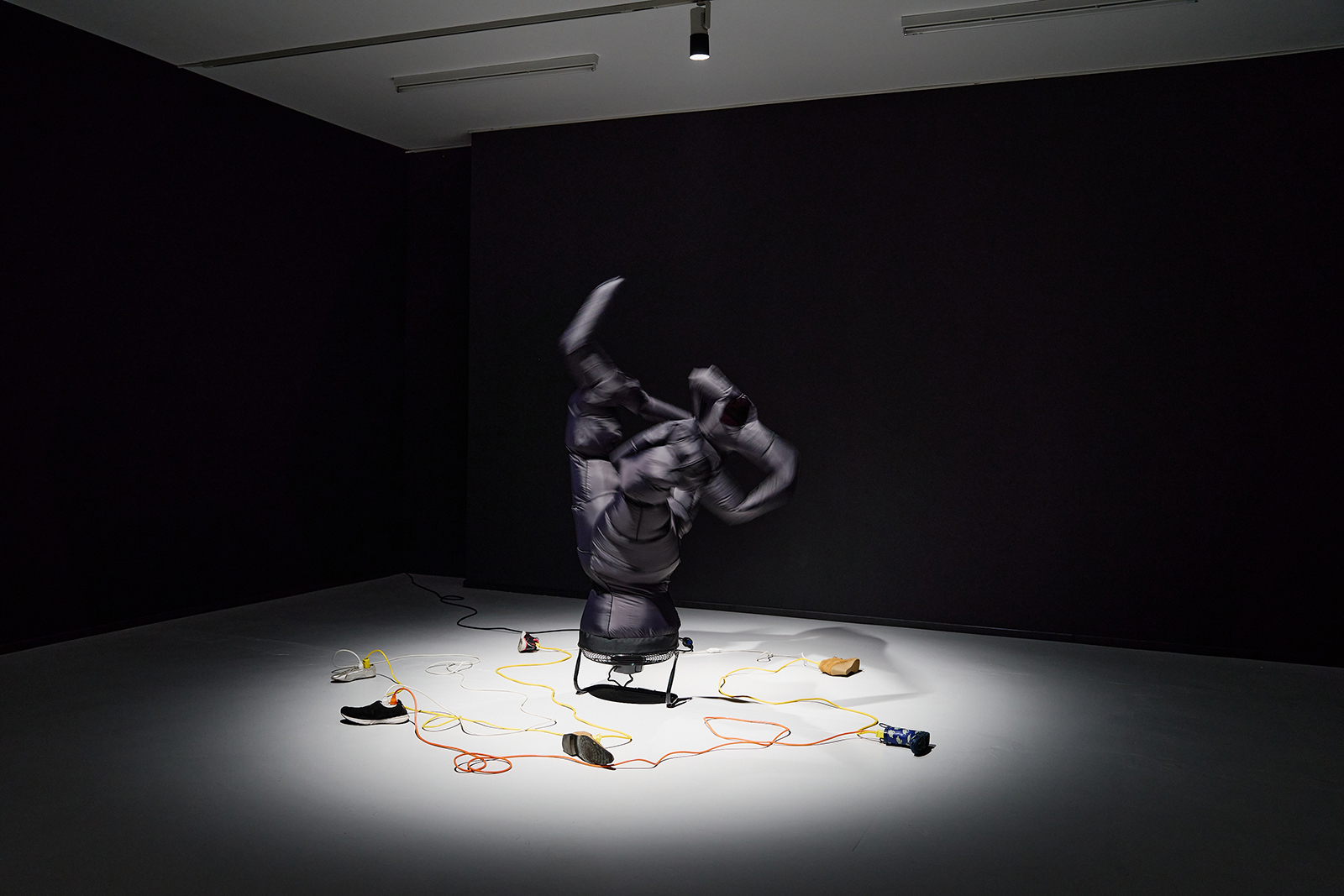
Paul Chan, Too Phantasia 4, 2024, sculpture; fans, synthetic and natural fabrics, metal, cords, shoes, concrete, 203.2 x 304.8 x 213.4 cm. Installation view, AFTER IMAGES, JSF Berlin. Photo: Alwin Lay.
The title gives it away: After Images at Julia Stoschek Foundation develops from the clear question “what comes after images?”. As Artistic Director Lisa Long — who curated the show with support from Line Ajan, Assistant Curator, and Josefin Granetoft, Curatorial Assistant — tracks back in the text introducing the exhibition, vision as a primary sense has a long philosophical history datable back to Aristotle and very much intertwined with western systems of knowledge, making far from surprising the ever increasing role that images play in societal storytelling and communication. In the 20th century, pioneers like Dziga Vertov, Sergei Eisenstein, and Walter Benjamin — some of which are also mentioned by Lisa Long — laid the groundwork for understanding the political and social implications of images. From the power of cinema to reveal deeper truths (Vertov), to montage as a method to manipulate emotions and convey ideologies (Eisenstein). Benjamin’s seminal essay “The Work of Art in the Age of Mechanical Reproduction” examined the political consequences of mass-produced images, questioning how technology could shift the authority of visual art and how images could move beyond representation to perform actions in the world, especially in warfare and surveillance. Well aware of such grounding, After Images positions itself after a tradition of exhibitions — including those presented at the Julia Stoschek Foundation — that have in the years examined how media theory shaped discourses on identity and representation, exploring how images are deeply embedded in power structures and individuating in image making the potential for world-building. In a contemporaneity where images’ proliferation is utterly out of control, how do we imagine what follows? As images keep perpetuating violence through upholding a dominant gaze, can we think of alternative strategies for time-based art? Given such a premise, the exhibition proposes a recalibration of our relationship to seeing and to contemporary image culture, drawing attention to works that tantalise through their haptic textures and immerse visitors in sound, light, and scent.
The show unfolds in what Long defines as a “sensual montage”, a term that evokes not just the sequencing of visual images but a choreography of sensory experiences that envelop the visitor in an experiential path, opened with a sound installation by Trisha Donnelly. The artist is renowned for her refusal of visual documentation, wall labels, and texts accompanying her work and her same intermittent sound piece hints towards the tension between presence and absence, inviting to listen and consider what remains unheard and unseen. Nearby, Ghislaine Leung’s Monitors (2022) employs a baby monitor that broadcasts sound and image from one room to another, Leung entraps Donnelly’s work subverting her ethos and engaging with themes of surveillance as well as the legal and other complexities of image reproduction in the digital age. This is just an example of how the show achieves to question image’s production and consumption while attempting to move beyond seeing. Shall we block vision whatsoever? Seem to ask the “closed” mirrors densely filled with dark permanent markers by Giovanna Repetto while with telefunken anti (2004) Carsten Nicolai disrupts the function of imaging technologies converting audio signals into visual patterns, and conveying the presence of a blind-spot as the screens face the wall.
As visitors navigate through the exhibition, a discernible shift from figuration to abstraction becomes apparent. This transition emphasises the ephemeral quality of experience, embodied in works such as Touching Clouds (2023) by Norbert Pape and Simon Speiser, which invites people to interact with floating point clouds through extended reality technology. Here, gestures leave temporary imprints, capturing that experiences are fleeting yet impactful. Similarly, David Medalla’s iconic Cloud Canyons (1963/2018) conjures up a sense of transience through its biokinetic bubbles—spectacles that arise and disappear in a cycle of creation and dissolution. The exhibition further explores multi sensoriality through works such as Adonia (2024) by Chaveli Sifre which merges light, sculpture, text, and scent to create a space of mourning and regeneration. It feels rather pivotal also the presence of artists’ whose practice has long critically examined the notion of the moving image. Rosa Barba’s One Way Out (2009), for example, pushes the boundaries of filmic production, having celluloid disappear into its infrastructural depths and generating an ephemeral soundscape that emphasises an investigation on the materiality of the medium while losing the image. The way After Images introduces loss in order to open to broader definitions of time-based art is remarkable not only within the contemporary hegemonic visual landscape that surrounds us and within the history of Julia Stoschek’s collection, which has long had a special regard for image and time-based practices. Once again less is more not as much as in minimal terms, but rather within perception and as an exercise for renewed and critical attention to what surrounds us.
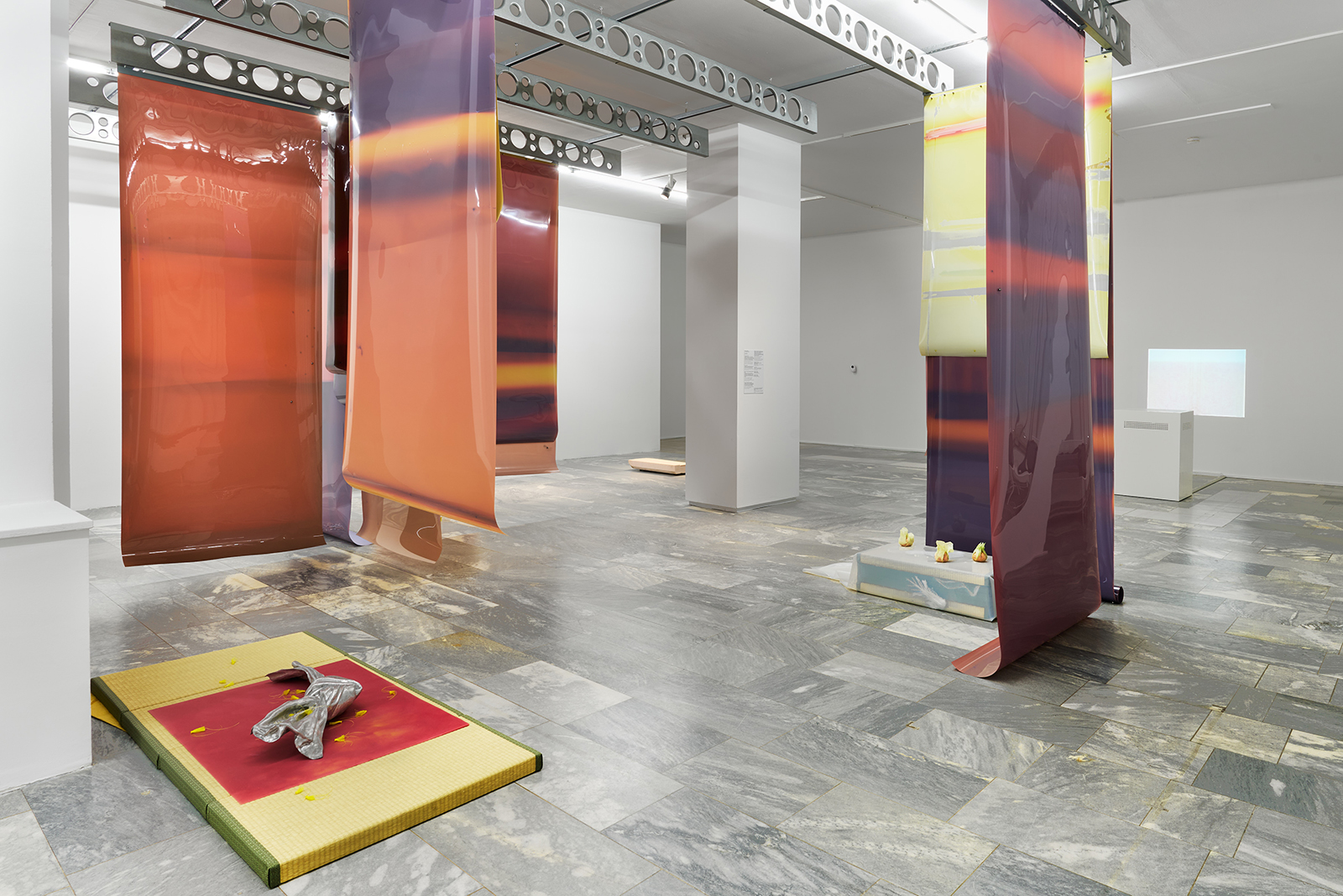
Lotus L. Kang, In Cascades, 2024, installation, dimensions variable. Installation view, AFTER IMAGES, JSF Berlin. Photo: Alwin Lay.
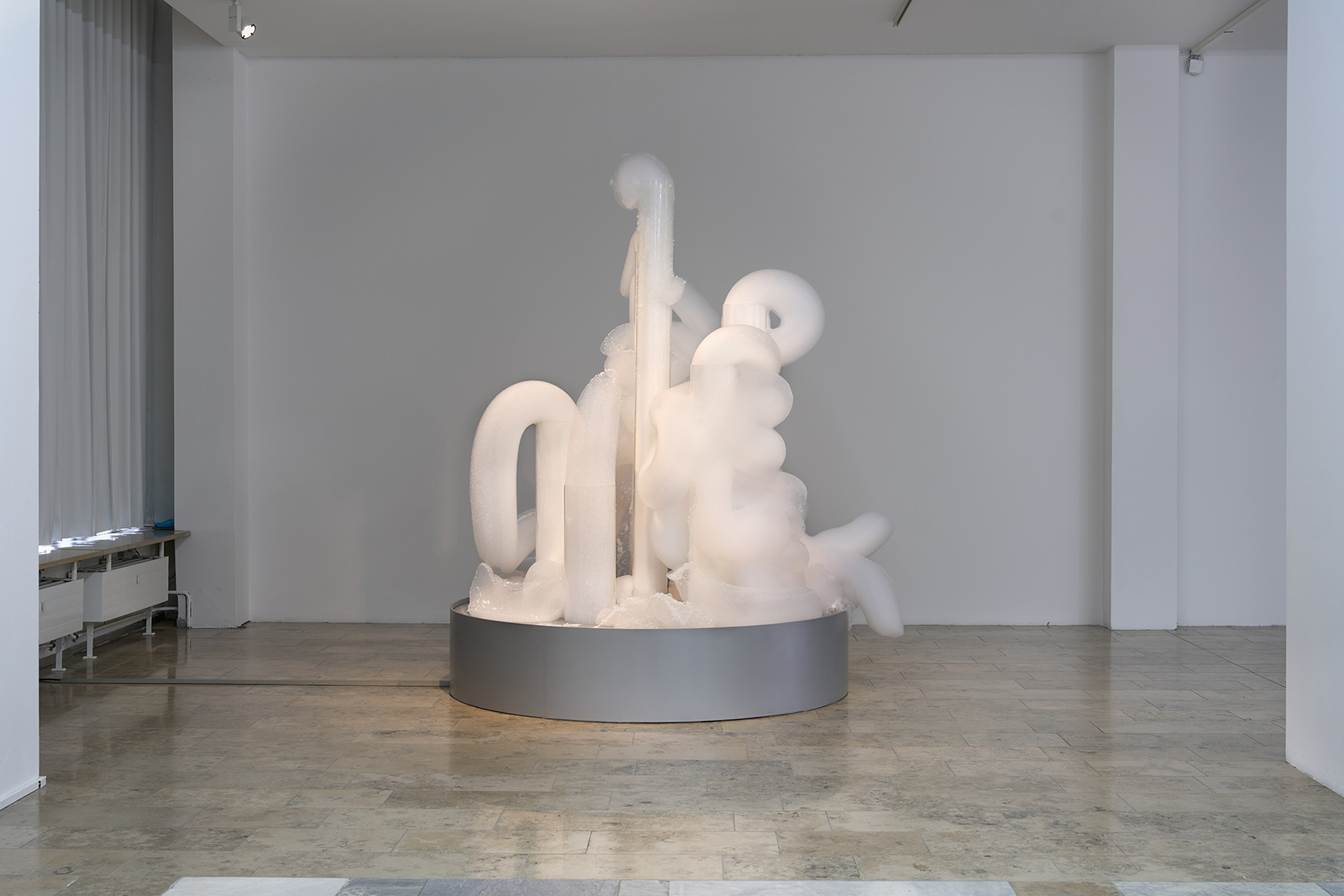
David Medalla, Cloud Canyons,1963/2018, Sculpture; metal, acrylic glass, compressors, timers, water, soap, Ø 200 cm x 42 cm (base), Ø 42 cm x 200 cm (acrylic glass tubes). Installation view, AFTER IMAGES, JSF Berlin. Photo: Alwin Lay.
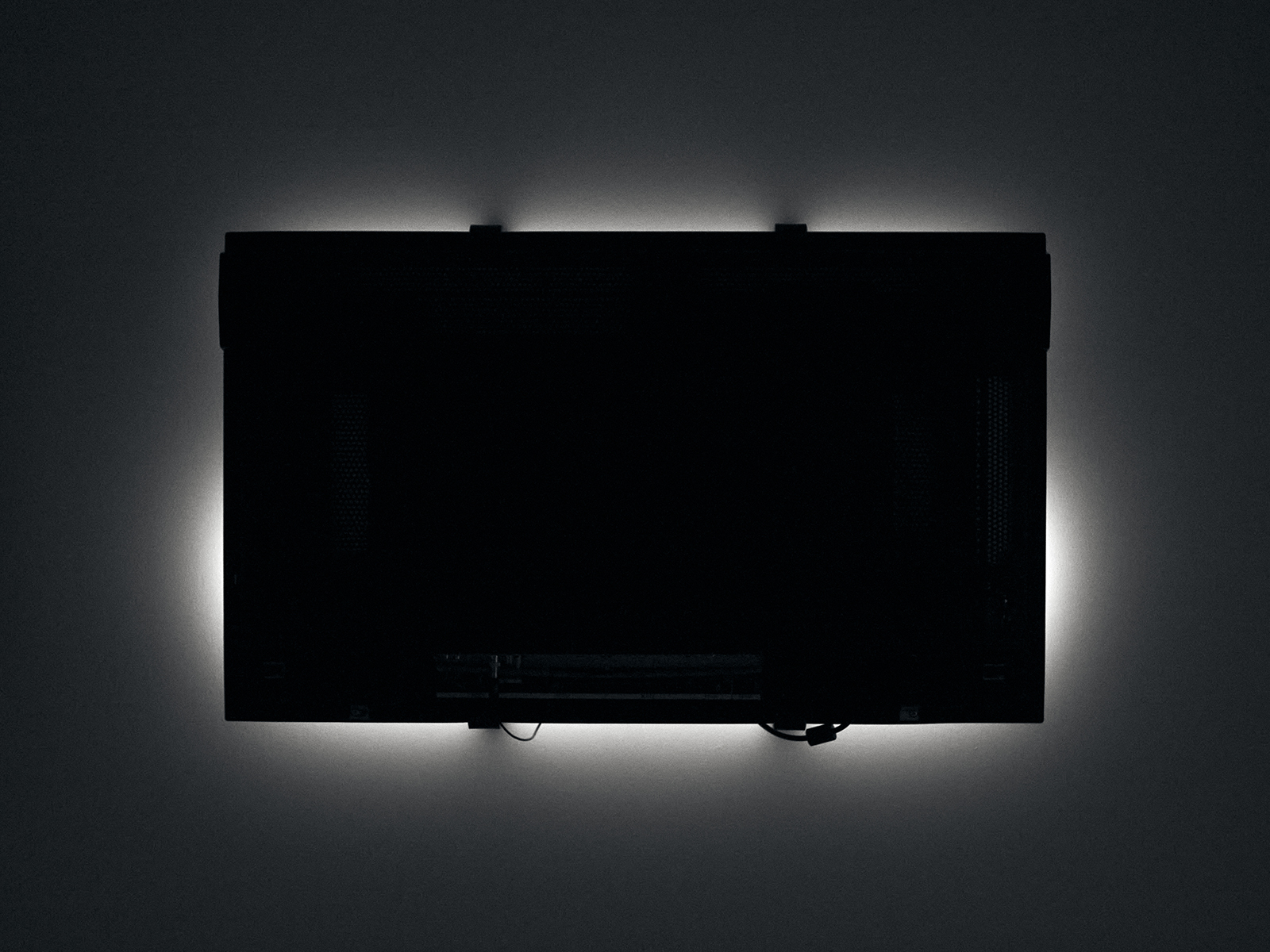
Carsten Nicolai, telefunken anti, 2004, installation; CD-Player, CD, LCD Televisions, two parts. Installation view, AFTER IMAGES, JSF Berlin. Photo: Robert Hamacher.
AFTER IMAGES
Julia Stoschek Foundation, Berlin
September 12, 2024 – April 27, 2025
with: Jo Baer, Rosa Barba, Theresa Baumgartner, Paul Chan, Trisha Donnelly, Laurel Halo, Lotus L. Kang, LABOUR (Farahnaz Hatam & Colin Hacklander), Ghislaine Leung, David Medalla, Carsten Nicolai, Norbert Pape & Simon Speiser, Giovanna Repetto, Chaveli Sifre, Jesse Stecklow, Anicka Yi
Curated by Lisa Long
with support from Line Ajan and Josefin Granetoft