Precious
Albion Jeune, London
October 7 – November 17, 2024
Review by Caterina Avataneo
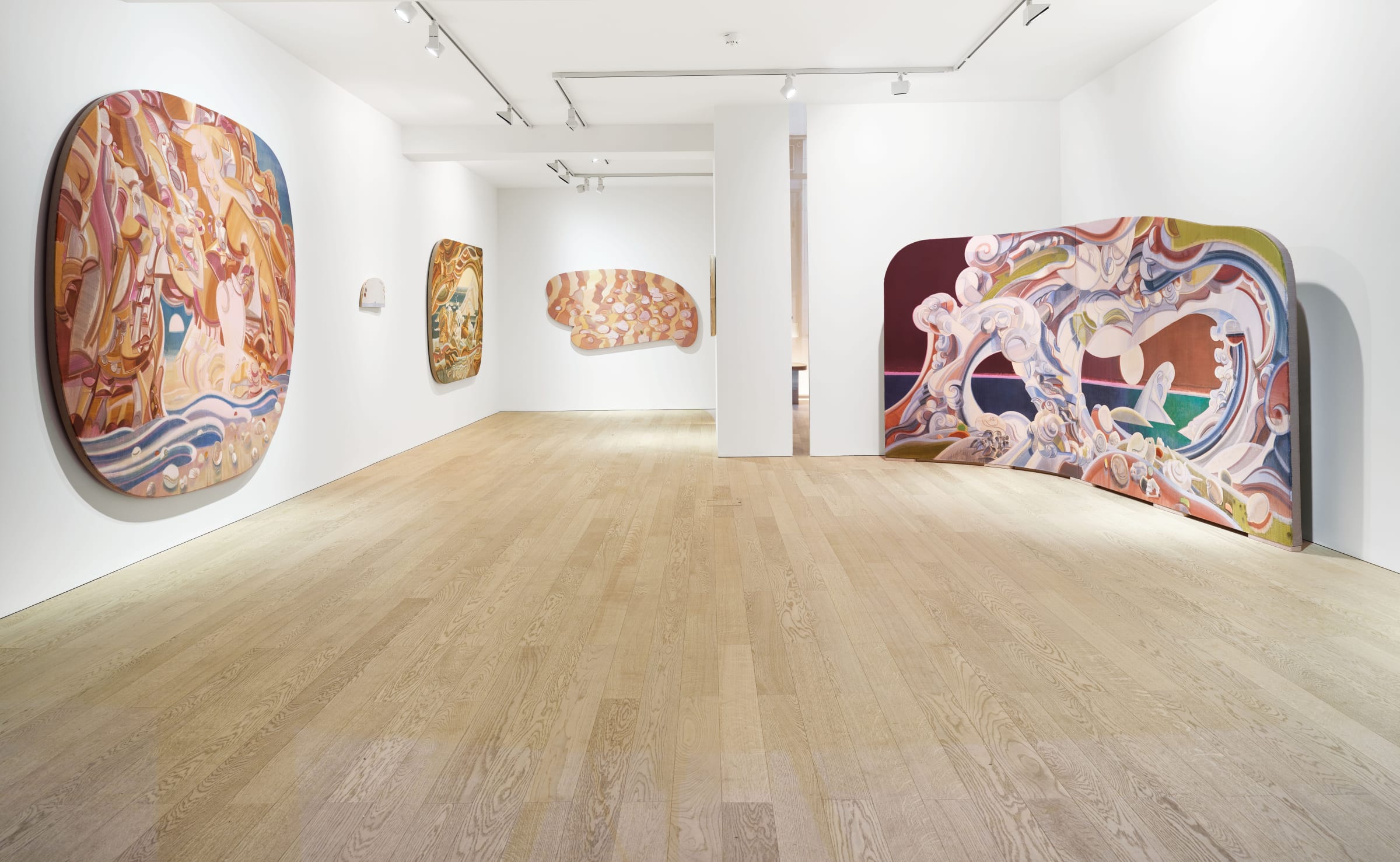
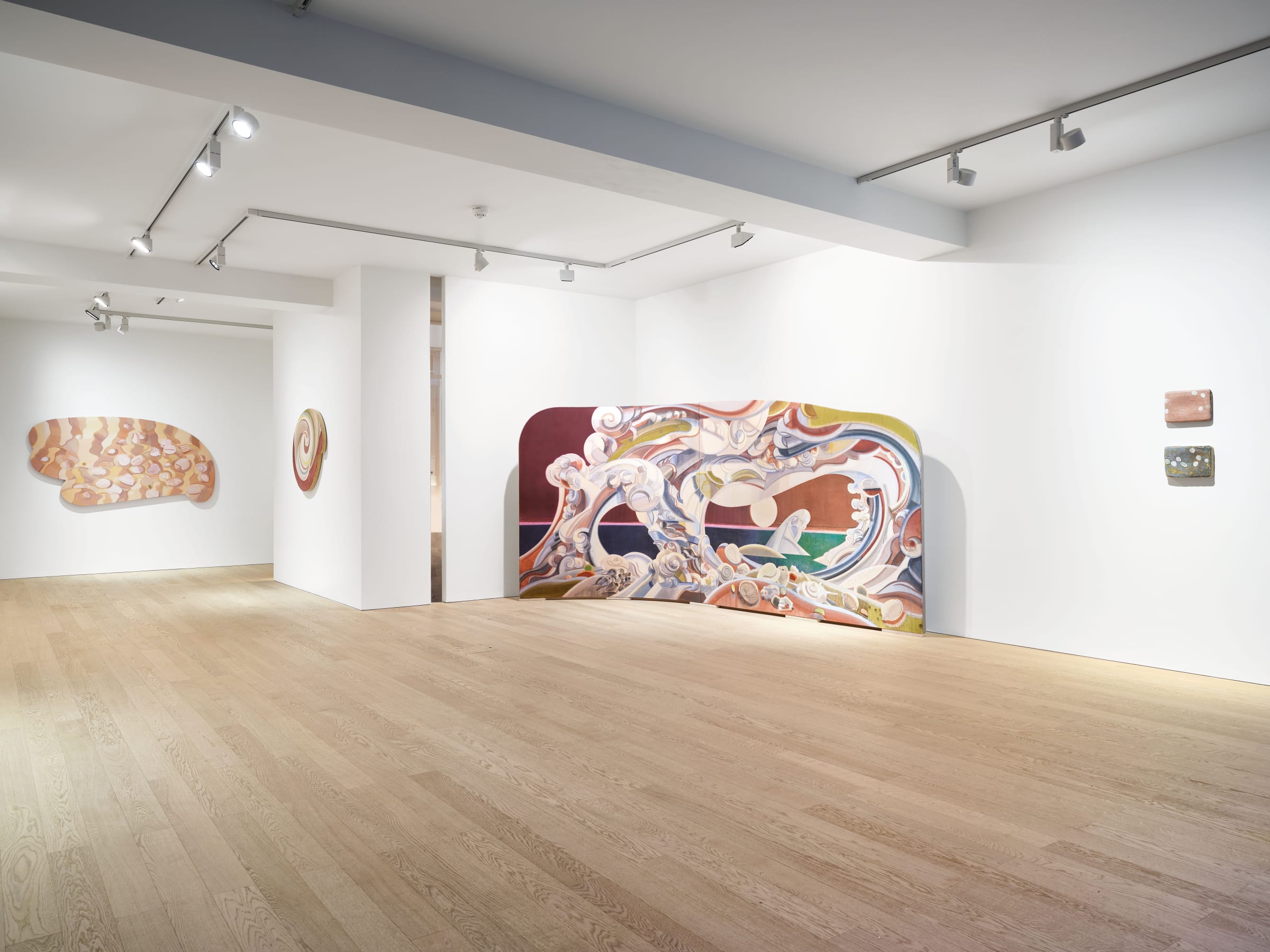

For her first show in the UK, Su Yu-Xin opens mixed-scale gashes into the walls of Albion Jeune Gallery, offering glimpses of a geological landscape that wriggles out of shells and grottos. With their panoramic character, Su’s paintings do not simply depict outward views of natural wonders, coastlines or other conventionally anthropized environments. They rather bring environmental narratives to the forefront, uncovering their layered ties to colonial history through a material and historical investigation of colour.
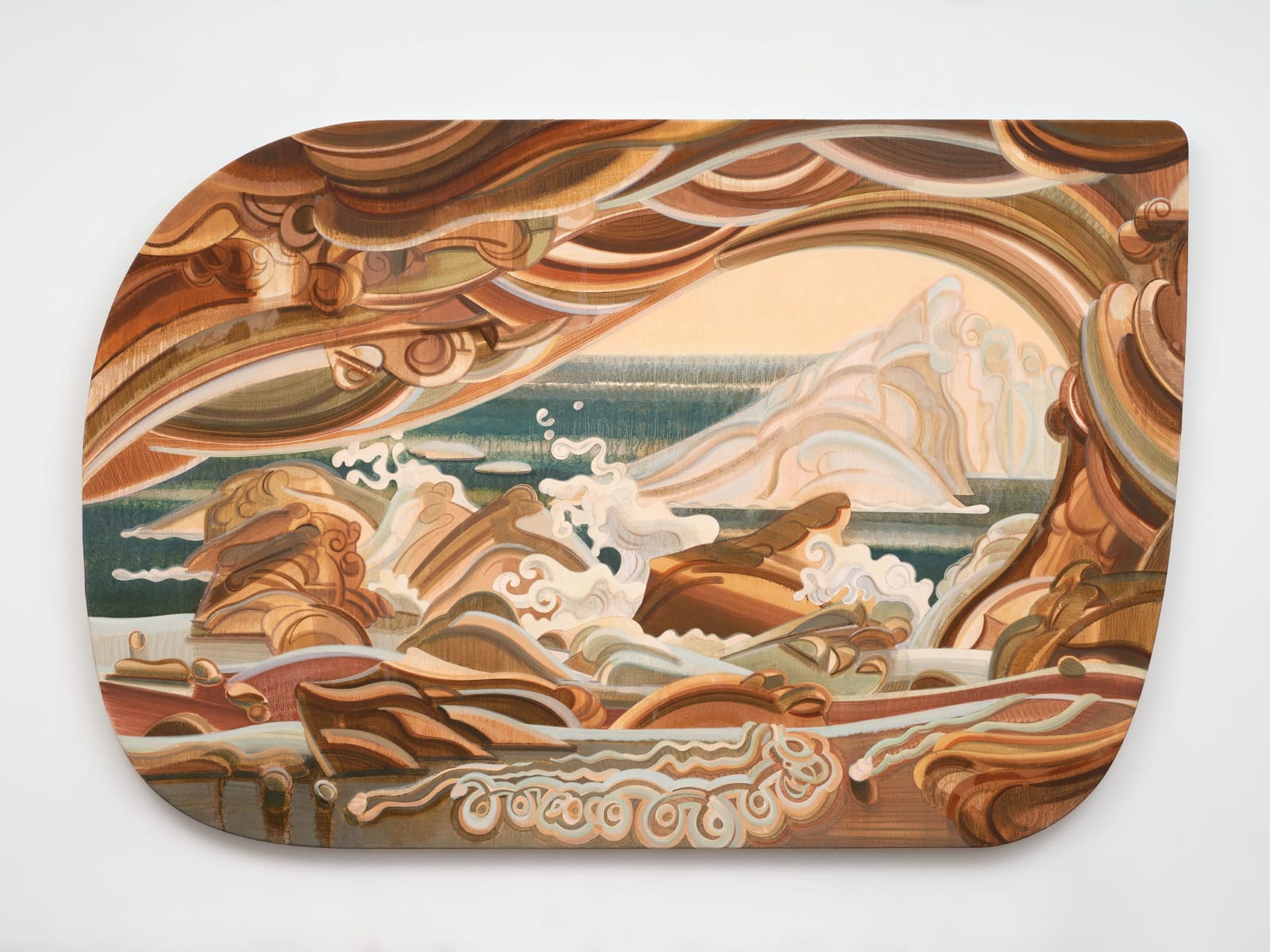
At the heart of Su’s practice is a meticulous engagement with the origins and embodied narratives of pigments. Acknowledging that “colours don’t start from zero”, the artist explores how they carry the weight of their histories, being entangled with legacies of trade, extraction, and exploitation. For the new body of works shown at Albion Jeune Gallery, Su has collected materials from the surroundings of Los Angeles —where she is based— studied their narratives and transformed them into her own paint. That’s how oxidised copper becomes greenish sea or bleached coral originates a spectrum of whites; the former pointing to California’s mining history, while the latter to environmental loss. Paintings such as Shelling or Passing Through the Night are composed of vignettes sketched on highly layered tablet-like hand-shaped wood which show the artist’s studies on colour, while others embody what they depict, their same shape being contaminated by the essence of their colours, escaping angles in favour of curves. Sweet and Spineless feels particularly emblematic as a shell-shaped canvas depicts the interior architecture of a shell through a range of pigments made with materials that include pink coral, cowrie shell, cochineal dye and clam fossil. Originating in the oceans surrounding the Maldives islands, cowrie shells or Cypraea Moneta, were widely used in many Pacific and Indian Ocean countries as shell money before coinage was in common usage. The small marine product was often employed as a currency in the slave trade and eventually became a form of currency in several ancient Chinese provinces. That’s just an example of Su’s interest in the diasporic histories unveiled by colour as well as value distribution and its invisible infrastructures, as the same title of the exhibition suggests.
Her biography has a relevance too, uncovering an intimate connection with diverse ecosystems and cultural influences. The artist was born in Taiwan and has lived in England, China and US, all imbued with different complex histories of exchange, migration, and environmental transformation. Su employs painting techniques from the Chinese and Japanese tradition, letting the ‘boneless’ method of Chinese painting and the ‘nihonga’, also known as Japanese-style, inform the layered application of colour and the construction of her compositions. Both traditions are particularly relevant in their philosophical underpinnings, as they create ethereal effects —achieved via natural mineral pigments and animal hide glue in the case of ‘nihonga’— where the subject dissolves seamlessly into its surroundings, embodying that sense of unity which emphasises the interconnectedness between environment and humanity. Large scale artworks such as Bones Caves or Copper and Sea Snails —from the California Coastline series— have an immersive and wondrous character which, combined with the artist’s critical engagement with their subject and material history, allows to both step inside and untangle the complex narratives they embody. I am reminded of Junji Ito’s anime Uzumaki where environment and humanity are ill-bounded by the haunting shape of the spiral. Just as the spiral entraps characters in a nightmarish reality, Su’s deep colours and organic shapes pull the viewer into her artworks, as if inviting one to get lost into the natural formations they depict. It’s perhaps also the two paintings in the shape of a painter’s palette —What is the Sky Made Of, Other than its Blueness and What is the Sky Thinking, if not the Light Leaving is Body— that help grounding back, allowing one to be blatantly confronted with the political implications of pigment.
Su Yu-Xin
Precious
Albion Jeune, London
October 7 – November 17, 2024
Review by Caterina Avataneo
All images
Courtesy of the artist and Albion Jeune