Galerie Eva Presenhuber, Zurich
November 15 – December 20, 2024
Review by Caterina Avataneo

No intro, nor preambles. The latest three-people show at Eva Presenhuber Gallery does not have a title, nor a curatorial frame as means of grouping the exhibited works. It unravels into three acts, straight in with a bang. Literally.
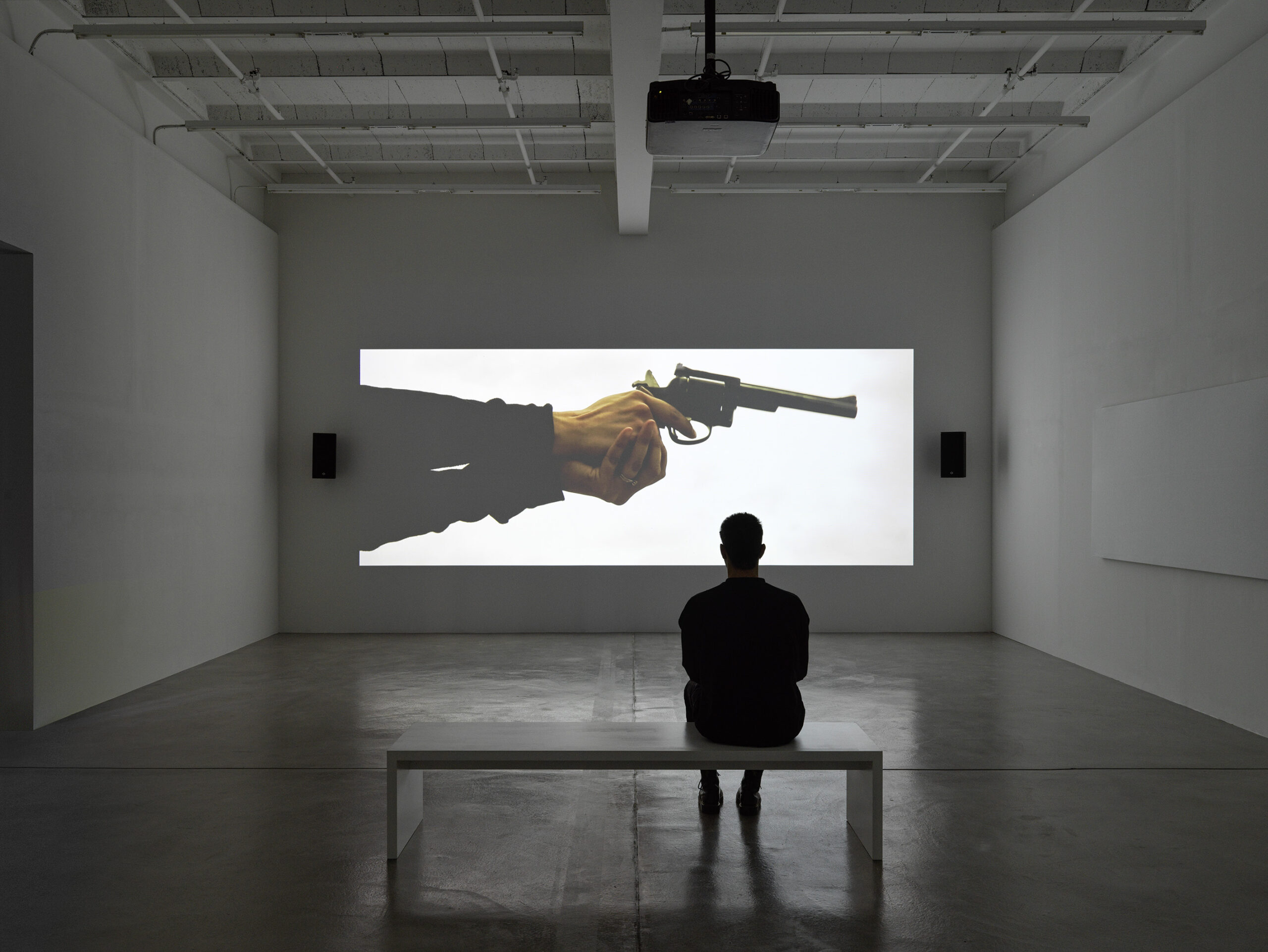
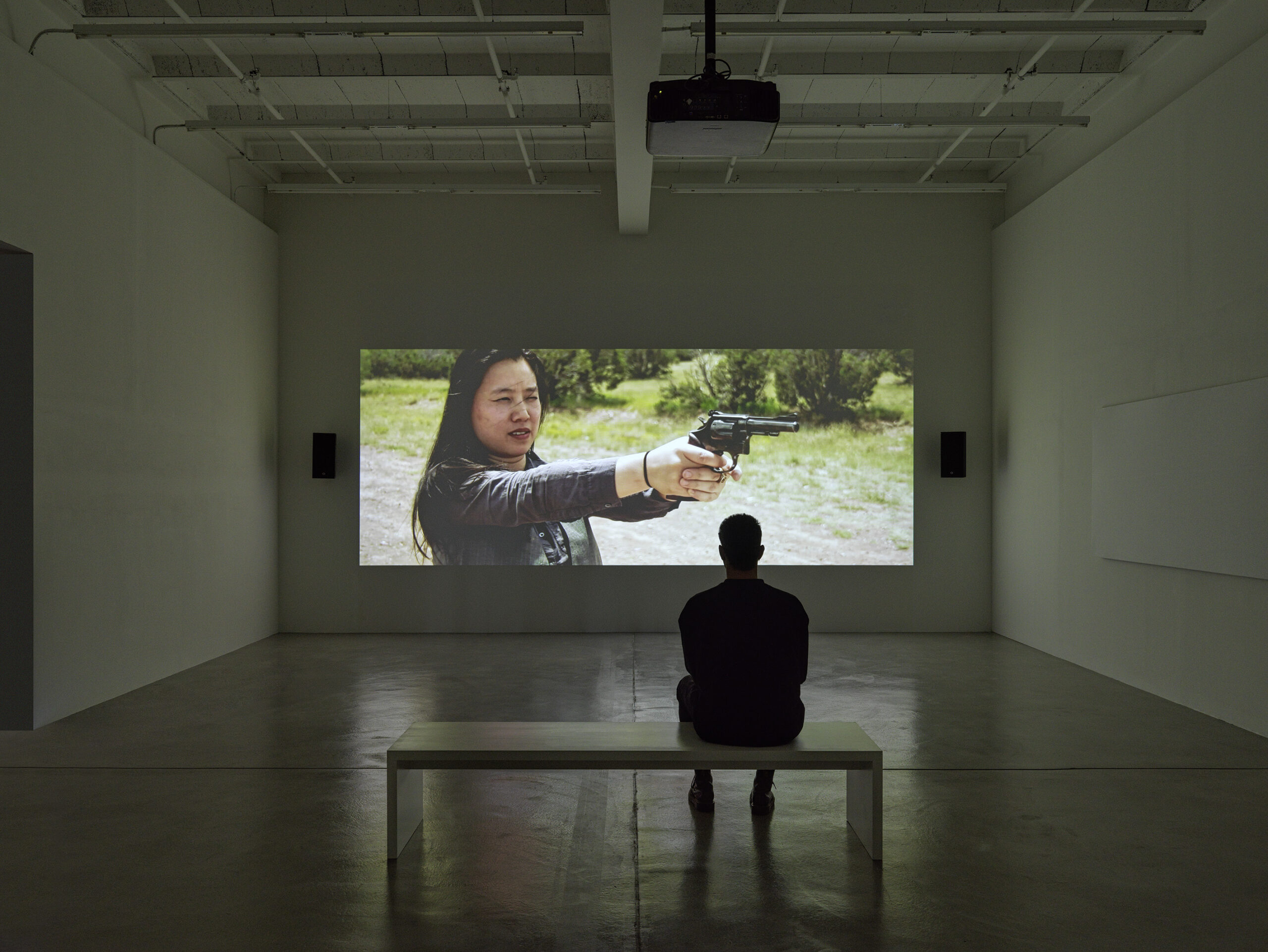
The first exhibited works are a series of scores for caliber revolvers, gauge shotguns, a ruger 10/20, and a 9 mm semi-automatic among other firearms; accompanied by a set of instructions for “experienced performers” and a composer’s disclaimer. Written by Raven Chacon, these scores were performed for his single-channel video Report (2001/2015), precisely a concert of gunshots. Starkly spare as much as unsettling in its blatant simplicity, the charged cacophony of percussive blasts is alternated with moments of silence in which distant echoes resonate in the Navajo ancestral lands, where the artist grew up and where the score was performed. The artist transforms such tools of aggression, or power in general, into instruments for musical resistance. “No pitch. No timbral changes. No volume. And maybe no tuning, no harmony. Nothing.” quotes the press release. Chacon is known for his exploration of refusal within sound and music. His escaping harmony becomes a strategy for breaching expected musical forms, as well as the privilege of classical musical composition and listening.
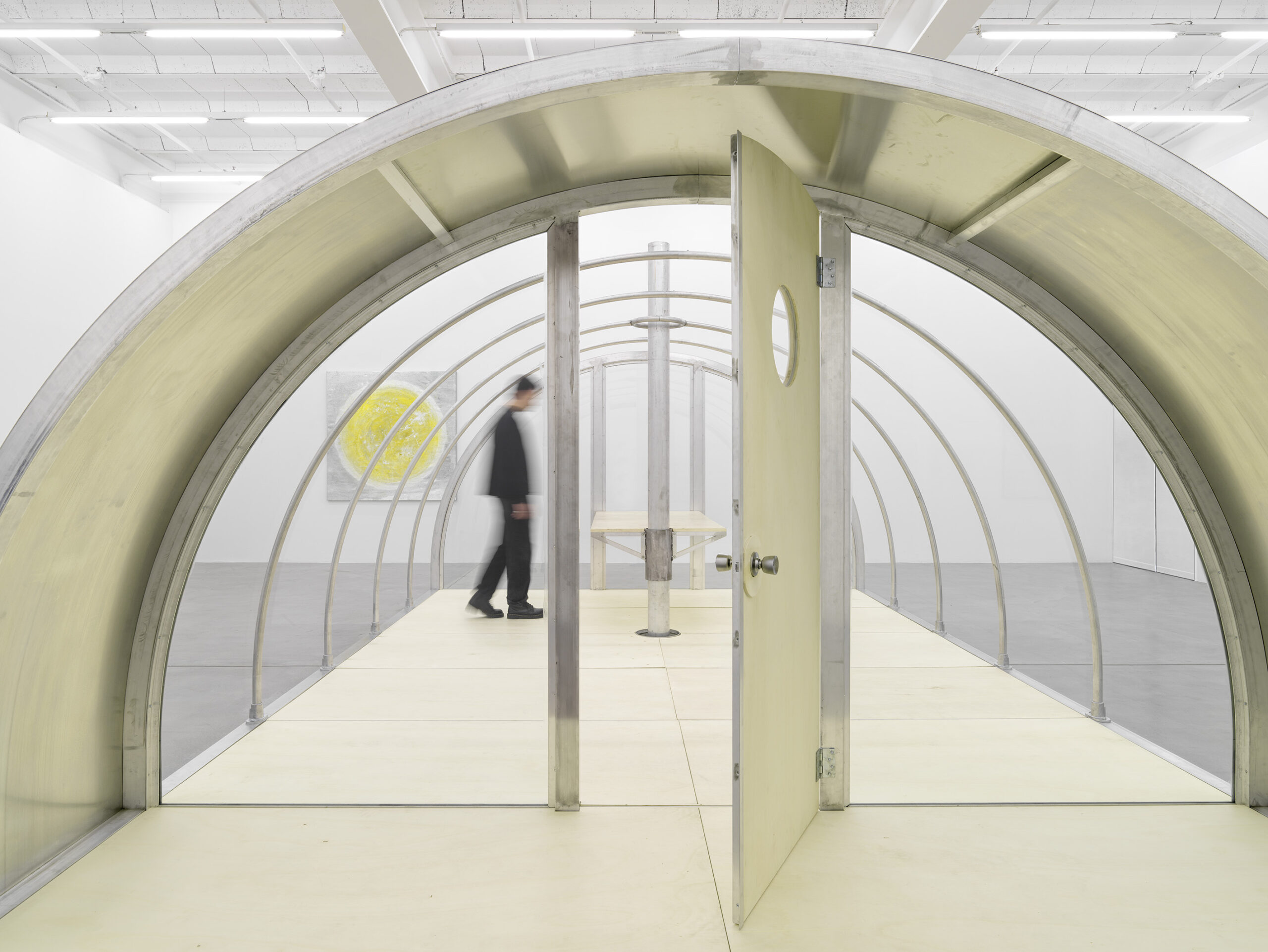
Stripped down to its skeletal structure, it’s also Oscar Tuazon’s large scale Quonset Tent (2016) installed in the following room. Made of aluminum, wood, and glass, the tent draws from military and modular architecture proposing a functional shelter. One that fills the gallery space, while also leaving a breathing space among its exposed ribs and allowing a glimpse of the artist’s most recent Water Paintings. Tuazon has been exploring water and its intricate connections to the environment and architecture since his first Water School in 2016, which has become an evolving educational and mobile project hosting events, roundtable conversations, and exhibitions where to practice places of collective learning and alternative authorship. In the context of the show it was not just the paintings — drawing from marbling techniques and capturing the movement of water — to convey notions of collaborative and multi-agency authorship. Quonset Tent was in fact activated to host a live sound performance by Raven Chacon which unfolded as a soundscape of field recordings, breaths, bells and noise spatialized by 3D sound speakers. As enveloping and strident as an eroding wind.
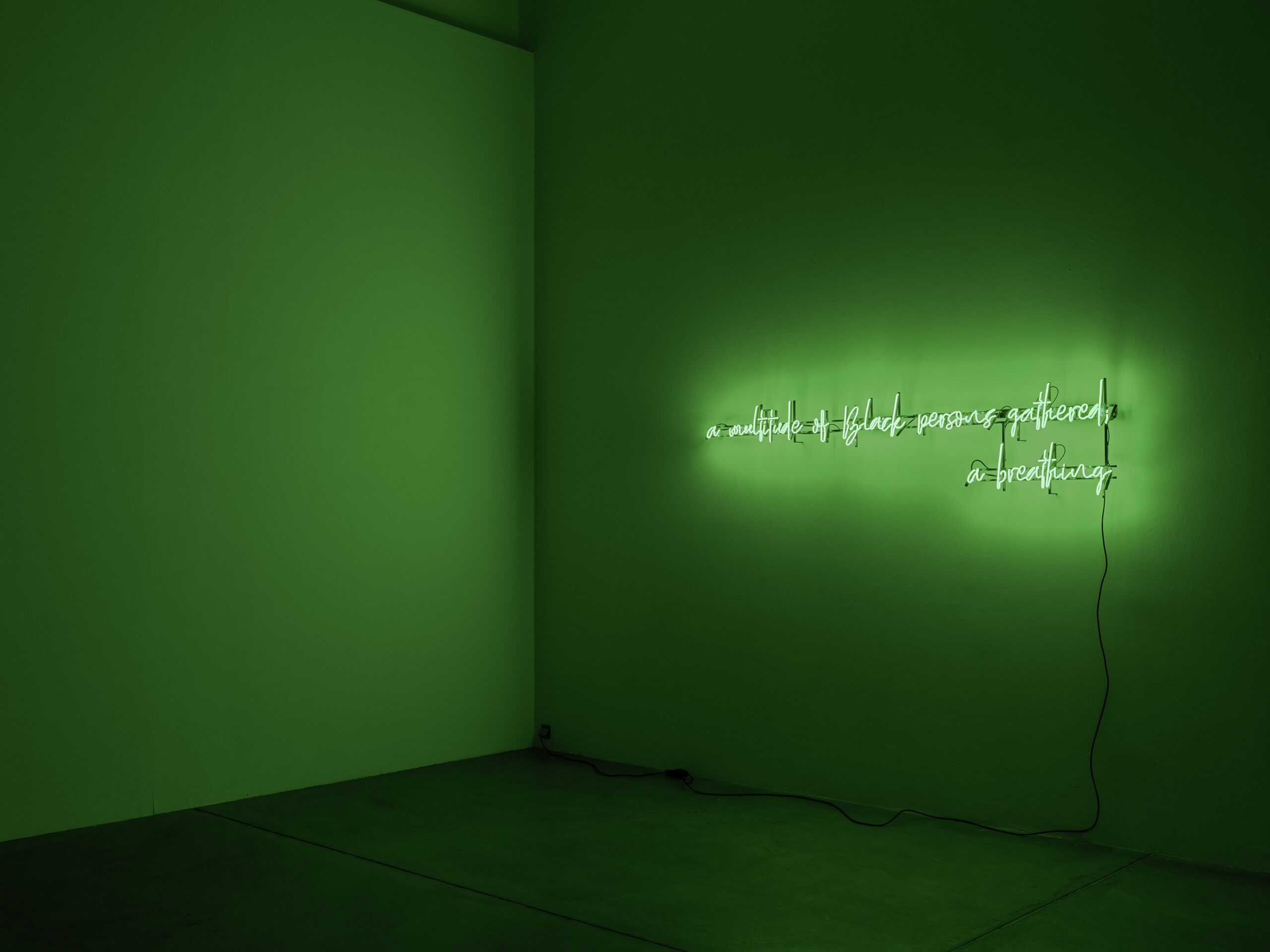
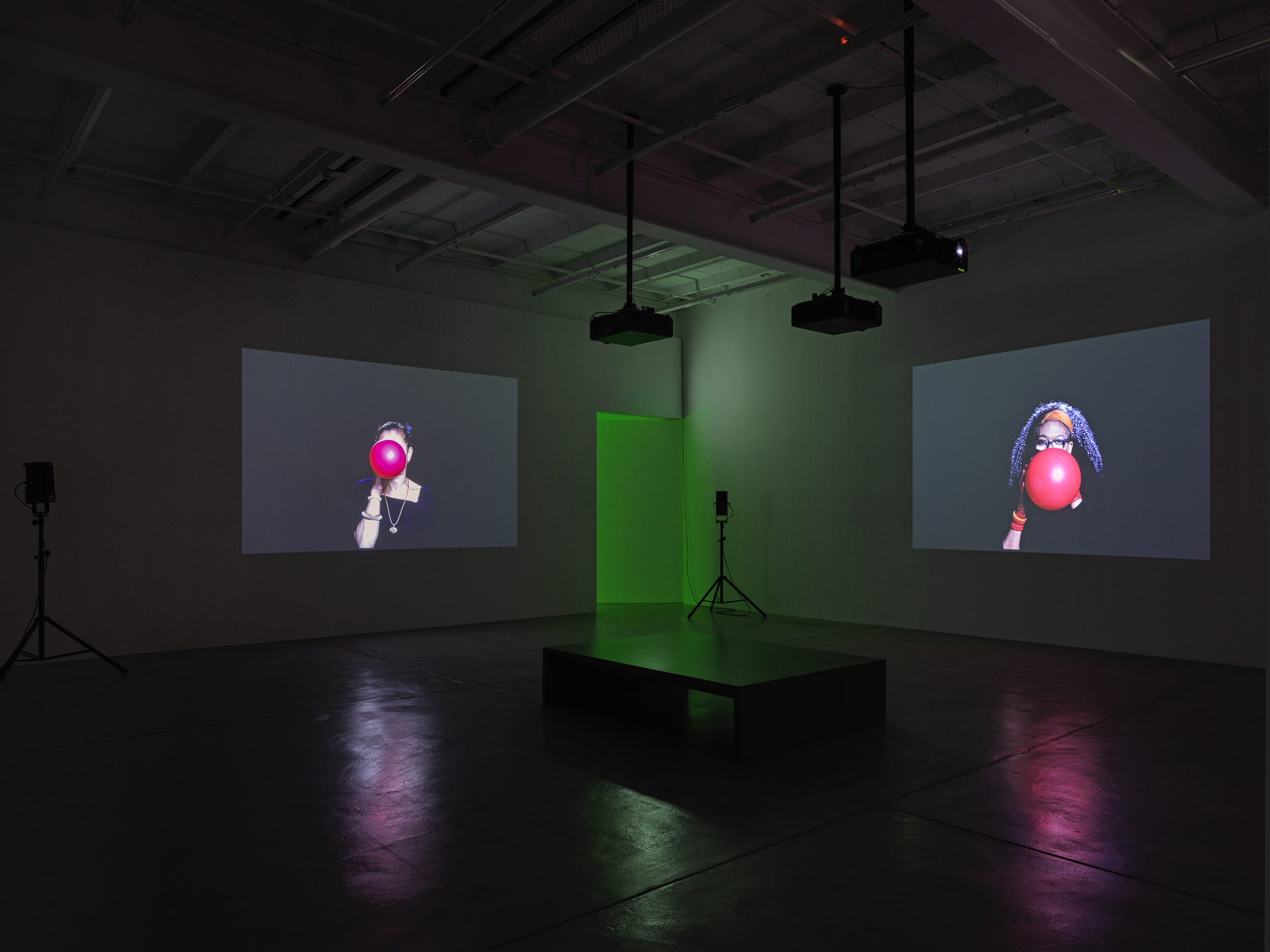
The last act of the show is dedicated to Belinda Kazeem-Kamiński. Her three-channel video installation Respire (2023) drags in a meditative exploration of Black breath. The video shows performers blowing a red balloon; each at their own rhythm and breath, the balloon adapting to the air it receives. The score here is for breaths and it unfolds as a sequence of mysterious murmurs beautifully musicalised in a soundtrack by artist Bassano Bonelli, a tribute to Curtis Mayfield’s song Keep On Keeping On (1971). Once again a sense of distant echoes emerges, as ghostly voices make memory and survival intertwine. A green neon work installed in an adjacent room renders Kazeem-Kamiński’s intentions even more evident. It’s a quote from Christina Sharpe situating breath as a gesture of defiance against systemic suffocation.
What becomes progressively clear is that the show does not aim to group, nor unify struggle. Resistance is rather shown in its dynamic and differentiated dimensions, articulating through its multiple sites, landscapes, spaces and infrastructures. The exhibited artworks allow resistance to reverberate and resonate: within silence, noise, music and distant echoes alike.
Raven Chacon, Belinda Kazeem-Kamiński, Oscar Tuazon
Galerie Eva Presenhuber, Zurich
November 15 – December 20, 2024