Simon Denny + Hito Steyerl

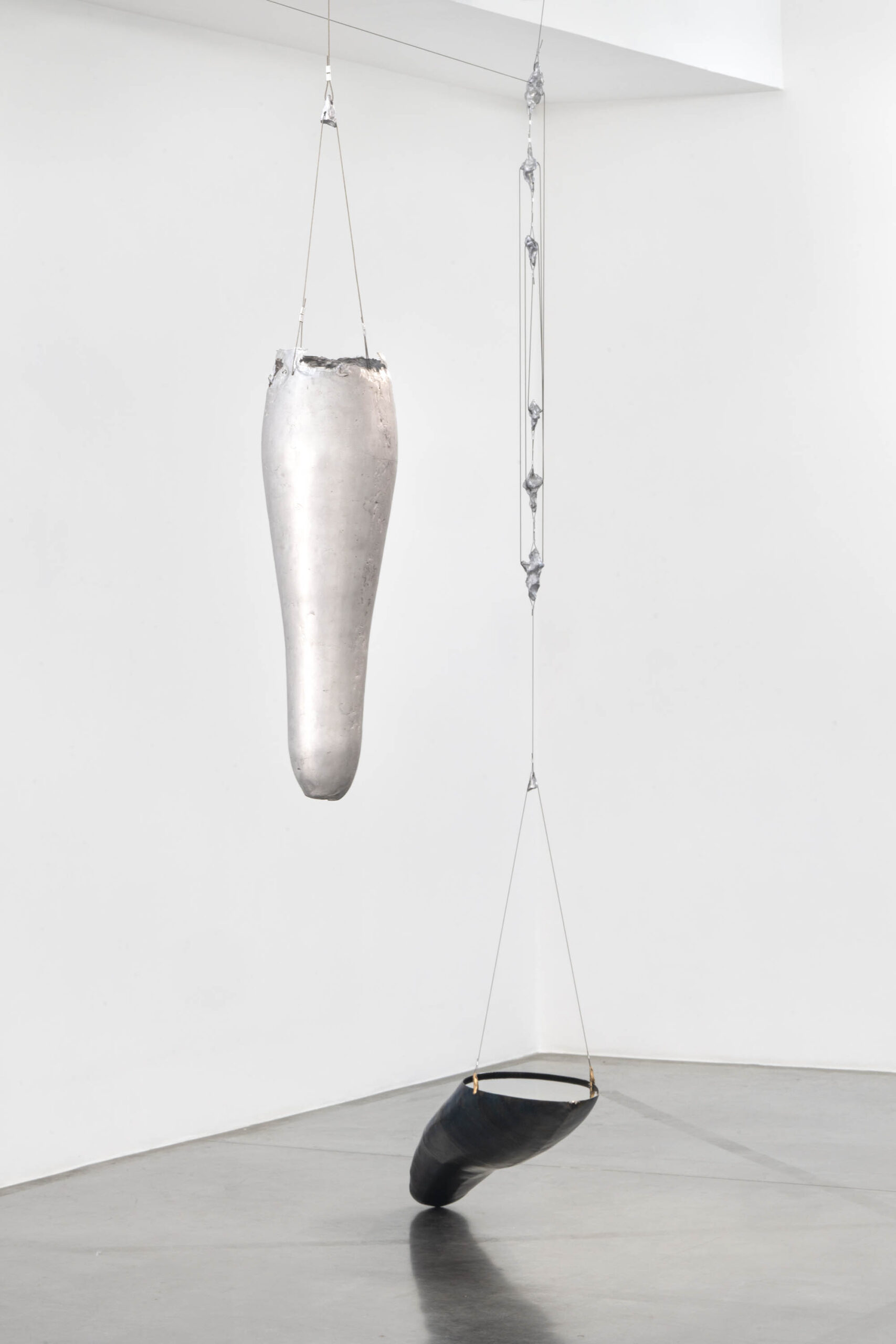
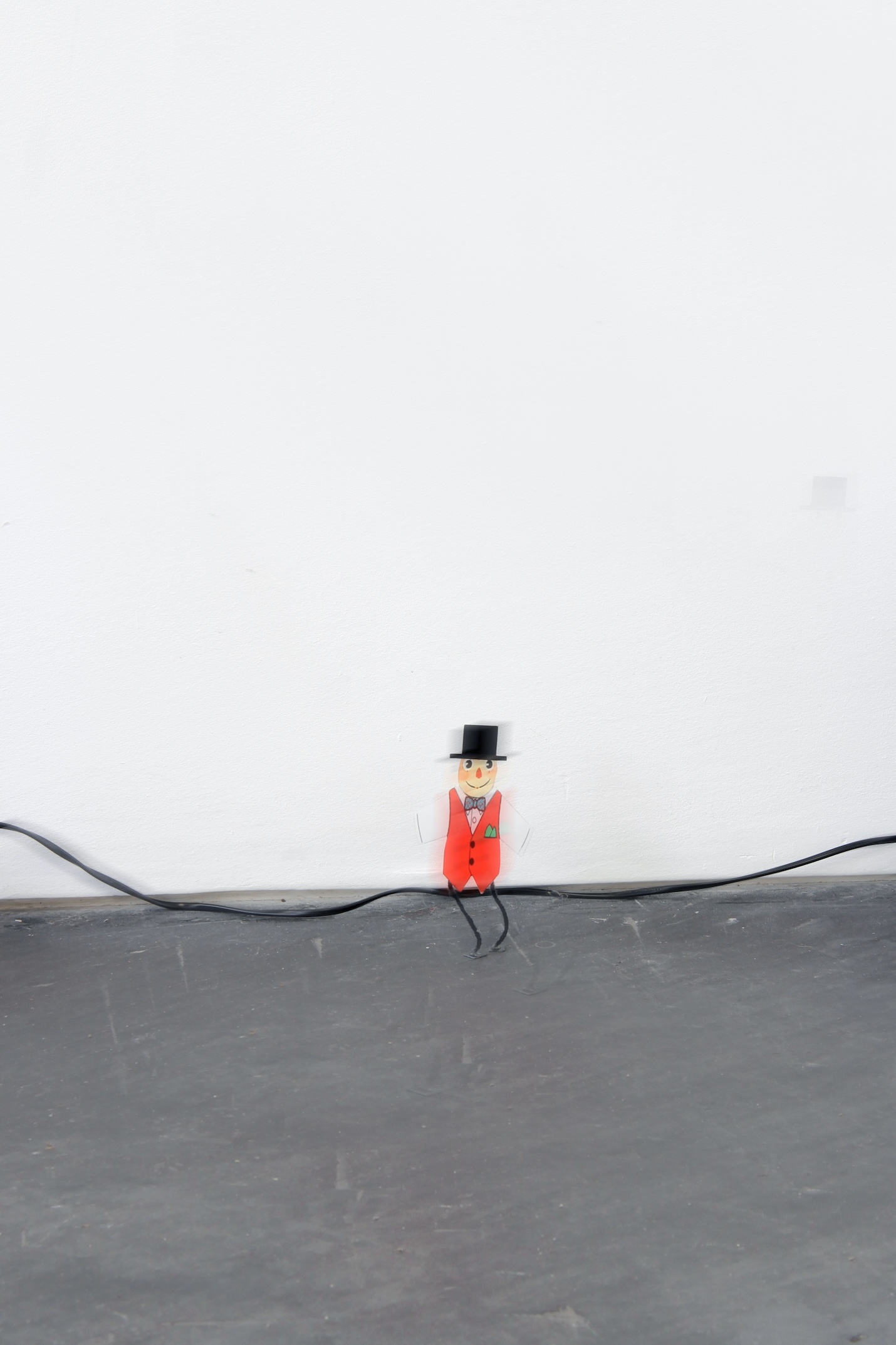
Hito Steyerl, Der Menschheit ist die Kugel bei einem Ohr hinein und beimanderen herausgeflogen, installation view, MAK Contemporary, 2025 Photo: © kunst-dokumentation.com / MAK © the artist / VG Bild-Kunst, Bonn 2025 Courtesy: the artist, MAK Contemporary, Andrew Kreps Gallery, New York and Esther Schipper, Berlin/Paris/Seoul

Hito Steyerl, Der Menschheit ist die Kugel bei einem Ohr hinein und beimanderen herausgeflogen, installation view, MAK Contemporary, 2025 Photo: © kunst-dokumentation.com / MAK © the artist / VG Bild-Kunst, Bonn 2025 Courtesy: the artist, MAK Contemporary, Andrew Kreps Gallery, New York and Esther Schipper, Berlin/Paris/Seoul

Simon Denny, Forces of the Unknown, installation view, JW Marriott Hotel, Berlin, 2025 Photo: Nick Ash Courtesy: the artist and Kraupa-Tuskany Zeidler, Berlin/
Munich

Simon Denny, Secret Power, installation view, Marciana Library, New Zealand Pavillion 56th Venice Biennale, 2015 Photo: Nick Ash Courtesy: the artist

Simon Denny: Frankly, I haven’t really speculated about blackouts that much before…

Hito Steyerl: Me neither. My thoughts have primarily been about electricity cuts. In early 2022, with the full-scale invasion of Ukraine, I began to wonder whether blackouts might occur. In the end, there weren’t any here, but the dependency on fossil fuels became very palpable, as did the very real possibility of blackouts. Until then, I had only experienced them in places like Beirut, where they were a scheduled, almost mandatory part of daily life. Since then, however, the prospect of blackouts has become a tangible reality for me.

SD: Yeah, I think this reading of blackouts suggests a kind of material definition for how we might think about infrastructural systems, and maybe that’s where our interests connect.
I once presented an exhibition at MONA – Museum of Old and New Art, the private museum established by David Walsh, a gambling mathematician. Walsh made his fortune by identifying and exploiting vulnerabilities in gambling systems worldwide. He lives on a peninsula in Tasmania, above the Museum he has excavated into the ground, like a bunker, its architecture still bearing the raw traces of that process. The exhibition I made there, Mine, brought together different scales of extraction, modelling them through games and AR. It was about making visible parts of systems that usually remain hidden, challenging the supposed ephemerality or virtuality of networks as they’re often framed. In this sense, a blackout becomes a kind of proof of the materiality of networks, with limits and complexity.

HS: Yeah, it’s a kind of system failure. It made me think of something I saw in Australia too, in this remote place called Coober Pedy. There was wild opal mining going on there, where people were digging their own holes, handling dynamite, just blowing up the silt.

SD: “Artisanal” mining… that’s the euphemism I’ve often heard for these kinds of small-scale, almost amateur mining setups.

HS: They really were “artisanal.” It looked like something out of the Bronze Age, honestly. And of course, those pits would sometimes collapse on people. It was the most individualized form of mining I’ve ever seen. It reminded me of the early days of the internet, when you could still mine things for yourself.

SD: Kind of like early crypto, when it still made sense to mine Bitcoin on a regular desktop. When did you first come across Bitcoin?

HS: Good question. I think it was around 2016. I’d always been interested in the theoretical side of it, but the practical part only really started for me in 2016.

SD: And what would be the difference between theory and practice in what you were attracted to?

HS: Well, you know, the theoretical side was really about reading the white paper. I think the original Bitcoin white paper was titled Bitcoin: A Peer-to-Peer Electronic Cash System. It used a completely different vocabulary about being open-source, horizontal, decentralized, and so on. But that whole language has more or less vanished since.

SD: Yeah. Actually, Ben Vickers’s occasional publishing house even printed a version of the Bitcoin white paper, with an introduction by Jaya Klara Brekke. Around that time, I was also reading her work, looking for a deeper political and historical context. She wrote an influential thesis covering this: Disassembling the Trust Machine, Three Cuts on the Political Matter of Blockchain. What I wonder is the continuities and discontinuities between then and now, between the theoretical and the practical. Because in some ways, the seeds of what Bitcoin later became were already present in the white paper.

HS: Absolutely. The encryption, the anonymity, the supposed untraceability of transactions, all of that.

SD: And then there’s the more zoomed-out idea of trying to solve social problems through technical fixes, right?

HS: Absolutely. Automating trust.

SD: That still seems important to many of the people who are enthusiastic about it today, though maybe in different configurations. The idea that you can invent a system that is entirely technically defined, which then functions as a social tool and effectively short-circuits an existing system that lacks the efficiencies of software-based solutions, at least within a particular narrow band… I think people are just as convinced of that now as they were when Bitcoin was first launched, perhaps even more so.

HS: Yeah. There are always new ones being ingested into the machinery. But back then, there was also something called LETS, Local Exchange Trading Systems. I don’t know if you remember those? It was a community-based currency initiative, theoretically developed in Japan.

SD: Not sure…

HS: It was basically the idea of community bonds in the form of small local currencies. And in my view, these were all predecessors to the creation of crypto as a technical system, but they also vanished.

SD: I also think those predecessors are really interesting, like E-gold. When I met Peter Thiel, he told me about it. Apparently, the early PayPal team was interested in E-gold and even got involved with it in some official capacity. But certain uses of E-gold triggered a major pushback from government authorities, which led the whole PayPal crew to distance themselves from virtual currencies in the years that followed. He said this made him much more hesitant when Bitcoin emerged and was therefore relatively “late” to get involved in crypto.

HS: I’m just a bit worried this is turning into an interview about Peter Thiel now, but… was that a formal interview, or more of an informal conversation you had with him?

SD: No, no, it was casual. In 2017, I did an exhibition in New Zealand called The Founder’s Paradox, a series of sculptures modelled after board games. They tried to distill the intellectual and political cloud surrounding Thiel’s context, built entirely from third-party information, basic online research, and even just Google searches. At the time, he was very present in the news in New Zealand. He had entered an investor program for gaining citizenship status and bought property, which many people there didn’t look upon favorably. His visibility coincided with research I was doing into startups. I’d noticed that tech entrepreneurs were occupying Berlin in ways similar to artists. And on every startup desk, from Berlin to Beijing to Auckland, I kept seeing a copy of Thiel’s Zero to One. I felt I needed more context. The exhibition became a way of mapping what I could about his philosophical and political interests. It contrasted his position with another text, Max Harris’s The New Zealand Project, which focused on indigenous models of governance and redistribution… something more “progressive.” About a month into the show, Peter turned up at the exhibition in Auckland. I’ve done a lot of work about prominent business figures and companies, and usually they’re disinterested or even hostile. I once got an official cease-and-desist request from Samsung for an exhibition about their corporate myths. But Peter responded differently. He spent a long time in the venue and even left his contact details. I reached out, he replied almost immediately, and he remarked on the “incredible amount of detail.” He also said that I seemed “not very optimistic about cyber libertarianism,” and that he was rather more optimistic about it, but he “could be wrong”…

HS: That’s great detail.

SD: Totally, I was amazed. And then he said that if I ever wanted to “compare notes,” he’d be open to a chat. I found that far too interesting not to follow up. As it happened, I was going to San Francisco for a show, and Thiel Capital was based there at the time, so I stopped by his offices. They were in the same building as Lucasfilm. Amusingly, you were greeted at the entrance by a statue of Darth Vader. I was basically unprepared. I didn’t really know what to expect, and I was a bit caught off guard. I asked him questions about New Zealand and about crypto. At the time, it felt like there were so many possibilities. His answers were detailed and generous. And that’s when we ended up talking about E-gold.

HS: … you could have been JD Vance, with just a little twist of destiny.

SD: Hahaha… right. I think somebody who was clearer about their own ideas might have taken a different path with that opportunity. I didn’t really know what to do with it.

HS: It’s almost a shame, though…

SD: At the time, following up on that would have felt quite transgressive in the art world I was part of. Now, though, there’s practically an entire art world around that conversation. It’s different. I’d find far more people in those circles with connections back into the broader art world. There’s even this whole kind of “downtown” scene…

HS: Apparently, there’s been an H&M, Dimes Square T-shirt edition!

SD: Oh, hahah. I guess with the political regime in the US as it is, it makes sense that these mainstreaming forces are at play. It makes sense there’d be an opportunity there.

HS: Do they have infrastructure yet? I mean infrastructure in the sense of a market system. Are there galleries? Is there some kind of critical apparatus?

SD: I think in the younger LES art world, which has of course been around for decades, those circles seem very intertwined. You’re just as likely to bump into someone politically conservative or merely curious about these worlds as you are someone liberal. It’s also hard to tell what’s genuine conviction and what’s just mimetic vibe-casting. In that sense, transgression seems fashionable. Punk-ish, almost a Who Killed Bambi or Sid Vicious kind of vibe, a libidinal pleasure in confounding expectations. Places like Sovereign House are pretty well known for this kind of performance.

HS: Oh, I did not know it.

SD: It’s a grungy basement space on East Broadway, a block or so east from Reena Spaulings. On the wall there you might see the book The Sovereign Individual, publications by Passage Press like Curtis Yarvin’s books. Passage even threw a party for the Trump inauguration in Washington with the Milady people. This is all sort of floating around downtown as a Semiotext(e) or e-flux might have been in previous decades. It’s complicated for me. These are not my politics, but I think these worlds are important. Milady etc. are really innovative, one of the most interesting things to come out of NFTs in terms of new formats for culture. I was just reading this book, Exocapitalism: economies with absolutely no limits by Marek Poliks & Roberto Alonso Trillo, which I think opens up some language to describe what might be happening. For me it joins some dots, and it productively meets the intellectual worlds like those around the Thiel-verse. I just read a great section suggesting how one can read SaaS as a model for contemporary social and political dynamics. In their words: “the way that the critical apparatus tends to think about capitalism is wrong and it should be amended, full stop. The Marvel Cinematic Universe theory of capitalism as a universal bogeyman is wrong. It doesn’t help us to intentionalize an introverted, ambivalent multi-scalar fractalizing machine as some kind of monster, and it doesn’t help us to suffer illusions about our own respective capacities.”

HS: Let’s talk about this book! It gave me hundreds of new ideas, especially about art, even though that’s not its main topic. One of the core arguments is that traditional production and value creation have been superseded by financial operations based on volatility. Simply put, price goes up, price goes down, and that movement itself becomes the engine of value. On contemporary markets, profit can be made regardless of direction, up or down doesn’t matter. This also means that concepts like efficiency, productivity, and much of traditional optimization become obsolete. The creation of “value,” in capital’s sense, is driven by sheer movement (volatility) often modelled in finance through Gaussian noise, essentially a proxy for chance. So, work and labor are displaced by disruption, arbitrary shifts, and the production of chance. What emerges is a gap (arbitrage) that can be monetized and exploited. This gap is pure difference, and capital, which the authors describe as a kind of replicant program akin to viral DNA, reproduces itself by feeding on these differences. This is why capital tends (without any intentionality) to expand the surface area of everything, rendering it porous, irregular, and exploitable, like an open-world terrain. Anything turns into a fractal Mandelbrot surface with near infinite complexity going down. The more terrain and differentiation there is, the more opportunity to create value. Like in those Coober Pedy Bronze Age mines, where basically every surface is infinitely complex and twisted and crooked and provides maximum surface to find and extract opal.
I think for art there are several paths to explore from here.
Number one: what happens to art, if labor in the traditional sense becomes more and more obsolete and with it the realm of social reproduction to which culture belongs? It means that many of the economic metrics that art is quantified with become meaningless. Labor doesn’t matter, but neither do productivity, quantity, or efficiency, the metrics of cultural industries. The only thing that matters in this new paradigm is its volatility value, and this is something we have been witnessing a lot around scandals, flame wars, platform polarization, etc. The creation of fissures, splits, cuts, and other kinds of volatility opportunities is basically the new engine of value creation and has become its own kind of performance art, which needs to be objectively addressed as such, meaning in a non-moralist way. Whether its style is hypernihilist, as from the extreme right, or hypermoralist, as from the extreme mainstream. Both transgressive chainsaw and rightwing dada and moralist shitstorm create volatility. The creation of polarization is a hyperefficient way to maximize minable surface area, by creating gushing wounds in the landscape like a massive caterpillar. The chainsaw is a tool to create maximum volatility, polarization to ramp up difference. It relates to the imaginary of cuts, and austerity. For this type of cut to be efficient, it cannot be clean or surgical. It needs to be as jagged as possible. So from the point of view of volatility, both extreme liberal mainstream and extreme right do the job, they create difference for capital to reproduce itself on. There is a new kind of volatility labor emerging, which has some overlap with performance art. Trillo and Poliks describe a sort of extractivism of artificial difference as volatility. Number two: in machine-learning-based image production, the main “raw” material is Gaussian noise, which gets basically algorithmically distilled, reverse-engineered and processed. You start from a technical proxy, a stand-in for chance (pure chance is very hard to produce, but one can get approximations). This is your infrastructure in AI image production. Operations that are aligned with financial formulas (like the famous derivative formula Black-Scholes, for example, which also uses noise as a stand-in for change over time). What does this tell us about image and art production, if its infrastructure leaves the realm of either artisanry or factory and aligns itself with the mode of production of casino, volatility, entropy, thermodynamics, and the exploitation of chance and differentials? The novelty is that we are talking about a machine-learning-based automation of chance, a sort of divination on steroids, a Mallarmé-bot, a Mecha Symbolism. Number three: if the exploitation of differences (something related to Derridean différance as authors suggest) is capital’s main operation, one can extrapolate a number of protocols to make it more difficult for it to operate. Which is to reduce surface area and individual differentiation, so algorithmic operation cannot encroach on it. Which is to become blank, expressionless, flat-surfaced, like a mirror sphere or an egg. As generic as possible, as illegible. Refuse outrage. Be the noise, not the signal. This is certainly not the only possible way to lessen exposure, just the first to come to my mind. It is also a way to rethink terms like privacy, opacity, encryption, or complexity in a new way. I think authors would argue that this is wrong for a number of reasons, primarily because it is not their priority to prevent the operation of capital in the first place or they are indifferent towards it. This is a productive point to discuss. There would be lots of ways to also expand the theses of that book. It’s also very well written!

SD: Totally. It was a relief for me to have things reframed in ways that felt closer to what we see today. I read it as a sort of lyrical polemic (which seems to be how you’re responding to it also). To your three ideas for art… I agree… outrage and disagreement production as “volatility opportunity performance,” and a way of creating artistic value is almost a standard format by now. It’s good to be explicit about that. Ben Horowitz and Marc Andreessen recently described Trump’s rhetorical style as “high drama,” and that the kinds of ways he produces value, in their assessment, are extrapolated from his experience in reality television and wrestling, where contriving conflict for value is key. Poliks & Trillo use a term, “nam-shub” from the Neal Stephenson novel Snow Crash, to describe something like this too. They say: “A nam-shub is a speech with magical force. The closest English equivalent would be ‘incantation,’ but this has a number of incorrect connotations.” The term could very well describe the polemic, animated political style of Trump, Mussolini, etc. Related to this, there’s an entertaining suggestion in your third idea for art, an idea for resisting this logic. That one could undermine or become invisible in an art field (or any other field, I guess) primed for value-creation-through-volatility-induced-arbitrage-opportunites by simply being boring is hilarious. What would a boringness-protest be and look like? I agree that Poliks & Trillo might not be interested in formulating such potential strategies of opposition (they may not see the point), but I like your suggestion of a kind of boringness Autonomia-successor. Imagine upsetting the “lift-stream” by being inefficient in the only way possible… a weaponized “basic-ness.” Hahah.

HS: Oh, I love the “boring autonomia”… autonomia noiosa! Or just some literal coolness and detachment to set off all the heat, rage, and entropy value engine. Being just friendly and encouraging as some kind of countermining. It’s a kind of strike in relation to volatility labor. Also, the nam-shub is very literally a prompt, an operative speech act. And it’s about a battle of incantations; everything is being prompted all at once, but the question is which speech acts can be backed up by real power.

SD: Right. To your second point, the similarities between randomness generators in finance and casino mechanisms and in generative models, gesturing perhaps to these sites of artistic production being native to these logics, have shown up in art-like things already for me. What’s most effective, most innovative in the NFT art world, particularly during “up” cycles like 2021’s bull market, was the recognition that speculation itself was the medium. A good NFT was an NFT where the price went up. Groups formed around NFTs were able to issue their own speculative asset for describing their enthusiasm financially. All my attempts at clever conceptual art as NFTs paled in comparison to the truly speculative PFPs that dominated the market of that period: Cryptopunks, Bored Apes, and, as mentioned above, Miladys. Even today’s “Gay NFTs,” as they’re called, with their associated meme coins and Solana derivatives, still feel like they’re a bit nostalgic for the heady speculative upsides of yesteryear, and suggest that it’s impossible to replace this value-stamp with any other metric.

HS: I thought Loot was incredible, but impossible to intentionally manufacture. A feral game that, in a way, was also art resistant, which is also great. This energy has been re-territorialized and captured through Magacoin projects and some strands of experience marketing. Which leads me to the cultural formations of the cultural mainstream Right, whatever is emerging. Trad accelerationist, new Futurist, you know? And also, these weird crossovers are really interesting. I think this is why I was really so excited about you harking back to Futurism, for example, because I see some real resonances, you know? And I wonder what we can learn from the Inter-War period, the 20th century? But also, what are the cautionary tales from that period? But it’s very difficult for me to grasp because these are things that emerge in a way very fluidly and it’s very hard for me to evaluate them. But I think, you know, at the core, I’m still a kind of documentary journalist. I want to step into a situation, approach it in a reportage-like way, expose myself to it, and see what I learn, because there’s always something in it that I didn’t know before.

SD: I think I always find the evaluative step the hardest one. Sometimes I think I have an instinct to stop short of the evaluation.

HS: It’s also the safe part, the evaluation. Because when you go out and expose yourself, it can feel awkward. You’re vulnerable to some degree.

SD: That’s interesting, because I actually see the evaluative part as the more dangerous bit. That’s when you risk polarizing people’s opinions…

HS: As a consequence, yes, but as an activity, I find it the safer part.

SD: In a talk earlier this year, you drew a connection between second-wave Futurism (or Aeropittura) and contemporary “Italian Brain Rot” memes, right? I suppose anyone looking into the history of modernism and technology ends up with Futurism, since it was so wildly enthusiastic about technology. But as tech politics have shifted rightward, I became more interested in tracing its history. Andreessen Horowitz, for instance, used to signal quite broadly, like Meta or Google once did, positioning themselves in a big-tent liberal frame. You could find right-libertarians there, sure, but also voices that spoke the language of liberalism. Marc Andreessen himself long struck me as less overtly partisan than Peter Thiel. But with the Techno-Optimist Manifesto, he not only leaned explicitly to the right but also invoked Marinetti as a model for engaging with technology. That was followed by a strong endorsement of Trump in 2024. From there, I turned to the vast literature on Futurism, especially Günter Berghaus’s Futurism and Politics (1996), which I cited in the talk at the conference Art in the Age of Average. The new AI-thoritarians in June. The book maps the political trajectory of the Futurists, their proximity to Fascism, and their embeddedness with Mussolini. It’s fascinating, especially given how many of them started as socialists or anarchists, frustrated by what they saw as the failures of internationally integrated liberalism in late 19th- and early 20th-century Italy. They were young, creative, and transgressive, working with parody, over-affirmation, shock, spectacle. They embraced disruption for its own sake, even violence, which they framed as a force of renewal. That was the cultural climate from which Futurism emerged. And reading about it now, it felt strangely familiar. The same kind of transgressive energy I see circulating in certain contemporary right-wing online communities.

HS: Additionally, there is this type of automation going on underneath, I would say automated transgression. And this not only ties in with Futurism, which is, of course, a very important legacy, but also with Dadaism, with the destruction of meaning.

SD: Yeah, right. That was also similarly negatively transgressive, right?

HS: Yeah, transgressive in different directions. But the idea of destroying language, that’s also been co-opted by the right wing. Basically, the notion that words don’t mean anything anymore, that they could mean anything or nothing at all. It’s about disrupting the social conventions around language.

SD: Yes, misused on purpose.

Hito Steyerl, Factory of the Sun, installation view, SAM, Tanjong Pagar Distripark, 2015 Photo: © Singapore Art Museum © the artist / VG Bild-Kunst, Bonn 2025 Courtesy: the artist, Singapore Art Museum, Andrew Kreps Gallery, New York and Esther Schipper, Berlin/Paris/Seoul

Simon Denny, For What It’s Worth: Value Systems In Art Since 1960, installation view, The Warehouse, Dallas, 2023 Photo: the artist and The Warehouse, Dallas Courtesy: the Howard and Cindy Rachofsky collection, Dallas

HS: Yeah. It’s an interesting tension. On the one hand, the nam-shub (a total speech act where meaning and power converge). On the other hand, the absolute impotence of language (words that signify nothing, have no effect, a magician whose spells fail). Automation underlies both, organizing them in a factory-like fashion. That logic is very close to Futurism, where machinic elements coalesced in the figure of the airplane, the pilot, the rocket, forms directly tied to Italian colonial warfare in Libya and Abyssinia. They were among the first to deploy aerial bombs, even poison gas. Futurism leaned hard into that legacy.

SD: Absolutely, yeah. In a similar way, I see companies like Anduril leaning into these kinds of language and images. There’s also something else that, for me, rhymes with Futurism. A continuity between today’s transgressive cultural figures and the actors at the very top of the political sphere in their tactics, their rhetoric, and the cultural models they work with. That connection feels more generative to think through right now than simply pointing to authoritarian tendencies in political leaders. What strikes me instead is how the X shitposter and the President of the United States seem to operate with a similar model of how the ecosystem of attention, both in politics and in culture, actually functions.

HS: You know, a similar model of trying to transgress, mine difference, trying to troll, hack and accumulate attention. That’s part of volatility labor, too.

SD: Exactly. Recognizing the value in the attention hack, but also enjoying the libidinal attraction of it too. I think the prominence and usefulness of terms like “vibes,” that seem to capture something of what’s going on with that way of working, is key. It is a very feelings-based, instinct-based, responsive kind of thing, rather than a grand strategy planned and executed. It feels very reactive. It’s reactionary, of course, but it’s also, I think, reactive. It only performs in relation to whatever else is going on. Leverages existing dynamics as those dynamics become mappable. But I also think about another thing. When I was also looking into Dada, I came back to an artist that I’ve been attracted to in other periods, for other reasons, who is Picabia. His journey through Dadaism, through using the machinic, diagrams, etc., but later leveraging pictorial forms that appropriated conservative visual language in the ’30s and ’40s. I am thinking of the work he made during the Vichy Regime, when he was living in France, these kinds of chocolate box looking paintings that somehow seemed to be appropriating the language of totalitarian art of the time, as well as being this kind of disruption of, and parody of, other more po-faced uses of modernism. Which became an important touch point, seemingly, for like, painters in the 1980s, you know, the beginning of the postmodern painting, Neo-expressionism. There was also a Buchloh’s text, Parody and Appropriation in Francis Picabia, Pop and Sigmar Polke, around how suspect Picabia was as a figure because of his seeming adjacency to the regime during the occupation of France. And my image of him in very fast cars. I thought that there’s something resonant there too, which is not exactly Futurist, right? In Picabia there’s adjacencies to Futurism, but it’s not the same. It’s more removed, but it is, maybe in a way that Futurism isn’t, more ironic in tone, more flippant with the politics.

HS: Maybe precisely because it’s less aligned, it ends up being more potent?

SD: Yeah, right. And it certainly has been influential in a different way, or seemingly on different generations.

HS: Yeah. For me, mainly, it’s a surprise. I grew up thinking of Mussolini as a ridiculous figure. Anytime I looked at him, he just seemed absurd. But now I can see how he could have been taken seriously.

SD: Yeah, it does look serious. Like a model that is useful, right? For somebody…

HS: Yeah, exactly. And I didn’t expect that. It’s very surprising to be forced to almost osmotically grasp the attraction of this kind of ridiculous, pathetic performance, because it’s backed by violence, with mobs ready to deploy.

SD: Yeah, actually, I didn’t grow up in Germany. I grew up in New Zealand. And I think there’s a difference between your experience in education and mine. If you’re German, looking at World War II and Fascist-adjacent history, I imagine the relationship is very different from the way I see it.

HS: Yeah. I mean, basically all of European art history from that period, I guess?

SD: Right. I assume you did some kind of artistic education?

HS: No, I was at film school.

SD: How was Futurism taught or was it taught at all?

HS: No, it wasn’t.

SD: That’s interesting. Was Dada taught?

HS: Yeah, Dada was taught more. I think because it was considered more progressive, which I’m not entirely sure was right. Well, in parts, it was a very diverse movement. But I shared the general enthusiasm for Dada, precisely because of its disruptive attitude. Now, though, I see that disruption in a new light.

SD: Yeah. But again, to flip that on its head, if disruption today is most effectively leveraged in the service of something resonant with a Trump-like project, then what’s the opposite of disruption? That’s something I find difficult to think about politically.

HS: Absolutely, yeah.

SD: It’s like does that make me conservative if I’m rooting for a continuity of liberalism, even as it’s falling apart?

HS: No, no. You can’t do that. One cannot go back.

SD: Exactly, you can’t. But then how does one proceed? By disrupting more?

HS: How about some kind of de-disruption? It would have to be a kind of sublation. It’s funny, if you translate from German, Aufhebung means both lifting and cancelling. If you apply that to exocapitalism, the idea of “lift” gains a new dimension. A lift that is also a dump, a nose-dive. A disruption not simply negated in the form of repair, but mediated differently, on another, more complex level. For example by negating volatility labor, and recreating its form.

SD: It makes me think of when I went to Russia a few times, before it became the other side of a war. One visit was for the Moscow Biennale, which I think maybe only happened twice? It was around the same time Rem Koolhaas was starting Strelka, which Benjamin Bratton later carried on. It was that moment when oligarch capital seemed to be investing in the international art world, trying to host it there. The Garage Museum was founded then, too. I didn’t really understand what was going on at the time, but what I did notice going in and out of Moscow was Russia Today advertising in the airports. I was struck by the messaging, this “Question Everything” language.

HS: Yeah. That happened in the Yugoslav wars as well. From there, Tuđmanization of the world took place, and also Milošević-ization.

SD: So, these disruption tactics were already being deployed by what I would say are similar politics. That Vladislav Surkov idiom, Nothing Is True and Everything Is Possible. Peter Pomerantsev’s books describe that attitude, which was cultivated and scaled in the 1990s. That Russia Today ad was my first encounter with that tone. And then there’s WikiLeaks. What did that really do politically, looking back? At the time, I was excited about Julian Assange. In 2015, when we both did the Venice Biennale, one of my focuses was the amazing Snowden leaks through WikiLeaks. But now, what does Snowden signify from today’s perspective? He ended up comfortably absorbed by Russia. The Assange project, one could say, ultimately served…

HS: … Trump, definitely.

SD: Exactly. And I’m pretty sure that’s not what those actors thought they were doing at the time. It wasn’t the messaging I heard then. But this notion of disruption, being transgressive, going against the State, exposing parts of it, ended up politically serving Trump’s rise and Putin’s world.

HS: Yeah, I think in the end they profit more, because they have the muscle. Not just the pose or the posture, but the ability to follow through. They usually also have institutions, militias, museums, and whatnot.

SD: But the liberal apparatus had all of those things as well, right?

HS: True, but it also had contradictions. Its opponents weren’t burdened with things like the rule of law, democracy, and equality. Liberals had to observe at least some of their own rules, which created insurmountable contradictions. Reactionaries, on the other hand, make a point of not observing their own rules. Rules are for losers. So, no contradictions or at least fewer.

SD: Exactly. That’s the thing about liberalism. If you claim to be a rules-based system, you have to follow the rules.

HS: At least to some degree, yeah.

SD: Or at least pretend to, to remain rhetorically consistent. Whereas in this emergent worldview, consistency doesn’t matter. One disruption can always be replaced by another, and the momentum that creates becomes power. But then again, in modernism, the conventional role of the artist was to disrupt, to challenge. So if disruption is the most useful tool for this world, how do you avoid becoming Assange or Snowden? I know that’s not the scale we’re working on, but still…

HS: Right. But then, on the other hand, how do you avoid becoming a tribalist who just forsakes the contemporary world and retreats into premodern times? Or to make it more complicated, how to adapt to newly premodern times without becoming a tribalist?

SD: Yeah. I find that idea very unattractive.

HS: Same. I don’t see the point. It’s not that I find it dangerous per se, but so many options get lost in the stone age, cancer research, astrophysics, you know…

SD: Exactly. This is why I think one has to meet the contemporary. For me, that comes back to what I described earlier as your methodology. You have to encounter the new, get to know it. And to do that, you have to use the system, be inside the systems.

HS: At least try to witness it, even if not fully understand it, from a position, which may or may not be in- or outside the system. At that point in time, at least it’s not clear, and later it usually ends up being inside the system, but even that is very uncertain now.

SD: Right. Because if you diagnose too quickly, form a language of opposition before you’ve even grasped what’s happening, as if you ever could totally understand, you risk creating a false analysis. You might label something as an opposable phenomenon that actually has nothing to do with reality, and waste all your energy fighting a phantom. That’s why I felt one danger in the way the conference Art in the Age of Average: the AI-thoritarians was framed. The premise seemed to be: “Okay, these are AI authoritarians, they’re all Fascists,” and then the critique focused on that as if we already understood it. That risks missing the wood for the trees.

HS: I get you. But we still need to develop a vocabulary, through trial and error. We’re not in the camp that enthusiastically labels everything Fascism. But we also know something of that kind; many mutations or updates exist today, and they need to be described.

SD: You know, I pay a lot of attention to the way technologists speak, what they focus on, and when. You’ll hear someone like Andreessen say, “Oh, Kara Swisher missed the point. She used to be a great journalist, but now she’s just calling us Fascists,” and dismisses her. It’s not that he thinks there’s nothing to critique; it’s more that he thinks she’s not even hitting the real thing worth critiquing. Whether Andreessen is or isn’t this or that isn’t the point for me.

HS: Yeah, he’s not Mussolini. Not even Musk-olini.

Hito Steyerl, How Not to Be Seen: A Fucking Didactic Educational .MOV File, 2013 © the artist / VG Bild-Kunst, Bonn 2025 Still © the artist Courtesy: the artist, Andrew Kreps Gallery, New York and Esther Schipper, Berlin/Paris/Seoul

Hito Steyerl, How Not to Be Seen: A Fucking Didactic Educational .MOV File, 2013 © the artist / VG Bild-Kunst, Bonn 2025 Still © the artist Courtesy: the artist, Andrew Kreps Gallery, New York and Esther Schipper, Berlin/Paris/Seoul

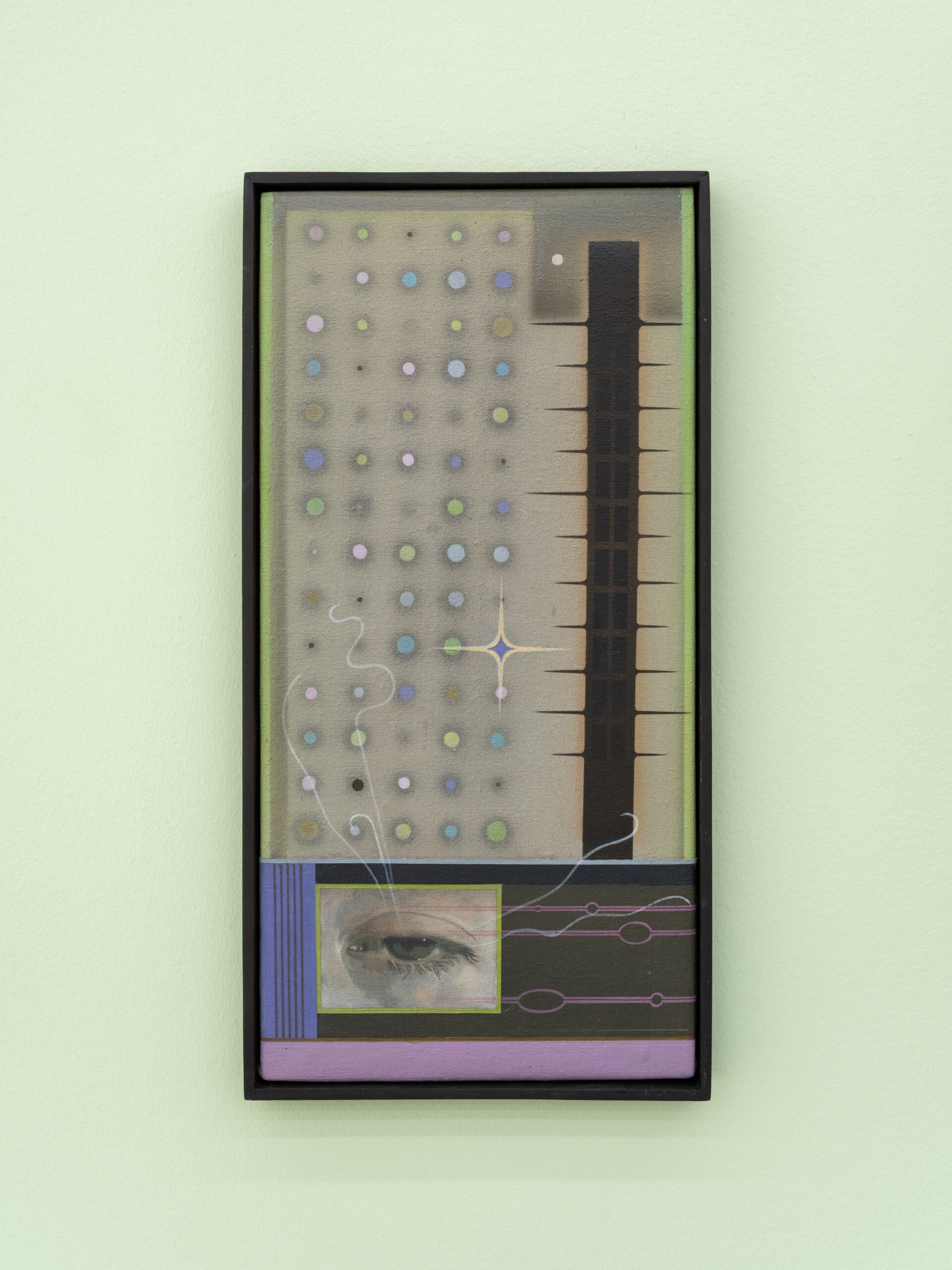
Simon Denny, Output 1472, 2025
Photo: Nick Ash Courtesy: the artist and Michael Lett, Auckland

Simon Denny, SpaceX Dragon Moves to Pad, 2025 Photo: Nick Ash Courtesy: the artist and Michael Lett, Auckland

SD: Exactly. He’s a contemporary formation; he cannot be Mussolini or Marinetti either. The question is: why does he find Marinetti so compelling? That’s what opens things up for me. Especially if you take into account Marinetti’s whole package, his ties to Fascism included. I was also around some AI people, another subset of the tech world, connected to Midjourney. I knew some artists testing early prereleases in Discord, when “Midjourney” was just an ad hoc name. There are transcripts of David Holz describing the tool as he discovered it. Two of my favorite quotes: “If millions of people want to play with Midjourney, the cultural force of that washes everything else away,” and “It’s not a picture maker… it’s like saying Instagram is a filter app. This is a new medium no one really understands.”
That’s the thing about these technologists. They don’t really know what they’re building. They’ve accepted that inevitability and are searching for language to describe it with whatever references they can reach for. My reading is that Andreessen is interested in Marinetti because it offers a language of disruption and energy to describe something unknown but important. Of course, there are risks with that, but also opportunities. If you’re funding a weapons company, drawing on rhetoric that dignifies violence can be very useful.
And here in Germany, we don’t have Anduril exactly (though it collaborates with Rheinmetall), but we do have Helsing and Quantum Systems. What does it mean for these companies to emerge here? I moved to a Germany that said: “We will never rearm, because of our past.” But since Vance’s speech at the Munich Security Conference, the cultural logic has flipped. Now it’s: “We were complacent, we should have led the rearmament all along, we’re the wealthiest nation in Europe.” And as someone who both fears Russia and loves living here, it’s complicated. Germany admitted many Ukrainian refugees, less so from elsewhere, but I teach amazing Ukrainian artists working to support friends and family on the front lines. How does one speak with them about weapons? These questions make me reflect on my own relationship to this.

HS:  Just recently, I overheard two German software guys at a restaurant: “We’ve been complacent too long, now we need to rearm to fight the Mongol hordes, the Russian Orcs.” That kind of rhetoric has gone mainstream fast. From “don’t invest in Rheinmetall” to “put all your money on the horse that saves us from the Mongols.”

SD: Right. Germany is sliding into a kind of military Keynesianism. Rearmament is even treated as a way to save the economy.

HS: Exactly. And AI industries are in a similar place, looking for that same military Keynesianism. In the US, it’s always been tied to the military-industrial complex. Germany wants back in.

SD: Right. One thing I’ve appreciated in Exocapitalism is the way it takes on Landian perspectives, seeing capitalism as an agent with its own momentum. I also read Cute Accelerationism by Amy Ireland and Maya B. Kronic, which describes this kind of agency compellingly. The danger is that once you set up a military Keynesianism, it exists like an algorithmic agent, with incentive structures that keep scaling, beyond anyone’s control.

HS: Yes, this fortified, automated body, it echoes the imaginaries of the 1920s, standardizing, militarizing, and fortifying bodies, redistributing profit unevenly. It’s frightening how quickly it has conquered the mainstream. It’s like a Theweleit-Transformer-Anduril body, in automated operation.

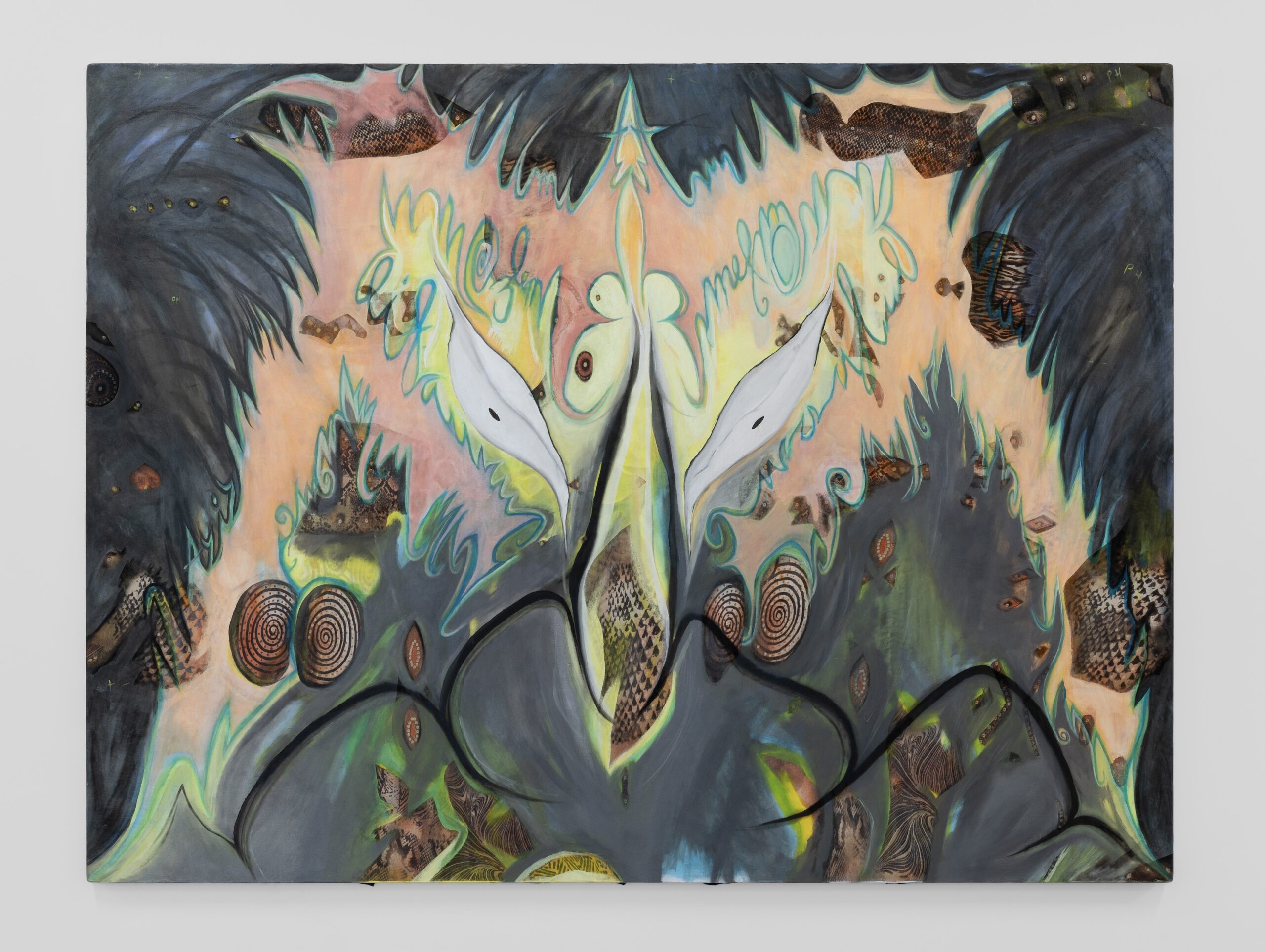
SD: Exactly. Norms have shifted fast. Which brings us back to art. For me, my main activity is making artworks and exhibitions. I’ve been creating these fake Futurist paintings using robot-manipulated brushes to paint AI outputs trained on both defense tech advertising and Futurist painting (Balla, Crali). The results mash those languages. What I find compelling is the uncertainty. The images suggest wings, bombs, lines of force, but also forms you can’t describe. There’s a resonance with both the known and the unknown. It feels truer to today’s uncertainty than past works of mine that were more diagrammatic, more top-down. This ambiguous language feels more alive to the moment.

HS: I understand completely. My recent work, too, is more about following a process without knowing where it ends, whereas earlier projects were about mapping and orienting. Now it’s about following the thread through the labyrinth.

SD: Exactly. And what about your own artwork right now? Obviously, your discursive and artistic practices overlap, but what are you working on?

HS: I don’t… I mean, one work is just finished, so I feel I’m done with it.

SD: Yeah? And can you describe the process of making that?

HS: It was pretty long. I was looking for microworkers in Kurdish refugee camps in Iraq. It took a long time to find them.

SD: Yeah. I imagine there was a lot of social work involved?

HS: Yeah. We found them, interviewed them. I eventually went there to see the circumstances under which machines are trained to see and recognize objects. And of course, those same characteristics are immediately embedded into weapons systems that turn against the same population. So, basically, the work was about that.

SD: Wow, yeah. And what did the artistic output look like? What would the viewer see?

HS: A video installation. Kind of a documentary, but not only. Also very focused on what they told us, their working conditions. I felt it was important not to assume but listen. The descriptions were less terrible than dominant discourse makes them sound. Shit pay, but no other jobs. That was the attitude. But I also came across many anecdotes I couldn’t fit into the film. One worker told me his drone was hijacked by the Turkish army because he launched it in a militarized mountain area. They jammed the GPS and kidnapped the drone. So suddenly, he had no drone.

SD: Unfortunate for him, but fascinating in terms of drone interception. That’s key to contemporary warfare, right?

HS: Absolutely. Very common. Imagine the shelves of captured drones somewhere, or maybe officers’ kids get them as toys. These toy drones plucked from the sky, living abducted lives. I found that super fascinating. All the films that could be edited from the hostage micro SD cards inside. Another thing I didn’t include. I visited a famous Neanderthal cave where 40,000 years ago Neanderthals were buried with rituals, flowers. It’s spectacular, prime real estate of the Paleolithic, the Trump Tower of its time. The cave was also used to survive Saddam’s chemical warfare in the late ’80s. When I arrived, rockets and RPGs were going off outside as the PKK was fighting in the mountains. Inside the cave, it felt safe. No rockets, no drone surveillance. And it struck me. This is the future. Retreating to a Neanderthal cave, a place beyond surveillance. The future looks like a very ancient past. Not only in terms of the Stone Age, but also rising water levels, climate shifts. What if that is our future?

SD: Yeah. This conception of cyclical time appears…

HS: Exactly. It connects to what you said earlier. The world has shifted 180 degrees, maybe not cyclical but in a spiral. You can’t use the language of transgression anymore. Even criticism has become difficult. The future looks like the past, but in a proprietary version you have to pay for. So how do you adapt to these rotations? How do you reorient without becoming conservative in one way or another?

SD: Yeah. And how would you recognize it if you did?

HS: Mess.

SD: But that’s the thing. How do I even assess myself as a subject? I don’t know. I formed some idea of the kind of actor I am in the past, and I try to live up to that…

HS: But how can you stay similar to what you once thought, when everything else changes?

SD: Right. And is that even a useful guide? And then these things that were hard to understand in the past, like, how does Mussolini start as the leader of a socialist magazine, and then suddenly becomes such an effective authoritarian dictator who leverages the ridiculous? Ten or twenty years ago, that seemed alien to me, something I didn’t recognize.

HS: To me, they didn’t seem alien, just historical.

SD: Historical, yeah, that’s a better way to put it.

HS: I could see where people might be going ten years from now by looking at history, even if the directions are very different. But I didn’t anticipate that I myself would have to go through such transitions or the uncertainty and disorientation they bring. Looking at the past, you know the ending. From the other end, when you don’t, it feels dizzying and full of war.

SD: That’s why I’ve been drawn to Benjamín Labatut’s books, When We Cease to Understand the World and The Maniac. They romanticize moments of technological emergence, the experience of scientists and engineers like Shannon and von Neumann. A critique could be that they still valorize singular geniuses, but they capture that chilling unknown, the “other end” of history you just described. Before computing or nuclear power were naturalized. Venkatesh Rao even called this a “Labatutian moment,” when you experience unknowing in a profound way. That also reminds me of Mark Leckey’s work. The world as a visceral, romantic unknown.

HS: In Labatut, unfortunately, as a science nerd, I already knew all the anecdotes. I’m skeptical about the trend among some peers to “go back” to the Neolithic. I’d love to, but it’s too late. We can’t go back. Instead, we need to actively move forward towards a Neolithic. The question is how.

SD: It’s like turning away from the internet. Did that happen in the ’90s with artist groups?

HS: No. Nobody I knew turned away from the internet. Everyone went, “Wow, finally!” Attitudes toward technology were so different then.

SD: More optimism?

HS: Yeah, the bad things hadn’t happened yet.

SD: Interesting. I had a different impression. I started exhibiting in the mid-2000s, when the internet was already embedded in the art world. Net art was past. My peers making work about social media looked back at Net art as different. Post-internet art was more ready to accept financial systems as sites of activity, something less visible in ’90s Net art. There was also a strong medium specificity then. Work had to be made for a browser to “qualify” as Internet art. We didn’t see it that way. Art fairs and objects could also address the internet. That’s where my question comes from.

HS: It was all really pre-industry. Net art happened in the time of Yahoo, Internet Explorer…

SD: Yeah, right. Explorer versus Netscape. Andreessen again. But the reason I mention Net art is because it feels similar to today. Some artists want to pull away from AI, to “go back.” My instinct is the opposite: to follow the dominant models as they scale, try to understand them, and be alongside them. Not because smaller alternative stacks have no value, but because their scale can’t compare. The cultural effects (shitposting bots, language mutations) come from the big systems. Building smaller ones doesn’t necessarily meet those effects. My instinct is to follow and describe the dominant ones, though I wonder if that’s a mistake.

HS: I don’t know either. Building alternatives is part of the research. It’s a way of immersing yourself.

SD: Yeah, right. It’s about understanding.

HS: You only really understand once you’re inside. That’s my rationale: praxis.

SD: Not building a “true alternative” to OpenAI, which is impossible.

HS: No. More like being in the engine room, working with what’s in there.

SD: Exactly. I also follow the discursive production of the industry itself. Podcasts, for instance. That’s where technologists publish. A16Z has produced consistently high-quality podcasts. I was even on one in 2024 with Sonal Chokshi, their founding editor. Since Erik Torenberg got involved, it’s become more politically consolidated. Recently, Torenberg, Casado, and Srinivasan shifted from saying “AGI will take over, only one winner, US or China” to asking, “Okay, what are these systems actually good at?” The new consensus is that no single AI will master everything. It will augment humans instead. Those with domain knowledge will leverage it best. That framing is rhetorically useful for them, but also true. When I use AI, my domain knowledge helps me get better results.

HS: I was reminded of a question Mark Spiegler asked us in Basel: Can AI enable artists to do more alone? It can. I can almost replace technicians now. But it also impoverishes imagination, because ideas often come from banter, miscommunication, and jokes. Once I can vibe-code everything myself, that disappears. Things become cheap and lonely.

SD: Right. That echoes what I’ve heard on A16Z pods. One host said LLMs can do a lot, but can’t learn or adapt to his writing style. Something is missing. For us, that missing piece can be productive. Failed prompts can open new directions, like Surrealist or Dada chance methods.

HS: Hahahahaha.

SD: That’s the value of the system’s limits, recognizing you can’t replace what a team gives you. It’s more than productivity exercises.

HS: It’s the watercooler conversations.

SD: Exactly. The offhand “how about this?” that leads to something. A different kind of agency. Anyway, it’s striking how the tech conversation has shifted in just six months.

HS: So you think the “existential risk” conversation is over?

SD: It’s been deleveraged, yes… which is relieving. The AI-Overlord talk felt nihilistic. Now they’re treating AI as a tool again. Casado says, “These are technical systems. Nothing magical, nothing religious.” I prefer that to “hallucination” metaphors.

HS: But doesn’t the industry feel manic-depressive? Sometimes manic, sometimes depressive. A bit unhinged.

SD: Yes. And that feels Futurist.

HS: The main question is where to go from here. How to keep going in this shifted landscape. What does it mean to “keep going”? Do I need to keep anything?

SD: I don’t know either. My instinct is to meet and describe. To see if my words or artworks resonate with the day. If not, try again.

HS: Same. Maybe I’m just a witness of our time. Reporting, producing testimony. Knowing it may sound ridiculous in ten years.

SD: Exactly. That’s where pop sensibility becomes useful. It was about witnessing, not diagnosing.

HS: Or judging.

SD: Right. That’s part of Warhol’s longevity. Conservatives and critics alike find value in his work. Descriptive, big-tent. A way of meeting the world.

HS: Yup.

Simon Denny + Hito Steyerl
Artist + Artist

CURA.45
The Blackout Issue

SIMON DENNY (b. 1982, Auckland, New Zealand) lives and works in Berlin. He makes artworks that unpack stories about technology using painting, web-based media, installation, sculpture, print, and video. He co-founded the artist mentoring program BPA//Berlin Program for Artists and serves as Professor of Time-Based Media at the Hochschule für bildende Künste (HFBK), Hamburg. His work has been highlighted in solo exhibitions at: the New Zealand Pavilion at the 56th Venice Biennale; Serpentine Galleries, London; MoMA PS1, New York; the Museum of Old and New Art, Tasmania; WIELS Contemporary Art Centre, Brussels; Portikus, Frankfurt; MUMOK, Vienna; Hammer Museum, Los Angeles; OCAT, Shenzhen, among others.

HITO STEYERL (b. 1966, Munich, Germany) lives and works in Berlin. Recent solo exhibitions have been held at venues including: MAK Contemporary, Vienna (2025); Museum der bildenden Künste, Leipzig (2024); The Portland Art Museum (2023); Museum der bildenden Künste, Leipzig (2023); National Museum of Modern and Contemporary Art, Seoul (2022); Stedelijk Museum, Amsterdam (2022); Kunstsammlung Nordrhein-Westfalen K21, Düsseldorf, and Centre Pompidou, Paris (2020–21). Selected group exhibitions and biennales include: Universal/Remote, The National Art Center, Tokyo (2024); Shift: AI and a future community, Kunstmuseum Stuttgart (2023); Double Vision, Tai Kwun Contemporary, Hong Kong (2022); 58th Venice Biennale (2019); Gwangju Biennial (2016); São Paulo Biennial, São Paulo (2016); 9th Berlin Biennale, Berlin (2016); 56th Venice Biennale, German Pavilion (2015). Steyerl is currently a professor for emergent digital media at the Munich Art Academy.