Videocittà Watercult 2026
Videocittà 2026
10 – 11 – 12 July, 2026
Review by Eleanora Milani
When Timothy Morton published Hyperobjects: Philosophy and Ecology after the End of the World in 2013, the debate around global warming and the broader ecological question, from the Anthropocene onward, was, within the cultural sphere, just approaching its peak. Clearly, a solid scientific literature on the subject already existed, as did a philosophical one, in which thinkers and theorists such as Gregory Bateson, Félix Guattari, Donna Haraway, Bruno Latour, Michel Serres, and Paul Crutzen were already speaking of ecology, nature, technology, and Gaia. Morton, however, had an intuition that would literally change the way culture has looked at this issue ever since. Adopting the idea that objects exist independently of human correlation, a theory grounded in Graham Harman’s OOO, or object-oriented ontology, Morton radicalized it to the point of transforming it into the first ontological theory of global warming. Hyperobjects are entities so massively extended in space and time that they radically exceed our capacity to perceive them and to situate ourselves in relation to them. We can encounter them only through local manifestations, never in their totality. Global warming, water, radioactivity, oil, and capitalism are all hyperobjects, so vast that they exceed any human scale.
Water, too, thus assumes a form of thinkability: it is a hyperobject, viscous and transdimensional. Beyond the theoretical and philosophical level, it also enters into visual reflections and manifestations. It is no longer merely a natural element, nor simply an ecological theme, but a complex epistemic field, a theoretical device through which we can read our existence, our geographies, our temporalities, and our politics through a matter that constantly exceeds the human scale. If Morton inaugurated a radical reflection on water as a hyperobject, an entity “massively distributed in time and space” that we cannot know directly but only through its traces, the last fifteen years have expanded and transformed this intuition, making water one of the most fertile sites within the environmental humanities.
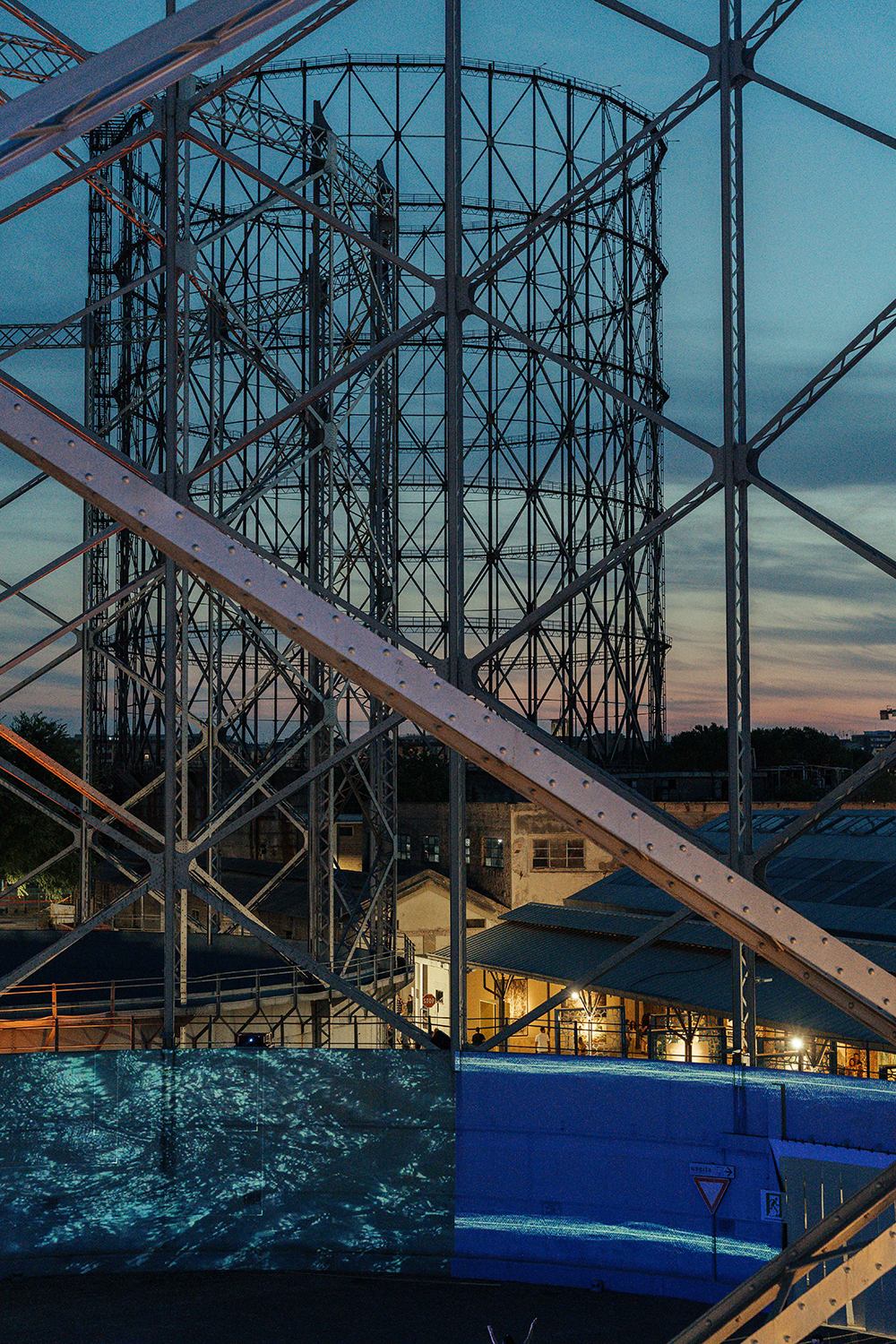
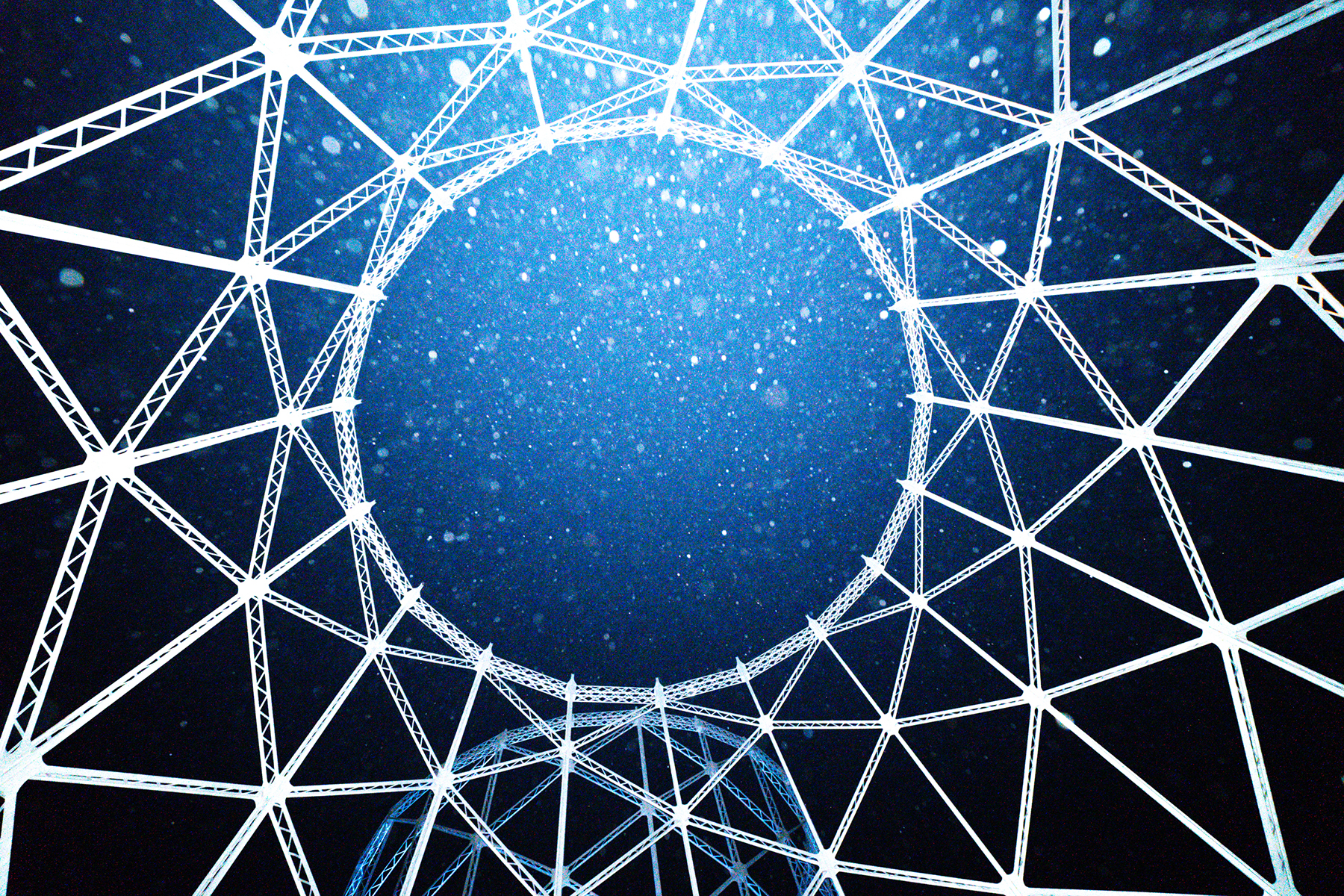
“Watercult” is the neologism that gives this edition of Videocittà its title. Active in Rome since 2018, Videocittà is the festival of vision and digital culture distinguished by projects capable of activating and accompanying processes of urban regeneration, transforming abandoned areas of the capital into new spaces for culture and innovation. This edition is the last to be hosted within the Gazometro complex, a historic symbol of the industrial archaeology of the Ostiense district: an area that for decades represented the city’s southern productive belt, but also an energy district that saw the birth of the Centrale Montemartini, the Mercati Generali, the gasworks, and the infrastructures that powered Rome’s modernization in the early twentieth century.
The effectiveness of “Watercult” lies precisely in the fact that it is a world-word, one that establishes a way of thinking about water. “Watercult” suggests a culture of water: a set of practices, imaginaries, sensibilities, and forms of life that recognize water as an ontological, political, and sentient entity. It offers a restitution of post-Morton visual practices around water, because it certainly absorbs the idea of the hyperobject, yet moves beyond it by opening onto a plurality of forms of existence. “Watercult” opens a window onto a historical moment in which water has simultaneously become body, archive, geopolitical infrastructure, ontological threshold, legal subject, and nonhuman temporality. Water is no longer conceived as a simple natural element or ecological backdrop, but as a complex ontological entity: that which exceeds human perception, that which materially constitutes us, that which passes through bodies and renders them permeable, that which precedes our existence and survives our forms of life, that which organizes the planet’s narratives and its colonial inheritances, that which claims rights and produces worlds, imaginaries, and relations. From this perspective, water is a principle that redefines our position in the world, our temporality, our vulnerability, and our capacity to imagine the future.
This plural vision is essential for reading the connections within the selection of videos, curated by Rä di Martino and Damiana Leoni, and the live performances in “Watercult.” Taken together, these works return water to us as a transdimensional entity, placing bodies and atmospheres, extractive economies and geological memories, maritime borders and political identities in relation to one another. Water emerges as a kind of agent that produces phasing among objects, images, technologies, and histories.
Before the publication of Hyperobjects, certain artistic practices had already begun to perceive water as an excessive entity, capable of inscribing the human gesture within broader temporalities. Adrian Paci’s Turn On (2004) is an emblematic example: the sea behind the men of Shkodër, who switch on lightbulbs connected to improvised generators while standing on a pier, inscribes social precarity within a geography already marked by global processes that exceed the local scale. In this sense, Turn On anticipates the hyperobject. It is a pre-Morton work that prefigures the dissolution of Nature and shows how water, even before any explicit theorization, was already a device that problematized the relationship among body, infrastructure, and world. Within this curatorial selection, Turn On is a point of passage in which water was already a thought, an alterity exceeding the human. The intermittent light is a signal of fragility, of a future pressing upon the present of post-communist Albania, a form of coexistence with an entity too large to be grasped.
Di queste luci si servirà la notte (2009), also by Paci, belongs to a moment in which aesthetic ecology was undergoing transformation, again before the explicit formulation of hyperobjects. It is one of his best-known works and marks an important passage in his research into community, light, rituality, and the collective dimension of gesture. The video installation, in which beams of light penetrate the river at night, originates in a performance on the Arno, whose waters conceal a history of floods and devastation. The Column (2013), again by Paci, is instead contemporary with the publication of Hyperobjects. It is a video work and photographic series that metaphorically document the journey of a block of marble quarried in China, shipped, and worked at sea until it assumes the form of a classical column. The time of production coincides with the time of transport: a poetic and unsettling short circuit in which capitalist logic and mythological imagery merge without friction. Through these three video works, Paci marks the passage from a pre-Morton sensibility to the full post-Morton phase, and this makes his contribution to “Watercult” particularly significant.
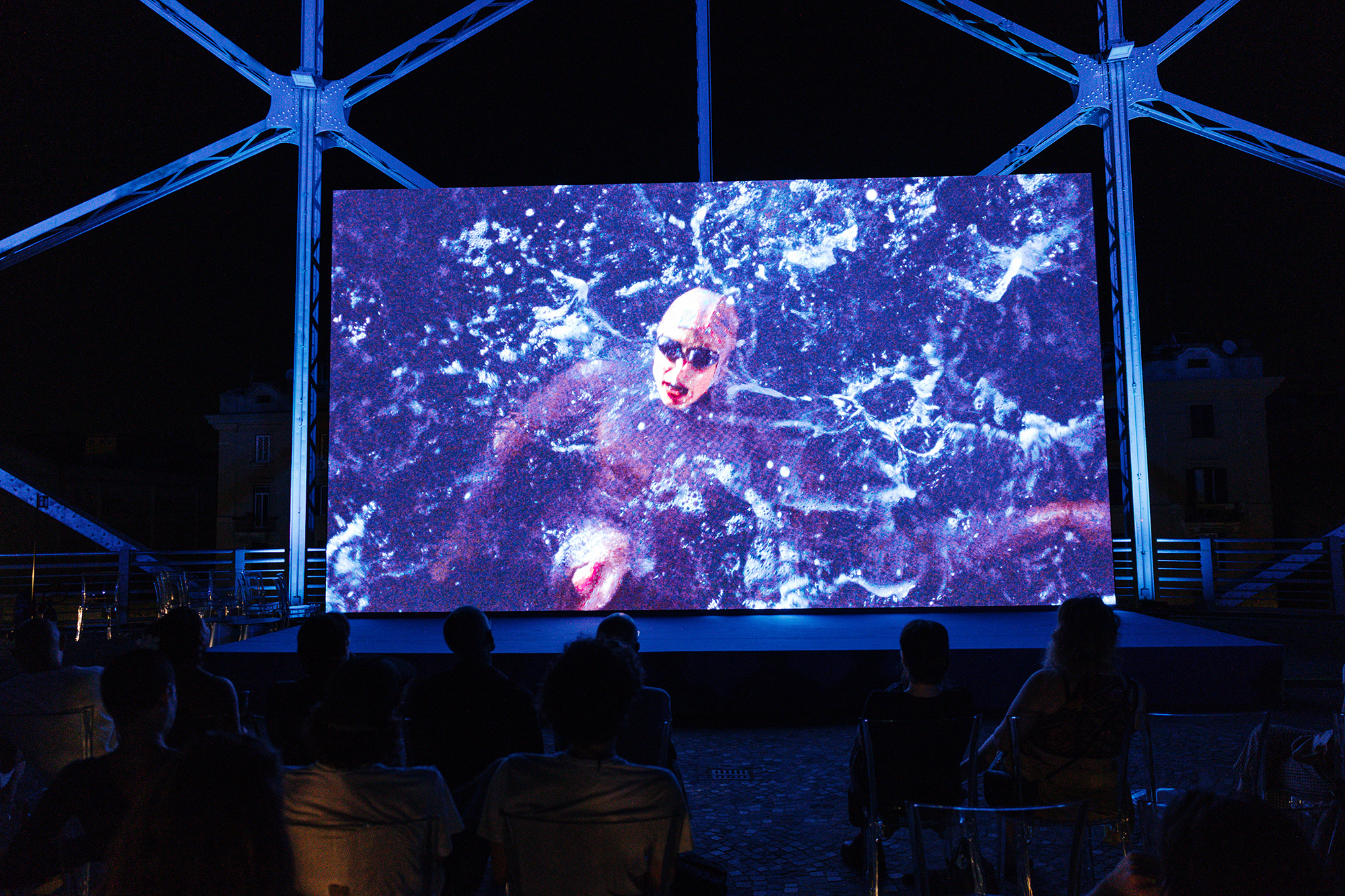
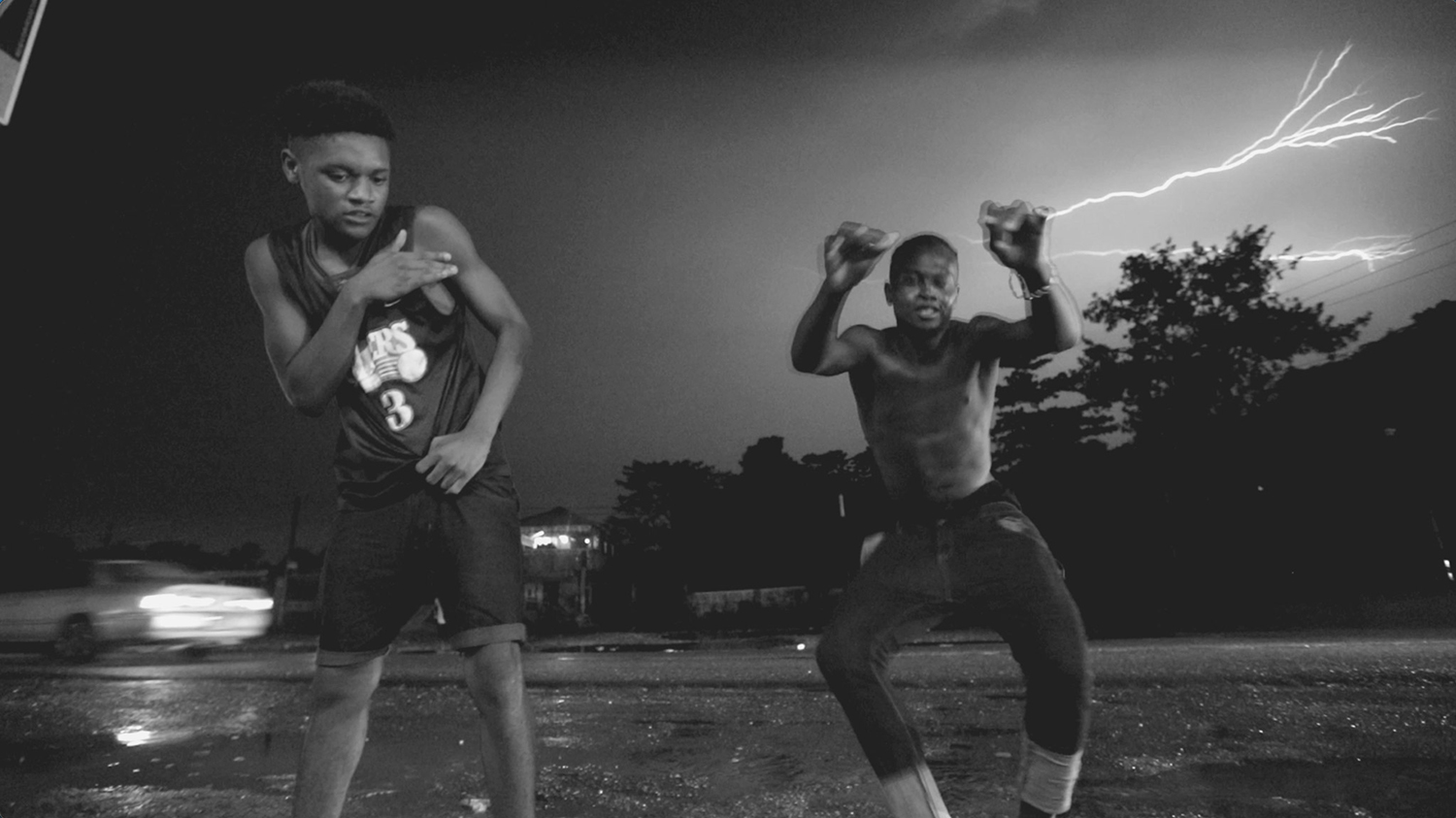
The other video works, conceived and produced between 2010 and 2021, crystallize just over a decade in which water has become a central theoretical site within the environmental humanities, accompanied by fundamental theoretical shifts, such as the posthuman feminist theories of Astrida Neimanis and Stacy Alaimo. These theories, in particular, seem applicable to Cecilia Bengolea’s Lightning Dance (2018–19), in which water flows over the dancers as energy, vibration, and permeability. The dance seems to be generated by the force and sound of water pouring down onto Jamaican streets. Here, water embodies trans-corporeality as theorized by Alaimo: a medium that passes through bodies, rendering them permeable and placing them in relation to atmospheres and nonhuman phenomena. The performers’ dance is the result of the friction of water against bodies, so powerful that it produces temporary forms of relation, dissolving the boundary between inside and outside.
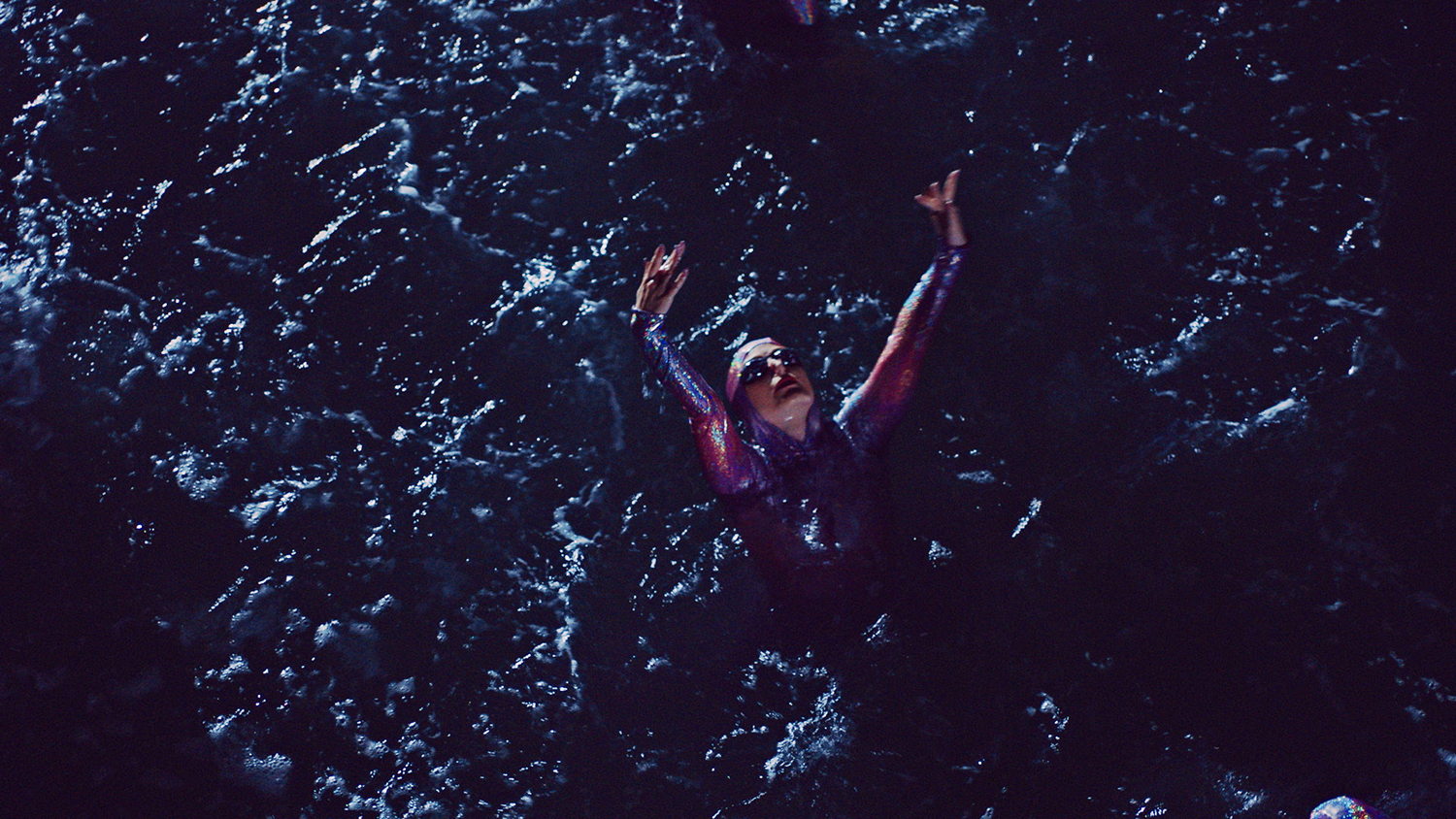
In Monira Al Qadiri’s Diver (2018), immersion becomes a passage through temporalities and economies by way of the discipline of synchronized swimming. Water is a metaphor for the geopolitical archive, as theorized by Kathryn Yusoff, which, in Al Qadiri’s practice and in Diver, retains the memory of pearl diving, oil extraction, and the violent transformations of the Gulf. The dancers’ synchronized movements, sharp and precise, return a subtle violence that is also a way of communicating forms of political denunciation.
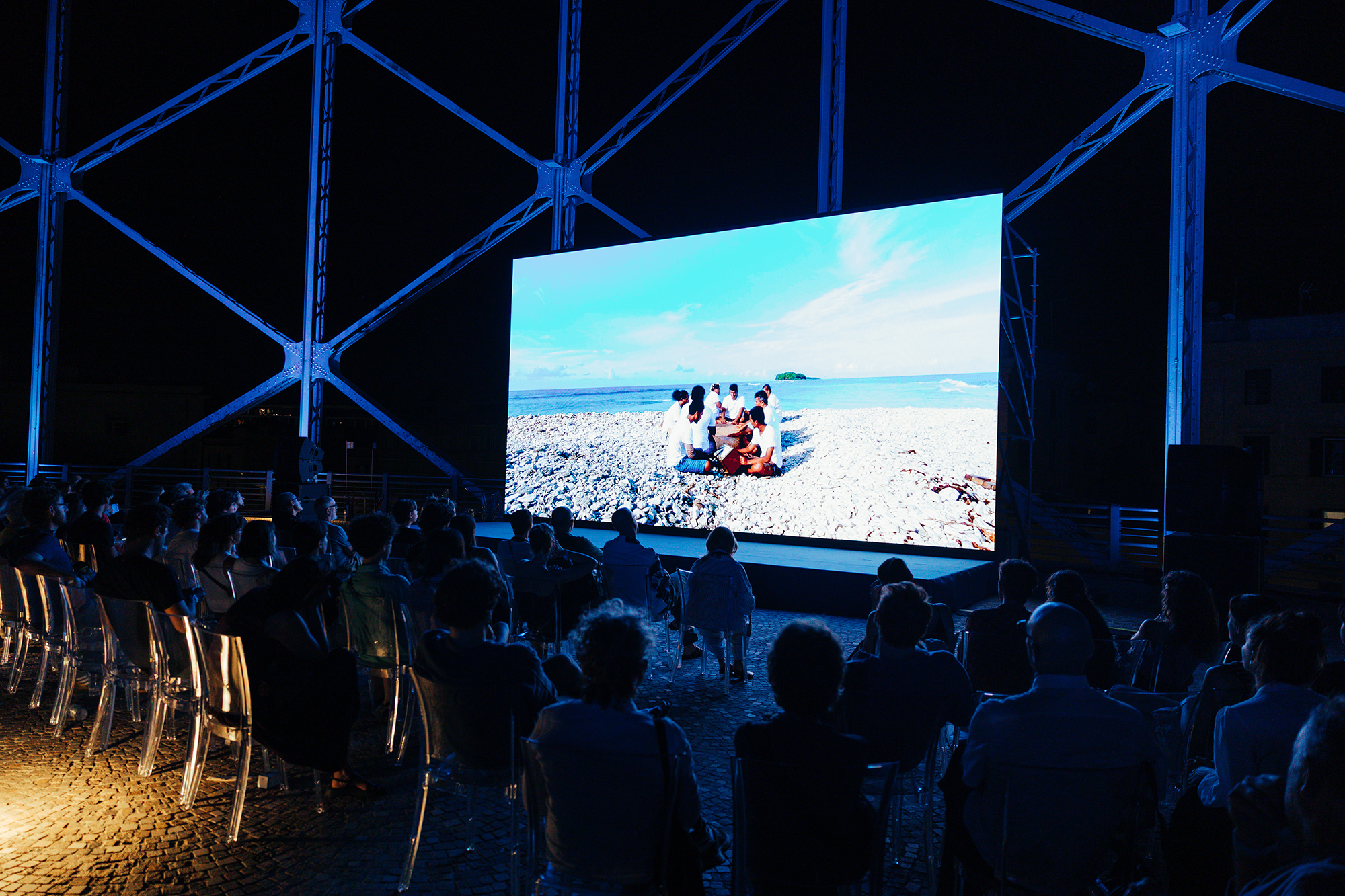
The relationship between water and bodies is different in Flatform’s Quello che verrà è solo una promessa (2017). The video unfolds as a horizontal sequence in reverse, showing aspects of daily life in a village in the Marshall Islands during the rise of the sea. The place returned to us by the duo assumes the form of an intersection between geological spacetime and human life, in which water exercises an inverse causality. Bruno Latour is perhaps the most immediate reference here, reframing water as a legal subject that redraws geographies and imposes new forms of coexistence.
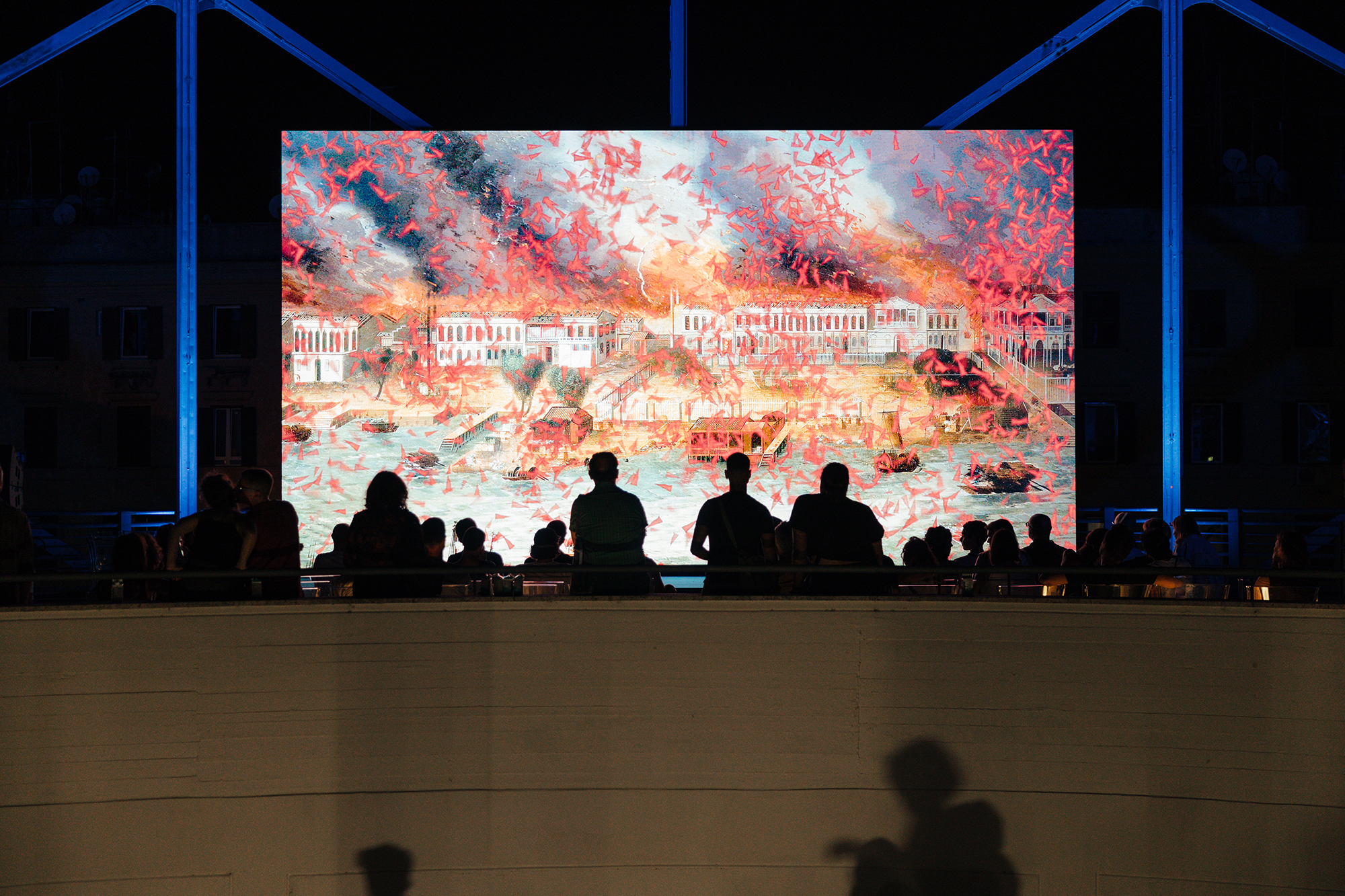
Shahzia Sikander’s 3 to 12 Nautical Miles (2021), the video that formally departs most clearly from the visual register of the rest of the selection, presents itself as a constellation of fluid forms between figuration and abstraction, in which the tradition of Indo-Persian miniature is expanded into a stratified language. Fields of translucent color overlap and seem to trace routes, borders, and currents. Some figures evoke human or animal silhouettes, always in a state of metamorphosis; others suggest marine elements, cartographies, diagrams, and landscape fragments. The visual surface is densely worked with dots, filaments, arabesques, and micro-ornaments that refer back to miniature painting, yet are freed from any coherent narrative function and transformed into a pulsating visual fabric.
Alongside the video art section, the two live performances unfolded within a visual framework that further amplifies the theoretical complexity of water. In Giuseppe La Spada’s installation Water: Always the Same, Always Different, images of oceans, rivers, and rain from different locations around the world compose an environment in which water is metamorphic, without hierarchies, and always identical to itself. La Spada’s intermedial research, which has made water the center of his poetics, naturally enters into “Watercult” by repositioning water as an original element of life, environmental memory, and a space of collective consciousness.
Francesca Heart’s sound performance, conceived in dialogue with Water: Always the Same, Always Different, is a ritual of listening to the liquid body, an action that makes explicit the permeability between body, breath, and environment. Heart performs minimal, repeated gestures that seem to emerge from an aquatic memory: movements that expand and withdraw like tides, oscillations that evoke the dynamics of flow and ebb. The action thus becomes an exercise in perceiving a continuity between body and environment, between gesture and ecosystem.
Almost complementarily, the performance by Amanda Lana, a Brazilian dancer with the Ballet de l’Opéra de Lyon, is built around a dimension of reflection, threshold, and light refracting through water as it gradually transforms. Lana works with a more expansive gestural language, with choreographed movement that traces circular, orbital trajectories, as if the body were the device that records tides and luminous refractions. The performance is crossed by beams of light that absorb her movement into La Spada’s aquatic surfaces and Heart’s soundscapes.
If Morton opened up the possibility of thinking water as a hyperobject, the live and video works presented in “Watercult” show that, over recent decades, water has assumed a plurality of theoretical functions that make it even more complex and politically situated. Water is what compels us to think after the end of Nature, after the end of the world as a totality of meaning. And “Watercult” shows that water, today, can no longer be reduced to a natural element or to a mere curatorial theme. It is, instead, a critical device that traverses the forms of art and exceeds them.