Tempting Fate
Kunsthalle Zürich
Review by Linnéa Ruiz Mutikainen
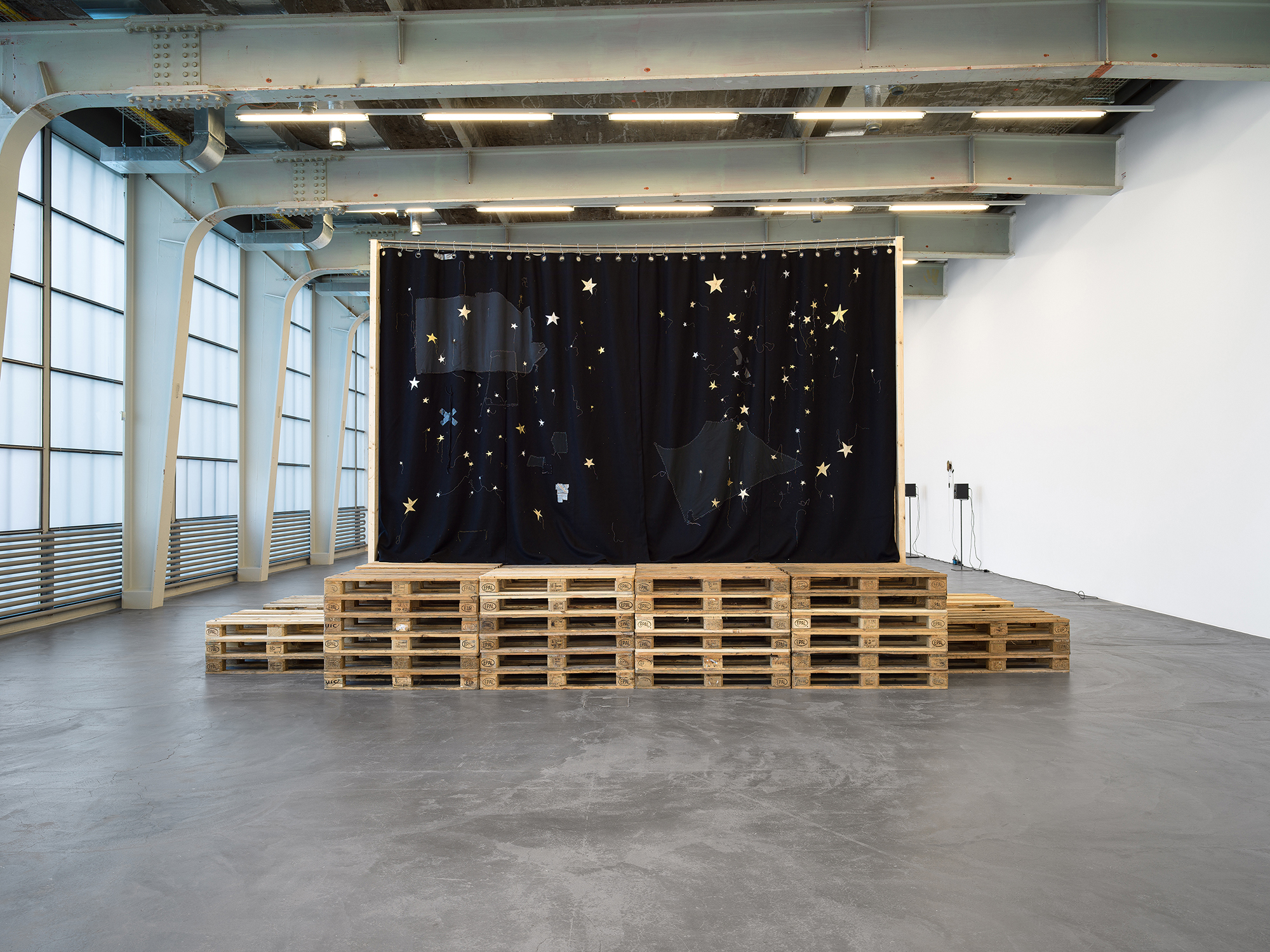
There is something consoling about the night sky. Our inclination to amass ourselves in what resides upwards is the result of a comforting curiosity: the vastness, punctuated by shimmering stars, embodies eternity. It’s an indeterminable counter-essence to death, to the grim and immediate, loaded with magic and idealism. In Tempting Fate, artist Caspar Heinemann (b. 1994, London) brings us even closer to it.
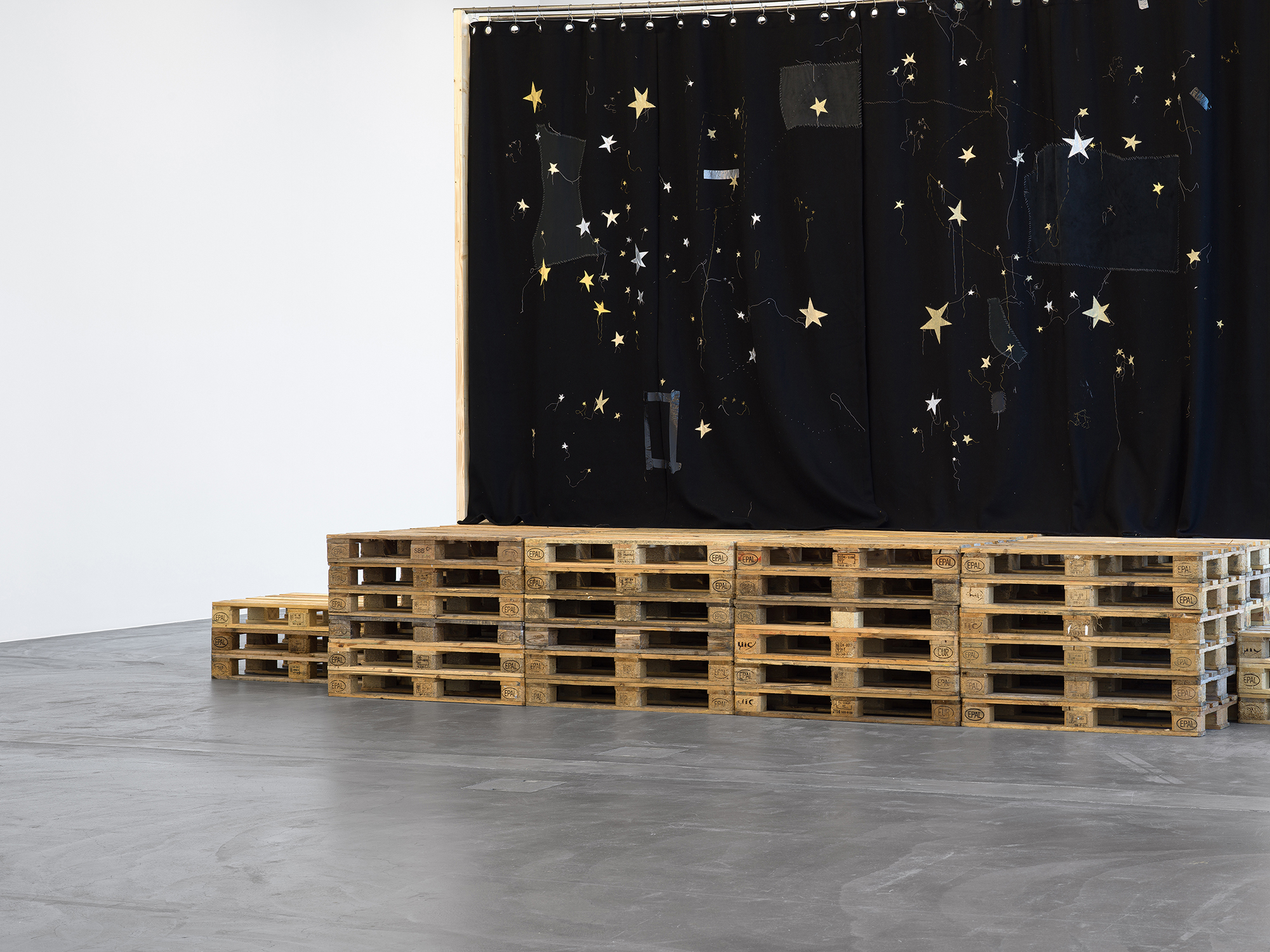
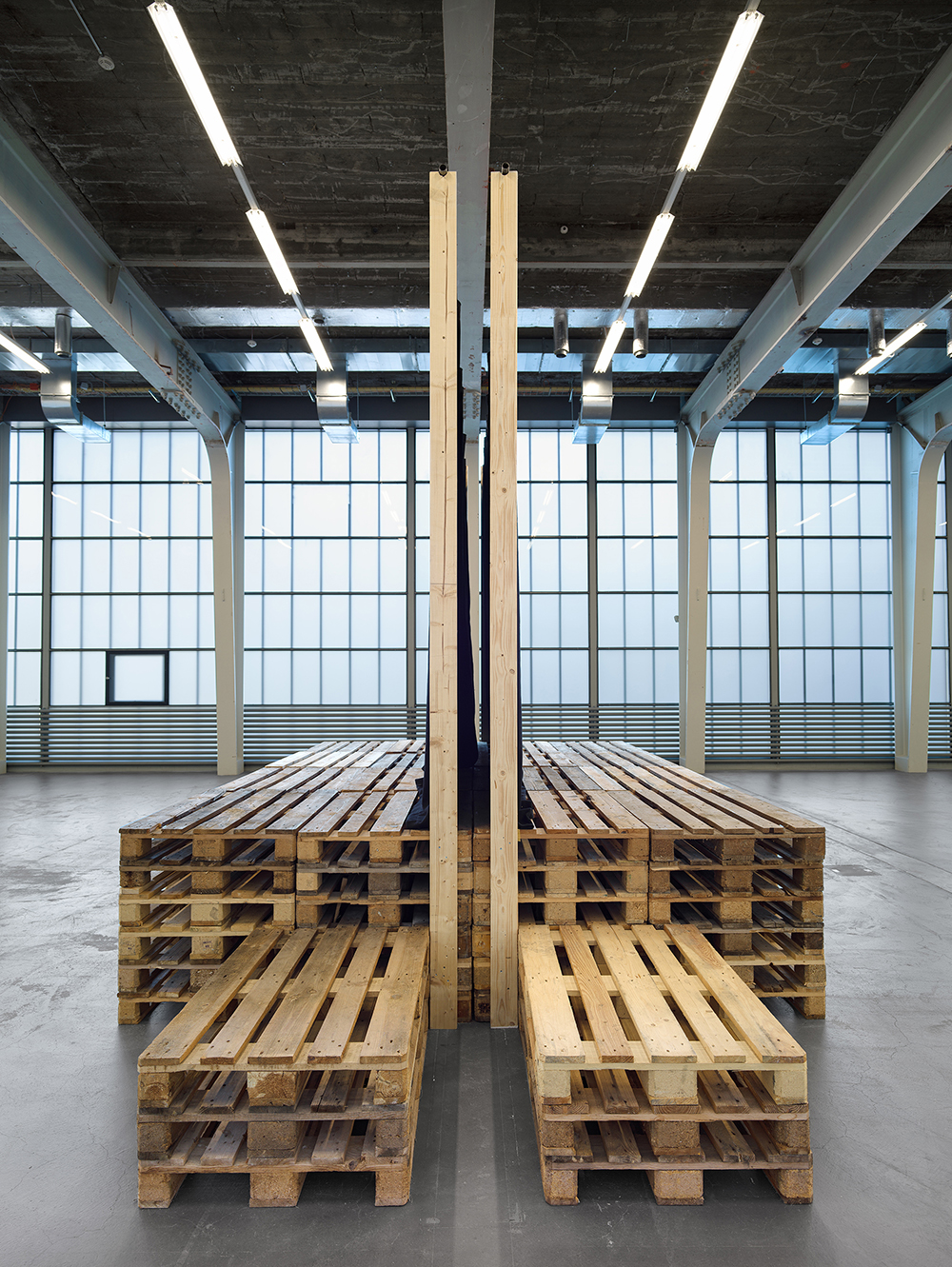
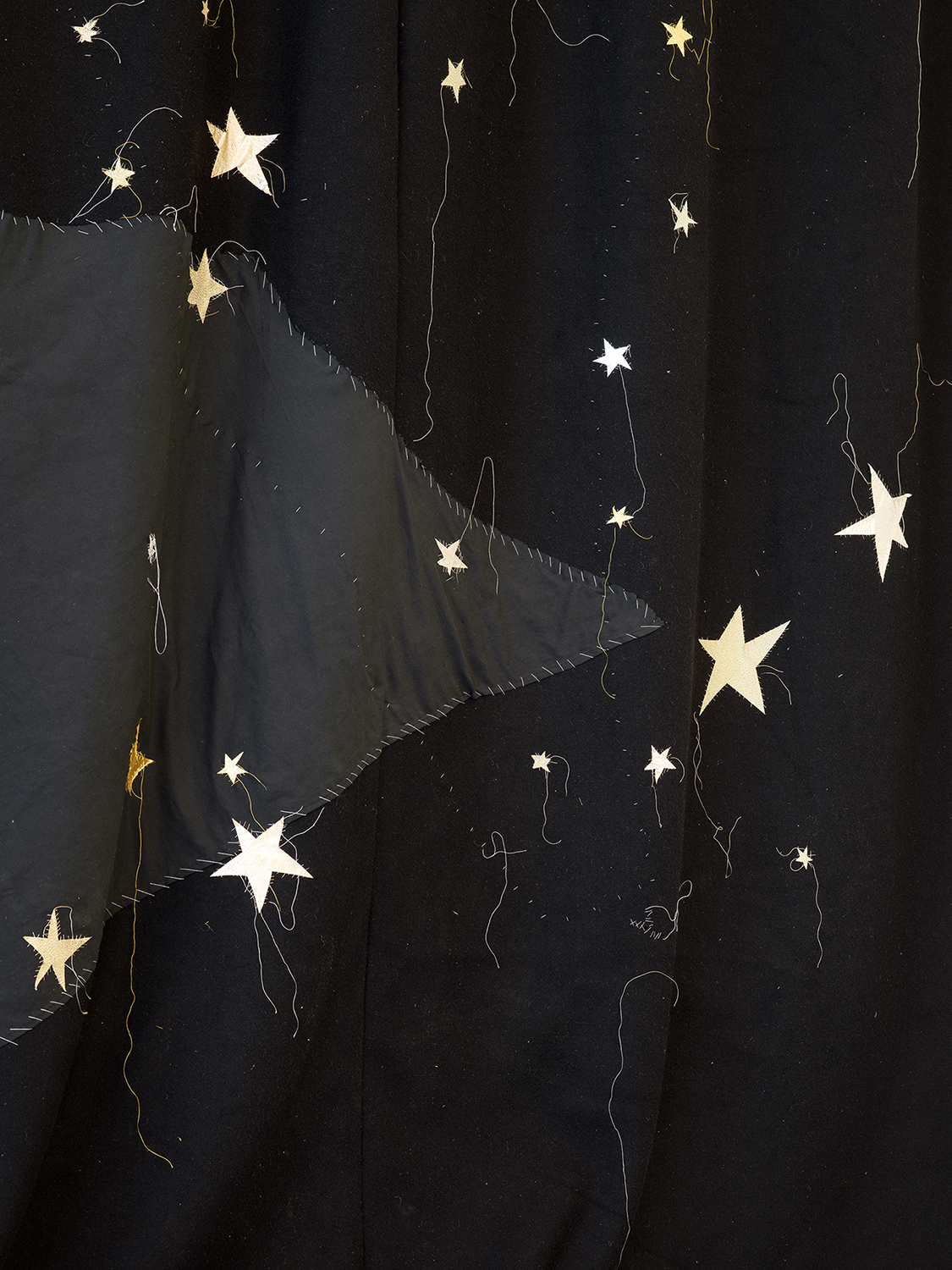
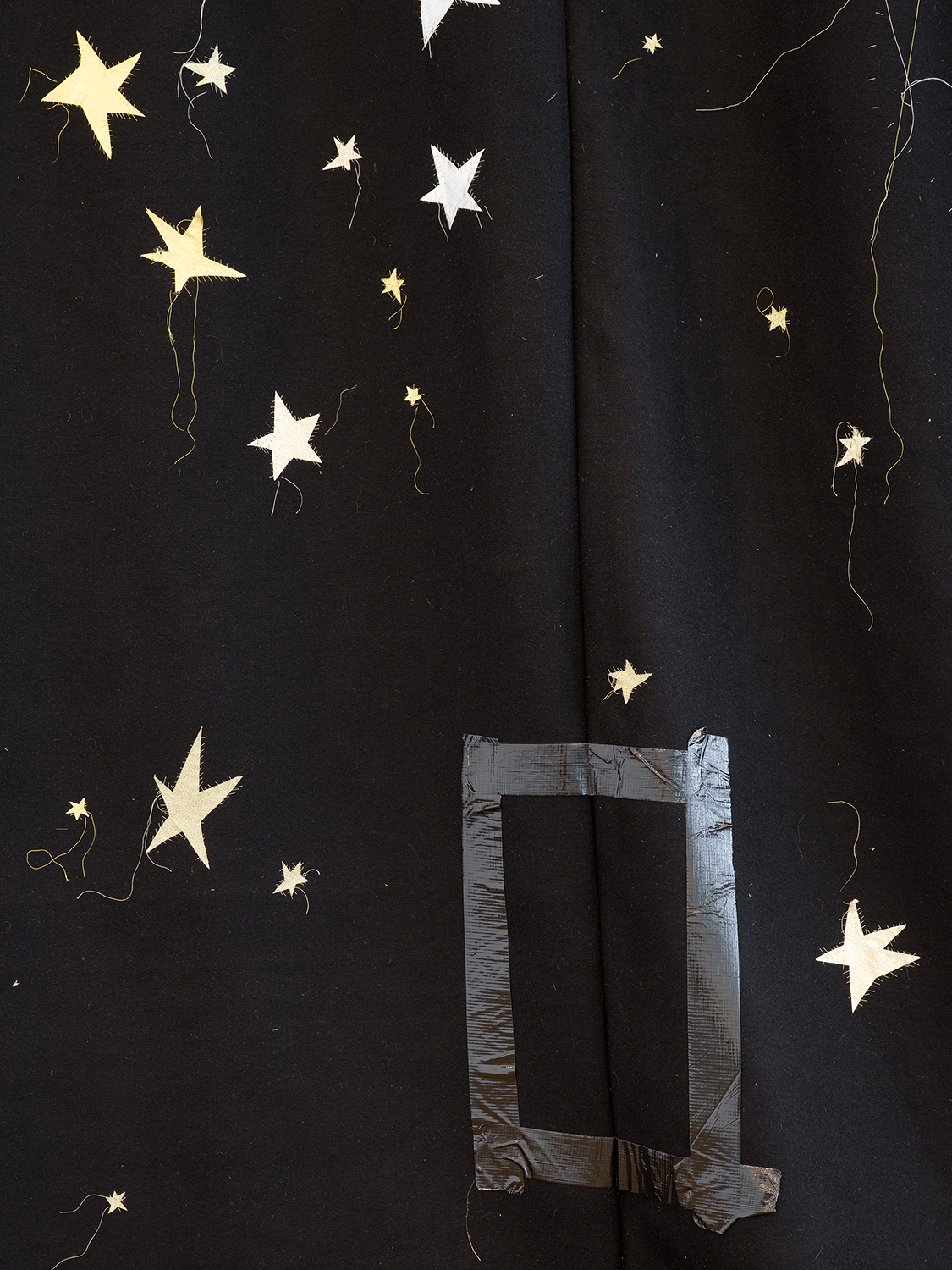
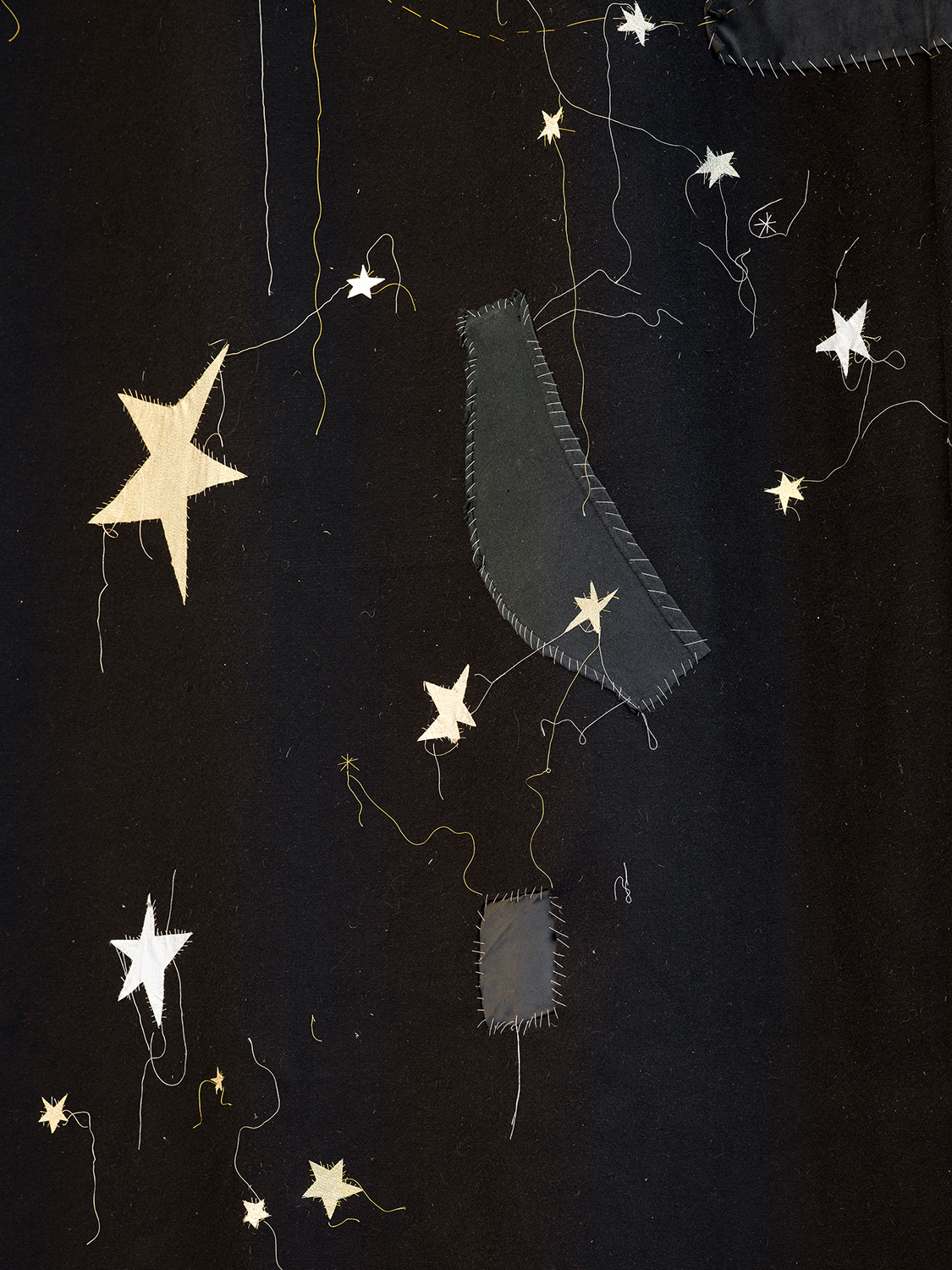
To enter the exhibition hall at Kunsthalle Zürich is like walking into the site of a school play, perhaps an improv setup. Heinemann has staged a night sky: a black curtain with patchwork – some stars, some rough stitching to hold the different fabrics together – hangs down, surrounded by wooden pallets. It’s titled ABRACADABRA (2026) and follows the artist’s DIY lineage, his penchant for implementing materials and techniques that radiate a sense of punk-like roughness. Behind it, there’s nothing. What traditionally serves as backstage is in fact an illusion, with the stage being replicated on the back too, lacking a front or back to the piece.
His application of the sky positions its natural contradiction: it’s enough to present a handful of stars on a black backdrop to evoke the imagery of the night sky, but what exactly does the night sky imply in 2026? There’s the universal meaning, but the motif itself triggers an endless imagination, becoming a canvas of incomprehension. Heinemann circles this unfathomable, bordering on exhaustive, feeling, this larger-than-life condition and the conclusion that, no matter the determinacy, the sky remains a surface we will never be able to detangle. It’s a springboard for our imagination, charged with whatever we want it to be charged with.
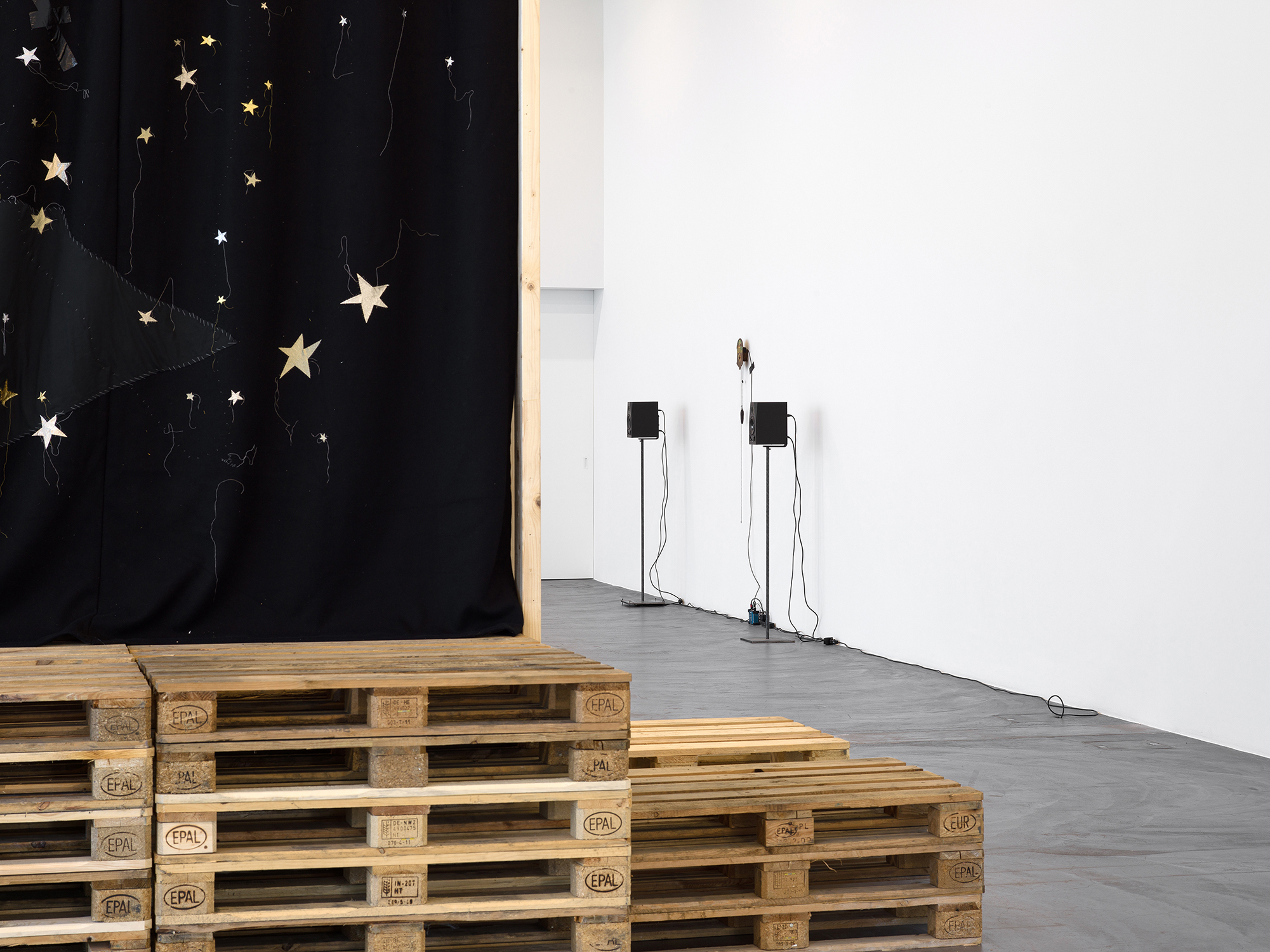
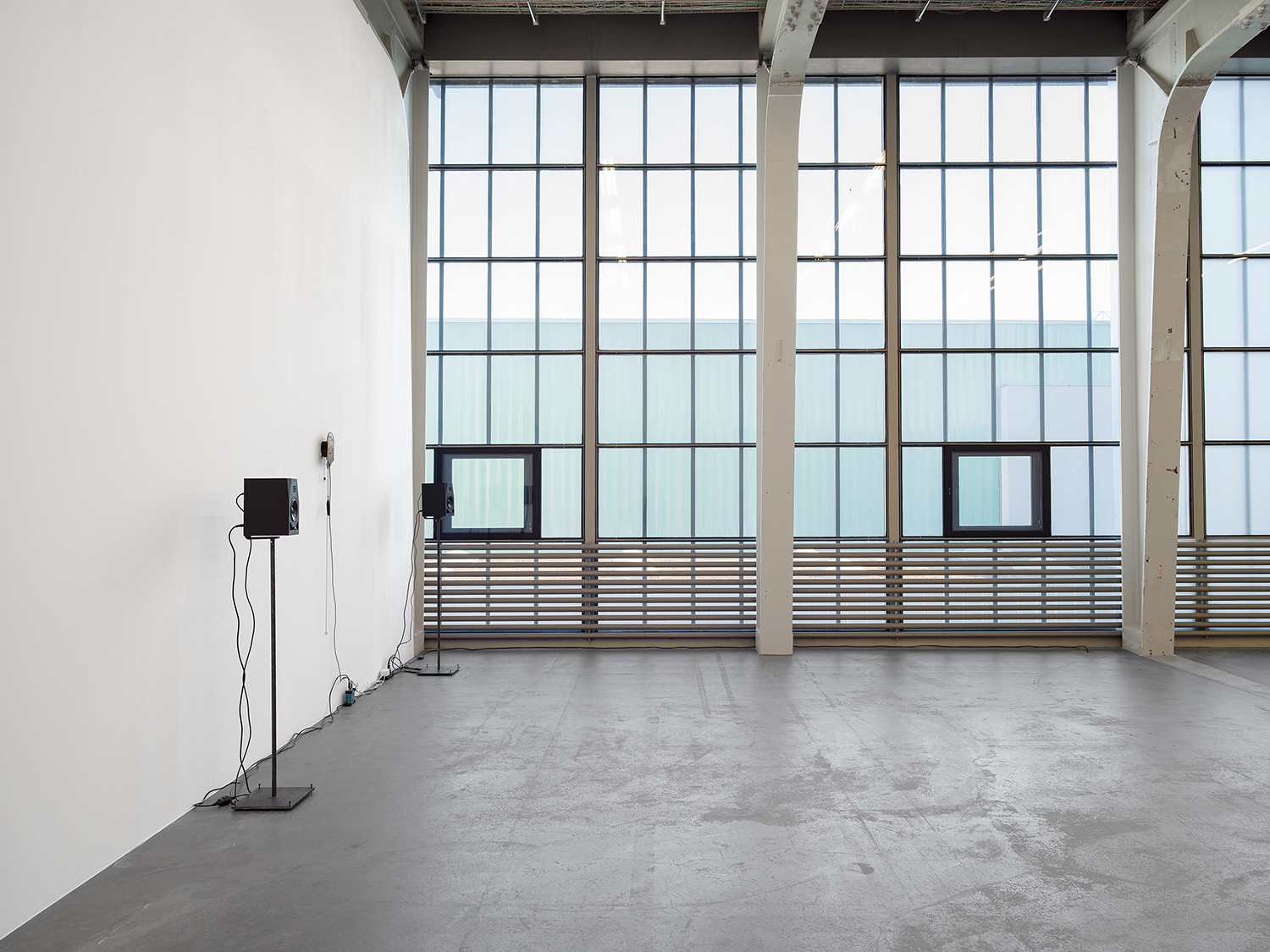
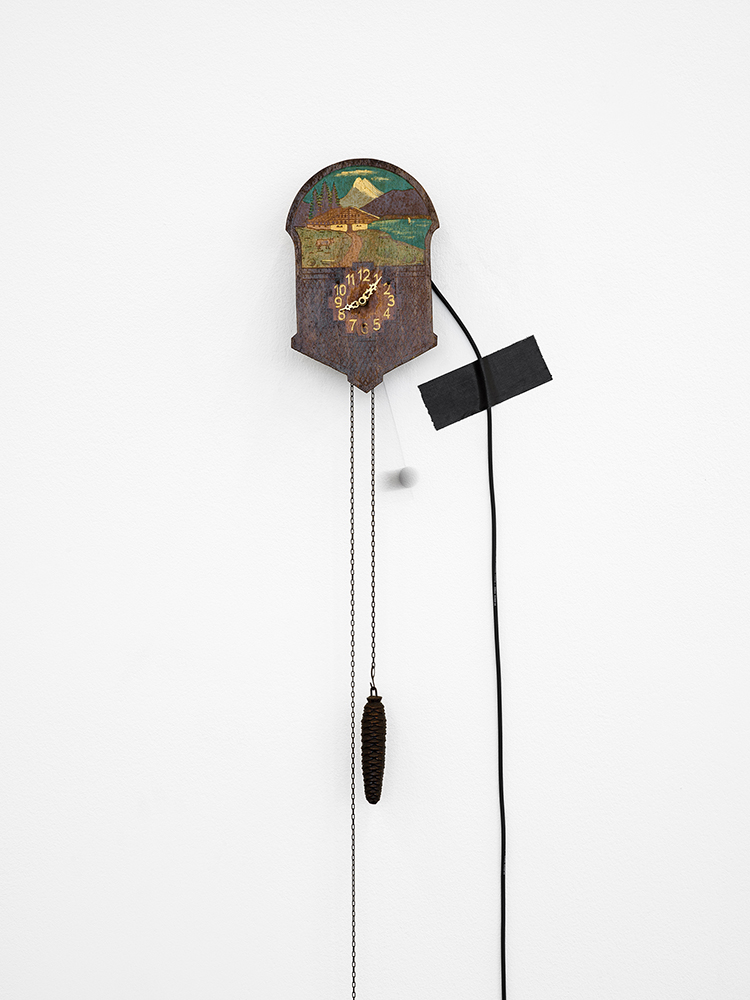
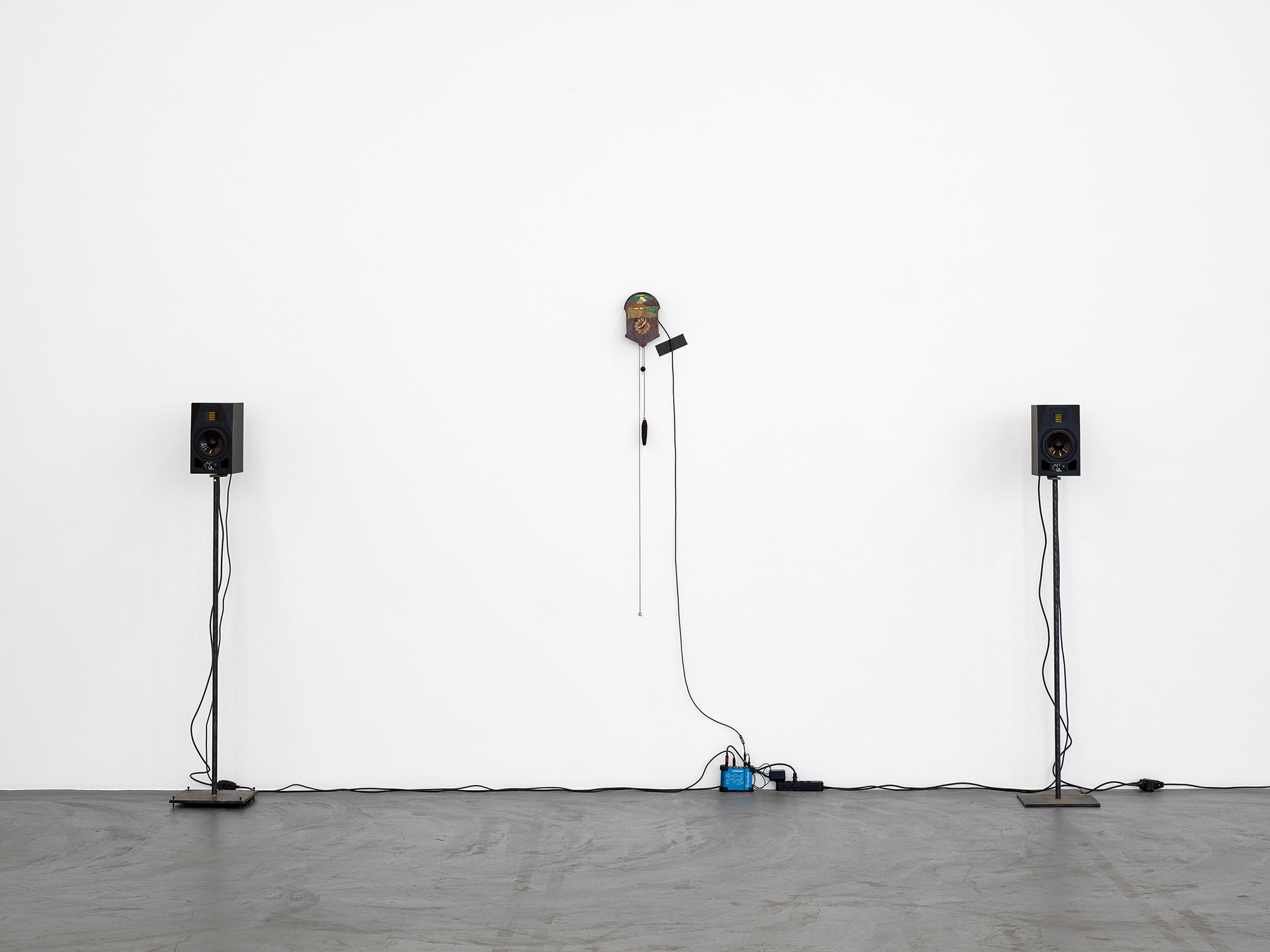
The sound of ticking clocks envelops the space. On the walls, surrounding the textile sky, are wooden cuckoo clocks connected to standing floor speakers. 2x Early Post War Black Forrest Cuckoo Clocks Hand Painted Shields Restoration (2026), dating from the Black Forest region, have been restored and amplified to add a level of auditory distress, but mainly as a nod to traditional craftsmanship. Mass-produced for export between 1947 and 1952, the clocks bring us back to a period when production methods from before World War II briefly recommenced. Heinemann sees intrigue in how “Völkisch” depictions connected to Nazism held the appeal of the masses in a chokehold even after the war.
This deliberate, ambiguous contrast is common to his creative catalogue. Opposing sensibilities and aesthetics have long bred a frictional fascination, particularly when we are confronted by them within the very same space of confinement. We see two works charged with social and ethical conceptions, heightened when contrasted with one another, imagination becoming the common denominator. That’s why ABRACADABRA makes sense: it’s a term unclear in itself yet it always houses this vivid transcendence.
Caspar Heinemann’s infatuation with double meanings is already evident in the exhibition title. Tempting Fate. On one side, we see the abstraction in tempting fate; on the other, we’re preoccupied with the mischievous desire to take things further, sparked by imagination and the plausibility of coming to fruition.
Caspar Heinemann
Tempting Fate
Kunsthalle Zürich
September 26 – January 10, 2027
All images:
Courtesy Caspar Heinemann & Cabinet Gallery, London
Photos by Cedric Mussano