Martine Syms: conceptual entrepreneur. The tagline for Syms’ (b. 1988) website gives some idea of the multiplicity of this Los Angeles-born and based artist’s output. Since she graduated in 2007 with a BFA in Film, Video and New Media from The School of the Art Institute of Chicago, Syms has co-directed the project space and bookstore Golden Age, designed a website for fashion retailer Nasty Gal, devised a branding strategy for the nonprofit organization Summer Forum for Inquiry + Exchange and founded Dominica publishing, an imprint “dedicated to exploring blackness as a topic, reference, and marker, and audience in visual culture.”
In demand and, clearly, prolific, Syms’ rise has been nothing short of meteoric. In the last two years, she has been included in Manifesta 11, Made in L.A.: a, the, though, only at the Hammer Museum, the New Museum’s 2015 Triennial: Surround Audience, has been represented by Bridget Donahue, the much admired New York gallery, and had a solo exhibition at the Institute of Contemporary Arts in London. This year, Syms will have a solo exhibition at the Museum of Modern Art in New York, for which she is producing her first feature length film Incense, Sweaters, and Ice. Not bad going for an artist still shy of 30. But why exactly has Syms achieved such stratospheric success so early on in her career?
One of Syms’ principal concerns is with the ways in which black subjectivity is mediated in popular culture. Her work draws on Alison Landsberg’s theory of ‘prosthetic memory,’ asserting that mass media produces a collective memory which has a lasting and meaningful impact on public consciousness and identity.(1) Syms focuses in particular on the appropriation and depiction of blackness on television, in movies and online. The misconceptions that often arise from these stereotypes help perpetuate the ignorance, fear and plain old racism that proliferate in the ‘real’ world, and have surely contributed to the circumstances in which someone like Donald Trump can become leader of the United States—a man who appears to believe that all black people are on speaking terms with one another.(2)
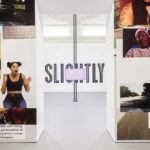
Syms’ interrogation of these cultural norms feels especially pertinent, given the recent awakening to racial inequity in mainstream American media: from Ta-Nehisi Coates’ incendiary articles on reparations for The Atlantic to the prominence of the Black Lives Matter movement on the streets and playing fields of the country. Fact & Trouble at the ICA reflected on the gap between public perceptions of blackness and lived experience. Here Syms created an immersive installation of images of black men, women and children which were culled home movies, online GIFs, advertisements, YouTube videos and surveillance footage. While Syms’ work is timely, she does not respond directly to news events in an overtly political manner, instead pursuing a more subtle and nuanced investigation, one which is as likely to draw on queer theory and the writings of black intellectuals as cartoons and television footage.
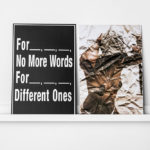
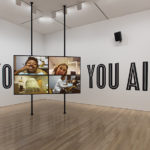
The flexible and responsive way in which Syms works—creating installations and photographs, publishing books, shooting films and presenting lectures—is also particularly suited to this moment. Syms makes online work in the hope that a more diverse audience can access these subjects—not only the rarified demographic of gallery-goers. While some of these early projects have a one-liner, throwaway feel—listing all of the things she’d ever googled for Everything I’ve Ever Wanted To Know or recreating a Geocities website in Black Culture in America—in recent years, Syms’ practice has become ever more sophisticated and ambitious, dense and complex.
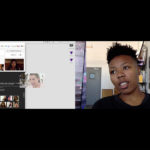
Littered with the tools of broadcast media—light stands, color filters, video stills, screens and cue cards—Syms’ work suggests the potential to capture, frame and represent potential subjects. Videos like She Mad: Laughing Gas employ sophisticated production techniques, co-opting the tropes of the sitcom, including speedy plotting, close-ups and a Brady Bunch-style four-way split-screen. This dizzying, highly entertaining video is positioned as a single episode of a fictive television sitcom called She Mad, in which the central character also goes by the name of Martine Syms. She can be seen making a tragicomic visit to the dentist, undergoing anesthesia before the dentist realizes that the patient’s insurance will not cover the procedure and sends her on her way. Disorienting excerpts from America’s Next Top Model, The Wire and The Fresh Prince of Bel-Air are intercut with footage of Syms, drugged to the hilt, navigating the Los Angeles public transit system before finally making it home and collapsing on her sofa.
She Mad: Laughing Gas not only explores how the circulation of particular images can make beliefs visible (and entrench them), it also generates an alternative by representing people of color in ways previously deemed unconventional. In A Pilot for Nowhere, Syms—in voiceover—makes clear that she wants to broadcast a version of the world that is not currently available onscreen: her L.A., with its subway entrances, clogged freeways and Koreatown bars, its colorful and diverse characters. In the video essay Mundane Afrofuturist Manifesto (2013), Syms proclaims her stance on the production of black identity, explaining that she is interested in changing the discourse of the world around us, not in trying to escape to build an alternative reality. The new representations that she introduces embrace the multiplicity, variability and specificity of individual experience, attempting to disseminate a new value system, one that speaks to a broad audience and has the capacity to change the world.(3) In her work, Syms outlines nothing less than a new framework for future cultural production, something we could all use in these divided times.
1) The British historian Mary Beard touched on this subject in a recent talk about the ways in which women in power are described in mainstream media. One newspaper headline quoted by Beard described the ‘power grab’ that women were making as they were appointed to prominent roles, from Head of BBC to the Bishop of London, as if this were a coordinated invasion, rather than the ascendance of qualified people to appropriate positions. She noted how such references serve to further entrench the idea that ambitious women are unnatural.
2) In a frankly bizarre press conference on February 16, April Ryan, a black journalist, asked Trump whether he would invite the Congressional Black Caucus to his meetings on urban policy, to which he responded “Well, I would. Tell you what, do you want to set up the meeting? Do you want to set up the meeting? Are they friends of yours? Set up a meeting.” This gaffe was a revealing insight into the ways in which the nation’s president views 12.3% of his people.
3) This brings to mind a recent survey of audiences and film casts by Darnell Hunt, Director of the Ralph J. Bunche Center for African American Studies and Professor of Sociology at UCLA. This found that diversity in film and television results in higher ratings and, ultimately, more revenue. The recent critical and commercial success of shows like Atlanta and Insecure, or the Oscar-winning sensation Moonlight, bears this out.
MARTINE SYMS
by Ciara Moloney
CURA. 25
https://curamagazine.com/wp-content/uploads/2018/01/28_SYMS_Notes-On-Gesture-copia.png,https://curamagazine.com/wp-content/uploads/2018/01/3_SYMS_A-Pilot-For-A-Show-About-Nowhere_2015.jpg,https://curamagazine.com/wp-content/uploads/2018/01/20_SYMS_The-Queens-English.jpg,https://curamagazine.com/wp-content/uploads/2018/01/34_SYMS_Fact-and-Trouble.jpg,https://curamagazine.com/wp-content/uploads/2018/01/36_SYMS_MiLA.jpg
Listening to a reading by Maggie Nelson at the Los Angeles Public Library recently jogged my memory to recall my (pubescent) longing for my own hands to feel like the hands of another—to be simultaneously both myself and someone else. In the text Nelson recollects her own coming of age, her wish to grind, and her love for Prince and his epic 1984 song Darling Nikki in the haze circle of her father’s death.
I knew a girl named Nikki I guess you could say she was a sex fiend, / I met her in a hotel lobby masturbating with a magazine, / She said how’d you like to waste some time and I could not resist when I saw little Nikki grind. (…)
Prince, Darling Nikki, 1984
Nelson describes Prince’s signature move when performing the song, making his hand look like the hand of another, slowly and seductively creeping down the side of his face—a move that electrified a generation and that would be imitated in front of bedroom mirrors and on dance floors for decades to come. Nelson sees the hand as Nikki’s hand and writes: “It’s Nikki’s hand, it’s one’s own self-pleasuring hand, it’s creepy, one’s own body made other. It’s self-seduction, a magic trick. It’s the masturbatory dream, that one’s hand could feel the way the hand of another feels on you.”1 Making oneself a stranger is not merely a tactic to get rid of oneself, much more it marks the desire for a relationship with the aspects of one’s identity that lie outside of our immediate reach. Curiously, it appears that sometimes we may well need another to enter into this relationship, to reach the other within us.
In a recent body of work the artist Eliza Douglas produced paintings of hands and feet in various engagements and styles and with varying accoutrements. Douglas, an American artist born in 1984, who is currently studying at the Städelschule in Frankfurt, only recently came to painting. After stints as a musician and social worker in New York, she left the city in a state of crisis, to make art. The anxieties about the audacity of being/becoming an artist were overwhelming and in an interview with the poet Eileen Myles, Douglas writes: “Since I was taking this plunge, which felt suicidal, I figured I might as well go all the way and be a painter. Along with its weighty history, painting is particularly polarizing. Choosing painting was the ultimate way of exposing myself. It felt like a region in which there would be no buffer, nothing to hide behind.”2 And yet it appears that there was the need for an interlocutor to create the conversation Douglas wanted to have with herself and her art. Resultantly she introduced other painters into her process and asked them to reproduce her hands and later feet in a naturalistic style and in erratic constellations on large canvases that left a gaping white space where the connecting tissue of the missing body would have been. Douglas then paints in varying styles and techniques the physical connections, often through harsh gestural brush strokes and marks reducing whatever may be connecting the extremities to gooey stick figures without heads or torsos.
The carefully crafted reproductions of the artist’s extremities are reworked by her own (hand), allowing for a curious self-portrait, a doubling of the subject and its maker in both style and content. At times the hands present in the paintings multiply suggestive of several people or multi-armed creatures. In others paintings the connecting brushwork reaches outside of the canvas, almost as if Douglas wanted to reinstate the empty canvas as a stand in for her missing body. Douglas also invites another form of reading that succeeds the gestural expression through the selective inclusion of accessories and pieces of clothing. There is a dimension of personal style visible in the paintings that stand out in the large blank space around them. Sport socks, denim shirts and white Dr. Martens lace-up boots speak to a fashion that is datable and rooted in a sensibility for what is current and that enhances the attitude that is evident in the gestures depicted.
The gesture to give away a part of one’s process and then to re-engage with the estranged severed bits is reminiscent of Prince’s stranger hand. Douglas’ paintings are made strange through the outsourced depiction of her limbs. The painted line crumbles once returned to Douglas’ hand, the detailed depictions fray, patterns become patches, skin and fabric are stretched into strokes. The quickly drawn connecting lines, dripping strokes, and patchy Impressionist brushwork speak of a dissolution that is held together by expression and speed. Myles described the works as letter-like and sporty and I concur that there is a communicative athleticism to them. The lines are decisive in their negotiation of the empty canvas, suggestive of an emphatic signalling and dynamic body language. “Who runs may read,” said Brion Gysin, and maybe it is the poetic dynamic that comes with fragmentation and speed that Douglas is after, the speed of the mechanical reproduction versus the handmade, which favors acceleration over intactness. Her interest in poetry becomes further apparent in the choice of her titles, titles such as The Cool Light of Dawn, I Really Mean It and Sparks Upon Your Face all stem from poems by the American poet Dorothea Lasky.
The channeling of oneself through another is a common trope, especially in poetry. Poets like Jack Spicer, Sylvia Plath and, above all, James Merrill employed strategies such as the use of chance, found language and Ouija boards to receive signals from beyond themselves and channel those into their work. Yet in addition to the reach outside of herself Douglas’ use of the hand as a gestural device also suggests an interest in the communicative potential in painting outside of the written word. I am reminded of the Italian artist Ketty La Rocca and her use of hands as part of a search for a language that avoided the clichés-ridden and male-dominated power structures that traditional letter-based language transports. La Rocca saw language as something that was both alien and hostile to women, using her art to form alternatives that would allow for a more authentic form of communication. Hands and gestures appear removed from the body in front of a black background and invite a reading of the patterns and symbols in the work with the use of one’s internal tools. La Rocca’s work suggests an internal set of signals that have the potential to communicate through the use of hands. She relies on a form of communication based on physical expression, the attempt to make sense of the body and its raw communicative potential, an aspiration that is also appears to be at play in Douglas’ gestural parsing.
So when Nelson slithers on her mirror in imitation of Prince she is grasping for the same conversational potential between what we know about ourselves and the unknown within us that appears to be at the center of Douglas’s painting—one’s hand as the other.
1. https://www.lapl.org/collections-resources/e-media/podcasts/aloud/eileen-myles-and-maggie-nelson-why-we-write.
2. E. Douglas in E. Myles, “Eliza Douglas. A History of Longing,” Mousse Magazine, #55, October-November 2016
ELIZA DOUGLAS
ONE’S HAND AS THE OTHER
by Anna Gritz
CURA.25
All rights reserved All images Courtesy: Air de Paris, Paris
https://curamagazine.com/wp-content/uploads/2018/01/Eliza_Douglas-Daysintonothing.jpg,https://curamagazine.com/wp-content/uploads/2018/01/4_ed16_IamtheHorseyouShouldBetOnII.jpg,https://curamagazine.com/wp-content/uploads/2018/01/9_ed17_follow-me.jpg,https://curamagazine.com/wp-content/uploads/2018/01/10_ed17_glittering-with-decay.jpg,https://curamagazine.com/wp-content/uploads/2018/01/12_ed17_ThePotentialofBeing.jpg,https://curamagazine.com/wp-content/uploads/2018/01/Eliza_Douglas-FruitJuice.jpg,https://curamagazine.com/wp-content/uploads/2018/01/images_file_67733-844×600.jpg
Visitors walking on the High Line in these summer months find a somewhat unusual object that stops their walk in the park: it is a large aquarium, about 3 meters long, sharp on the horizon, overlapping the view of the Hudson River in one of the most scenic spots of the famous promenade at the level of the 14th Street. This is the work by Max Hooper Schneider, Section of Intertidal Landscape (Hair Metastasis), a new sculpture commissioned by High Line Art, the High Line’s public art program.
Upon carefully observing this strange ecosystem, the visitor realizes that, instead of containing the usual tropical fish found in fish tanks displayed in thousands of restaurants and waiting rooms in dentist’s offices, this diorama is full of strange floating shapes that interweave and sway like algae or exotic aquatic plants. Hooper Schneider’s algae, however, have a glossy, silky quality and twirl in a spiral like the curls of a complex rococo hairstyle: in fact, these mysterious aquatic creatures are sculptures made with synthetic and human wigs and hair, which the artist has been collecting for years in the neighborhood where he has his studio in Los Angeles, just a few steps away from dozens of factories and laboratories where wigs and hair extensions are made.
The bottom of the aquarium is covered in what look like geological formations from another era: the ruins of a future apocalypse that has produced a new post-human age—all in all, an era not too different from ours. Encrusted in crystals and minerals on the bottom of the aquarium, there are several overlapping layers of scrap and metal wreckages, including old used batteries, rusty razor blades, the tips of a fork, scissors, scalpels and other medical instruments on which colored resins and other artificial concretions have been laid. The game of lights and colors recall a stained glass window of a cathedral, but here the marquetry of shapes appears miniaturized, like the pulsing cells on a microscope slide. Or, more prosaically, this buildup of items recalls the collection of some patient archaeologist-wannabe bricoleur.
This description perfectly fits Hooper Schneider himself too—one of the most interesting artists to emerge from the Los Angeles scene in recent years.
Looking like Michael Jay Fox in Back to the Future—ripped leather jacket, tight jeans, basketball sneakers and all—Hooper Schneider plays with the stereotypes of the crazy scientist and the eternal amateurish sci-fi fan, creating works and assemblages in which there are mixed references to Land Art and to supermarkets displays, overlaid with memories of a restless metalhead teenager and the jargon of biology and landscape architecture scholars, two of the disciplines in which Hooper Schneider graduated at Harvard.
This unlikely mix—which recalls the sculptures’ very concentration of heterogeneous materials—casts its roots in a very American tradition, in which the strict geometry of minimalist sculpture opens up to include much more sordid materials, from Robert Smithson’s non-sites to Jeff Koons’s Equilibrium Tank showcases, in which saline solutions keep basketballs in suspension. Paul Thek’s so-called “relics” are not too far off either—small showcases where the American artist placed his wax sculptures which mimicked decomposing flesh. Even Joseph Cornell’s miniature theatres don’t appear too far away from Hooper Schneider’s chamber landscapes, in which Cornell’s Victorian memories are replaced with memories from some sort of night of the living dead.
Like Romero’s famous film, Hooper Schneider’s sculptures evoke the imminent end of the society of affluence, and it is definitely not by chance that among the artist’s unrealized projects there is a gigantic environmental intervention aimed at transforming a shopping mall into a ruin in which flora and fauna slowly reclaim the spaces that man had tried to seize from the control of nature.
It is exactly due to these end-of-the-world visions that the observation of Hooper Schneider’s sculpture on the High Line offers other interesting keys to interpretation. Not only is High Line itself an industrial ruin—a finding of the first technological revolution, that of the steam train and engine, transformed into a perfect public space for the latest revolution, that of immaterial and digital communication—but it is also a unique observation point from which to contemplate the transformations of the city of New York, a model of urban and anthropological mutations worthy of Fritz Lang’s Metropolis. In this scenario, Hooper Schneider’s sculpture evokes at once biological and industrial processes, correspondences and differences between nature and culture, similarities between artificial concretions and geological sedimentation.
One of the most frequent comments from viewers of Hooper Schneider’s sculpture on the High Line is that the aquarium is somehow connected with the waters of the Hudson River and functions as either a cleaning system or a proof of the level of pollution of the waterway that separates New York City from New Jersey. In either case, Hooper Schneider’s work seems to connect immediately with the discussions—heated more than ever in the Trump era—on the state of global contamination and overheating. This is perhaps one of the most unusual aspects of Hooper Schneider’s work: its ability to connect with current events and even topics usually handled in politics, activating a personal reaction from the viewer, even when involving objects or situations that are not immediately understandable. But this, after all, is the typical function of science fiction literature and utopian thinking, i.e. to create extreme situations through which art may teach us to live with tragedy and the impossible.
CREDITS
Section of Intertidal Landscape (Hair Metastasis), 2017
Part of Mutations, a High Line Commission (April 2017-March 2018)
Photo: Timothy Schenck Courtesy: Friends of the High Line
Portrait by Micheal Underwood
MAX HOOPER SCHNEIDER
Section of Intertidal Landscape (Hair Metastasis)
by Cecilia Alemani
CURA. #26
https://curamagazine.com/wp-content/uploads/2017/11/Schenck-High-Line-Art-Mutations-2017_07_20-DSC_5753.jpg,https://curamagazine.com/wp-content/uploads/2017/11/MHS-PO_COVER.jpg,https://curamagazine.com/wp-content/uploads/2017/11/Schenck-High-Line-Art-Mutations-2017_07_20-DSC_5858.jpg,https://curamagazine.com/wp-content/uploads/2017/11/Schenck-High-Line-Art-Mutations-2017_07_20-DSC_5865.jpg,https://curamagazine.com/wp-content/uploads/2017/11/Schenck-High-Line-Art-Mutations-2017_07_20-DSC_6262.jpg,https://curamagazine.com/wp-content/uploads/2017/11/Schenck-High-Line-Art-Mutations-2017_07_20-DSC_6291.jpg
Margot Norton: The first time I encountered your work was with your Wikipedia interventions such as Public Access (2010-2011), where you drove up Highway 1 on California’s coastline, photographed yourself on the beaches looking out to the sea, and uploaded the images onto each beaches’ Wikipedia page. Mood Disorder (2012-ongoing) is another related project where you photographed yourself on a beach in New York City with your head in your hands wearing all black and posted this image to the Wikipedia page for “Mood Disorder.” Since nothing posted to Wikipedia is copyrighted, these images could, and did circulate freely and legally online I remember thinking: what exactly is going on here? Did this artist just break Wikipedia? When does a photograph become “stock”? Divorced from its author? From its location? Is it when it is cropped? Photoshopped perhaps? Or given new titles? The Mood Disorder project is still ongoing and I am curious to hear how your experience of it has changed over time and what happened along the way that you didn’t expect? Also, can the project be fully-tracked? Or are there parts of it that you can’t trace, dissolved into the cyber abyss?
David Horvitz: I want to tell you a funny story: I was looking at a website that discussed different beaches you could find sea glass on. These were to make the glass works that were shown in my New Museum show, where I melted found sea glass I collected walking along the coast, and blown them into vessel shapes. I was reading about one of the beaches online when something caught my attention: there was a photograph of me standing on a beach. The author of the webpage sourced Wikipedia for the image and I encountered it just by coincidence. Strangely enough, I found it while researching for a new work. It was like this trace or shadow of an old work resurfacing into a new work. To answer your question, I didn’t expect anything. When I discuss this work I always have to tell people that I didn’t make this image circulate—it circulated by itself. Obviously, I set up the situation with the possibility that something could happen. I like to imagine it as a kind of seed that I cast out and grew, but it could easily have not grown. It could have been blown in the wind somewhere and grown somewhere that I was not aware of. The image has since been removed from the “Mood Disorder” Wiki page because I ended up getting banned from Wikipedia because of these works. I didn’t expect this at all! Yet the image still circulates, somewhere in the back channels of the internet. I still find new pages that use the image but it can’t fully be tracked. I find it by doing a simple reverse image search but I’m sure that not every website that uses the image shows up, especially if it was altered. Also, if anyone printed the image in a publication or something, there is no way I could find it through an online search. It would be crazy to one day encounter the image printed somewhere.
(MN) I love how you describe your digital images as seeds that can be carried long distances by the wind (or in this case, the internet). This is something that many of your works have in common—a generosity of sorts, where you allow the work to go viral, destabilizing the notion of the unique art object (or artist!) and finding inspiration in the possibilities of endless reproducibility. In this sense, your works have a lot in common with those by Félix González-Torres, such as his take-away stacks of sheets or piles of endlessly replenished candies—or even his “Untitled” (Perfect Lovers) (1991) —a pair of ticking clocks that will ultimately fall out of sync when their batteries expire. For your piece Let us keep our own noon (2013), for example, which was shown at the New Museum and most recently in Reykjavík, Iceland, for the 10th anniversary of the Sequences Art Festival, which we are working on together, you are in effect disseminating and dissolving the act of keeping time. The piece consists of forty-seven handbells which are activated by performers who, at local noon (when the sun is positioned directly above them), collectively ring the bells and disperse into the surrounding streets until each person can no longer hear another bell aside from his or her own. With this work, you empower each performer with the literal sound of time. What is it that interests you about this type of collaboration with the public and removal of yourself from your own work?
(DH) I’ve wanted to make a photo flip book of Perfect Lovers. Maybe a photograph every minute for 24 hours as the clocks fall in and out of sync with each other. I think all artworks collaborate with the audience, and some of mine do this more literally. For example, there are encounters with works that you carry with you. I didn’t grow up looking at art, but my mother would occasionally take me to a museum. I must have been in high school, and my mother took me to MOCA in Los Angeles. I have this blurry memory of walking through the collections, not really thinking about anything, and encountering a pile of candy wrapped in silver paper. I probably didn’t even read the wall label and just kept walking, but this memory stuck with me, and I’ve been carrying it around with me. It wasn’t until years later I realized what this work was. I feel that carrying this memory of an encounter with an artwork is the same as carrying out a piece of candy from one of González-Torres’ works. The bells, besides being a sculptural installation or performative artwork, is also a sound piece. I get a lot of inspiration from sound and artists like Pauline Oliveros and John Cage. The bells are about ringing the time and developing your own rhythms as you fall out of sync with each other, but it is also a deep listening exercise. In this piece, it is important for people to hold the bells, as if they were carrying time. And as with Mood Disorder, I kind of let things go. With the bells there is more of a structure, but still things fall apart and something happens that I can’t really control. To me, it is more interesting when something happens that you don’t expect. I really despise keeping a schedule because for me that ruins a day. You already define what you are doing at a certain time and place, and that day is no longer open for something unexpected to happen. A few years ago I did two connected shows at Jan Mot in Brussels and Dawid Radziszewski in Warsaw. The shows opened the day my friend Jenny gave birth to her daughter, so no one knew exactly when the opening would be. I wanted it to be unknown, to complicate the gallery’s calendrical system with the biological (and lunar?) rhythms of my friend’s body. I’ve always been amused when Brooklyn Botanical Gardens would have their Sakura festival and none of the cherry trees would be in bloom yet, or the peak blooms would be over. The gardens would have to schedule it a year in advance for various reasons, but a tree will bloom when it wants to bloom. In Japan, the moments the trees blossom is the moment you celebrate Sakura. You are on the tree’s schedule—it doesn’t follow your Google calendar.
(MN) Your projects reveal the abstract quality of standardized metrics such as Google calendars and clocks and investigate alternative, perhaps more “real” methods for measuring and experiencing time. This idea is central to the theme for the Sequences festival, Elastic Hours, that I am curating in Iceland this October, and which features your work. For the festival, you present your sculptures of hourglasses. Instead of being used in their traditional capacity, they are filled with water and used as instruments in a collaboration with Icelandic musician and composer Jófríður Ákadóttir. In this work, time is experienced visually, aurally and metaphorically perhaps. For you, how does this piece function in relation to alternative systems or rhythms of time and communication?
(DH) I made molds from a collection of hourglasses I found online and the glass is blown into the same shape of the original hourglasses, but the top stays open. In the performance, the lips of the glasses vibrate when someone’s fingertips press along the rim, like how you can make a wine glass sing. I like this idea of the vessel as a container of standard duration, and then taking this defined, quantified measurement—the hour, the minute, whatever it is—and imbuing it with subjectivity and experience, and giving it a sound. Maybe it is a sound of time, of a minute, or an hour. There is also a conceptual score/text work that goes with the piece, which is a list of meditations on time. These are seemingly impossible ideas, such as trying to imagine all the time that will pass after your death (or before your birth), or imagining your heartbeat as a second—thinking beyond quantified or standardized time. The idea is that the performers might think about these ideas as they perform the sound piece or the audience is thinking about them as they listen. It is a meditation on time. You might encounter the work and have no idea that the glass pieces are made from hourglass molds, or you might miss this text, and just sit and listen to the sounds.
(MN) This meditation on time reminds me of your piece I will think about you for one minute, where someone may purchase your time. The posters published by Yvon Lambert bookstore, which we are going to be wheatpasted all over Reykjavík, are another example of works that propose alternative clocks in sync with natural rhythms, such as “a clock that is wound by the wind.” When we were discussing what works you would show at the festival, I remember that you had so many ideas. One idea that we didn’t end up doing, which I love, is that you wanted to create a bootleg minute where you would offer passers-by an alternative minute that they could live on in the same way that people may sell bootleg watches on the street. You actually seem to have an archive of unrealized ideas—and I am curious to know, if you could pick one idea that you have always wanted to realize, but haven’t had the chance to yet, what idea would it be?
(DH) I am doing the bootleg minute in Milan at Pirelli HangarBicocca in November! I once had the idea to do a box of ideas, and whenever I needed an idea for a show, I would go to the box. Maybe I need to put this idea in the box! I like ideas that are somewhat incomplete, that are like seeds and once they come to fruition something unexpected happens. In Los Angeles, out in the Pacific Ocean, there are old trolley cars. They were dumped out there when LA started to become a car city. It is like a secret past, buried in the depth of memory. If you look around, you can only see the present, and you can’t even imagine this past. By now the trains are probably rubble, but I’ve always wanted to bring one out.
(MN) It would be amazing. There are old subway cars in the ocean surrounding Manhattan that have actually become underwater reefs for crustaceans and fish! It seems that you spend a lot of time working at the beach these days, alongside the ocean. When I was at your studio the other day you showed me a score that you created for a choir to perform the sounds of the ocean. Can you tell me a bit more about this work? Do you think that the human voice will be able to mimic these sounds?
(DH) I live in California, and I think the beach might be my studio. It is a place to clear your head, to experience distance (looking out into the horizon), and aligning yourself to the rhythms of nature (the crashing of waves, the shifting of the tides, sunrises and sunsets). I was asked to be in a spoken word event at TBA21 in Vienna that was themed around the ocean. I’ve had this idea for some time—to speak the ocean sounds—and thought that Vienna would be a good place to do it, especially since it is not near the sea. I went to a specific beach (actually the beach below Trump’s golf course in Palos Verdes) with my computer and tried to type out the sounds of the ocean with the English alphabet. I made 50 separate scores, which are printed as large posters, and look like giant concrete or dada poems. To really get the effect of the ocean you need to make crazy sounds with your mouth and throat—sounds that you can’t really represent with alphabet characters. Part of the idea comes out of something I read in a Rachel Carson book. She describes the salinity levels in our blood as the same of sea water, which helps build a case for theories that life came from the sea. Imagine early life forms with porous skin or cell walls, where the sea’s water could flow in and out of these tiny bodies. Then, when some life forms migrated to land, skin developed to hold the fluids in, which was basically sea water, so they carried the sea inside them wherever they went. In a sense, these exercises are listening and vocal meditations, but they are also exercises in imagining or re-imagining that maybe we are the sea.
(MN) I like how you mention that you observed the sounds of the sea from a beach next to Trump’s golf course—it’s a nice reminder that our current moment is just a small blip when considering the history of the ocean. Not to belittle the severity of our current situation, but it is refreshing to think beyond our daily preoccupations. In cities like New York and Los Angeles, I think it’s easy to forget about the greater scheme of things such as the fact that we are on a slowly rotating planet. Yet somehow, amidst it all, you manage to encourage this type of thinking with your work. I think of your neon sign that says “Whenever I take a shower I always wonder when the water was a cloud,” or the tote bag that you made that reads “Nobody owns the beach.” You even created an app that charts the physical distance between yourself and the nearest user of the same app. While it exists in the digital world, the app reminds users of the fact that we exist on a geographic axis. Do you find urgency in reminding people of the physical world in an age so marked by virtual connectedness?
(DH) It’s funny, I just got back from watching the solar eclipse! It was nice standing in the middle of the city and connecting to the cosmos. I took Ela Melanie, my daughter with me. When I dropped her off at her school after they had a sign posted to reassure parents not to worry because they were going to keep the kids inside with the blinds closed during the eclipse. It seems like a punishment! Or a fear of the universe! Virtual connectedness is a good thing. You can communicate with people across the planet almost instantaneously, but it also displaces you from where you are. You lose sense of the place you are standing. A lot of my work is about reminding yourself that you are somewhere unique—in a spatial sense and a temporal sense. Imagine what it was like before time zones, when places had their own times. What time is it? Where exactly are we right now?
DAVID HORVITZ (b. 1981, Los Angeles, CA, USA) currently lives and works in Los Angeles. Solo exhibitions include: Galerie Allen, Paris; Chert, Berlin; Yvon Lambert Librairie, Paris; New Museum, New York; Kunsthal Charlottenborg, Copenhagen. Group exhibitions include Sequences, Reykjavík; MoMA, New York; IMMA, Dublin; LIAF, Lofoten. He has done projects with TBA21 (Vienna), Frieze (New York), Triple Canopy (New York), Recess (New York), LACMA (Los Angeles), The Getty (Los Angeles), Fiorucci Trust (Stromboli), Rhizome (New York). He publishes many artist books.
MARGOT NORTON is Curator at the New Museum, New York. With Jamillah James, she is curating the 2021 New Museum Triennial, and recently curated exhibitions with Sarah Lucas, Mika Rottenberg, Diedrick Brackens, and Carmen Argote at the New Museum; the group exhibition The Same River Twice at the Benaki Museum in Athens, Greece; and the Georgian Pavilion with artist Anna K.E. at the 2019 Venice Biennale.
CREDITS VIDEO
MoMA – The Museum of Modern Art
David Horvitz describes “Mood Disorder,” an artist book generated out of his experiment to see how a single image propagates across the Internet. The project began when he uploaded an image of himself holding his head in his hands to the Wikipedia page on mood disorders—and resulted in Wikipedia banning him as an editor.
DAVID HORVITZ
IN CONVERSATION WITH
MARGOT NORTON
CURA. 26
https://curamagazine.com/wp-content/uploads/2017/11/1.jpg,https://curamagazine.com/wp-content/uploads/2017/11/31.0.jpg,https://curamagazine.com/wp-content/uploads/2017/11/Bodega_head.jpg,https://curamagazine.com/wp-content/uploads/2017/11/Mooddisorder.jpg,https://curamagazine.com/wp-content/uploads/2017/11/New-Museum_David-Horvitz_NYC_Benoit-Pailley_0851.jpg,https://curamagazine.com/wp-content/uploads/2017/11/Pelicanstatebeach.JPG.jpg,https://curamagazine.com/wp-content/uploads/2017/11/22.0.jpg