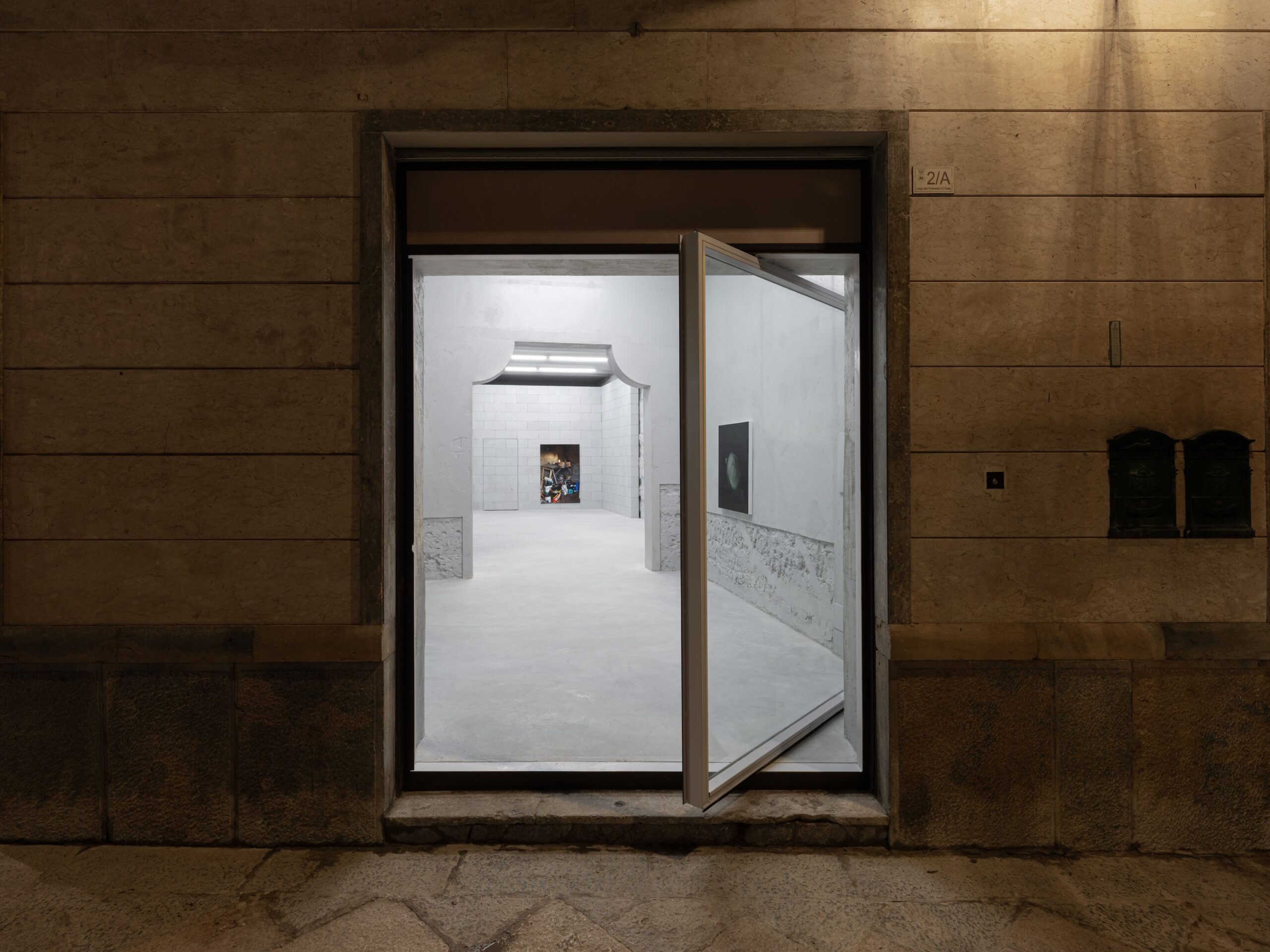
Dusty Die
M Leuven, Leuven
October 10, 2025 – February 22, 2026
Review by Linnéa Ruiz Mutikainen
Dusty Die is Polish-German visual artist Alicja Kwade’s (b. 1979, Katowice) recently unveiled solo exhibition, presented by Belgian art museum M Leuven.
In Kwade’s art, installations, photographs, sculptures and videos constitute a platform of scientific and philosophical dismantling, primarily commenting on awareness and popular beliefs on societal, cultural and literary ideas. Perception and time are given material properties – not to provide any explanation, but to call them into question.
The exhibition Dusty Die exudes matter and fate, and as the material reads, “it is precisely in not knowing that wonder and imagination take root.” Meanings shift from one room to the next, a delicate perception play unfolds: weight and space juxtapose, introducing surreal environments that appear senseless. Kwade finds that perplexing in-between state: from the earthly tactile to universally unpredictable. Each piece becomes a visual code, allowing viewers access to the undiscovered, the other side of our measurable structures.
Its title, Dusty Die, is an eloquent wordplay. Dust refers to not only the microscopic matter, but the testament of life, as it creates stains of living. Die connects to dice, a cult symbol of chance and destiny. These elements serve as both navigation modes and key mechanisms, aiming to decode the uncertain conditions of society today.
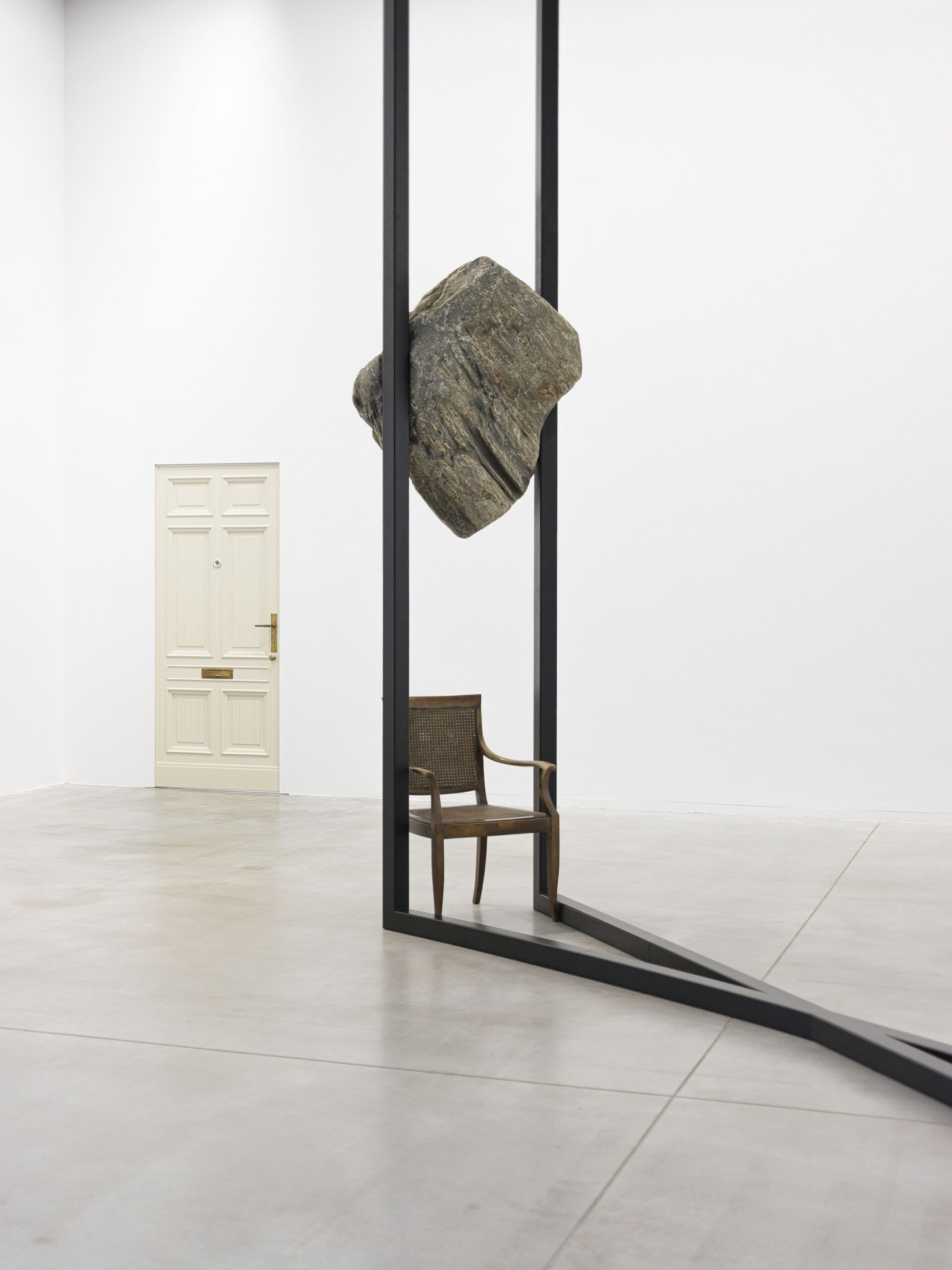
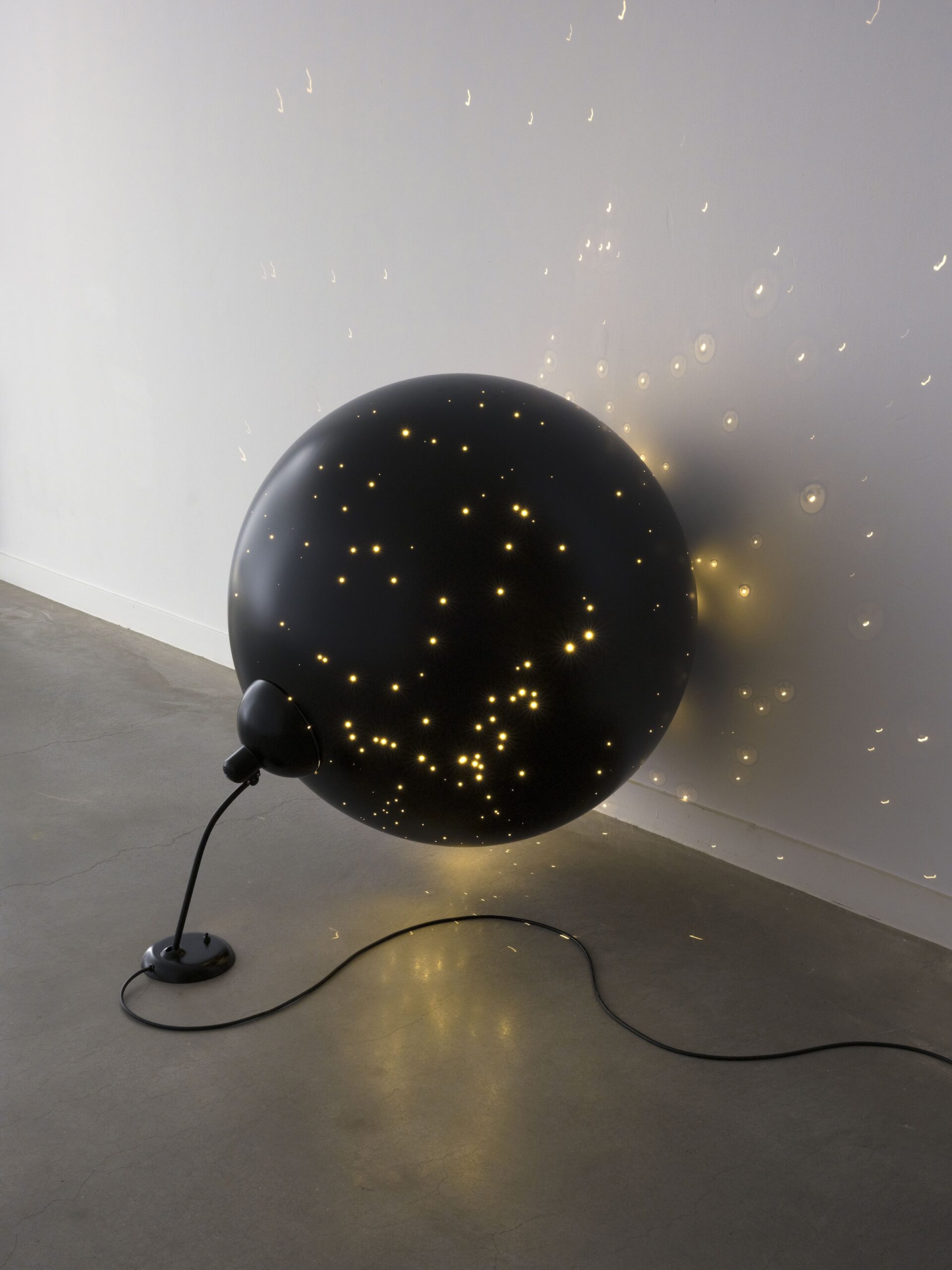
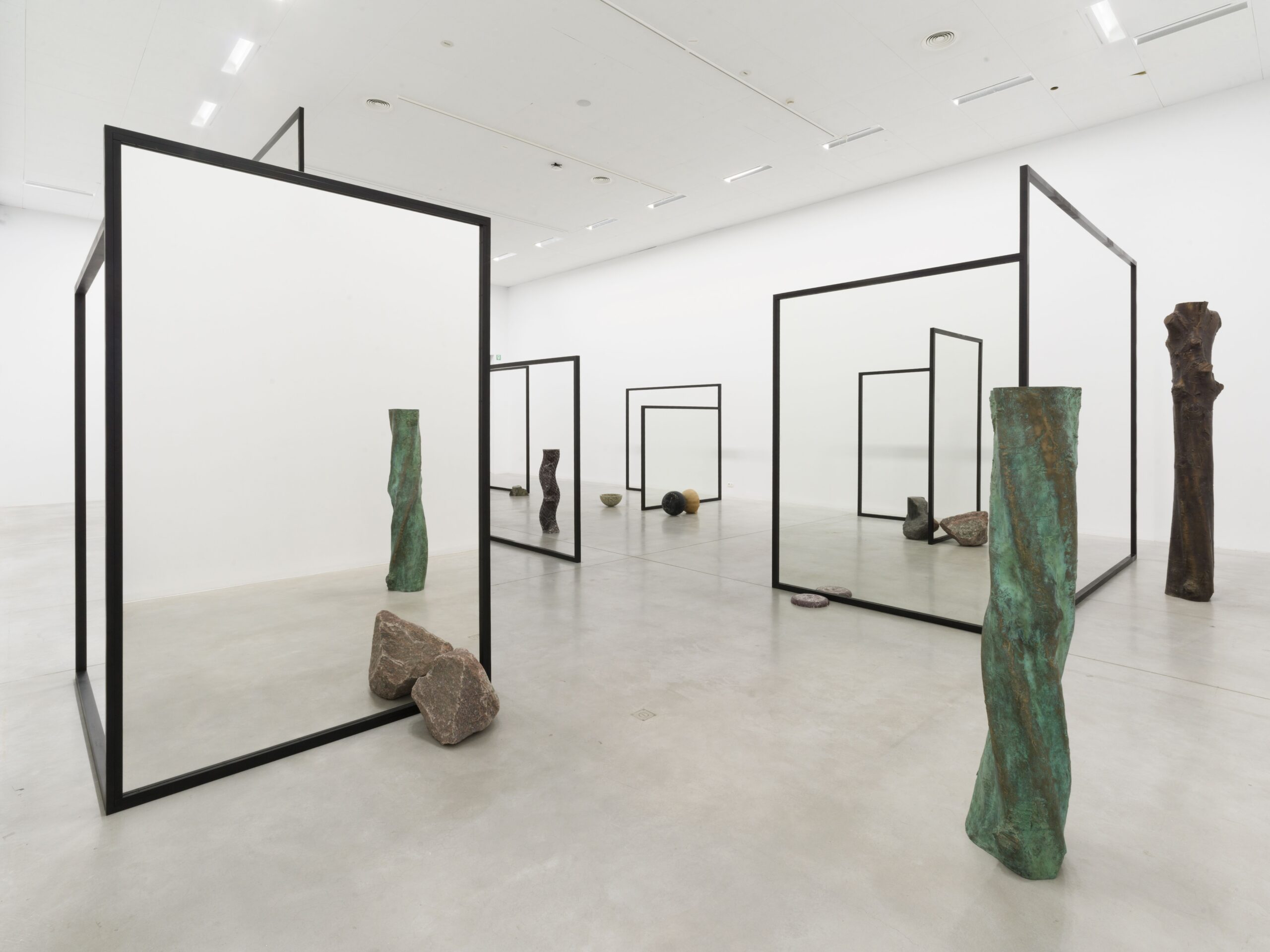

In Ewig den Zufall betrachend (2014) plays in the first room. Translated into Forever Contemplating Chance, the video installation shows giant-size dice in motion, capturing a throw that remains forever undecided – mirroring the infinite possibilities and pursuit of time. In the second room, WeltenLinie (2019/2025), a massive installation of powder coated steel, mirror, bronze, patinated bronze, stone and petrified wood orchestrates disorientation: Kwade’s shapes and surfaces converge, creating a conceptual journey that blends past and present. It almost becomes an optical game doubling as a question: What is the boundary between natural product and cultural object? It sparks an endless set of questions: Can the world ever simply be, is there just one way to perceive it, and if so, which way is correct?
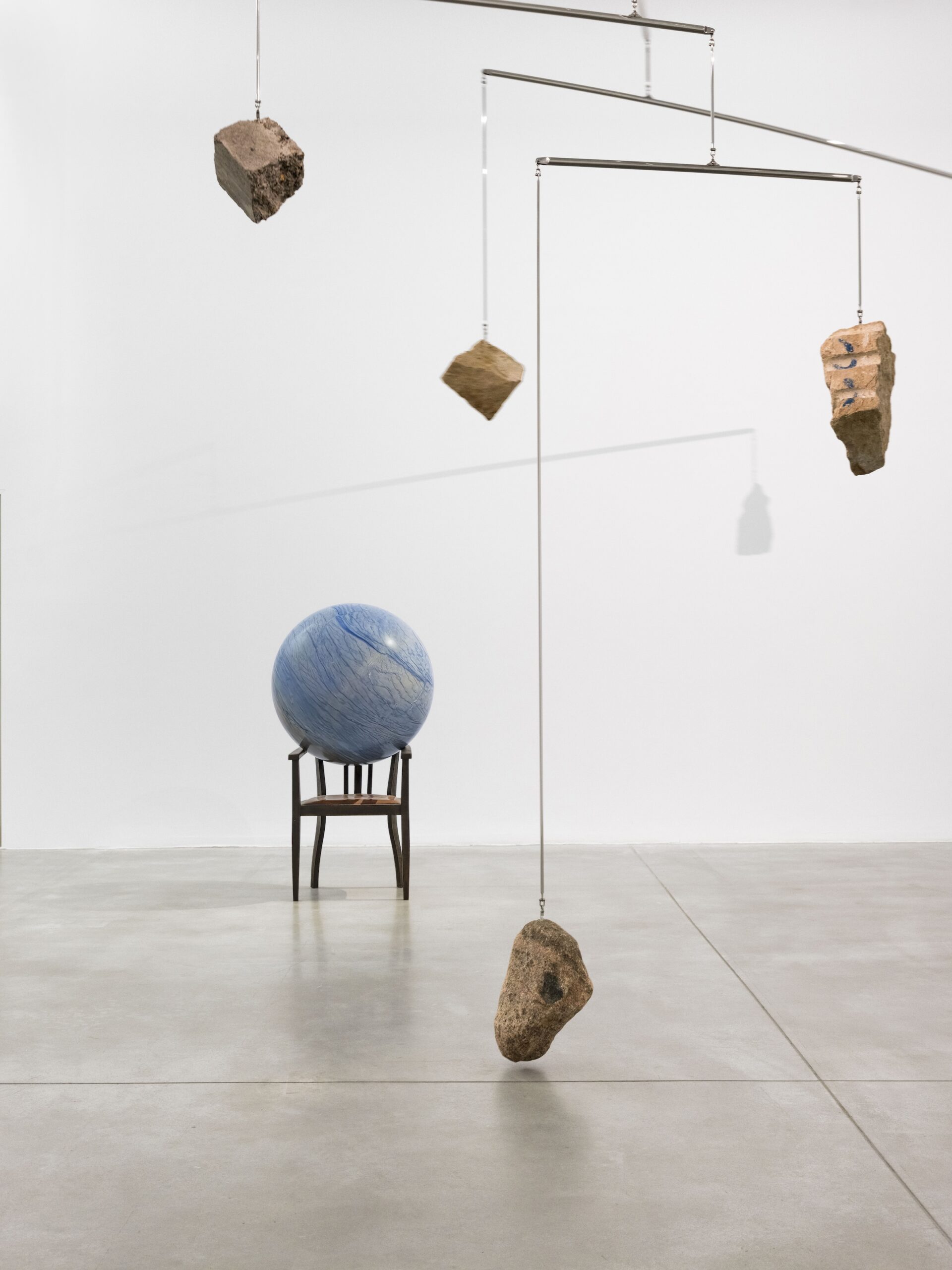
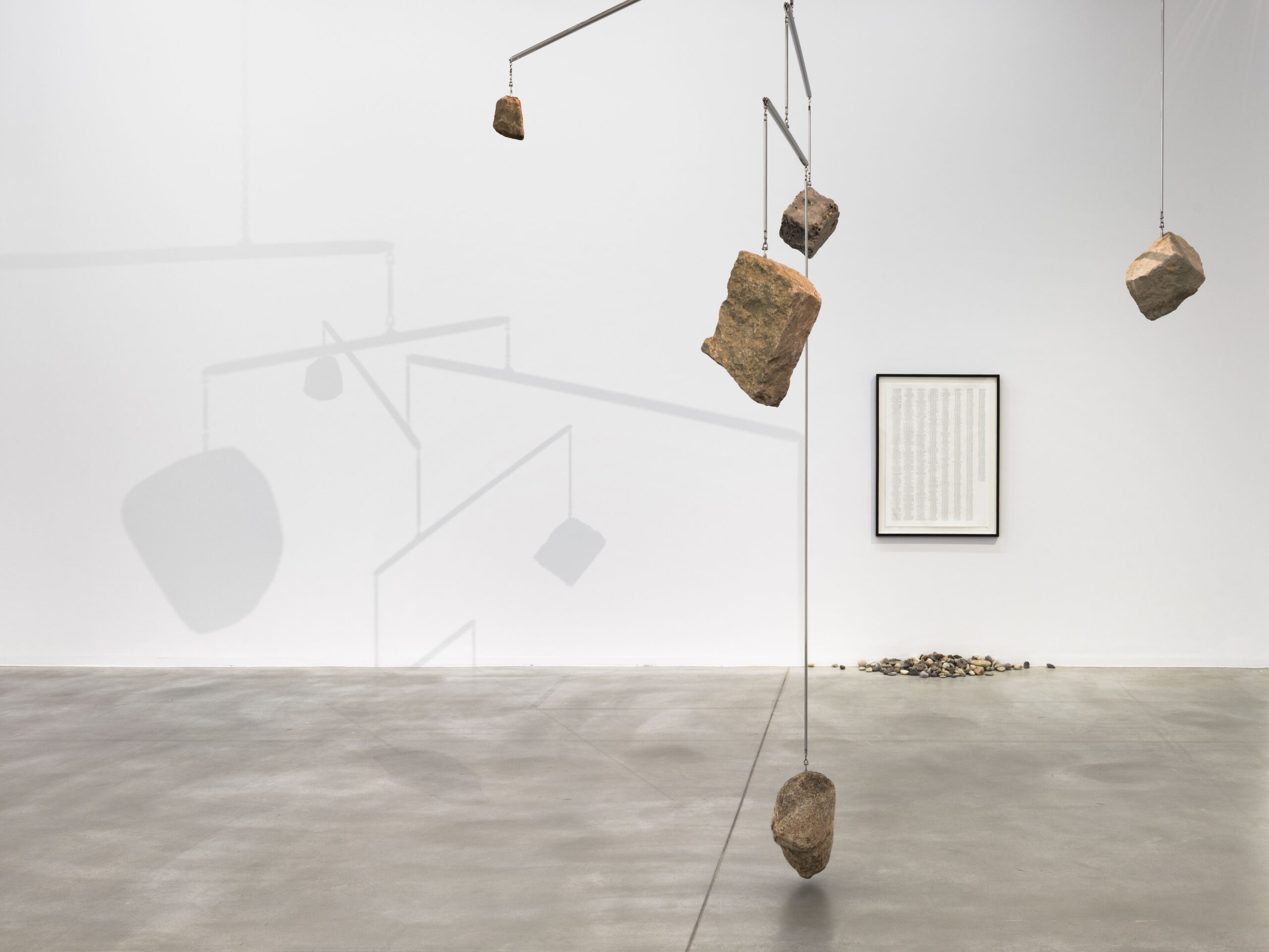
Superheavy Skies (2025) makes the substantial seem insubstantial: a mirror polished mobile hangs from the ceiling, with boulder-like chunks in varying sizes secured to the slender limbs of the stainless steel construction. Everything is in balance – the rocks appear heavy, yet they hover so carelessly through the space in calibrated harmony.
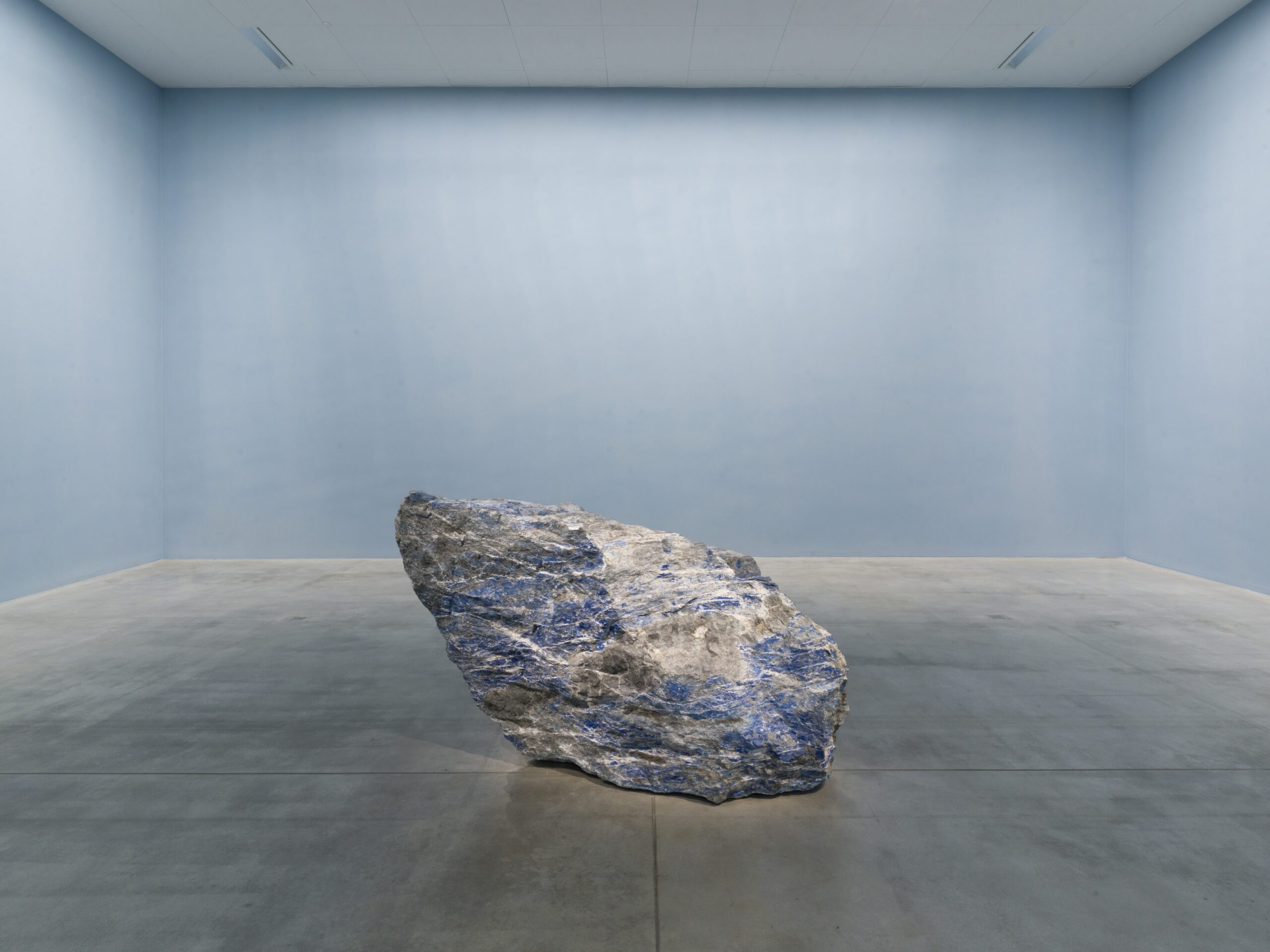
Towards the end of the exhibition, Blue Days Dust (II) (2025) becomes its own monument. House in the middle of a room with soft blue tinted walls, a near two tonne lapis lazuli – a semi-precious veiny-clad stone whose pigment was as valuable as gold during the Renaissance. Its pigment also colours these walls, as the earthly and the cosmic connect. Walls and stone share origin but diverge in their meaning. Kwade reminds us again how matter, time and perception inform one another, shaping how we label every fragment of the world we live in – from doctrines and visual codes to the very idea of certainty.
Alicja Kwade
Dusty Die
M Leuven, Leuven
October 10, 2025 – February 22, 2026
All images:
Exhibition view ‘Dusty Die’, Alicja Kwade, M Leuven, 2025
© the artist Photos: Roman März for M Leuven