Studio Visit
Text by Linnéa Ruiz Mutikainen
15.09.2026
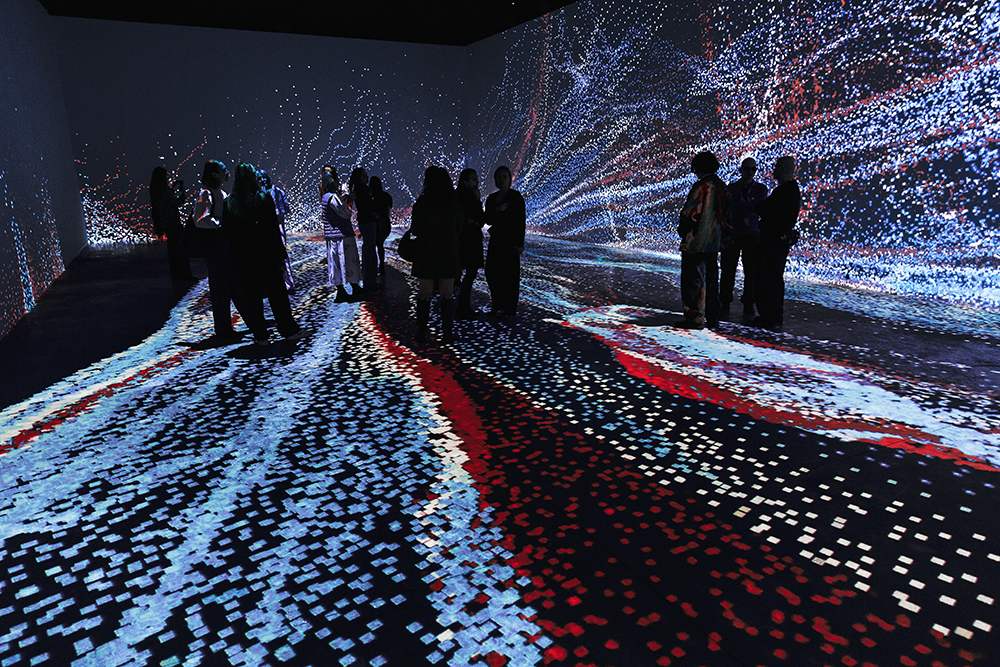
Cosmic in the brain, Hybrid, Chronicles, Vnutri Center (2025)
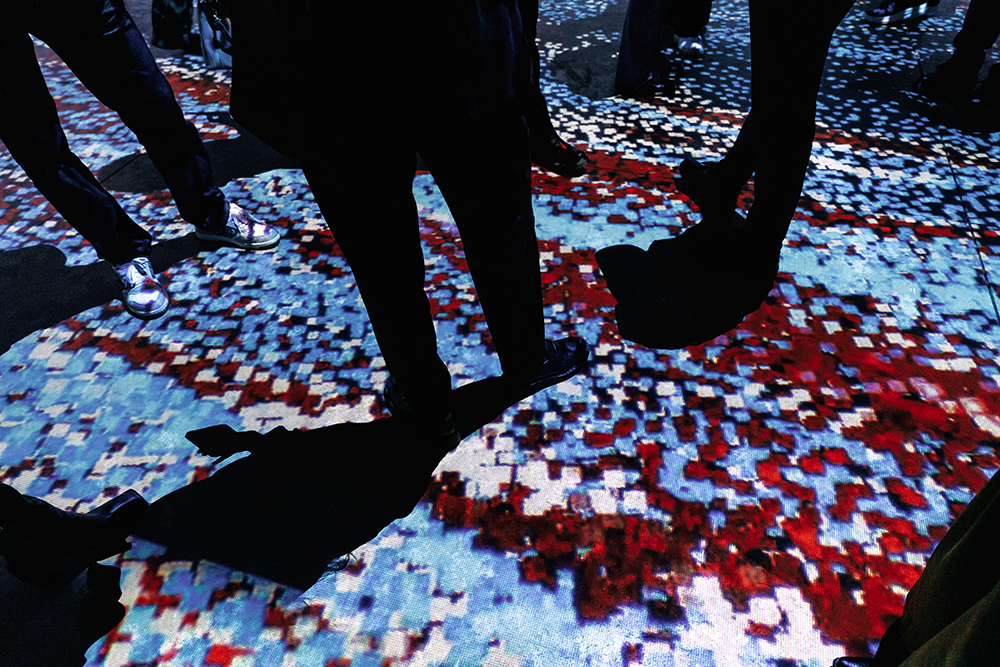
Cosmic in the brain, Hybrid, Chronicles, Vnutri Center (2025)
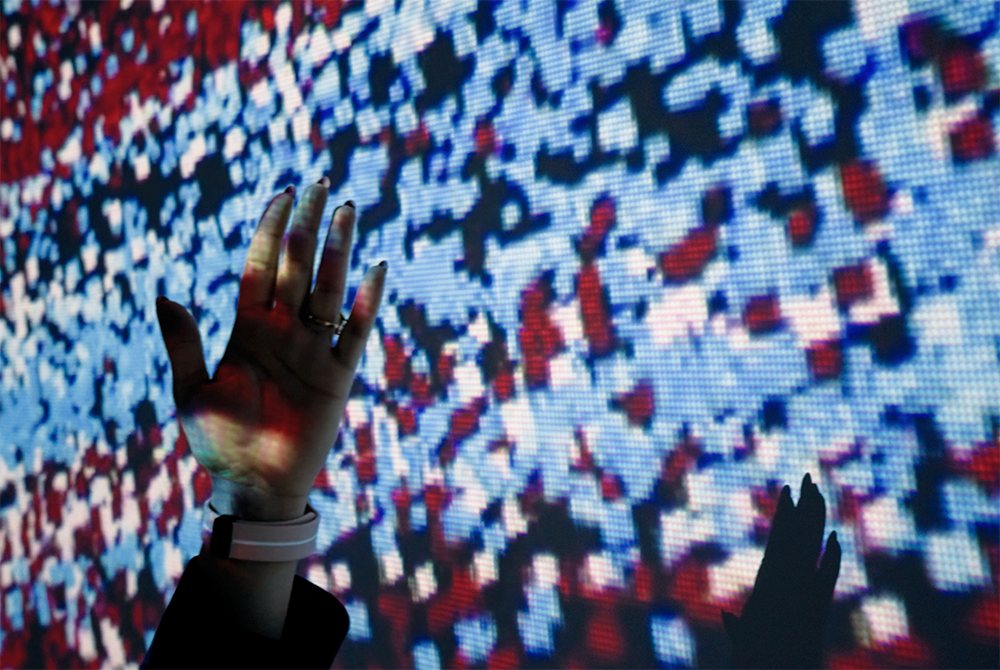
Cosmic in the brain, Hybrid, Chronicles, Vnutri Center (2025)
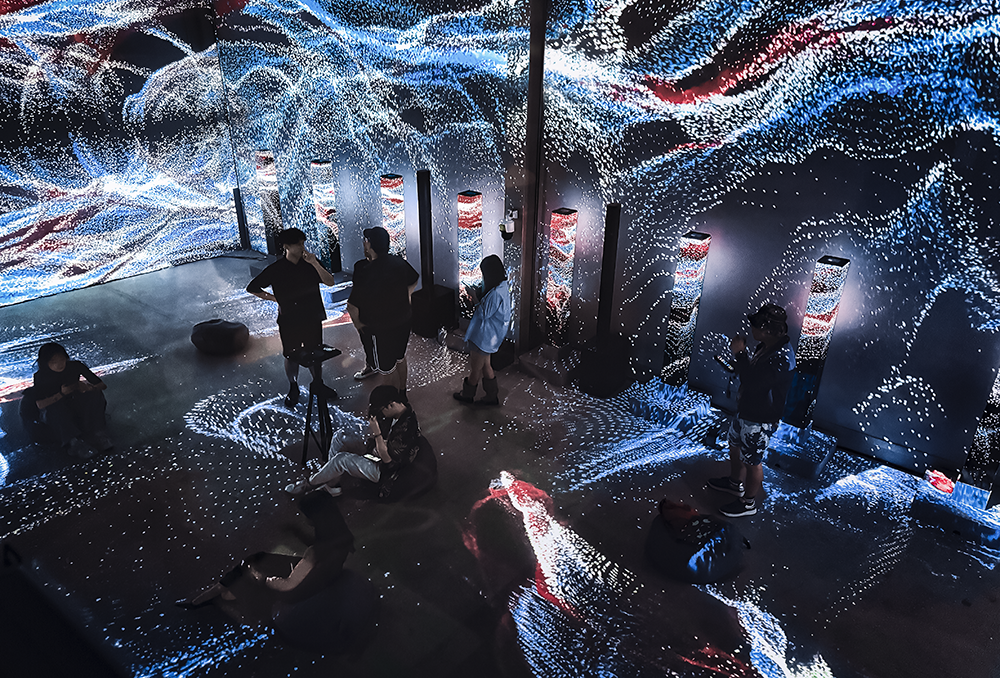
Cosmic in the brain, Atom Space (2025)
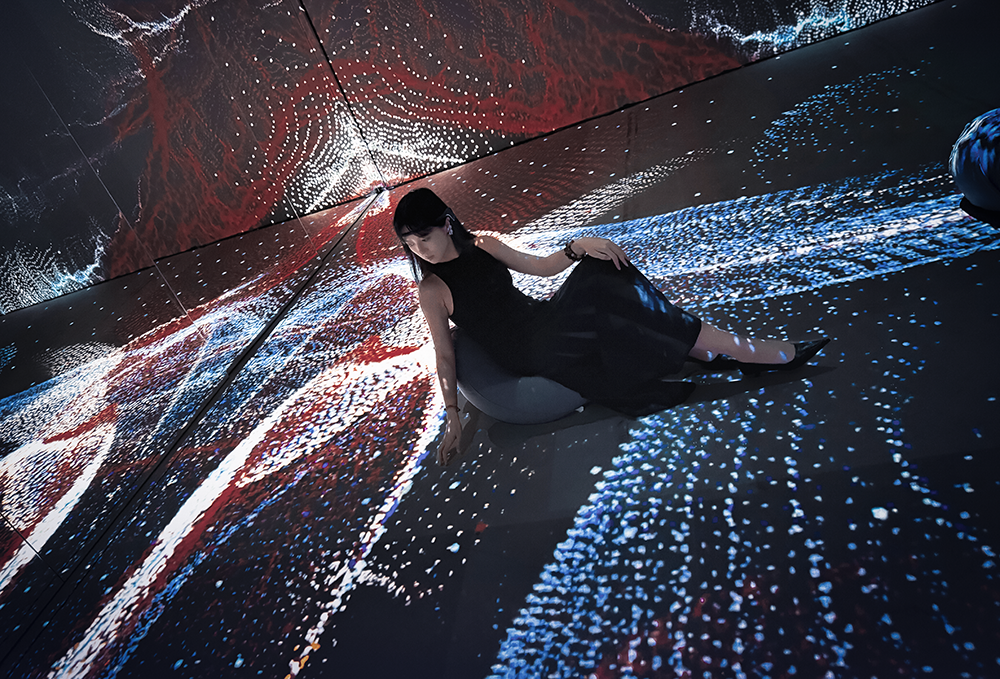
Cosmic in the brain, Atom Space (2025)
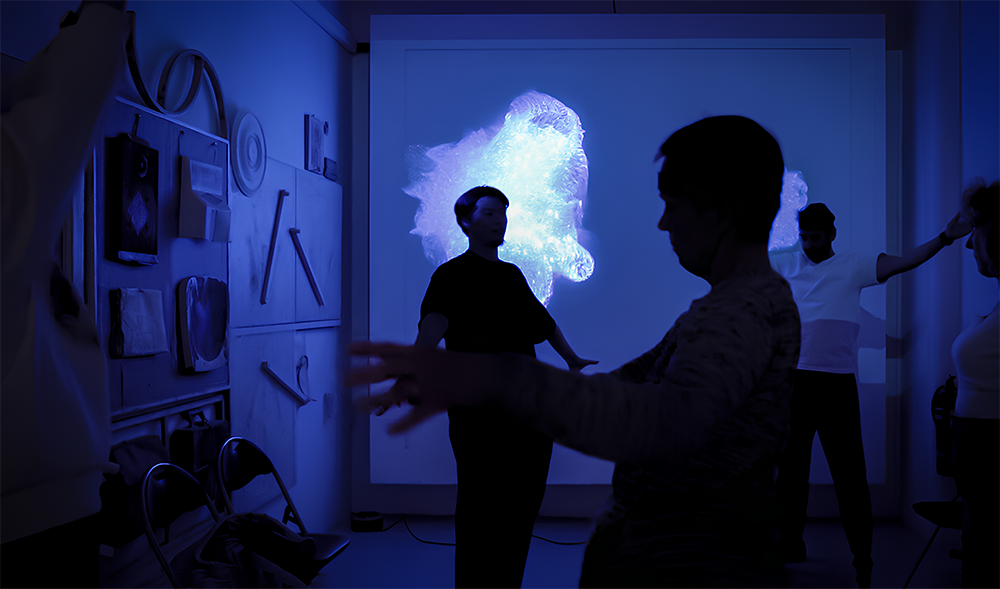
Participatory Brainwave Meditation Lab, The London Group Annual (2026)
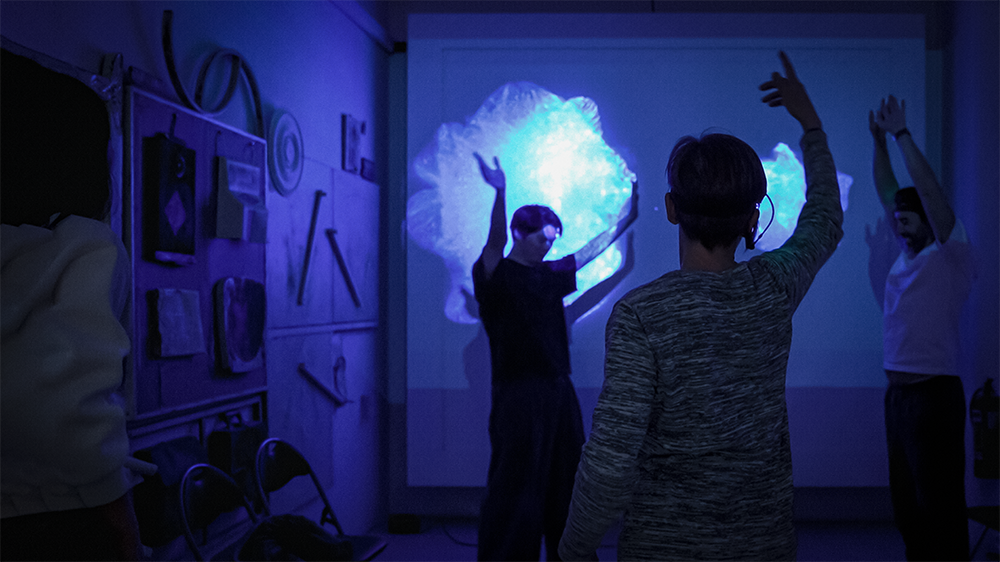
Participatory Brainwave Meditation Lab, The London Group Annual (2026)
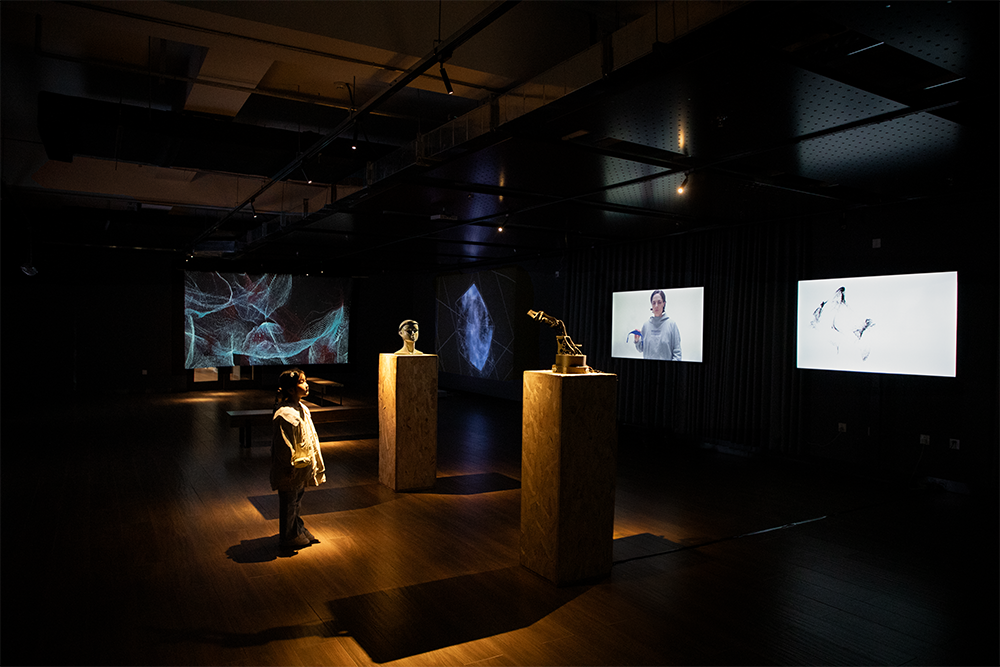
Solo Exhibition, Wandering Waves, Tinglan Art Museum (2025)
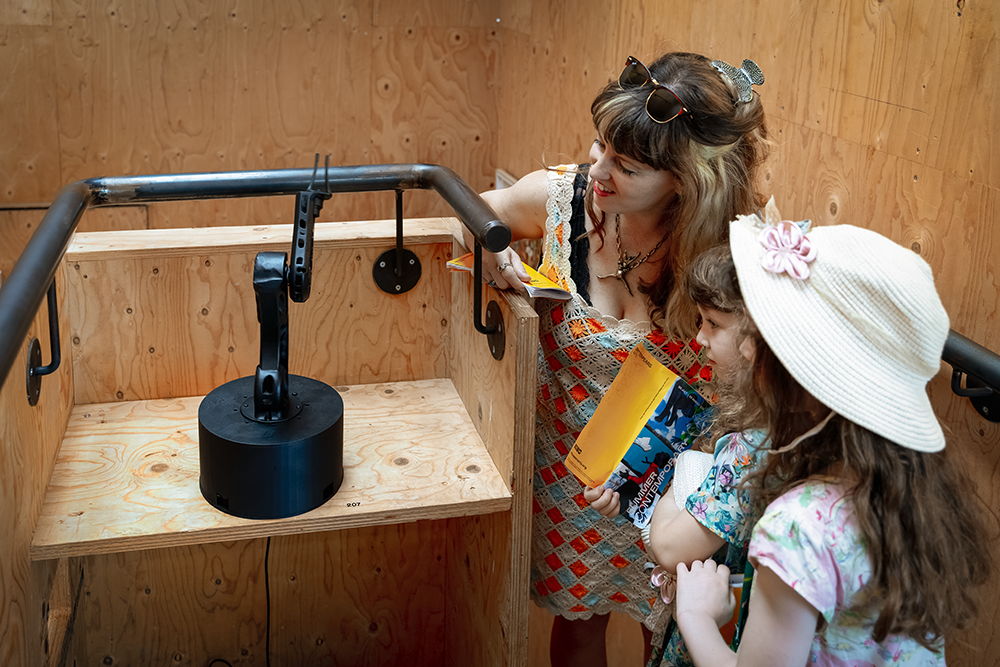
Robotic Arm of Chaos, Summer Contemporary (2026)
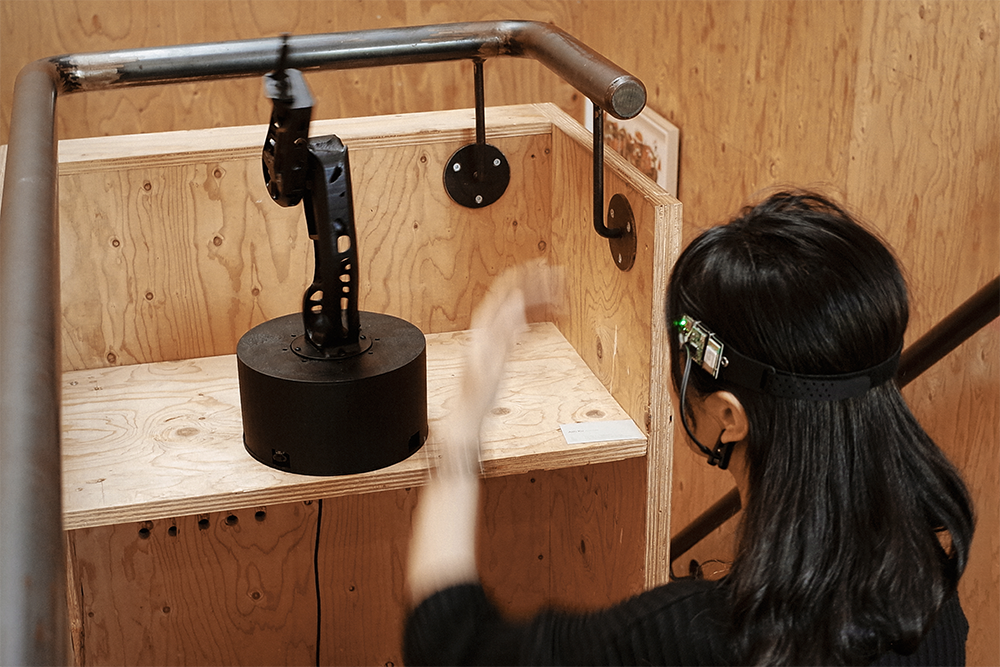
Robotic Arm of Chaos, Summer Contemporary (2026)
Technology has this almost fictional coating to it. New advances enter and quietly embed themselves into the ordinary, but not without friction. They quickly feed into the very systems that shape the conditions of our existence, and no matter the initial absurdity – take AI – a post-digital society without them rapidly becomes hard to imagine. What alerts us the most is perhaps their processed qualities – expression and emotion both levelled to zero – and their impact on human relationships.
Artist Ash Xu operates right there. He sees the possibilities within technological systems and their tension, but also questions how they shape our encounters with one another. The result is a merge between the two, a showcase of technology in alternate forms.
Something tangible to the human audience emerges: be it a new apparatus or idea, but it’s never a spectral sci-fi cliché. Instead, Xu sees a semblance between the public and technology and recalibrates the power balance, opening up for a modifiable, biological layer. His works revel in physical tangibility: immersive environments integrate technology in a way that makes it feel as though it belongs from the beginning rather than becoming alien by default. Nothing is there to become a loud spectacle.
Now in its seventh year, Xu’s participatory art practice started in Macao during the pandemic, sparked by the turn to digital platforms to simulate the social connections people lacked. Alongside his work with cultural and arts organisations, Xu began exploring brain-computer interfaces (BCI), where mental activity translates into art: brainwaves become the input, generative audiovisual fragments serve as the output.
In Cosmic in the Brain from 2025, arguably his richest work to date, EEG signals transform into an evolving virtual cosmos as individual cognition feeds into a collective audiovisual participation. This work reveals Xu’s delicacy in presenting a process outside of their perhaps most familiar framework. Here, something ordinarily invisible and individual unfolds within the realms of collective experience, as he makes the distance between private cognition and shared space remarkably tangible. This relationship between bodily signals and machine response is also investigated in Participatory Brainwave Meditation and Robotic Arm of Chaos. The latter is an interactive installation steeped in the distance between mechanism and human perception. By assigning emotional qualities to a mechanical system, one quite abstract to the eye, it asks how we might relate to these objects and even co-exist with them as they’re defined by more than their function.
It’s compelling how Xu gives complex technology an intimate, approachable face. It relates to the effective positioning that he establishes, one where technology never feels like the unattainable subject stuck in something profound and difficult to grasp. Instead, it becomes a means of making what’s otherwise abstract into a shared experience. Arguably, this very translation is where Xu is the most compelling, turning opaque systems into experiences the viewer can physically encounter and interact with. His immersive worlds are not futuristic for futurism’s sake. What we see is a creative continuum of something originally developed for neuroscientific research, adding a layer of the unknown, or at least the much less familiar, to the art discourse. His work deepens the lineage of biofeedback art that emerged in the 1960s and ‘70s, expanding on its eagerness to turn invisible physiology into perceptible art. In that afterglow, Xu uses contemporary advancements to bring that history into more participatory territory, one where art even exists in one’s own body and mind.
STUDIO VISIT
Ash Xu
Written by Linnéa Ruiz Mutikainen
Ash Xu is a London-based digital artist, curator and designer. His work zooms in on technology and themes of perception, interaction and unstable human connections within our post-digital society, often returning to brain-computer interface (BCI) art and participatory practices. He co-founded Flotage.co in 2023 and founded Ash Lab in 2026. Ash Xu’s work has been presented at key industry events such as London Design Festival, Berlin Art Week and Milan Design Week, as well as at institutions including the National Galleries of Scotland and BBA Gallery in Berlin.
Linnéa Ruiz Mutikainen is an art writer and editor based in Paris. Her texts have been featured in publications such as CURA., Purple, GRUPPE, Carcy, 032c and Numéro Berlin. She also works closely with independent artists and galleries for conceptual work and writing projects.