Feel-Good Color Photography
Villa Medici, Rome
February 26—June 09, 2025
Review by Annalisa Inzana
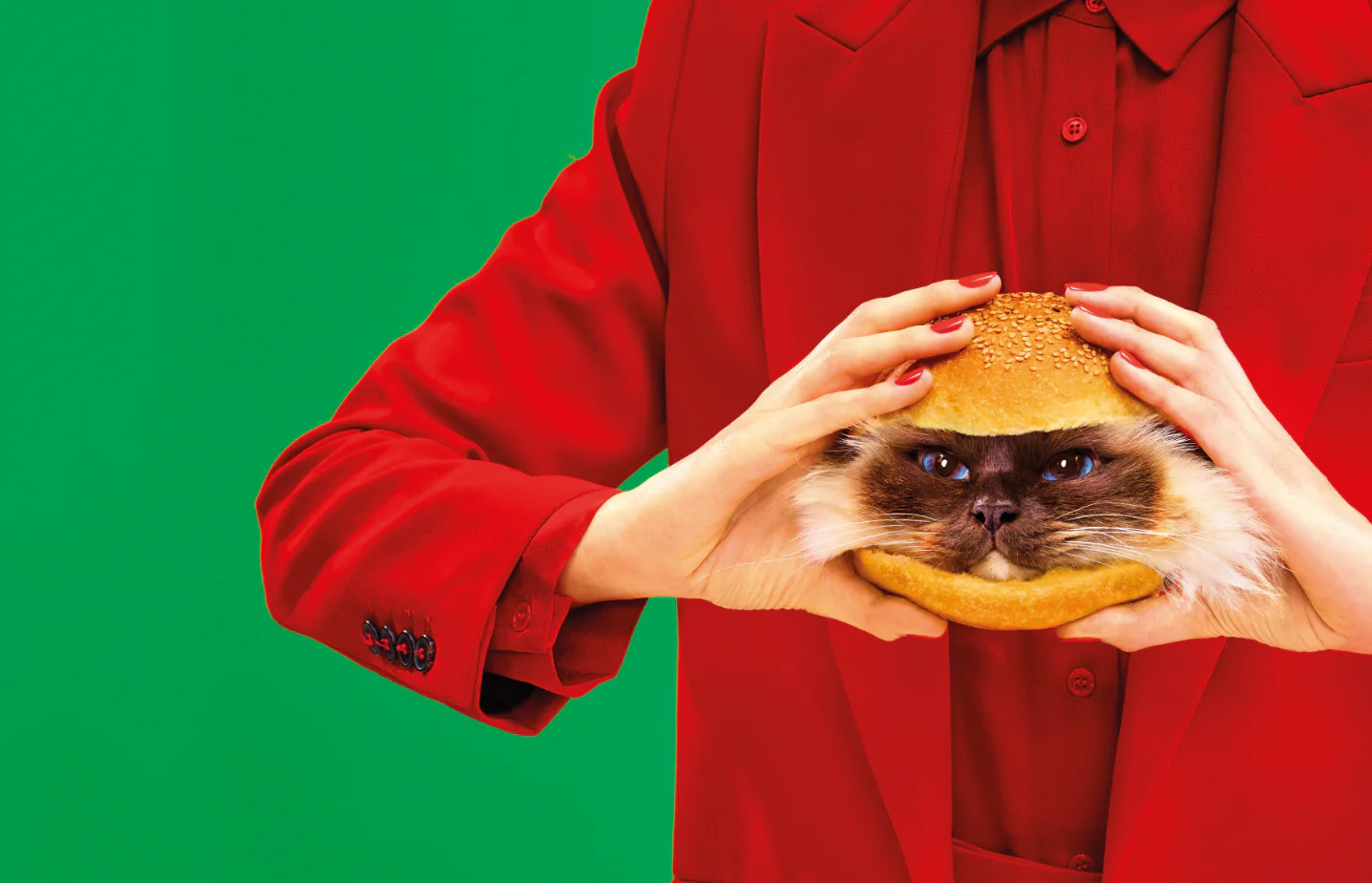
Maurizio Cattelan & Pierpaolo Ferrari, Toiletpaper. Courtesy of Toiletpaper
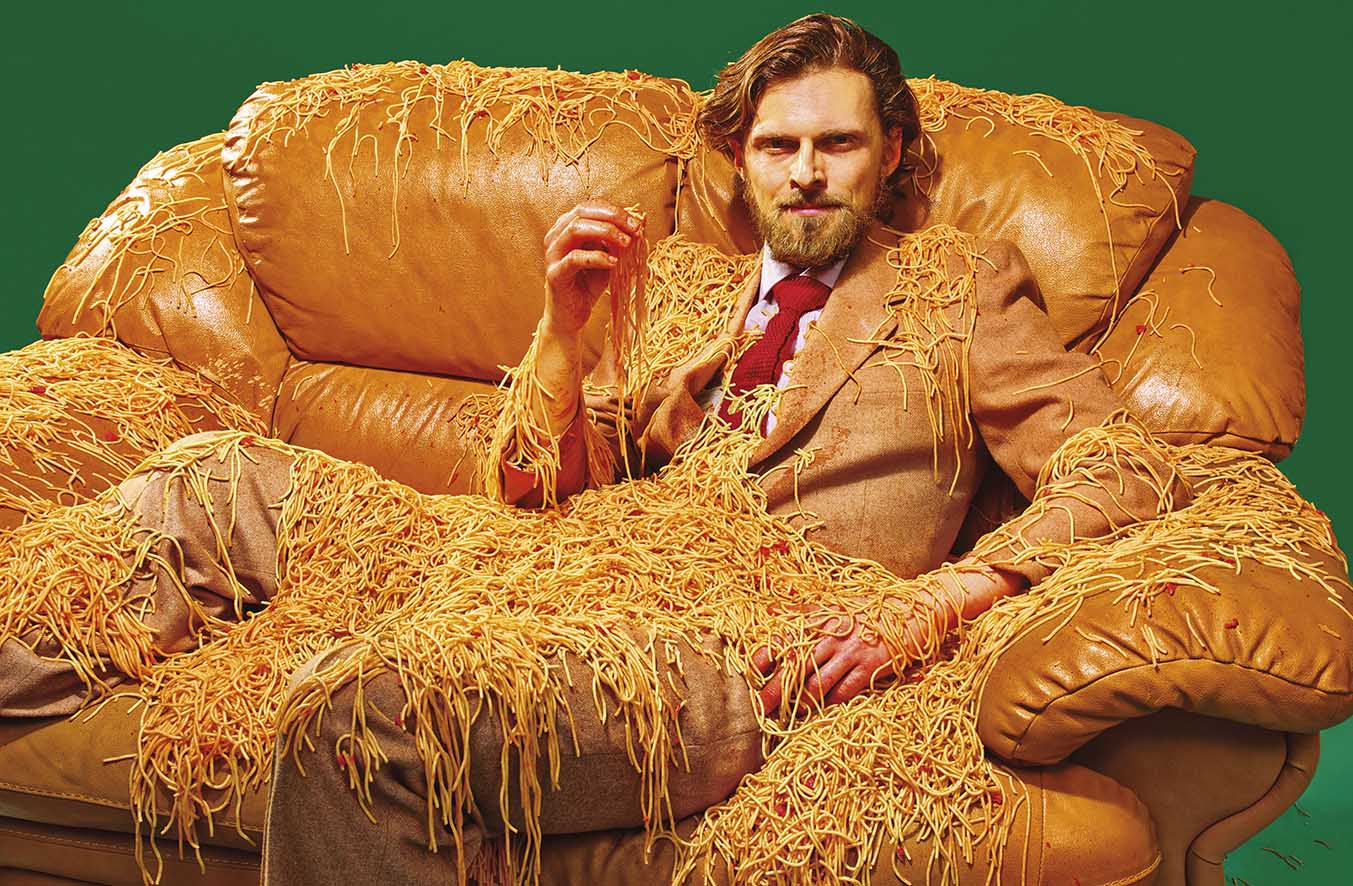
Maurizio Cattelan & Pierpaolo Ferrari, Toiletpaper
Courtesy of the artist
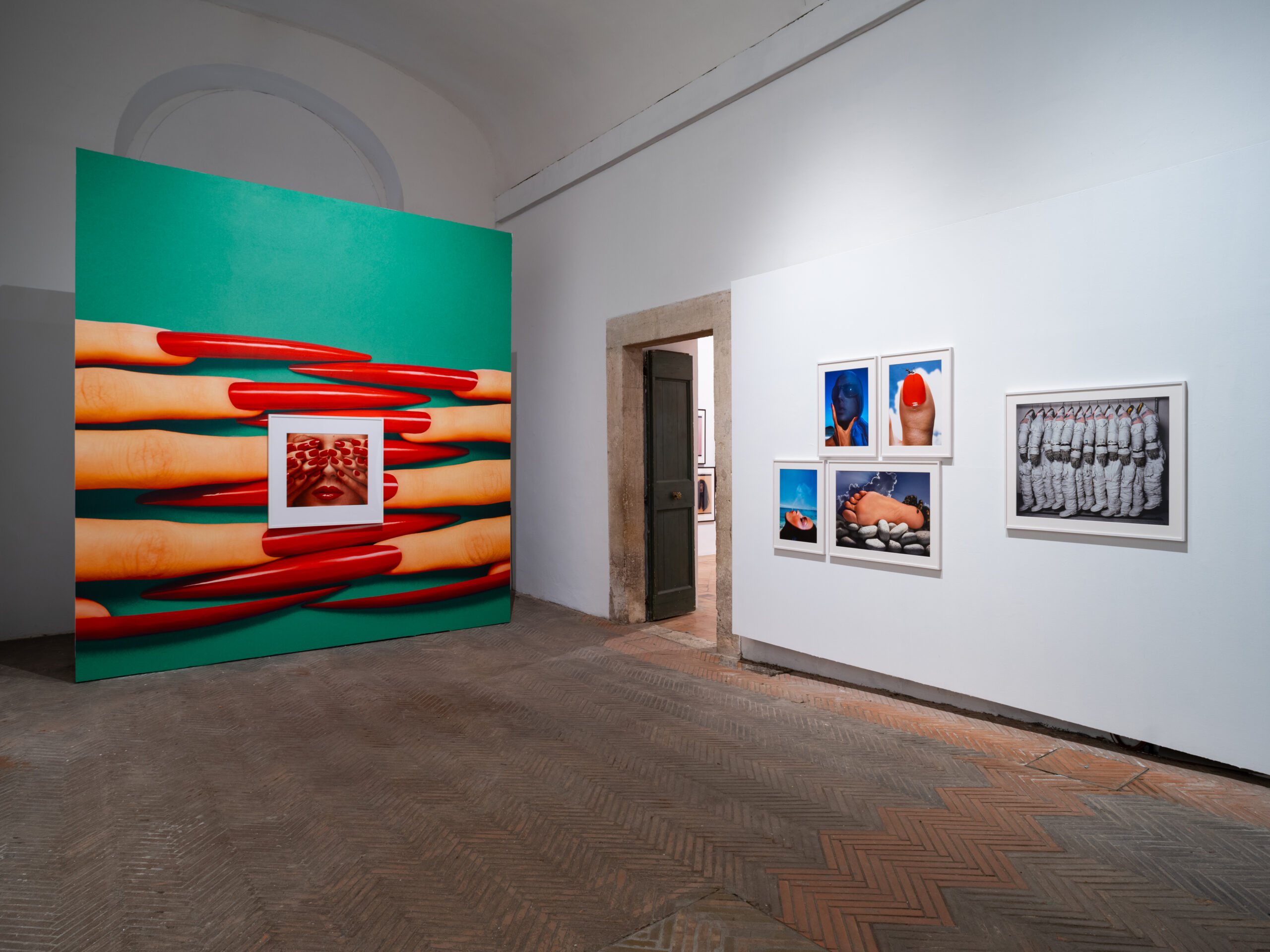
Exhibition views, Photo © Daniele Molajoli
Are we really sure that we are only talking about color? Looking at the photographs chosen by Maurizio Cattelan and Sam Stourdzé for the Chromotherapia exhibition at Villa Medici (lasting until June 9), alongside the feeling of being overwhelmed by a storm of visual stimuli, there is a feeling that the point is not to cure us but to wake us up.
Since the times of ancient Egypt, chromotherapy has explored the connection between colors, sensations and our health, and the idea of an exhibition that is somehow thaumaturgical, thanks to the vibrations produced in the pupils of those who view it, is extremely clever; however, the true great celebration staged in the halls of the French Academy in Rome is that of color photography, which since its origins in the mid-19th century has had the merit of freeing photography from its documentary duties to recover its ability to cast light on what we often do not see.
The shots by Miles Aldridge, Erwin Blumenfeld, Guy Bourdin, Juno Calypso, Walter Chandoha, Harold Edgerton, Hassan Hajjaj, Hiro, Ouka Leele, Madame Yevonde, Arnold Odermatt, Ruth Ginika Ossai, Martin Parr, Pierre et Gilles, Alex Prager, Adrienne Raquel, Sandy Skoglund and William Wegman, clearly show an innovative approach to the observation of reality, which in these bright and hypersaturated shots becomes surreal or hyperreal, at the same time giving us back something we know but from an unexpected perspective, nourished by surrealism, kitsch, pop culture, bling and deliberate madness. Capable of embracing it all, digesting it or commenting on it, is Toiletpaper, a creative magazine and studio founded and directed by Maurizio Cattelan and Pierpaolo Ferrari, which since 2010 has become a project capable, with irreverent irony, of recounting the contemporary obsession with the image.
In the exhibition path divided in seven sections – Early Birds, Raining Cats and Dogs, Glossy, Femme Fatale, Stranger Things, Foodorama, Make a Face – we find, among other photographs, Sans Titre (1945) by Erwin Blumenfeld, a Dadaist futurist capable of transforming fashion photography with photomontages, filters and saturated colors, William Wegman’s Weimaraners, which since the Seventies have been reinventing the art of portraiture as Walter Chandoha did with his kittens which, well before the current digital success (today covering around 15% of the global daily Internet traffic), in the Fifties triggered a revolution in animal photography.
The iconic Vogue Paris shot (1970) by Guy Bourdin catches the eye, set on a wallpaper that reproduces a photograph from Toiletpaper, a clear homage to the French master who, with his ambiguous scenes, was able to create pictorial and fascinating worlds, while the Five Girls in a Car (2013) by Miles Aldridge reproduce all the clichés of pop culture and glam imagery. Moreover, the liquefied colors of Arnold Odermatt record reality disturbed by a visual episode; a large wall, part of Martin Parr’s Common Sense project, offers a cookery catalog that, involving fast food, supermarkets, greasy hands and French fries, tells the indigestibility of a consumeristic, excessive, doped world, while we find the liberation of bodies and faces from the conventions of portraiture in the images by Ruth Ginika Ossai or Hassan Hajjaj.
To move along this colorful historical path, among images that sanctify vulgarity, harmonize contrasts, mock aestheticism and idolize Surrealism, is not only a discovery, but an exercise. If color has the ability to heal us and even, as the curators speculate, to save us, maybe the question we should ask is: from what?
Today, when vision is often reduced to an obsessive scrolling, it is necessary to re-educate ourselves to attention, to the observation that without ideas photography is reduced to smooth emptiness (as Byung Chul Han would call it), and that we should return to preferring the frightening and sometimes disturbing Sublime to Beauty, the complexity of the message to the speed of communication. Will color wake us up from the sedation of perception?
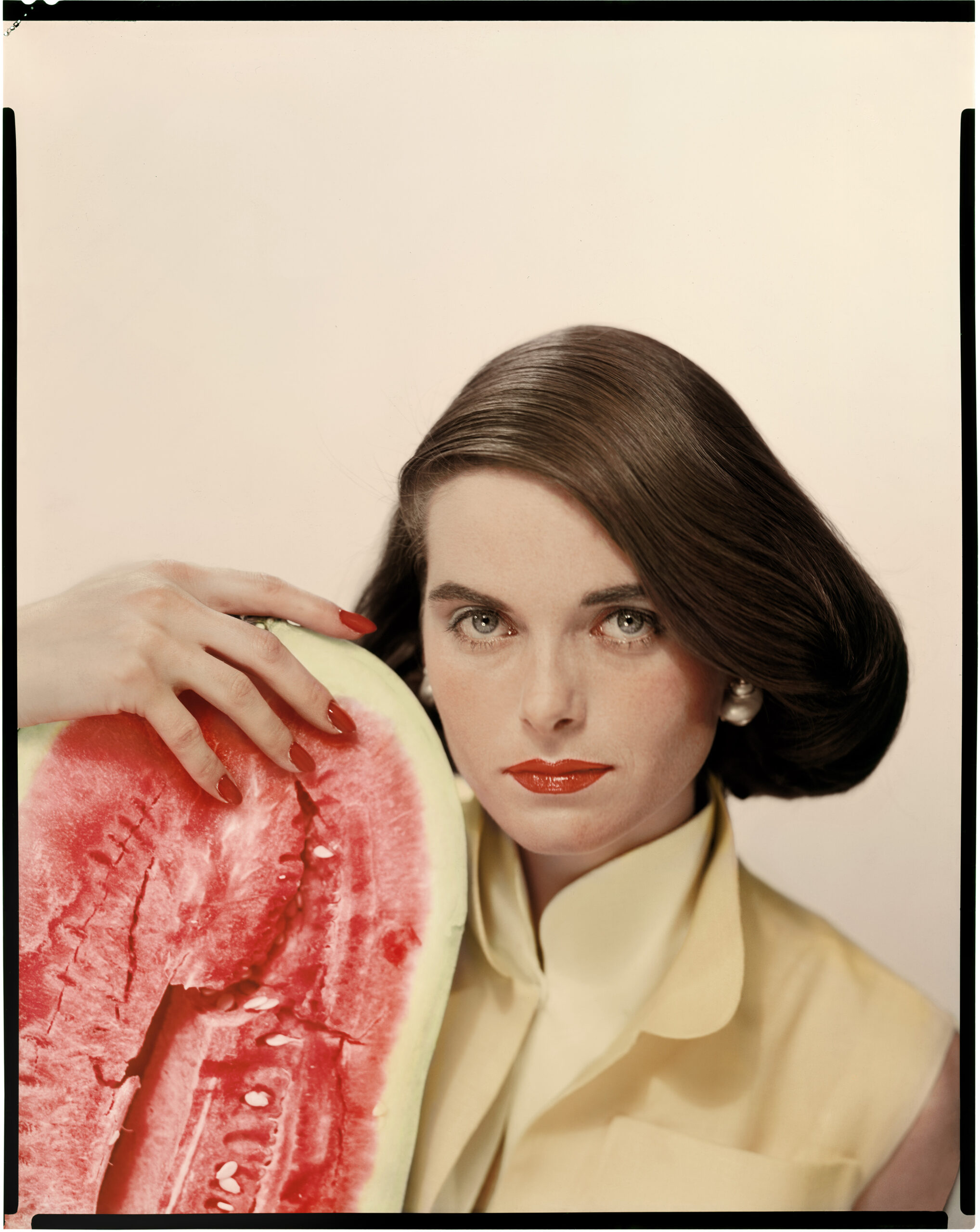
Erwin Blumenfeld, Sans titre, 1945
Courtesy of The Estate of Erwin Blumenfeld 2025
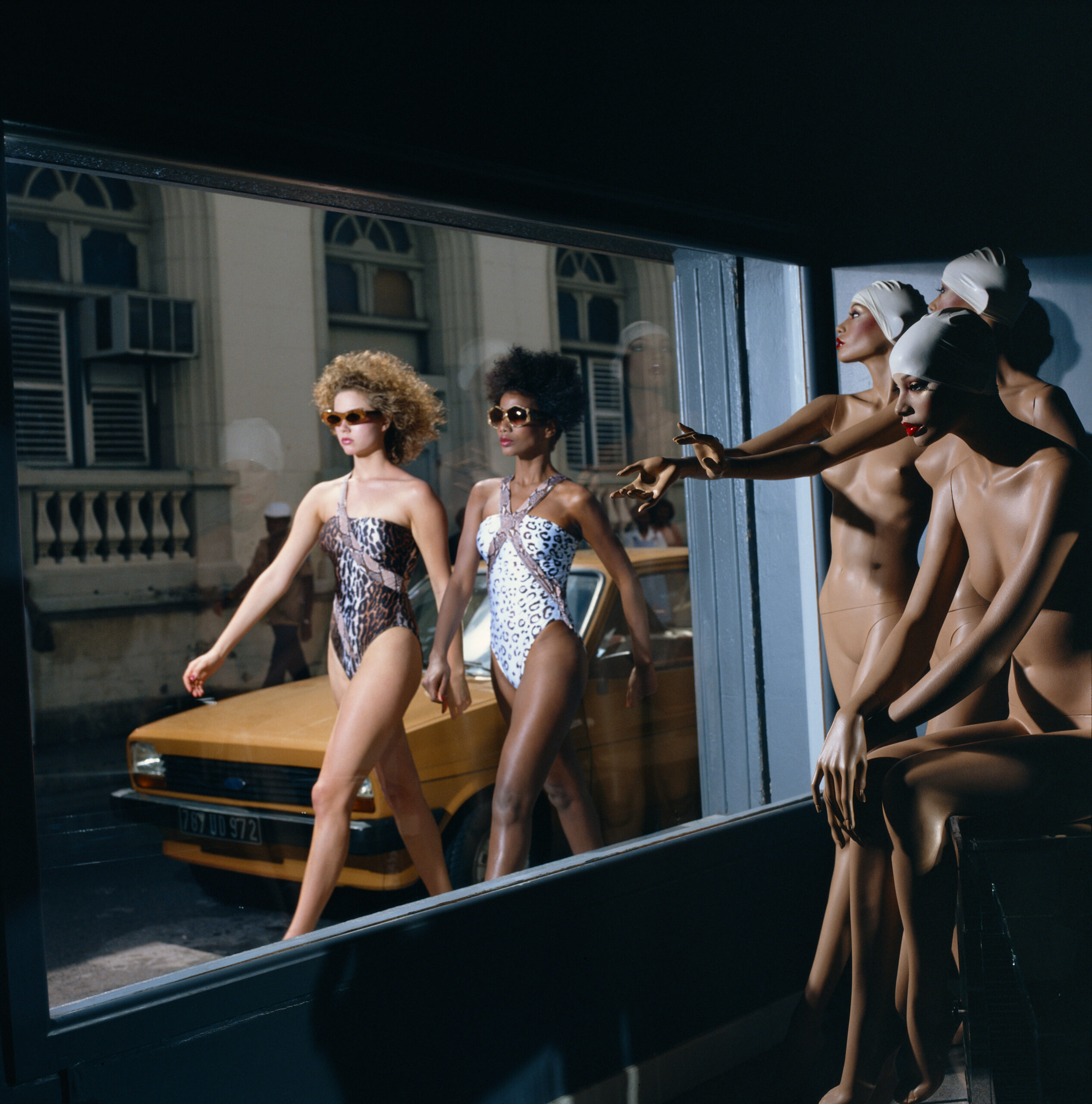
Guy Bourdin, Vogue Paris, May 1984
© The Guy Bourdin Estate 2025. Courtesy of Louise Alexander Gallery
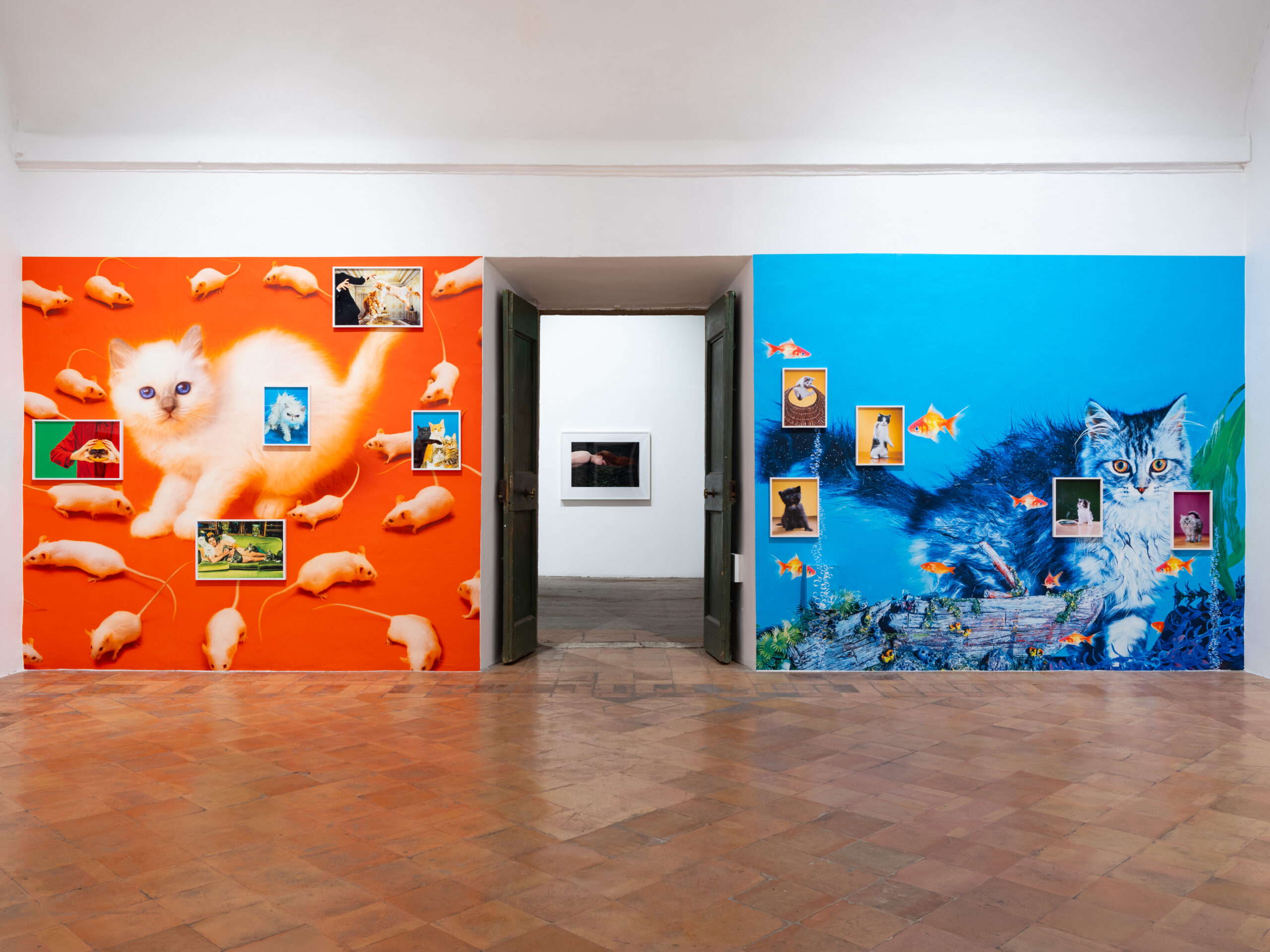
Exhibition views, Photo © Daniele Molajoli
Chromotherapia
Feel-Good Color Photography
Curated by Maurizio Cattelan and Sam Stourdzé
Artists: Miles Aldridge, Erwin Blumenfeld, Guy Bourdin, Juno Calypso, Walter Chandoha, Harold Edgerton, Hassan Hajjaj, Hiro, Ouka Leele, Arnold Odermatt, Ruth Ginika Ossai, Martin Parr, Pierre e Gilles, Alex Prager, Adrienne Raquel, Sandy Skoglund, Toiletpaper, William Wegman, Madame Yevonde
Villa Medici, Rome
February 28 – June 09, 2025