CURA.45
The Blackout Issue
ARTIST + ARTIST
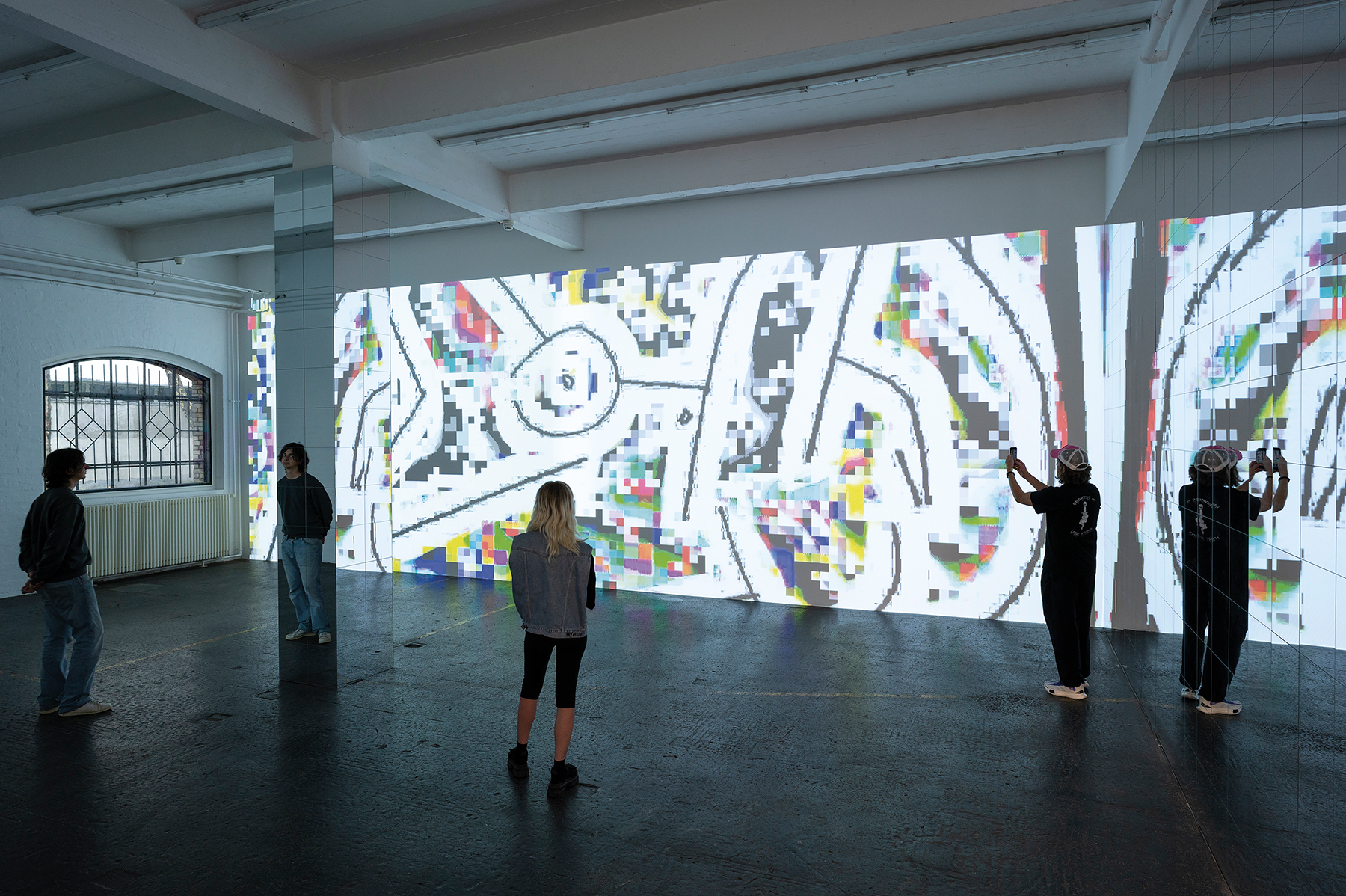
Cory Arcangel, Femmes d’Alger dans leur appartement (Version A), 2024,
installation view, ALL I EAT IN A DAY, Kunst Halle Sankt Gallen, 2024
Photo: E. Sommer Courtesy: the artist and Kunst Halle Sankt Gallen
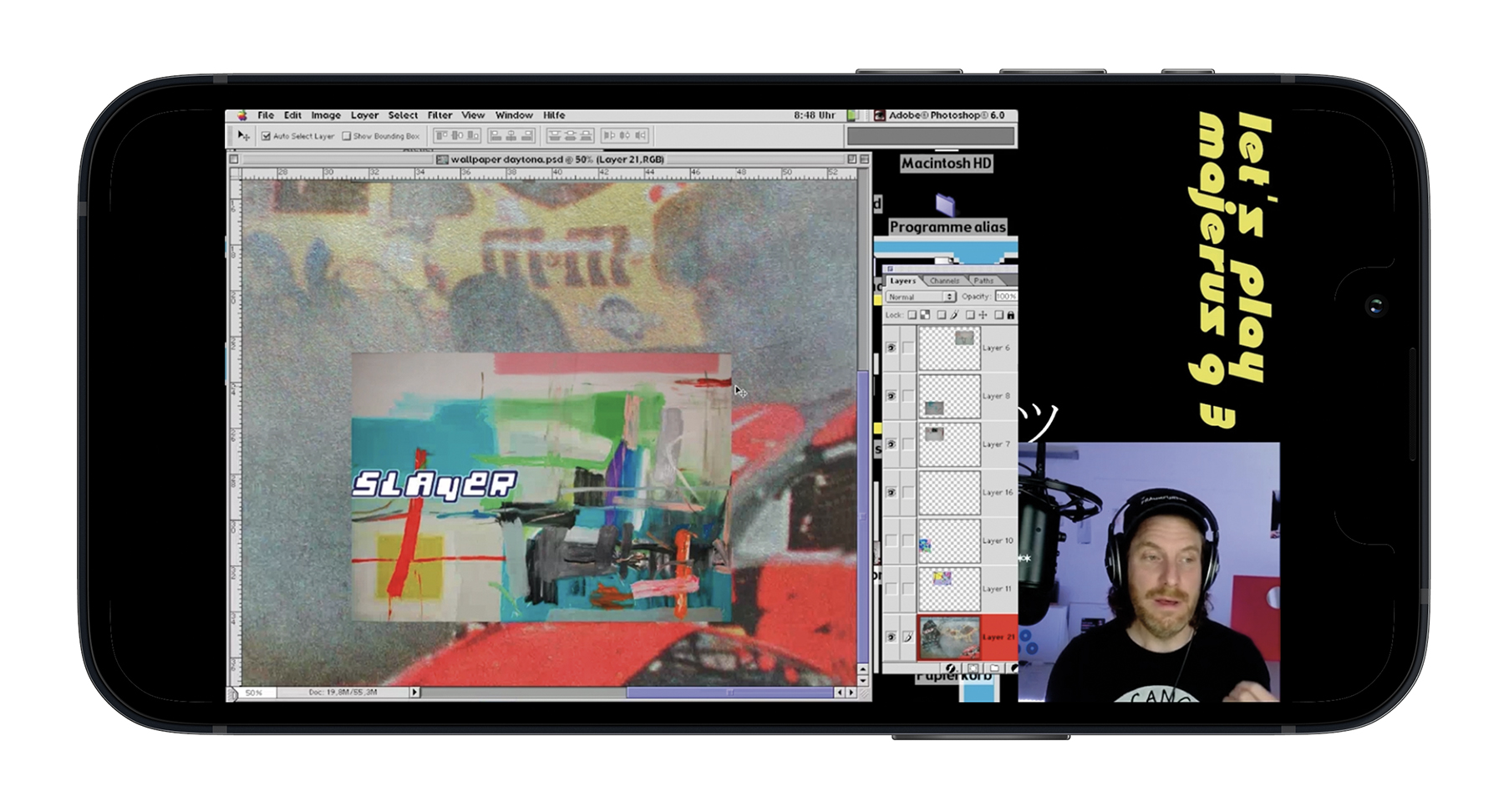
Cory Arcangel, the Michel Majerus Estate, & Rhizome.org, Let’s Play Majerus G3 📽, 2024 Photo: the artist
Courtesy: the artist, Michel Majerus Estate & Rhizome
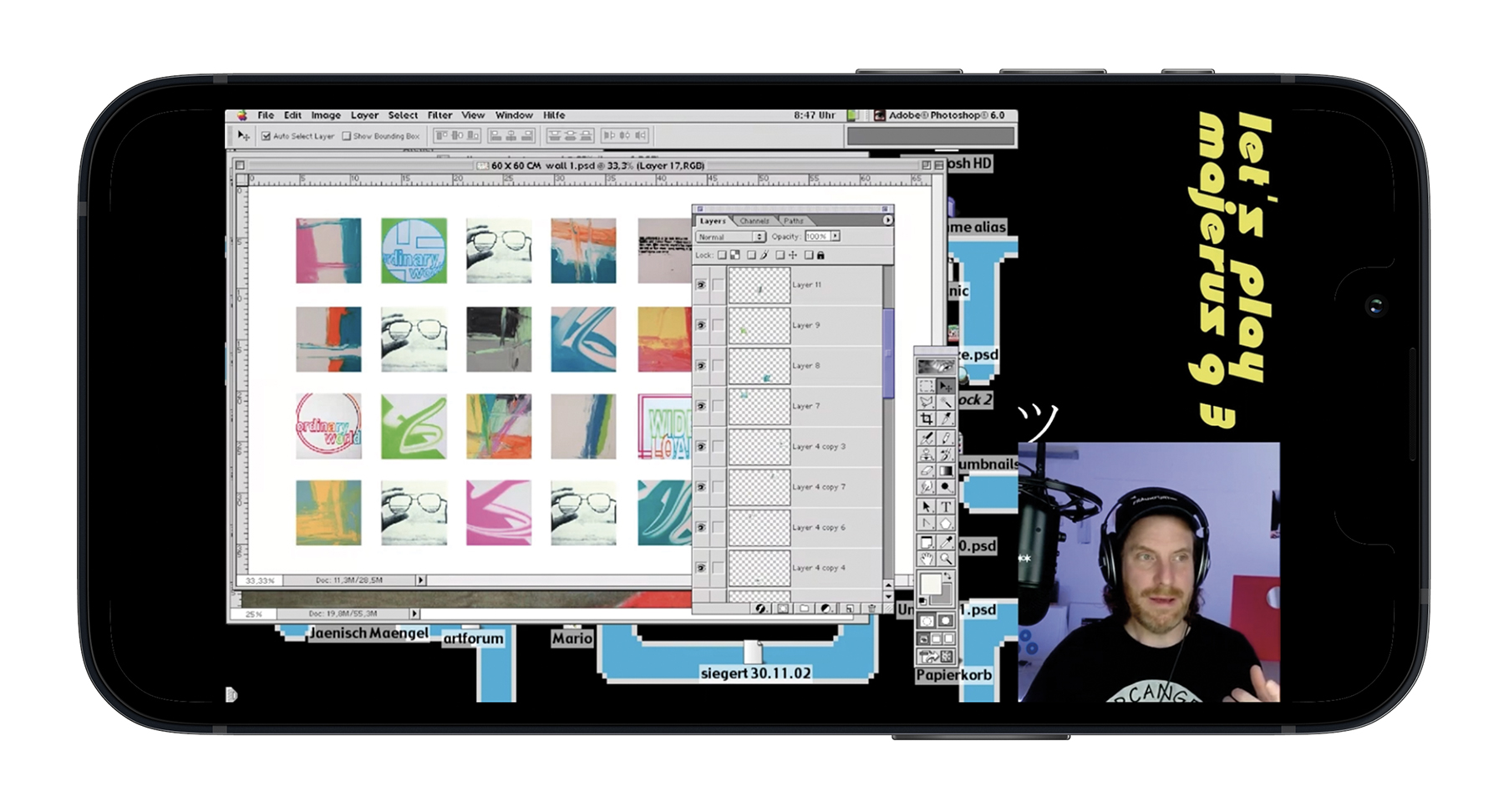
Cory Arcangel, the Michel Majerus Estate, & Rhizome.org, Let’s Play Majerus G3 📽, 2024 Photo: the artist
Courtesy: the artist, Michel Majerus Estate & Rhizome
Maya Man, FAKE IT TILL YOU MAKE IT #37, 2022 Courtesy: the artist
Maya Man, FAKE IT TILL YOU MAKE IT #85, 2022 Courtesy: the artist
CA: I listened to the podcast you did with Ben Davis, and you are super on it.
MM: Wow. Thank you.
CA: You had mentioned you used to work at Google. I would like to know what the trajectory was. You studied with Casey Reas, then you were working at Google, and at some point, you went back to school? Can you take me through it? How did it happen?
MM: I grew up in the suburbs, which is something I know we share. As a kid, I loved spending time on the computer, messing with the built-in software, uploading videos to YouTube that no one watched, all of that. But I was also into math, and I thought I would be a physics major. Growing up in Central Pennsylvania, I wasn’t exposed to the world of contemporary art. When I went to Pomona College in California, I knew that I had an interest in technology and programming, so I chose to double major in computer science and media studies. I knew what I liked to think about, but I still didn’t see how this might lead to an art practice and didn’t have a vision for what life might look like as a contemporary artist.
Right after school, I needed a job. I had interned as a software engineer at Google previously, and ended up in a kind of residency program at the Google Creative Lab in New York City. Living in New York, I met a lot of artists. My friends were all involved with organizations like the School for Poetic Computation or Rhizome. I started to realize there was a whole ecosystem supporting artists making work critically engaged with technology.
The stability of working in tech was obviously nice, and I learned a lot working inside the industry, but I felt deeply conflicted about the job from the beginning. A bit after the pandemic hit, I left. I spent a lot of that period online looking at art and reading about artists. I realized that was what I’ve actually always wanted to do and decided to apply to UCLA’s Media Art MFA program to study with Casey Reas and Lauren Lee McCarthy.
CA: Did you work in the actual Google building, that giant building which takes up the whole block?
MM: In Chelsea. Right across from the Chelsea Market.
CA: I’ve never been there, but every time I walk by it, I always ask myself, what is in there?
MM: It’s really wild in there. It’s probably what you would expect. I was on the fifteenth floor.
CA: I went to the opening party when Google opened their New York office. This might have been 2005? There was all-you-could-eat ice cream, and if I am remembering correctly, drones flying through the party? The same night, I went to a Microsoft party, and it was in this old brownstone, and they were discussing ethics with a philosopher they had invited. The contrast left such an impression on me. For years, I thought, “Oh, Microsoft really knows what’s happening.” But now I don’t know. I think none of them knows what’s happening. Talk me through some of the first things that you were seeing.
MM: My first introduction to code as a medium was through Processing and p5.js, programming languages for visual art. I saw there were all of these artists building out a vision for accessible, open-source software for other artists and educators.
I’ve always felt that my practice stretches across two different worlds. There are artists who are into using software as a medium and programming as their primary way of making, like Casey, whom I studied with. Now there’s this whole scene of ‘generative artists,’ but a lot of the work is often more formally driven or more abstract. Then there’s this other group of artists who are interested in the Internet and pop culture, who are often using digital tools or out-of-the-box software in some way, but aren’t necessarily interested in programming specifically.
Seeing your work was very important for me because you clearly encapsulate both of those worlds.
CA: I always thought there was the MIT world, which you would describe as the Processing world, and then the other world, which I associated with artists from Europe and Russia, like Olia Lialina, for example. Those two worlds, even in the late ’90s, were kind of established. I always thought it was MIT, but I don’t know how connected Casey and Processing are to MIT.
MM: Processing actually came out of the Aesthetics and Computation Group at the MIT Media Lab.
CA: Okay, right! And although they were conceptual bubbles, I remember that all those different people were all really around. When I moved to New York, they were all blobbed together, you know?
MM: So it didn’t feel like there was a big, definitive difference?
CA: There was a difference in the work, but not in the community, because there were so few people doing code art at the time. You just had to take whoever you could get. It was like 11 people. And it was all mixed up. It’s interesting that it kind of solidified, and to hear how you thought of them. Who were the artists? What might have been some early projects that you saw, both Processing style things and then more net-arty kind of things?
MM: Seeing work focused on self-performance really shifted my perspective. Lynn Hershman Leeson’s Roberta Breitmore was important for me, but that’s pre-Internet. Definitely Olia Lialina’s websites, Ann Hirsch’s Scandalishious in the early days of YouTube, Molly Soda’s Inbox Full, and Lauren Lee McCarthy’s Social Turkers. These projects play with the performance of identity and femininity online, and even before I knew I wanted to be an artist, since I was a kid online, that’s something I obsessed over. Their work guided me.
CA: Speaking of being a kid, I’d like to talk a little bit about the Capital City Mall.
MM: I’m so excited to talk about the Capital City Mall.
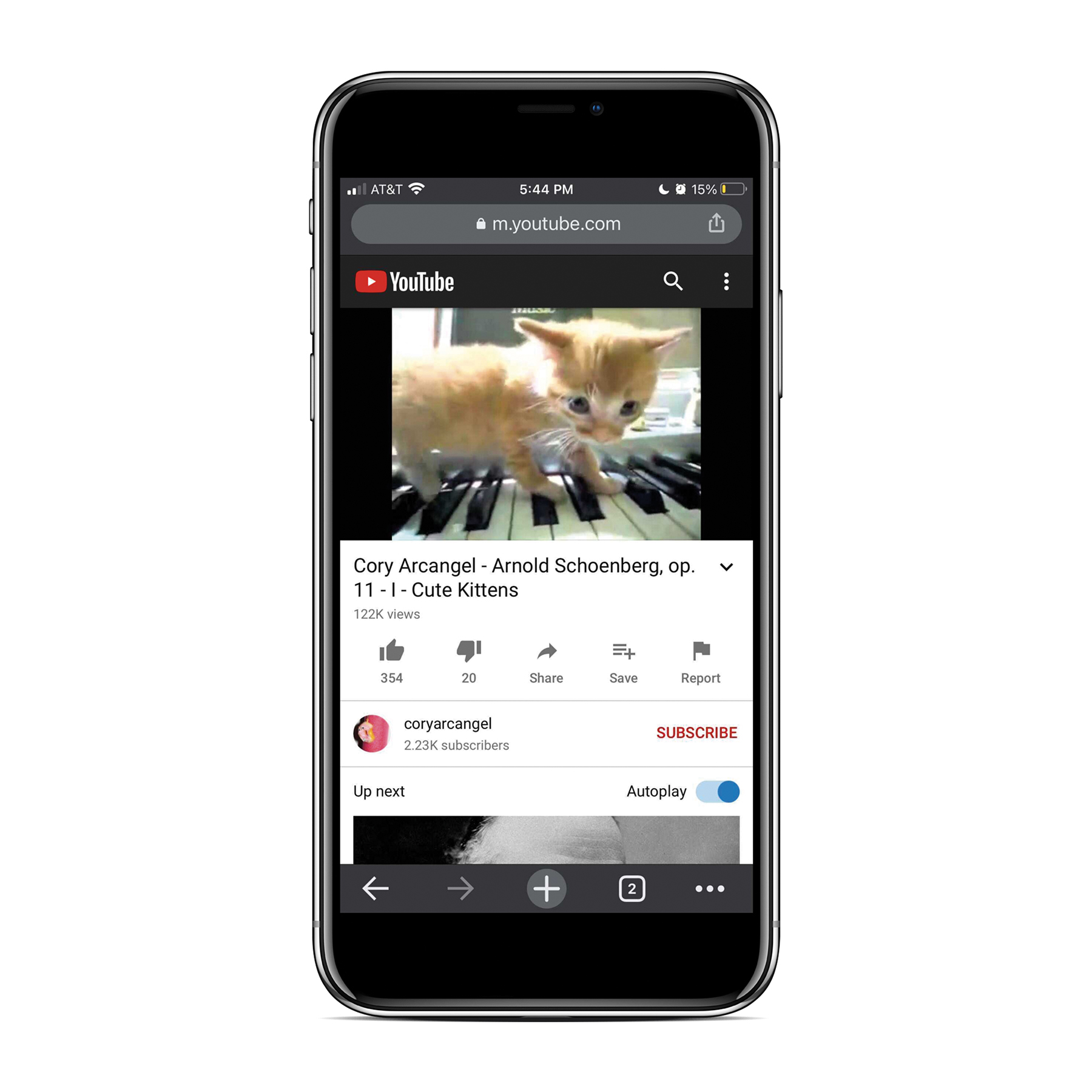
Cory Arcangel, Drei Klavierstücke op. 11, 2009 Courtesy: the artist
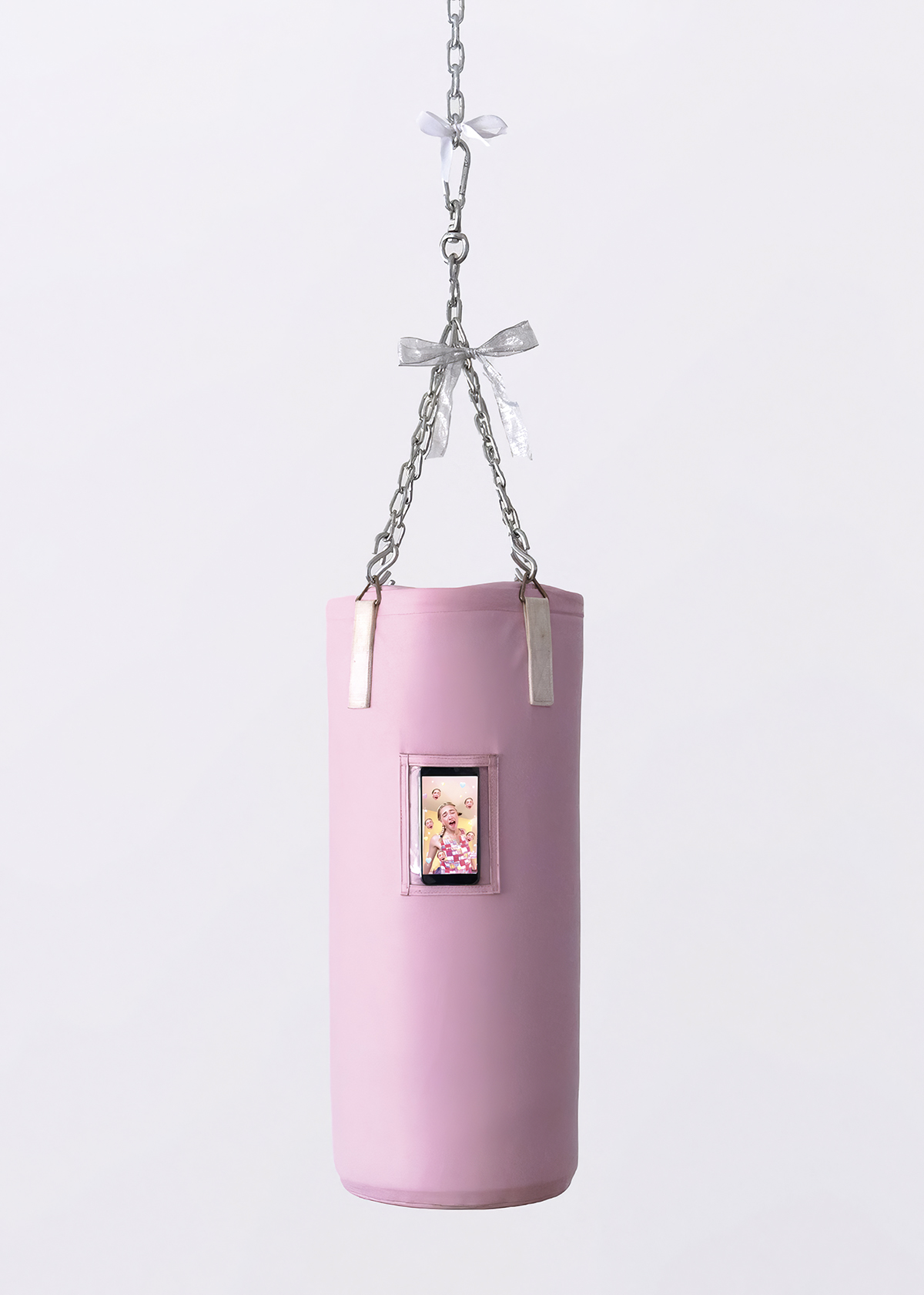
Maya Man, love/hate, 2022 Courtesy: the artist
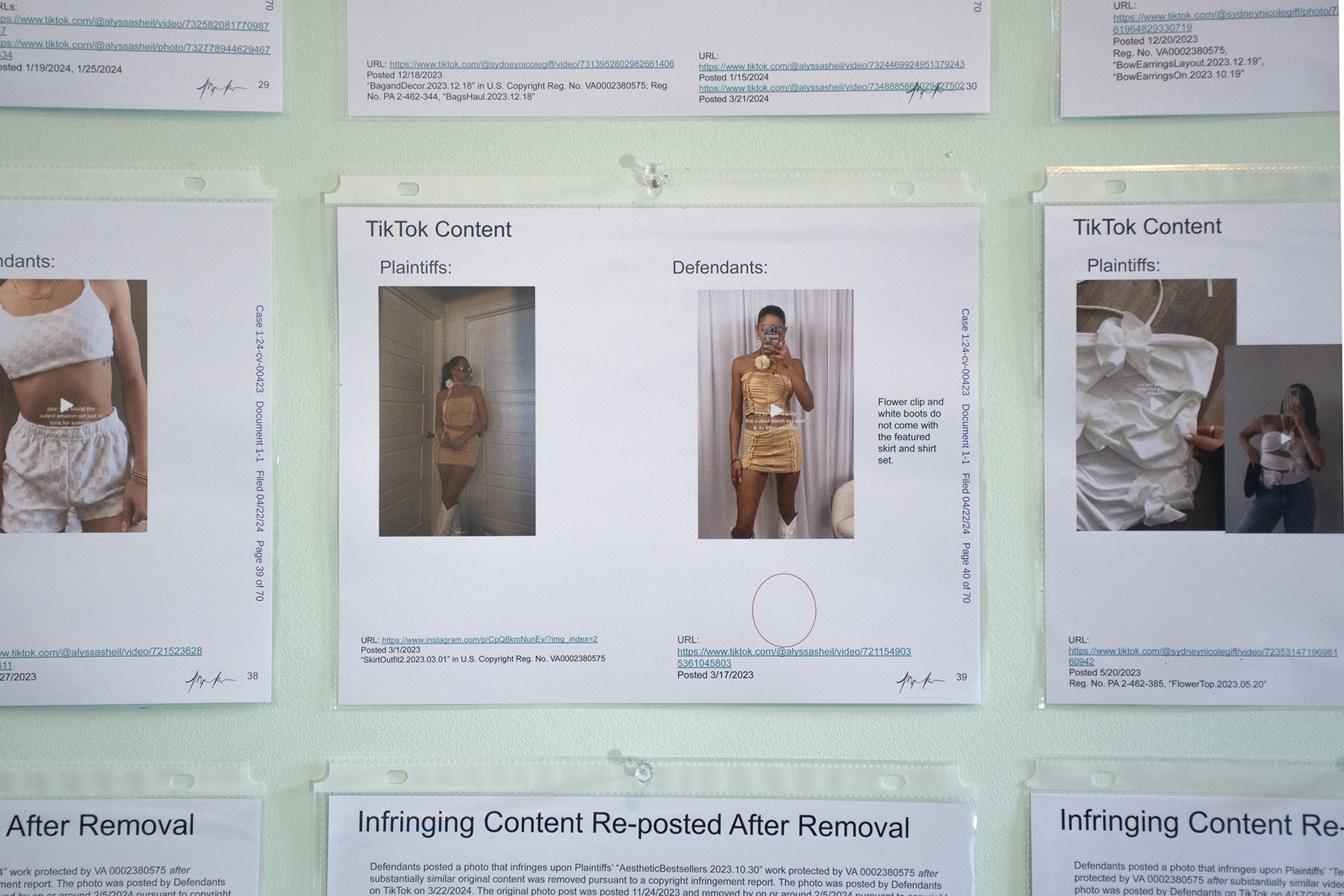
Maya Man, Hard Copy, 2025 Photo: Gunner Dongieux Courtesy: the artist
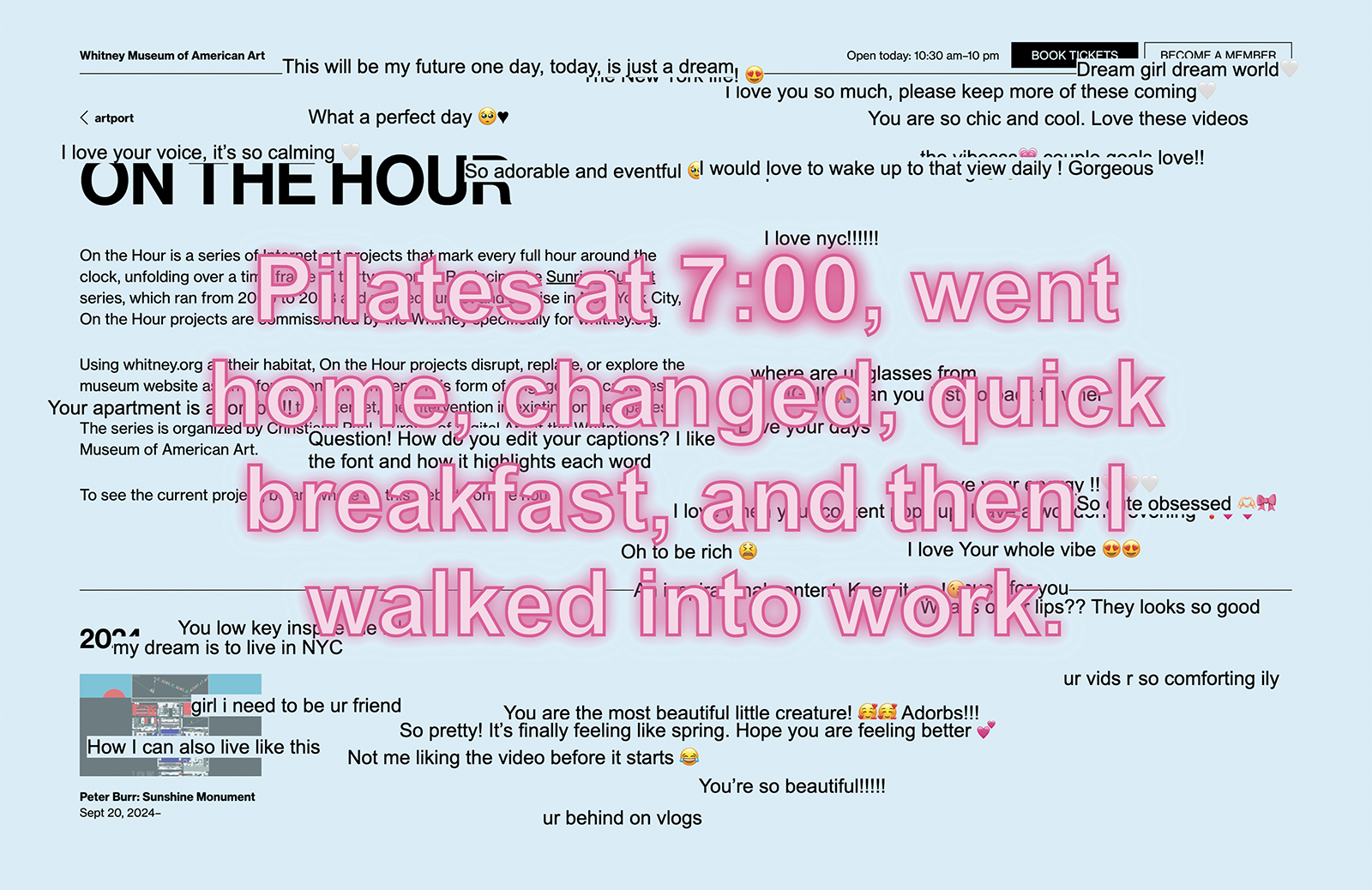
Maya Man, A Realistic Day In My Life Living In New York City, 2024 (screenshot) Courtesy: the artist and the Whitney Museum of American Art
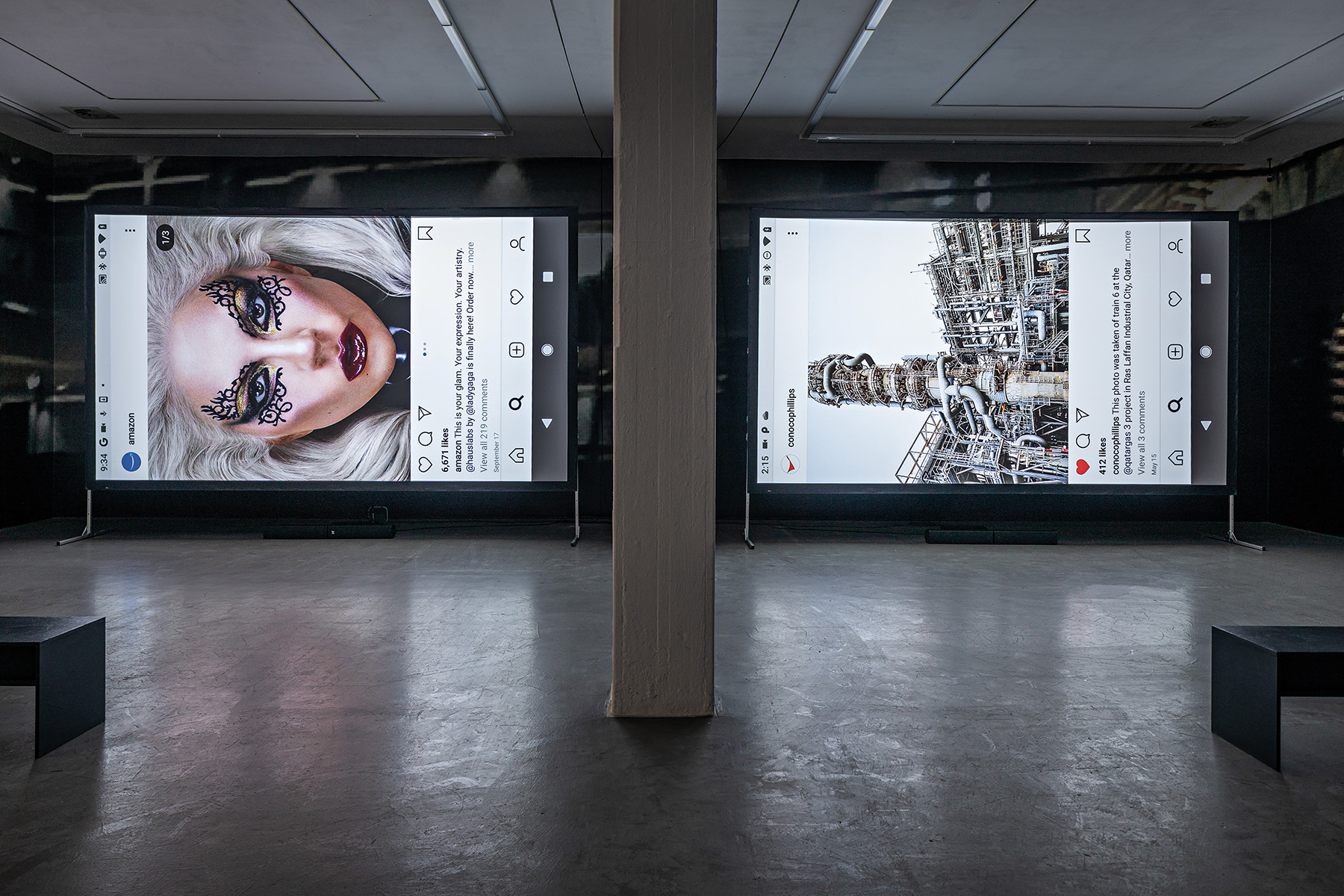
Cory Arcangel, Flying Foxes, installation view, Kunstverein Hamburg, 2022-2023 Photo: Fred Dott Courtesy: the artist and Kunstverein in Hamburg © Kunstverein
in Hamburg, 2022
CA: For those reading the conversation, we have been sharing a private Are.na channel together. Maya, how would you describe Are.na?
MM: The way I usually describe it to people is “Pinterest for ideas.”
CA: Okay. I say “a cool Pinterest.”
MM: Okay, yeah, very similar.
CA: Are.na is the only place online that I actually feel comfortable with these days. I struggle with identity online, so maybe we can come back to that because there’s probably a generational divide. It’s so fun to talk to you because the twenty years in between us create so many differences.
MM: A lot has changed.
CA: A lot is the same, but a lot has changed. So we’ve been sharing this channel, and one of the things that came up is you had posted a video from the Capital City Mall, which comes from a larger channel you have. And somehow I deduced that it was your hometown mall. So tell me about it. I want to hear everything about it.
MM: Okay. Well, the motivation for me to make the Capital City Mall Are.na channel came from us working on our Are.na channel and thinking about mass culture and suburbia as something that we’re both interested in. The mall analogy has been made a million times in relation to social media and the Internet. So, I made this collection of Capital City Mall YouTube walkthroughs because I wanted to “revisit” it online. Capital City Mall is outside Harrisburg in Pennsylvania. I grew up in a town called Mechanicsburg. I used to go there, and I remember I would walk in, and to the right, there was a Forever 21 store. The turnover of clothes there was so fast. It felt like the magazines I read were lifted off of the page and hanging in the store in a way that inspired this intense feeling of panic and desire. I used to love going there because it felt like all of my fantasies might be realized if I made the right purchases. Actually, while I was making this channel, Cab (Charles Broskoski) from Are.na messaged me on Instagram and was like, “What’s up with Capital City Mall? I used to go there with my grandparents.”
CA: No. Really?
MM: And I said, “What? Where did they live?” And he said Mechanicsburg, where I’m from, and no one ever knows this town! So that channel really unlocked something for me. Then it was crazy to me that I was making the Capital City Mall channel, thinking about our shared Are.na channel, and then you shared the video that you had made when you were 19 of your mall walkthrough.
CA: I hadn’t really thought about the mall. Just to get back to what you were saying, imagine that you’re in that Forever 21, and then maybe Cab actually walked by.
MM: I know! We were probably there at the same time. Do you know Gene McHugh? He’s also from Mechanicsburg.
CA: What an influential mall!
MM: The Capital City Mall was doing a lot of work.
CA: In the Ben Davis interview, you had also mentioned that you are annoyed when people talk about IRL and virtual as being two different things. I felt that, but I could never articulate it. Do you want to explain? Is there any relationship between this idea of yours and what you first experienced? Because if you’re in Forever 21, it sounds like it’s one of the first times you experienced being confronted by the media that you acquire. Is there any relationship between those two things?
MM: Definitely. I’m glad you agree with that about IRL versus online.
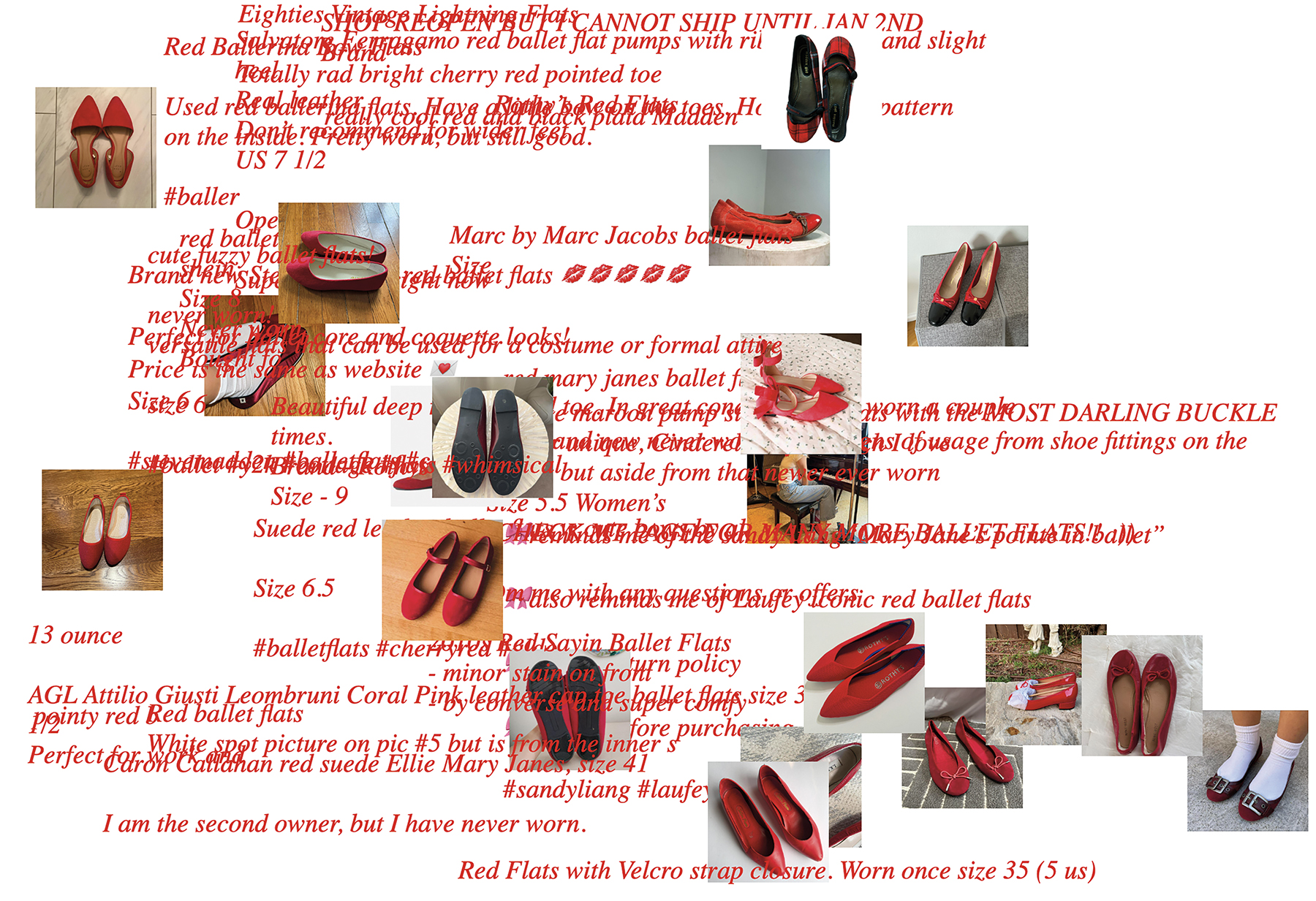
Maya Man, (The Angels Wanna Wear My) Red Shoes, 2024 (screenshot)
Courtesy: the artist and HEK, Basel
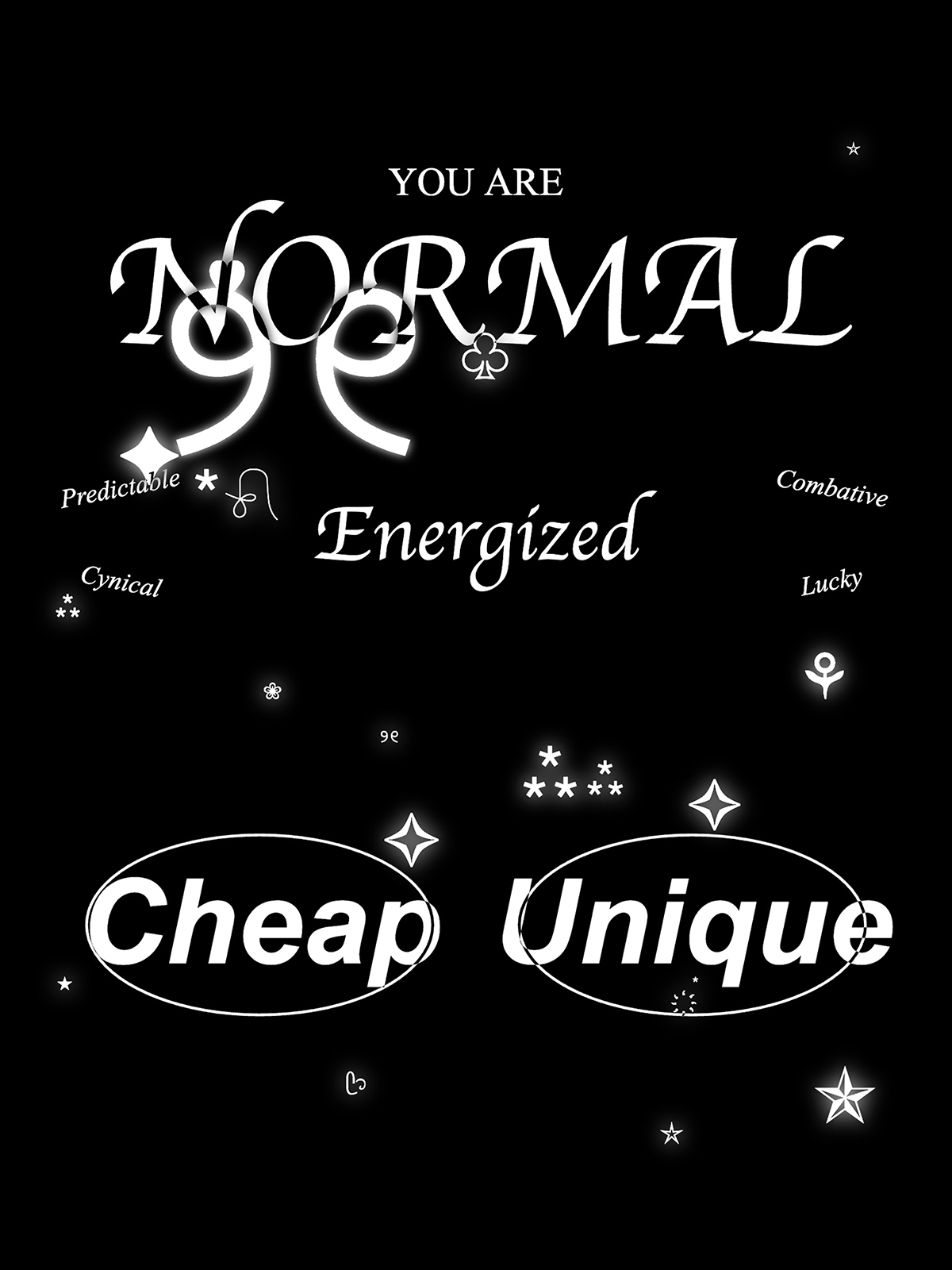
Maya Man, I’m Feeling Lucky #133, 2023 Courtesy: the artist and Verse, London
CA: Hearing you articulate it was like hearing a mathematician solve one of those impossible 100-year theorems. And I think it’s totally true!
MM: I always felt it was always true. A lot of my feelings about being online have come from this deep discomfort with posting, but also not being able to explain why, despite that discomfort, I do it all the time, and I’ve done it for over a decade very regularly. I think this feeling, the emotion that I would feel going into a place like Forever 21, I felt the same when opening Tumblr or Instagram or YouTube, or whatever.
Being surrounded by this potential of who I could become if I shopped the right way made me feel very powerful. Going into Forever 21, I’m thinking about everything I’ve consumed online. I’m thinking about images on the Internet and how I can become them via the clothes in front of me in the store. So, for me, there was no point at which I was able to conceptualize an idea of myself that wasn’t in relation to being online.
CA: I wonder if it comes from previous generations. For me, there was a whole adult life until I was in college, which was basically pre-online. I wonder if it’s something that will just be washed away like vaudeville or something.
MM: I know. I wonder about that too, but I also see people much younger than me still promoting this propaganda of IRL, like, you know, oh, the Internet is fake. Don’t believe everything you see; it’s just a highlight reel. I think it’s very dangerous to try to divide them because it basically invalidates people’s experience online, as like, you shouldn’t feel a certain way because it’s not real, that I don’t really agree with. Do you feel like when you were starting to engage in such a deep way with being online, people thought about the Internet as so far away from the place that everyone else was living?
CA: 100%. You couldn’t even explain what it was to people. You’d be like, “Well, the computers, they’re all hooked up together.” It just was like talking about Mars or something.
MM: And was the novelty for you exciting, being the one to bring people to it, or was it tiring to have to be the bridge?
CA: For normal people, it was exhausting. It was really only a small number of people, those 11 people I described earlier, that you could talk with. And it was maybe similar to your experience. I had to go to New York to meet people, which is kind of hilarious, but it is true. And it wasn’t until, I would say, ’06 or ’07, where I could start to relax a little bit, and I could talk about email to a normal person. So it was very specialized, very separate. Then, of course, social media came in the late aughts, and that really changed everything in a way. I’m pre-social media. To give you an example, in the early 2000s, for an artist even to have their own website (theirname.com or .net) and to put their work on it was considered gauche or tacky. It was a totally different universe.
MM: To me, it sounds quite romantic in a way. I’m very curious about the parallels between the pursuit of being a contemporary artist and the pursuit of being an influencer.
CA: That’s another thing I wanted to talk to you about because you had another text I read where you started diving into these ideas. Would you like to elaborate a little bit? What is it to be a net artist today? And maybe you could talk about all that together with the fact of being in an influencer world.
MM: You know, everyone’s on the Internet all the time now. 24/7. It’s no longer a novelty. What I’m interested in now is taking and repackaging a lot of what everyone’s too used to seeing and reframing it in my work. The overdose of content I take in online stresses me out. To me, making work about it is my only way through.
CA: What would be the parallel if you were a painter? You’re like, “Oh, I’m here in the studio every day, and these acrylics, they’re just grinding me down.”
MM: All this paint is just destroying me.
CA: You are surrounded by color all day long.
MM: There’s so much to look at. There’s so much visual culture in the world.
CA: What you’re saying is that it is an especially caustic medium. It’s so juiced up with violence and capital and commerce and monopolies and digital feudal lords, Silicon Valley, and these fucking guys. You know? It’s all there. Right? That’s your medium.
MM: It’s also so infused with desire. Like in your work, Sorry I Haven’t Posted. The phrase gets at this intense desire people have to feel like they are producing something.
CA: Or to be appreciated, essentially. To be seen in some way.
MM: That engine has been running the Internet since the beginning.
CA: There was another phrase that was supposed to be a kind of sister project to the Sorry I Haven’t Posted project, which was, Is anybody reading this?. Those were the first years, around 2010, that you could see this, that this need was starting to be exploited. That was really a new thing. Social media had really just started only a few years earlier, but you could just start to see that it was poking people in these ways. But now it’s like it’s more than poking. You know? It’s like algorithmically fire-hosed.
MM: All of those phrases are about this wish to have an audience, and that’s what being an influencer is all about. People who post regularly now usually aspire to brand deals and building their lives around the possibility of developing a dedicated following.
CA: I was in New York over the summer, and every once in a while, you would see these huge lines outside of these stores. And I realized this is because of Instagram.
MM: It’s really true. And TikTok.
CA: Yes, also TikTok, of course! Ten years ago it was not that way. I guess it gets back to your theory. There is no difference between IRL and virtual worlds. I also watched this incredible FAKE IT TILL YOU MAKE IT code video that you did. If I were in the early 2000s and things like that had existed, I would have lost my mind. It is exactly the kind of thing that should exist.
MM: I love talking about the code. I’m so glad you watched it and liked it.
CA: I mean, I couldn’t even believe it. It was like crack to me.
MM: I love hearing artists talk about their own code because it is very unique that the medium is completely obscured in the final work. You never see it.
CA: When you do a drop like that, can anyone view the source code?
MM: Technically, anyone can view the source code. I don’t have a public GitHub repo for this one. But anyone can inspect and view the source. That is my dream, to have someone interested enough to read through the files, because I think about it when I’m writing them. I’m naming variables in a specific way and everything.
CA: It was so beautiful. So, you’re very orderly. You’re very tidy. And what I loved is that there was this really orderly core to the code. The sentences with the kind of Mad Libs variables. To me, it was so incredible because that is actually what it’s like to be a coding artist. Then what I especially loved is that at some point, you were kerning your own fonts.
MM: FAKE IT TILL YOU MAKE IT was originally released on a platform called Art Blocks, and a constraint that they have is that you can’t upload any fonts. Everything has to be on-chain, so you have to rely on the default web safe fonts. In a lot of the Instagram graphics that I was referencing in this piece, the typesetting is very bespoke, so it was hard to create a way to mimic that with code. The really challenging thing about working with text is that it’s very obvious when something is ‘wrong’ versus when making something more abstract. If the words are out of frame, it looks like a mistake, which you can play with in an intentional way, but there is not a lot of room for error. When you’re working with a generative system and you have to allow for a really wide-ranging possibility space of what can be generated, there’s a ton of testing that you need to do before letting the code run live. It’s funny, looking at one FAKE IT TILL YOU MAKE IT output, I’m like, “someone’s going to think I made this in Canva.” That’s why it’s really important to me to talk about the code. It makes up the core concept of the piece.
CA: What is the line between the fantasy and the reality of that language?
MM: All the language is actually taken from real Instagram posts. Nothing is fabricated. It’s all found. I collected hundreds and hundreds of different posts from different accounts to use as a reference. But I wanted the perspective of the project to feel like it was coming from a singular voice or maker, because it was also going to live on its own Instagram account that I would post on every so often. There are choices that the algorithm makes that are not what a person, a designer, or a content creator would make when they’re making these graphics, so I need to shape the code in a way that constrains the output pretty strictly. Then the algorithm starts to return this cohesive collection of generated output. It looks like there is one specific perspective, even though it is different than what a person could ever create.
CA: Does this emerge while you’re coding?
MM: It’s something I’m curious to ask you about, too, because I am so concept-driven, and I find fine-tuning the visual output of a piece extremely difficult because I know how I want it to feel, and I know, looking at other people’s work, what I like and I don’t. I’m very tuned into that. But to try to warp something so it’s the best representation of the concept that I have and I know that I like, it’s a really grueling process for me for some reason. I spend a lot of time iterating on one detail of the code, generating hundreds of outputs, looking at the collection from afar, and looking at it close-up.
CA: When did you first know that you had this visual sense? When did you know that you were pretty psychotic about how things are laid out?
MM: Visually, I really gravitate toward the aesthetics of pop culture. I’m really into making things look almost real. But then, when you get close, you realize something’s off about it. Reality is crystal clear, a very hard-coded reference. It gives me something very steady to work toward. Also, coming from a background in software engineering, I’m also very tuned into the exactitude that you need to make these things look a certain way. Which I think is sometimes great, but then also sometimes it’s difficult for me to know exactly when to let go of reality a little bit and twist it in the way that actually makes it art.
CA: So, there’s also a lot of neurosis here. There’s a lot of pain, anguish. Right? A lot of this is unpleasant.
MM: A lot of it is unpleasant.
CA: When I am in my office, I am always in a little bit of a bad mood. I’m always dissatisfied.
MM: I mean, it’s funny. Earlier this year, I went to the Ruth Asawa show at SFMoMA. I walked away thinking, “Wow, this is an art practice that’s really in alignment with having a nice life.” That’s very surface level, but I think there is something to the medium of the way that we work that is a little bit… yeah, masochistic. I have a belief that good work comes from melting my brain through the process of immersing myself in the media and making work about it.
CA: It reminds me that when you were doing your FAKE IT TILL YOU MAKE IT, you started this other Instagram account to train the algorithm to kind of melt your brain. You’re training yourself like if you were AI.
MM: Exactly. It really felt like I needed to learn to think like I’m a generative model that’s only been trained on these graphics. For me, that’s always been the process when I’m making work about any kind of content online. I need to go really deep into that genre of content and feel like I’m fully immersed before I can make something decent about it.
CA: So, you’re basically training your intuition. That’s how I described it with the Let’s Play Majerus G3 project. I had to spend a year in Majerus’ laptop just to train my intuition and get a sense of it where I felt comfortable. Then it was quite easy after that.
MM: It’s almost like working out a muscle. When it comes time to do the work, you feel trained, and it feels easier because you’ve trained in it. Watching you use Majerus’ laptop in your YouTube videos, it felt like you were dialed in. You could just tell that you had this backlog of hours and hours spent on the computer because you knew exactly where everything was.
CA: Actually, those were pretty rehearsed.
MM: Really?
CA: I would record them over and over again just to get the tone right. So they were actually quite massaged. It’s one of the secrets behind that project.
MM: They do really feel like they are for a YouTube audience.
CA: Yeah. They’re for a kind of audience that has no attachment to contemporary art in theory. That is one of the pleasures of doing this kind of work, it often ends up in front of people who aren’t aware that it’s even a work. That’s one of the things that I love so much about net art: it is ambiguous. When I first saw a JODI piece in the ’90s, I didn’t know it was art. It was unclear what it was.
MM: That’s what’s so beautiful about making work on the Internet. You can reach people who aren’t going to museums and galleries and who don’t know about contemporary art, but can appreciate the absurdity of a project.
I was watching a lecture you gave at the ICA in Philadelphia. You were talking about your piece Drei Klavierstüke. You were showing it in a gallery, and it was on BuzzFeed. You have these two lanes that you’re sharing work in, and both are important to you. Both are really weighted in, in your practice, but they live in completely different contexts. And I’ve always wanted that, but it’s quite a hard balance to strike.
CA: That’s why you did the Instagram channel for FAKE IT TILL YOU MAKE IT. That’s a similar dynamic. On Art Blocks, everybody knows it’s an artwork, while on Instagram, it travels ambiguously. I wondered if you were annoyed that Instagram just put a retweet in now.
MM: What I’m most annoyed by is that Instagram has changed its grid layout to not be square.
CA: Oh, really?!
MM: FAKE IT TILL YOU MAKE IT was released in 2022. I already feel like it’s an archive of a past moment in Instagram culture.
CA: I always have this analogy. Imagine if you were to see a Jeff Koons sculpture twenty years later, and it would be shrunk to one-third its size. That’s what net art is like. It’s always like this, you know? It’s just changing.
MM: For work that you released that’s about a really hyper-specific moment of online or technology culture, do you feel like the impact is strongest at the moment when you’re within it, or once you actually move past it and then have hindsight?
CA: That’s a crazy good question. It’s a little bit like jazz. In the olden days, in the ’50s, jazz musicians would go to the clubs, and the clubs would always have mics set up. They never knew if the mics were on or not. Sometimes they would be on. And three months later, there would be a record released by Columbia Records, and it would be like, “Live at the blah blah blah club.” So, sometimes I think this kind of work is very much like that, it’s just like it happened once, and it’s a recording. If we extend the metaphor, was the performance the most effective the night they were playing in the club? Probably. An even higher-level theory that I’ve been trying to test out lately is that all art is a performance. Even a painting. Even if you go to the MoMA and you stand in front of a painting made in 1959 or whatever. It’s just some color on a piece of fabric. It really means nothing. It’s a performance only in that it’s hanging in the MoMA, and someone is whispering in your ear, “Oh, that’s a Rothko.” Does that make sense?
MM: It totally makes sense.
CA: Not to mention that it’s even literally a performance because the rays from the sun are coming and hitting a piece of plastic polymer. So I wonder if everything is not so far from what we do, really.
MM: I’ve been thinking a lot about this. I am thinking about an Are.na channel you have, Things I learned in art school. An amazing channel.
CA: Thank you. That’s all not even a joke. I’m not performing, I’m being sincere!
MM: One note in it really unlocked something for me. It says, “What happens in the studio is the work. And when the work leaves the studio, it’s show business.” That’s what I really think. That’s what creates the whole world of art. You need the show business swirling around the art object, and that’s what’s making it the painting hanging in MoMA. That’s the coolest part.
CA: That same painting could just be hanging in your aunt’s living room, and you would not give a fuck. Exactly. Show business. It’s like when you see the festival Coachella. You see the poster. Guess what? Some names are little and some names are big. That is show business. The managers of each one of those bands are fighting to death to get the font of their band a little bit bigger, and that’s what makes the world go around.
MM: It’s so true. It’s one of the biggest and, I think, toughest lessons to learn about being an artist, which goes back to the ‘artist as influencer’ idea.
CA: Tell me, how do you survive in the age of ‘influencers as artists’?
MM: I make a lot of work about influencer culture, specifically. It’s important to me to maintain ambiguity. I am not interested in playing the role of an artist who poses as someone living above Internet culture, because I live inside of it. It’s interesting to be able to both recognize that desire and be in certain spaces online and then also be able to critique them. I’m able to experience the highs of indulging online and the depth of its flaws, and the kind of consequences that it has socially and psychologically. Did you ever feel like you had to walk a tightrope between playing the role of the contemporary artist and being someone who releases things online?
CA: Art is what people think art is, and also what becomes embedded in the archives of art. At the moment, there are museums, but maybe now there are other things like blockchain collections or whatever. I think maybe there isn’t an answer because in the end, you’re just looking for the highest of human expression, regardless if it’s a kid or someone who’s fifty years in the art game. But, with that said, I like the game, and I like the show business. So in a sense, as a professional, I am embedded, and I do enjoy the kind of logistics of being an artist in the world. The avant-garde is what people in the avant-garde want and think is in the avant-garde. Although perhaps, maybe, I should live a little bit more in the other world of just appreciating all beauty.
Maya Man, I’m Feeling Lucky #270, 2023 Courtesy: the artist and Verse, London
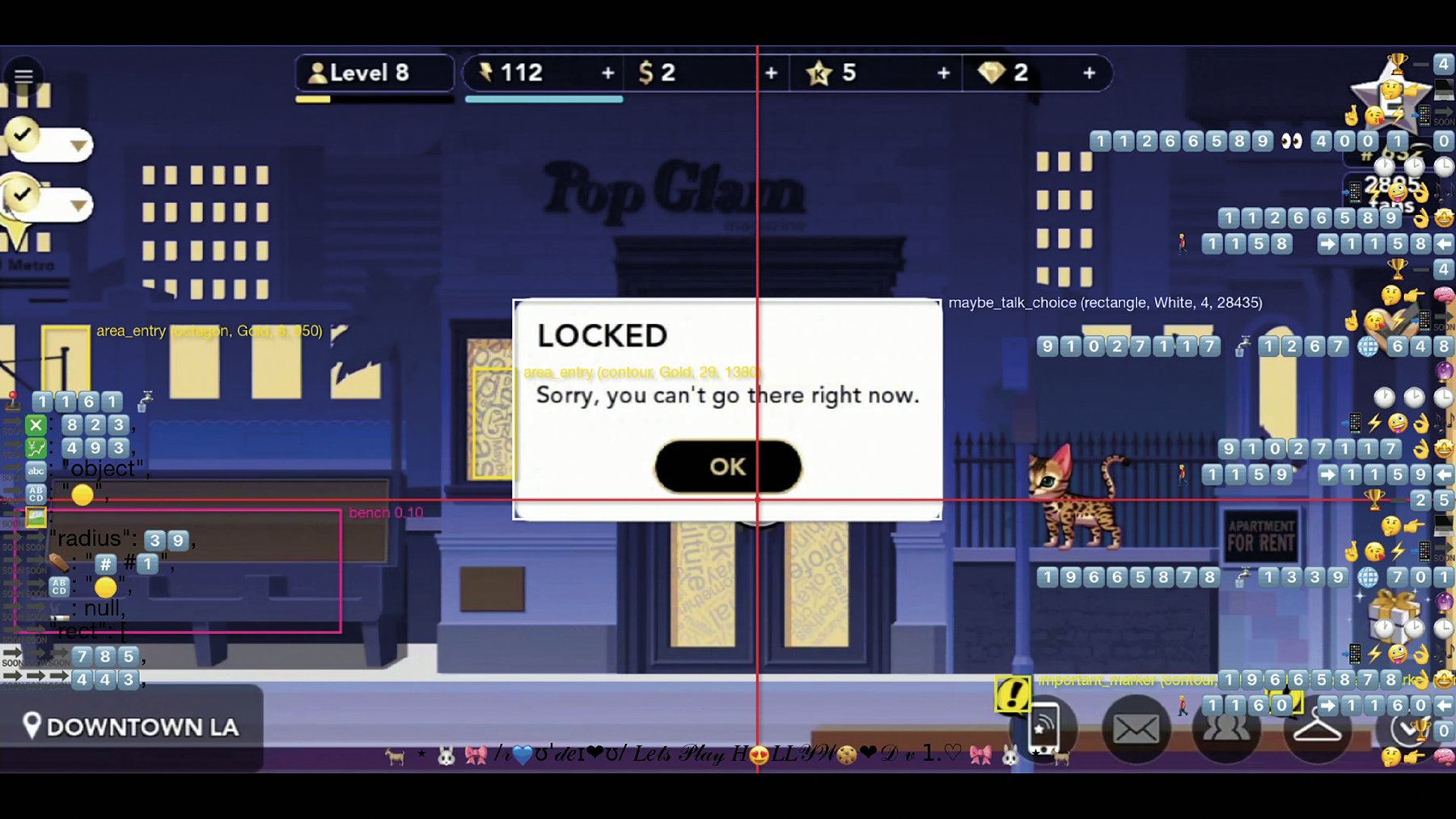
Cory Arcangel, /roʊˈdeɪoʊ/ Let’s Play: HOLLYWOOD 2021-1214T19:26:00+01:00 10918, 2021 System sounds: Daniel Lopatin (Oneohtrix Point Never) Photo: the artist
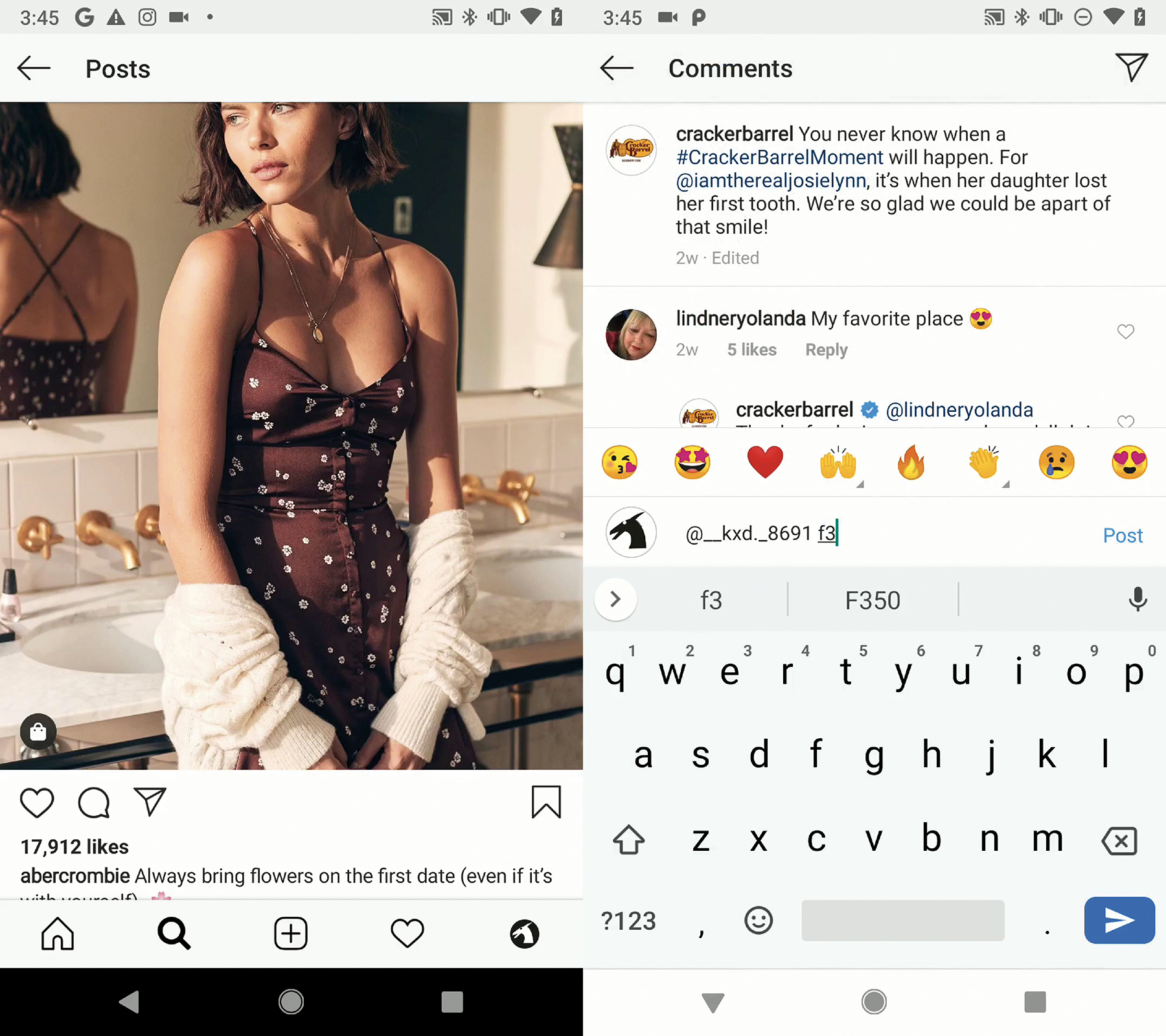
Cory Arcangel, we deliver / the king checked by the queen, 2020 Photo: the artist Courtesy: the artist
CORY ARCANGEL + MAYA MAN
CURA. 45
The Blackuout Issue
Artist + Artists
CORY ARCANGEL (b. 1978, Buffalo, NY, USA) is an artist and composer living and working in Stavanger, Norway. Recent projects include: Let’s Play Majerus G3, Michel Majerus Estate, Berlin; ALL I EAT IN A DAY, Kunst Halle Sankt Gallen; Worldbuilding: Gaming and Art in the Digital Age, Julia Stoschek Collection, Düsseldorf, and Centre Pompidou-Metz. His work has been exhibited in solo exhibitions at: Art on The Mart, Chicago; Kunstverein in Hamburg; Whitney Museum, New York; Carnegie Museum of Art, Pittsburgh; Barbican Art Center, London; Reykjavik Art Museum; Hamburger Bahnhof, Berlin; Museum of Contemporary Art, Miami; and the Migros Museum für Gegenwartskunst, Zurich.
MAYA MAN (b. 1996, Philadelphia, PA, USA) is an artist focused on contemporary identity culture on the internet. She has exhibited at: Whitney Museum of American Art, New York; bitforms, New York; MoMu, Antwerp; SOOT, Tokyo; Verse, London; HEK, Basel; and the online platform Feral File. She has performed or presented her work at Tate Britain and The V&A, London; MOCA, Los Angeles; and The New Museum, New York. She organizes a curatorial project called HEART, previously run out of her studio in SoHo. She is online at mayaontheinter.net.