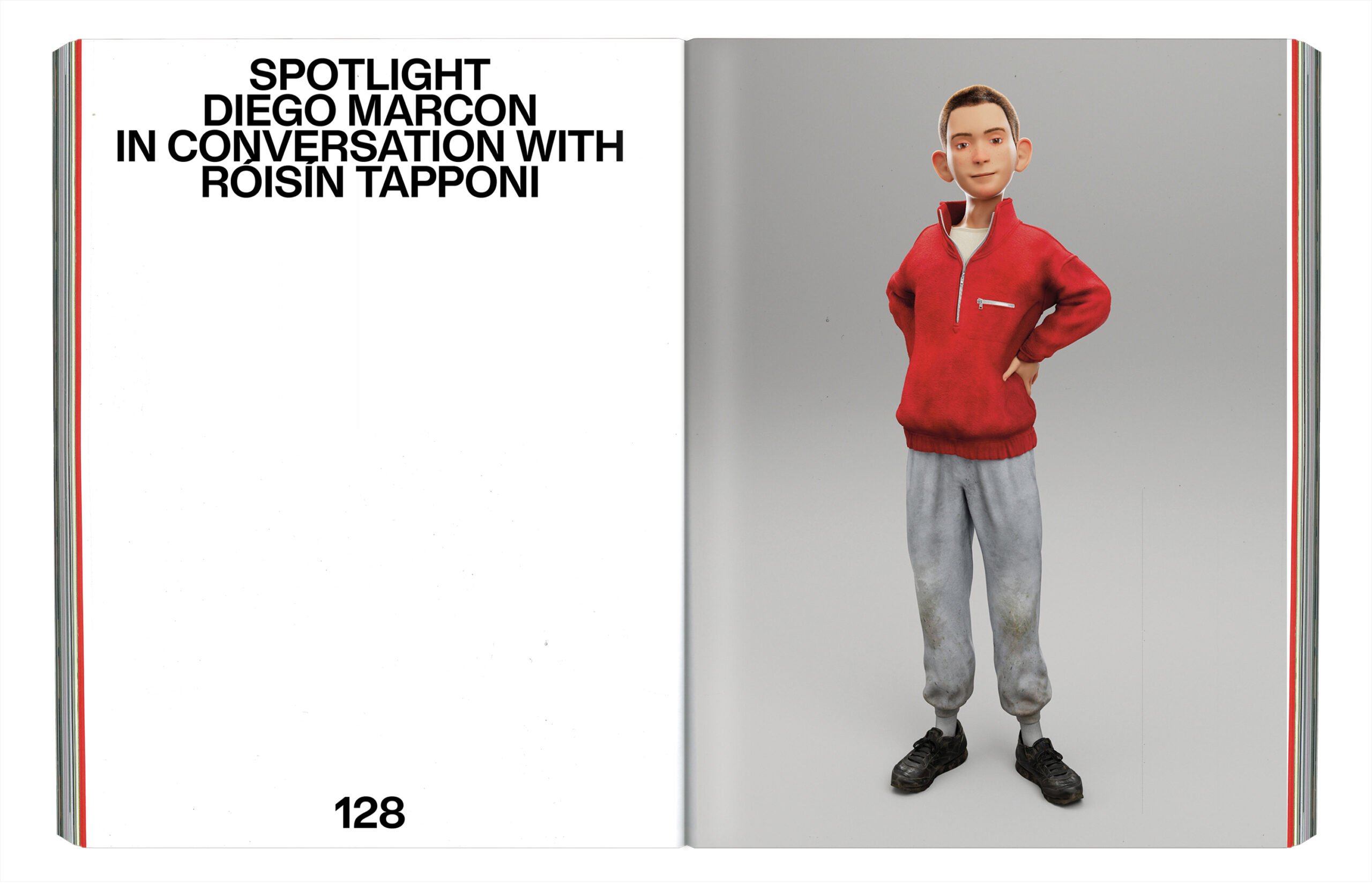
in conversation with Róisín Tapponi
CURA. 43
Coming of Age
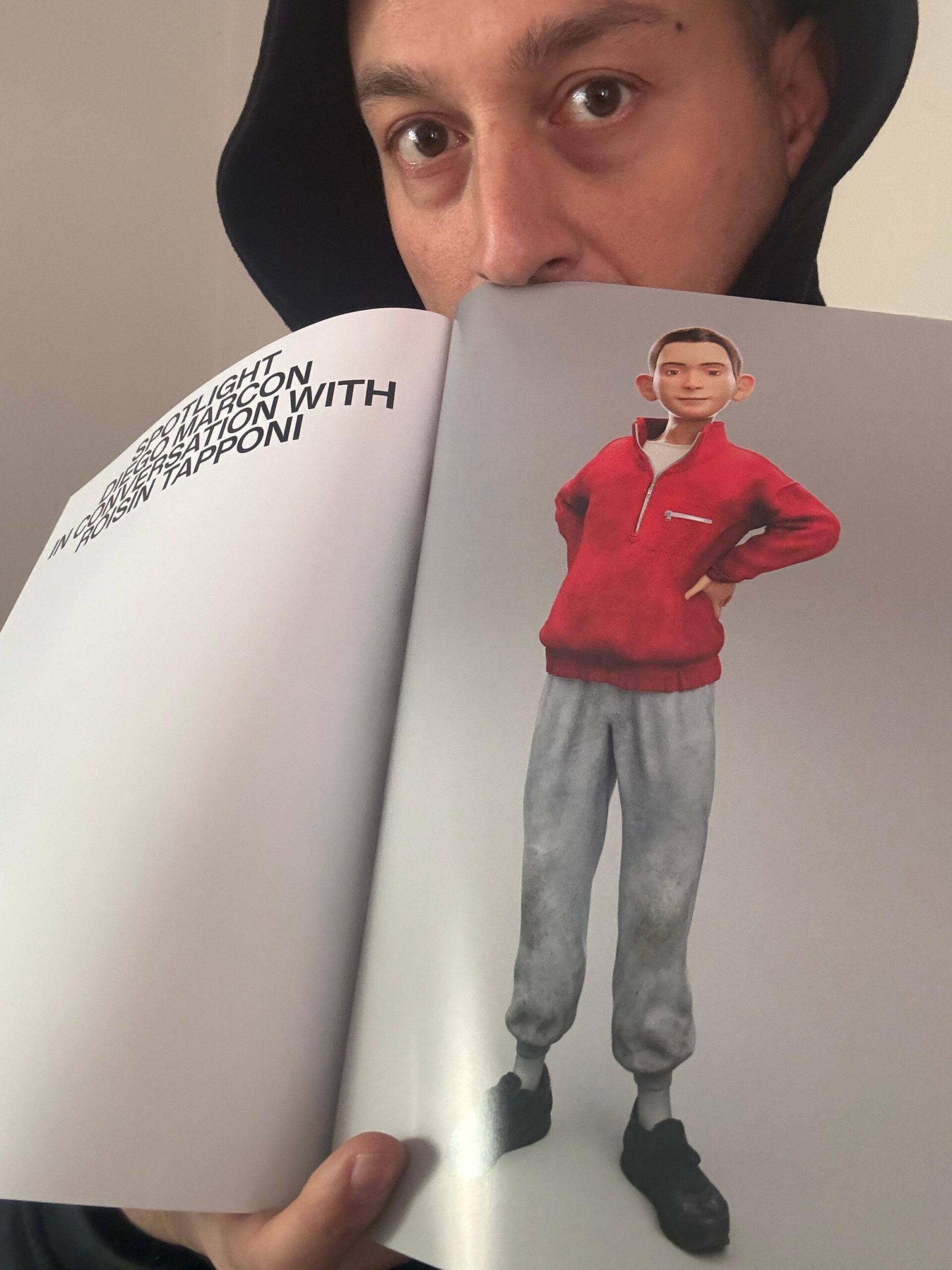
Is there a defining moment that marked your ‘coming of age’?
While playing with my dog, I purposefully hit her on the nose with a slipper, and she started to sneeze blood.
What about the moment made it ‘coming-of-age’?
That was the moment I discovered wickedness, and that pain could be inflicted for no reason, and even with pleasure.
For me, coming of age means experiencing moments that are universal or generic for the first time, such as getting your period. We remember these moments partly because cinema makes them remarkable. They are societal rites of passage. In this sense, there is something structuralist about coming-of-age, as a model of a universal narrative structure, and a system of recurrent motifs, which determine how we exist and relate to each other in society. What do you think?
Coming of age can’t exist without narrative—whether that be literature, cinema, or the lyrics of a song. It seems like a genre, and as a genre, it has its own codes
Despite structuralism’s association with a certain cold rigor, many structuralist filmmakers have used children, and their way of being, as a hook, to more easily get closer to emotion. For example, Jonas Mekas’ epic As I Was Moving Ahead Occasionally I Saw Brief Glimpses of Beauty (2000) and even Hollis Frampton’s Zorns Lemma (1970). How does childhood or certain themes enable you to reach others?
It seems like most people easily empathize with children—they are able to easily reach a sensible and vulnerable dimension. For me, children are like Trojan horses: they help me to ‘get in,’ and once there, we play together.
Children are your primary actors, but I think your work refuses vulnerability. I say that because cinema is arguably the most collaborative medium, but your artistic decision to develop a practice based on principles of animation and structuralism is the closest one can get in cinema to total control. You don’t use actors; for example, you minimize the risk of intervention that comes with other bodies. From where does this desire to control come from? Where does control break, for you, if ever?
I am not sure making movies is a collaborative medium per se—actually, I think it is a pretty hierarchical practice, and often it is only the film director and a few other figures who are venerated. In any case, perhaps the aim of such control is a sign of vulnerability itself. A completely designed, controlled, or programmed set, is of course a failure and a pathetic effort. The more structure there is, the more I feel the emptiness behind it, the void it tries to organize, and I think my interest in structure primarily lies here.
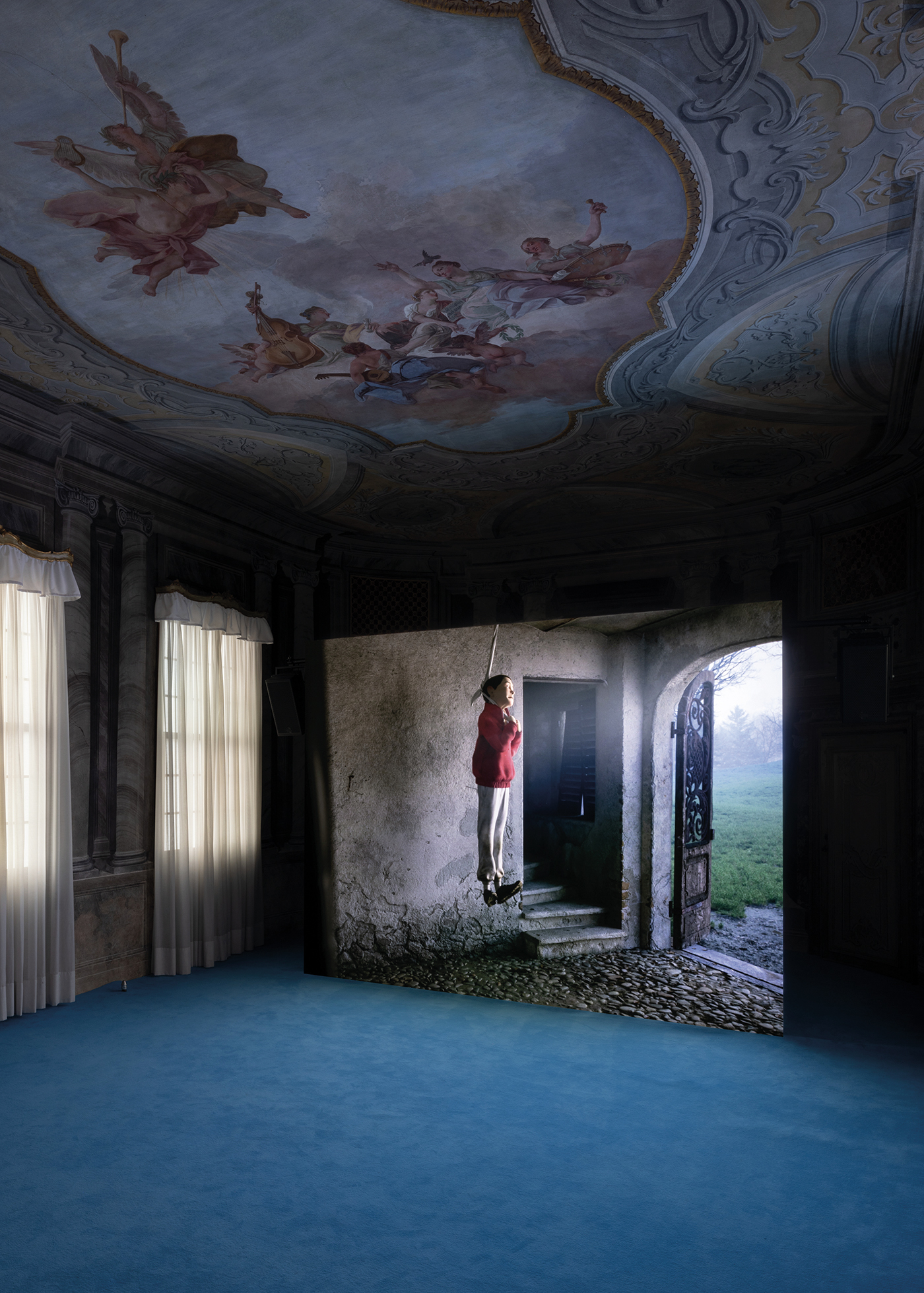
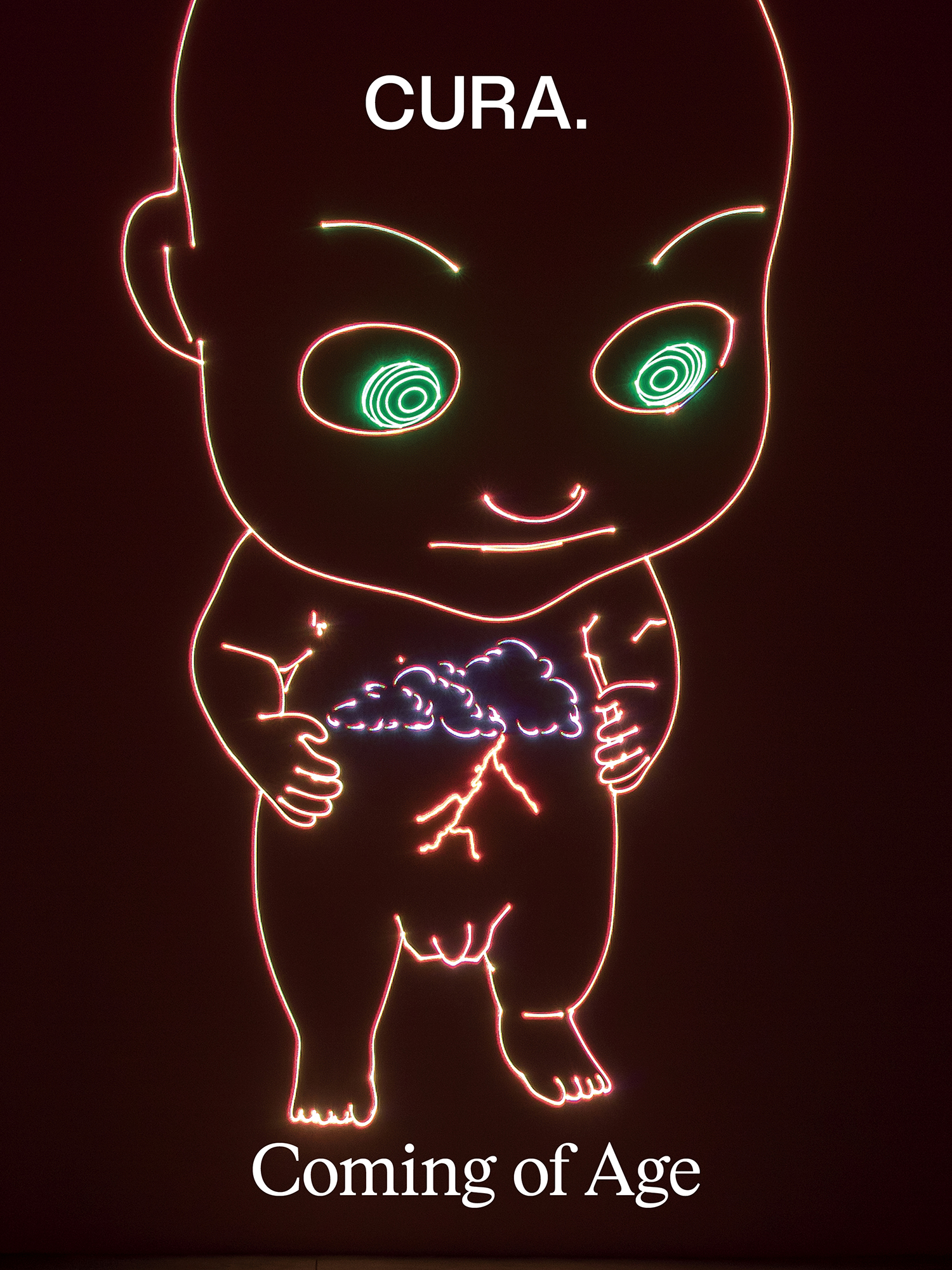
Nebula (installation view) Fondazione In Between Art Film, Venice 2024 © Diego Marcon Photo: Andrea Rossetti/ Fondazione In Between Art Film Courtesy: the artist, Sadie Coles HQ, London, and Galerie Buchholz, Berlin/Cologne/New York
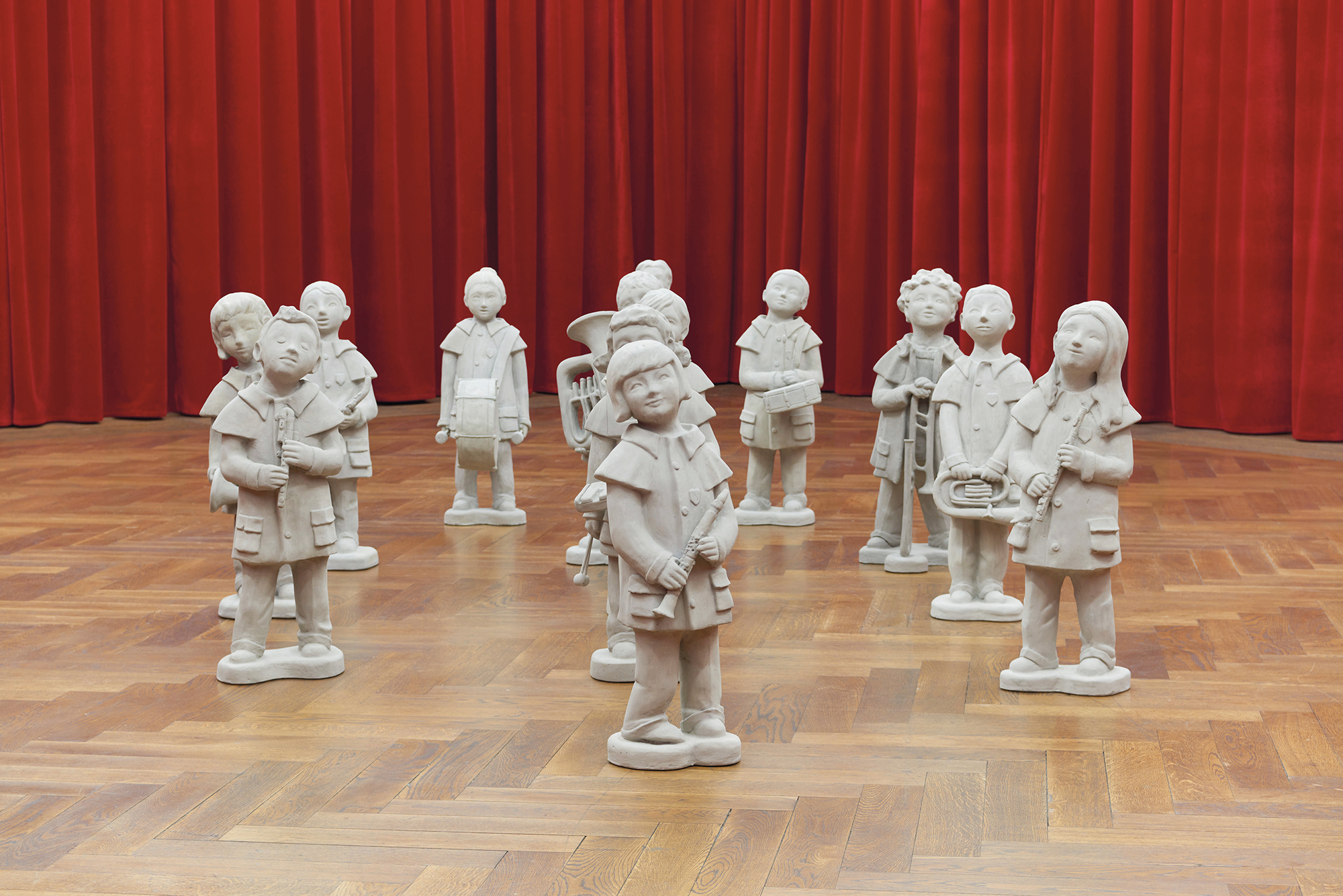
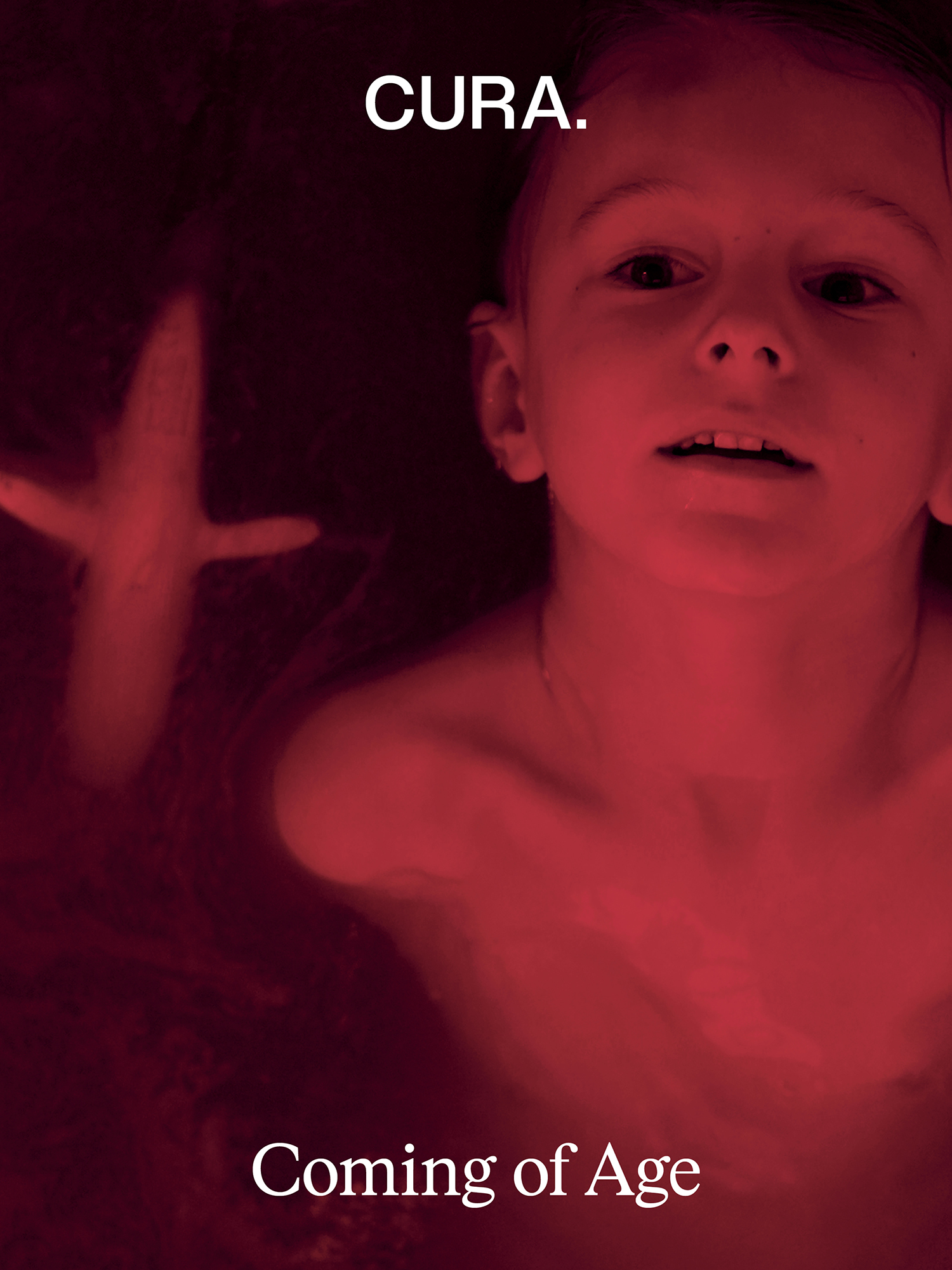
Have You Checked The Children (installation view) Kunsthalle Basel, 2023–2024 © Diego Marcon Photo: Philipp Hänger / Kunsthalle Basel

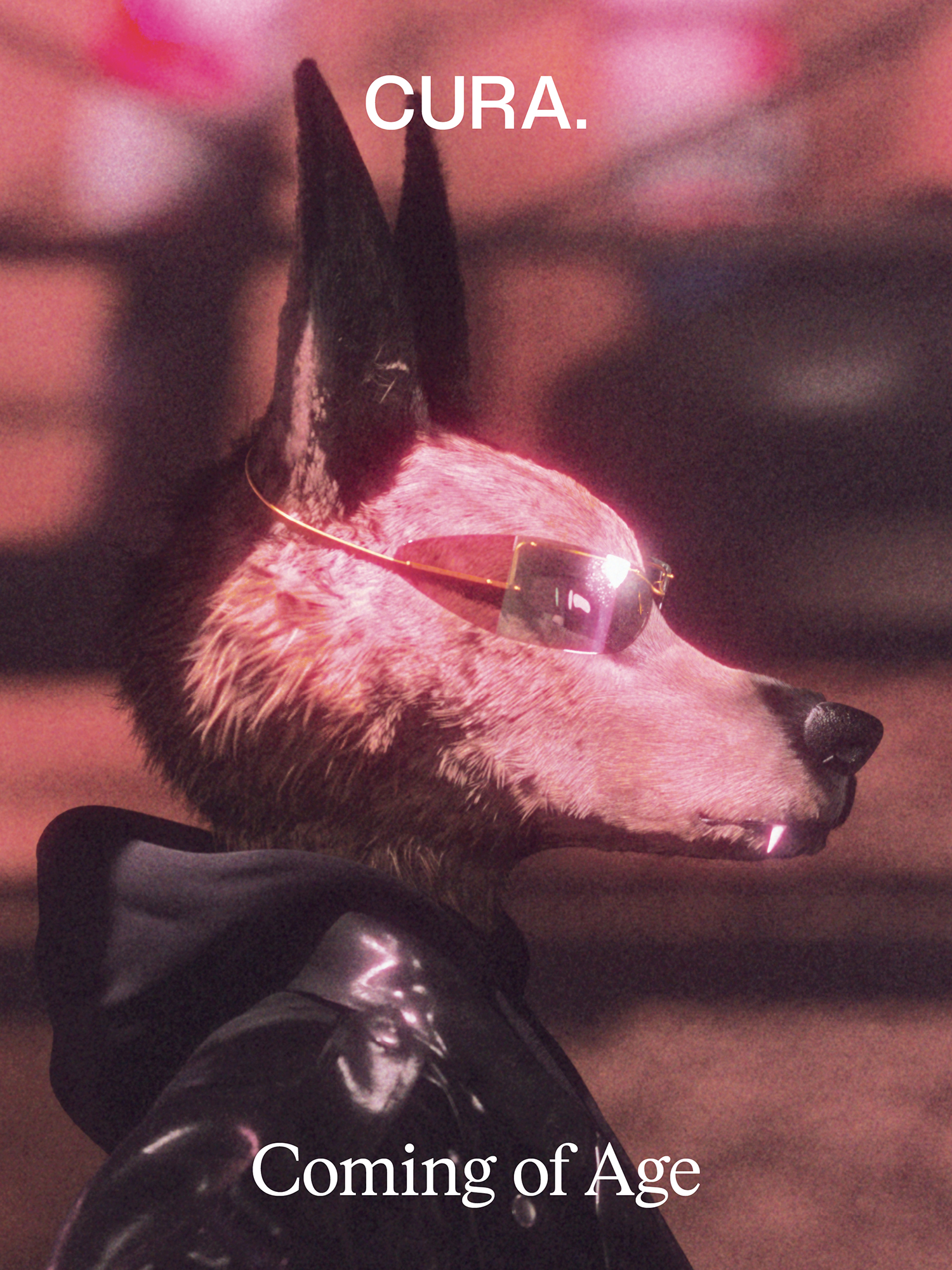
La Banda di Crugnola, 2023 (production images) © Diego Marcon Photo: Andrea Rossetti Courtesy: the artist and Sadie Coles HQ, London
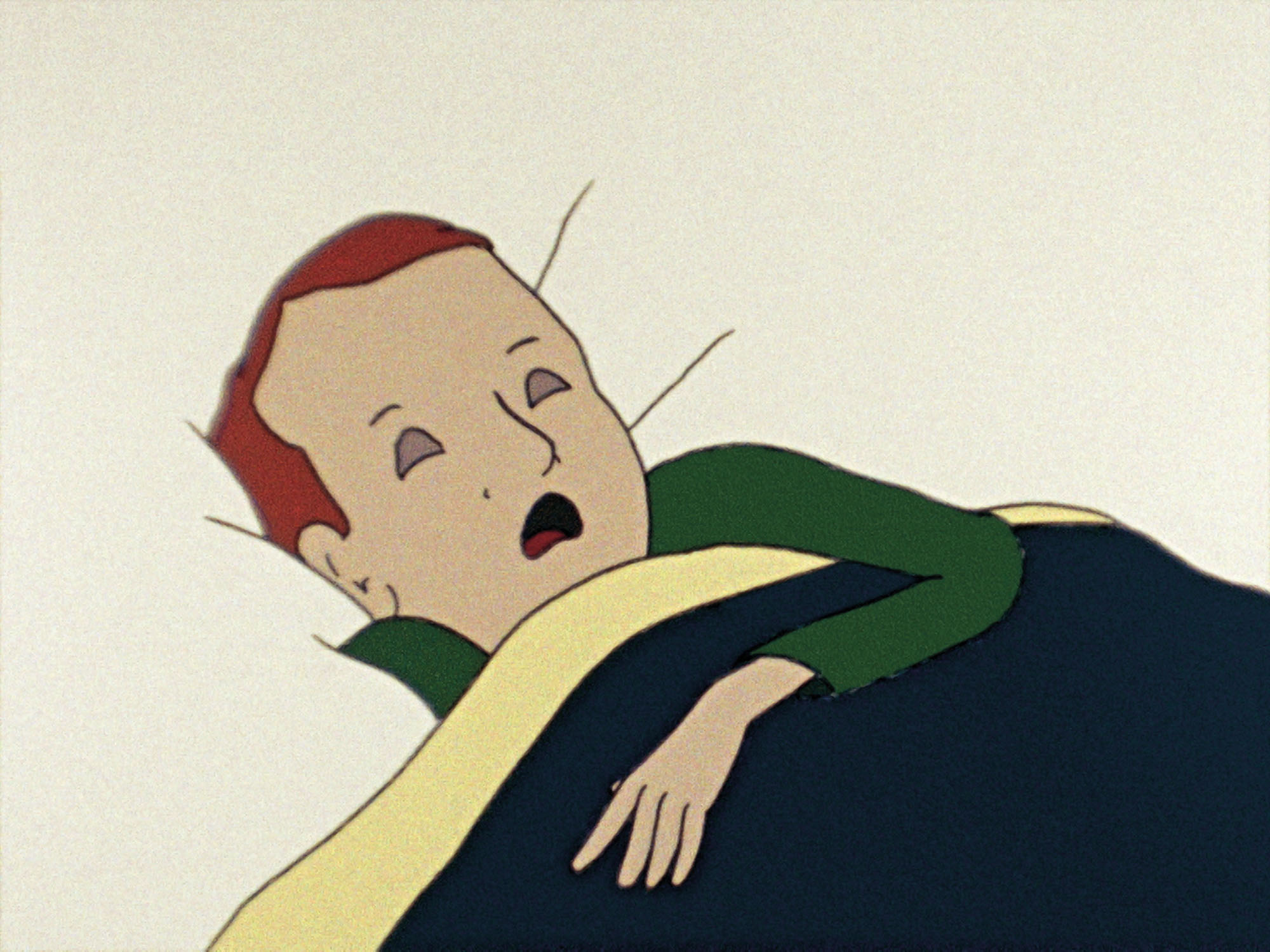
Il Malatino, 2017 (video still) © Diego Marcon Courtesy: the artist and Sadie Coles HQ, London
I think your films are beautiful because of their expressive melodrama, particularly of melancholy. There is something coming-of-age about this heightened state of emotion. At the same time, there is also an emotive restraint that emerges from structuralism. Is the simultaneous melodrama and discipline of your films a contradiction? How do they relate to each other?
Melancholy is characterized by a sense of loss of something that we can’t really grasp. In this sense, I think melancholy is very connected with coming-of-age. What is lost might be childhood, but what is childhood exactly? I just finished reading Tove Ditlevsen’s Childhood, and she writes that it is “long and narrow like a coffin.” In relation to melodrama, I don’t see much contradiction: generating feelings towards cinema is planned—it is a discipline that can’t be improvised, if we’re speaking about studio or fiction movies. Structure might be a part of the path to get there.
Repetition and structure are not reassuring and comforting in your films, they are suffocating and torturous, evoking a strong sense of paranoia. Why? In structuralist terms, what can cinema say about time and free will, or lack thereof?
Despite the fact that structure, repression, rules, and so on might give pleasure and satisfaction in specific contexts, this is not reassuring or comforting to me!
I think structuralism is the closest thing to architecture in cinema. You have shot in buildings where the architecture is a character; Monelle (2017) and Ludwig (2018) both depict characters who are trapped by the architecture and, cinematically, by the loop structure and frame of the shots. In your films depicting illness, children are trapped by their bodies. Do you see this link between architecture and structuralism in your practice? You have also worked with architects for your exhibition design. How is it possible to think about architecture in cinema?
I think more about space than architecture. I like their narrative quality. An exhibition for me is dramaturgy, and the venue—with its features—is one of the most important elements for the development of this dramaturgy. Space plays a huge role in the reading of a piece and the way we approach it, both physically and emotionally. Artworks are not in a vacuum, they are in space: its specificities are fundamental for the works themselves. Exploring architecture in an audiovisual way often means moving with the camera through the space, suggesting a path through the editing. This is the opposite of what happens in Monelle, where we don’t have an image edited after an image, but darkness. The attempt was to portray the building as a monolith, through the repetition of its recognizable structural elements. For that reason, among others more conceptual and speculative, the film is set in Casa del Fascio in Como by Terragni: because it is a dialogue between pure geometrical forms, very iconic, and repeated in space. For me, it is the materialization of a virtual space, and this underlines the ambiguity that crosses the whole film between real and virtual, analog and digital, horror and comedy, silent film and musical, and so forth.
Your films are not ‘for’ children, in the way, for example, that Abbas Kiarostami made a series of experimental films ‘for’ children. This is due to the dark subject matter of your films, however, there is something close to a nursery rhyme or bedtime story in the repetitiveness and confines of the structural form throughout your work. You also published a book of nursery rhymes, Oh mio cagnetto in 2020, which all have an AABB rhyming pattern. Could you speak more about this link between nursery rhymes and structuralism?
My interest in certain kinds of poetry, and especially in nursery rhymes, is because I am interested in structure, and they rely on it.
There is something also inherently structural about genre cinema. You borrow from genre cinema, without making genre cinema. Agnès Varda does this very well. Le Bonheur is a horror film! In your films, there are many allusions to the horror genre. How has studio-produced genre cinema influenced you? Any particular examples?
Horror interests me very much because horror movies need to scare people, and build tension and suspense. To do so, even the most bad or boring horror movie has at least one trick or use of audiovisual language that is compelling or interesting. One of the films that most influenced me I think has been The Blair Witch Project, which I saw in 1999 at the cinema when it came out. It was so scary and mind-blowing. I rewatch it once a year and it still scares me a lot.
Emotions and sentimentality are viewed within society as provincial, closer to the masses. Even though the general public is not your primary audience, because you don’t make narrative, feature-length, commercial cinema, is that an audience that interests you? Have you thought about engaging them? How do you relate to others in society through filmmaking?
I have difficulties thinking about the audience because it is composed of many different subjectivities that I don’t know and can’t know. They have different backgrounds, paths, personal stories, and memories. I can partially relate to that I feel I am part of. I think audiences are deeply engaged in cinema, even if in a way that doesn’t allow any exchange, except maybe an economical one, in terms of feature-length films.
The children in your films often behave in an extremely melodramatic way, veering on angst. I recently saw Nan Goldin’s three-channel video installation, Sisters, Saints, Sibyls (2004-2022), which is about Goldin’s sister who committed suicide. For me, Goldin’s films epitomize angst. It is an aesthetic she developed to visually communicate trauma. You have developed a way of visualizing melodrama that differs, for example, from popular cultural forms associated with melodrama, such as opera or the telenovela. How have you developed your specific aesthetic for melodrama?
I would love to read how you think I developed this way of visualizing melodrama that differs from the popular cultural form associated with it!
How can cinema, generally speaking, creatively give form to emotions, so they can be better communicated?
For me, the goal is never to communicate. I don’t trust much in communication, and I don’t feel the need to communicate, at least not to an audience who I can’t be in contact with anyway. But I do think that cinema can give form to emotions through specific uses of its language. Finding the ways is perhaps one of the aspects behind the languages developed by artists, and they differ. Other disciplines know how to better communicate emotions to an audience they generally believe to be stupid, like advertising, marketing, certain politics. It’s less nice.
Your piece Ludwig (2018) portrays a young protagonist singing an aria, performed by a member of the Accademia Teatro alla Scala’s Children’s Choir, as he waits aboard a ship at the mercy of a storm. Could you speak about your use of opera—and music more generally—in your films, to create certain desired effects?
Ludwig was the first time I used music in a piece. It both structures the video (its length, but also the movement of the camera and the actions) and its emotional temperature.
You use a very diverse range of animation techniques, which is extremely interesting. Your earlier short animations are painted on 16mm film. Monelle, for example, blends film and digital, rendered in 35mm as well as CGI animation. You also built an animatronics lab, which is so cool. What techniques and technologies are you experimenting with now?
I am working on a dance film, trying to understand how it could be funny to use the chroma key.
Parents feature in your films as violently apathetic figures, both in The Parents’ Room (2021) and Dolle (2023). Why?
I am not sure they are. After all, the father in The Parents’ Room, whilst killing his children, noticed the missing button on his son’s pajamas, and the nice, blue polish on his daughter’s nails… in Dolle, Father-Mole and Mother-Mole are constantly worried about the coughing, and the asthma of one of their babies, and in general that they can sleep well…
Your most recent film Fritz (2024) depicts a child being hung. It reminds me of the controversial Maurizio Cattelan installation in 2004, where he hung the dummies of three children by a noose from a tree. Fritz seems existential, but it is not a meditation about death you are presenting, it is a direct action. This decisiveness is what brings it closest to real violence. Where did this film come from? What were you trying to explore, formally, by making it?
The main difference with Cattelan’s hanging boys is the context. More than in a video, Fritz hangs in exhibitions and art spaces instead of in a public space. This context and the format (the fact that Fritz is a video, a screened or projected image) make a radical difference. In this way, I feel Fritz is closer to Collodi’s Pinocchio. With him, Fritz also shares a particular relation to life and death, being weirdly trapped between the two. Moreover, with Pinocchio he might share being in the position of constantly pleasing someone else. For a while, I wanted to work on a jodel piece with Federico Chiari—the composer I have worked with since my earlier works. I wanted to work on a composition for voices that might be both a mourning and a call—as the historic use of the jodel by farmers. The starting point has been the sound of voice, and the use of it in the jodel. The sketch came later.
Your first video, TINPO (2006), features two children. It shows them play-fighting and pointing toy guns. This is not real violence, but you make it seem like real violence, from the editing. I think this speaks conceptually to a problem in middle and upper-class society, where there is an increased blurring or flattening between what is actually violent, and the threat of violence… Although now your work is concerned with documentary and creating effects in post-production, there are still some strong thematic threads and motifs. What continues to interest you, as an artist?
There is a joy for me in the making. That’s why every film has its own process, different from the one before. I understood that it was vital for me to disregard my own expectations, and to place myself and my close collaborators every time in an experimental position. There is a sense of wonder and surprise in this way of working that I find very important. I can write, plan, and structure any aspect of film production as much as possible, but there is always a moment when the real arises. When this happens, finding ways to confront it and turn it into the process is the most joyful part, especially when done with a crew of friends. I make films mostly to work and spend time with them.
The uncanniness in your work often arises from using something to represent something else. In The Parents’ Room (2021) you use humans, but they wear extremely disturbing prosthetics which look more like death masks. Why not use animation here? Was it to create a more disturbing effect? In Dolle (2023) you give the moles human qualities. Why not use humans, if you’re going to treat moles like humans?
While first thinking about The Parents’ Room, I wanted it to be a stop-motion animation, made with hyper-realistic puppets and sets. But I never liked the flickering movement of stop-motion animation, which couldn’t be avoided because of the very specific quality of its process. It might be that I wanted it to be an animation because I don’t want to work with actors. So, I thought that if I made puppets, to be moved from the inside by performers into a human-size set, I would have solved both of those problems. Then thinking about prosthetics came. While I was in Tuscany with Lorenzo Cianchi coloring the masks, I told him that it would be funny to make a film with a family of moles counting endlessly. We laughed, but then I thought it was a good idea. I don’t know why I use moles. The moles came to me.
Your film Untitled (All Pigs Must Die) (2015) samples footage from Winnie the Pooh, and you sampled Donald Duck in a sound piece, ToonsTunes (Four Pathetic Movements) (2016). Did you grow up watching cartoons? Or are you more interested intellectually in the structures of these cartoons?
I watched cartoons when I was a kid, but I wasn’t into them like, let’s say, anime or manga lovers. I started to be more into cartoons and animation later. In my work, animation came in a quite natural way. In 2014 I realized Pour vos beaux yeux, a film entirely made by Super8 mm shots of clouds. My first animation piece was the film after. It has been like tracing an outline to a cloud, making it a figure.
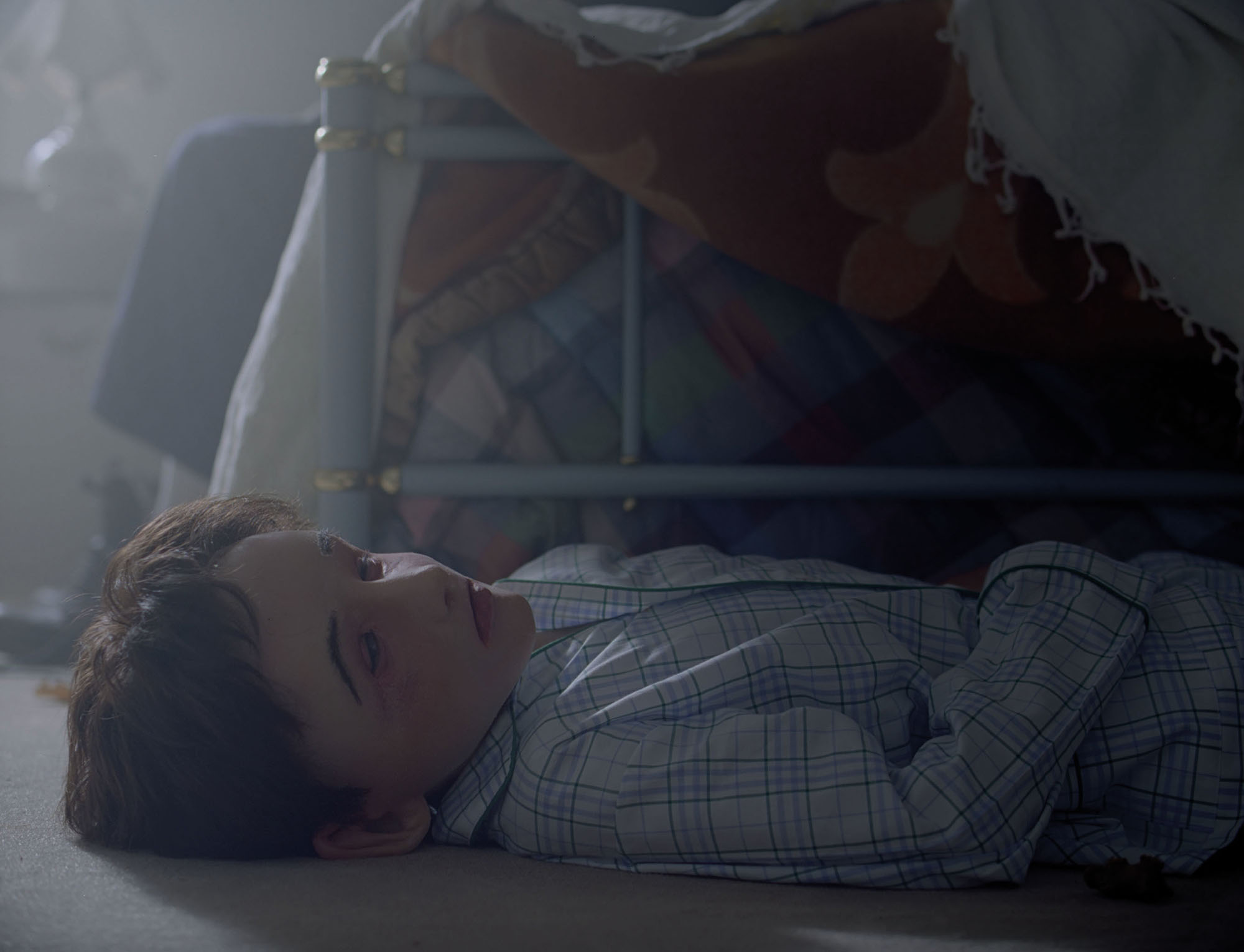
The Parents’ Room, 2021 (video still) © Diego Marcon Courtesy: the artist and Fondazione Donnaregina per le arti contemporanee, Naples Courtesy: the artist and Sadie Coles HQ, London

Glassa (installation view), Centro Pecci, Prato, 2023–2024
© Diego Marcon Photo: Andrea Rossetti / Centro Pecci Courtesy: the artist and Sadie Coles HQ, London
Diego Marcon
in conversation with Róisín Tapponi
CURA. 43
Coming of Age
DIEGO MARCON (b. 1985, Busto Arsizio, Italy) currently lives and works in Italy. He has exhibited internationally with solo presentations including: La Gola, Kunstverein in Hamburg (2024); Dolle, Sadie Coles HQ, London, and Galerie Buchholz, Berlin (2023); Have You Checked the Children, Kunsthalle Basel (2023); Glassa, Centro Pecci, Prato (2023); Dramoletti, Fondazione Nicola Trussardi, Teatro Gerolamo, Milan (2023); Monelle, Sadie Coles HQ, London (2023); The Parents’ Room, Museo MADRE, Naples (2021); Ludwig, Institute of Contemporary Art Singapore/LASALLE, Singapore (2019); and La miserabile, La Triennale di Milano, Milan (2018). Recent group exhibitions include: Nebula, Fondazione In Between Art Film, Complesso dell’Ospedaletto, Venice (2024); Biennale de l’Image en Mouvement, Centre d’Art Contemporian, Geneva (2024); After Laughter Comes Tears, MUDAM, Luxembourg (2023); The Milk of Dreams, 59th Venice Biennale (2022).
RÓISÍN TAPPONI (b. 1999, Dublin, Ireland) is a film programmer and writer based in London. Tapponi is the founder of Shasha Movies, an independent streaming platform for artists’ film and video from South-West Asia and North Africa. She completed a PhD in History of Art at the University of St. Andrews.