Aurore Bagarry, Mounir Ayache, Sara Ouhaddou, H·Alix Sanyas and Bye Bye Binary, Martin Routhe
Passerelle Centre for Contemporary Art, Brest
20 June—20 September, 2025
Press release
De la côte, vers l’Ouest. Aurore Bagarry

Exhibition view Aurore Bagarry in De la côte, vers l’Ouest, 2025, Passerelle Centre d’art contemporain, Brest © photo : Aurélien Mole

Exhibition view Aurore Bagarry in De la côte, vers l’Ouest, 2025, Passerelle Centre d’art contemporain, Brest © photo : Aurélien Mole
Aurore Bagarry (1982) invites us to travel far away from the beaten track, far beyond the mere representation of the landscape. When we look at her photographs, we are not looking at picturesque views, but are plunged into timescapes, tableaux where geology evolves in a silent choreography, and where the passing of eras is sculpted by the light.
Through her iconic series, from the majestic ‘Glaciers’ to the raw ‘Rocks’ via the evolving expanses of ‘From the Coast’, Aurore Bagarry does not capture the moment, she reveals its full extent. Her demanding and meditative use of the photographic chamber slows down the work, imposing a patience that impacts on the image itself. The infinitesimal details of the rock strata, the texture chiselled by the elements, the nuanced colours revealed by the dawn or dusk, all contribute to a profound, almost tactile, sensory experience. It is no longer the eye alone that perceives, it is the whole body that feels the power of the forces in the work.
The artist deploys reflection on the constant flux of the world. Her coastlines, swept by the tides, reveal porous borders and shapes of monumental fragility. In the place where land and sea meet, ceaselessly eroding and transforming each other, Aurore Bagarry questions our place in the face of these vast timescales. She reminds us that landscape is written collectively, carved out by water, wind and the shifting plates of the earth, long before any human intervention.
As we contemplate her works, we are encouraged to feel our humility in the face of geological time, to become aware of the ephemeral nature of our own scale. The artist does not seek to tame nature, but to resonate with it, and to grasp its very essence: raw beauty, tranquil force, and constant reinvention. The Aurore Bagarry exhibition immerses us in the matter making up the world, in an intimate dialogue with the elements making up our planet, inviting us to look beyond the surface, and see where time takes physical shape.
The Aurore Bagarry exhibition is further enhanced by a unique voice, that of the artist Vava Dudu (1970). Invited to cast her eye over the ‘coasts’ of Aurore Bagarry, Vava Dudu takes us to other shores, those of the Caribbean, via a poetic and sensory exploration. Her words are woven from the sensations and rhythms of the island, and converse with the mineral and temporal qualities of the photographic images. This unique gesture invites us to see how land and sea, whether polar or tropical, murmur universal stories, transformed by the prism of vibrant responsiveness.
The project From the Coast has been produced as part of the ‘Great West’ research and creative residency supported by the Neuflize OBC Enterprise Foundation and the Ateliers Médicis and thanks to individual support for the creation of DRAC Bretagne.
In partnership with the Gwinzegal Arts Centre, Guingamp and FRAC Bretagne, Rennes.

Exhibition view Aurore Bagarry in De la côte, vers l’Ouest, 2025, Passerelle Centre d’art contemporain, Brest © photo : Aurélien Mole
Pulsar. Mounir Ayache and Sara Ouhaddou
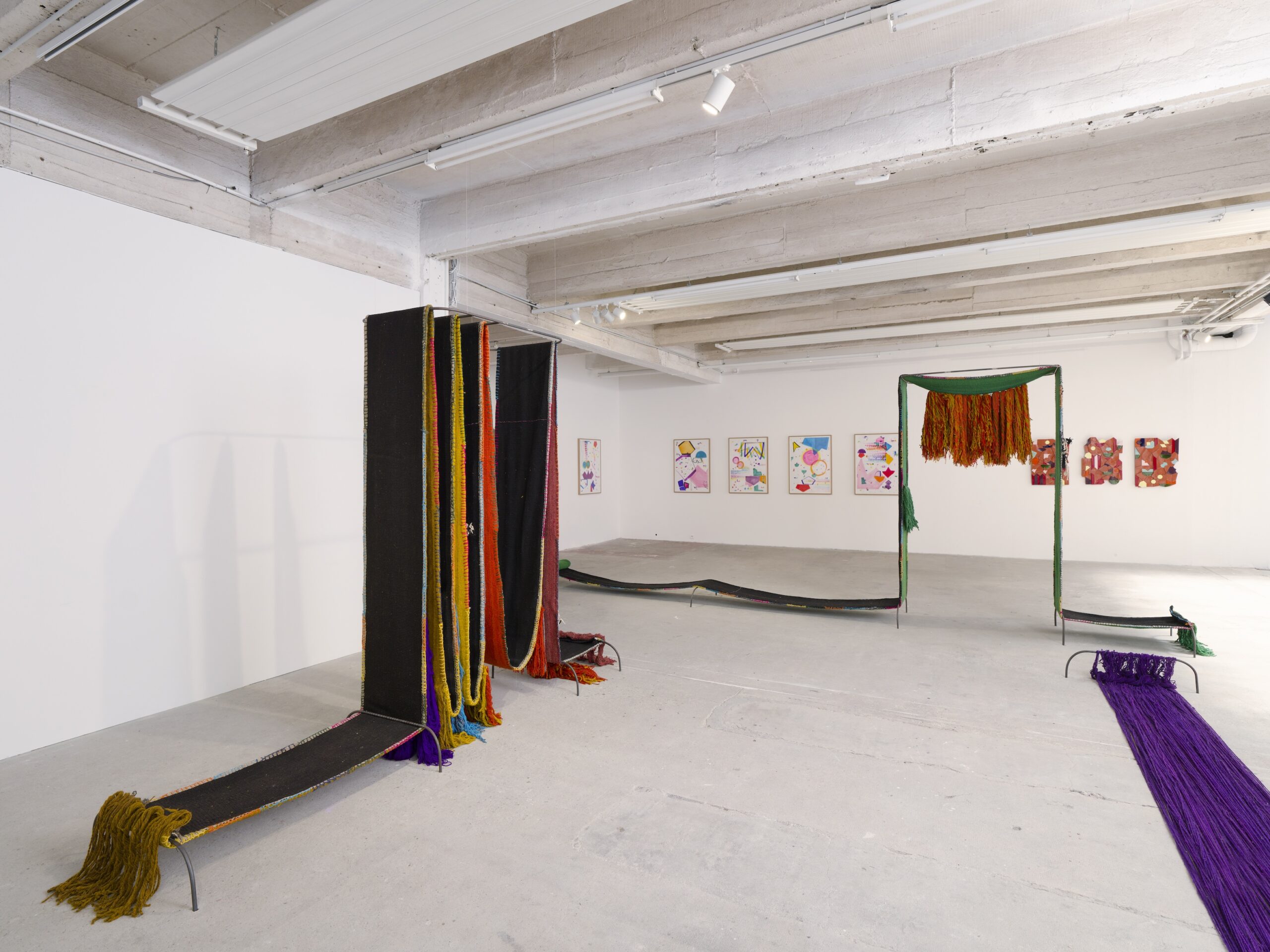
Sara Ouhaddou, Je de rôles, 2023
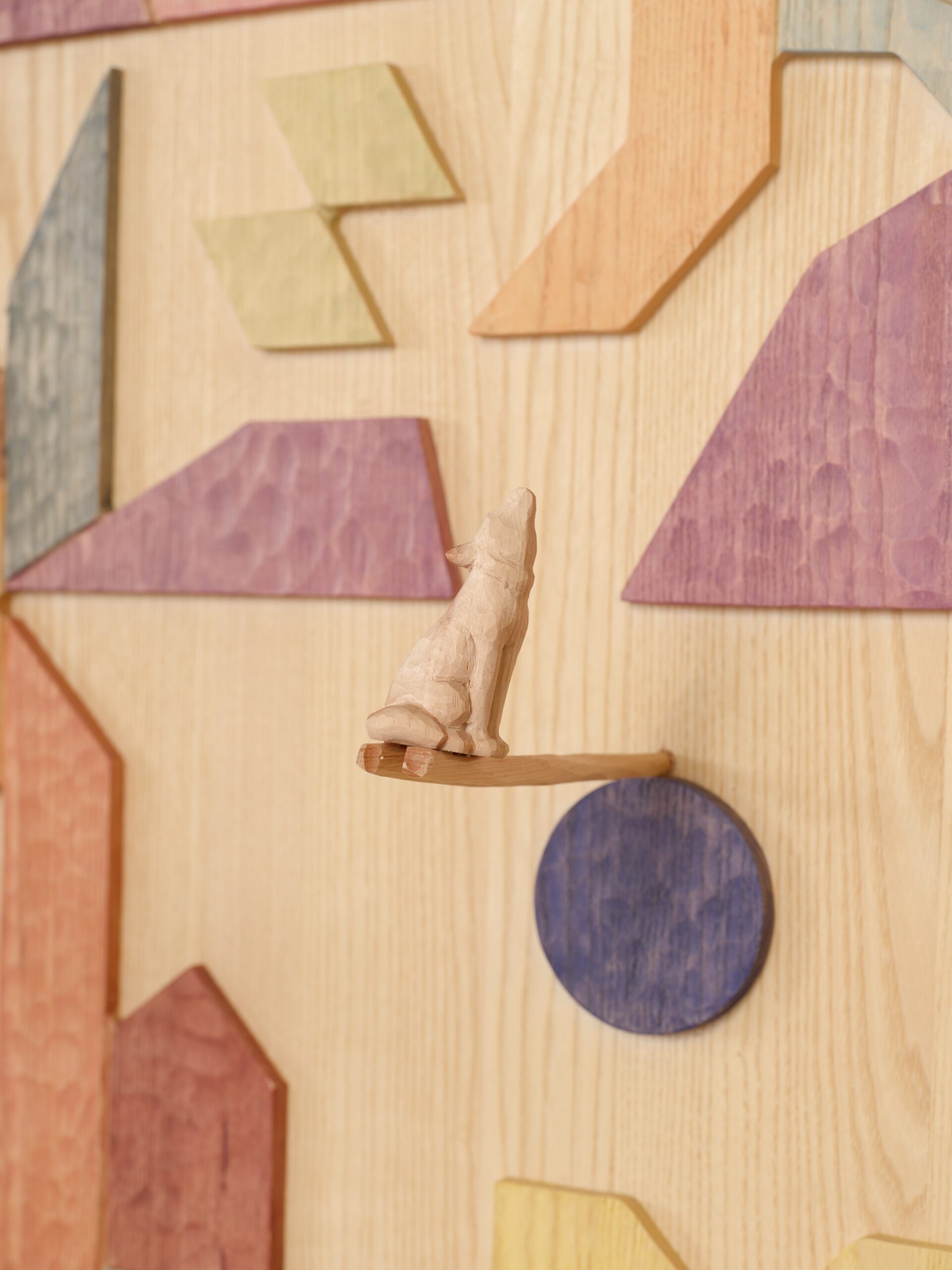
Sara Ouhaddou, Les mains fertiles (détail), 2024
The Pulsar exhibition invites us to reflect in depth on the notion of tradition through the works of Mounir Ayache (1991) and Sara Ouhaddou (1986). Although both are rooted in a rich cultural heritage, their approaches show markedly different interpretations, with one reinventing the very concept of tradition, and the other ensuring the continuance of ancestral knowledge. Their works resonate with philosophical questioning around collective memory, the persistence of knowledge and the emergence of new cultural forms. At the heart of the exhibition is a new work made by 4 hands, entitled Pulsar – a reference to the heart of a fallen star that continues to emit light – bridging the gap between the practices of these two artists.
Mounir Ayache approaches tradition not as a fixed set of rules or forms to be repeated, but as a field of infinite potential, open to reinterpretation. His work is characterised by a bold deconstruction and reconstruction of established codes, including in particular references to science-fiction. Following on from the reflections on dynamic cultural identities proposed by thinkers such as Stuart Hall (1932-2014), Ayache shows us that what we perceive as ancient is often a malleable construction, capable of being remodelled by the present. He has no hesitation in taking traditional motifs, techniques or stories and bringing them in contact with contemporary language or inserting them into new contexts, thereby infusing them with unexpected vitality. For Ayache, tradition is a living entity enriched by the dialogues it enters into with the present, embracing a form of cultural hybridity close to the hearts of philosophers like Kwame Anthony Appiah (1954). His works invite us to question our own perceptions of cultural heritage and see tradition as a driving force of innovation, capable of endless renewal.
In contrast, Sara Ouhaddou positions herself as a transmitter of ancient knowledge. Her art is deeply rooted in ancestral artisanal techniques, often passed down from one generation to the next. Her approach is far removed from mere reproduction, but rather involves transmission and updating. She collaborates with artisans, immerses herself in their practices and contributes to the conservation of activities and knowledge which, as so well emphasised by the Malian writer Amadou Hampâté Bâ (1901-1991) when he speaks of African oral traditions, constitute real living libraries. This knowledge is the collective memory of a community, allowing techniques and story to continue existing through the ages. The work of Ouhaddou highlights the richness and complexity of these artisanal traditions, and demonstrates how the continuance of such knowledge is not only essential to the preservation of material heritage, but also to the continuity of intangible and identity heritage. Her work provides eloquent testimony to tradition’s ability to endure and adapt, while retaining its essence and depth, embodying a persistence essential to cultural vitality.
Together, these artists show us that tradition is not a monolithic bloc, but a pluralist concept, under constant evolution. It can be the source of inspiration for the most radical experimentation, just as it can embody the tranquil force of uninterrupted continuity. Their dialogue invites us to celebrate the richness of our past while embracing the transformations necessary to build the future, thus offering a complex and enriching vision of our relationship with heritage.
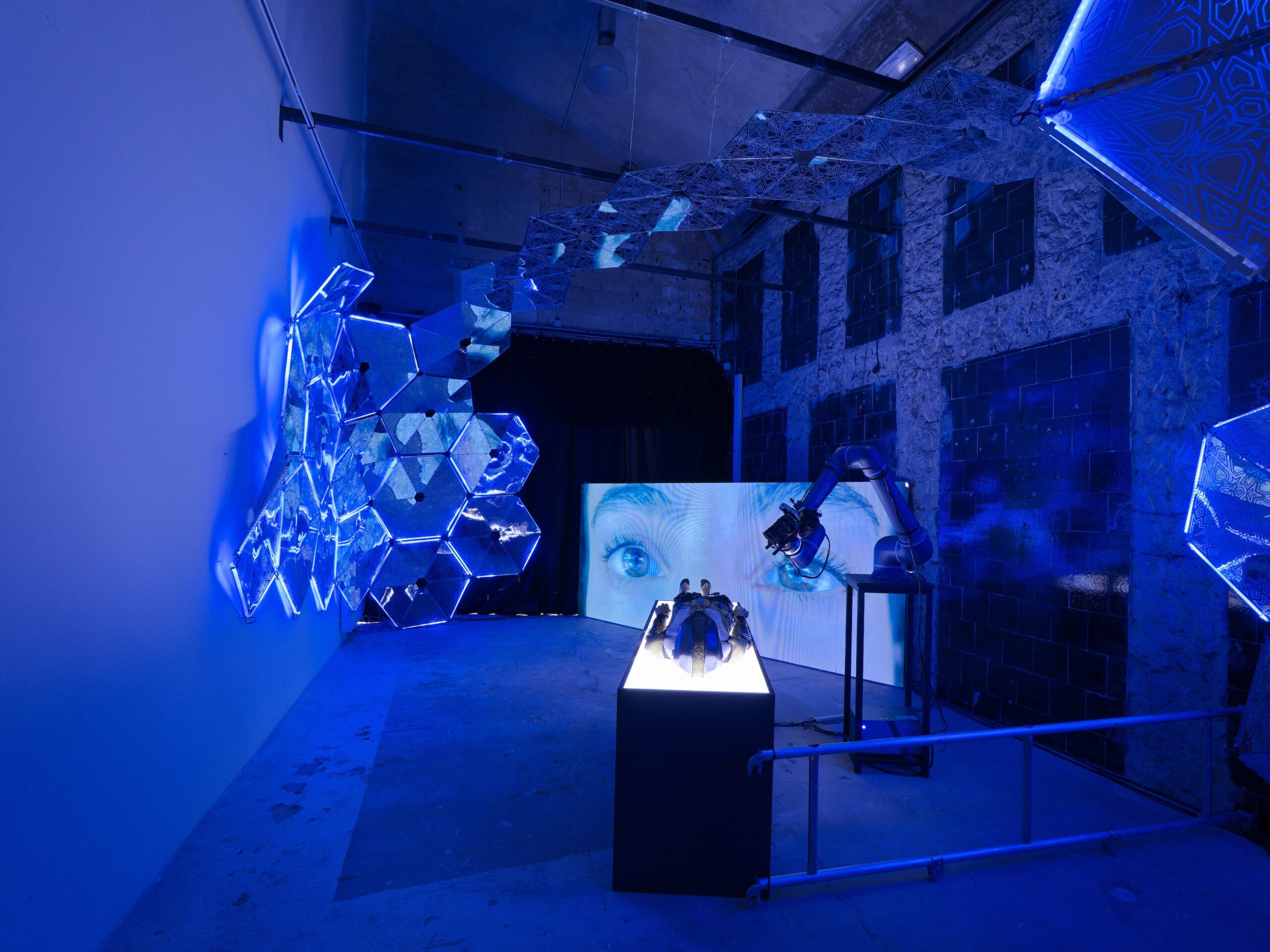
Mounir Ayache, Khadija, 2020-2025
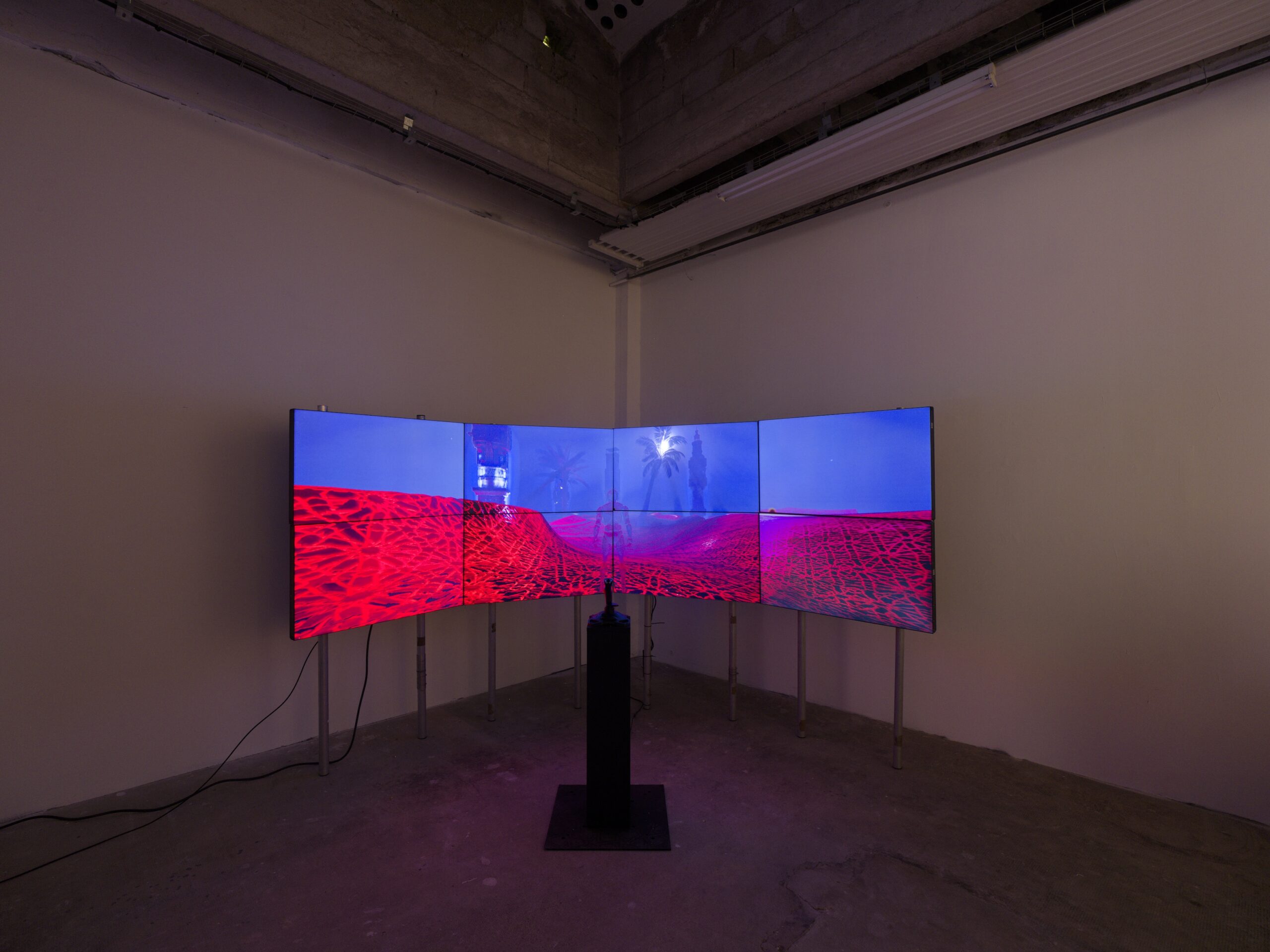
Mounir Ayache, Odyssey, 2024
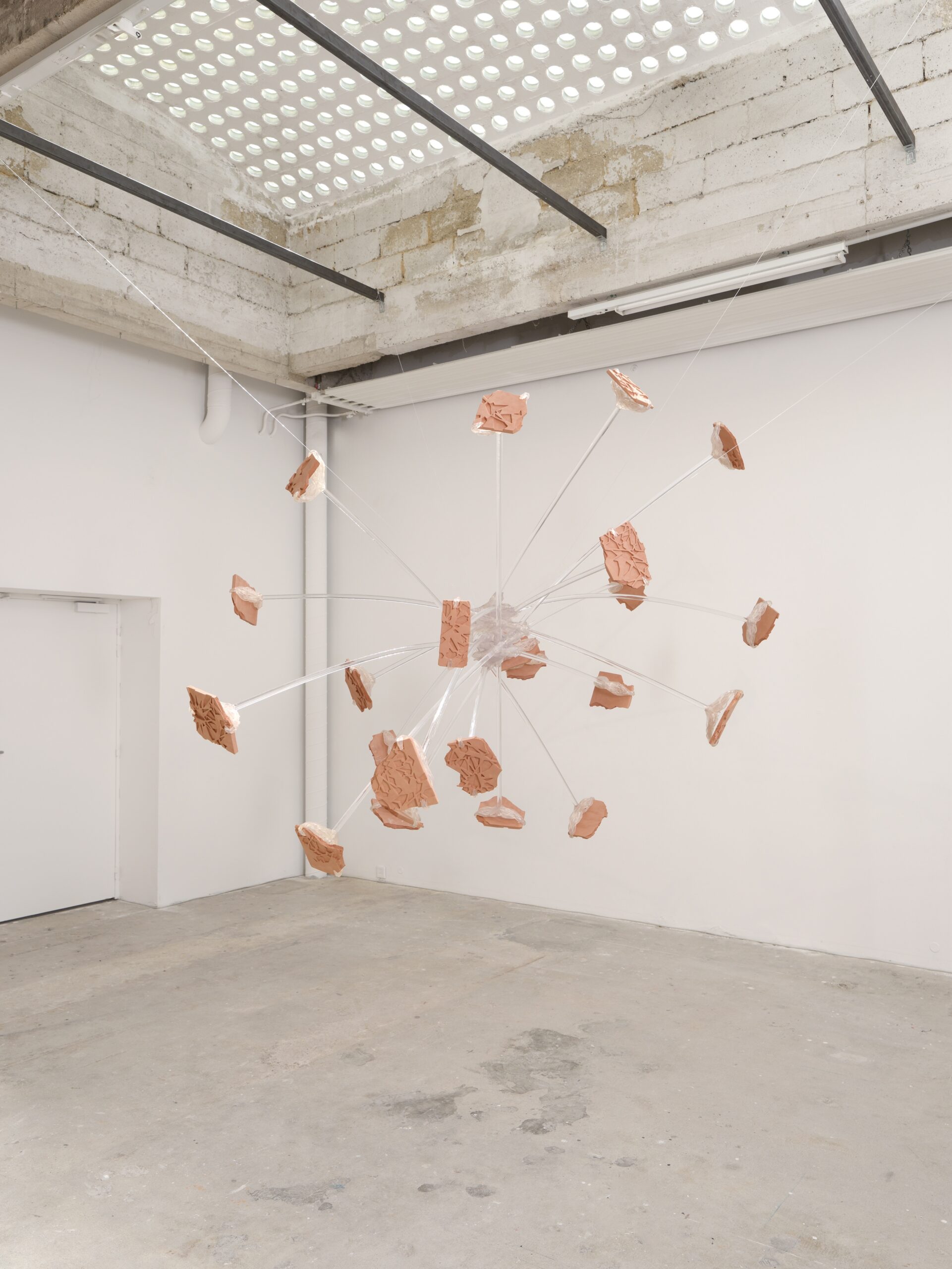
Sara Ouhaddou et Mounir Ayache, Pulsar, 2025
Leader Pride 2. H·Alix Sanyas and Bye Bye Binary
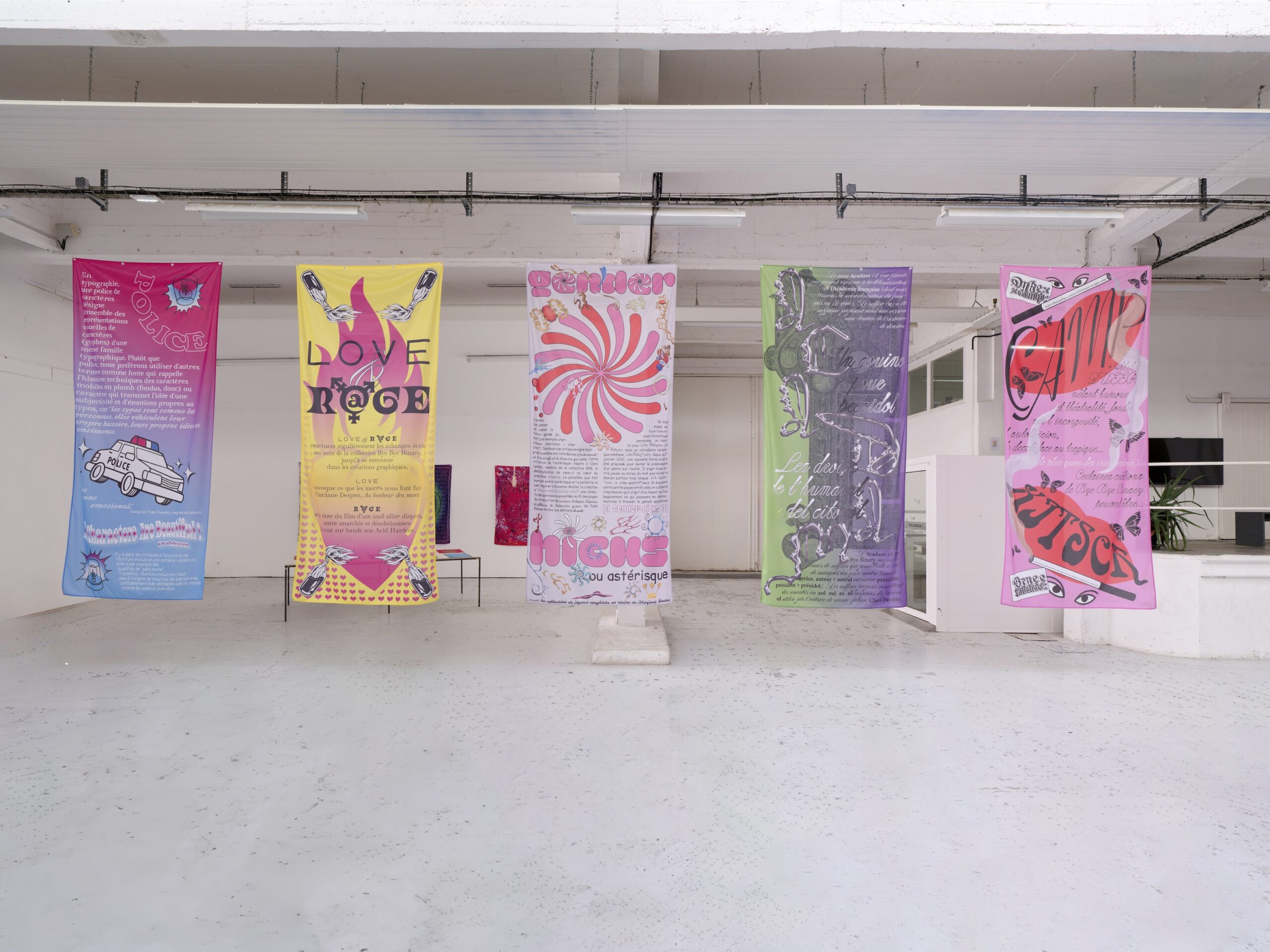
Exhibition view de H·Alix Sanyas & Bye Bye Binary, Leader Pride 2, 2025 Passerelle Centre d’art contemporain, Brest © photo : Aurélien Mole

Exhibition view de H·Alix Sanyas & Bye Bye Binary, Leader Pride 2, 2025 Passerelle Centre d’art contemporain, Brest © photo : Aurélien Mole
The exhibition LEADER PRIDE 2 brings together works by H·Alix Sanyas (1988) and the Belgian-French collective, Bye Bye Binary. Bye Bye Binary was formed is 2018 during workshops held jointly by the École de Recherche Graphique (erg) (School of Graphic Research) and La Cambre visual arts school in Brussels, and defines itself as a learning experiment, a community, a workshop for typographical creation, a network and an alliance. Their work focusses on the creation of new typographical forms adapted to the French language, especially by designing glyphs and ligatures (and other elements of symbiosis or liaison) which make it possible to express a greater diversity of gender identities beyond the masculine/feminine binary. Their approach is profoundly political and committed, and springs from a perspective that combines numerous struggles. They question the political weighting of graphic design, language, and the representation of bodies and identities.
Specifically, they have developed a range of fonts that are inclusive, non-binary, post-binary under construction, and have created the Queer Unicode Initiative (QUNI) to facilitate the use of these fonts. They also recently drew up the ‘Conditions d’Utilisations Typographiques Engageantes (CUTE) (Conditions for the Committed Use of Typography)’ providing guidelines for their use.
At the centre of the exhibition is a series of banners by the collective Bye Bye Binary which perfectly expresses their approach of making non-binary languages and identities visible. First shown at La Station – Gare des Mines in Paris, these banners are not mere decorative objects, they are manifestos floating in the breeze. By carrying messages in the non-binary inclusive typographies they are developing (like iels [the French alternative to the gendered ils/elles pronouns]}, these banners do not merely talk about inclusivity, they practise it in a very visible, large-format way. The flag, a symbol of power, of belonging to a nation or group, becomes an educational and performative vehicle for their research. By investing it with their queer and non-binary messages, Bye Bye Binary is creating powerful symbolic subversion. They are subverting a tool of hegemony to turn it into a flag of diversity and resistance.
Also exhibited, alongside fanzines and printed objects, is the new installation by H·Alix Sanyas. Produced as part of Nouveau Printemps 2025 in Toulouse, JE VEUX YN PRÉSIDOL is a video installation exploring the representation of LGBTQIA+ desires and struggles through the prism of language and design. The installation takes its inspiration largely from the archives of the American presidential campaign of author Eileen Myles, a figure of the LGBT community and from the poem I want a President by Zoe Leonard. Myles’ candidacy was an unconventional ‘write-in’ campaign (where the elector writes the name of the candidate on the voting paper) and ran under the slogan ‘An Openly Female Candidate’. This approach was at one and the same time an artistic performance project, a protest and a form of political criticism.
In partnership with the ICE Festival.

Exhibition view de H·Alix Sanyas & Bye Bye Binary, Leader Pride 2, 2025 Passerelle Centre d’art contemporain, Brest © photo : Aurélien Mole

Exhibition view de H·Alix Sanyas & Bye Bye Binary, Leader Pride 2, 2025 Passerelle Centre d’art contemporain, Brest © photo : Aurélien Mole
Dis-moi que la nuit se déguise. Martin Routhe
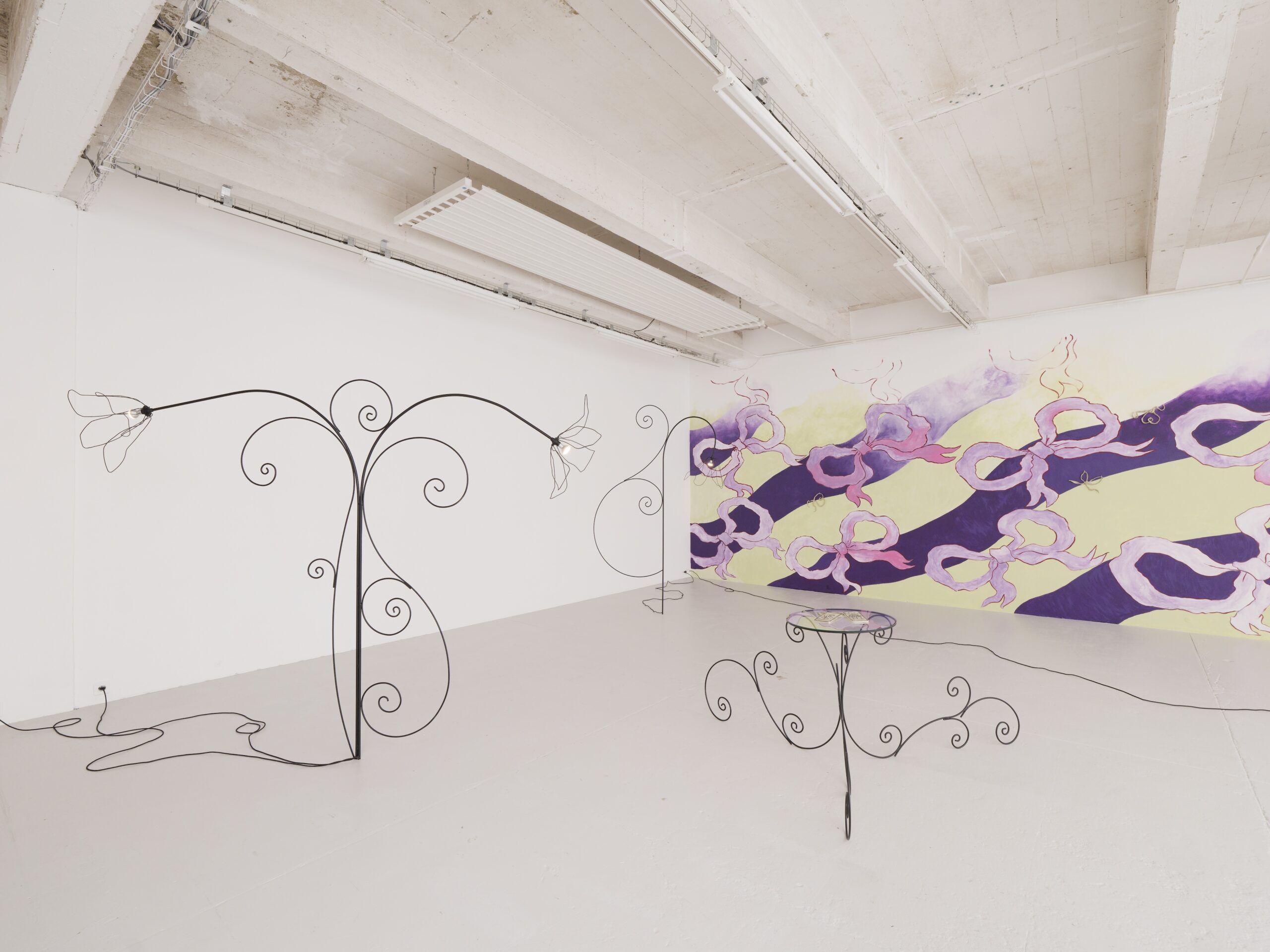
Exhibition view de Martin Routhe, Dis-moi que la nuit se déguise, 2025 – Les Chantiers Résidence – Passerelle Centre d’art contemporain, Brest © photo : Aurélien Mole
After spending 3 months at Passerelle under the joint programme with DDA Bretagne Residency Workshops, Martin Routhe (1994) is presenting a personal exhibition. Martin graduated from Brest School of Art in 2023, is both a painter and a sculptor, and here offers a vast installation that functions as a whole.
The phrase “Where are you?” rings out as both a mantra and a cry. Those few very simple words are taken from some writing by the artist’s grandmother after her husband died. The exhibition takes as its starting point this intimate pain, the impression of emptiness and the metaphysical question of the presence of those who have left us. The works produced especially for the occasion show moments of life; the sculptures have a domestic appearance and recall the codes of furnishings. On the one hand there is the desire to reflect on the question of the decorative, in the manner of the artist Marc-Camille Chaimowicz (1947-2004), and on the other hand the idea of ‘filling the space’ like a doll’s house and seeking a potential soul in the objects that surround us. The works act as elements of non-verbal drama like those of artist Jessica Stockolder (1959). We are invited into an illusion where the borders of reality are blurred: gloves and shoes end up as sculptures, wrought iron door furniture turns into lamps. Objects have the potential for life like those in La belle et la bête (Beauty and the Beast) (1946) by Jean Cocteau or the Disney cartoon of the same name (1991). A single figure occupies the space, a rabbit recalling the one in Alice in Wonderland or Pokemon creatures. Martin Routhe is deeply influenced by the Japanese culture of the image and takes inspiration from the manga of the authors’ collective, CLAMP, in particular the character of Cardcaptor Sakura or the shop of the witch of xxxHOLiC, a timeless imaginary place. The visitor is invited to become a character in a manga, a three-dimensional cartoon, like the pair of legs, loosely inspired by a Tom and Jerry cartoon, landing in the middle of the motifs like a disturbing yet joyful element.
The title ‘Dis-moi que la nuit se déguise (Tell me the night is in disguise)’ is from a song by Mylène Farmer that reasons like a haiku. The poetry of these words takes us back to the reflections preoccupying the artist: What are the limits of our reality? By what artifice are we surrounded?
As part of the Workshops | Residency programme intended for emerging artists in Brittany and led by Passerelle Centre d’art contemporain et Documents D’Artistes Bretagne leschantiers-residence.com
With the support of Suravenir, a subsidiary of Crédit Mutuel ARKEA
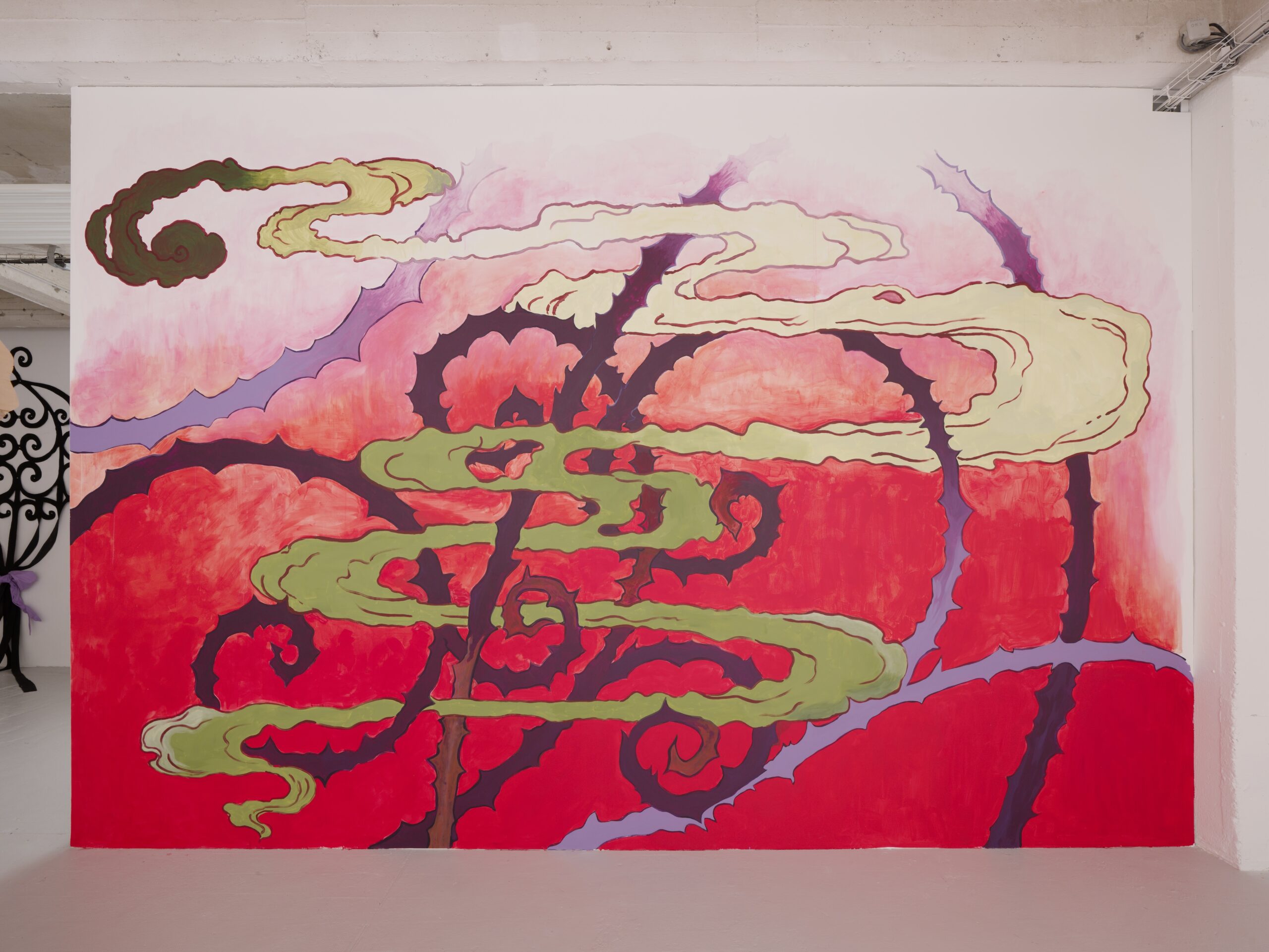
Exhibition view de Martin Routhe, Dis-moi que la nuit se déguise, 2025 – Les Chantiers Résidence – Passerelle Centre d’art contemporain, Brest © photo : Aurélien Mole
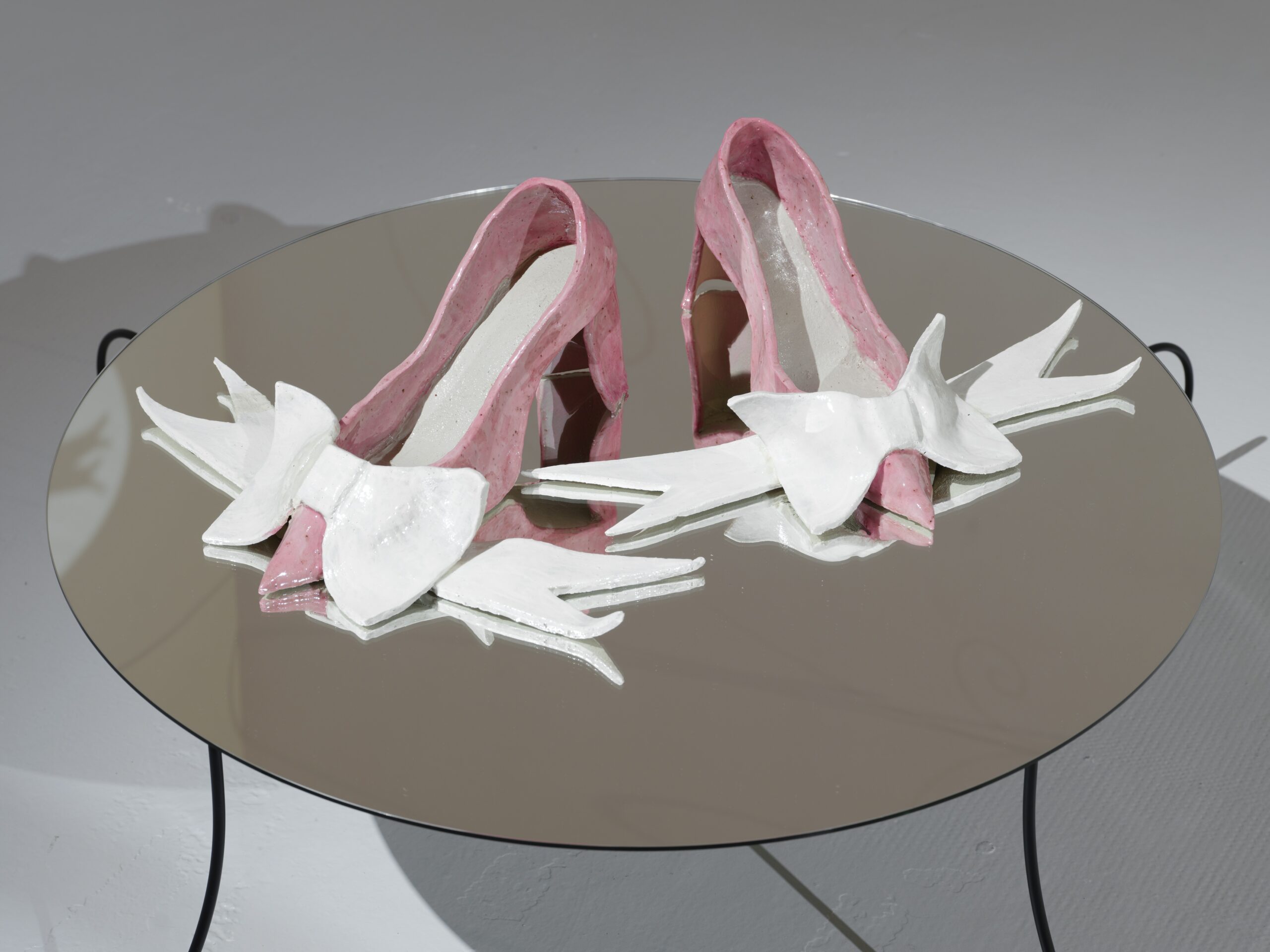
Exhibition view de Martin Routhe, Dis-moi que la nuit se déguise, 2025 – Les Chantiers Résidence – Passerelle Centre d’art contemporain, Brest © photo : Aurélien Mole