North and True North
White Cube, London
Review by Linnéa Ruiz Mutikainen
Trinity, 2025
© Firenze Lai. Photo © White Cube (Theo Christelis
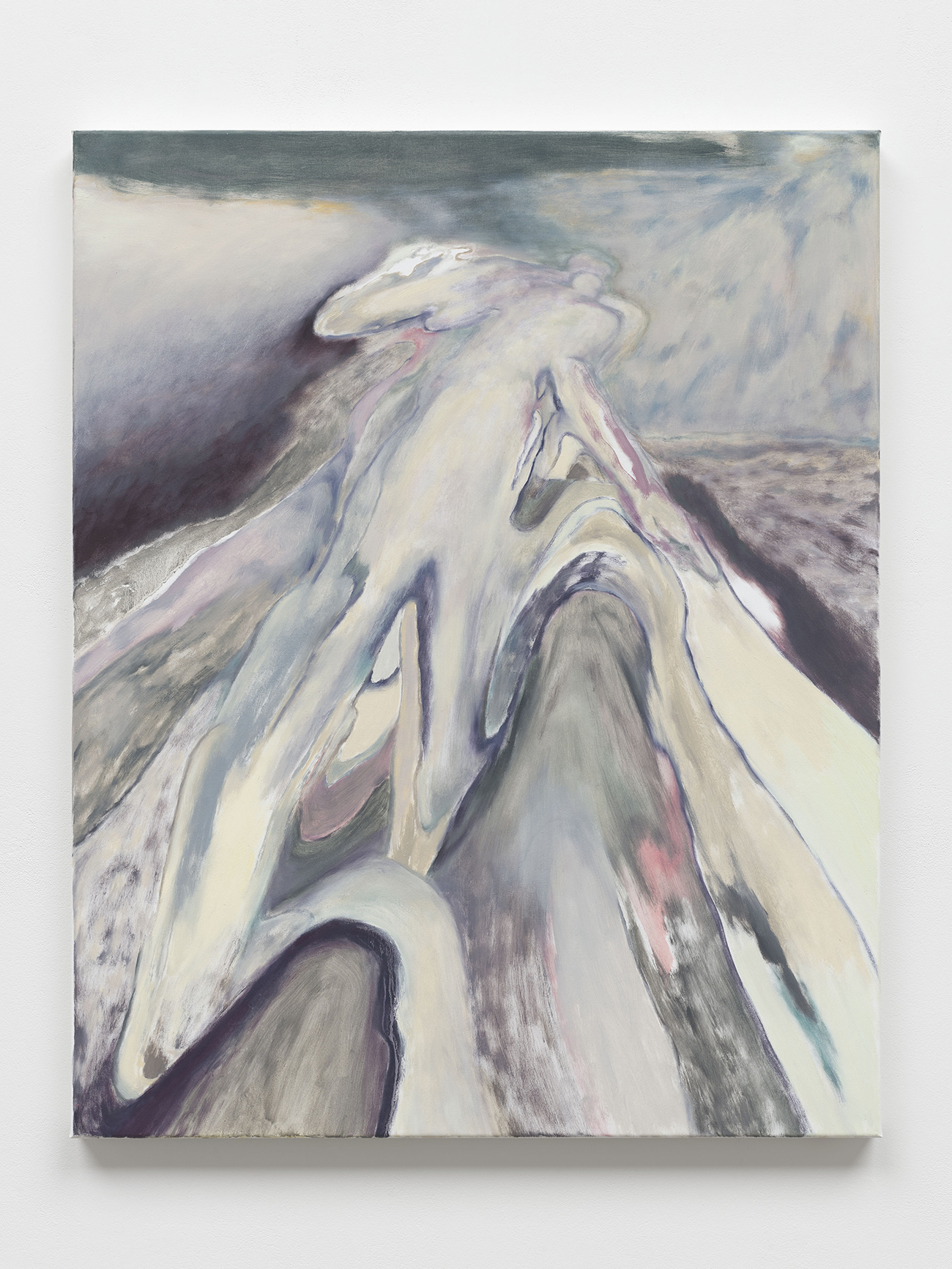
Topographer, 2025
© Firenze Lai. Photo © White Cube (Theo Christelis)
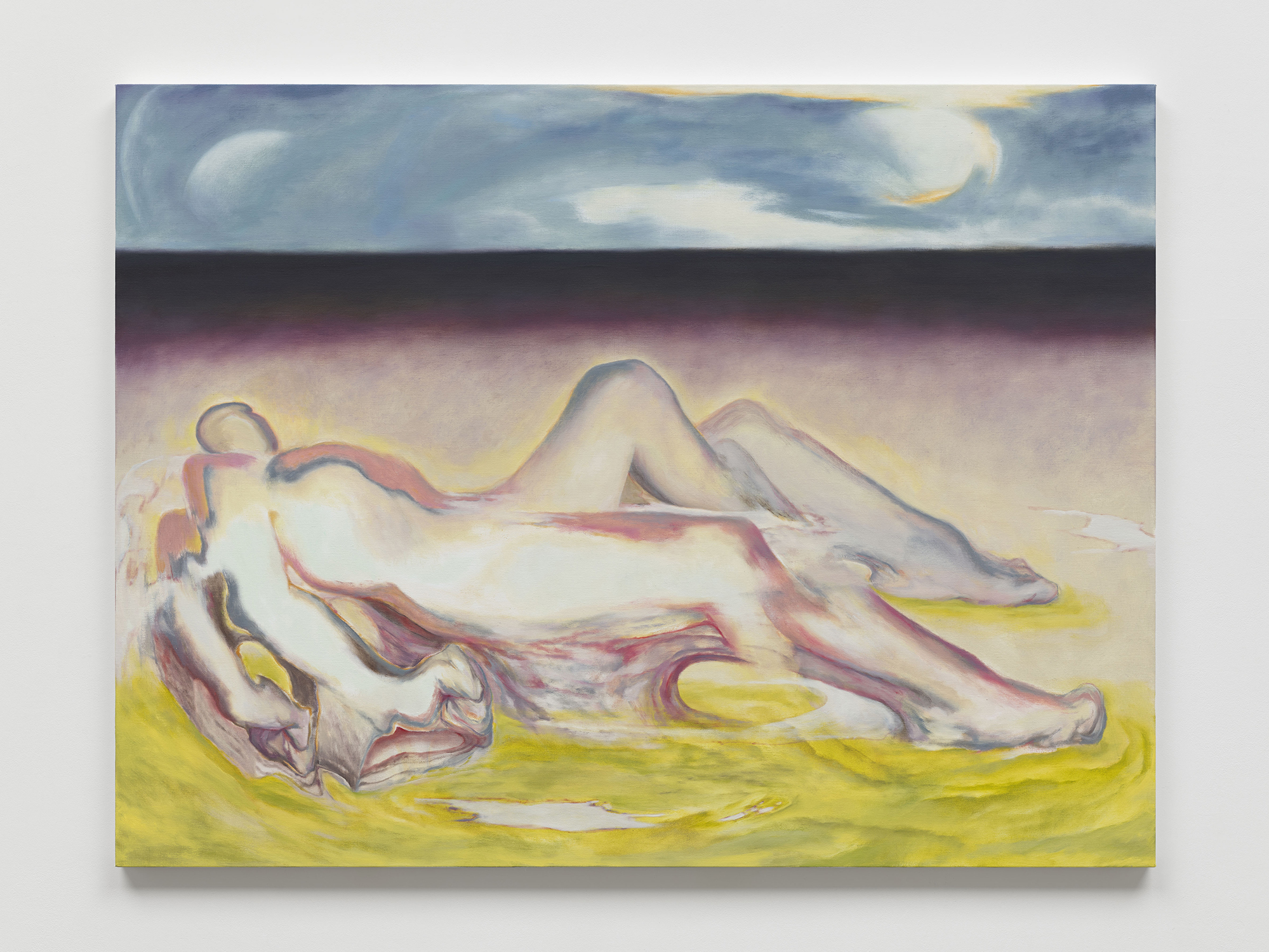
Slow Sand, 2025
© Firenze Lai. Photo © White Cube (Theo Christelis)
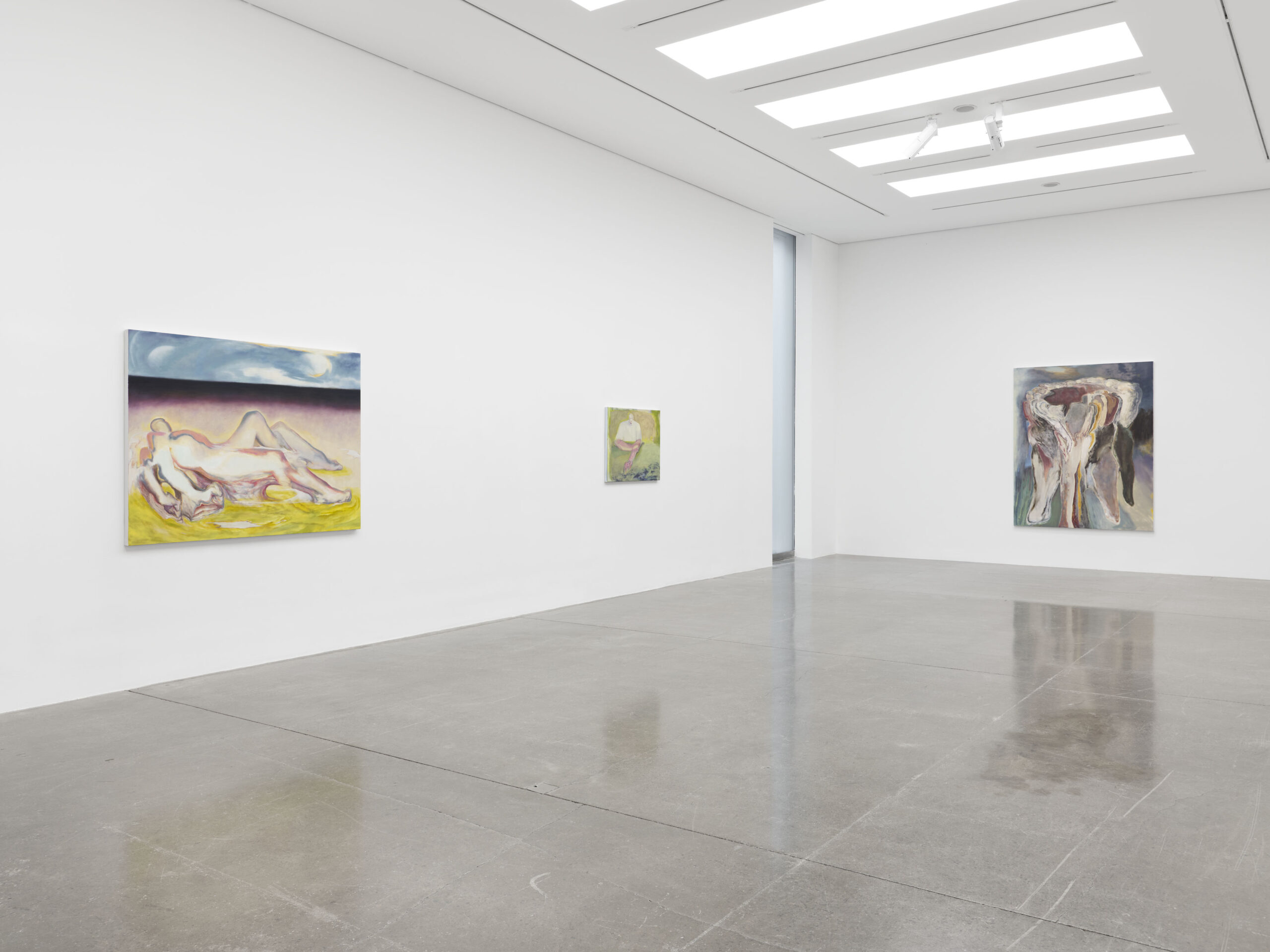
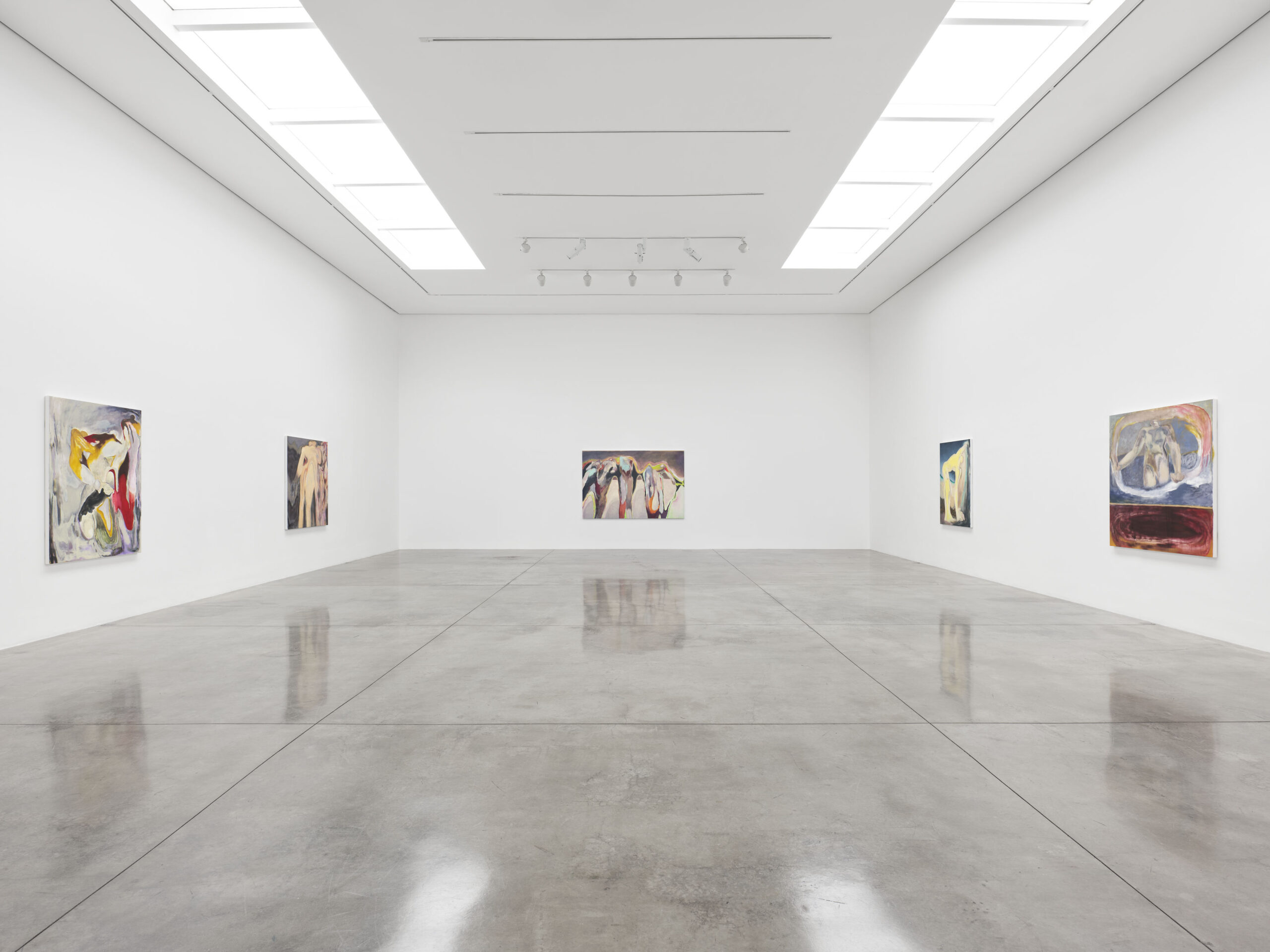
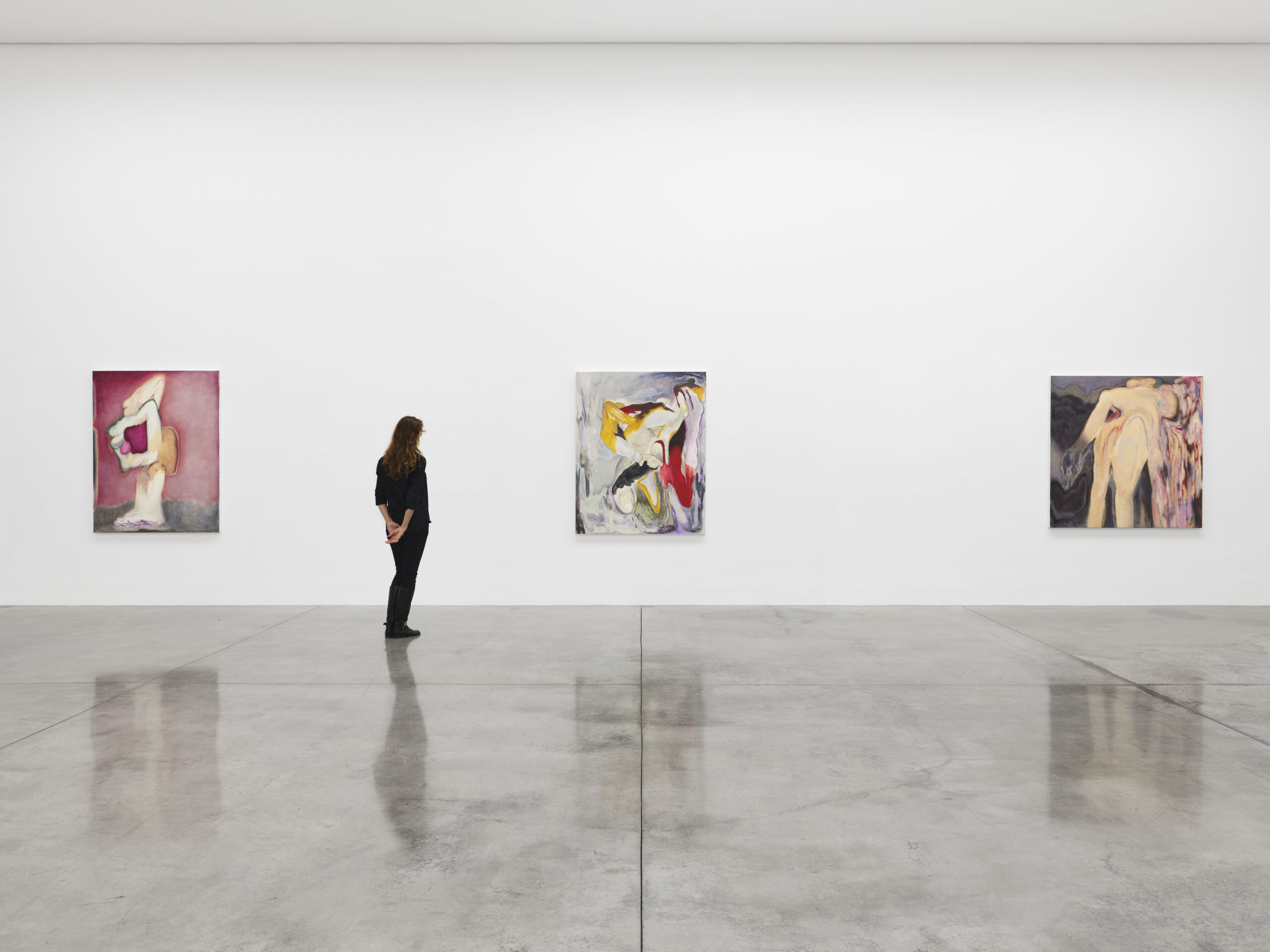
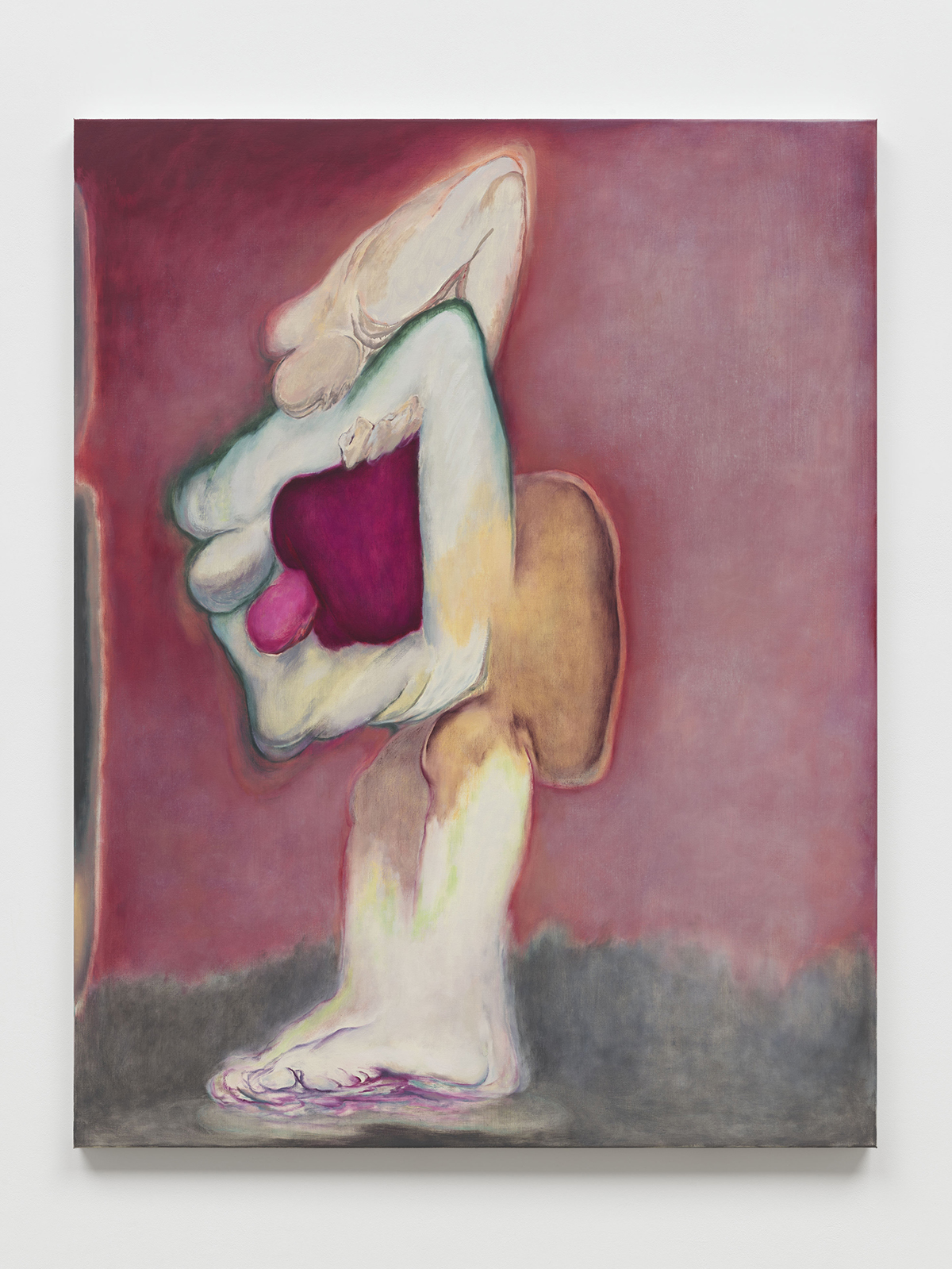
Formlessness has gone rogue. Across Firenze Lai’s canvases, we’re greeted by figures lingering in anonymity, positioned within equally indeterminate environments. A body here is either on its own or circulating around others, some absorbed into each other, creating an even larger case of this drifting uncertainty. Her painted environments and bodies populating the frame speak to our online blueprint, our technology-fed identities, without including any devices. This liquid modernity has something Sartrian to it, like in Being and Nothingness (1943) when Sartre dedicated a chapter to discuss the body as one’s anchoring to reality. Here, the mind served as this detached supernatural force hovering inside a physical machine. Now, our current roadmap is predominantly distanced, screen-dependent and populated by ghosts floating through, almost numb, threatening to dethrone physicality itself along with any sense of belonging to the physical world. Lai, too, is more concerned with the actual impact on the humans operating within this landscape.
In The True North (2024), a kneeling body seeks guidance: a hand blown up in proportion, seen wrapping around the corpus, sort of mimicking the touch control used to rotate a smartphone map. This direction-seeking entity becomes the archetype of the disoriented self, a small self within the infinite compendium of online data. As the title suggests, the directional determination of the geographic North Pole serves as the sliver of hope, a fixed anchor in the overwhelm. The same play resonates in the exhibition title, North and True North, though pitched against the magnetic north, which remains in flux: certainty finds home within a framework that is equal parts fixed and unfixed.
Firenze Lai is an observer of people. In most instances, we’re faced with an abstract background and an exaggeratedly placed figure at the forefront. In every instance, each figure is the same prototype, someone she refers to as “a universal character taken at different moments.” Figures are given contemporary diagnoses and concerns: Grey Matter (2026) sees a hunched-over figure sporting “tech neck”. Grey matter is also the part of the brain that supports thought, a location essential to what it means to be human and a location in jeopardy when AI is doing the heavy lifting for us.
Throughout the exhibition, human-looking figures are faced with the heavy sombreness of current times. The overarching theme of digitalisation illustrates how objects previously approached with awe, considered efficiency-makers of our entire being, are tragic catalysts for shapeshifting bodies and minds – becoming monotone. Bodies reconfigured into eternity, composed in an almost glitch-like manner to better suit the current version of life. It’s a diligent portrayal that balances between pure survival and finding the way, using disorientation as a springboard for identifying a path out through the cracks of societal displacement. Figures bound together, meet, in the same sensory nightmare of detachment.
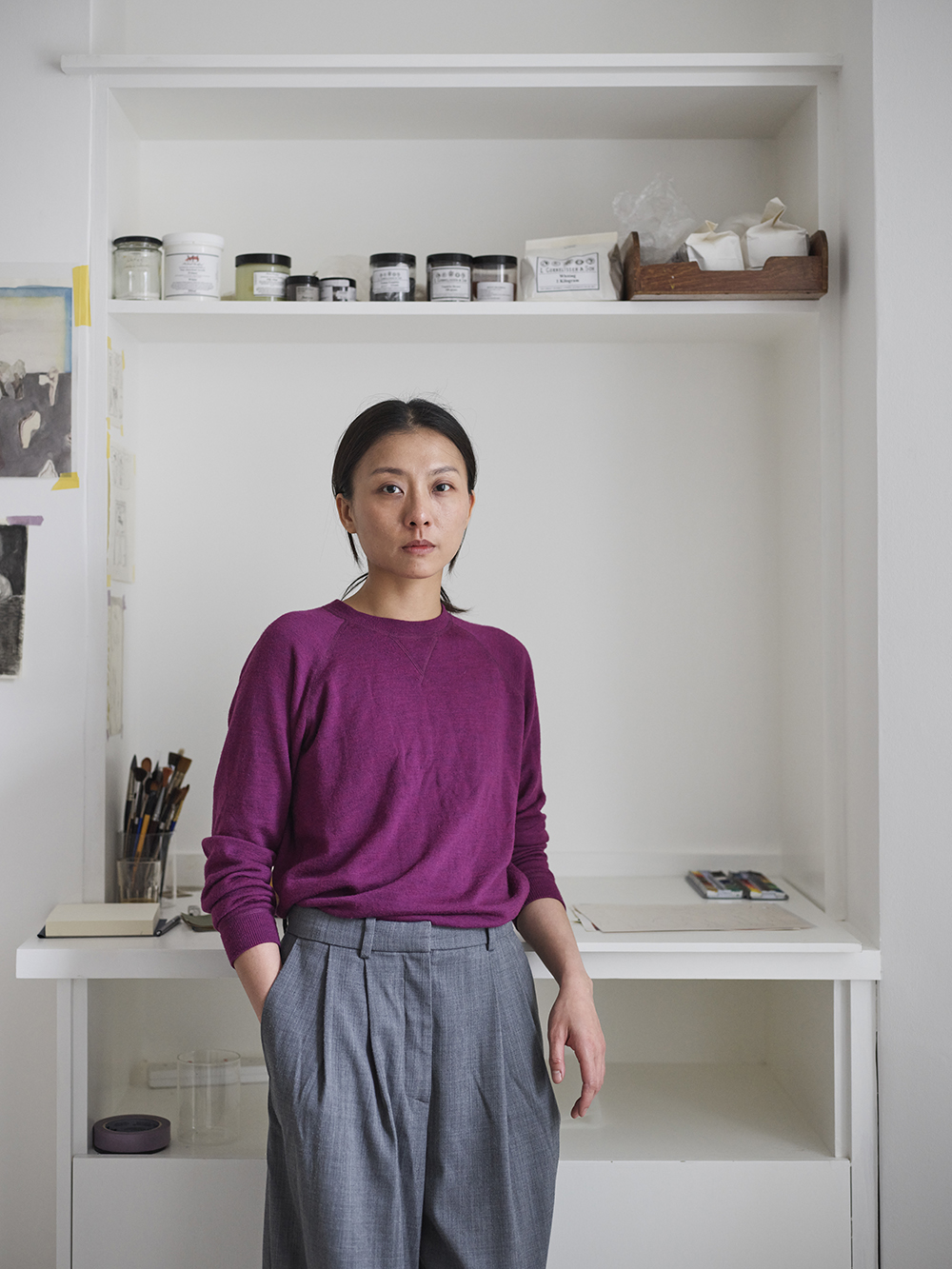
Photo © White Cube (Ollie Hammick)
Firenze Lai
North and True North
White Cube, London
October 13 – November 14, 2026
Review by Linnéa Ruiz Mutikainen
Credits:
Installation view
© Firenze Lai. Photo © White Cube
Photo by Eva Herzog.