by Manuel Arturo Abreu

CURA.25
In Hannah Black and Juliana Huxtable’s Life: a novel (mumok, 2017), a former catastrophic risk analyst named Hannah Black describes her duties: “our job is to assess the unimaginable.” This descriptor also fits the real artist and writer’s multimedia conceptual practice, which pairs analytic rigor toward the modern political context with an imagineering project rooted in a deep scepticism of modernity’s terms of value. Engaging a Marxist black feminist framework that wrestles with pleasure, ambivalence, and the vastness of the unthought, her practice is an exhilarating mix of theory, diaristic fragments, concealment, and pop forged in the liminal spaces between making, thinking, mourning, and forgetting.
Black particularly questions Enlightenment ideals of universalism, showing not only their ongoing violence but their contemporary inadequacy: “maybe knowledge gets more interesting, not less, when we recognize its limits across subject positions, when we don’t make it subordinate to a blanketing, universal subjectivity.” Simultaneously discarding capitalist realism and sci-fi utopianism, Black sculpts possible worlds as bulwarks against anxieties caused by meddling parallel universes and alternate selves. Yet her work thrives in this anxiogenic space of unfulfilled possibility, bearing witness to the ways the self is stretched by the hellish longue durée of history’s violence into a blank speculative sensitivity to relations of intensity, to the impossibility of relation.
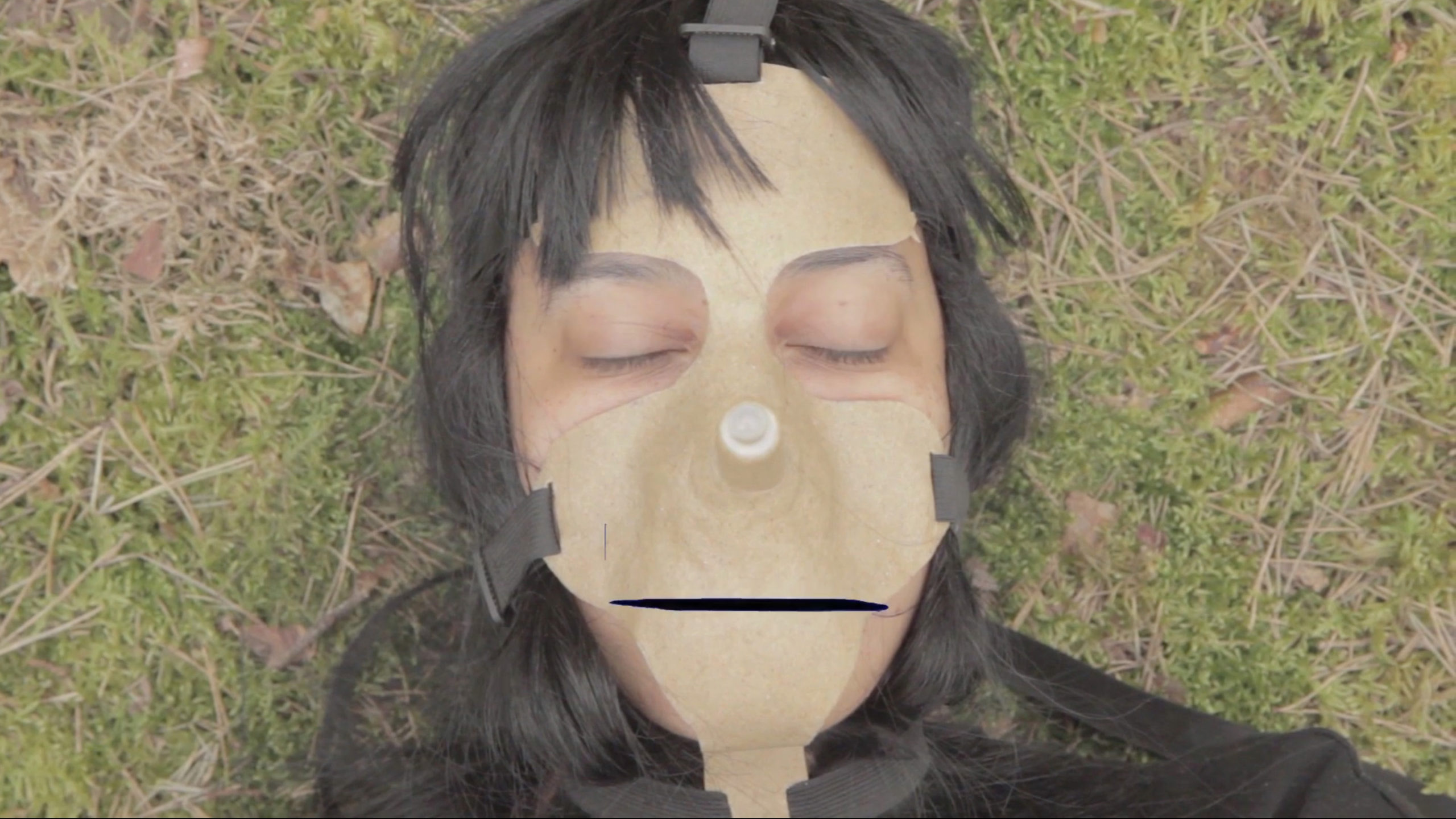
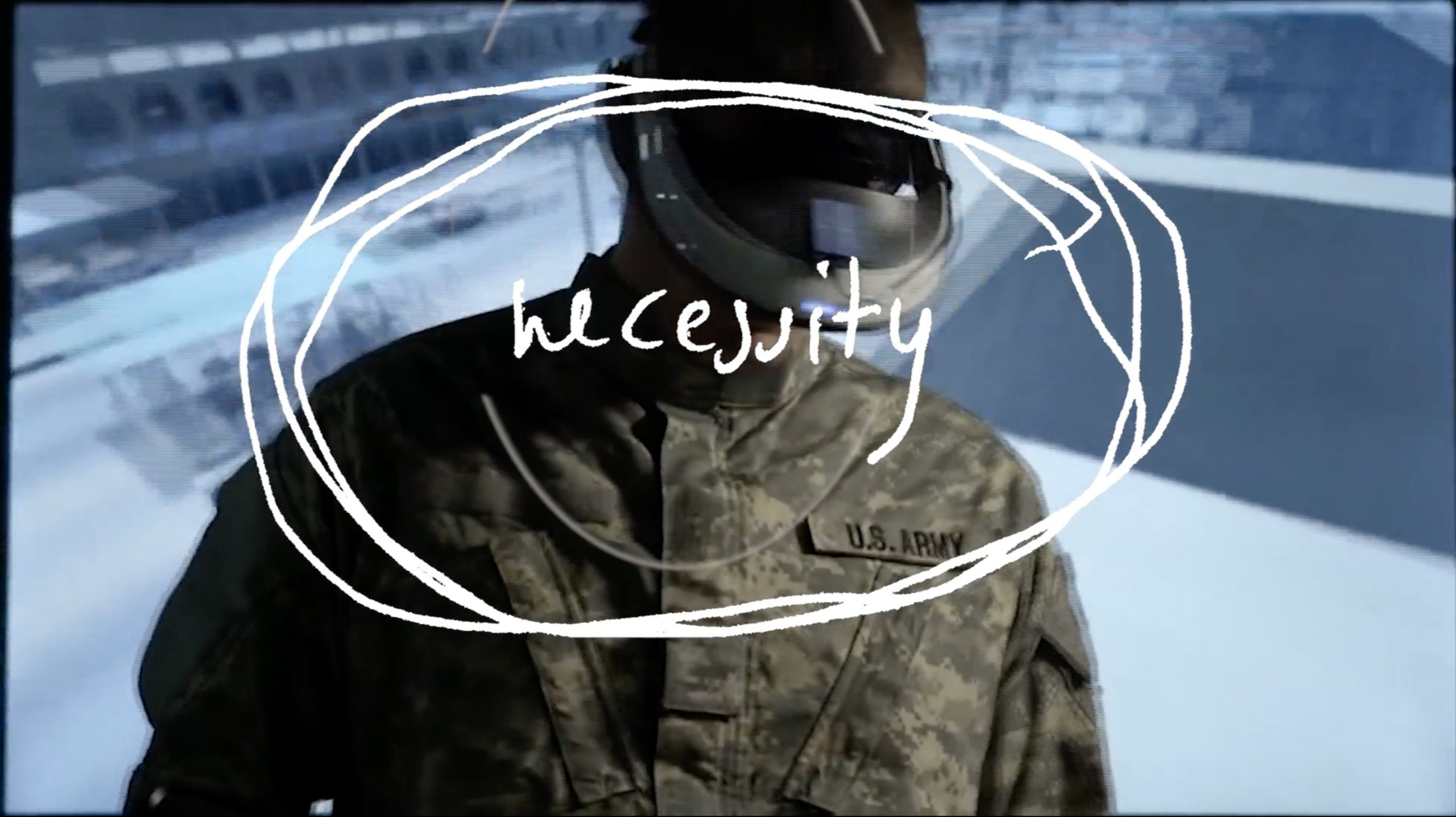
In the video My Bodies (2014), a jittery tapestry of audio clips of black woman R&B stars singing the titular phrase underscores abject images of white male executives, pointing to the violence of universalist concepts of the body and the neutrality embodied by ‘business as usual.’ The ‘objectivity’ of the market is shown to conceal long histories and presents of violent circulation, and demonstrating that universalist concepts of the ‘body’ are only possible via this ongoing violence. It begs the question of alternate realities and regimes of feeling, upon which the artist meditates in the quieter second section: an instrumental of Ciara’s Body Party underscores cave and water imagery, dank droplet sounds, and poetic text to “imagine a realm in between lives where someone is considering whether or not to be born again into a new body,” as the artist describes in a Rhizome artist profile. The weight of this unfathomable choice becomes a space for reflecting on life’s brutal facticity: what does it mean to have hope when we never asked to be born, at least not into this world? Moreover, how can we ask this and imagine other worlds when market logic has infiltrated everything, even nothing?
This has particular import for black people, the historical and present maiming, killing, and subsumption of whom serves as a central basis for capitalist accumulation. Slavery and its afterlife engender a slippage between blackness and the global circulation of commodities which continues in the present. Black’s debut solo show Not You (Arcadia Missa, 2015) asks: what happens when capitalist “principles of accumulation are given flesh and walk around?”. Four 8 x 6’ wooden boards painted a ruddy brown feature sad lopsided smiles scratched on by the artist; the piteous figures obscure airline blanket sculptures laid on Plexiglas, a folded latex sculpture, and a video, All Over (2015), which features images of flowing satin, global trade and travel, and other analogies of circulation. One section makes explicit the conflation of the body and global trade with pixelated anatomy diagrams overlaying images of flight paths. A text placed where a press release would go speaks of the violence of analogy and questions our investment in a politics that deploys analogies such as that between blackness and global capital flow.

The eternal return of history and its cycle of violent empty categories is a constant undertone to Black’s work. For her recent Bodega show Soc or Barb, she drew on Rosa Luxemburg’s 1916 prediction on the future of capitalism (“socialism or barbarism”). With glazed lumpenprole eyes, a ragtag group of sculpted clay spectators in shirts with infinity signs watches three flat monitors infinitely looping videos of the sun dawning to a motley soundtrack including Céline Dion’s A New Day Has Come, snippets from the artist’s private conversation, recordings of Octavia Butler and Kofi Agawu, a fascist British marching song. Like the second half of My Bodies, this moment too is a twilight limbo outside linear time, showing how the erasure of difference in a collective “we” flattens political horizon into spectacle and cajoling the viewer into a self-critique of the underlying passivity of our politics of hope. And yet the vacuous thumbprint eyes of the clay figures betray a potential duplicity: are they simply gawking angels of history, or a sleeper cell awaiting activation?
In racial capitalism the extraction of collective being’s surplus value goes so far as to subsume life itself. Small Room, Black’s recent exhibition at mumok, features a three-channel video installation exploring the conceptual overlaps between the biological cell and the prison cell. Various real and virtual factory shots, cell diagrams, and other images orbit the central scene, a translucent grey panopticon through which the camera eye roves almost wistfully over a score featuring ambient tones, a train’s rumble, pitchy humming, casual conversation, ancestry test advertisements, and more. The definition and boundaries of life are scientifically contentious, always in dialectical flux with lifeless thinghood. Black sees a similar fluidity in a site where slavery remains legal—the prison cell, which for black people extends much farther than prison itself: schools, militarized public space, the home, and other
environments are simply surveilled sites of potential capture, rendering blackness into a position of, as Frank Wilderson III puts it, “prison slave in waiting.” Such dehumanizing slippages reveal categories like ‘body,’ ‘life,’ and ‘reason’ as the teleological fictions they are. The video particularly explores this with the metaphor of the cell as a factory, productive of labor power, social relations, and the circulation of currency, both bills and bodies.
Across a wide range of texts, videos and installations, Black has articulated the contemporary paradox of resisting global circulation while embodying its grotesque flow. While she deals with big ideas, she never disregards the most banal minutiae of cognitive interiority, rejecting the gendered imposition of frivolity on them. Her greatest gift is the way she anchors the dizzying scope and structure of her work with sudden moments of pause operating somewhere between an out-of-body experience and a meta-political object lesson: consider the billowing satin early in All Over (2015), over which the artist softly intones “this is the part where nothing happens.” In these womblike interiors, Black pushes the viewer toward critical reflection with an almost cruel degree of generosity, negating all universality without losing hope in the potential of a collectivized assemblage of subjectivities.
CURA.25
CREDITS
All images Courtesy: the artist and Arcadia Missa, London