Kandis Williams, Meriem Bennani & Orian Barki, Tai Shani
Palazzo Nervi Scattolin, Campo Manin, Venice
Venice 9 May – 7 June 2026
Special Venice Biennale 2026
Review by Caterina Avataneo
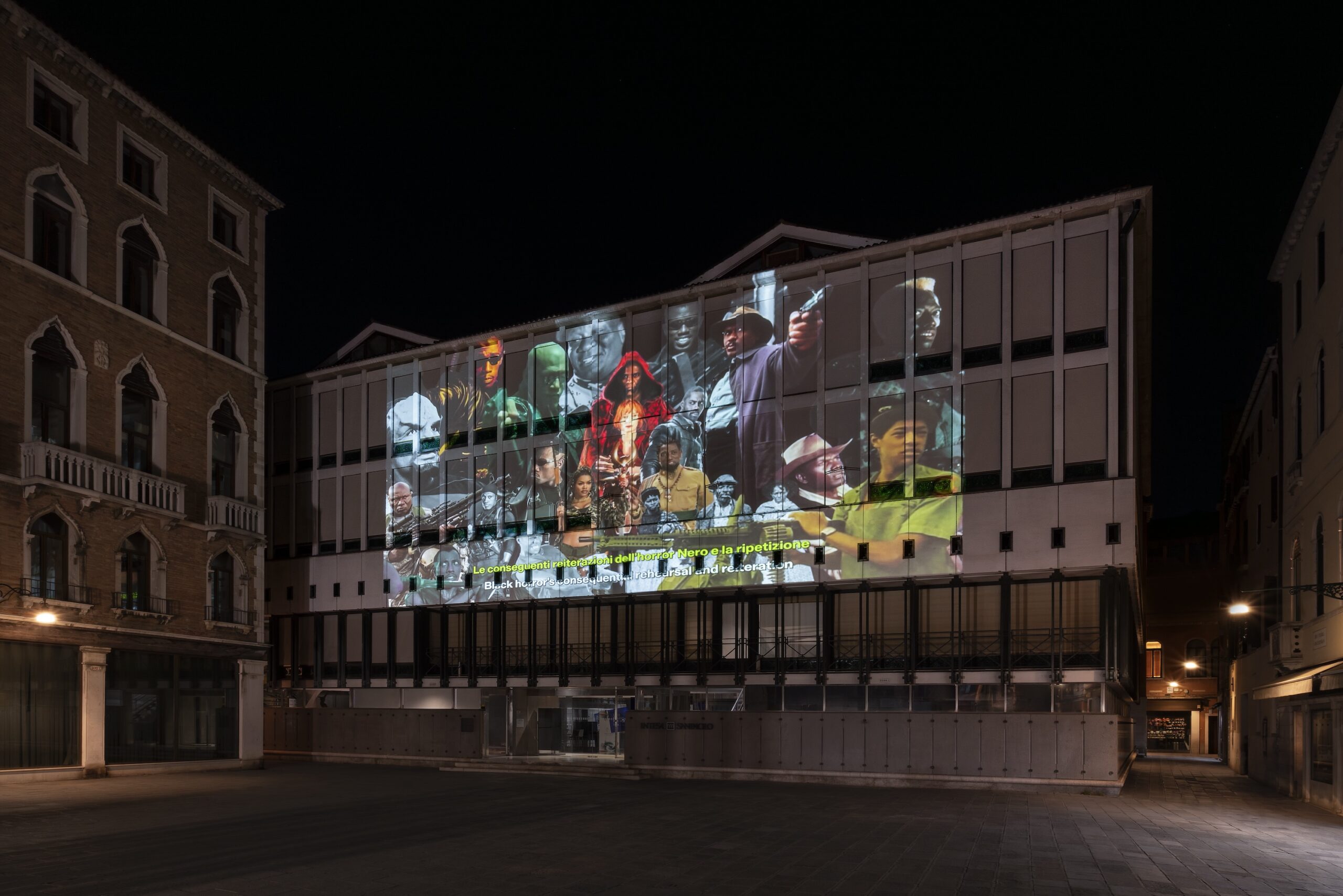
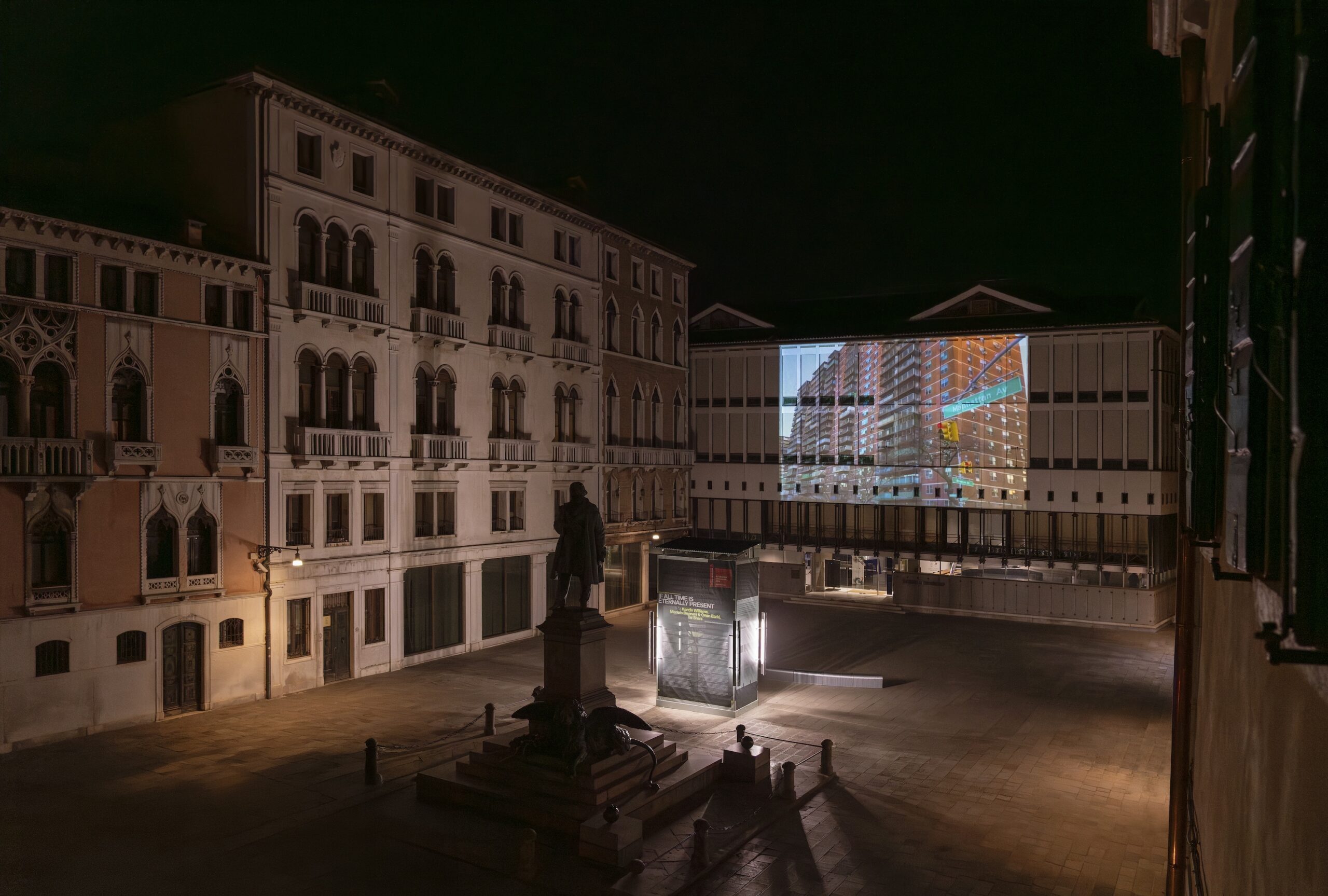
Invited by Pier Luigi Nervi Foundation to propose a project responding to the architect’s legacy, curators Marta Barina and Chiara Carrera chose to focus on the facade of Palazzo Nervi Scattolin, then posited a simple but unexpectedly radical proposition: what would it mean for a cultural programme to actively produce a place for artistic visions in the city after dark?
The nocturnal is often imagined as a space of suspension, an ambiguous territory where hierarchies and rules loosen, allowing for social, psychological and economic unofficial practices. Or, as Kandis Williams would have it: “demon time, the late hour when rules slip and hauntings become legible”. Campo Manin—where the Nervi Scattolin headquarters of Venice Savings Bank is located—can be read as an ambiguous location too, suspended between the public, the private, and the institutional. It was approached by the two curators with a nocturnal attitude, so to speak, favouring less official ways of living the cityscape, such as dérive, dreaming, contingent encounter, and fictionalisation, which all became means by which the project is accessible, the video artworks themselves carrying an analogous ethos.
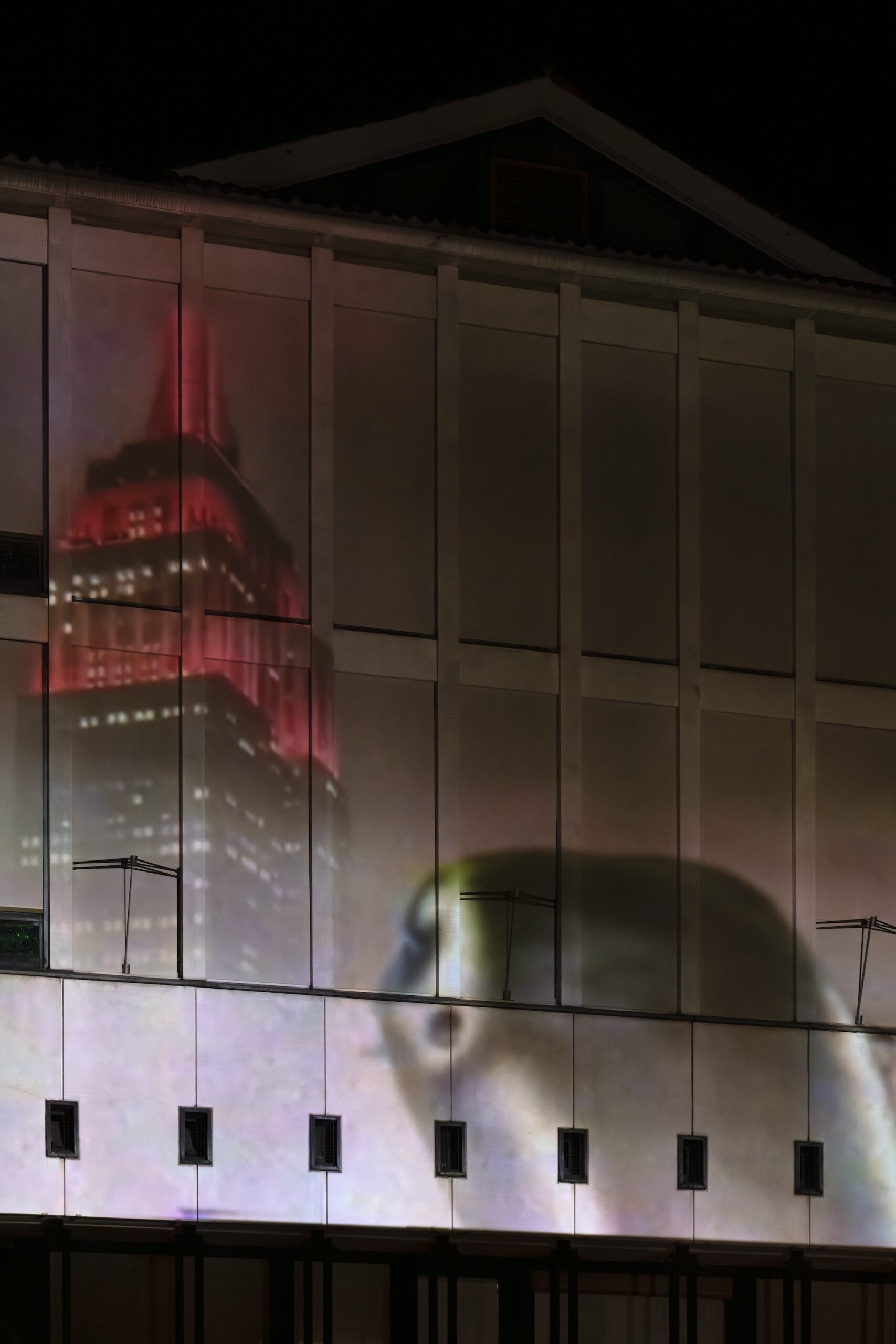
Take Meriem Bennani and Orian Barki’s animated series 2 Lizards (2020), for instance. Produced amid the first COVID-19 lockdown and initially made available via Instagram Stories, eight short episodes follow two rather irreverent talking lizards as they navigate isolation and digital proximity in a deserted New York. Among Zoom birthday parties and improvised balcony concerts, the series brings to the fore all those shared micro-rituals that composed the lived texture of the pandemic, impeccably articulating official-unofficial relations of this very recent epochal event. Hope, boredom, paranoia, loneliness, and excitement are just some of the shared emotions of that time, here conveyed across seemingly trivial, spontaneous exchanges. These become the primary narrative material through which the crisis and its broader historical implications are told and metabolised. And if the mundanity of Bennani and Barki’s animation mirrors a curatorial strategy intent on avoiding monumentalisation and spectacle as primary ways of activating public space, Kandis Williams’ fifty-five-minute A Travel Guide: Black Gothic in South Korean Horror (2025) contextualises the notion of dérive through a multi-historical Black lens, while simultaneously resisting the romanticisation of darkness itself.
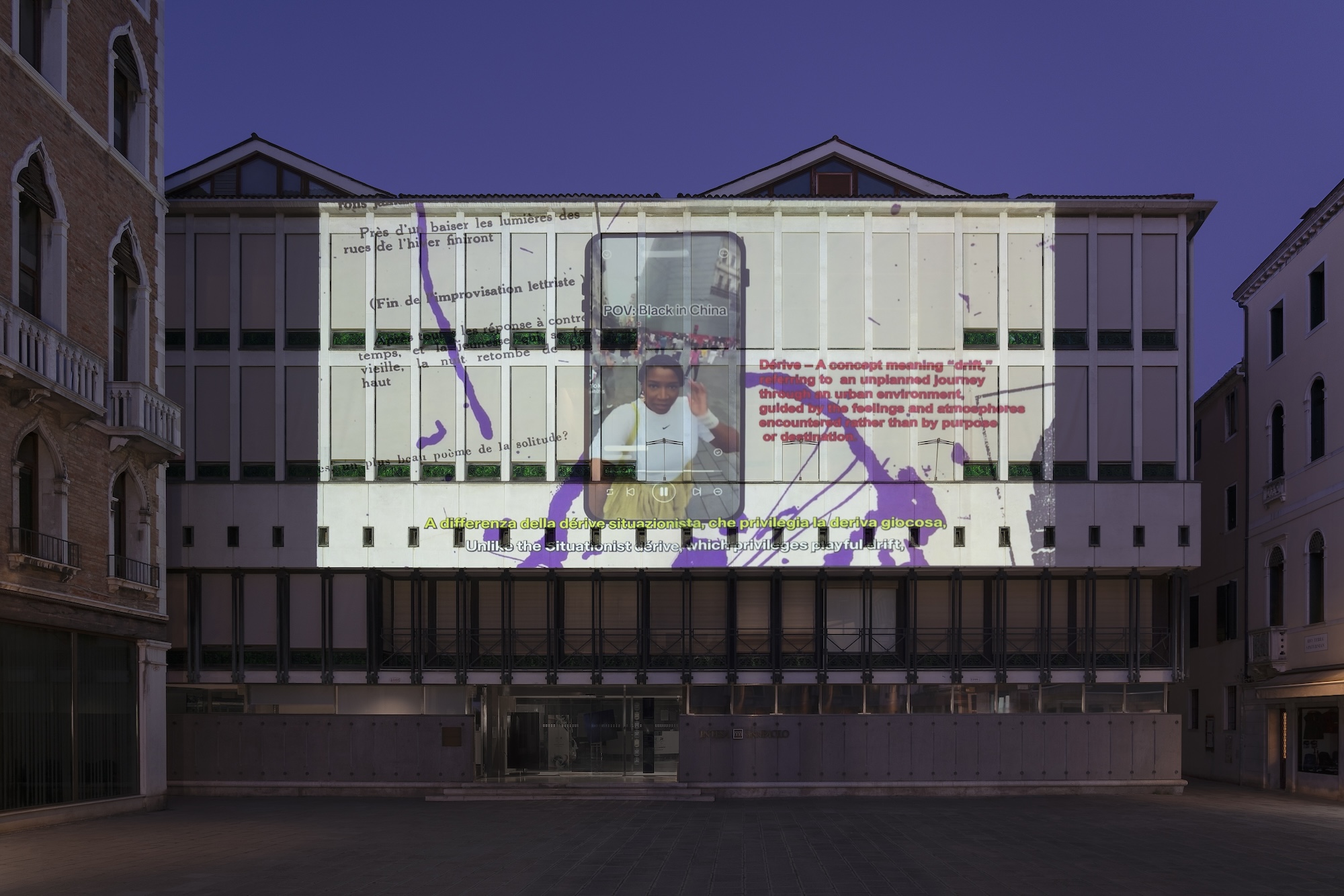
The essay-film begins from a historical analysis of The Negro Motorist Green Book—published annually between 1936 and 1966 as a survival guide listing safe places for African Americans during the Jim Crow era—and fluidly moves into the contemporary dérive of the Black traveller and what it means to negotiate forms of captivity within ostensibly open spaces. Between TikTok excerpts, fragments of horror cinema, archival material and personal observations, Williams recounts her own journey through South Korea, tracing Black cultural influences within K-pop and reflecting on military occupation, surveillance culture, beauty industries of shine, and the afterlives of American imperial presence in the peninsula. Overall, the film both documents and performs a dérive, continuously drifting across temporalities, geographies, and cultural references. It is precisely through this unstable and unofficial movement that Williams constructs a “Black Gothic”. Actively against the romanticisation of doom and the aestheticisation of Black trauma, in Williams’s hands the Gothic emerges from historical repetition and unresolved racial violence. Ghosts, in this context, are paradoxes of global circulation, myths, and crossroads of commerce and desire that continue to structure the present.
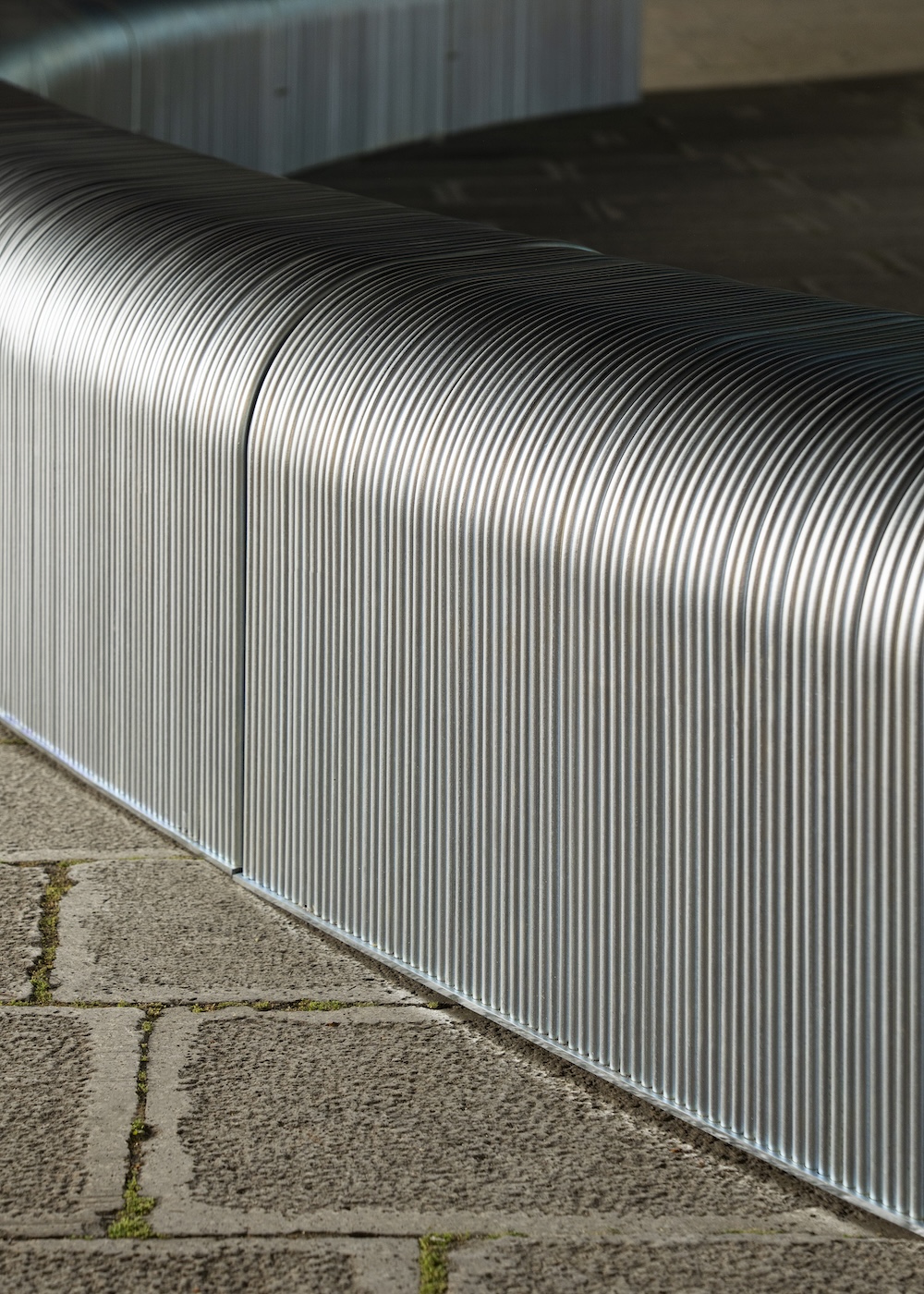
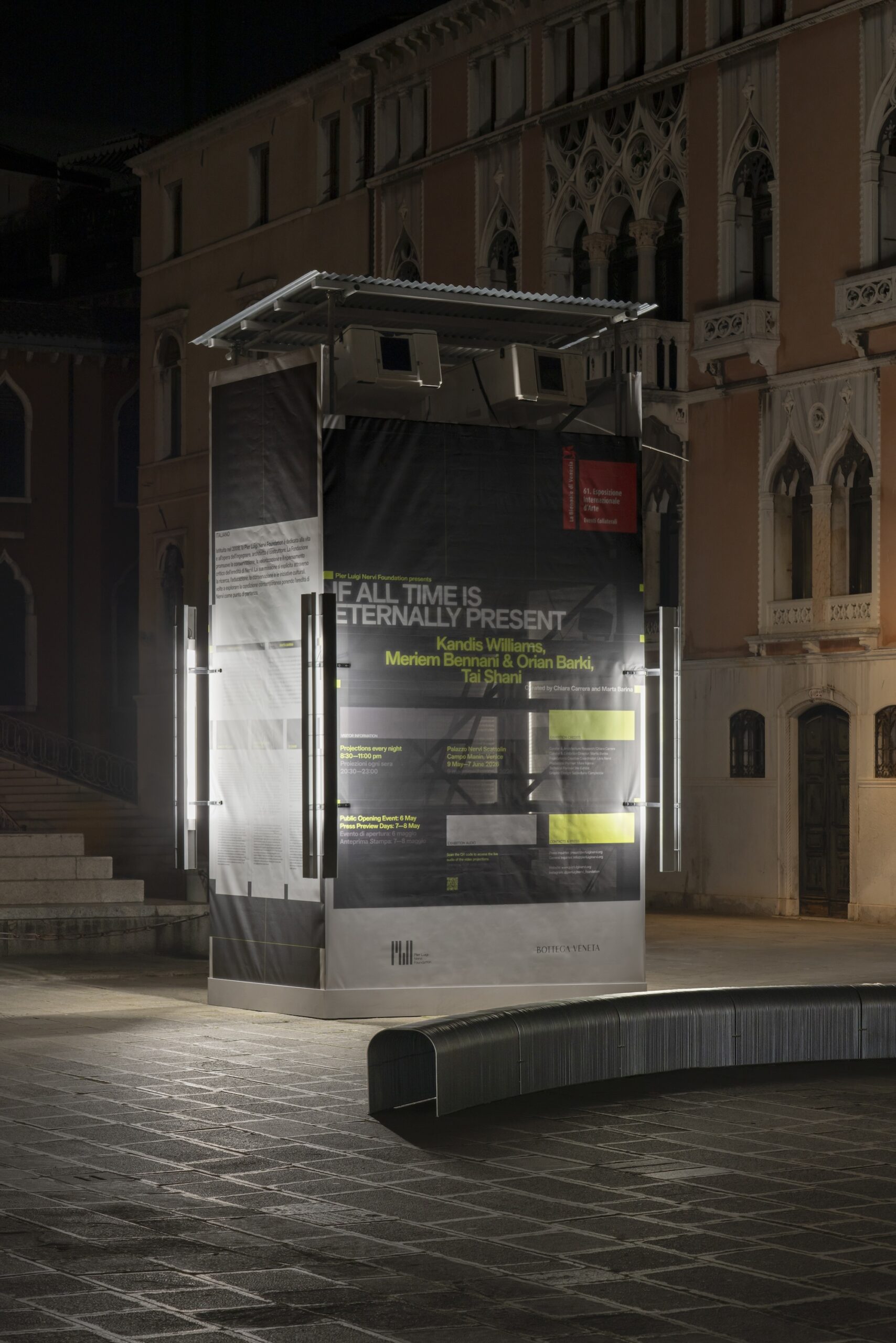
The nocturnal and the dérive become strategic conditions through which linearity gets unsettled, allowing different temporal registers to leak into one another and propose visions for the future, ones that take history into account. Here is where a resonance with the architectural legacy of Pier Luigi Nervi is to be found. Completed in 1972 after nearly a decade of revisions and bureaucratic negotiations, Palazzo Nervi Scattolin remains one of the rare examples of modernist architecture in Venice — a visionary structure that originally embodied both futurity and controversy within a city historically resistant to transformation. Pivotally, the curatorial project never resolves its complexity into simplification. On the contrary, Barina and Carrera chose to maintain the conceptual density of the selected works while facilitating conditions to make them accessible to a broad audience. Modular urban seating, multi-lingual subtitling of the video works, as well as the presence of members of staff available to mediate conversation, are just a few of the actions taken that make this project an exhibition; its public dimension being particularly relevant within the context of the often too exclusive Venice Biennale, of which this is a collateral event.
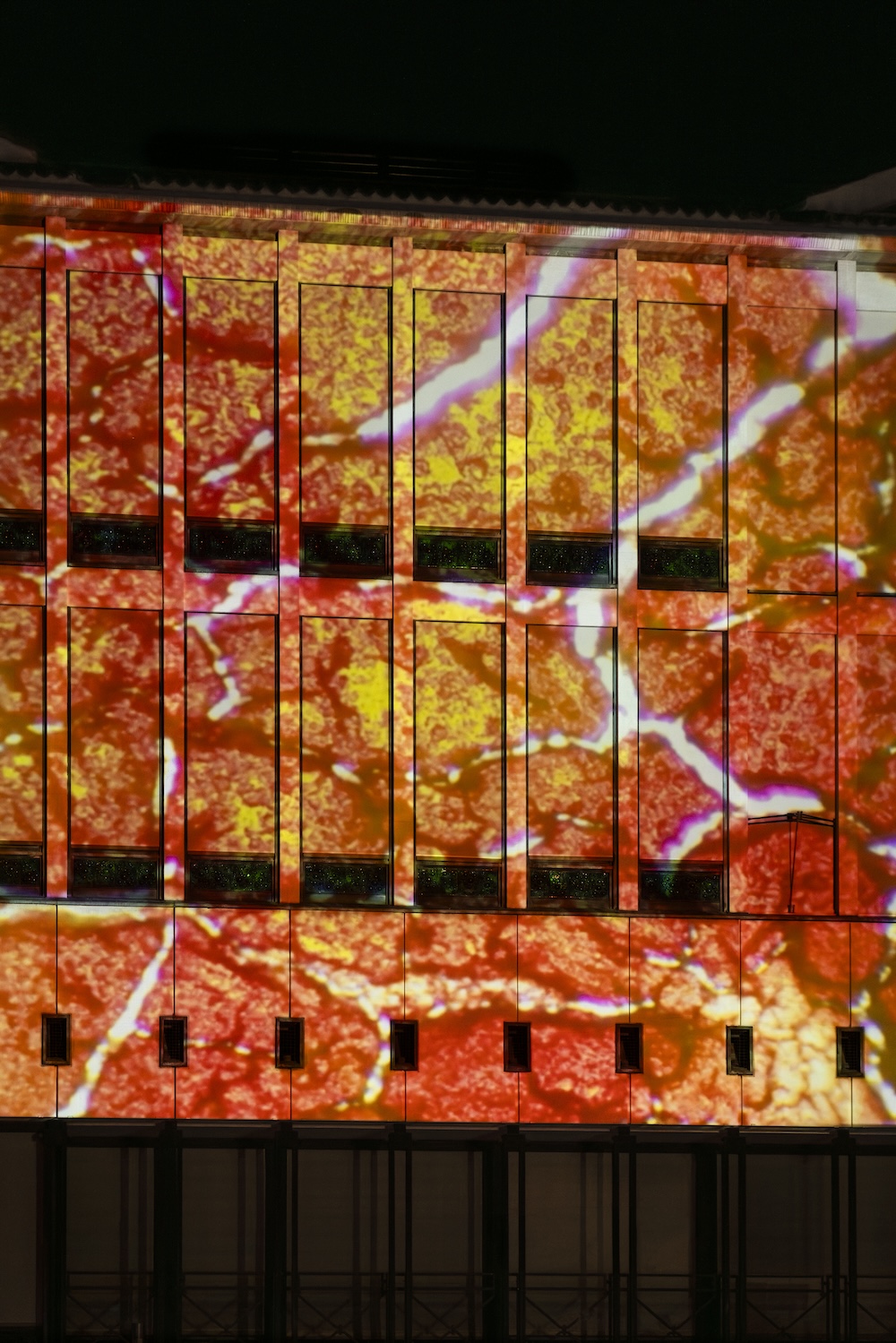
Tai Shani’s My Bodily Remains, Your Bodily Remains and All the Bodily Remains that Ever Were and Ever Will Be(2023–2026) brings the whole into a cosmic dimension, amplifying further the notions above listed. Combining submerged landscapes, spectral figures, desert horizons and videogame aesthetics, the work unfolds through a dreamlike and affective logic where bodily vulnerability and political transformation become inseparable. At its centre appears the monologue of a ghost speaking from the backseat of a moving car at night — a presence that feels surprisingly tangible, less spectral apparition than melancholic companion. The city nightlights passing outside the windows, the wandering cadence of the speech, and the film’s constant oscillation between intimacy and abstraction all contribute to constructing a suspended temporality, porous and collective. If Williams approaches the ghost as the return of unresolved historical violence, Shani instead turns spectrality into a condition of radical emotional and corporeal interconnectedness. Love, grief, pleasure and dissolution ooze into one another, allowing the body to emerge as something relational, unstable, and shared across times and subjects.
Borrowed from T. S. Eliot’s Four Quartets, the exhibition title If All Time Is Eternally Present ultimately finds one of its clearest manifestations here: in the sensation that modern history, contingency, antiquity and future-archaic cosmologies may be found in plain sight, on a Venetian nocturnal drift.
If All Time Is Eternally Present
Kandis Williams, Meriem Bennani & Orian Barki, Tai Shani
Curated by Chiara Carrera and Marta Barina
Palazzo Nervi Scattolin, Campo Manin, Venice
Venice 9 May – 7 June 2026
Organised by Pier Luigi Nervi Foundation
Sponsored by Bottega Veneta
Collateral Event of the Biennale Arte 2026
Photo by Tiziano Ercoli
Courtesy the artists and Pier Luigi Nervi Foundation