in conversation with Laura McLean-Ferris and X Zhu-Nowell
Rockbund Art Museum 日历
2 May 2025—8 February 2026
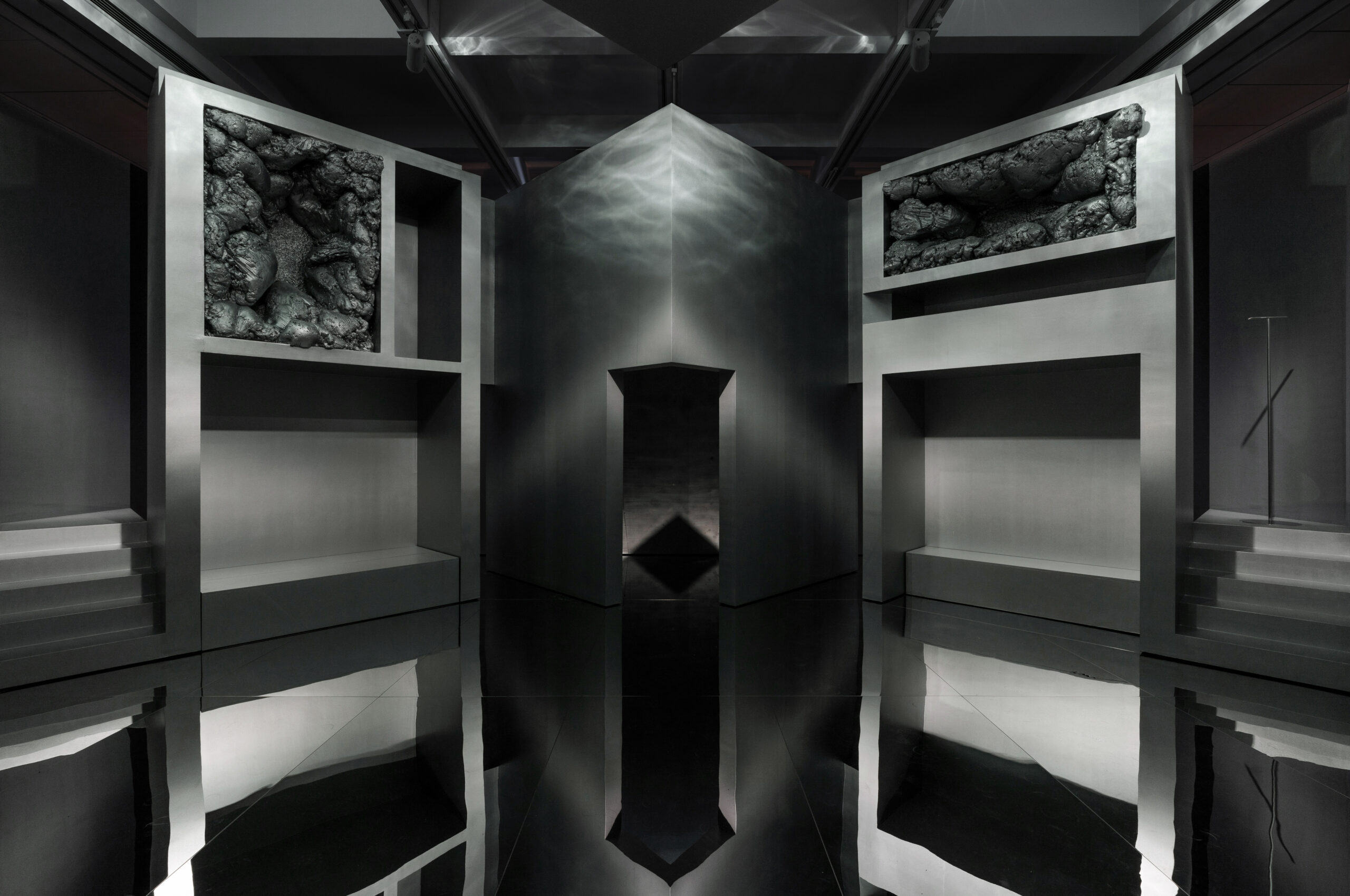
Installation view, Irena Haiduk, Nula, Rockbund Art Museum, Shanghai
© Rockbund Art Museum, Shanghai. Photo: Yan Tao
The first chapter of Irena Haiduk’s multi year-long project, Nula, at the Rockbund Art Museum (RAM) in Shanghai, is a dark and gemlike project, gleaming with many different facets. It is an elaborate film set with mirrored rooms and hidden corridors, where Haiduk has been filming a feature film, also called Nula, complete with dressing rooms, hair and makeup, and a costume department. There is a dark, cavelike room, a cabaret theater, a tunnel lined with boxes and a variety of other spaces. Every visitor is handed a cast list and a set of character descriptions when they enter the exhibition outside filming times, is also invited to choose a role, and sign a contract. Yet Nula is also the name of a new economy operating within the museum that has been generated by the world of the film. The Rockbund is now operates with ‘Nula bills’, printed currency notes that have the face of a teenage girl printed on them. The project is part of a new, cyclical approach to the Rockbund that has been adopted by its director X Zhu-Nowell on the occasion of the institution’s fifteenth anniversary, one that works against the logic of the finished product, the consumable, knowable exhibition. To inaugurate this new structure, the first season explored the aftermath of collapse, including projects by Cici Wu and Ash Moniz. Here, Laura McLean-Ferris talks to Zhu-Nowell and Haiduk about Nula, new economic models, exhibitions as theatrical spaces, and forms of thinking that are unfinished.
Nula is an exhibition that is also a site of production and a working film set, among other things. And this production site has its own economic system which is part of the infrastructure of the exhibition. Here, everything acts, including the building itself, anyone passing through it. There are props, there is currency in circulation, there are actors and roles in circulation. Let’s begin with the economy – what is the Nula economy and how does it operate?
The currency is based on a bill that no longer circulates, one that lasted for only one day. The story of this bill left a really a huge mark on me, and it’s really where this entire project started. It was designed by one of my mom's closest friends at the Yugoslav National Mint, who was an illustrator for the mint in the 1990s, at a time that the currency was going through a 3 million percent inflation. Every day, night or even hourly, the mint would have to trash a series of bills and create new denominations with more zeros and new faces on them. One day, when they were running out of famous historical faces to put on a new bill, the illustrator made a drawing of his daughter to put on the bill. When he came over to our home later, he showed us the bill and the photo of his daughter from his wallet that he had based the drawing. But already at that moment, that bill was almost worthless and couldn’t be used to buy anything. So, it was just one of a series of moments in my life when I understood that value is not a stable term. Already then, I saw that currency simply returns to the status of ink and paper.
The primary aim of introducing the Nula economy at Rockbund is not to preserve the bill, but to put it back into circulation; to let it be touched again, passed hand-to-hand, as if to awaken its latent history. The system we devised ensures that every exchange of the museum and its public is mediated through Nula. In this way, economy itself becomes a form of contact.
People can trade bills for event access, but they can also get bills by being involved in the exhibition, by negotiating for it, by exchanging something else for it. I think what X has in mind is for this institution to become one where transaction is handled this way. And I think Nula is a good training for people who need to make the transition from money into just pure oral transaction and non-material exchange.
Within just two days of the new currency entering circulation, visitors began returning. Repeated presence, of course, can merit forms of non-material value gained through engaging with art. It can engender modes of attention, duration, and care. But in this context, repeat visitors are literally rewarded with Nula bills: not as payment, per se, but as a token of an alternative mode of transaction. Or this is how I view the transactional aims of the experiment. Institutionally, the Nula exchange micro-economy at RAM is an experiment with particular relevance to the local context of Shanghai, because in this city, cultural life is so often streamlined for effortless consumption. In this landscape, the Nula economy proposes a subtle resistance: it asks for presence over purchase, slowness over speed.
Did you have any hesitations about putting this kind of delay or barrier in place for audiences?
No, because I believe the heart of the Nula economy is about re-functioning an exhibition. I welcome acts of resistance to the seemingly frictionless drift of art objects as capital and ways or grabbing (or diverting) attention. Relatedly, in terms of barriers, we removed one of the most obvious barriers to art—the entrance fee. So, the museum is now free. But I don’t believe that free admission, in the conventional sense, is a panacea. Removing this barrier does not necessarily encourage audiences to give artworks more attention, time, and the presence it deserves. A so-called free museum could create an even more impatient art-consumer mentality. These kinds of engagement issues are important for me, and I think we need to explore new forms of exchange. So, for Irena’s exhibition, we replaced the act of buying a ticket with something else: signing a contract. Singing a contract is a gesture that binds the visitor to a role within the museum. The presence of a contract slows you down and produces at least some brief self-reflection about the interaction taking place. So, yes, asking audiences to sign a contract does produce a kind of delay or barrier- you could call it that. But having observed people engage with it, in this context, I’d say it’s a process that’s almost playful. People want to take part. They want to embody their role in the exhibition’s economy. They become a producer with some agency. In this sense, if it is a barrier, it’s certainly not a blockade.
It’s to do with attention. I don't believe in universal access, in the right to see and the right to have access to everything. We must be generous in the way that we seduce people to want to be a part of something, but then also provide them with some formal tools and stakes for becoming engaged.
X, I’m interested in statements that you have made about your lack of interest in staging static exhibitions and are committing instead to projects that stay alive through programs and events and different types of activations. Can you say more about that?
Static exhibitions belong to museums invested in closure—in fixing meaning, in finishing thought. But I have always been drawn to the non-static, to institutions and exhibition forms that remain in motion. What interests me is not the final statement, but the structure that moves, shifts, contradicts itself. We are not living in a static time—how, then, can our exhibitions remain still? To live in this moment is to embrace the non-static, not just in form, but in method, and in production.
Let’s talk about what is physically present in the exhibition spaces at the Rockbund, and what has taken place there during Nula.
When people first enter the museum, there is an area which is what we call the prop area or the backstage area. This is the edge, the threshold where you can cross over, where things begin, where the frame that art gives another life to things. Then people can fill out a form, choose to engage in the project in different ways, choose a character, and then take a seat if they like, to take some time to accumulate an image for themselves. Then, they pass through racks of costumes, feel and see the textures involved. If they engage on a regular basis, they acquire access to the MC's office, which is also used as an office in the way that everything here is itself, and playing itself at the same time. When we pass that, we go to the space called the F-Stop, which is a site of storage from previous exhibitions, but also the scene for a sex show (F-stop is also a fuck room) in the film. Then a huge cut, in this multi-room assembly, a smuggling tunnel lined with cardboard boxes of contraband goods. I wanted to make the exhibition so that, through colors, rooms and different scales and aesthetics, it would feel like a collage or labyrinth, so you don't know what's coming next. Artworks are embedded everywhere, on walls, on floors. Everything is considered both art and actor at the same time. On the second floor, we have a really non-orientable space with a mirrored floor, which is a site of a kind of lair for the criminal gangs that run the street money exchanges when the banks collapsed in 1990s Yugoslavia. In this space, we have the second quintessential object of the exhibition, which is a work called Notion, embedded in an Andreas Angelidakis’s Home for My Mother made with Yugoexport, and another head (space) by Andreas Angelidakis. The room housing these works is non-orientable, MC Escher-esque, Piranesi-esque with elements from Gaetano Pesce’s The Period of Great Contaminations (1972). We wanted to make it feel like it's a knot where all the smuggling tunnels end, where everything is super concentrated, where everything departs from and returns to, a center of the Yugoslav economy at the time which was stacked with knockoffs, illegal trade routes, drugs, disappeared people. The whole exhibition is deeply emotional, tempered. Each room has its own character. People go into these hallways and they don't know where they're going to emerge, and I really like that, that visitors probe and test the space. It's not just an imaginary space: you have to learn how to move through it as you walk around.
And this final space is the one in which the climax of the narrative takes place.
I would say that the end leads from this space, yes. This space leads to water, a liquid end. And there's a lot of water and liquid feelings in this exhibition. In the leir, there’s a shimmering light on the ceiling which reminds me of underwater exploration, and which I think makes people feel like they're under water. I asked Lane Gutović when I was a prop assistant, where the cabaret came from, and he told me it came from the sea. I did not understand the answer and he wouldn't tell me why it came from the sea. It really taught me how to live with not knowing. It keeps working on me. That's how powerful I think an unanswered question is: learning how to live with something that you don't know. Its disorienting and stabilizing at the same time, because the unknown is our world and we need to live with the mystery of it. If you walk through the right tunnel in the lair, you will arrive at the cabaret theater, where the cabaret scenes will be filmed. And here, especially, the participation of the audience is key because in order to have the scene accumulate, we need to have our Shanghai audience to come into the space and play the audience.
Irena and I have spoken a lot in the past about the importance of the cabaret in the former Yugoslavia in an Eastern European tradition, and about her own experiences of cabaret. But I was wondering about the context of Shanghai for a project like this. Are there examples of cabaret or radical theater histories that resonate with this style of theater?
From the 1910s to the 1940s, Shanghai’s cabarets thrived as sites of glamour, cosmopolitanism, and cross-cultural encounter. First emerging in the trenches of Hongkou before migrating into the foreign concessions, these venues became the heart of the city’s nightlife. Bands, dancers, and shidaiqu singers drew gangsters, politicians, artists, and the urban elite into the same nocturnal orbit. Many cabaret stars also appeared in films, underscoring the deep entanglement between the cabaret scene and Shanghai’s burgeoning film industry. While performances tended to center on romance and spectacle—rather than the overt political satire found in some Western traditions—these spaces nonetheless became fertile ground for discreet social and political exchange. We are interested in revisiting and reanimating this layered history through our public programs.
Irena, you've made many items of clothing and footwear in the past for your exhibitions with Yugoexport, the blind, non-aligned, oral corporation that you started.[1] Can you tell me something about your approach to the design of these garments, which often pulls from historical traditions but alters, augments, and twists these into new forms?
For Rockbund, we made the Tiger Parka, which is going to be used as the uniform for the one of the paramilitary gangs in the film. Their uniform really existed, but we wanted also to make it a little bit more stylized than conventional military gear. Also, I did not want to invest in getting the original Tiger paramilitary uniforms because I did not want to support people selling it online. This was an extremely nationalist illegal paramilitary cell that operated in Serbia and Bosnia, during the 1990s civil war. Most of its members were not prosecuted. So, we made a beret, which is reminiscent of the UN blue berets. For me, the UN were just as problematic as any of these paramilitaries. They just let things happen, they observed and did nothing to prevent all these atrocities. The Tigers were a voluntary, fanatic, ethnic paramilitary, fueled by hate. They also ran smuggling operations. This work references many things that existed and actually happened, but in this environment I try to make the costumes distinct from the aesthetics that these death-driving entities created. So, with Alexis Mark, we designed the logo for the Tigers, which is in between the UN logo, the tiger’s claw scratch and the Eye of Sauron.
Yes, so every element of the aesthetics is transformed, reimagined.
There's a lot of surreal things here. And the reason they are surreal is because I don't believe that I can actually depict any of what I lived through realistically. I don't think that violence or this memory can be touched. I had to find another way, and I think the non-western context allows that. When it comes to costumes, clothing has become a means for me that I can personally, without others, to start things up and engage in a making of a world with some control. I'm completely okay with the lack of control everywhere else. Sometimes, it's a great pleasure to also be alone working on things. It's nice to have prep time, still time, and time in general to load a world on every level of imagination and make it real.
I did want to ask about the context of war for the for this narrative, which takes place in a space that's somewhat removed from reality, but also overlaps with the context we are in right now, when there are major wars taking place. We are in a very divisive moment politically.
When Ukraine started, it was a very hard, psychologically, because it reminded me of the time when the war in Yugoslavia started, when I was growing up. The media coverage was identical. I was panicking, because everything around me started disintegrating in a very similar way to Yugoslavia disintegrated and this time I was all grown up. I had a really hard time accepting the fact of this heavy echo. I am based in New York now and I rationalized coming to the US as a way to get away from the ruin of war. But after covid things really started shifting and continued sliding, deformed by internal and external convulsing, declarations of loyalty, taking sides, return to biaries, cynicsm, secret tribunals, disciplinary hearings, re-education sessions, arrests, witch hunts, mass firings. When the election in America happened last year, after all this panic and backpaddling, there was profound shift in me. Suddenly, all my fear and panic left me and I became very calm because, finally, the world that I was living in became a 1:1 copy of the world that I grew up in. I was home again. A familiar ground. And I knew what to do. Working on Nula made me understand that I had to model for myself and others, what the artists and people I worked with at the theater modeled for me, which was this incredible space that art has to offer. This place is not separate from the world, but is absolutely vital in a time of full dissolution. It demonstrates, clearly, that we shouldn't base the foundations of our society on a financial free market economy, that we should base it in art because in the end, markets collapse on our heads. Everything around us suffers a constant crisis of values and meaning. There is no crisis of meaning in art. Art has no stable values, it’s a place that loves difference and instability. A place for testing everything. It's such a home for making the world anew and experimenting. And in a time of profound crisis, It has a very clear and stable role.
I’ve always been drawn to how you re-function the medium—whether through making exhibitions, forming corporations, fashion design, performance, or publishing. Now that you’ve filmed most of the scenes for Nula, what has that process taught you about the medium of film? And to what end do you imagine re-functioning it?
I found that my intuition that Nula had multiple forms, a book, and exhibition and a film, was true, and that it has life as all three. This rarely happens for anyone. It has to do with my collaborators. I am sure that, as we enter post production, this work, like many others will teach me about itself, and the best way towards re-fundtion (more life). At this point, this work is alive, smarter than me. Many have given time to it and shared themselves within it. So, like all animate creatures, the film has a will, and demands its own dignified form. I will listen and let it guide me. After living in my own work for more than a month, with an amazing film production team, I truly reached a new level in my life as an artist. Since childhood I lived intensely in my mind, it was what kept me whole. At Rockbund I made some of that space physical, real again, and we brought others into it, people of extraordinary talent and will who made what I imagined possible. Every day was the essence of alchemy, casting spells, making things real. Also, for the first time in my work, I truly shed the feeling of being alone. The institution is not something I had to face alone, as it hosted the whole thing by joining in the work, throughout. Even the most difficult days were liveable because of this collective good will. There is an abundance of it in Shanghai. What the medium of film provided me was unexpected. Before Nula, I thought it was material form, a medium, a means to communicate something different to a world living in screens and finding a way for the oral image to map its own cinematic space. But after this experience, what film gave me and keeps giving me is what Yugoslavia lost and I was too young to fully experience: celebration of difference, virtuosity of making, collective action, a family, a sense of music and home.
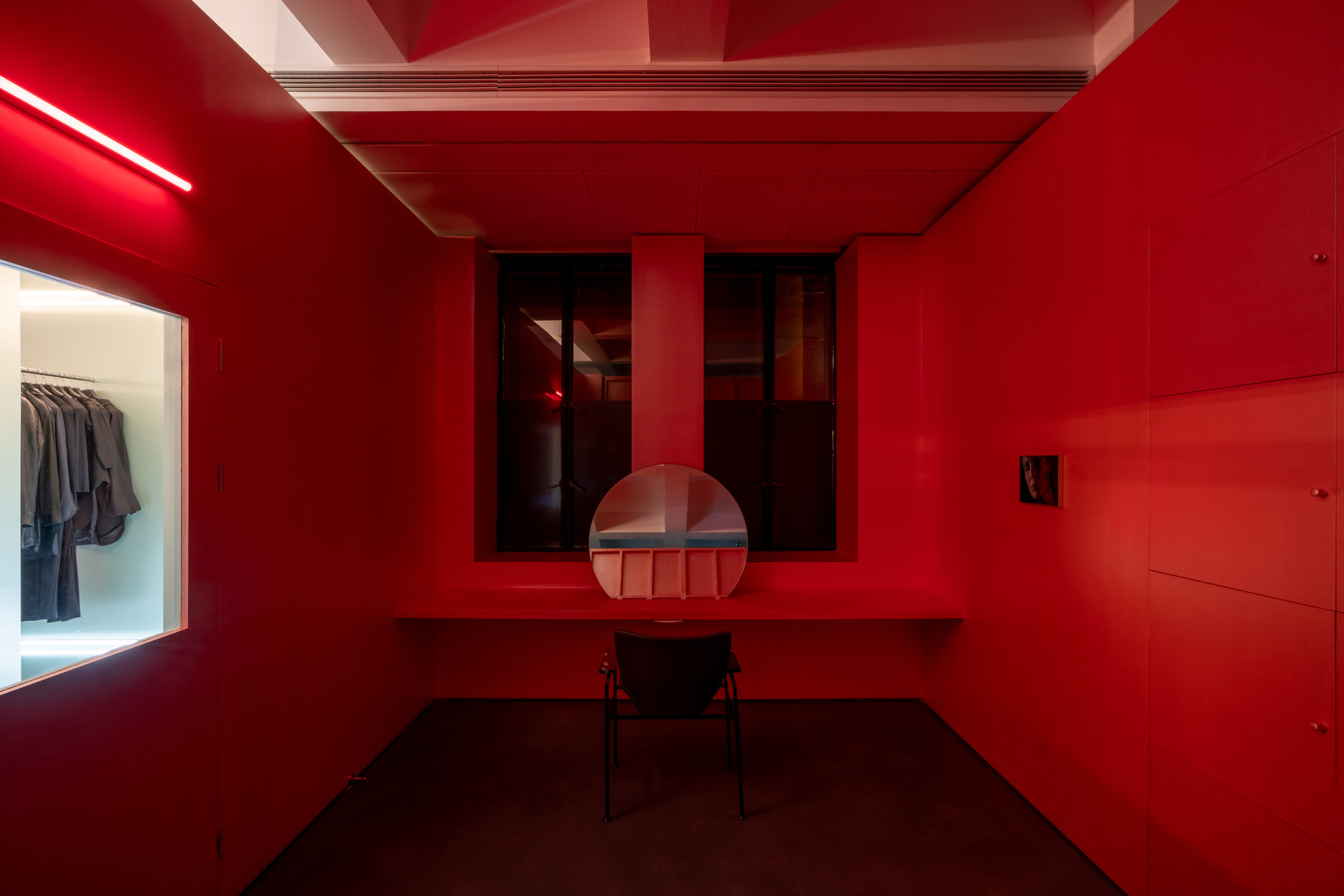
Installation view, Irena Haiduk, Nula, Rockbund Art Museum, Shanghai
© Rockbund Art Museum, Shanghai. Photo: Yan Tao
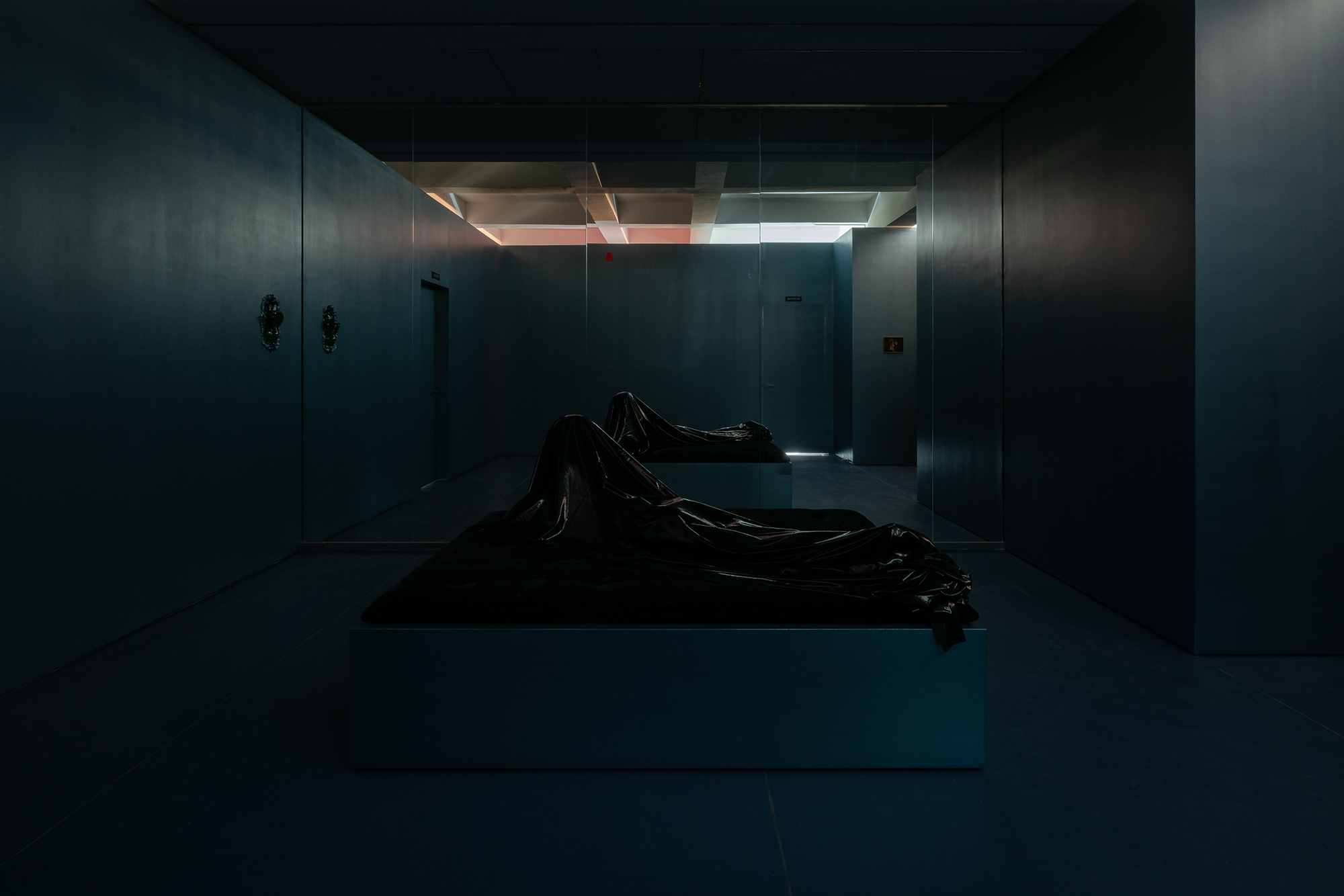
Installation view, Irena Haiduk, Nula, Rockbund Art Museum, Shanghai
© Rockbund Art Museum, Shanghai. Photo: Yan Tao
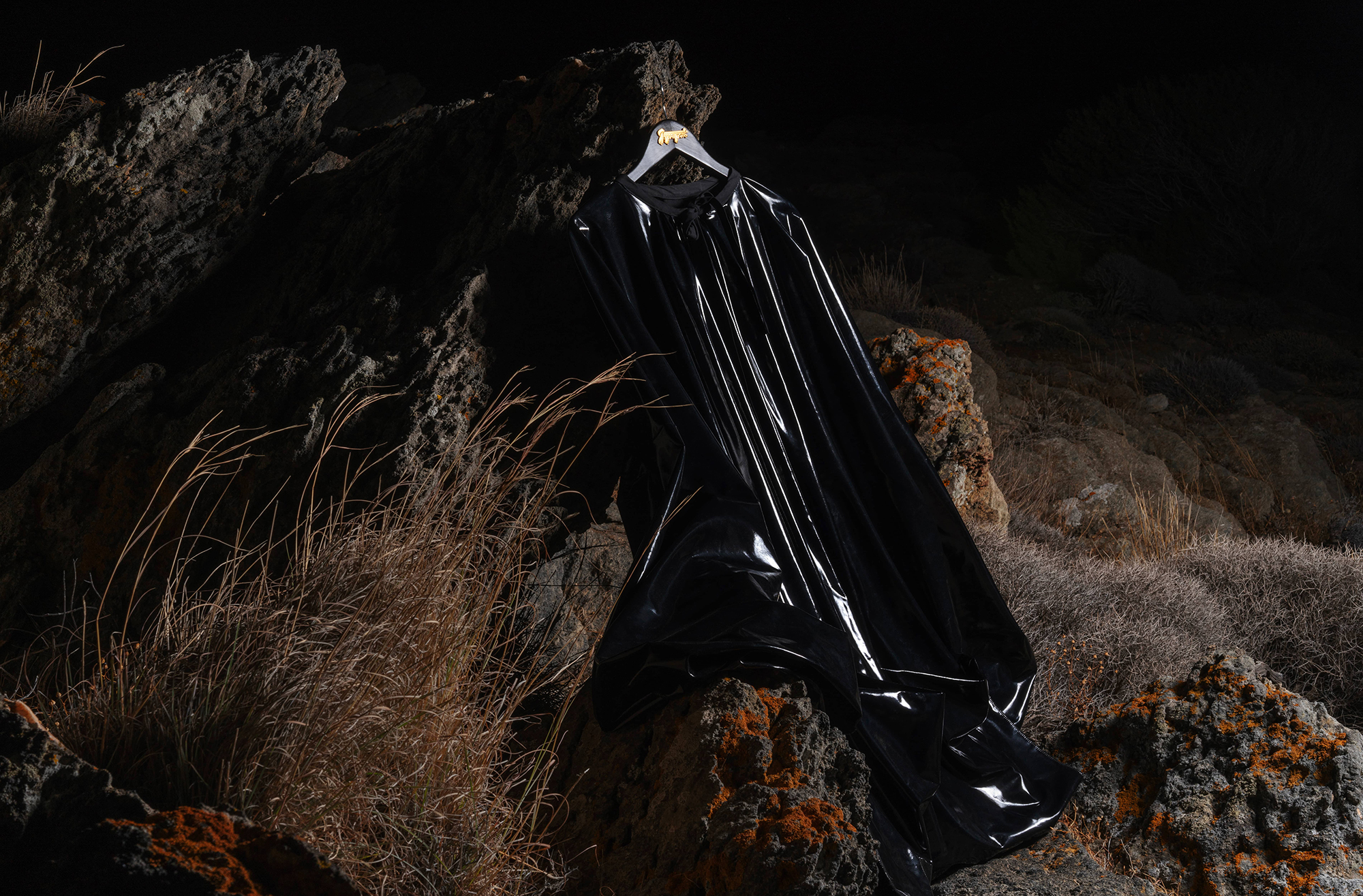
Irene Haduik, The Night Cast, 2022, digital image for various formats. Produced by Yugoexport and the Swiss Institute
© Irena Haiduk. Image courtesy of Irena Haiduk. Photo: Anna Shteynshleyger
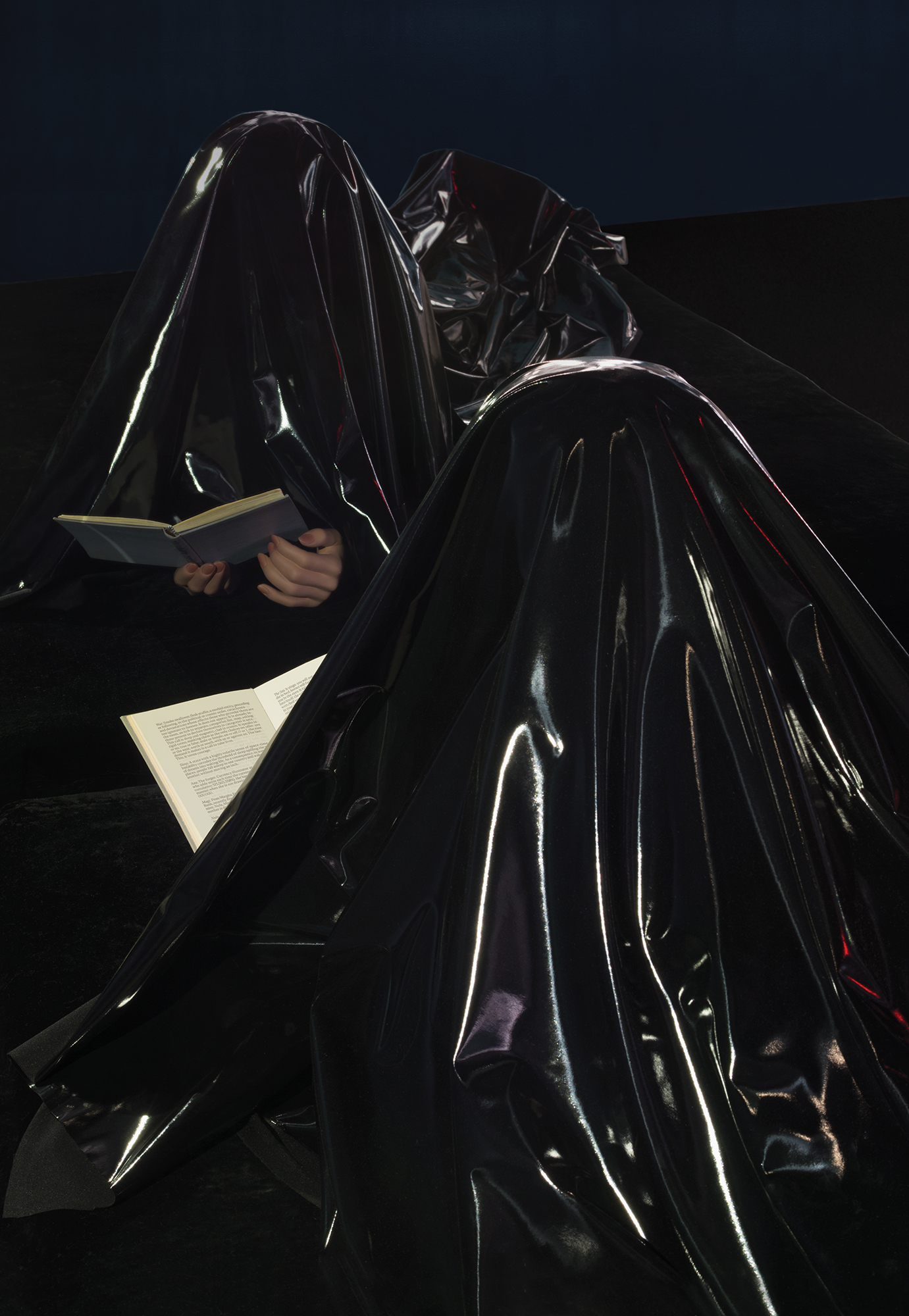
Irene Haduik, NULA, 2024, feature film vertical ad for digital formats. Produced by Yugoexport and the Swiss Institute
© Irena Haiduk. Image courtesy of Irena Haiduk. Photo: Anna Shteynshleyger

Irena Haiduk, Nula, film still. Director of Photography: Manuel Claro. The still depicts Yugoexport x Andreas Angelidakis collaboration House for my Mother (2025), holding Notions by Irena Haiduk (2024).