Text by Calla Henkel
CURA. 44
The Generational Issue
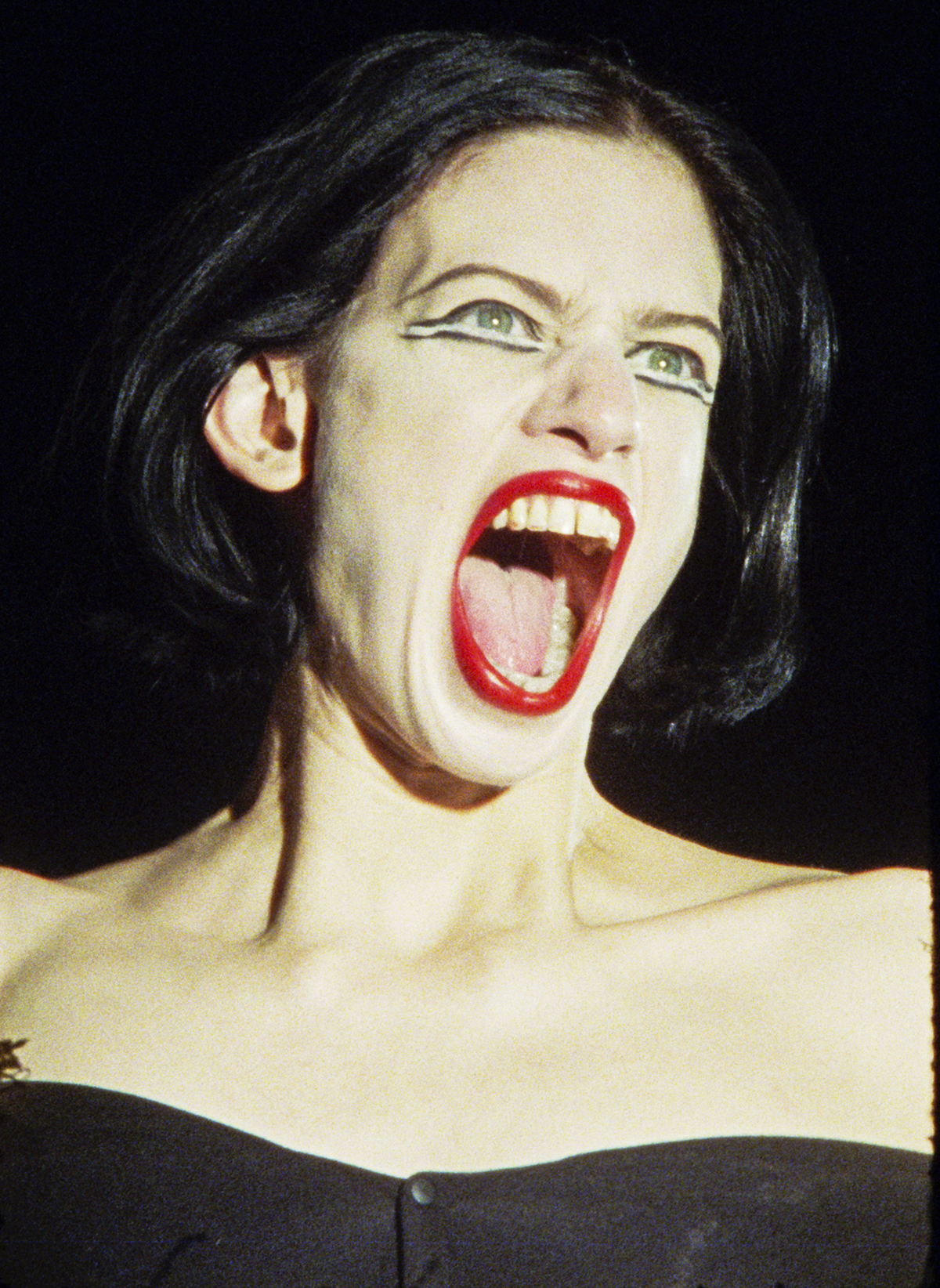
Portrait by Aidan Zamiri
I first saw Lily McMenamy in a nightclub in Berlin in 2016. I do not remember who was DJing or what I was drinking or wearing or wanting from the evening, but I do remember clocking Lily for the first time. It was one of those movie moments; a hazy spotlight dredged across the crowded dance floor, then stopped, pulsing on Lily as she stood near the edge of the bar. Lily was 19. What struck me was her energy. Standing there, she had an electric quality, she radiated outward, sucking in that hazy light and tripling it. She is of course born from supermodel stock (her mother is ’90s icon Kristen McMenamy), but there is something else, something metallic, sharp, and unnerving, mirror-like, which Lily uses to spit back light to those around her. Watching her at that night club, I knew instantly she needed to be on stage and it just so happened I was running New Theater with Max Pitegoff in Kreuzberg, and we were working on a play which needed another insane sister. It had to be her.
I felt like a pervert walking up to a teenager in a club and asking her to be in a play, but Lily said yes, and a few days later she was at our storefront theater on Urbanstraße. When Lily arrived, the play’s script had not been finished. Regardless, we all did a read through of what we did have on paper. Lily would be playing one of the Bateau sisters, a failed showgirl who lived in her family’s crumbling soon-to-be-demolished hotel. Lily was initially shy, but a few minutes in, that strange electricity I’d seen at the club found its way to the surface and she began to speak her lines with demonic courage. It suddenly made me nervous to have this beautiful stranger with all her caustic charge in the theater while we were all bickering about plot, but Lily seemed unphased.
We all relied on each other at the theater back then. There was no genius. No singular mind which went into shaping the plays we made and Lily showed up each day, ready to pour herself into that maddening and unpredictable process. The audience largely knew everyone on stage, as it was in its own way a community theater, but no one knew Lily. When she came out in the first few minutes of the play, I watched as half the spectators pulled out the playbill and checked her name—clearly in awe of whoever this woman in front of them was.
It can even feel vulgar or gregarious to see Lily recorded on film, as her bombastic energy, her bright light, needs to be eaten in person, because what is vital to her performing is that she in turn needs to consume you. Lily is deeply self-aware of the depth of beauty she is serving—she walks runways regularly, she is the face of Gucci—she knows we want to watch her, and when she is on stage, she is able to hold us accountable for our desire to stare. Lily honed these skills in Paris at L’École Internationale de Théâtre Jacques Lecoq, or what we all liked to call clown school. There, Lily focused on miming, and sharpened all of her knives, particularly the butcher’s knife; her physical effect on an audience.
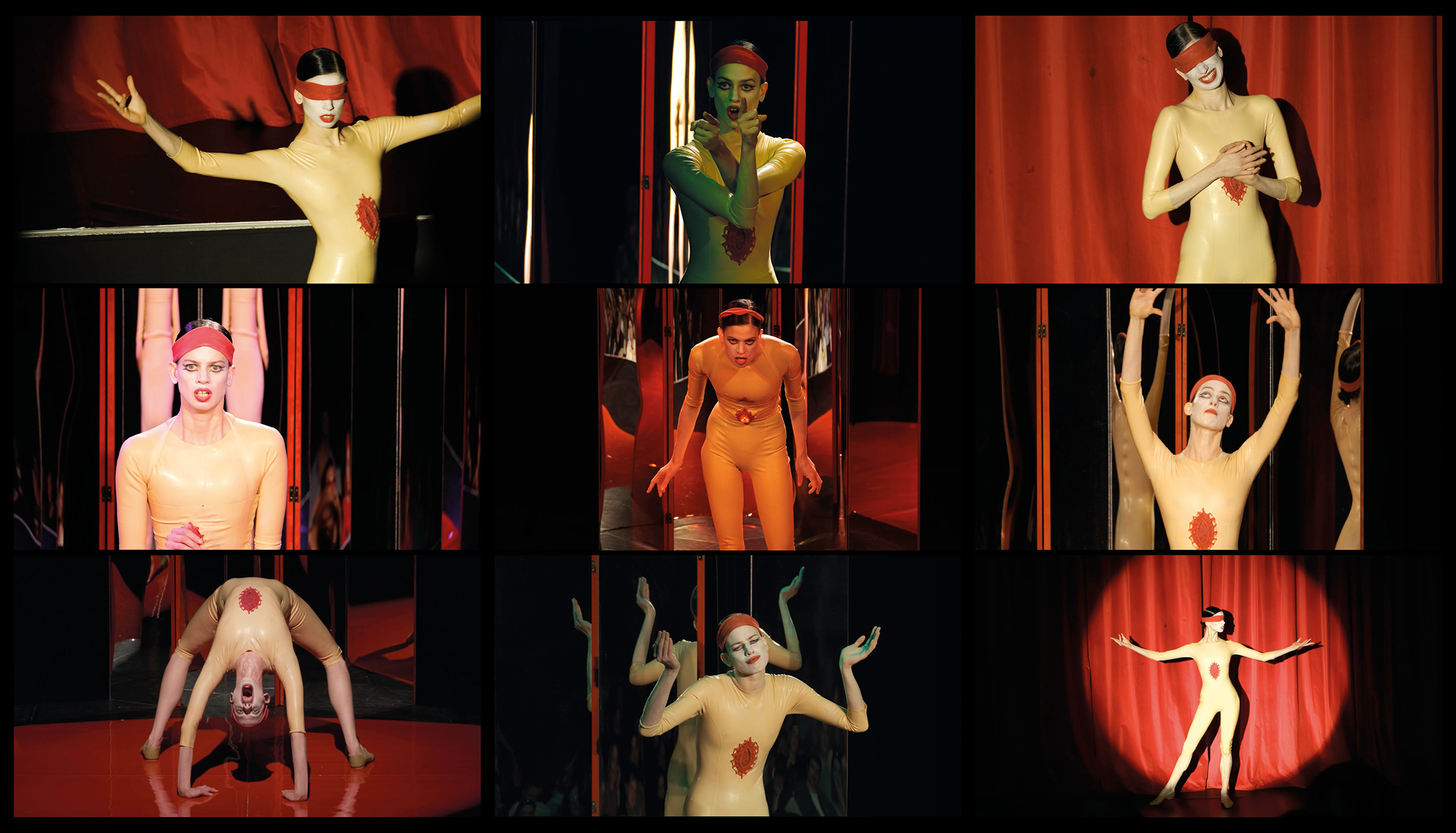
A Hole is a Hole, performance, Cafe Theater Schalotte, Berlin, 2024 Courtesy: Galerie Isabella Bortolozzi, Berlin and London Performance Studios
I believe every artist’s first real piece comes late. This first real artwork is often a reflection on what one has already put into the world, almost as if it is a correction, as if to say, no, here is the work I really meant to make. Lily’s piece, A Hole is a Hole, is this sort of artwork. It processes the muzzle of the muse after her lifetime of being flattened into the two-dimensional. You can feel it as you watch, Lily is reaching her hand into the audience and taking back all of the versions of herself that we have consumed without her consent.
A Hole is a Hole is a blistering 45-minute one-woman show in which Lily mutates into dozens of characters; a lost girl, a forest of shitty boyfriends, a demented genie, a bouncer at a night club, a sleazy French photographer, a bro, angels and the muse herself. On a stage flanked by folding mirrors, Lily wears a nude latex suit with what looks like a red cunt affixed to her chest, which she describes throughout the show as her a wound, from which everything seems to be spilling out. The show is a mediation on the predatory serpents that lurk on the journey of becoming, part absurdist narrative, part fairytale, Lily performs with marathon stamina, sweat flying from her body as she alone brings together this ensemble drama.
The muse might be a metaphor for her own supermodel mother, the photographer might be her stepfather, the ex-boyfriends are all fairly recognizable, the story has an autobiographical strangeness—and as you get lost in it, you get the feeling that you are watching something miraculous; a re-birth. From the wound on her chest Lily seems to emerge—as if she is giving birth to herself, setting the story on her terms—so that she can start again. A blank slate. Lily keeps the audience hooked on the psychotropic trip inward, never once letting us settle until the lights drop at the end of the show.
Lily is a focused performer, when she is in it, she is emotionally raw. She has a meditative pre-show ritual. She cries easily. She questions everything. To be with her before a show is to feel like you have slipped inside an oyster’s shell, but then when she gets on stage, all of that softness is replaced with steel. It is a wonder to observe. She stares the audience down. She makes them uncomfortable. She is physically menacing. All of this transformation, her ability to move between soft and hard is harnessed in her performance of A Hole is A Hole. It feels in some ways that she is providing an answer to the demands of femininity; the need to be presentable, and the power that can be attained when you refuse.
Lily has invited us to watch and suffer along with her, making us fully responsible for our role as voyeurs. And there is a shamelessness to Lily’s embrace of camp which is relieving. I have always referred to the mess that Lily makes in the dressing rooms we have shared over the years as a “girl tornado,” fake eyelashes cling to the wall, baby powder coats every surface, empty salad containers are flung to the corner, and make up is everywhere. The show, in its own way, is another girl tornado, one in which all the pieces that create a woman are flung together and disassembled over and over and over again for all to witness.
In February of 2024, Max and I staged A Hole is a Hole at New Theater Hollywood, the theater we run in Los Angeles. Lily developed the piece at the London Performance Studios and had just performed it the previous month at the Bourse de Commerce in Paris. Because the work already resided inside of her, we had the joy of tweaking it to make it hit harder. How to make it really hurt. In the dark black box of the theater on Santa Monica Blvd, it struck me that the light that I had seen emanating from the girl at the night club in Berlin had turned even brighter, and I had that rare feeling; unbridled excitement for all that was to come. I was desperately happy to be her audience.
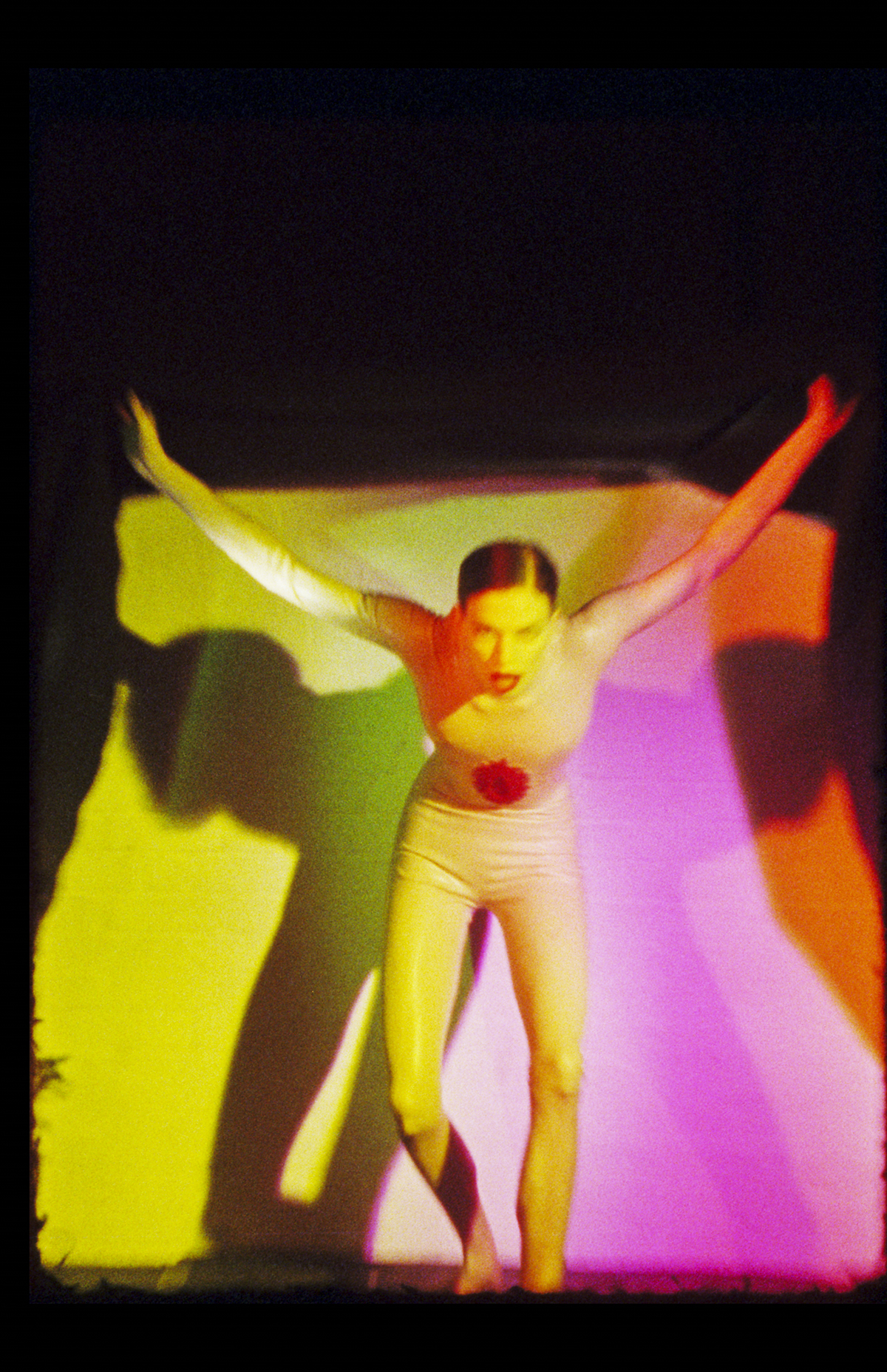
A Hole is a Hole, 2024 Photo: Aidan Zamiri Courtesy: the artist and Galerie Isabella Bortolozzi, Berlin and London
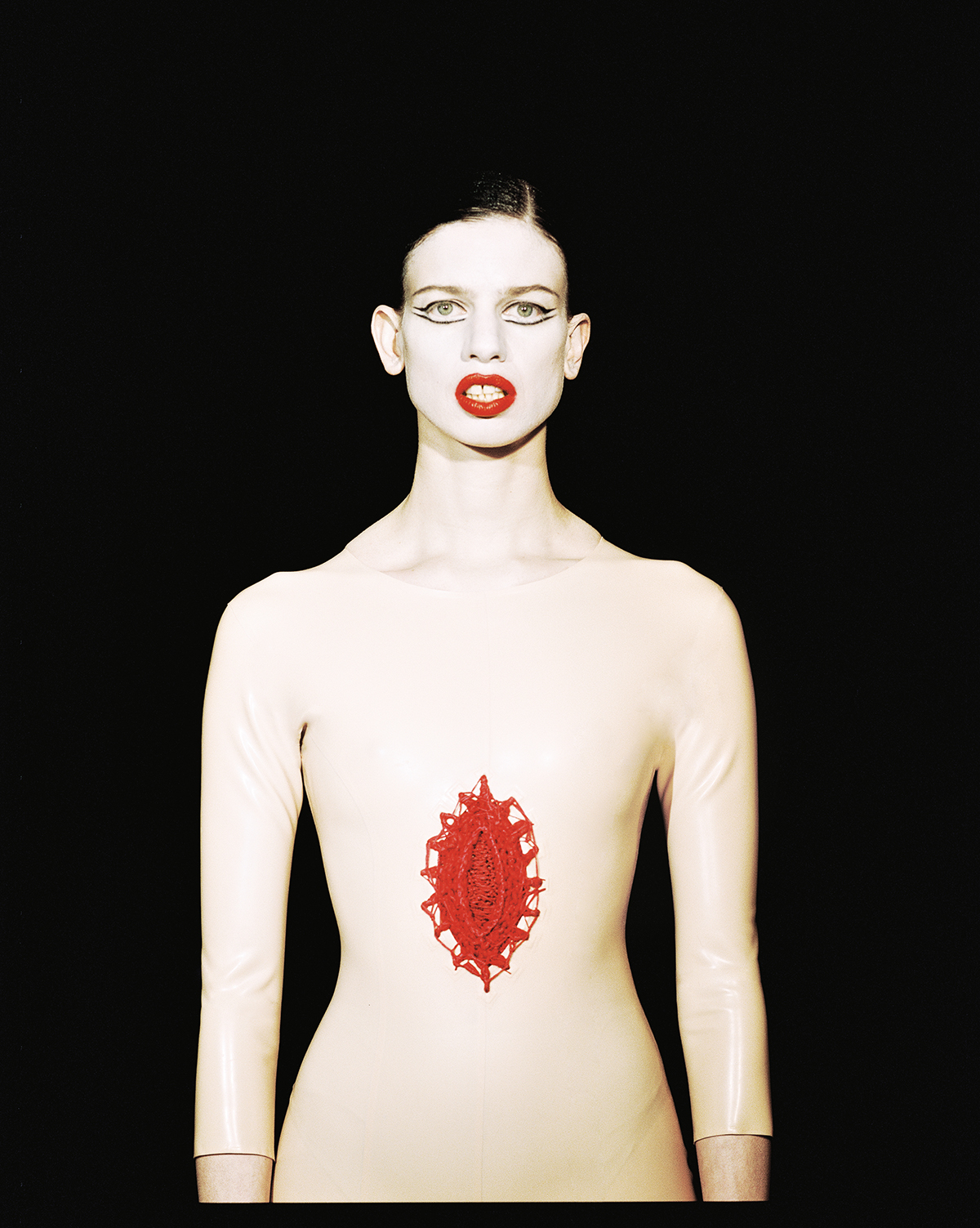
A Hole is a Hole, 2024 Photo: Aidan Zamiri Courtesy: the artist and Galerie Isabella Bortolozzi, Berlin and London
Lily McMenamy
Text by Calla Henkel
CURA. 44
The Generational Issue
Lily McMenamy (b. 1994, USA) is an artist, model, and performer born in the United States and raised between Paris and London. She trained in Physical Theatre at L’École Jacques Lecoq in Paris and holds a Master’s in Performance Making from Goldsmiths, University of London. McMenamy has presented work with Isabella Bortolozzi Gallery, Bourse de Commerce–Pinault Collection, Cabinet Gallery, and New Theatre Hollywood. She is an Associate Artist at London Performance Studios.
Calla Henkel is an American writer, playwright, director, and artist living between Berlin and Los Angeles. Her debut novel, Other People’s Clothes, was a New York Times Book Review ‘Editors’ Choice’. She has staged plays at Volksbühne Berlin and the Whitney Museum of American Art, and her artistic work with Max Pitegoff has been exhibited in museums and galleries worldwide. She currently operates a theatre in Los Angeles, called New Theater Hollywood.