Text by Sarah Johanna Theurer
CURA. 44
The Generational Issue
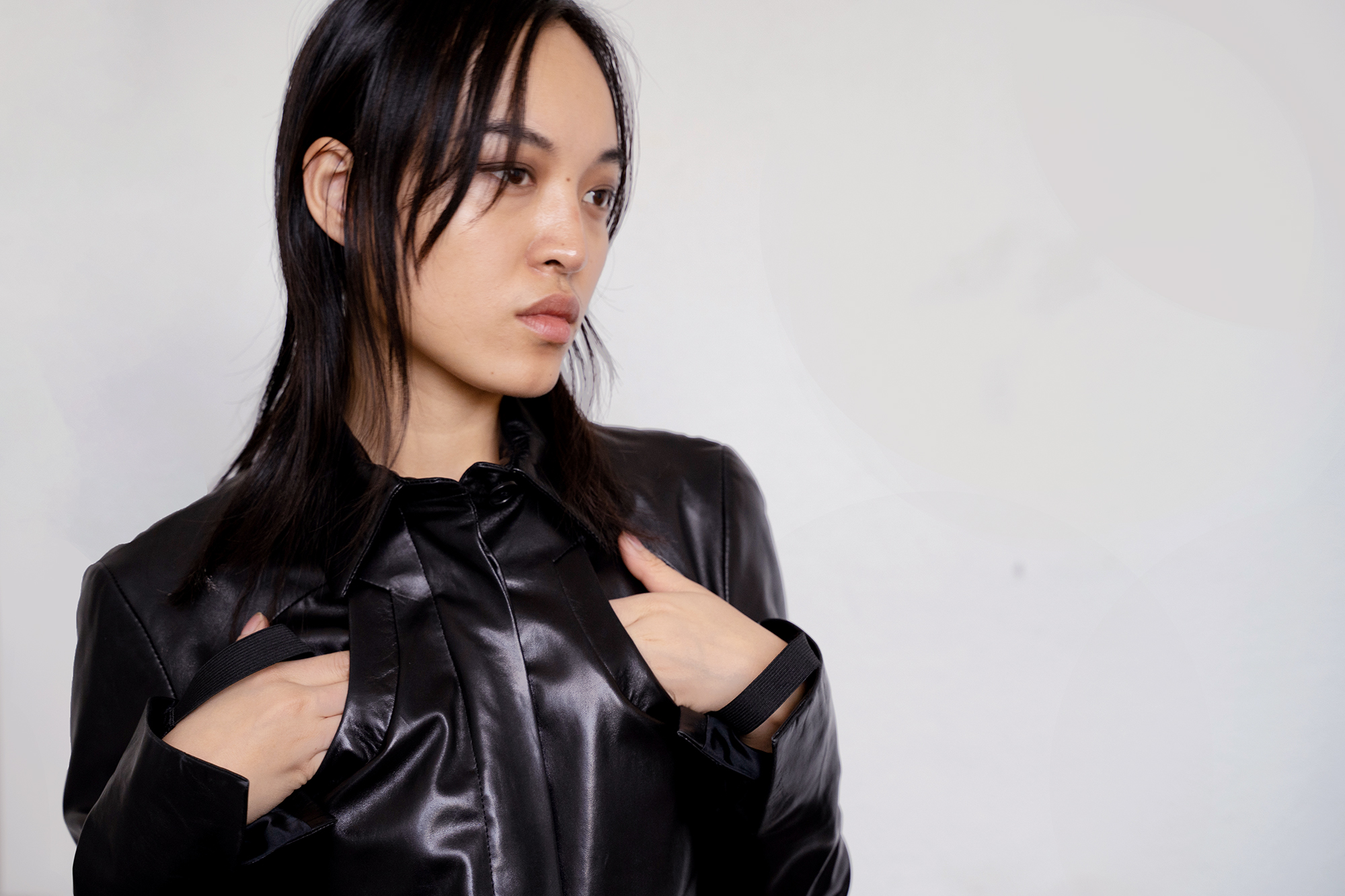
Portrait by Dzhovani
Pan Daijing is an advocate of lived experience. As an artist and composer, she engages architecture, film, movement and sound to create expansive works that might best be described as living environments. The relations between all elements that compose her multidimensional works are dynamic, entangled in a rhythmical composition.
Her works are episodic; less a discrete object or isolated instance but rather moments linked backwards and forwards to others. Or like after-images, an ongoing photochemical activity that continually produces effects, long after we’d been exposed to the original stimulus. With her work rooted in music, inspired by cinema and driven by storytelling, Pan toured important music festivals and held solo exhibitions in Hong Kong, Munich and Minneapolis.
Her exhibitions always include live elements, sometimes several hours of live performance, which generate new work, notably films and what she refers to as “traces.” Pan adopts a critical stance towards the rapid circulation and consumption of images and her exhibitions can hardly be captured, recorded or represented. Although, of course, she’d collect lots of material, lots of traces, which then exist in both consonance and dissonance with previous works. Perhaps her works are best kept in the mind and memory of those who witnessed them. Such work may be fragile, but it is certainly not frail.
The seed of a work might be an image, a smell, a sound or a story stretched out into three-dimensional space, distributed into discrete moments, or dissolved into an atmosphere. Without ever claiming unity or completeness, her work always operates across multiple dimensions simultaneously. In the moment a work manifests itself, it morphs into another form and is distilled into a memory or a film, a photograph, an LP, or another constellation of still and moving images. Morphing is an effect that sees one shape transform into another in a seamless transition. It’s a gradual process, often used to describe the special effects of cinematic animation. This is why it seems so fitting a term for Pan Daijing’s work, which engages and challenges animation and liveness.
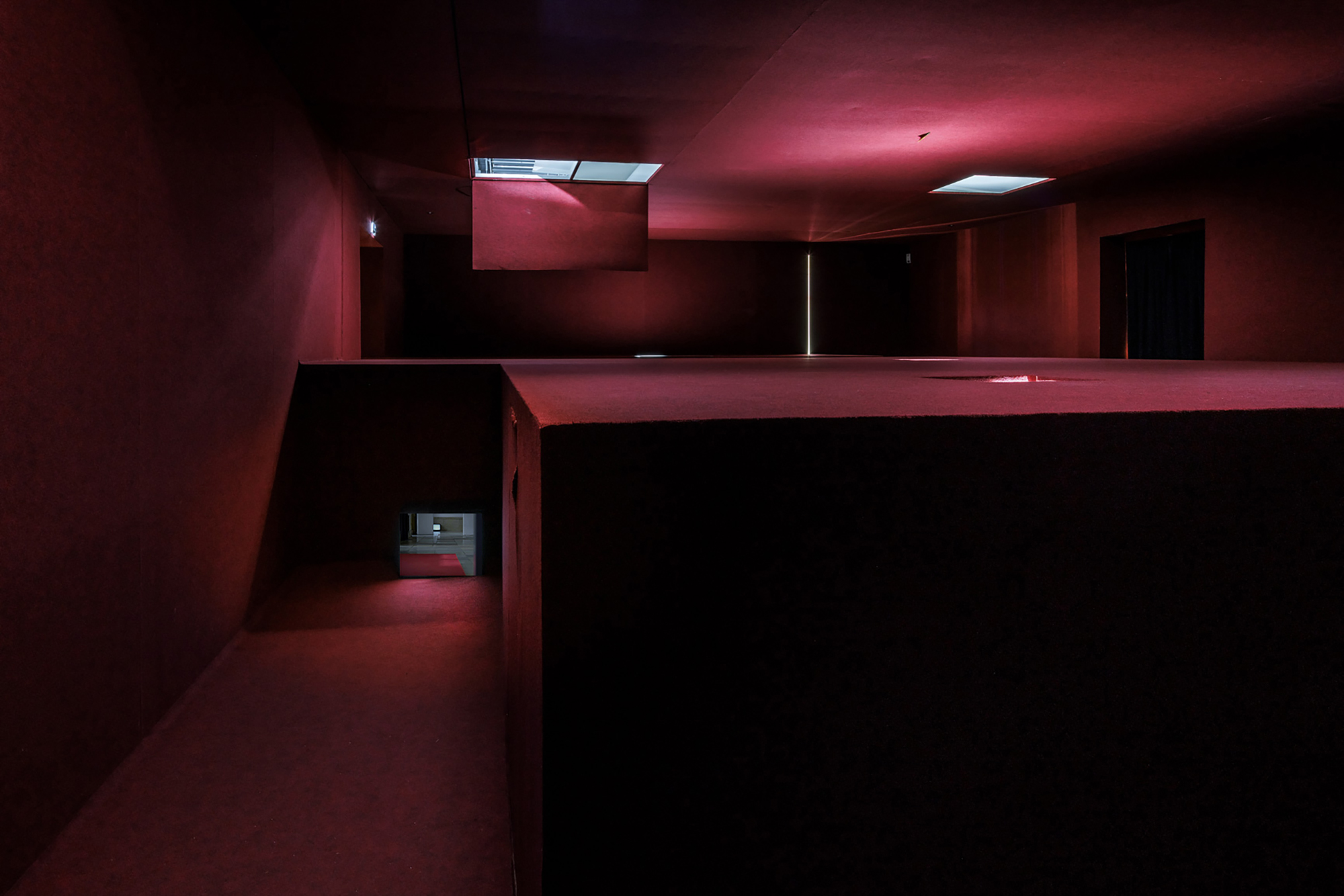
After Fugue, installation view, Hamburger Bahnhof, Berlin, 2022–2024
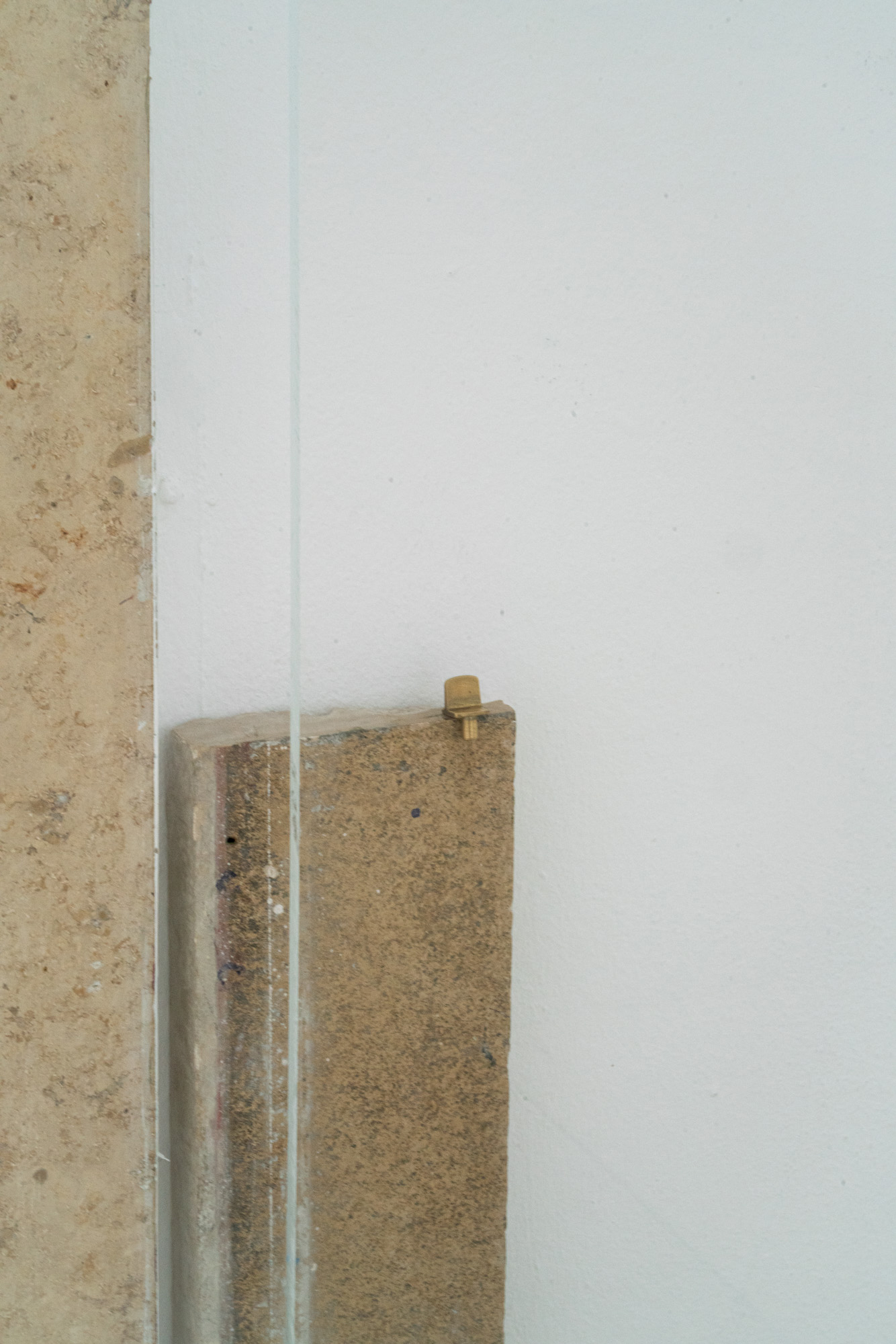
Untitled, 2024, installation views, Haus der Kunst, Munich, 2024
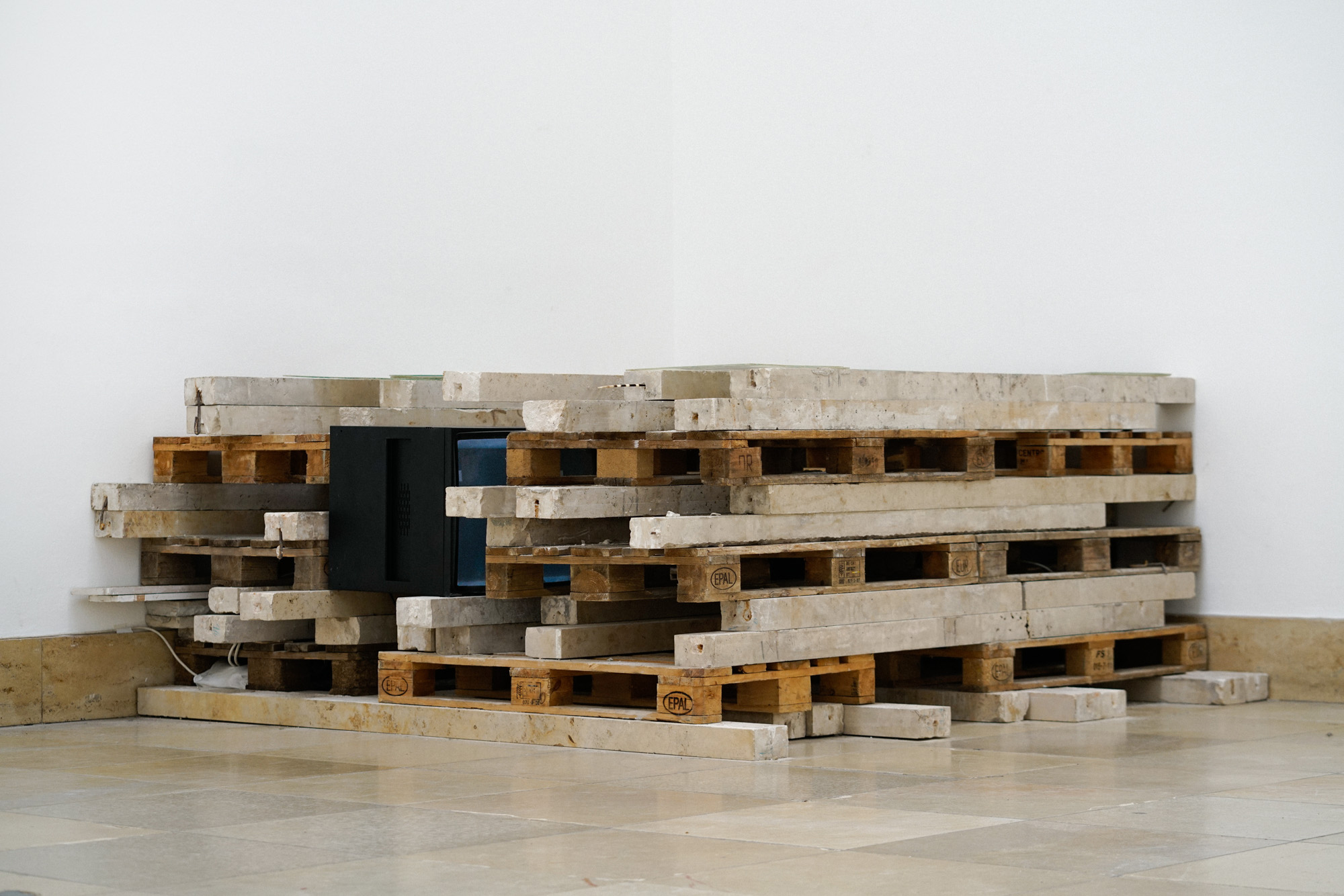
Untitled, 2024, installation views, Haus der Kunst, Munich, 2024
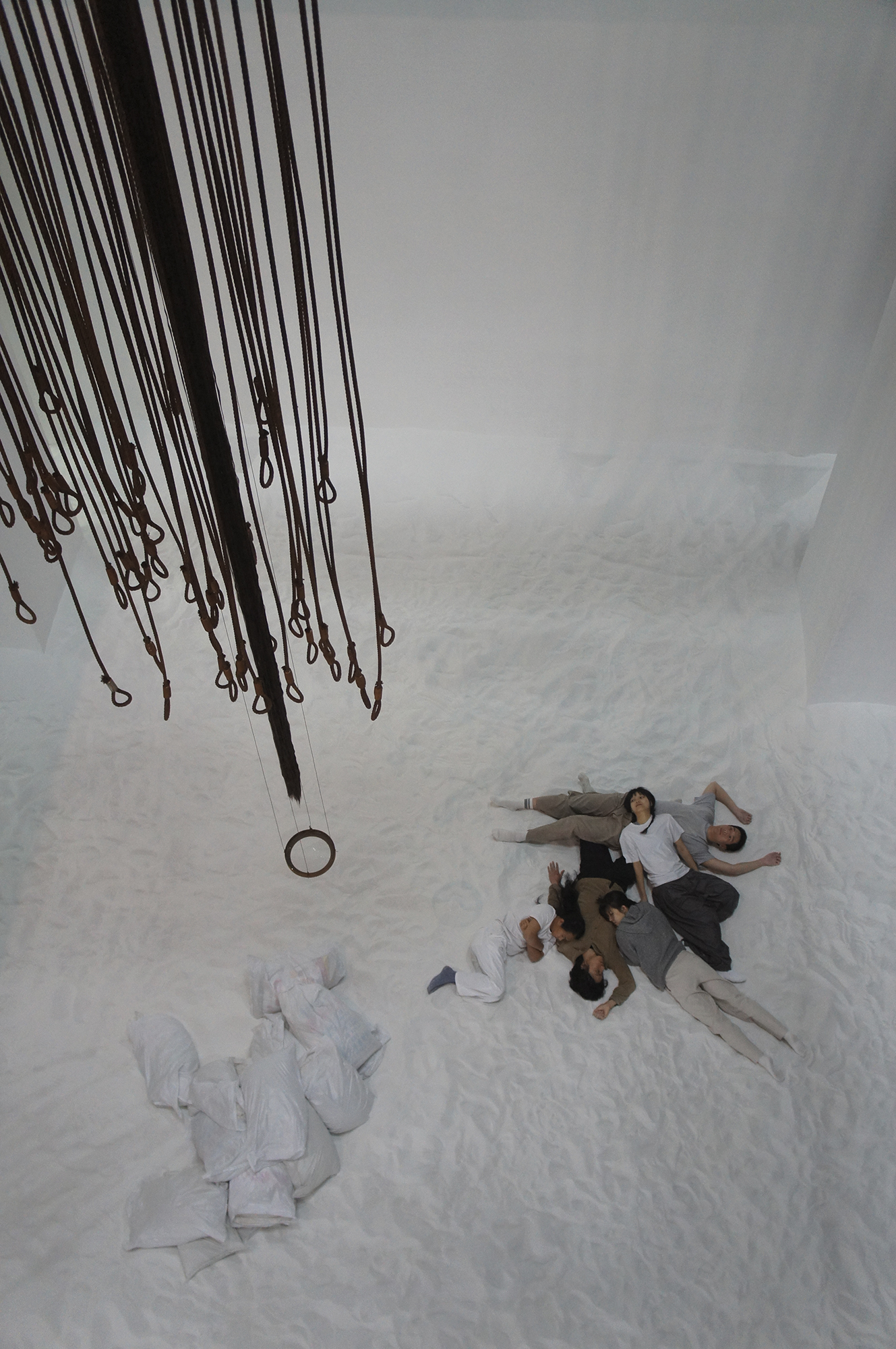
Done Duet, installation view, Power Station of Art, Shanghai, 2021
A favorite work of mine is Scale Figures (2023), a distributed array of elements punctuating the given space. It consists of metal clamps holding barely visible fragments of paintings imprinted on leather, as well as several carabiners tangled into clusters and suspended midair, accompanied by a call and response sound piece of two operatic voices. The work mediates between inside and outside using the objects and the sound in the space as both connector and barrier. Pan doesn’t tell us where to look, but asks us to observe carefully.
I came to think of these elements as “hallucinatory details,” a notion borrowed from Susan Sontag, who used it to describe how we sometimes perceive details that may not align with reality, but rather reflect our mental state. Pan Daijing’s self-portrait Metal (2022), for instance, is such an off-center detail that—once it catches our attentention—grows into a meaningful or even metaphorical event. Materially speaking, Metal consists of two large photo prints derived from video stills on which Pan’s body emerges faintly against a grainy black background. When I first encountered this work, the figures were balancing under a slightly tilted glass, facing the floor. No frame directing the eye, only the presumed weight of the glass freezing the moment, making this doubled portrait a sculpture rather than a photograph. In her exhibition Mute (2024), we showed these images printed on film, attached to a large scaffolding, the heads facing each other like the inkblots of a Rorschach test. To me, the portrait seems to amplify the blurriness of the individual and that which lies beyond it, reaching, perhaps, for a different kind of connection to the world.
It is a world in which everything can become music: In Service of a Song (2017) is an installation (or: architectural intervention) that was activated by a performance and in later versions morphed into a four-channel video. The piece has no audible sound but invites us to experience sonic imagination. Inside a soundproof perspex box we see Pan performing with a flute. Her pet tortoise, an animal very sensitive to vibration, is the only living organism to witness the sound. Bearing in mind how radically different the tortoise’s perception must be to mine, I understand that what is on display in the perspex shed is that which lies beyond human comprehension. And notably, this is not the horror of the unhuman or the supernatural. It’s just another nature. And according to Pan, it is music.
It is hard to pinpoint what music is. Footnote (2023), seven drops that resemble the seven notes of the major scale, might give us a hint. A mix of bone meal, volcano powder, and wall paint dried up dripping from the walls, looks as if the walls had been sweating, oozing struggle or desire in reaction to something they witnessed. But Footnote is a trace of gravity, a musical notation of unpredictability. Pan’s work never follows a single tempo. It is a reminder that various systems in our bodies, including the cardiovascular, metabolic, and reproductive systems, have their own “peripheral circadian clocks,” which cycle through active and resting phases. In fact, the same is true for the trillions of cells and microbes that make us who we are. The impersonal perspective offered by Pan’s work assumes the potential liveness of everything and everyone. It expresses how everything is both present and, at the same time, latently effective.
Pan Daijing
Text Sarah Johanna Theurer
CURA.44
The Generational Issue
All images Courtesy: the artist
Pan Daijing (b. 1991, Guiyang, China) is a multidisciplinary artist and composer working in Berlin. She has held solo exhibitions at: the Walker Art Center, Minneapolis (2025); Haus der Kunst, Munich (2024); Tai Kwun Contemporary, Hong Kong (2021); and Tate Modern, London (2019), among others. Her work has been presented at various institutions such as Musée du Louvre, Paris (2023) and 13th Shanghai Biennale (2021). In 2024 she was awarded with the Preis der Nationalgalerie.
Sarah Johanna Theurer (b. 1988, Berlin) is a curator and writer focusing on time-based art and techno-social entanglements. She works at Haus der Kunst München curating exhibitions and live-programs that trace histories and futures of liveness. Her curatorial work explores different ways of inhabiting life and other forms of animation.