Charlotte Beltzung, Romain Bobichon, Pauline Lecerf, Louisa Marajo, Jérémie Paul, Yoan Sorin, and Marie Boyer
Passerelle Centre for Contemporary Art, Brest
28 Feb — 17 May 2025
Press release
Setu Charlotte Beltzung, Romain Bobichon, Pauline Lecerf
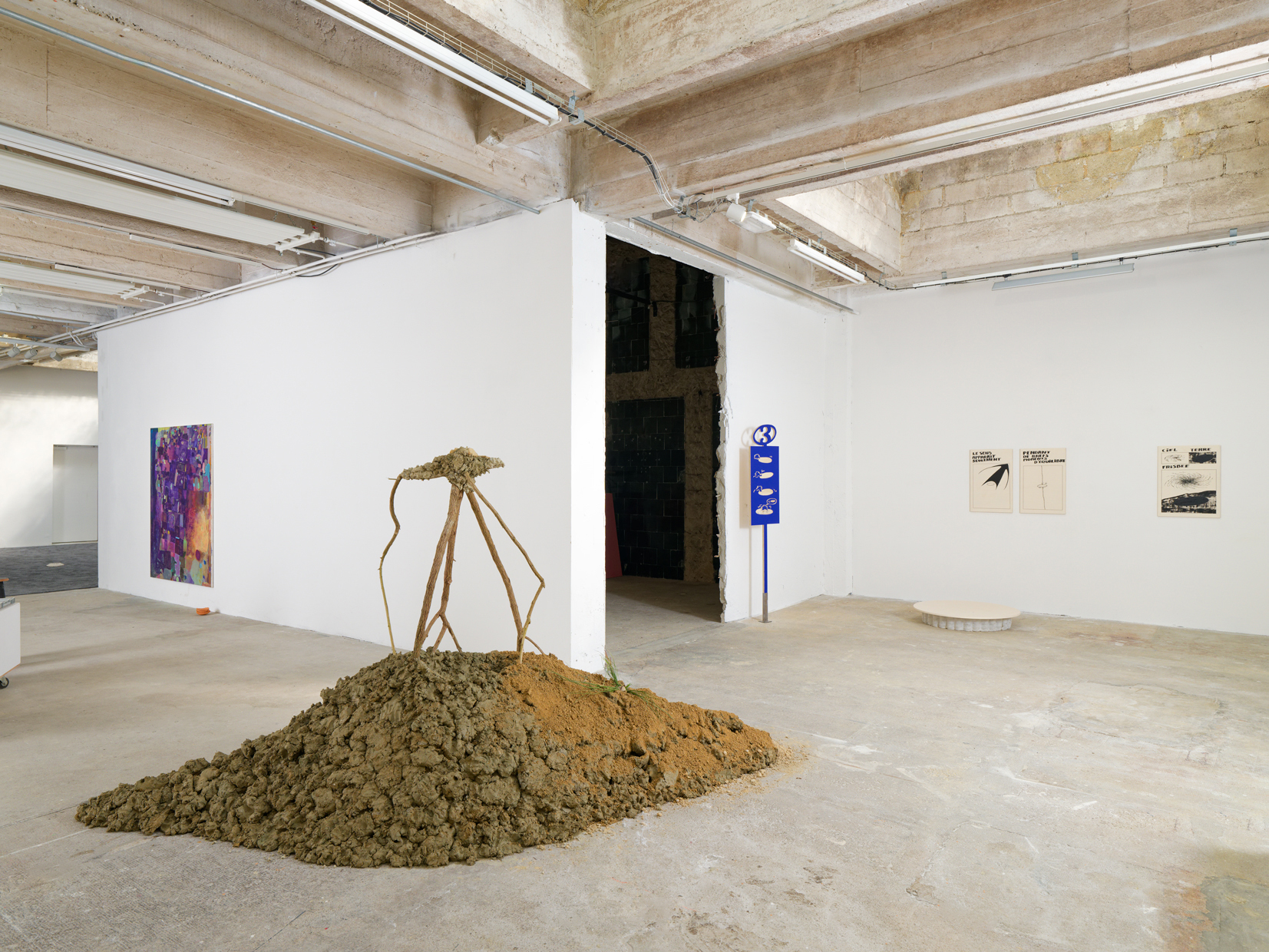
Charlotte Beltzung in Setu © photo : Aurélien Mole
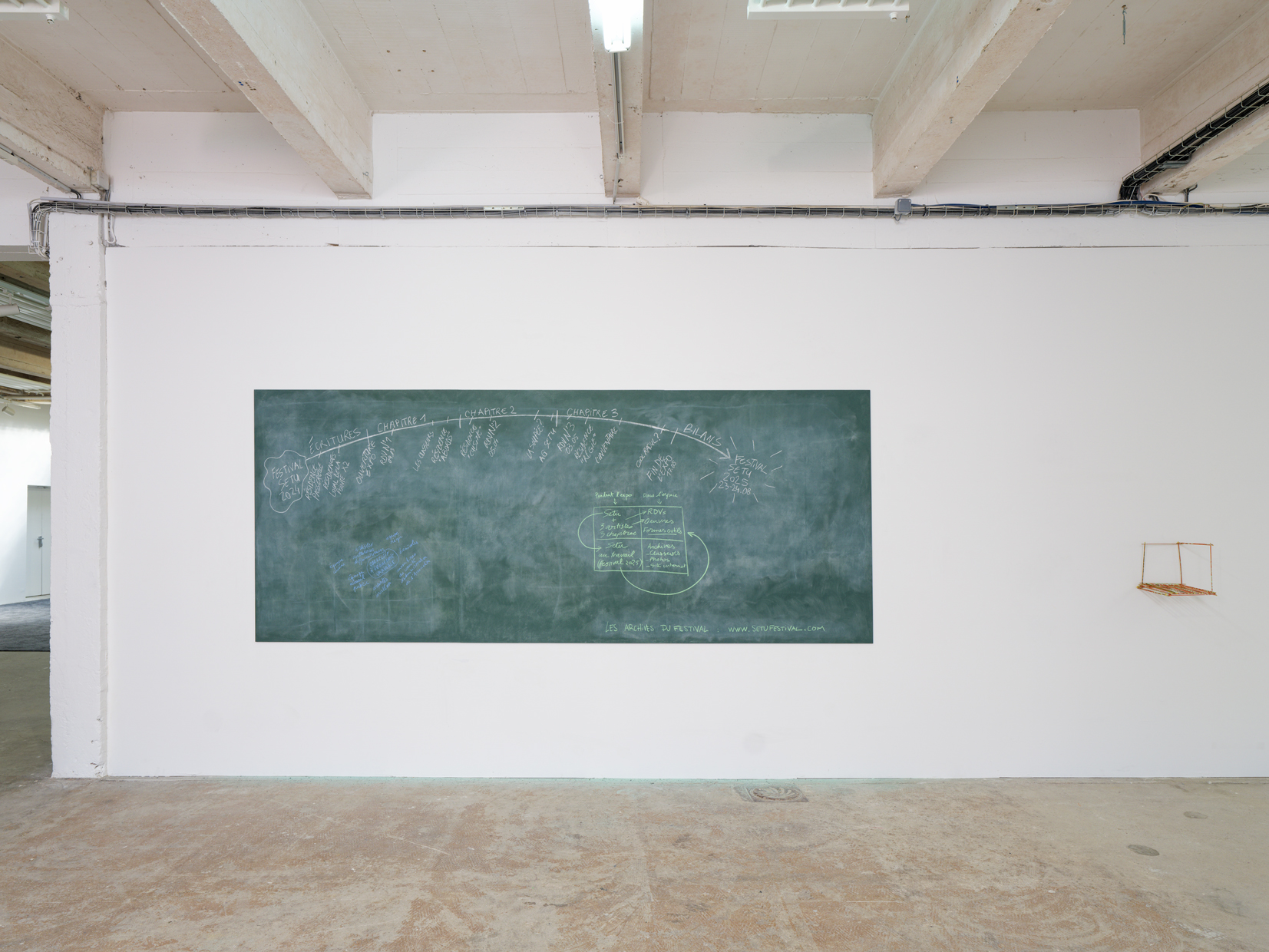
Romain Bobichon in Setu © photo : Aurélien Mole
Setu is like a laboratory that promotes creativity by inviting and supporting artists to present performative works, live and in writing. «Setu» means «here it is, there you are» in Breton (pronounced «saytu» \ˈsetːy\). «Setu» is a work of the beginning and of the end, a term which literally presents and displays. «Setu» opens and rhythms an action, thereby highlighting the current moment of the representation. Setu is born from a desire to generate an encounter at the juncture of various different practices, scenes and generations of artists In order to construct together the Setu festival, which has taken place in late summer every year since 2016 at Elliant in south Finistère. At the heart of the Setu company is a group of artists and writers regularly joined by teams of professionals and volunteers. This project has evolved over the years under the influence of a large number of artists who have worked with them. Three of these artists – Charlotte Beltzung (1989), Romain Bobichon (1988) and Pauline Lecerf (1993) – were invited to use the exhibition space alongside Setu, and offer works that echo the issues of living art, in action and in metamorphoses. The ecosystem of the festival is embodied, as well as in the works, in a collection of materials and tools needed for the exhibition. These hybrid forms are so many elements of stories that can weave connections between what is happening at Passerelle and the story of Setu. During the exhibition, there will be meetings with the public at Passerelle, when other artists and like-minded associations can be invited to take part in the movement. The festival teams will also occupy space in the art centre for collaborative work and contact with the public. These activities are intended to act as an expansion, sending out a tremor from the exhibition, celebrating the porous nature of Setu activities. They are a way of affirming the stance of a community that acts as artist, author and broadcaster all at the same time, and of unveiling time for creativity and for writing, which has inspired the association since its early days.
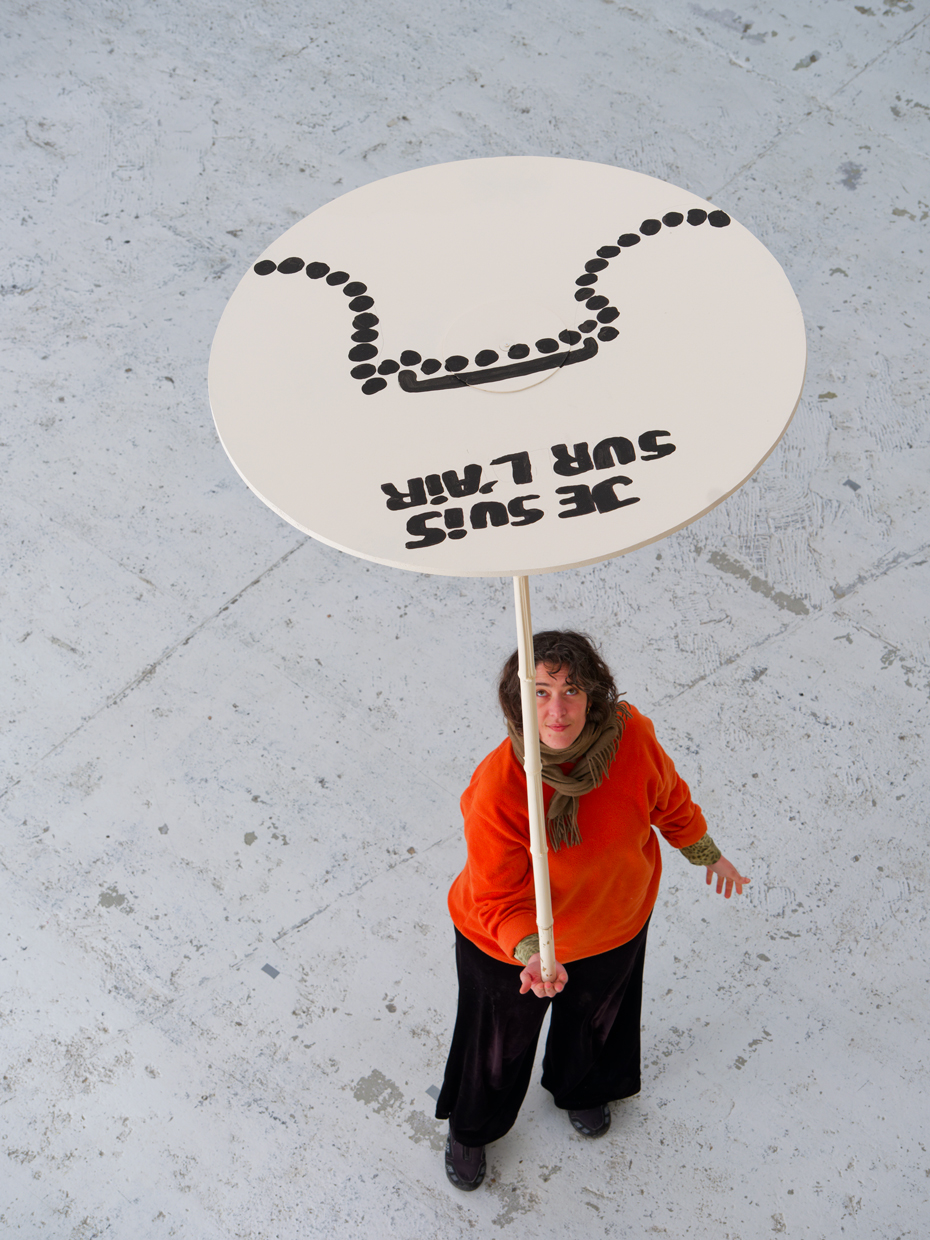
Pauline Lecerf in Setu © photo : Aurélien Mole
Eaux troubles: réfractions des Caraïbes Louisa Marajo, Jérémie Paul, Yoan Sorin Commissioner: Arden Sherman
In 1902 the volcano Mount Pelee erupted on the island of Martinique, solidifying its place as the worst volcanic disaster of the 20th century. The eruption killed nearly thirty thousand people and completely destroyed the port town of Saint Pierre. Four decades later, across the Atlantic Ocean, U.S. troops aggressively liberated the German-occupied city of Brest in one of the fiercest battles of World War II. The aftermath was a devastated, rubble-strewn landscape and thousands of casualties. Though the specifics of the two events differ, the outcome was the same: two vibrant cities, full of life, were razed and silenced. The photographic documentation of these calamities left behind emotionally charged and hauntingly captivating images of destruction: hallowed structures, dusty streets framed by bright skies and visible horizons. Beautiful pictures, catastrophic subject matter.
We live in a distinctively divided time, one marked by stark contrasts that coexist inside a universal setting. The dichotomies of red vs. blue, right vs. left, beautiful vs. ugly, disaster vs. triumph, are amplified by media, politics, and visual culture. A compelling image of disaster is often an equally alluring photograph, prompting reflection on the tension between these opposing forces. While there is a human impulse to somehow understand or “convert” the Other, the philosophy of Martinican writer and thinker Édouard Glissant offers an alternative. Glissant emphasizes the power of Opacity, suggesting that peaceful coexistence is a more powerful tool than attempts to transform the Other.
As he writes, “Only by understanding that it is impossible to reduce anyone, no matter who, to a truth he would not have generated on his own.” (Opacity, pg 194). The concept of Opacity, which embraces contrast and dualities, offers a key to understanding the work of Louisa Marajo, Jérémie Paul and Yoan Sorin—three artists of French Caribbean descent currently living and working in France.
Their stories, much like the volcanic islands of Martinique and Guadeloupe from which they hail—powerful landmasses rising from the shimmering blue of the Caribbean Sea—are anything but straightforward. Marajo, Paul, and Sorin, like cloudy waters that obscure transparency, navigate two overlapping realms: one rooted in the distant colonial histories of their ancestors, and the other shaped by their current lives within the globalized contemporary art world.
For Louisa Marajo, an ongoing investigation into the biology of Martinique provides a lens through which to view her work. She focuses on the imagery of toxic seagrasses that threaten the island’s coastlines, disrupting both the natural ecosystem and the lives of its inhabitants. Her dynamic installation draws inspiration from the destruction of Brest in 1944 and the continued disintegration of the planet caused by human interference. This reflection on the past offers a poignant, almost prophetic glimpse into the future: if we fail to care for our natural resources, what will remain? Her expansive installation can be interpreted as a wave, a mountain, or simply a force of energy—an evocative gesture to the impacts of climate change and human influence on our fragile Earth.
Jérémie Paul delves into Creole histories, family stories, and emotions, using them as rich sources of inspiration. His practice explores regenerative themes: interpreting dance, musical tones, seascapes, landscapes, and color. Paul’s approach is layered and additive, with each idea building upon the last. Grounded in an understanding of his personal history — who he is now, where he comes from, and the experiences of his family — Paul creates colorful stories of imagined dreamscapes, emotional punctures, and existential refractions.
Yoan Sorin works with found objects, repurposing discarded items — often remnants from previous exhibitions — to offer a self-reflective commentary on the art world, particularly the industry of exhibition-making and the role of museums and art institutions today. Drawing on the resourcefulness of the inhabitants of Martinique and Guadeloupe, shaped by the limited geography and ecology of their environment, Sorin’s practice reflects this spirit of adaptation and reuse. For Sorin, the act of gathering and organizing detritus is both a visual and emotional process, with this dual focus serving as the guiding principle for his installations. Ultimately, he creates environments that engage with the material and emotional resonance of waste.
The works of Marajo, Paul and Sorin come together in conversation, creating a network of ideas that reflects their individual artistic approaches. There is contrast, but here it is acknowledged and embraced. The concept of Opacity opens a door: a pulled-out chair, an invitation for exploration. The result is a space that is neither fully Caribbean, nor fully European, nor entirely independent. Like a beautiful photograph of disaster, the exhibition and its artworks inhabit an interstitial, cloudy space — one where the lack of clarity opens the possibility for hopeful dialogue and contemplation.
Curator: Arden Sherman, Senior Curator of Contemporary Art at the Norton Museum of Art in West Palm Beach, FL

Jérémie Paul in Eaux Troubles © photo : Aurélien Mole

Jérémie Paul in Eaux Troubles © photo : Aurélien Mole

Yoan Sorin in Eaux Troubles © photo : Aurélien Mole

Louisa Marajo in Eaux Troubles © photo : Aurélien Mole
N’oublie jamais jamais les fleurs Marie Boyer
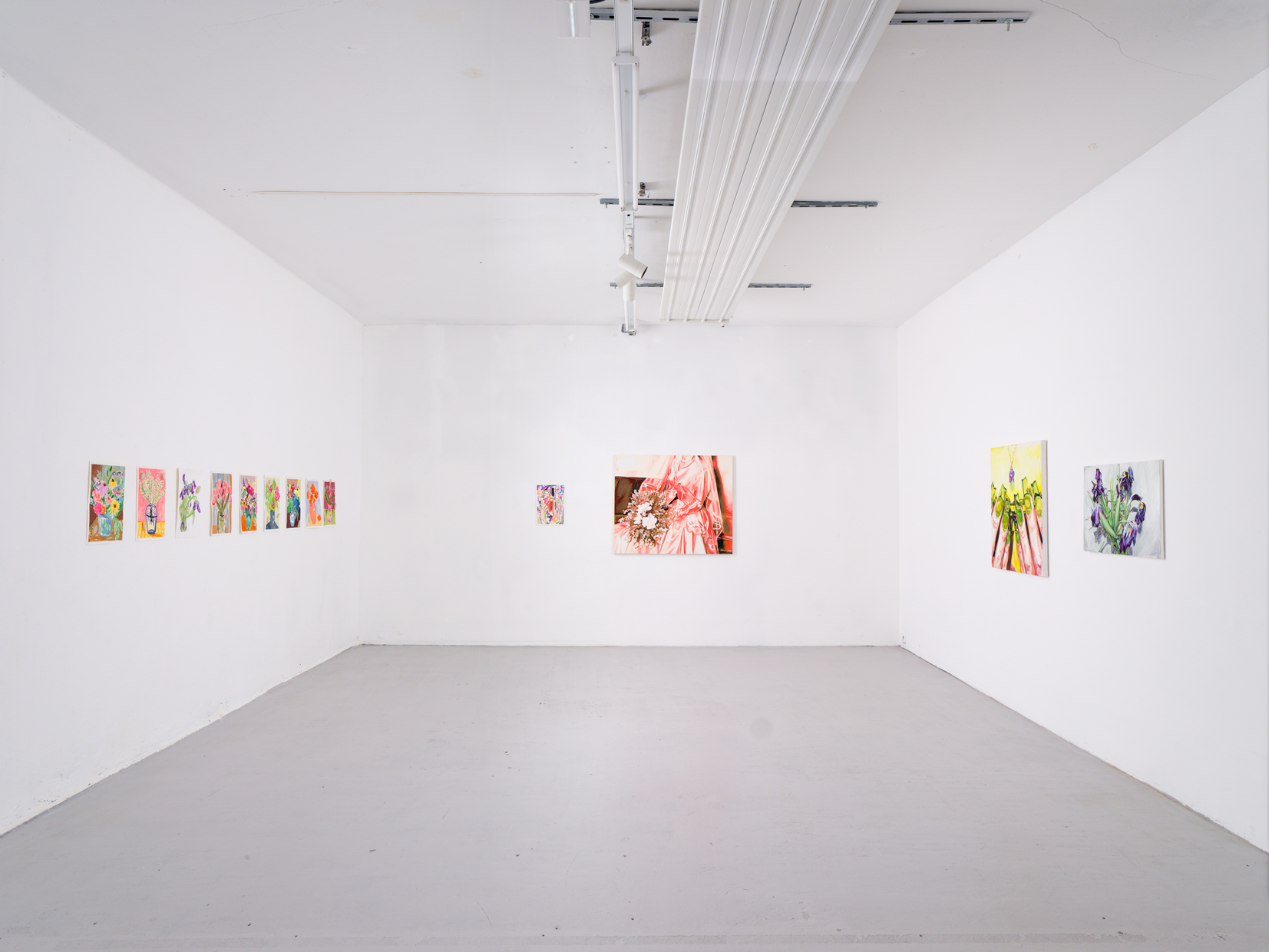
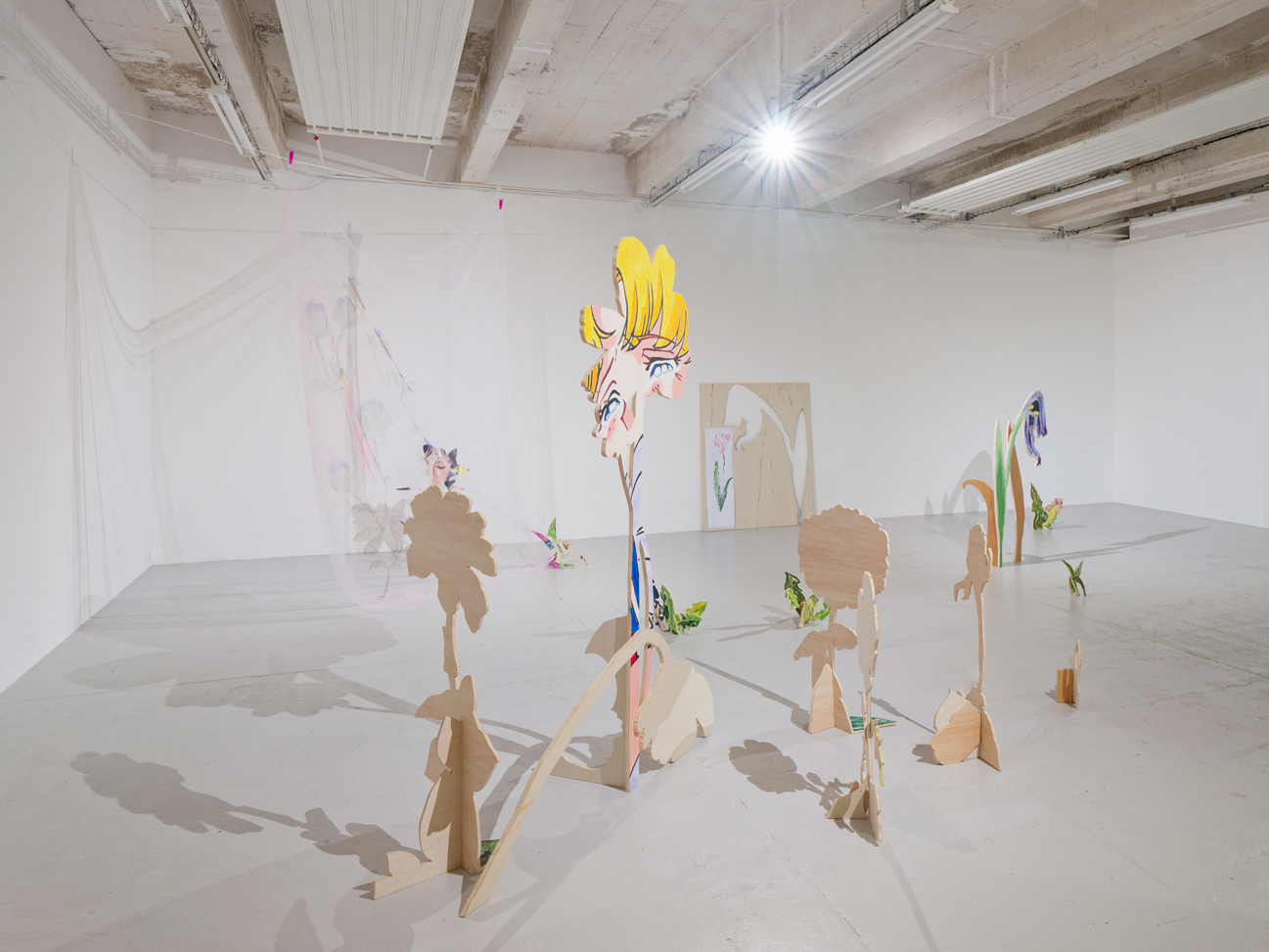
Marie Boyer, N’oublie jamais jamais les fleurs © photo : Aurélien Mole
Marie Boyer, N’oublie jamais jamais les fleurs © photo : Aurélien Mole
As an Artist in Residence, a role created and supported by Passerelle and Documents d’artistes Bretagne, Marie Boyer (1997) is exhibiting a series of new works she has produced at Passerelle. She is a graduate of the Quimper campus of the École européenne supérieure d’art de Bretagne (the European Academy of Art in Brittany) and here has developed an astonishing, joyous garden where painting interplays with botany and with the Japanese manga aesthetic.
“There are flowers everywhere for anyone who cares to look” declared Henri Matisse. This cheesy, rather kitsch quotation might be seen on a box of chocolates or on a sign outside a garden centre, yet it leads to much deeper reflections than might first be apparent, on the role of art and the presence of joy in our lives. That sentence uttered by such a famous painter explains much of the art of Marie Boyer. She sees flowers as «living beings intended to be painted», as a sort of ideal and perfect motif. Her love of flora partly derives from her family, of whom one side originated on the island of Reunion where plants abound in profusion, and partly from one of her grandfathers on the other side who was passionate about floral composition. He would document flowers by photographing them and carefully classifying them in files which the artist has studied closely.
Marie Boyer is keenly Interested In the history of painting, and is fully aware that flowers are a subject with a particular iconography which have been widely represented by her peers. Understanding the history of art helps her understand her own practice as an artist. She observes the Renaissance painters, is passionate about Jean Siméon Chardin (1699-1779) and Diego Velázquez (1599-1660) while also appreciating more modern and contemporary works from Georgia O’Keeffe (1887-1986) – a lone American painter, indefinable, who fascinates her both for her art and for her life choices – to the duo of Ida Tursic & Wilfried Mille (1974) who plumb the anonymous depths of the Internet. Marie Boyer is interested in what differentiates ‘good painting’ from just daubing paint: is it a matter of technique, positioning or status? She makes herself change style regularly, sometimes between each painting, sometimes after a series; it’s like a need providing sustenance for her work. At Passerelle, she chooses to transpose the flatness of the canvas into space, transforming traditional painting into astonishing sculptures. The rooms of the exhibition become an exuberant garden. The flowers are like characters onto whom the public can project their own desires, hopes and experiences. When Marie Boyer represents bodies, these play a supporting role to the plant motifs. Some of the flowers shown reference fragments from anime of the Japanese manga culture such as Sailor Moon and Cat’s Eyes. Marie Boyer recently explained that «painting is joyous magic that allows you to find infinite ways of representing the world.» This statement is as cheesy yet serious as that of Matisse and reveals the artist’s view that painting is above all a matter of pleasure!
Presented as part of the Workshops | Residence, a programme for emerging artists in Brittany run by Passerelle Centre d’art contemporain and Documents d’artistes Bretagne leschantiers-residence.com
With the support of Suravenir, a subsidiary of Crédit Mutuel ARKEA
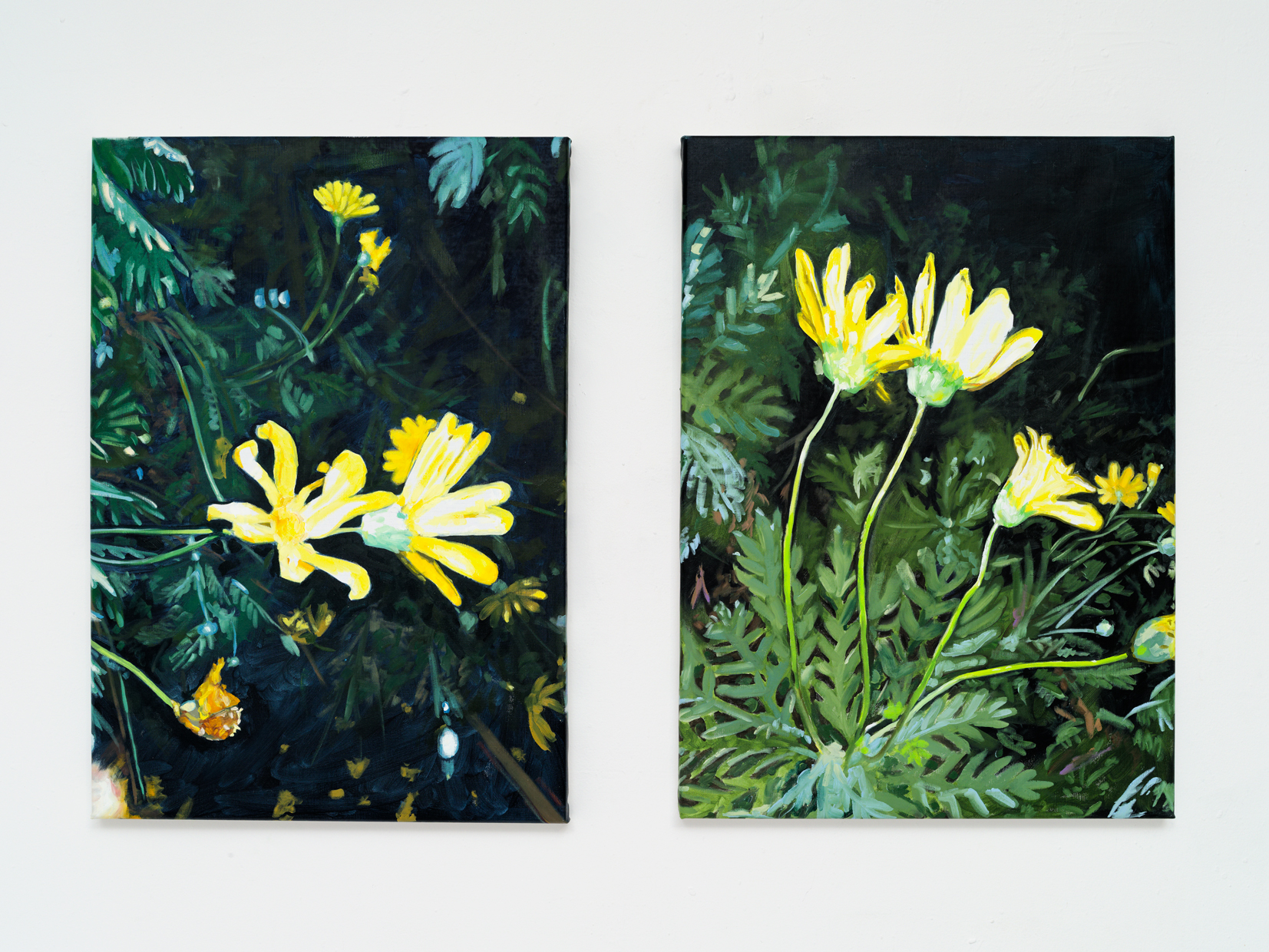
Marie Boyer, N’oublie jamais jamais les fleurs © photo : Aurélien Mole