Le Prix Marcel Duchamp | Une séparation, Laura Henno, Germain Marguillard
CAC Passerelle, Brest
June 16 – September 16, 2023
Press release

Installation view at Le Prix Marcel Duchamp | Une séparation, 2023
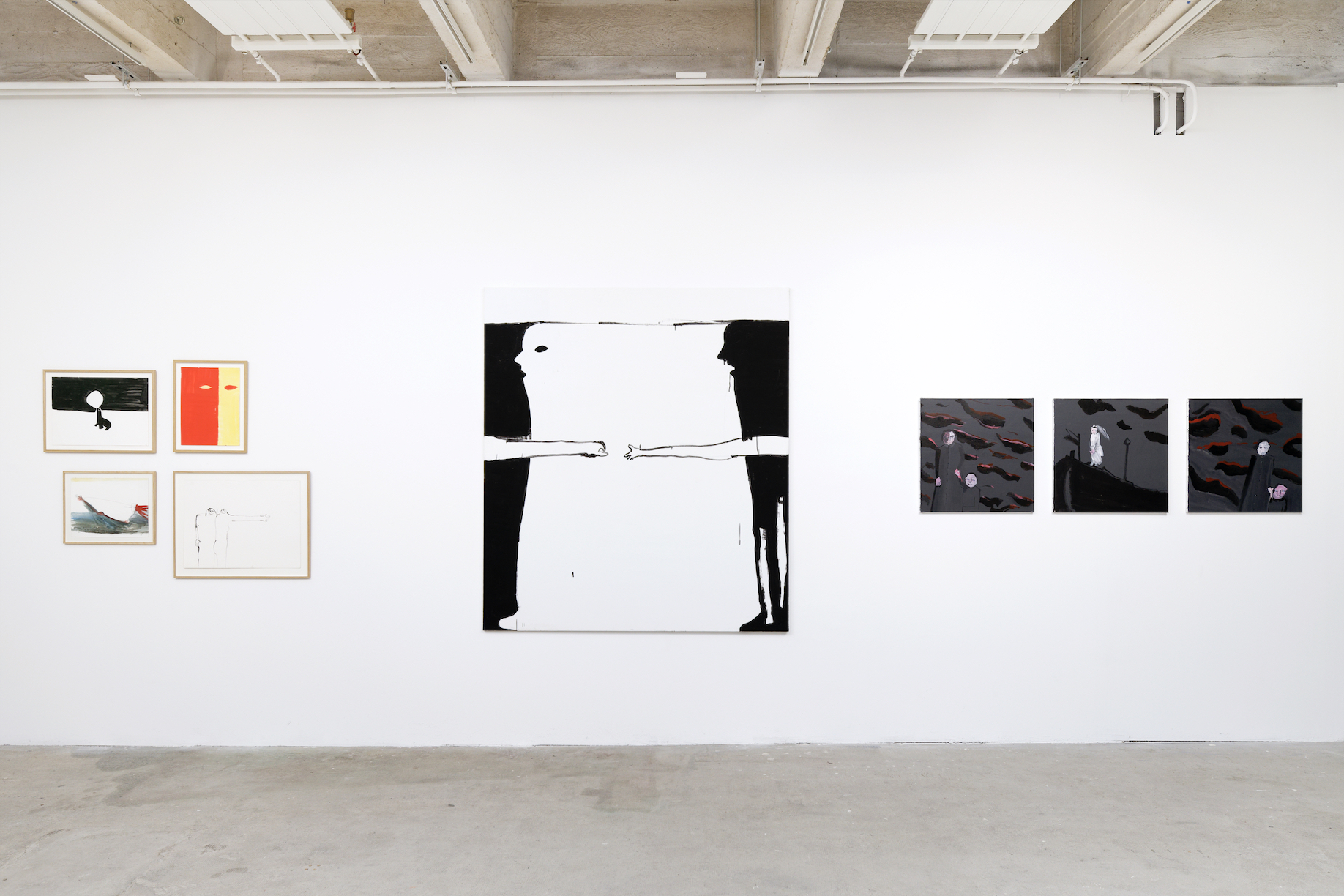
Installation view at Le Prix Marcel Duchamp | Une séparation, 2023
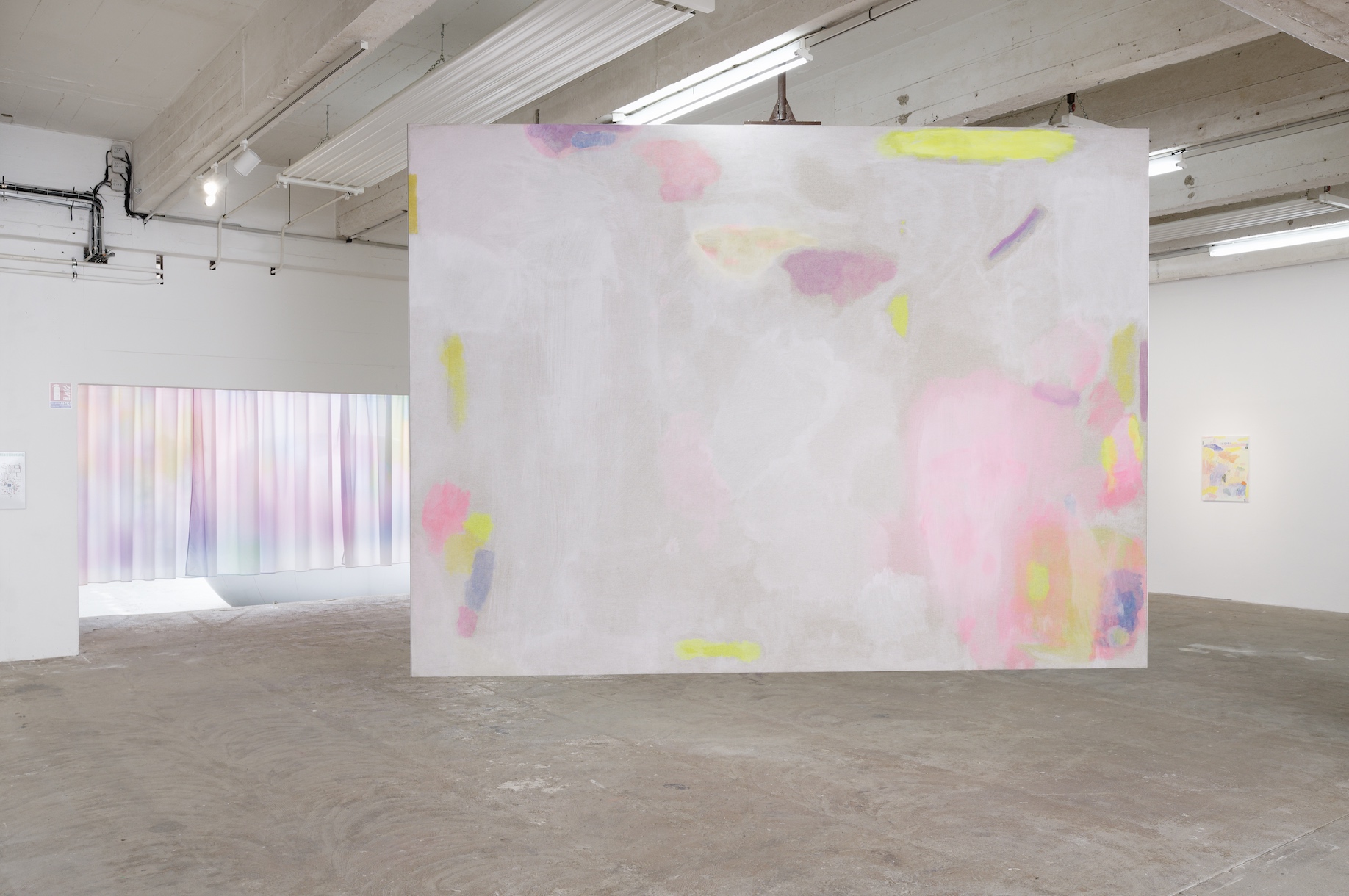
Installation view at Le Prix Marcel Duchamp | Une séparation, 2023
LE PRIX MARCEL DUCHAMP | UNE SÉPARATION
Yto Barrada, Éric Baudelaire, Bruno Peinado, Anne-Marie Schneider, Zineb Sedira, Thu-Van Tran
For over twenty years the Prix Marcel Duchamp has each year crowned the career of an artist of the French scene, and in partnership with the ADIAF – Association pour la diffusion internationale de l’art français (Association for the International diffusion of French Art), this summer Passerelle is hosting an exhibition bringing together six artists who were award-winners or nominees between 2006 and 2019. The exhibition offers a partial panorama of art in France today through one apparently simple word: separation.
Taking up the title of the film by Asghar Farhadi, the exhibition examines separation in its many meanings and definitions. In 2011, Asghar Farhadi focussed on this word through various major issues, especially the cultural and religious differences in Iran, tension between the generations and social classes, as well as the difficulties experienced by women in a patriarchal society. The exhibition aims to widen these themes and extend the possible meanings of separation. This word can equally well refer to a romantic break-up as to the distance between two things, or to division – the difference between concepts, people or geographies.
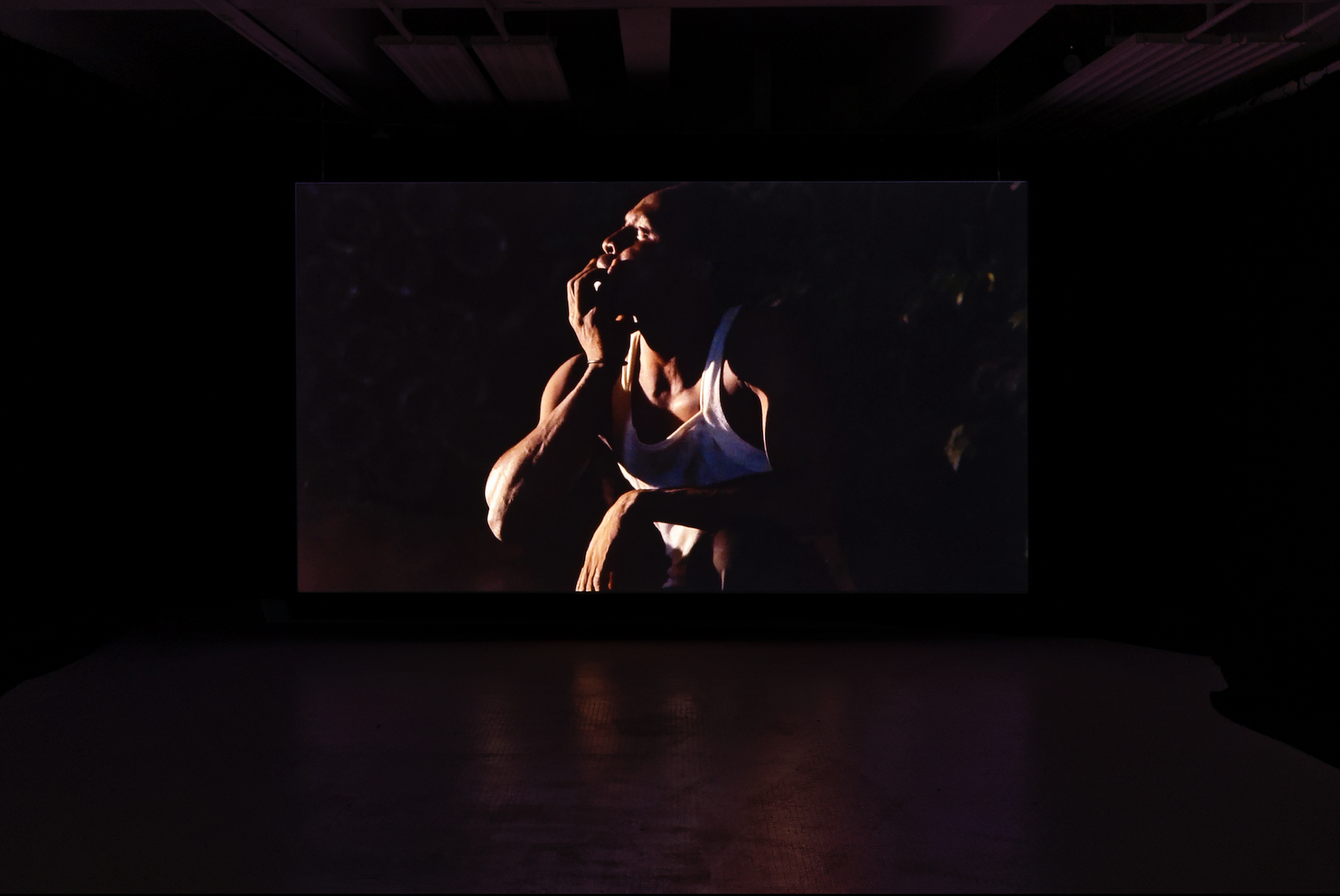
The contemplative film MiddleSea by Zineb Sedira portrays the ferry journey between Algiers and Marseille. A man is watching the sea, leaving the viewer wondering: what is his story? Is he going somewhere or coming home? The Mediterranean separates the continents of Africa and Europe as much as it links them. The crossing becomes a time of expectant waiting and of poetry, the metaphor of a border that is both vague and infinite.
The story told by Thu-Van Tran is also situated in a particular geopolitical and social register but in a completely different region of the world. With Arirang Partition, the artist uses traditional Korean music to recollect the unity of the peninsula. She also reproduces scenes and motifs drawn from the homespun vocabulary of Korea and its history.
Yto Barrada examines cultural separations and possible rapprochements in her film installation Tree Identification for Beginners, with Pan-Africanism, Black Power in America and the civil disobedience movements inherent in the Vietnam War. She subtly interchanges the tales of the protagonists with stop-motion images of toys by Montessori, an alternative learning method. Her animated abstract forms recall the mobile works of Bruno Peinado which split the space into multiple dimensions.
Peinado’s separations are also a way of rethinking the status of the work in traditional art: is hanging on a wall the only place for a painting to be found? Or can it be given a fresh breath of life? The formal interplay in the exhibition creates uncertainty and reconfigures the art centre.
Although the separation may be physical, it is above all a matter of feelings for Anne-Marie Schneider. Her paintings bring us back to romantic matters, stories of break-ups and pain, or to the moment one enters adult life.
Éric Baudelaire is interested in the boundary between the paranormal and our real world, recreating a para-scientific experience. What is the place of chance in our lives? What limits do we impose on reason and on the power of the mind? These are some of the questions posed by the artist in this new installation produced for this exhibition.
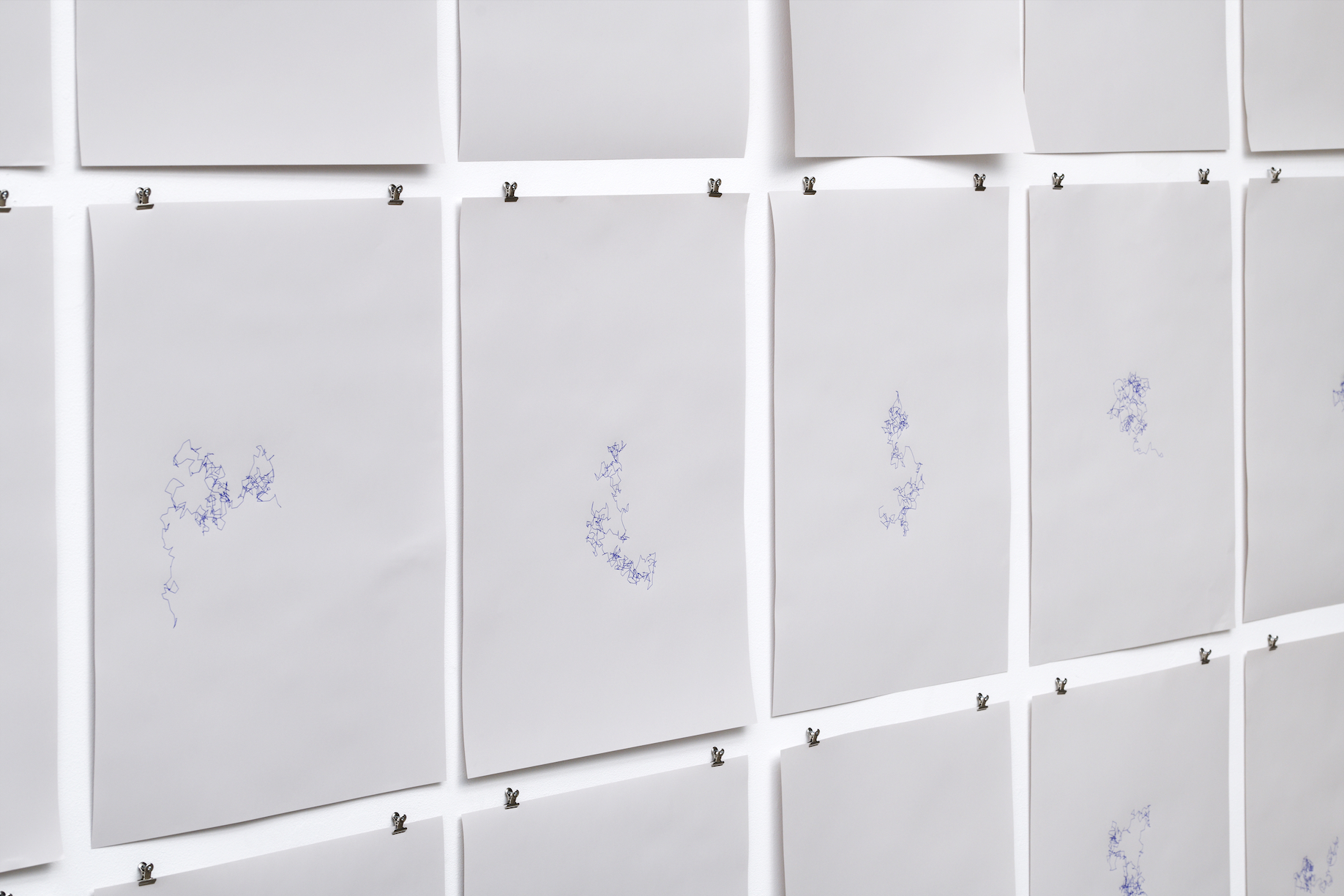
Installation view at Le Prix Marcel Duchamp | Une séparation, 2023
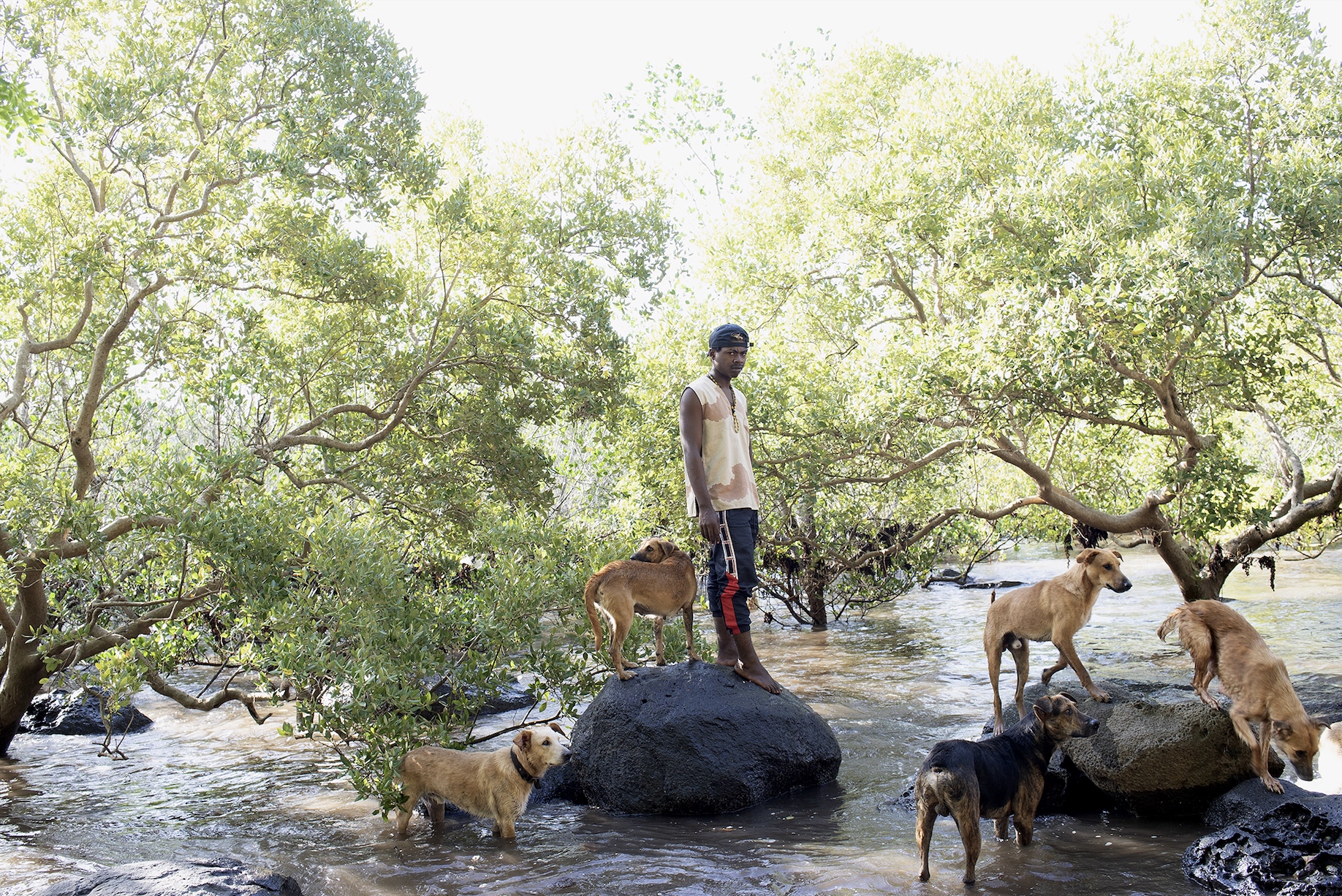
Installation view at Laura Henno, Grande Terre, 2023
Installation view at Laura Henno, Grande Terre, 2023
LAURA HENNO
Grande Terre
Passerelle is taking part for the first time in the initiative entitled ‘A photographic journey through Brittany’ which presents a photographic exhibition trail across the whole region every two years. This monographic exhibition by Laura Henno entitled ‘Grande Terre’ (Great Earth) is part of a broader presentation of the ‘Radioscopie de la France’ photographic commission aimed at photojournalists and supported by the National Library of France (BnF). Awarded this bursary, Laura Henno engaged in work that was artistic, committed, poetic and almost sociological, pursuing this in Mayotte from 2013, the date of her first visit to the Comoro Islands, the archipelago to which the island of Mayotte belongs. In her work she shows various ways of resisting oppression; this is precisely what attracted her to Mayotte, following the life of teenage gangs that survive on the coast of this land of contrasts, long forgotten by mainland France.
To understand the artist’s research, we must delve into the history of Mayotte, intrinsically linked to the post-war self-determination and independence movements. The Comoro Islands, then a French protectorate, declared their independence in 1974. The government of Valéry Giscard d’Estaing refused to accept the positive result of the referendum and retained one of the four islands, Mayotte, as an intrinsic part of the French Republic. This occupation became illegal and was condemned by the United Nations. In 1995, visas became compulsory for inhabitants of the Comoros wishing to visit Mayotte. Yet the people of the archipelago had always come and gone between the different islands, both to see family and to work. This geographical division created clandestine immigration that had not existed before, as well as social division, by exacerbating the hatred between rich and poor.
Laura Henno first became interested in the undocumented people of the Comoran community living in Réunion in abject poverty when she had a residency on that island between 2009 and 2012. She could see a parallel between the history of marronage and the clandestine life imposed upon migrants. Marronage was the word used in the colonial era when a slave escaped from a plantation and fled to wild, inaccessible areas. It was later broadened to mean a way of resisting slavery. Her early experience inspired her to spend time in the Comoros, and then in Mayotte, meeting people who took part in the illegal immigration system, including child people-smugglers.
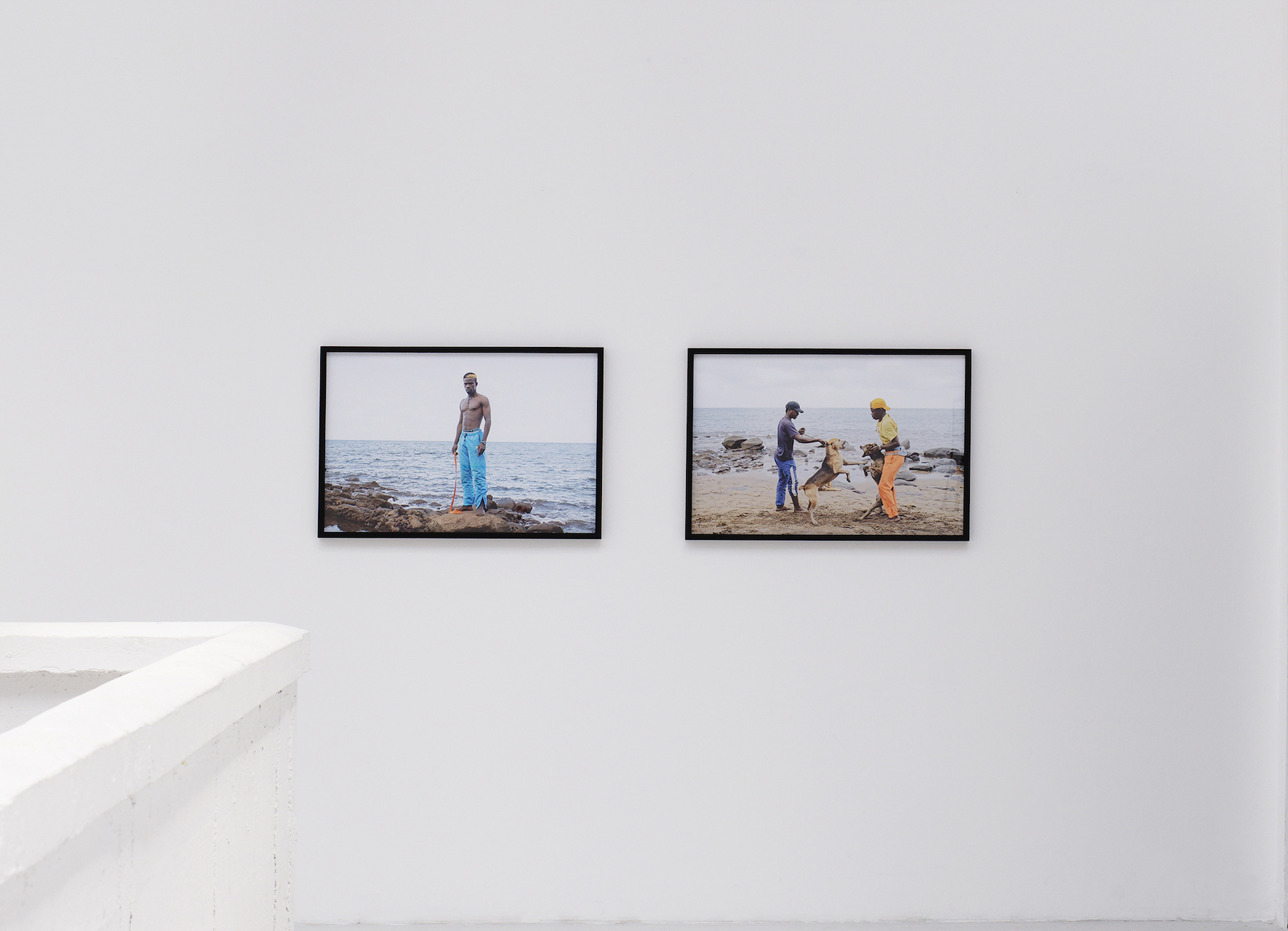
«I bring out the existences and plural voices co-existing on the margins of society and make them resonate. By concentrating on isolated populations, in situations of migration or of survival, I explore the creative dimension of the resistance revealed in them. My use of photography and cinema favours an immersive approach to the communities I follow over several years,» explains Laura Henno, who spent whole months following the same groups of young people. One night, during one of her journeys, she heard whistling and barking around the village she was staying in. She was captivated by this very particular soundscape, as if the supernatural was emerging from the forest. She then tried to make contact with the young men who trained the packs of dogs roaming freely, working with them mainly at night. However, the Comoran people, the great majority of whom are Muslim, have banished this animal from everyday life. Laura Henno sees many symbols in this strange situation including the re-appropriation of a tool of domination: in the old days hunting dogs were used to track escaped slaves on the run, and they are now in the hands of young outcasts. The artist chose to reproduce this incongruous symbiosis between humans and animals. The series of photographs she is showing at Passerelle are therefore the tale, both committed and sensitive, of her extraordinary encounters.
Installation view at Laura Henno, Grande Terre, 2023

Installation view at Germain Marguillard, À l’infini, pas du tout, 2023
Installation view at Germain Marguillard, À l’infini, pas du tout, 2023
GERMAIN MARGUILLARD
À l’infini, pas du tout
The ‘Artists-in-Residence’ programme, led by Passerelle and Document d’Artistes Bretagne, promotes the creativity of artists starting out their careers in Brittany. This year Germain Marguillard is enjoying the benefit of this arrangement for budding artists, which includes a residency, critical and technical support and an end-of-residency exhibition. After his three months spent at the art centre he is presenting the exhibition ‘À l’infini, pas du tout’ (Ad infinitum, not at all) in which he explores the links between sciences, the occult and the symbolism of forms.
At first sight it seems difficult to link the aesthetic of Marguillard to any specific era. He takes codes of representation and ways of seeing the world which appear to be in contradiction and outside of time. The common thread of his research is esotericism; he is passionate about beliefs, practices and phenomena that cannot be explained scientifically, such as astrology, divination, magic, and parapsychology. On the other hand, he closely follows technological developments in the so-called hard sciences, including chemistry, astronomy and physics, with no scientific ambition. Marguillard sets these worlds in opposition, where they stare stonily at each other, yet they are both asking the same questions: how does matter change or transmute? What is chaos? And many other questions that could be called existential…
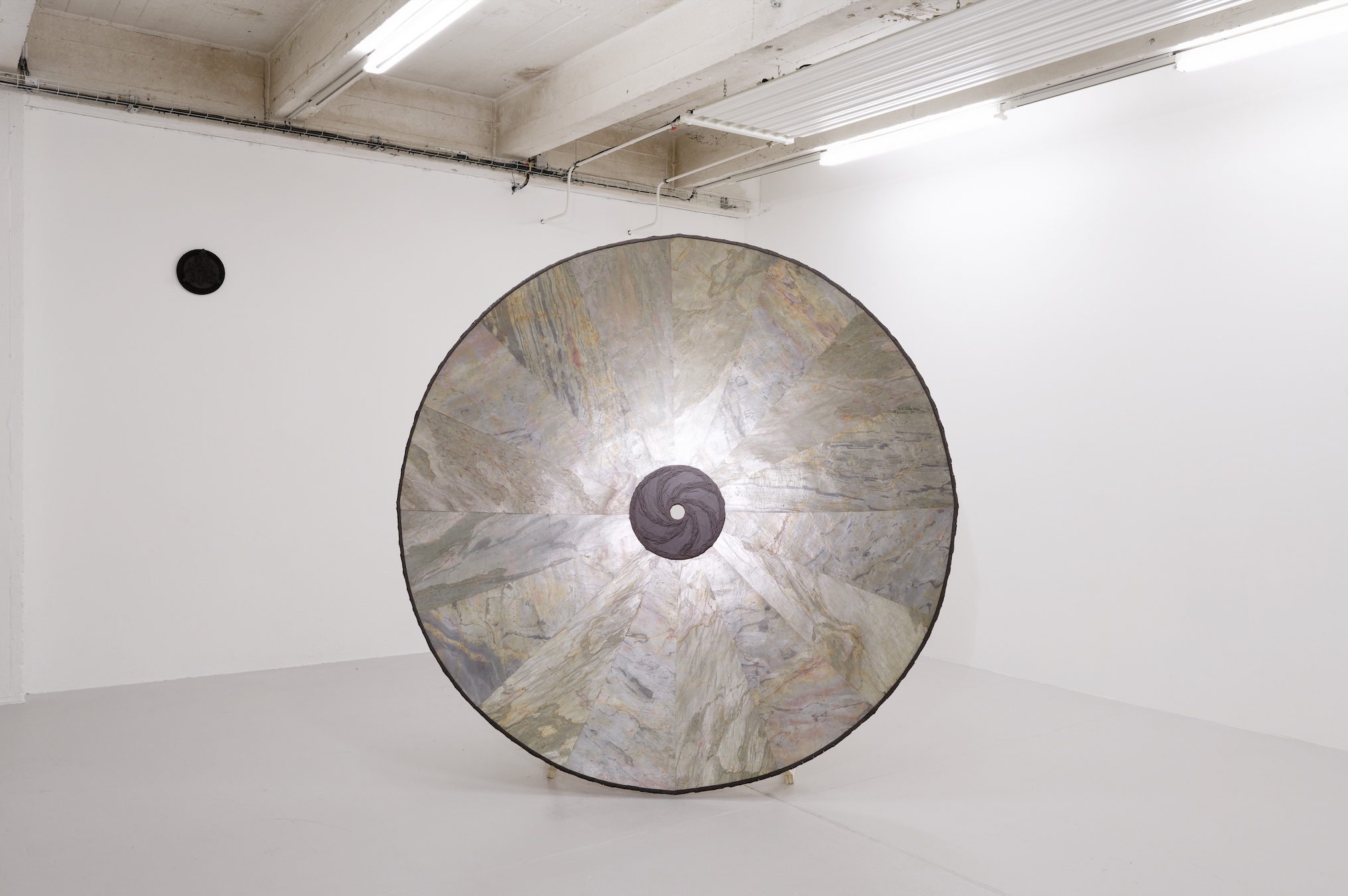
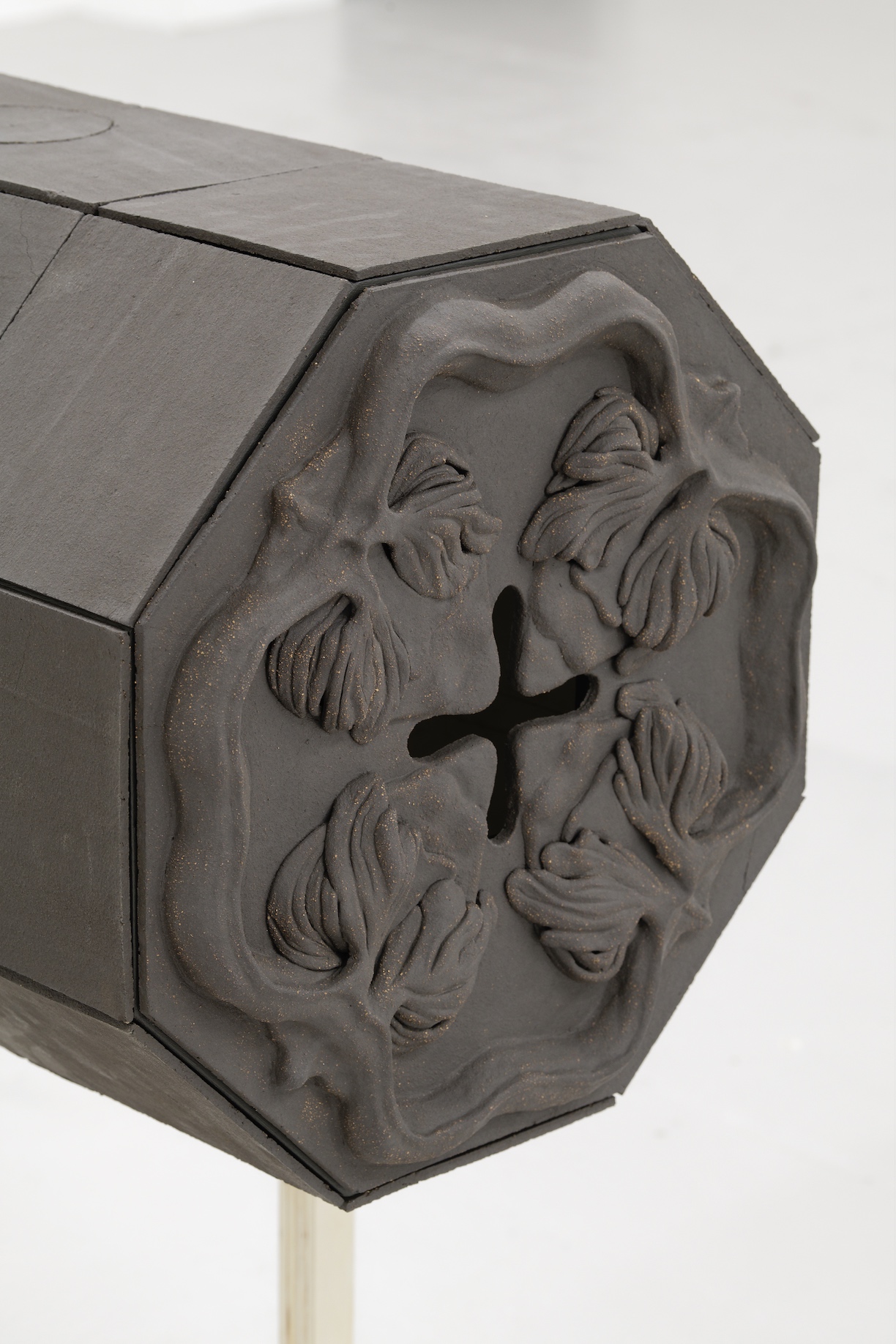
The artist pays particular attention to the microscopic and the gigantic, from the atom up to the galaxy. The exhibition title alludes to this, ‘Ad infinitium, not at all’, and to a certain children’s rhyme, ‘I love you a little, a lot, passionately, madly, not at all’. He is fascinated by objects, documents and scientific instruments. He takes ownership of many forms from this particular vocabulary including the iconic one of the particle accelerator. This type of installation allows scientists to better understand how the universe works – it is possible to recreate cosmic phenomena in a miniature version – and to study the transformation of matter. When you grasp the objectives of this machine and how it functions, it then becomes evident that it is part of the alchemical ‘bestiary’ of the artist.
Marguillard shines a light on another duality: that of tradition in the face of modernity. The techniques he uses, such as firing ceramics, are ancient and common to numerous civilisations and peoples. He combines simple decorative forms such as leaves, knotwork and spirals which powerfully recall Islamic and medieval arts. But these motifs are inspired by treatises on botany and anatomy and other scientific works. Marguillard works on linking them to sculptures which resemble technological tools where they would not at first seem to belong, because our unconscious situates them in another place. By setting down this bridge between two incompatible worlds, he reinserts symbolism and grace into the scientific world which, however, only requires utility and functionality. Presented together, his singular sculptures paradoxically recall an archaeological site as much as a state-of-the-art technological laboratory. The exhibition could relate to a ruined temple, the home of ancient myths, but its resolutely contemporary register confuses one’s reading of it. By seeking to find the spiritual in the everyday – as also In his mural works that are half screen and half stained- glass window – Marguillard questions our certainties acquired in a world where information has never before been so available and so manipulated.
Installation view at Germain Marguillard, À l’infini, pas du tout, 2023
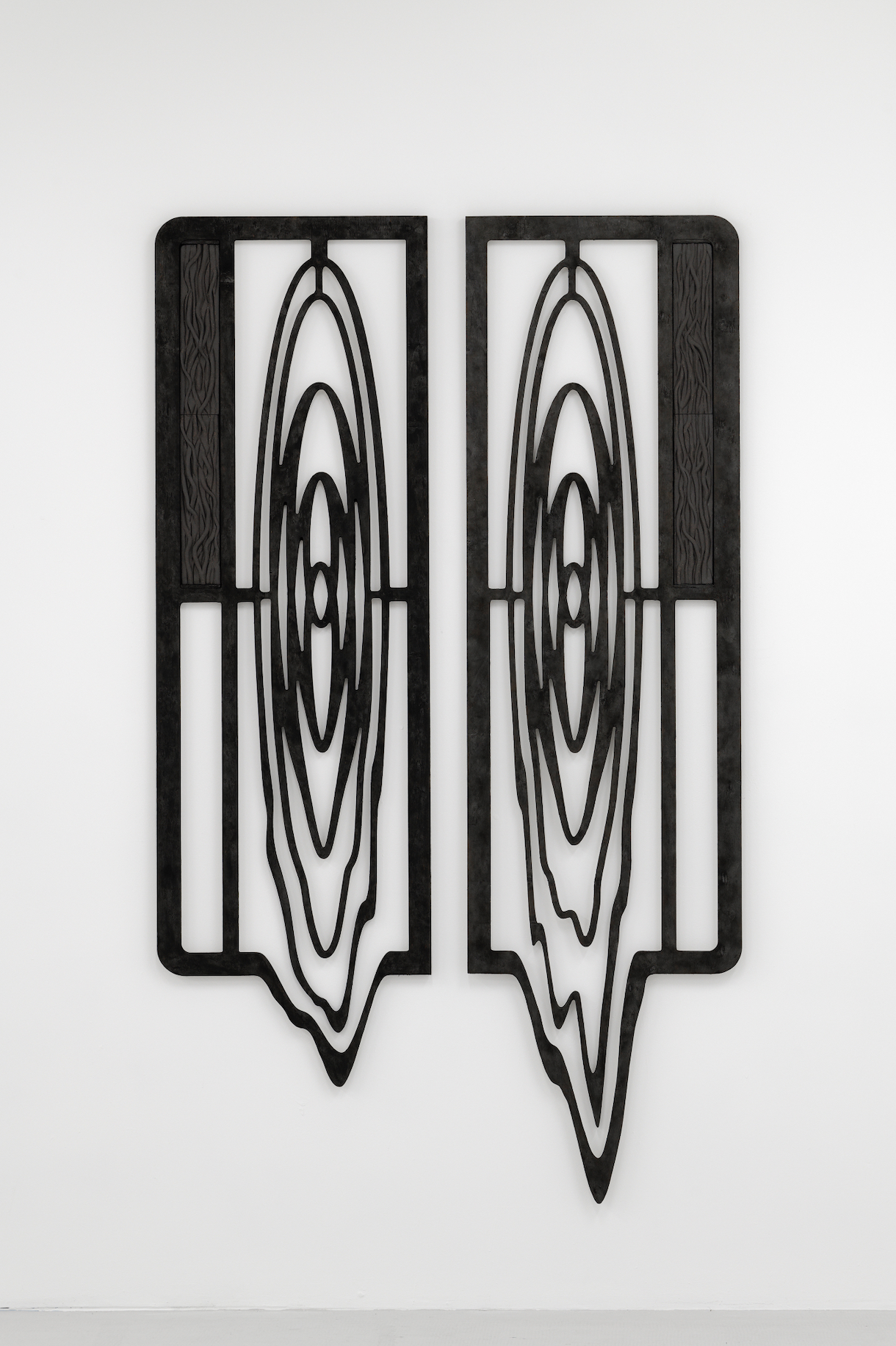
Installation view at Germain Marguillard, À l’infini, pas du tout, 2023
Summer Exhibition at CAC Passerelle
Le Prix Marcel Duchamp | Une séparation, Laura Henno, Germain Marguillard
CAC Passerelle, Brest
June 16 – September 16, 2023
CREDITS
All images courtesy Passerelle Centre d’art contemporain, Brest.
Photo: Aurélien Mole