Studio Visit
Text by Linnéa Ruiz Mutikainen
Virtual components make up the skeleton of our digital reality. Once a separate subassembly of the humanly tangible, it now sits at the epicentre of modern existence, mediated through hyper-engineering and interface infrastructures that mirror minds through carefully composed relational tweaks.
Yvonne Fang builds virtual ecosystems. Real-time renderings and otherworldly installations investigate our boundaries, creating landscapes that often bend anthropocentrism and human-centered principles. Her work emerges from appropriated AI systems, with assistant models, community simulators and image generators repurposed to co-pilot nonhuman perspectives. This means, an AI model may run freely within a script that she narrates, attentive to areas like hallucinations and refusals, where she lacks control. By establishing conditions for interaction, she allows figures to interfere with probabilistic worlds beyond human-prompted interfaces. This approach has also resulted in the development of AI- and ML-powered world-building pipelines and creative tools, such as Co-Creative Canvas.
Climate change and nature function as key currencies in Fang’s practice as she creates spheres distilled from our disruptive present. Generative AI becomes a fluid entity rather than a pictorial extension or cognitive assistant to the human mind. Virtual spaces appear idyllic, only to be overtaken by abnormality, a hallucinatory mashup that has become pivotal to Fang’s visual language. Dream Field is where she reaches a culmination. An AI system seeded with nonhuman ecological data is the core substance, detached from its settled role as an aide in everyday human life. In a saturated mishmash of semantic categorisation, malleable creative materials become fleeting building blocks. Structures, dissolved, between humans and insects, without any clear direction or meaning to follow. In this way, Fang uses the indistinguishable to engage with her viewers, interrogating technological entanglement to make us question our own roles within ecological systems.
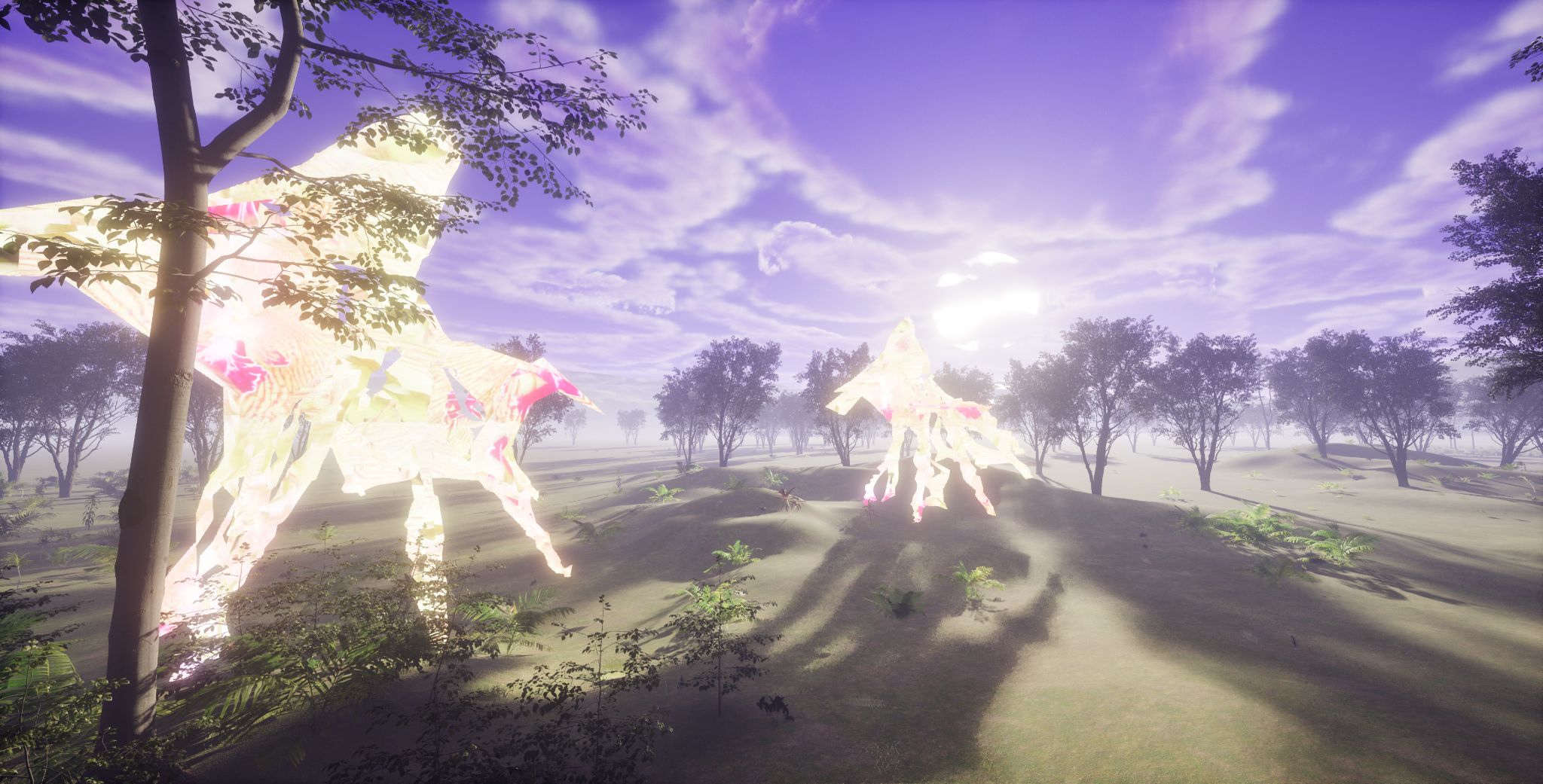
In its first 2024 iteration, Dream Field uses serene nature pierced by ecological grief as its canvas. It directly mirrors the growing synergy between data and nature and is used by Fang to play with this speculative weak spot of the modern world through a fictional AI system. Dynamics are reversed; the viewer steps in front of the installation and a webcam embedded in the work determines its fate, selecting the character that best fits the ecosystem in its present shape. Stripped of beauty and hierarchical structures, Fang produces a scene where the human is reduced to a passive surface, morphing into whatever shape the simulated ecosystem favours. The viewer becomes food for a well-oiled machine, one intent on unsettling while it removes the individual of agency. The result is a neat, almost grotesque, mediation on ecological systems and our own roles within them.
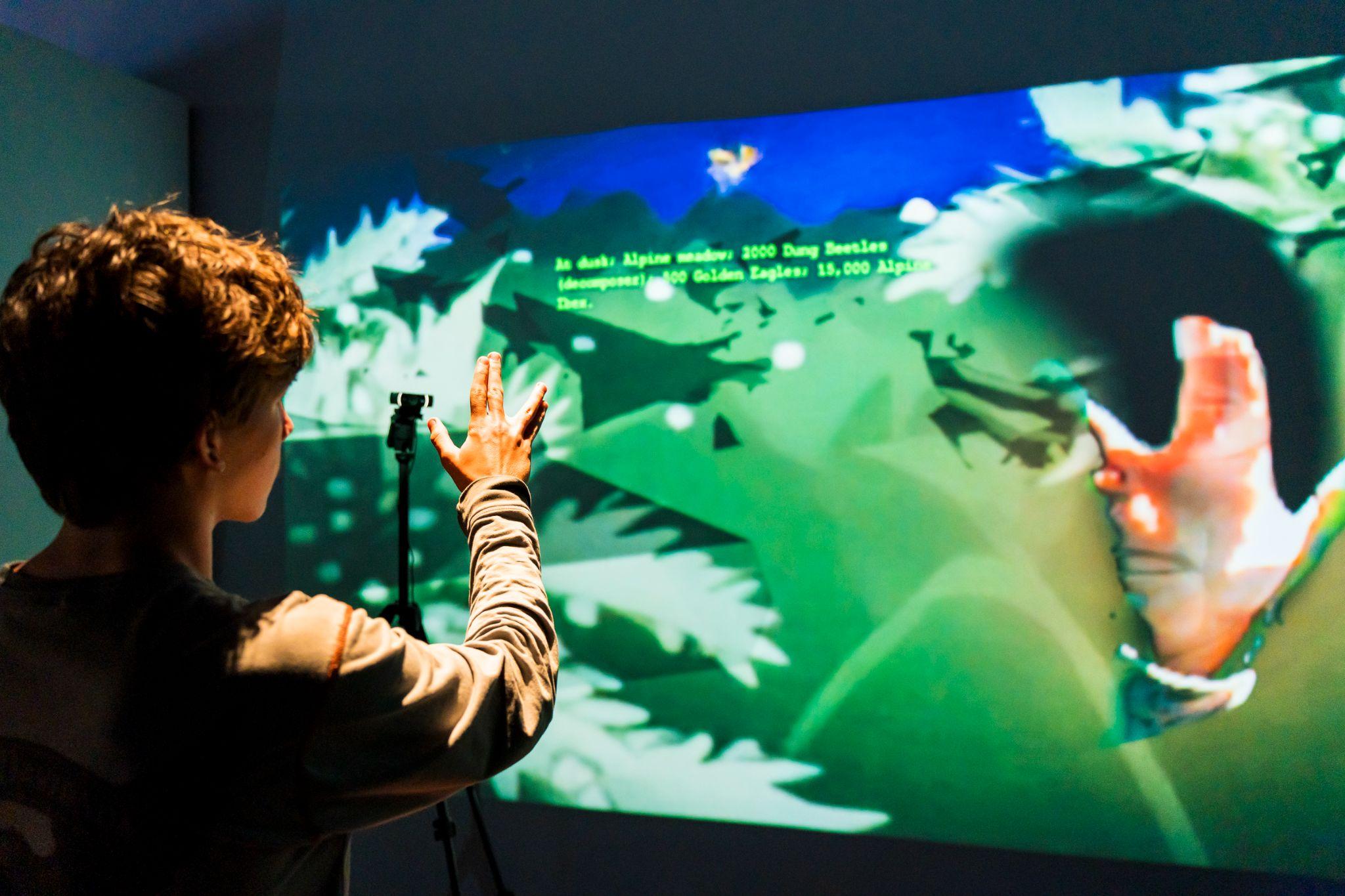
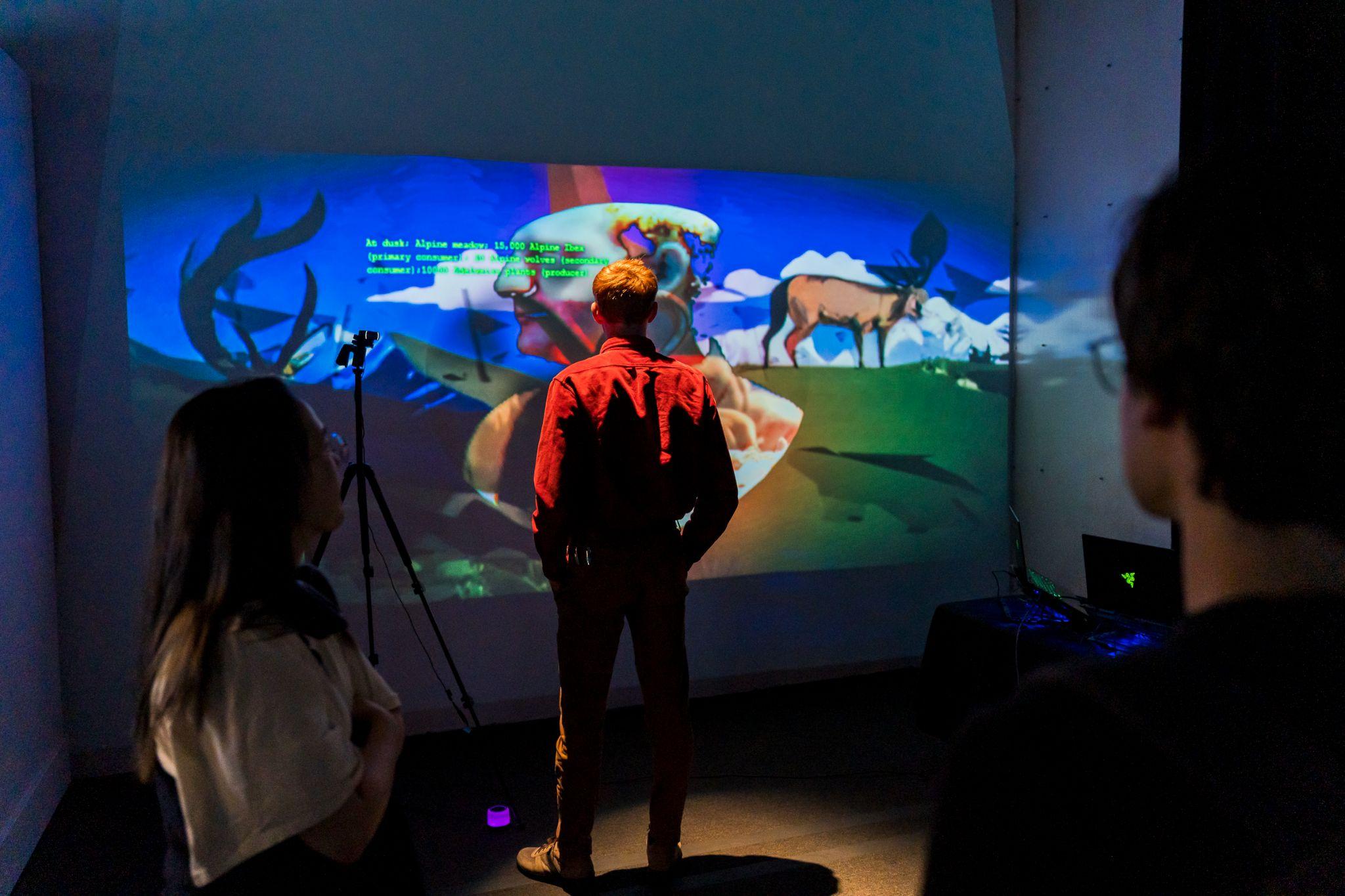
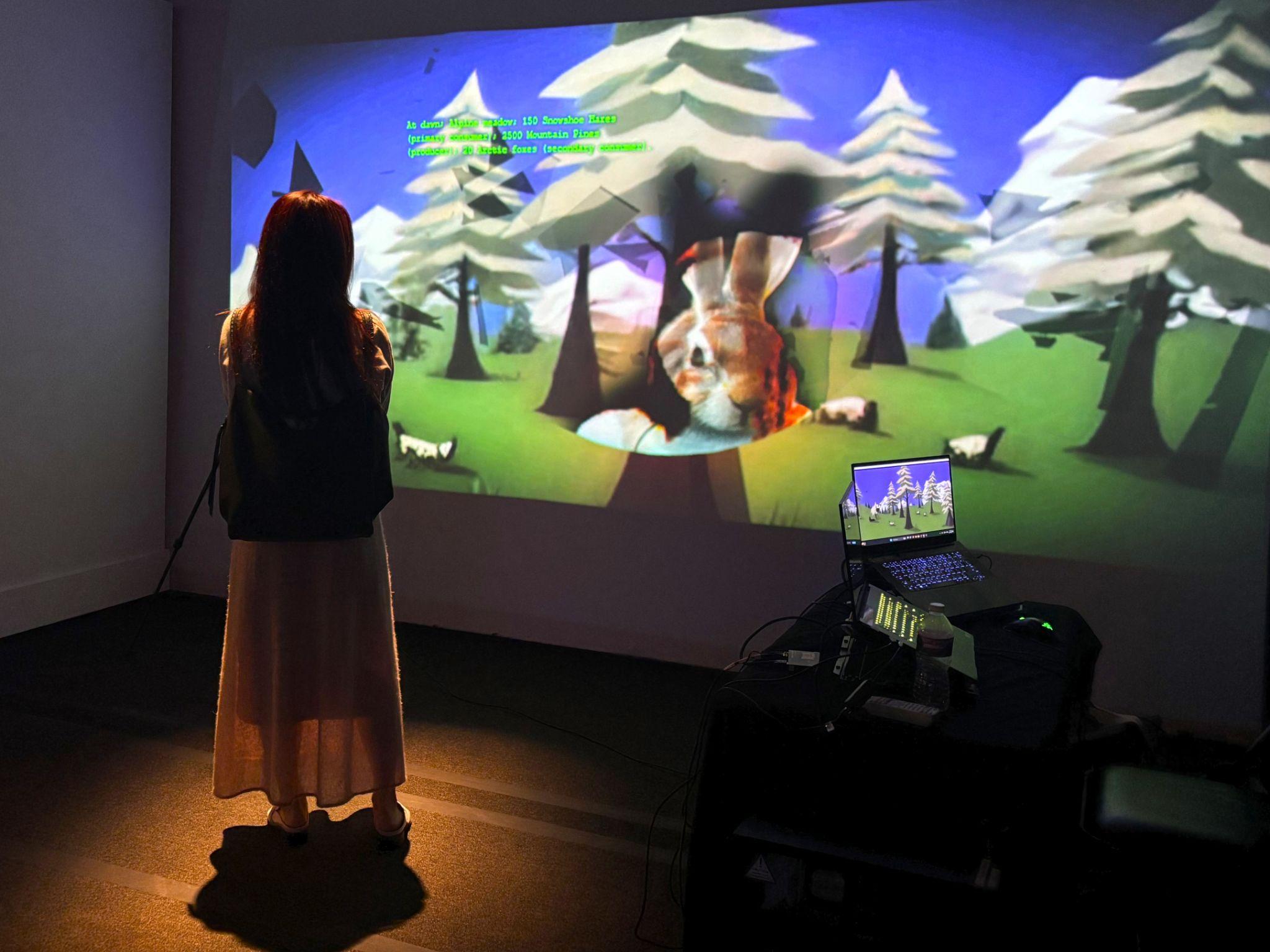
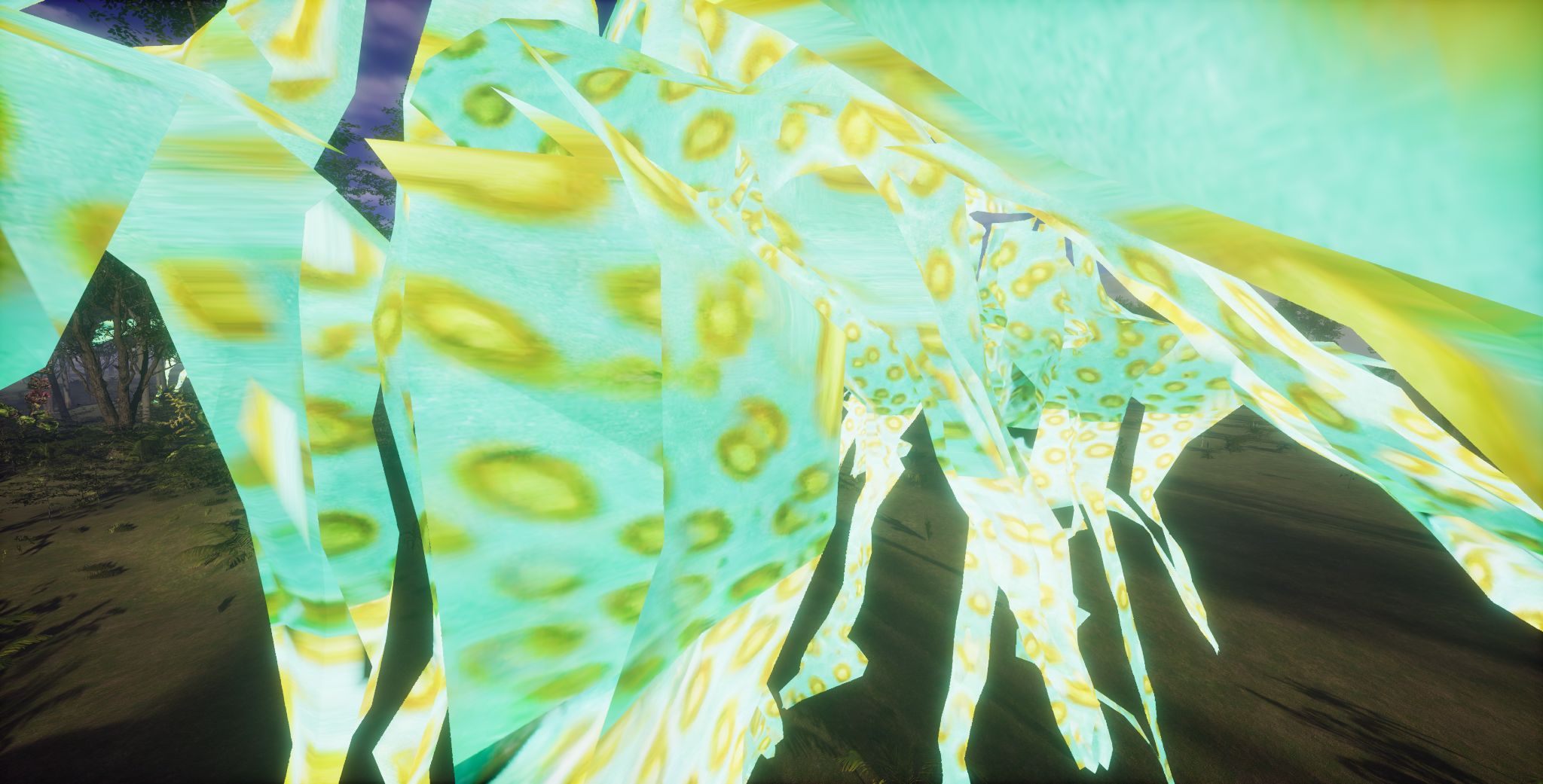
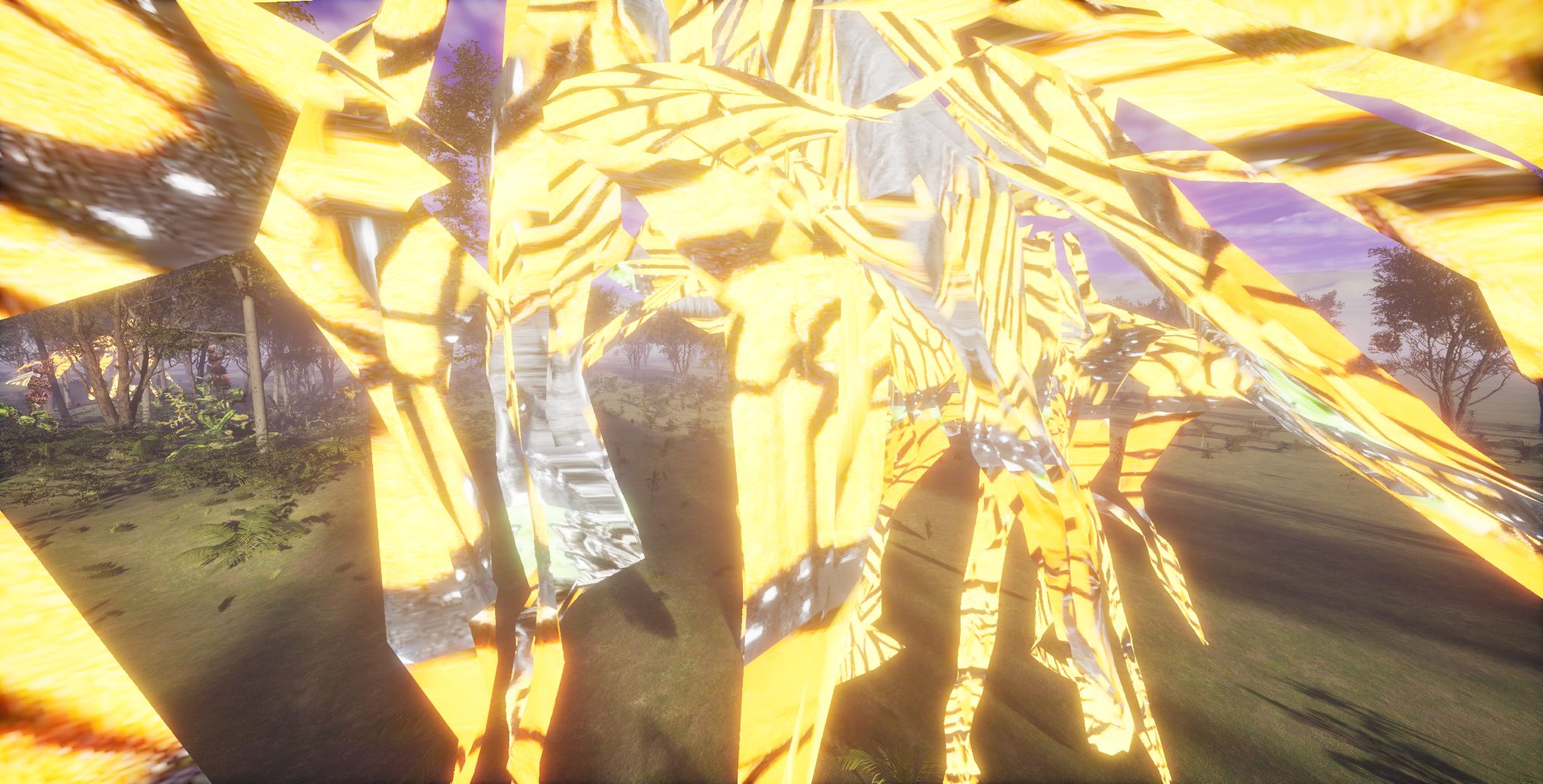
Fang’s ongoing project, Dream Field 2.0, transforms the concept into an immersive XR experience with real-time AI agent simulations. Morphing here is less human-initiated than an open-ended process following an emerging logic of the scene: creatures constantly inherit traits from the other, moving from hummingbird to human and back again. Fang reconnects the individual to the collective through a continuum that situates humans as one species among many, never positioned above the rest. Cross-species discourse leads into environments without traditional lineage, amplified by agents with unique memory streams that shift through each encounter.
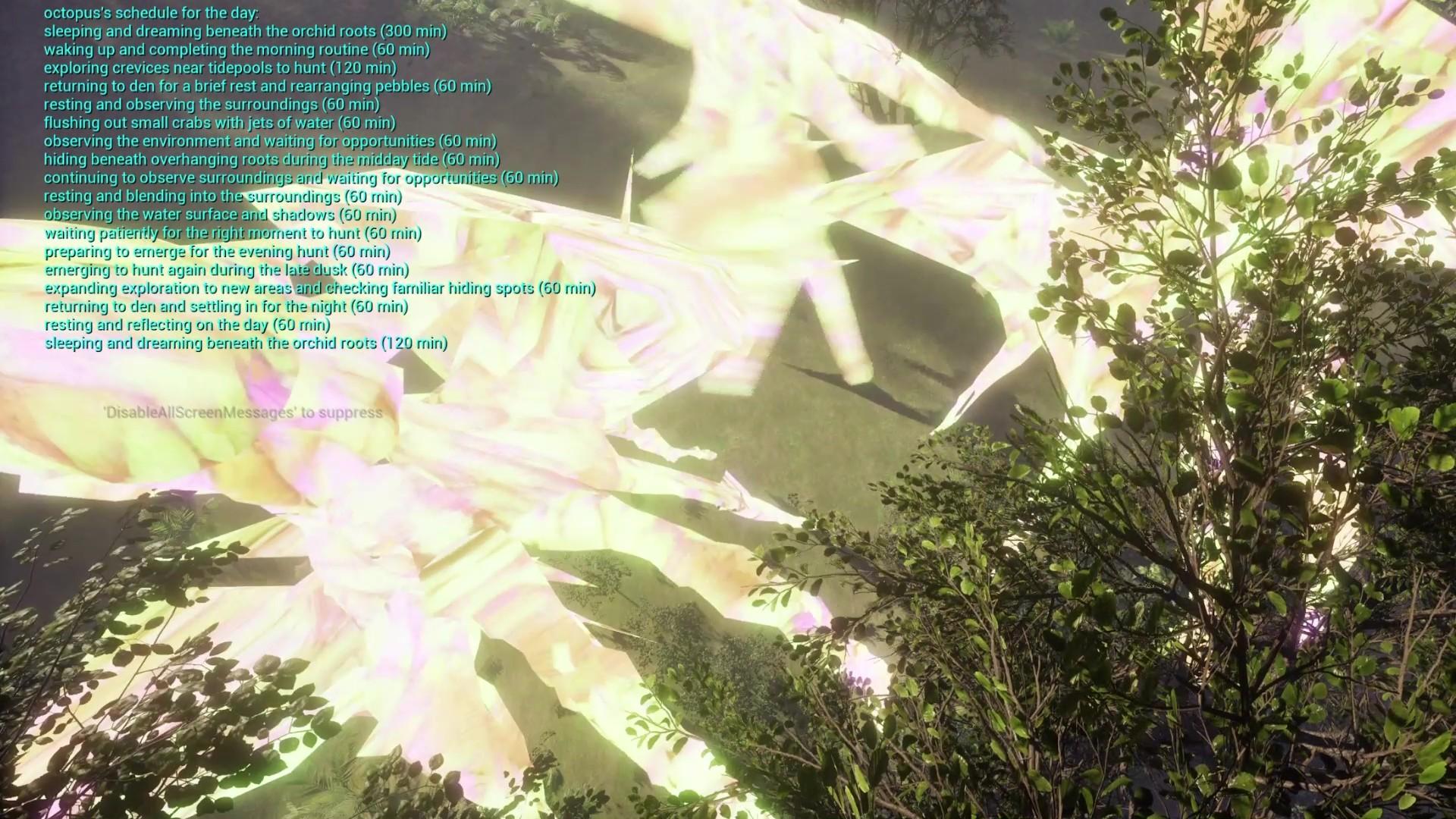
Unlike AI systems trained in tune to human rhythms, Yvonne Fang’s use of a Python-based large language model (LLM) agent simulation allows her to attune to a different wavelength. Repurposed anthropocentric technology sees a careful mapping of her creatures’ memories, thoughts and plans, and stems from a modded version of an open-source LLM simulation system first designed to simulate human communities. By appropriating this technology, Fang creates a gateway into uncanny encounters between humans, nonhumans and AI. The prefigured is shattered through a series of real-time morphologies of inhabited spaces of existence, as she reveals environments, species and hybrids that belong to a shared continuum, rather than to fixed categories.
STUDIO VISIT
Yvonne Fang
Text by Linnéa Ruiz Mutikainen
Yvonne Fang (b. Shanghai, China) is an artist and creative technologist based in San Francisco. Through her work with AI simulations, virtual worlds, games and interactive extended-reality experiences, she explores latent-space aesthetics and bridges human and nonhuman perspectives, unsettling human-centered ways of thinking in a time of climate crisis. Her work has been presented at the Gray Area Foundation for the Arts and the Asian Art Museum in San Francisco and at the Beijing Fringe Festival.
Linnéa Ruiz Mutikainen is a writer and editor based in Paris. Her texts have been featured in publications such as CURA., Purple, GRUPPE, Carcy, 032c and Vogue Scandinavia. She also works closely with independent artists and galleries for conceptual work and writing projects.