RATIO
KW Institute for Contemporary Art
February 21—May 10, 2026
Review by Caterina Avataneo
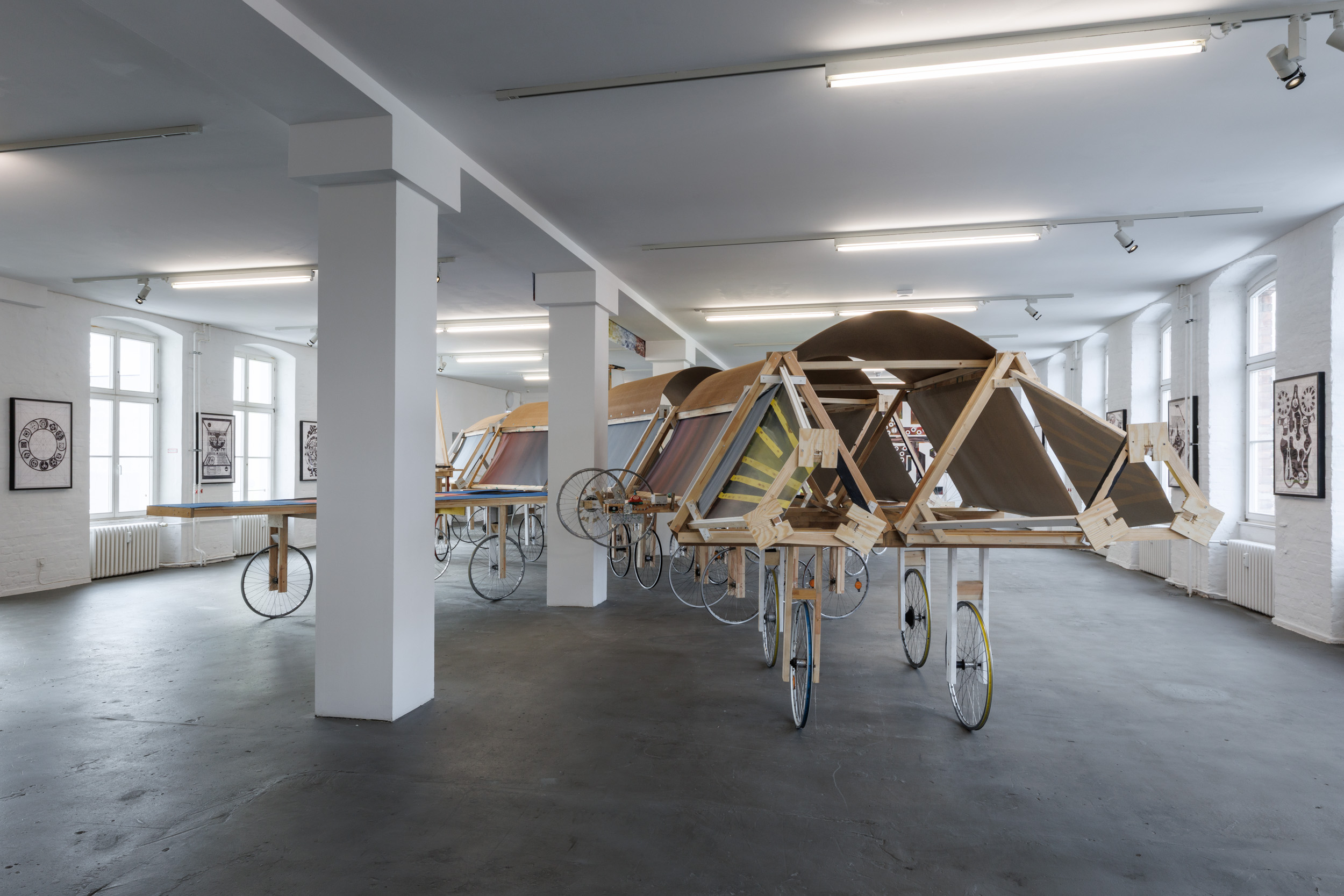
Jean Katambayi Mukendi’s solo at KW rocks! and quite literally rolls. At its core stands a sprawling, low-tech apparatus on wheels, assembled from wooden frames, curved panels, and scavenged materials sourced from Berlin’s recycling yards and KW’s own storage. Its functioning is exposed: belts, joints, and rotational elements remain visible, producing a distinctly geeky gimmick—somewhere between DIY farming equipment and the prototype of a self-taught aviator. It feels less like a finished machine than a thinking process made visible.
This insistence on exposure acts as a counter-model to the dominant logic of contemporary tech. We’re used to slick, sealed devices—black-boxed objects we tap and swipe all day without the faintest clue how they actually work, or what they’re made of. Mukendi’s show feels particularly exhaustive in the context of KW’s broader exhibition programme, especially thinking back to exhibitions such as Poetics of Encryption, where opacity, secrecy, and the inaccessibility of technological systems were staged as defining conditions of contemporary digital culture. Here the same issue at stake is approached from a different angle, showing an artistic practice that cracks open the system, laid bare in its complex circuitry.
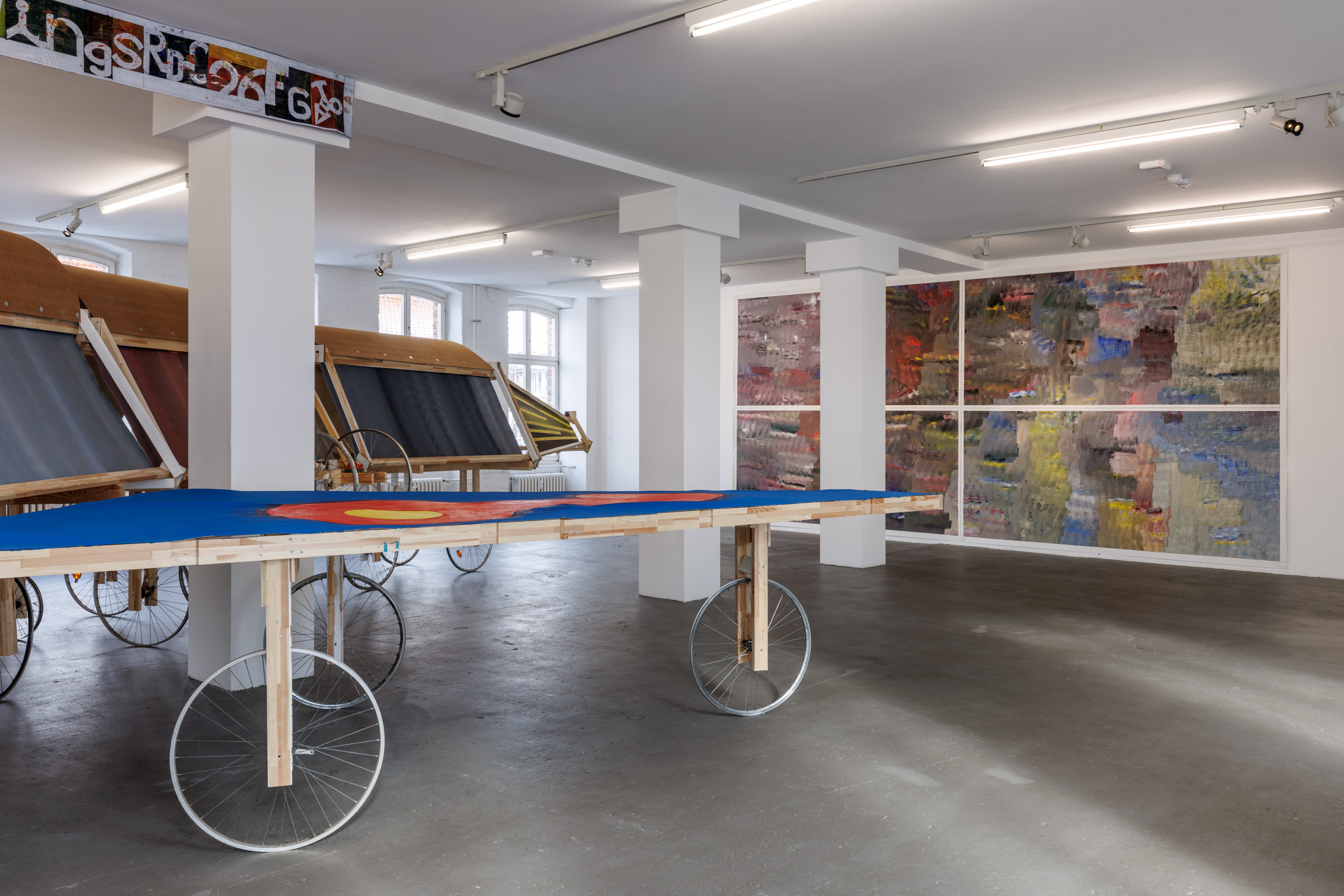

mukendi kabongo Air hybird Wings RDC26FG—this the title of the inventive machine—resists function in any conventional, Western sense. Mukendi, trained as an electrician, clearly understands the systems he mobilises. His machines are operational, but their purpose is displaced in a deliberate refusal of utility. This gesture is inseparable from the paradoxical conditions of the Democratic Republic of Congo, where the artist lives: a territory that supplies the raw materials—copper, cobalt, lithium—necessary for global power as well as technological development, while remaining energetically and economically excluded from their benefits.
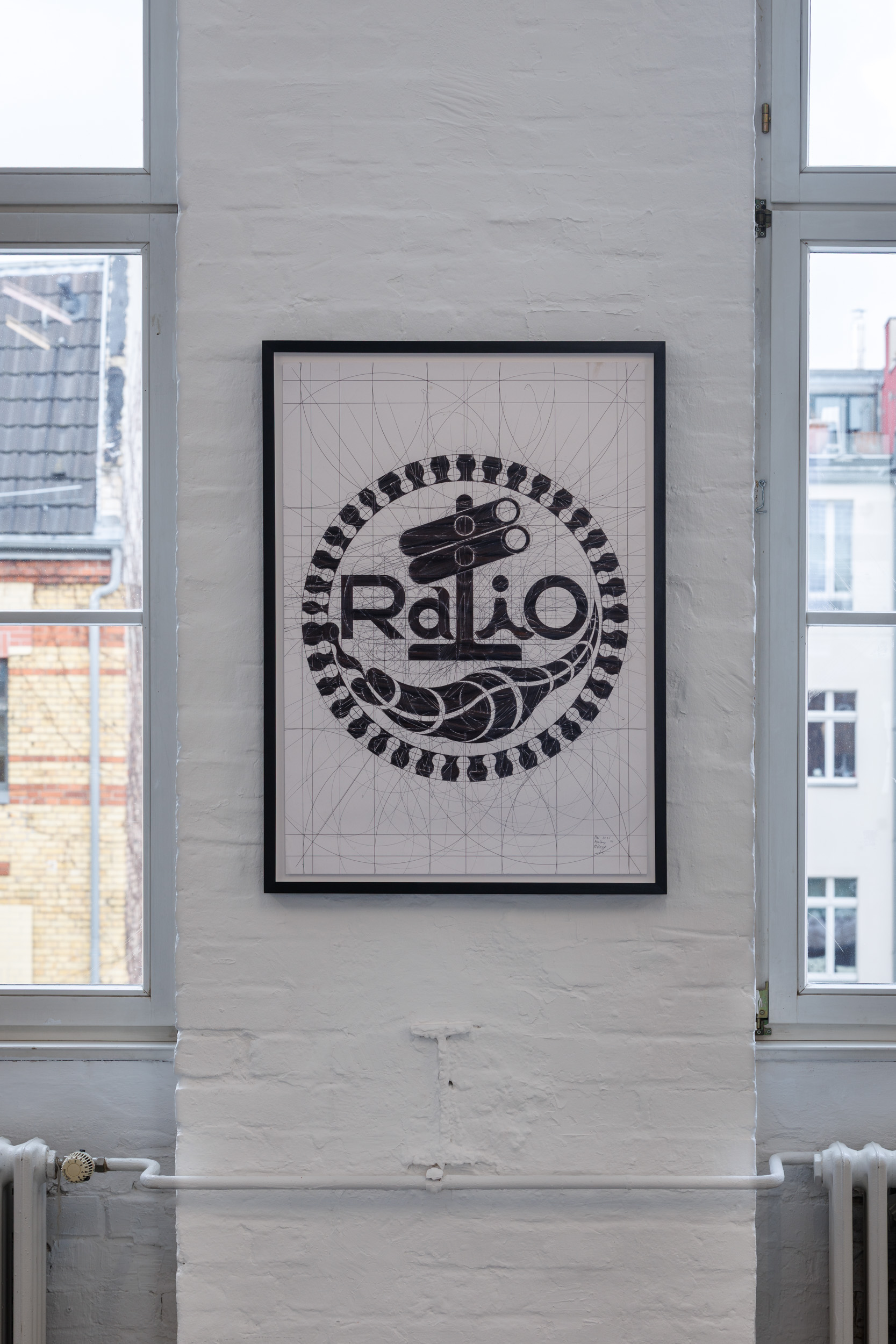
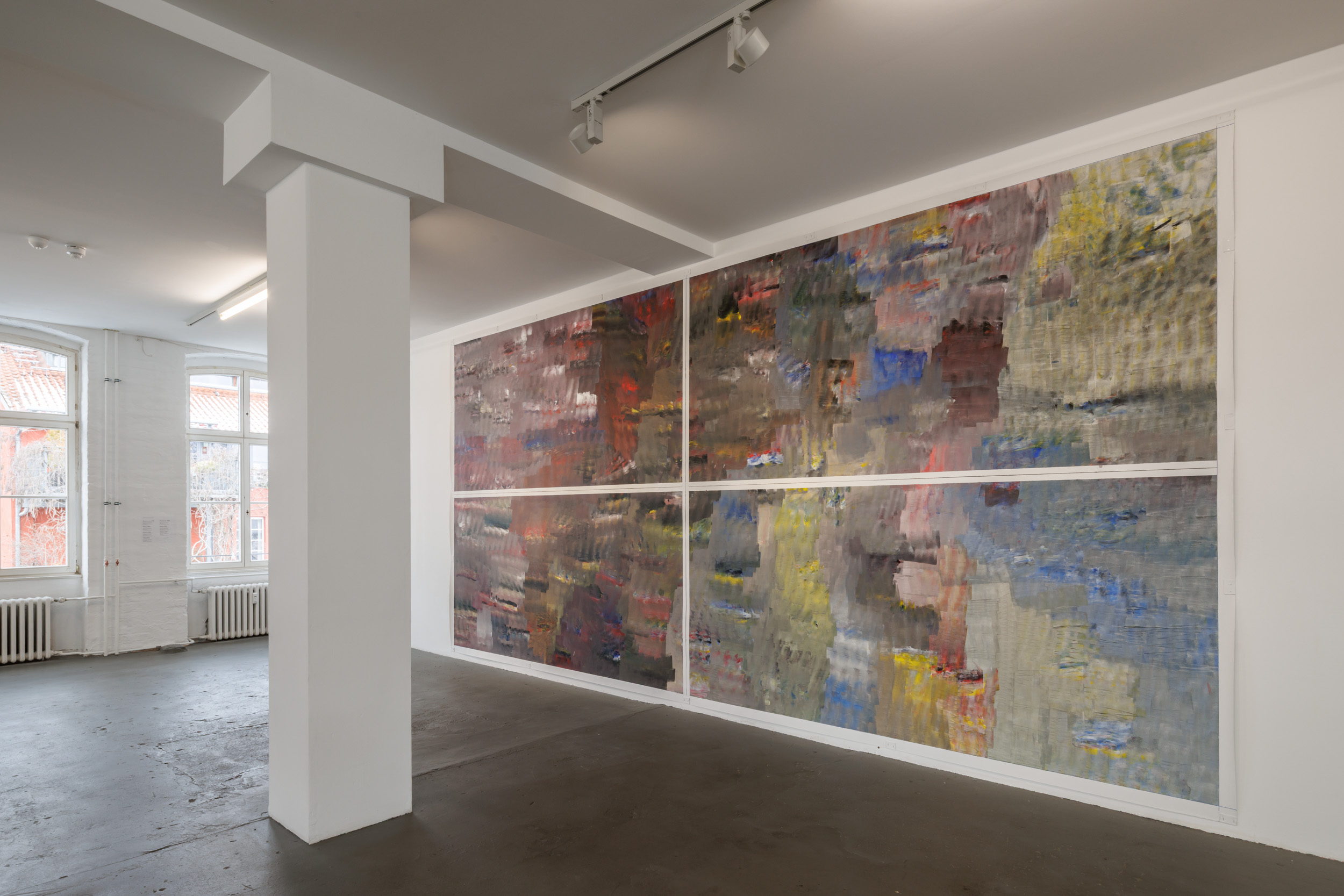
The exhibition’s title, RATIO, introduces the question of relation between elements, forces, and scales. Katambayi frames it in terms of imbalance: between North and South, extraction and distribution, resources and power, growth and destruction. This becomes particularly evident also in the large-scale painting Vita, composed of four abstract panels that oscillate between geological strata and atmospheric turbulence. The title is of specific relevance in this case as well, bringing forward a dramatic contrast between parts. While “vita” in Italian signifies life, in Swahili it refers to conflict and war. Katambayi structures the work around the four seasons, where nature itself struggles through phases of life and death. A cross-like form cuts through the composition, doubling as both a coordinate system and a targeting device, evoking the mediated violence of drone warfare and referring to the core of global conflicts, ultimately pivoting around natural resources.
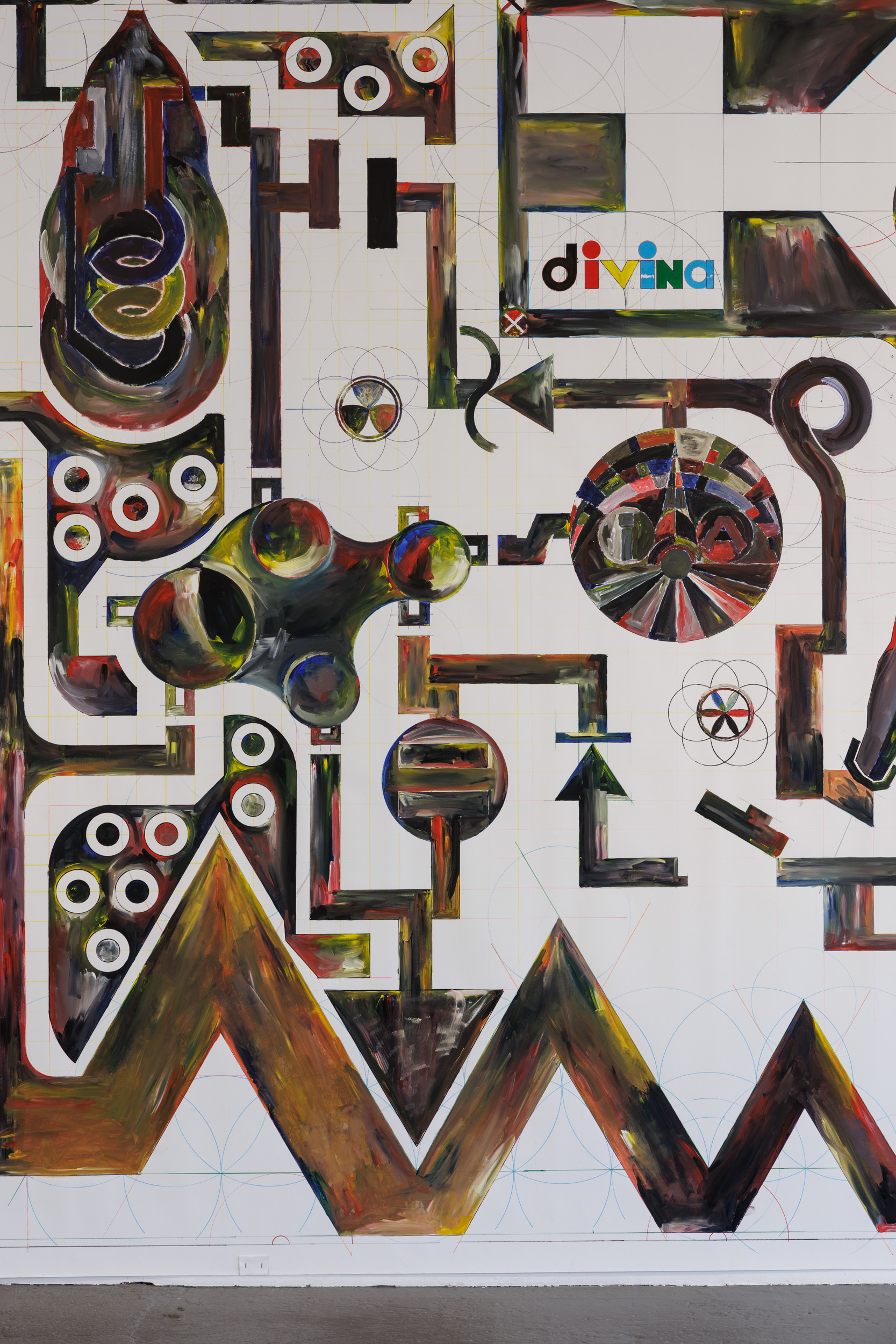
What makes RATIO particularly compelling is the way it sidesteps didacticism despite its artworks being inspired by geometric studies and infographics. Its critique—of extractivism, technological inequality, and global asymmetry—emerges through form. The roughness of the materials, the precarious balance of the constructions: all of this contributes to a sharp and precise visual vocabulary. Katambayi shifts the attention from solutions to relations. The result is a witty exhibition. Like its central machine, it remains in motion—recalibrating the conditions under which another system might, eventually, be imagined.
Jean Katambayi Mukendi
RATIO
KW Institute for Contemporary Art, Berlin
February 21—May 10, 2026
CREDITS:
Installation view of the exhibition Jean Katambayi Mukendi – RATIO at KW Institute for Contemporary Art, Berlin 2026.
Courtesy the artist. Photo: Frank Sperling.


