Hamlet’s Mill
Galerie Eva Presenhuber, Zürich
January 23 – March 14, 2026
Review by Linnéa Ruiz Mutikainen
Artist Verne Dawson (b. 1955, Meridianville, Alabama) uses paintings as anthropological fragments, saturated extensions of time and belief. Long interested in continuing narratives – from the structures that still govern our modern lives to the art of passed-down oral and visual traditions – Dawson remains absorbed in an entanglement of depictions. His work resists any linear chronology, instead it suggests reconsideration of time as we know it, often placing past, present and future in the same context, coexisting on the canvas. Paintings anchor a sense of hopeful curiosity, exploring and articulating a prosperous timeline for nature and civilisation. Dawson’s oils are chimeric: abstract elements linger alongside those of expressionism, brushstrokes born of both personal observations and improvisation.
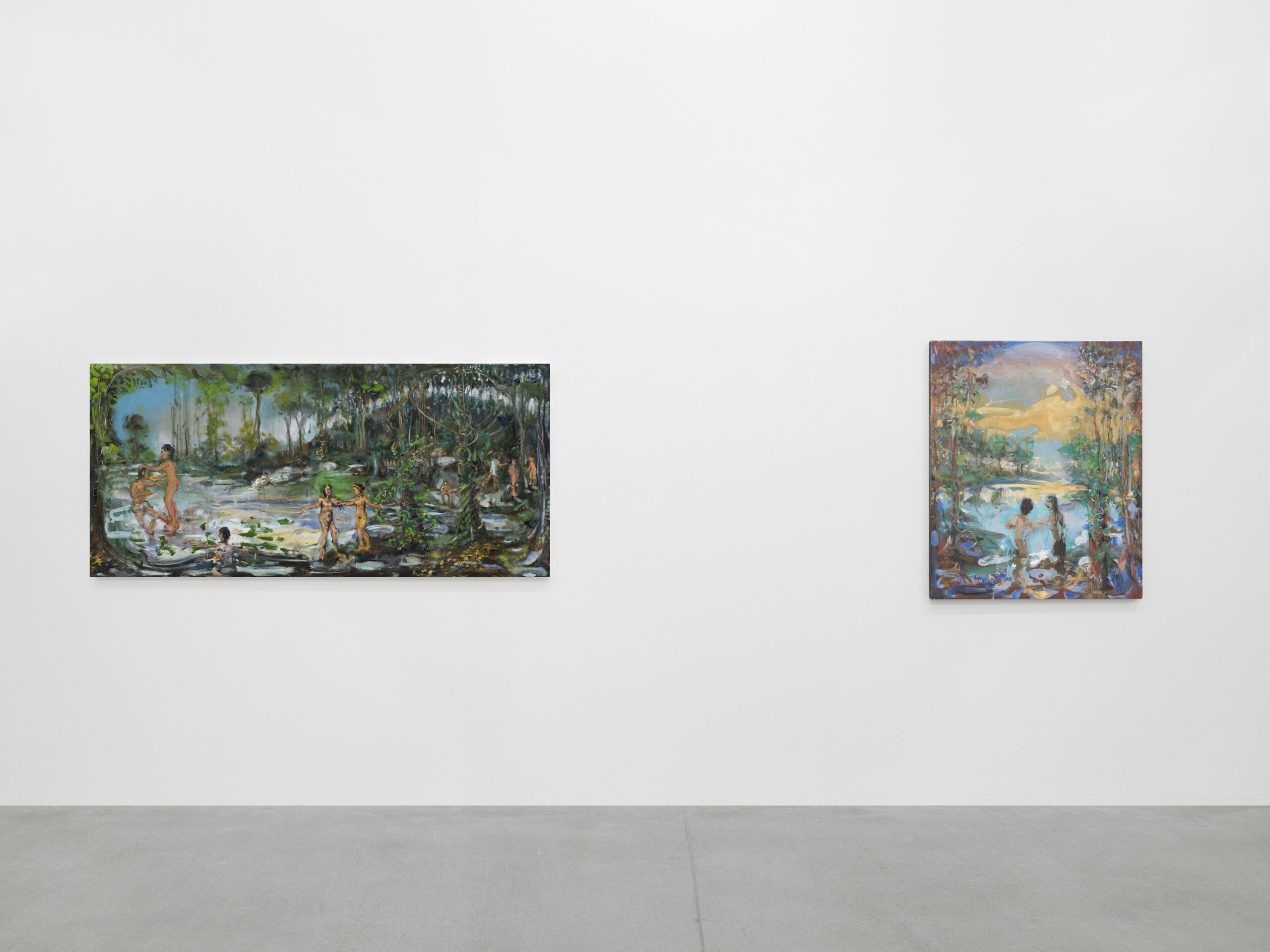
Hamlet’s Mill, Verne Dawson’s seventh solo exhibition for Galerie Eva Presenhuber, continues to render cosmological spheres through the blossoming disquisition of humanity and nature. Its title stems from Italo-American philosopher Giorgio de Santillana’s 1969 book that carries the same name, an almost dizzyingly anthropological showcase that tore apart worldwide myths to point at their similarities. Mirroring Dawson’s obsession with time and cosmology, de Santillana argued that these myths are not earthly but celestial, bringing awareness to narrative that goes beyond historical and cultural territory. What if the casualty of reaching for handed-down truths and ideas, and implementing those in our modern lives, make us forget to consider myths on time and cyclical nature as possible factual depictions? For him, the point is that while modern findings are not to be dismissed, there is historical knowledge that may also contain valid bits of information rather than “just” folklore. Dawson hooks onto that field too, as his paintings recognise the grey zone of the perhaps questionably translated, the lost literacy. His work is rarely heavy or detrimental; it’s blossoming. Dawson is an artist who shatters time in order to make it bloom, pointing at its eternity and the beauty in our chaos.
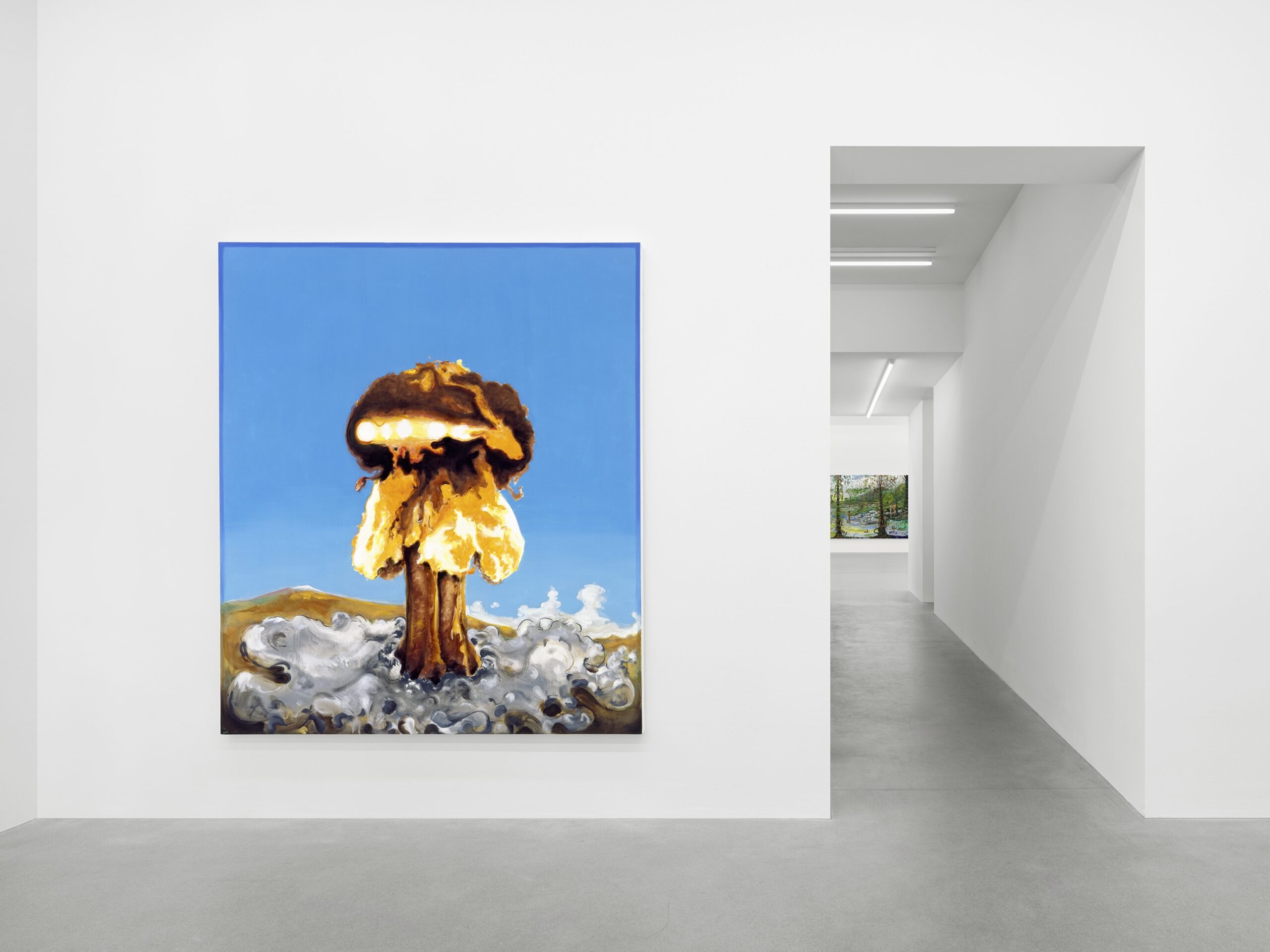
Pivoting around the exhausted state of our modern landscape, Hamlet’s Mill brings light to the toxic deconstruction that we breed, defined by technological advancements and a detachment from our surroundings. To exist is overshadowed by the urge to perform, but Dawson, much like de Santillana, suggests there may lie fruit in applying the brakes and finding relief in past observations. In this exhibition, we continue to see testaments to Dawson’s infatuation with ecology. White walls are dressed in flourishing nature, coexisting next to deconstruction: Atomic Bomb (2007) sees a mushroom cloud penetrating the bright blue sky, an antithesis to the greater theme of rebirth and prosperity. An eye-opener that carries into luscious depictions of ecology, mirroring Dawson’s love for his subject in the most contagious of ways. Ethereal vessels line up across the space, leading into the final room where The Old Mill Calendar (2011) is presented. Connecting back to both the exhibition name and its greater ideas, the four large-format canvases create a mural illustrating Earth’s daily rotation, with the mill serving as an ancient metaphor for the 26,000 year long axial cycle frequent in fairytales.
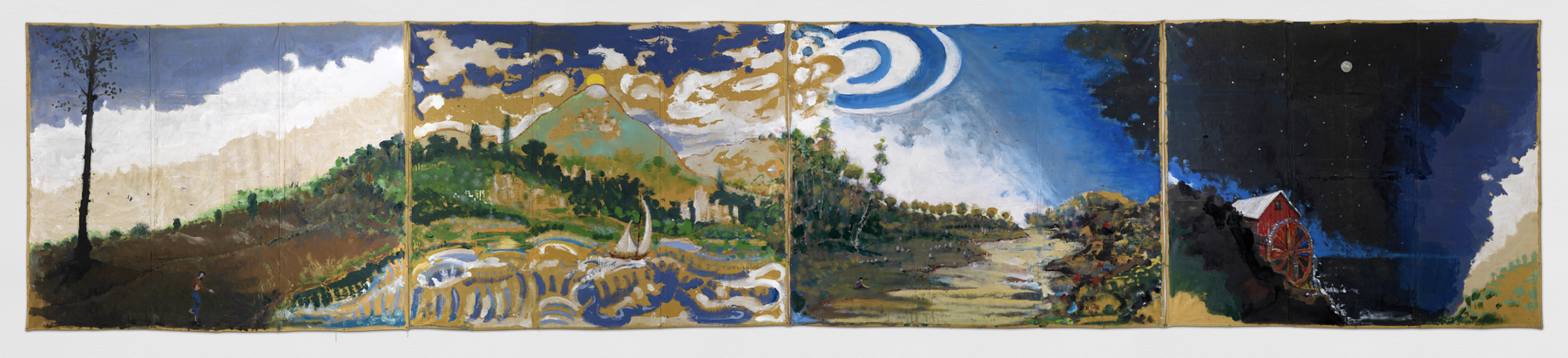
The Old Mill Calendar, 2011
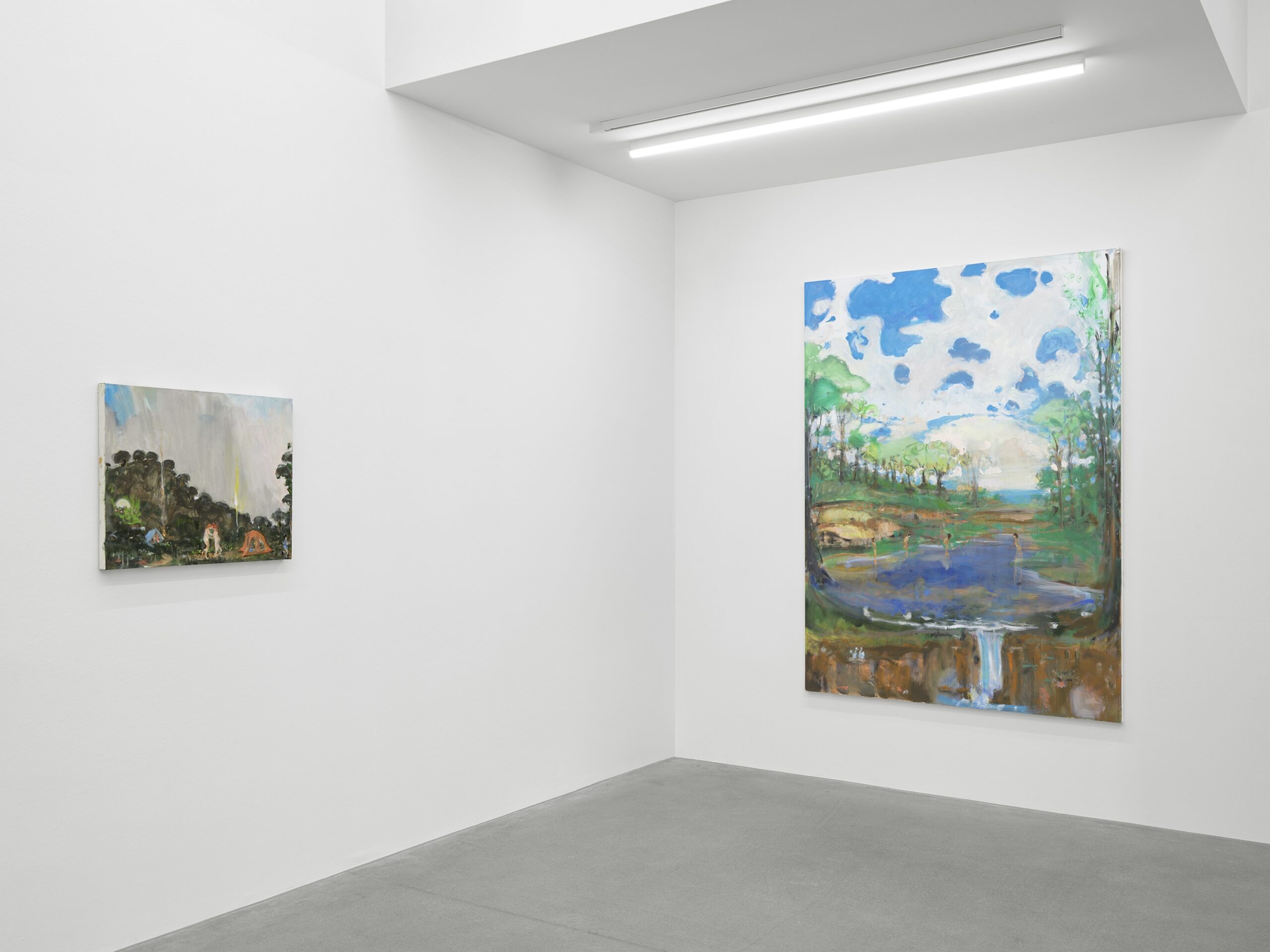
Hamlet’s Mill transforms time and myth from vast referents to aligned markers with a matching, diverged past. Paintings illustrate the pictorial language of his ideas on our unfathomable universe, the collective playground that still nurtures so many questions. Anthropological findings perform in parallel with myths as Dawson presents an alternate way to observe the past, stripped of hindsight bias: no modern awareness or knowledge concerning the universe and our relation to it. Instead, to look backwards becomes an antidote to future angst – to always lust for what’s next, even when it’s out of one’s power. The past becomes a metaphor for knowledge and a plausible solution to generational distress, pointing to the shift we collectively need to initiate to regain a lost sense of belonging and purpose. What is it that the course in reverse, the leap backwards, could teach us about the complexities we face today and will face tomorrow?
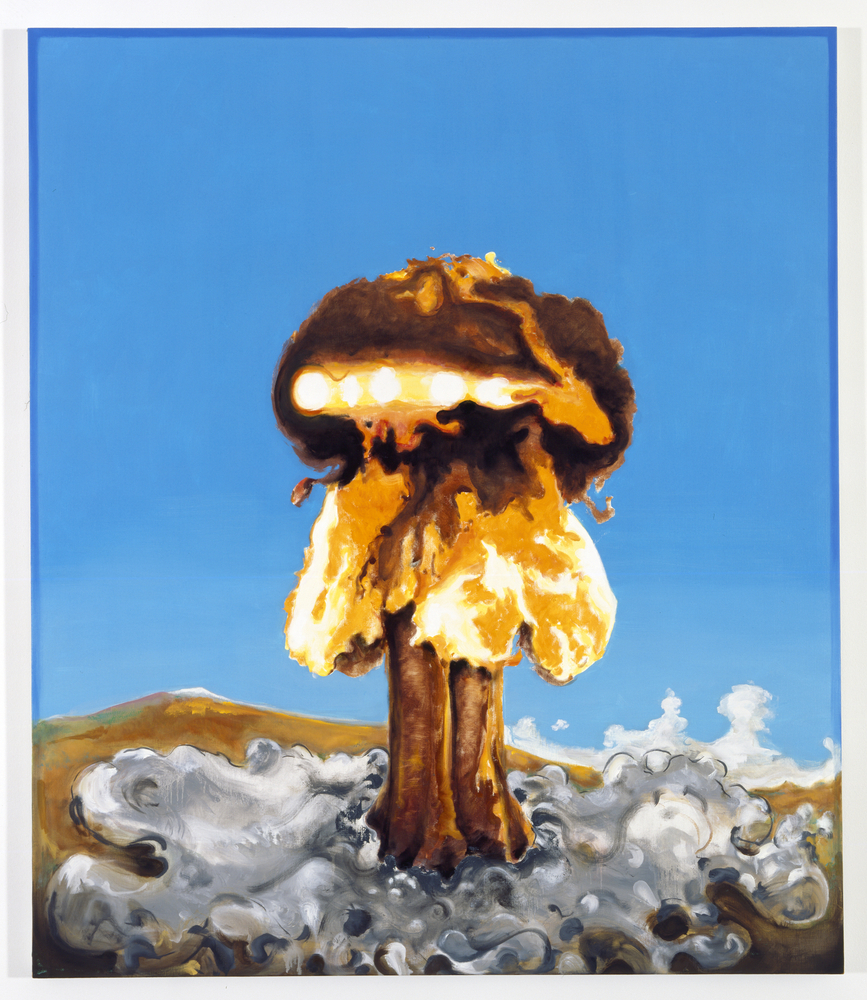
Atomic Bomb, 2007
© Verne Dawson

Smoke and Lightning, 2025
© Verne Dawson
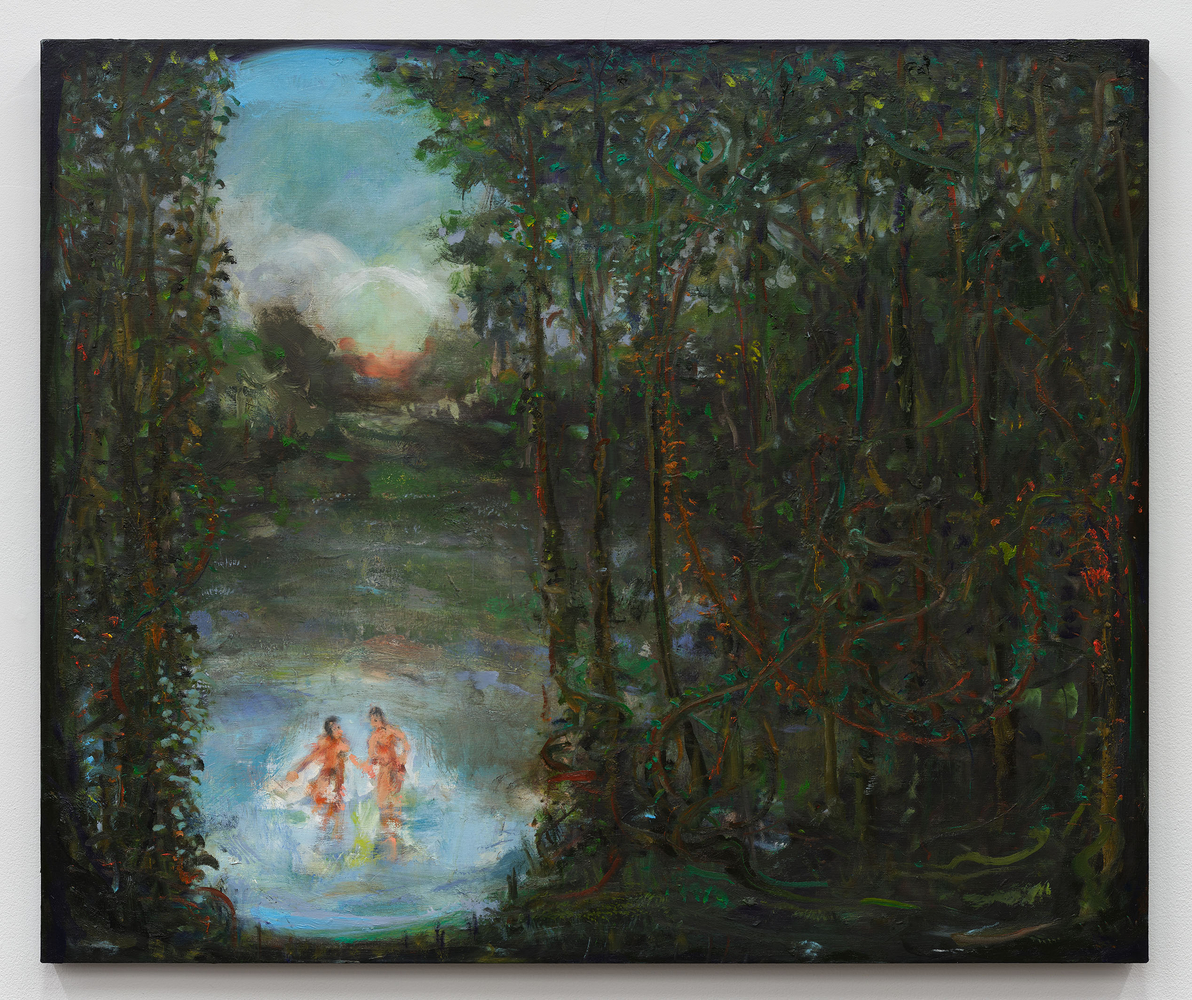
Pot Shoals, 2024
© Verne Dawson