Text by Francesca Gavin
CURA.45
The Blackout Issue
Special Venice Bieannale 2026
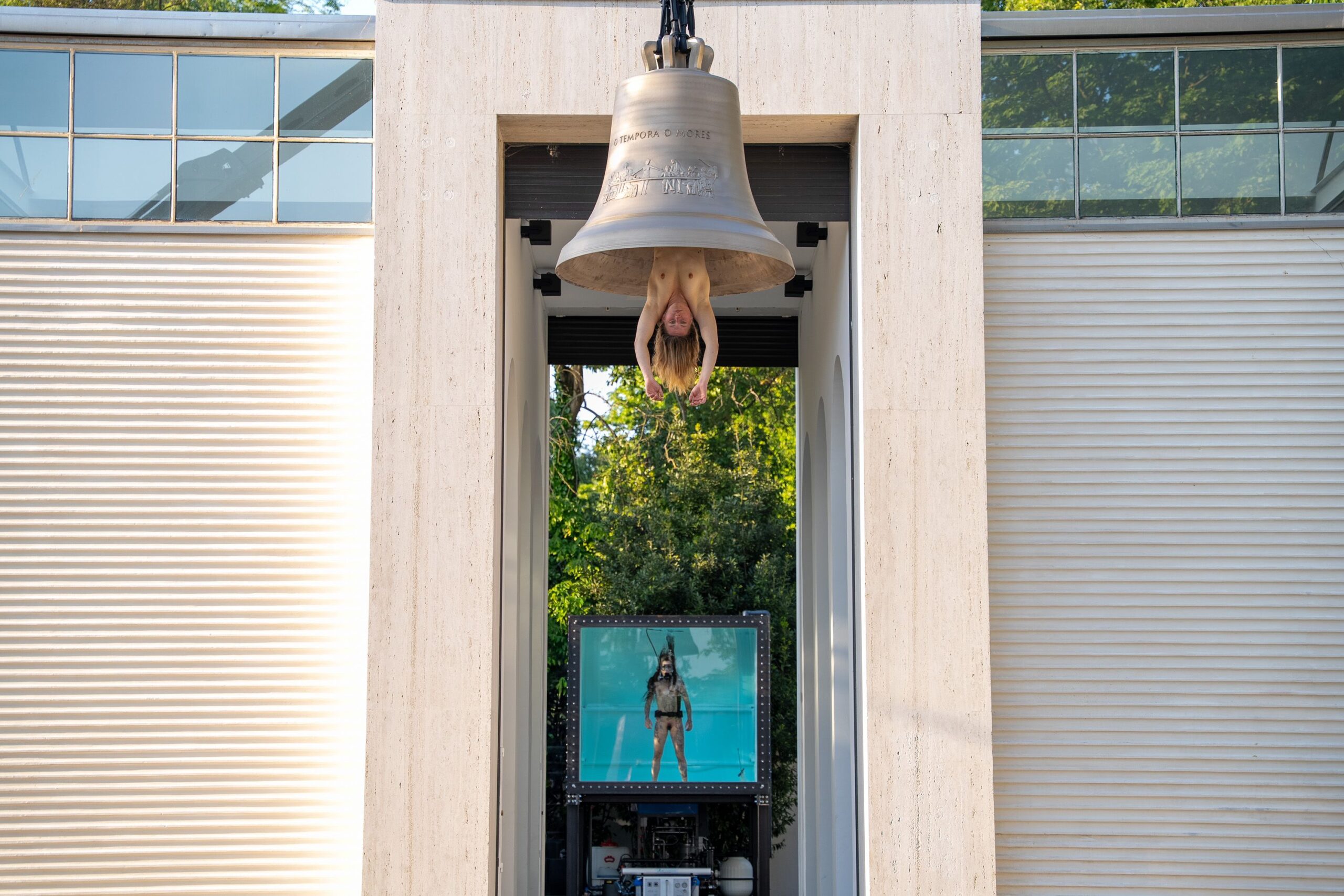
Austrian Pavilion – Biennale Arte 2026, 61st International Art Exhibition
SEAWORLD VENICE, 2026 © Nicole Marianna Wytyczak
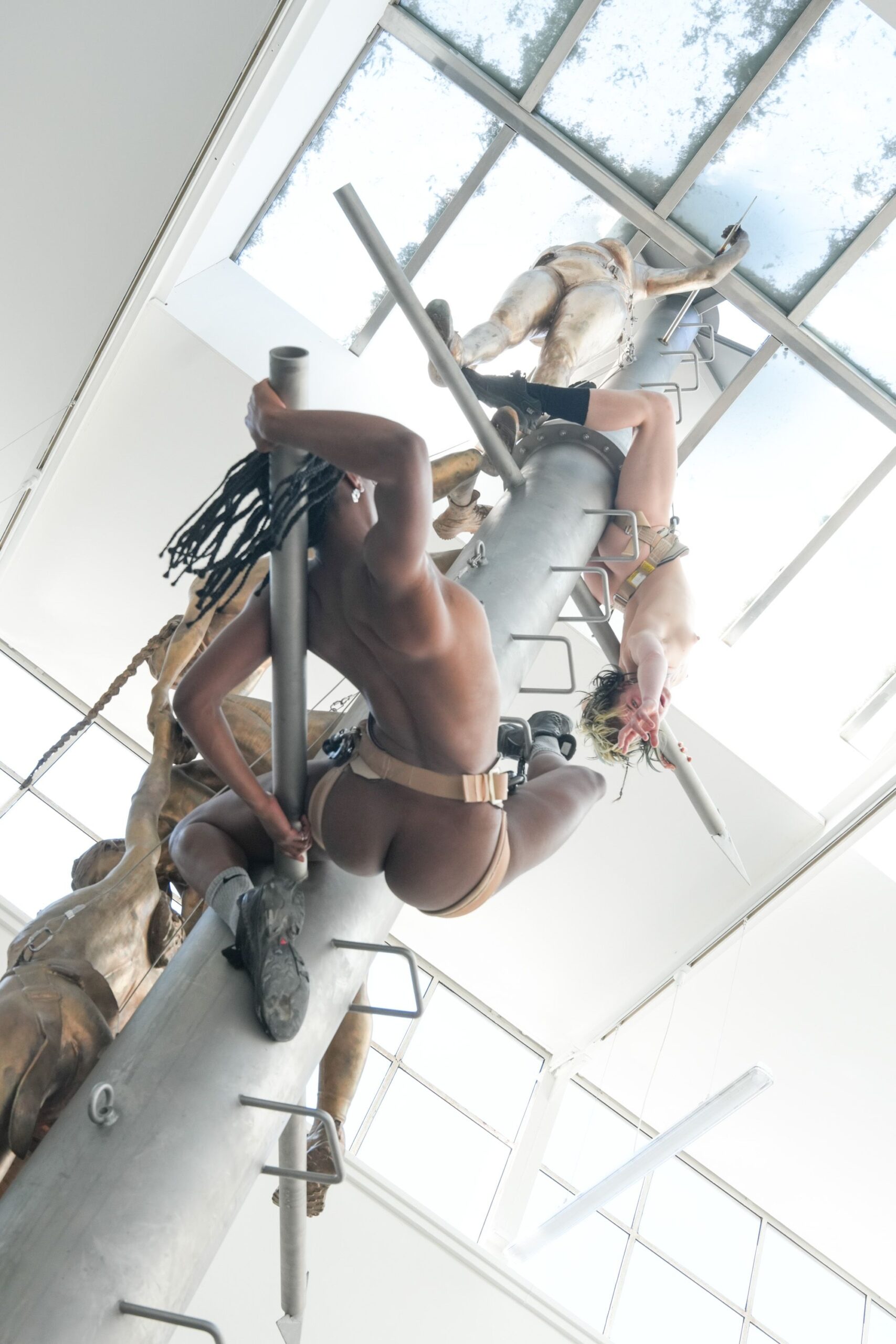
Austrian Pavilion – Biennale Arte 2026, 61st International Art Exhibition
SEAWORLD VENICE, 2026 © Nicole Marianna Wytyczak
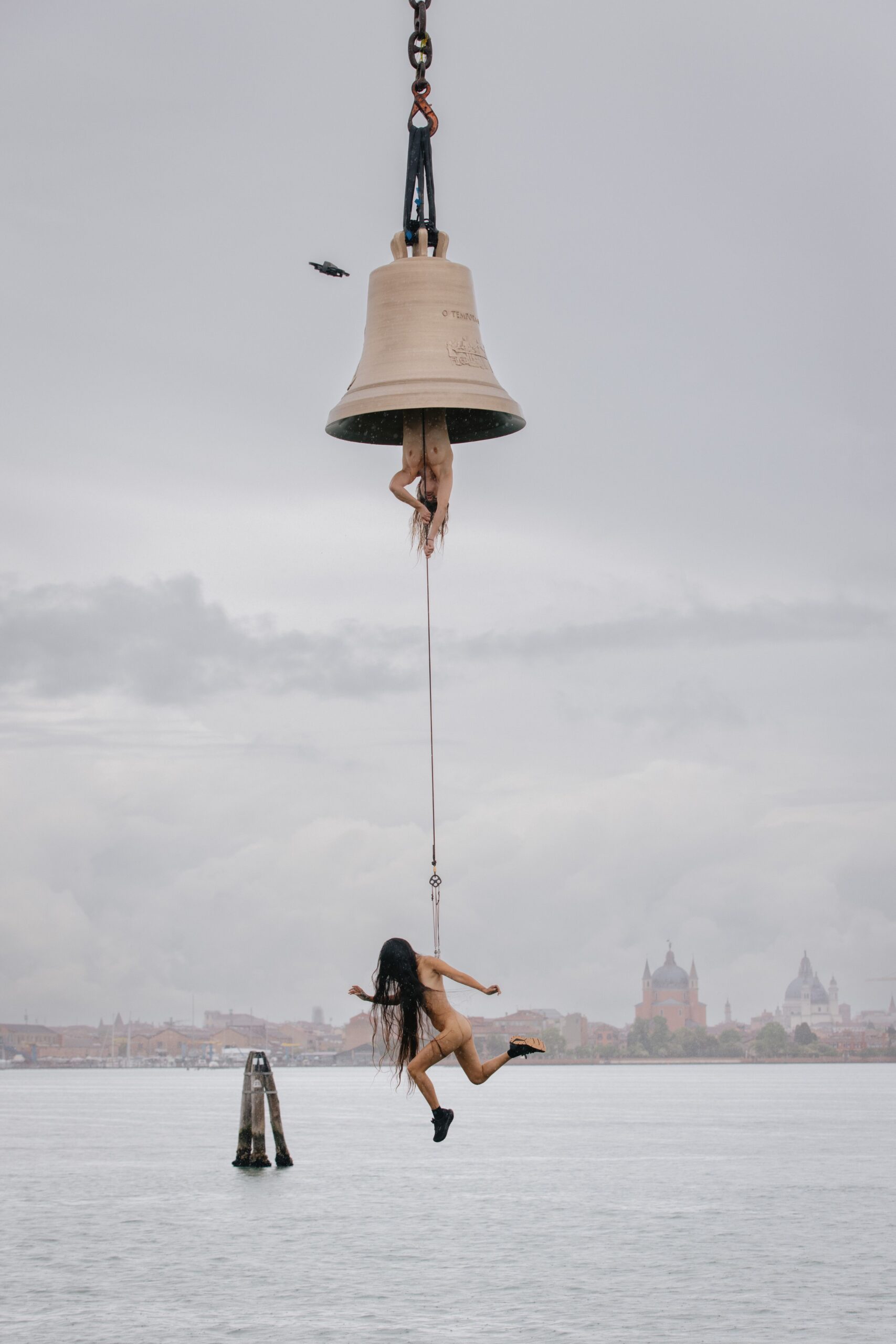
Austrian Pavilion – Biennale Arte 2026, 61st International Art Exhibition
SEAWORLD VENICE, 2026 © Nicole Marianna Wytyczak
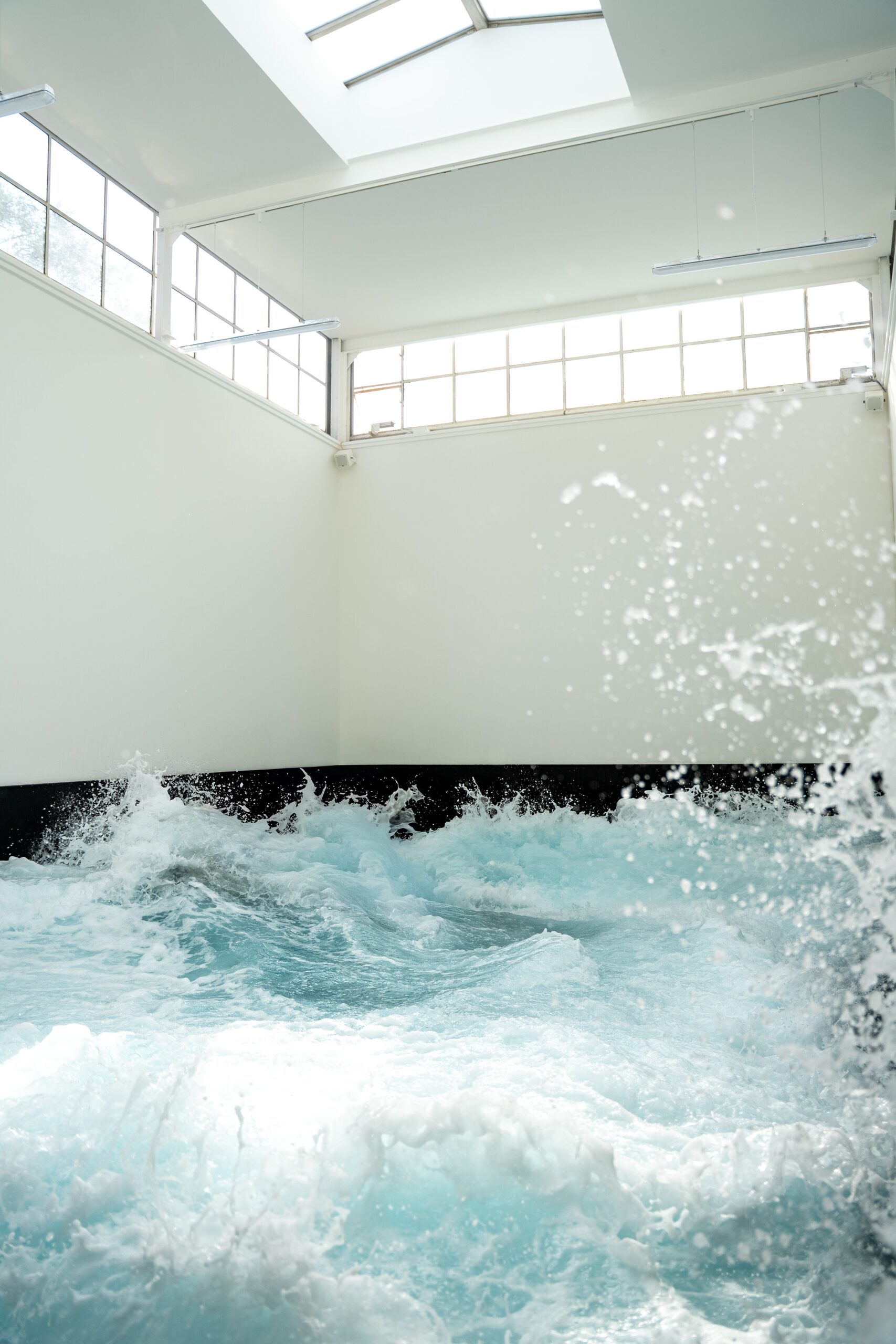
Austrian Pavilion – Biennale Arte 2026, 61st International Art Exhibition
SEAWORLD VENICE, 2026 © Nicole Marianna Wytyczak
Austrian Pavilion – Biennale Arte 2026, 61st International Art Exhibition
SEAWORLD VENICE, 2026 © Nicole Marianna Wytyczak
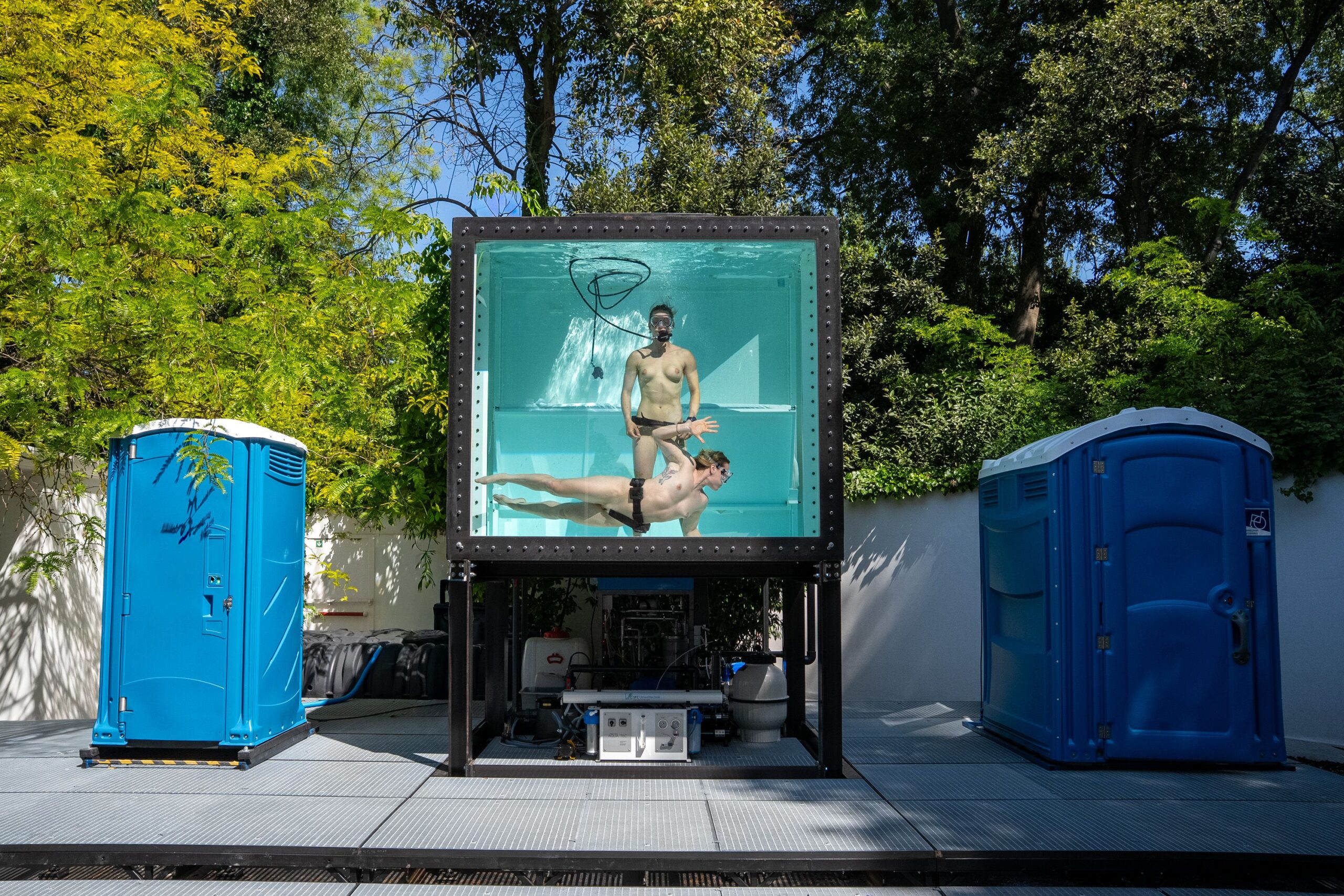
Austrian Pavilion – Biennale Arte 2026, 61st International Art Exhibition
SEAWORLD VENICE, 2026 © Nicole Marianna Wytyczak
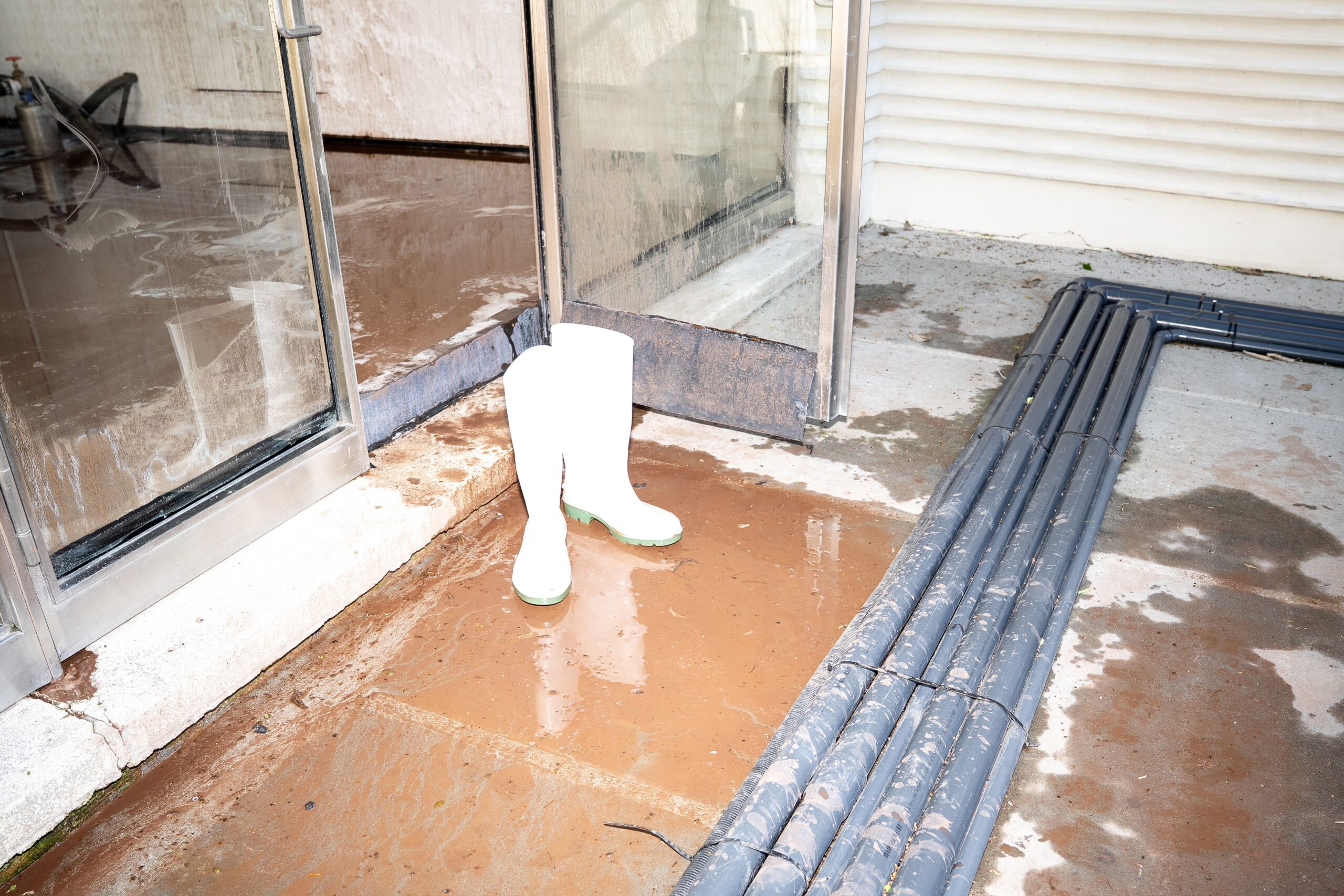
Austrian Pavilion – Biennale Arte 2026, 61st International Art Exhibition
SEAWORLD VENICE, 2026 © Nicole Marianna Wytyczak
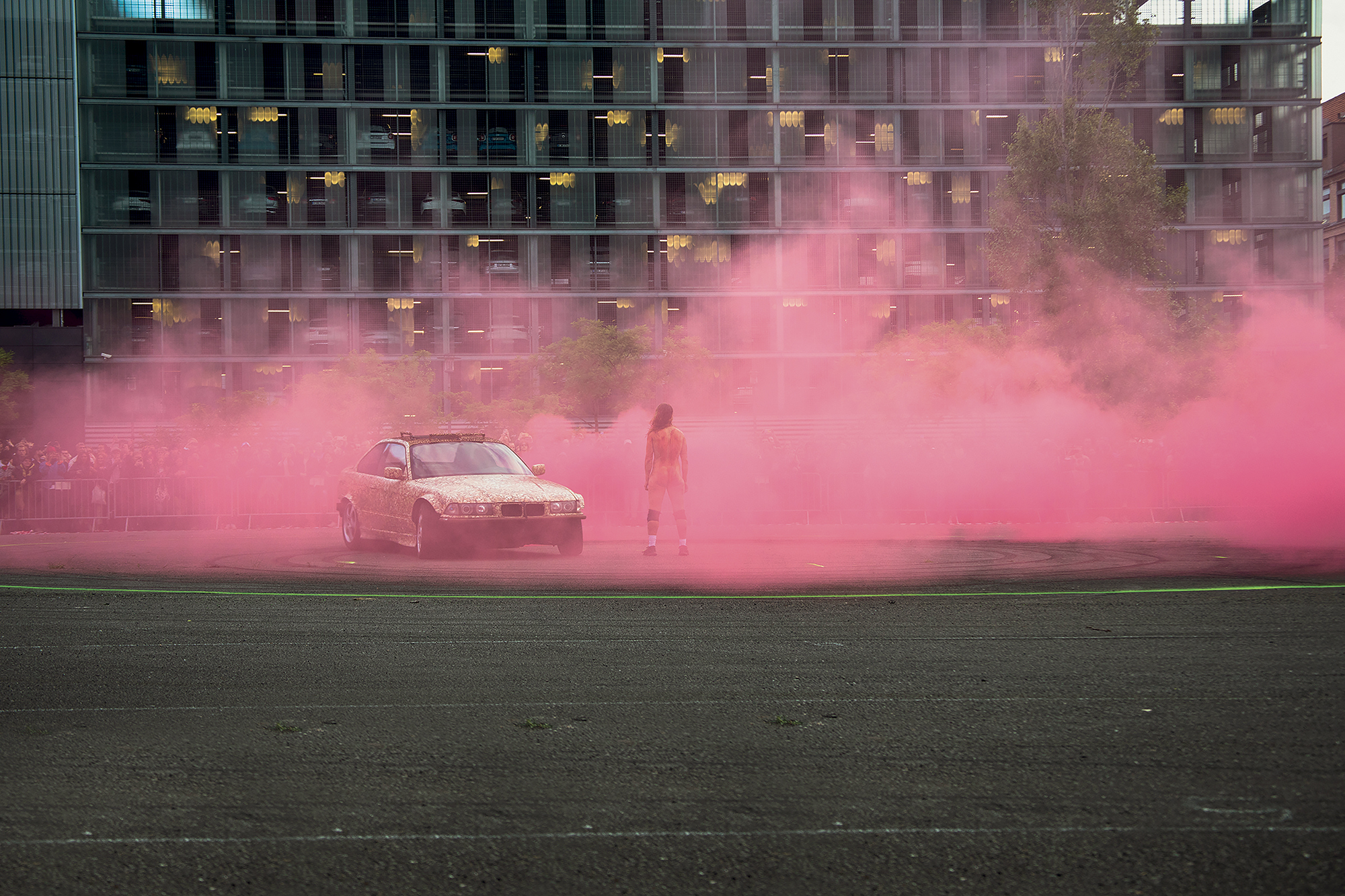
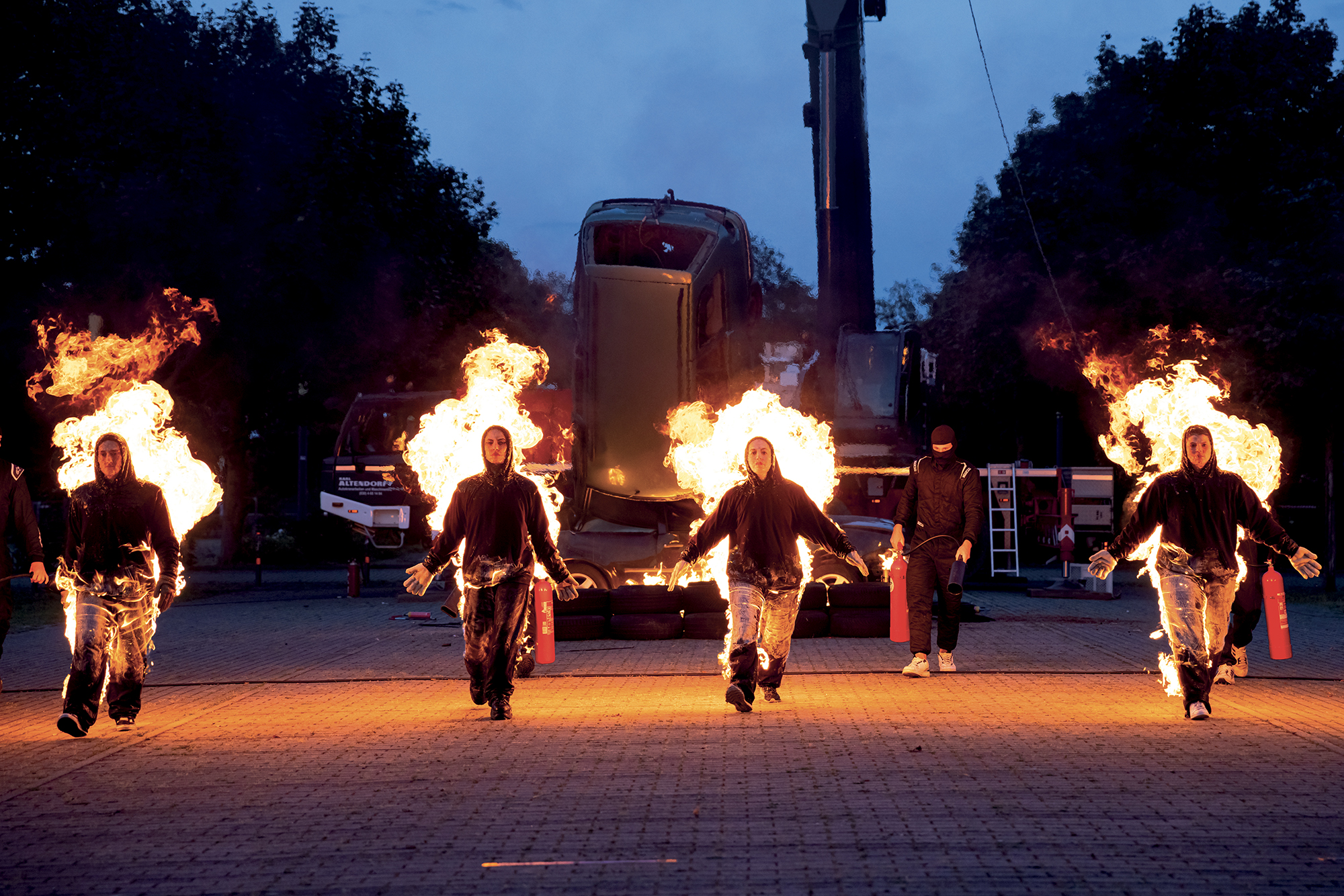
Étude for Disappearing. Composition for eight bodies, five harps and a car, Parking lot at Gallus Druckerei, Berlin
Photo: Silke Briel Courtesy: © Schinkel Pavillon, the artist, and neon lobster
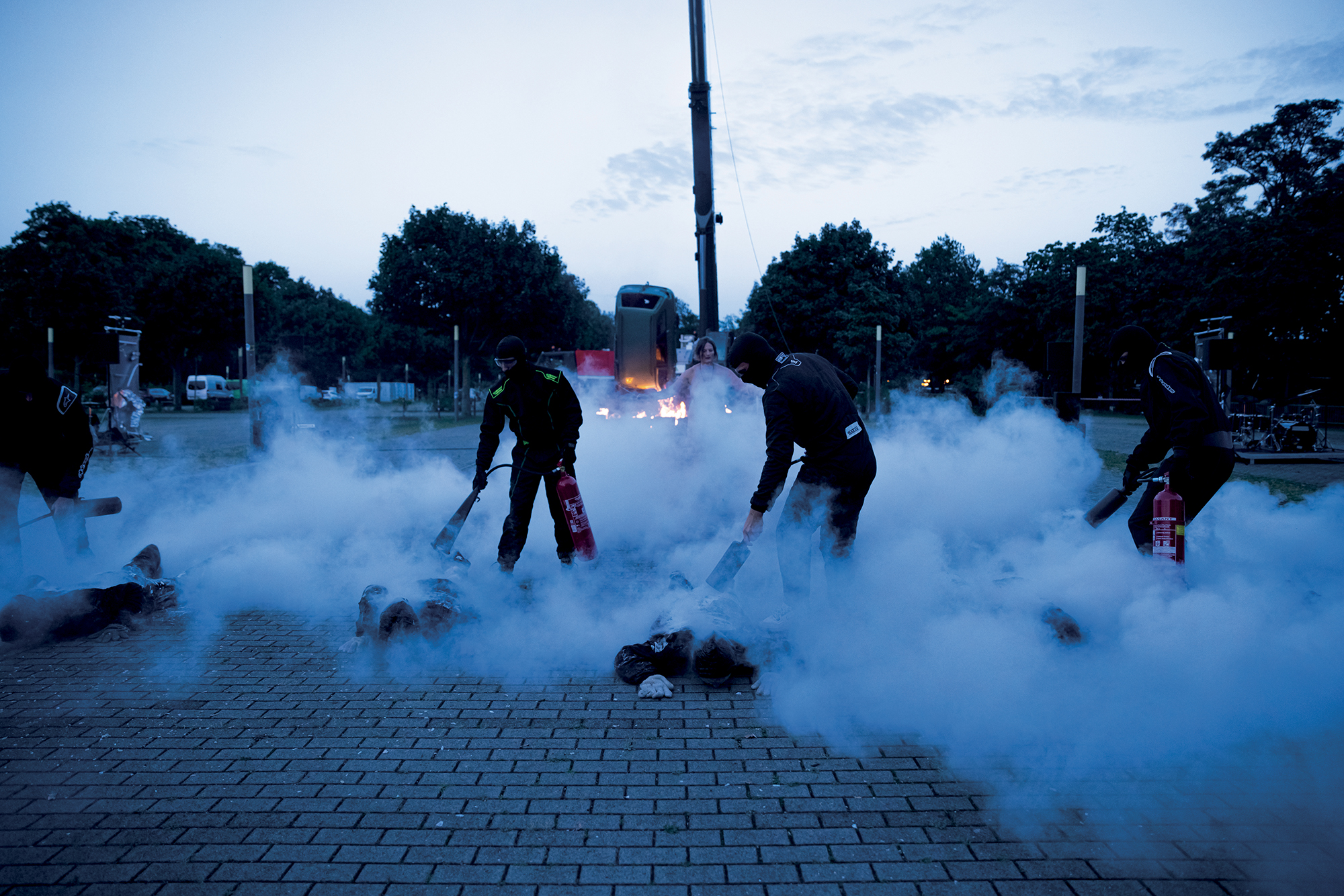
Étude for Disappearing. Composition for eight bodies, five harps and a car, Parking lot at Gallus Druckerei, Berlin
Photo: Silke Briel Courtesy: © Schinkel Pavillon, the artist, and neon lobster
On the occasion of Florentina Holzinger’s SEAWORLD VENICE, presented at the Austrian Pavilion of the 61st Venice Biennale, we publish Francesca Gavin’s essay on the artist from CURA. 45: Blackout (Fall–Winter 2025–2026).
The word disruption was originally used as a medical term in Medieval Latin in the 1640s to describe the laceration of tissue. A breaking asunder, a bursting apart. It is the ideal term to describe the work of Florentina Holzinger. An artist-director who has established herself as one of the most unusual, visceral names in theater and performance. Her productions such as Sancta, TANZ, and A Year Without Summer seen on stages ranging from Wiener Festwochen to WestK in Hong Kong sell out in minutes. Artist-in-residence at Berlin’s Volksbühne since 2024, Holzinger has created works for art contexts too, such as for Schinkel Pavillon in Berlin, and the Bergen Kunsthall. Speaking over Zoom from a site visit in Venice—where she is representing Austria at the Venice Biennale in 2026—Holzinger describes what she does as “very physical theater.”
Holzinger’s clear passion for the form and rigor of dance comes through in her works, but what makes her so unique and exciting is how she breaks out of the rigidity of genre. “What we like is to really experiment with the body. It always finds itself a new context to be relevant. Ultimately, the work tries to stir up certain things that everybody can relate to.” The body is undeniably here. The stage is filled with an all-nude cast who explore their own bodily limits.
It is impossible to think about Florentina Holzinger’s work without bringing up the extreme. Her nude cast on roller skates or mechanical bulls, playing with dildos, feces and chainsaws, is just the tip of the iceberg. She is not afraid to penetrate the body itself. Blood is a widely used material. Watching a slice of tiny flesh cut out of a dancer, cooked and eaten on stage. Perhaps, most memorably, people being dragged up into the air by hooks through their skin. These extreme moments—which are sometimes reused or rethought in different productions—have become a very unusual signature. It is notable that Holzinger tries out all the radical moments in her work herself in their creation. Members of the audience fainting has become the norm.
This deep viscerality is not just shock for the sake of shock. Instead, it somehow relates to ideas of transcendence, freedom, manipulation, or is deeply embedded as part of the narratives of each production. The suspensions, for example, where dancers were dragged into the air by meat hooks piercing their faces or other body parts, are a direct reference to romantic ballet. Holzinger brings up ballet’s pointe shoes as a comparison. “What is more painful? What needs a more rigorous mental training? Both are very bloody affairs,” she points out. “For me, as a dancer, this was always very relative—this notion of pain. Everybody goes to the dentist. I still think that to go for waxing is much more painful than body suspension.” These moments are not lightly used. They emerged from “purely physical research on taking the body off the floor and the creation of a weightless body. Or at least the illusion of the body in flight. This fantasy of the weightless body and anti-gravitational forces.”
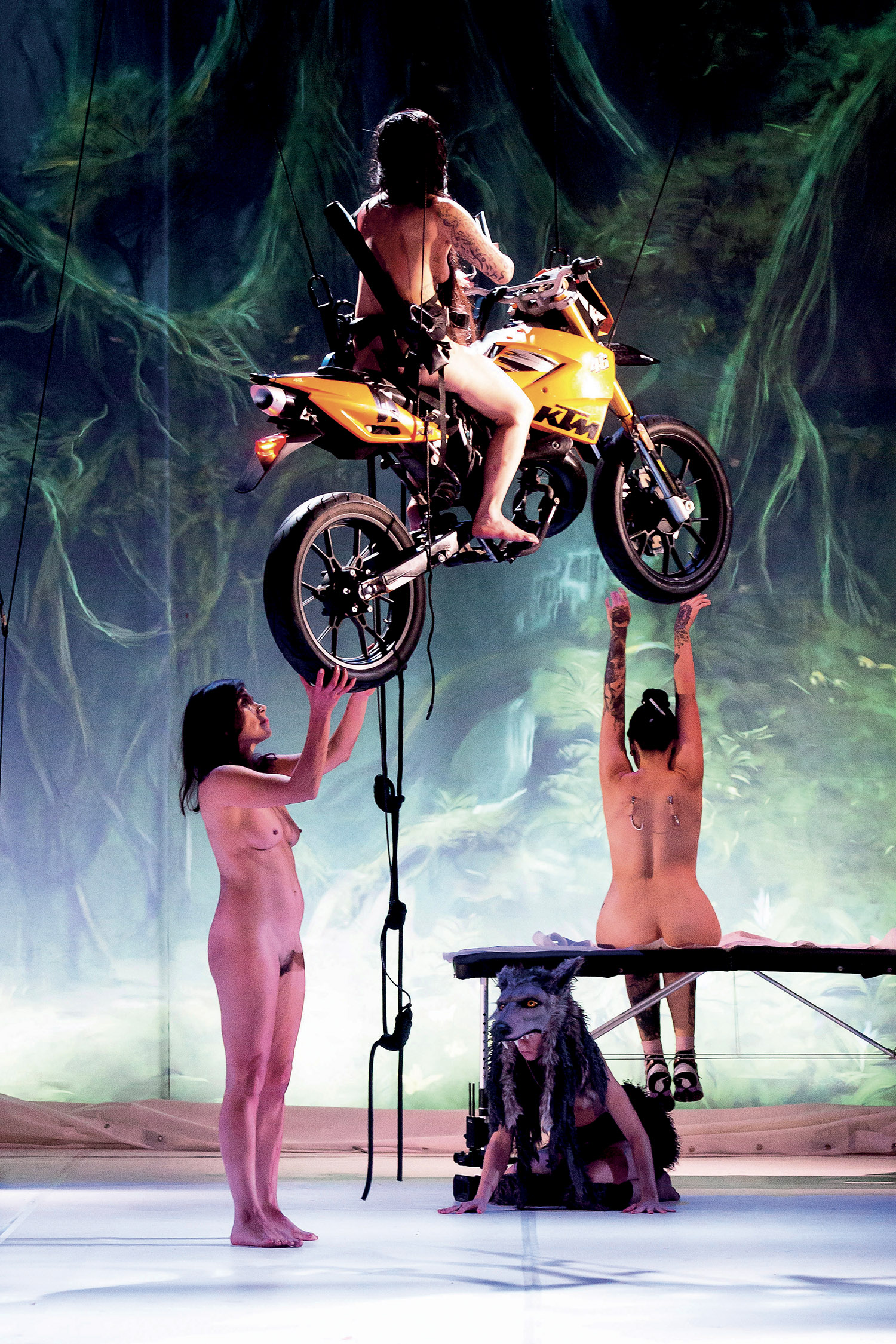
TANZ, 2019 Photo Nada Žgank Courtesy: the artist and neon lobster
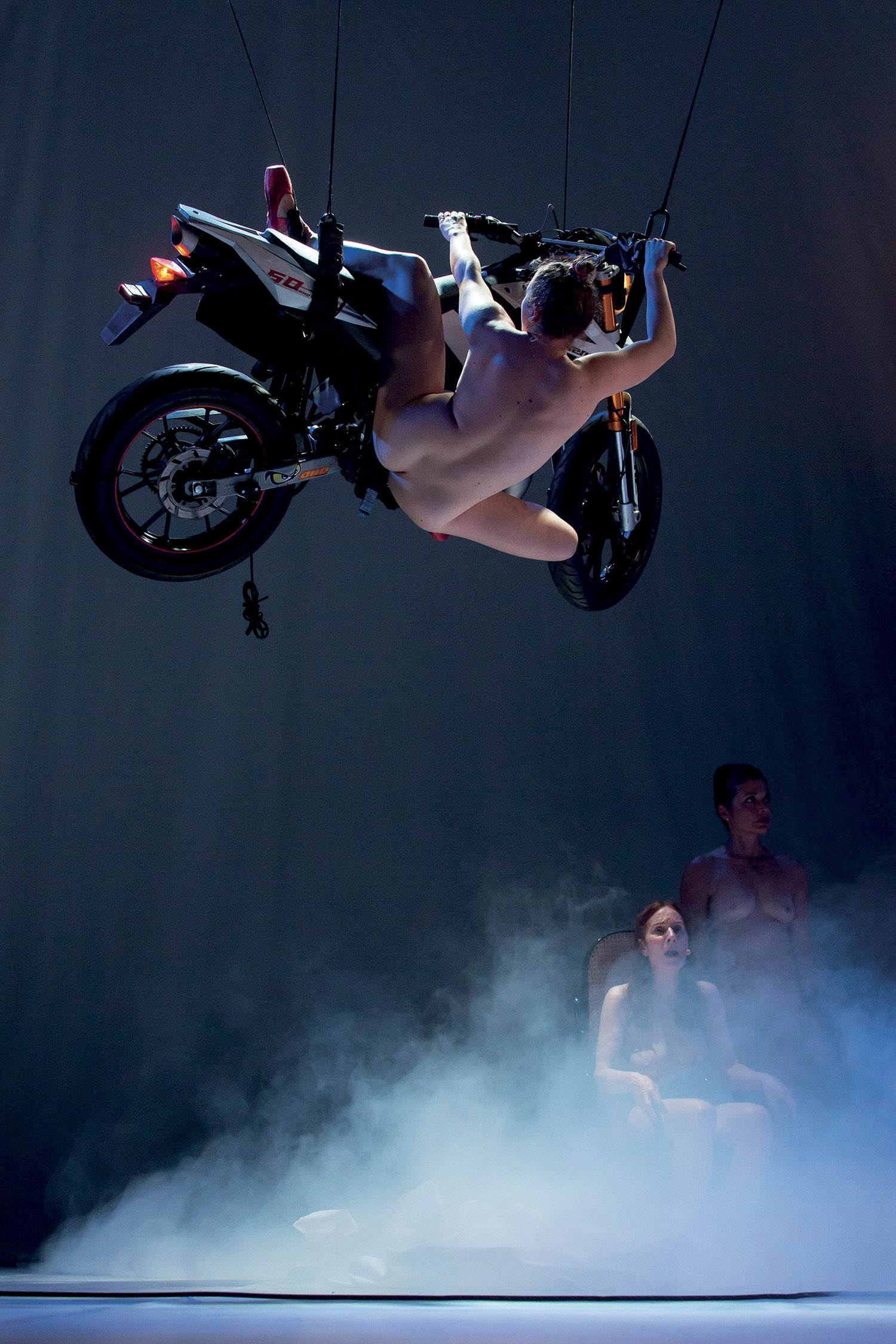
TANZ, 2019 Photo Nada Žgank Courtesy: the artist and neon lobster
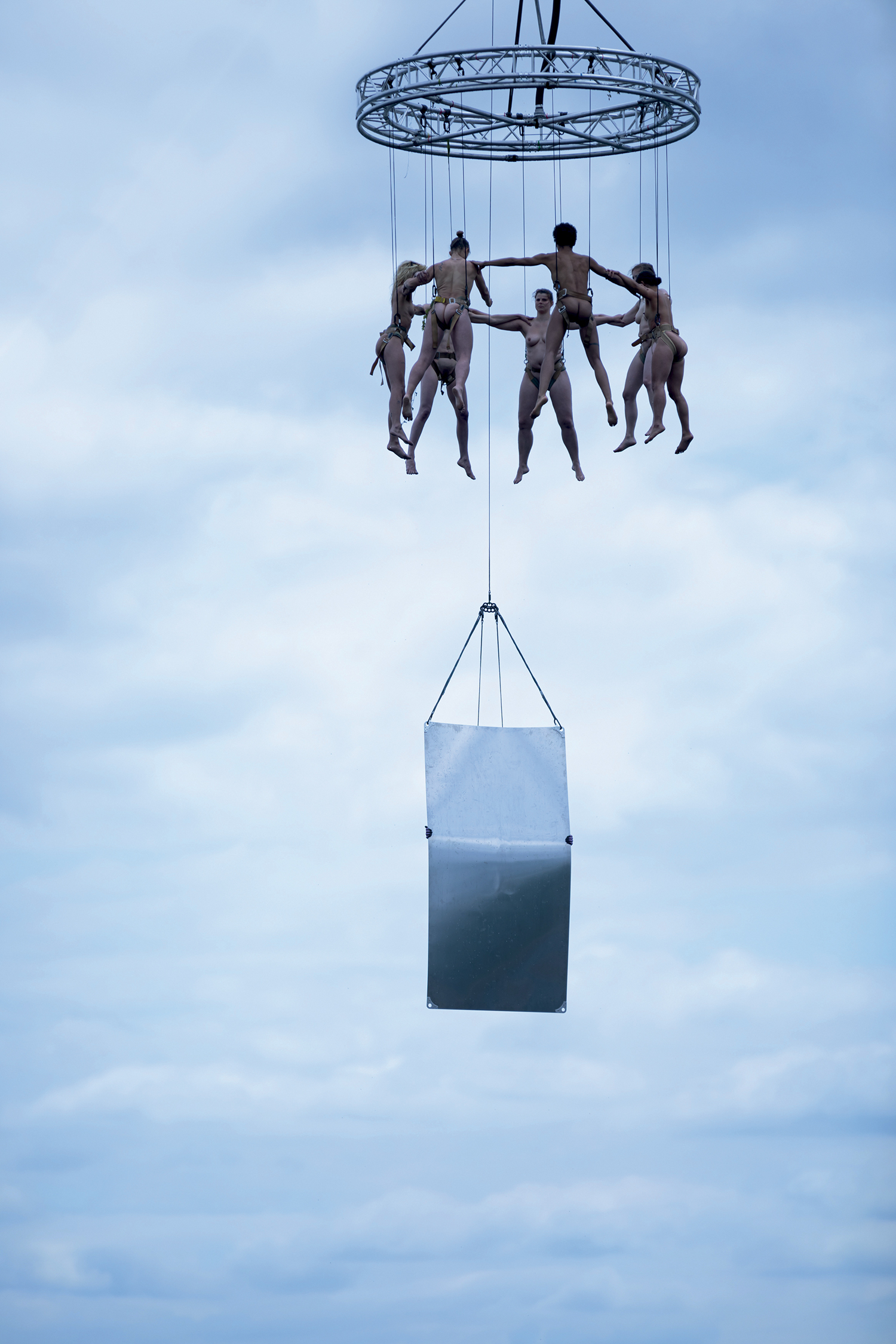
Kranetude (Étude for a Crane), 2023 Photo: Mayra Wallraff
Courtesy: the artist and neon lobster
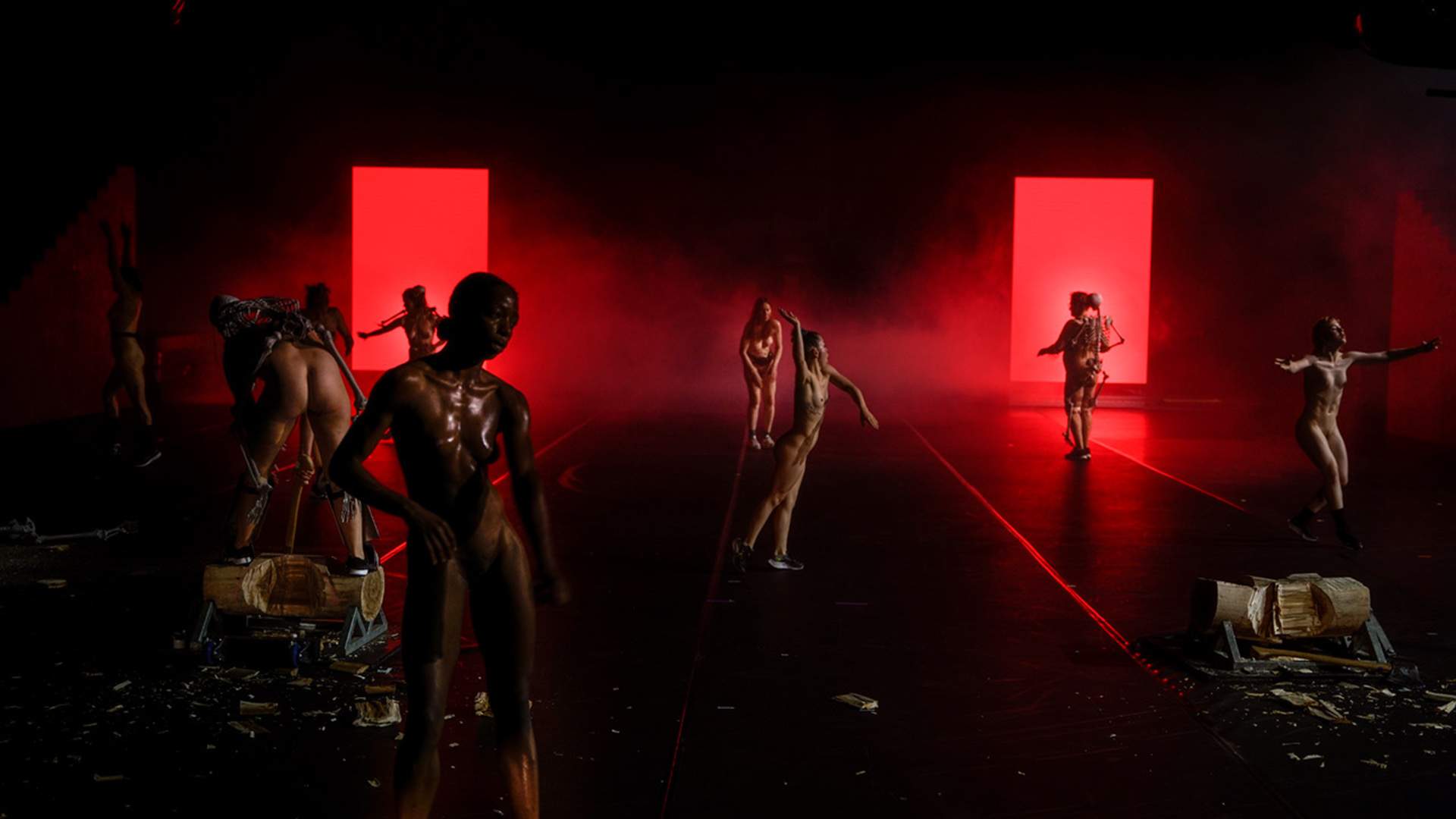
A Divine Comedy, 2021 Photo: Nicole Marianna Wytyczak
Courtesy: the artist and neon lobster
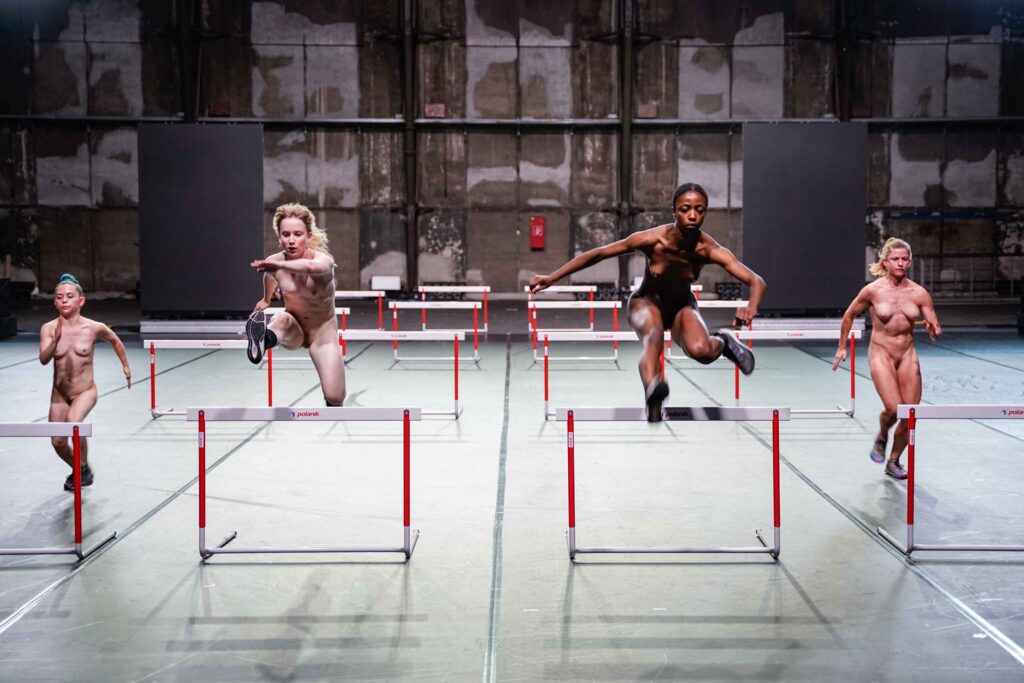
A Divine Comedy, 2021 Photo: Nicole Marianna Wytyczak
Courtesy: the artist and neon lobster
There is an interesting contrast in Holzinger’s work between illusion and reality. “I love theater but I also hate certain things about it. How boring is it for people to sit there in the dark for two hours and you subject them to this genius thing that you have created and manipulate them in a way. You make them a stupid, passive audience. So, for me, it was always important to show them something but also make them aware of this mechanism. They are also actors in this drama that unfolds there in this theater space, or define it. It’s also fun. It’s also entertaining. Somehow, you are in limbo and cannot really place things so clearly. It’s very much similar to how life is—or how I experience reality. I am really interested in how morality forms itself, or certain values that a society is based on, and to question this. You will never solve it, but it’s nice to poke.”
The radicality and aesthetics of Holzinger’s work also make sense, emerging as they do from an Austrian context. The country of the Salzburg festival—arguably the home of international opera. The location of the post-war rebellion of the actionists and Hermann Nitsch, renowned for his group art rituals with a ton of blood and shock. The country that spawned Franz West’s papier mâché turds and the humor, nudity and provocative freedom of Gelatin. Although, as Holzinger points out, the actionists—a group who were later tainted by scandals of animal or child abuse—were not the pinnacle of cool when she was emerging. Holzinger is nonetheless conscious of the context and the legacy, echoing their resistance of the accepted.
Matthew Barney is another interesting artist to compare Holzinger to. Someone who has also made the limits and possibilities of the human body fundamental to their work. While Barney’s films and performances draw more on Beuys, materiality, and metaphors for masculinity and the American psyche, Holzinger’s work seems instead to prod or disrupt the concepts of Western ethics and morality. “The form is also everything that is inside of the body. It’s everything that nobody wants to see or be aware of. The stickiness of the body and the out-of-control-ness of the body. Everything that people don’t really like to look at in theater,” Holzinger notes.
Holzinger talks about the creation of the work in the plural and has a strong core team made up of people working with technical direction, scenography, a cluster of dramaturges who help conceptualize each work, a vast team of multi-generational performers coming from completely different ways of life, ranging from side shows, magic, and sex work as much as dance and performance. “People who share certain passions, like experimenting with the body and aesthetics. A certain shared sense of humor. Everybody’s a professional as soon as they have done a show once,” Holzinger observes.
The structure of Holzinger’s works, such as Ophelia’s Got Talent, often plays with a variety of show formats, almost like vaudeville. Rethinking and addressing the form of theater is fundamental. “There is a quite extensive conceptual process, because we need to keep to a certain production timeline. What we do is very process-oriented. I’m not a person who writes a script. I do like to work a lot with text. The works have strong references to art history or dance history or the history of theater.” Layers of theory, art history, dance history, film history and references are all present, as she explains. “You can just go there for the spectacle, for the entertainment, for the shock if you want, or even for sexual satisfaction. I don’t care, but there is also a lot there for the literature nerd or the movie nerd. It took me quite some self-confidence to allow myself as an artist to have this very broad field of inspiration. I want to make pieces about everything. Why would I limit myself?”
It is surprising that Holzinger was only recently censored—in France earlier this year. Her nude performers were made to wear costumes at the last minute, as the performance got dragged into culture wars and late wake of the #metoo movement in France. “When the shutter comes down on production like ours, it is very counterproductive. Let’s just not talk about it and put a big blanket over sexuality and nudity and gender. We want to talk about normalizing sexuality. That was really the first time we got censored. At the same time, we are performing in Asia; we are performing in Poland. People risk something by inviting you. But the responses we get then from audiences there are so strong, that it’s worth taking risks.”
Holzinger is not afraid of scale and asking big questions. This is work that chases monumentality. Set staged pieces in her work almost echo monumental sculpture. Bernini made flesh. These moments of beauty are made even more effective by their narrative contrasts. “You can choreograph all kinds of bodily functions in the same way you can choreograph six people. It’s about keeping people on their feet somehow and confused about what they witness—because they are then confused about all kinds of binaries. Is it painful or not? Is it beautiful or ugly? Am I having a good experience or a bad experience right now?” Here, expect to see, feel, and question everything, all at once.
Florentina Holzinger
Text by Francesca Gavin
CURA. 45
The Blackuout Issue
FLORENTINA HOLZINGER (b. 1986, Vienna, Austria) works across artistic disciplines and has produced extensive, widely discussed and awarded theatre productions. Her most recent stage productions include: A Year Without Summer (2025), her first opera project SANCTA (2024), Ophelia’s Got Talent (2022), A Divine Comedy (2021), Etude for an Emergency (2020), and her most toured work TANZ (2019). She has been an associate artist with Volksbühne since 2020. With the Etude formats, one-off performances in public spaces, Holzinger has gradually opened her practice to the visual arts context, having presented Etudes at Schinkel Pavillon Berlin and Bergen Kunsthall, amongst others, since 2020.
FRANCESCA GAVIN is the editor-in-chief of EPOCH and has written 11 books on art and visual culture. She has curated exhibitions including Mushrooms at Somerset House and The Art of Mushrooms at Fundação de Serralves, The Dark Cube at Palais de Tokyo, and co-curated
Manifesta11. Gavin is Art editor at Twin and regularly writes for publications including the Financial Times HTSI, CURA., Hero, Port, Konfekt and frieze. She has a monthly radio show Rough Version on NTS Radio on art and music which has been running for over nine years.