TIME:LINE
Museion, Bolzano
Review by Nicolas Vamvouklis
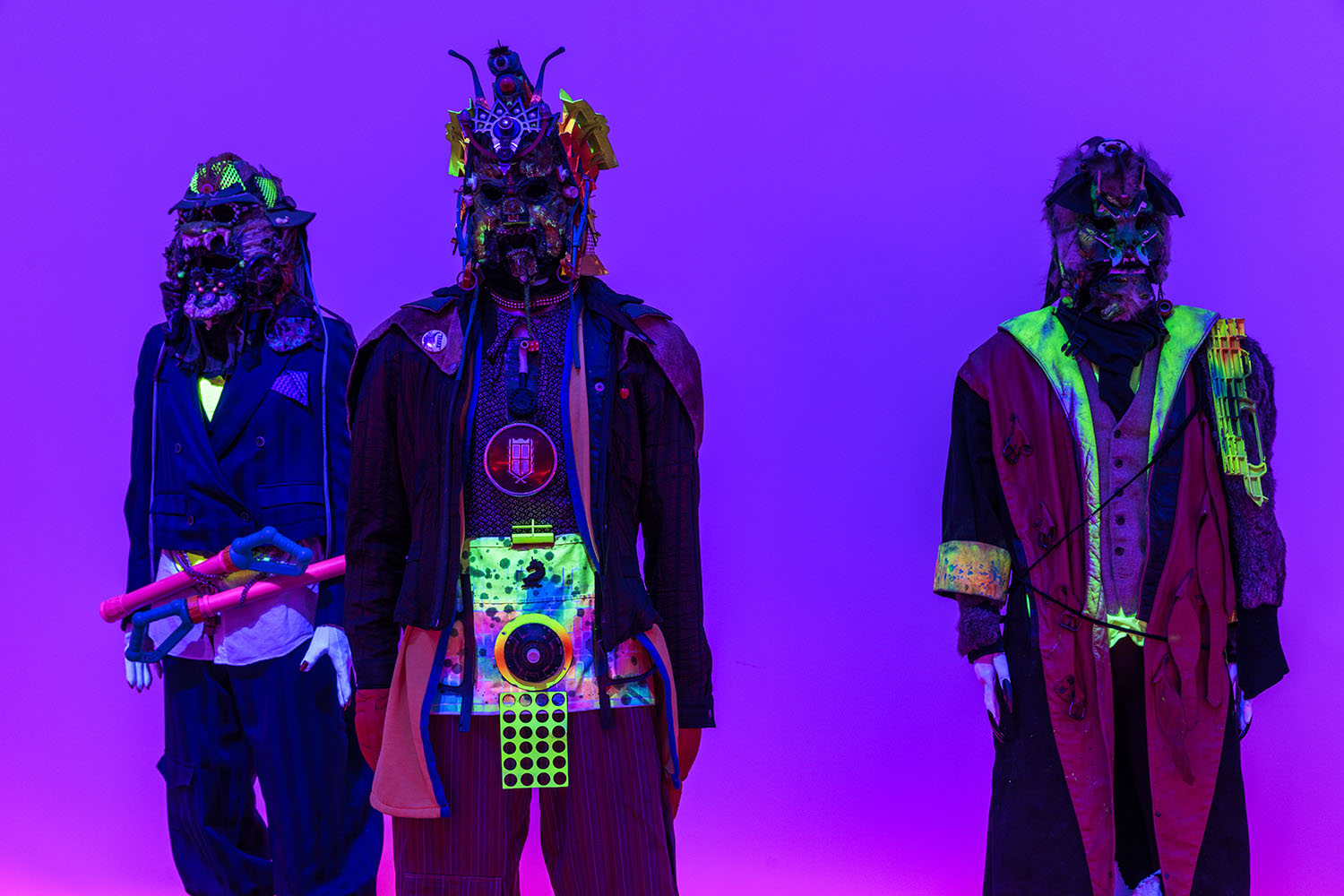
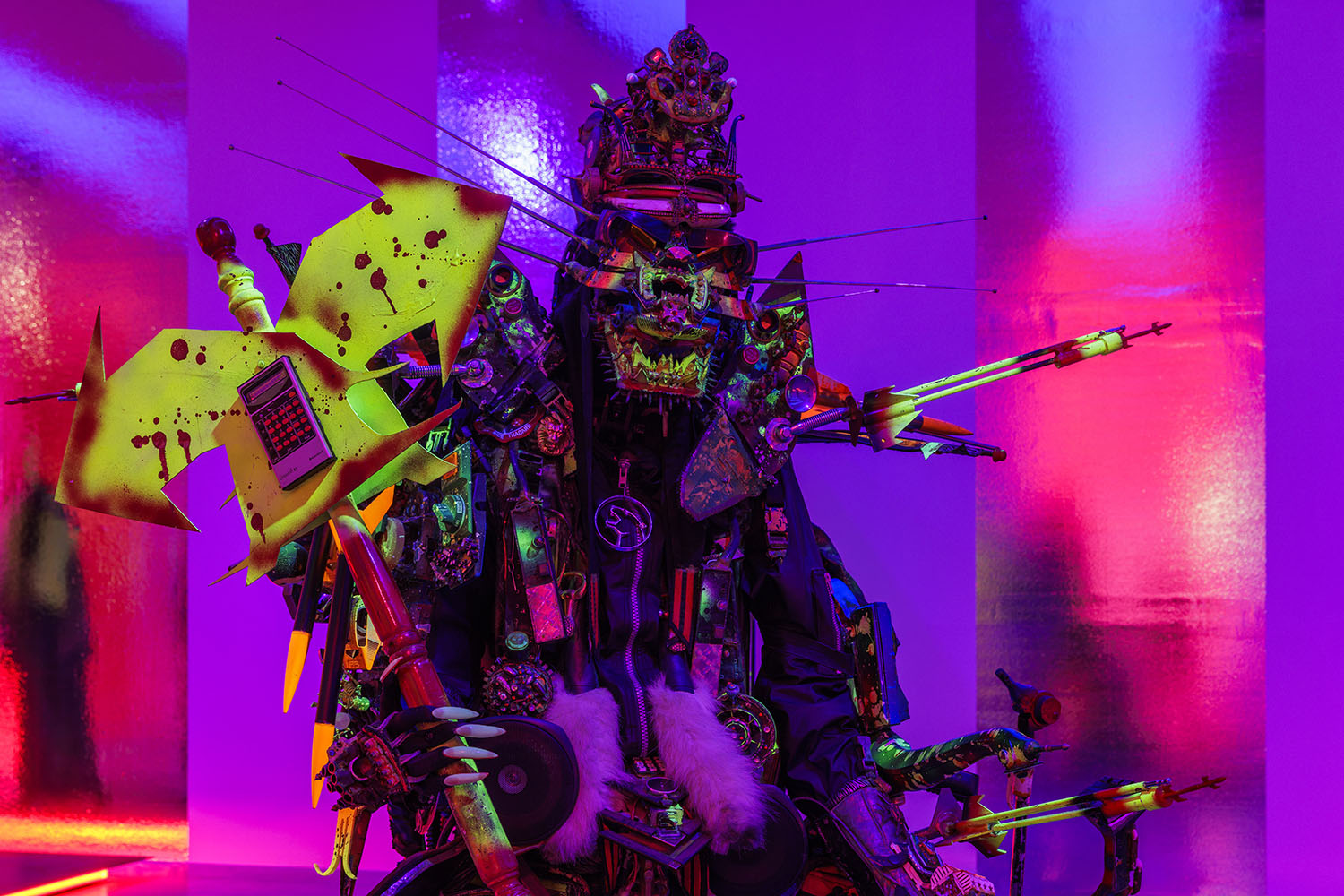
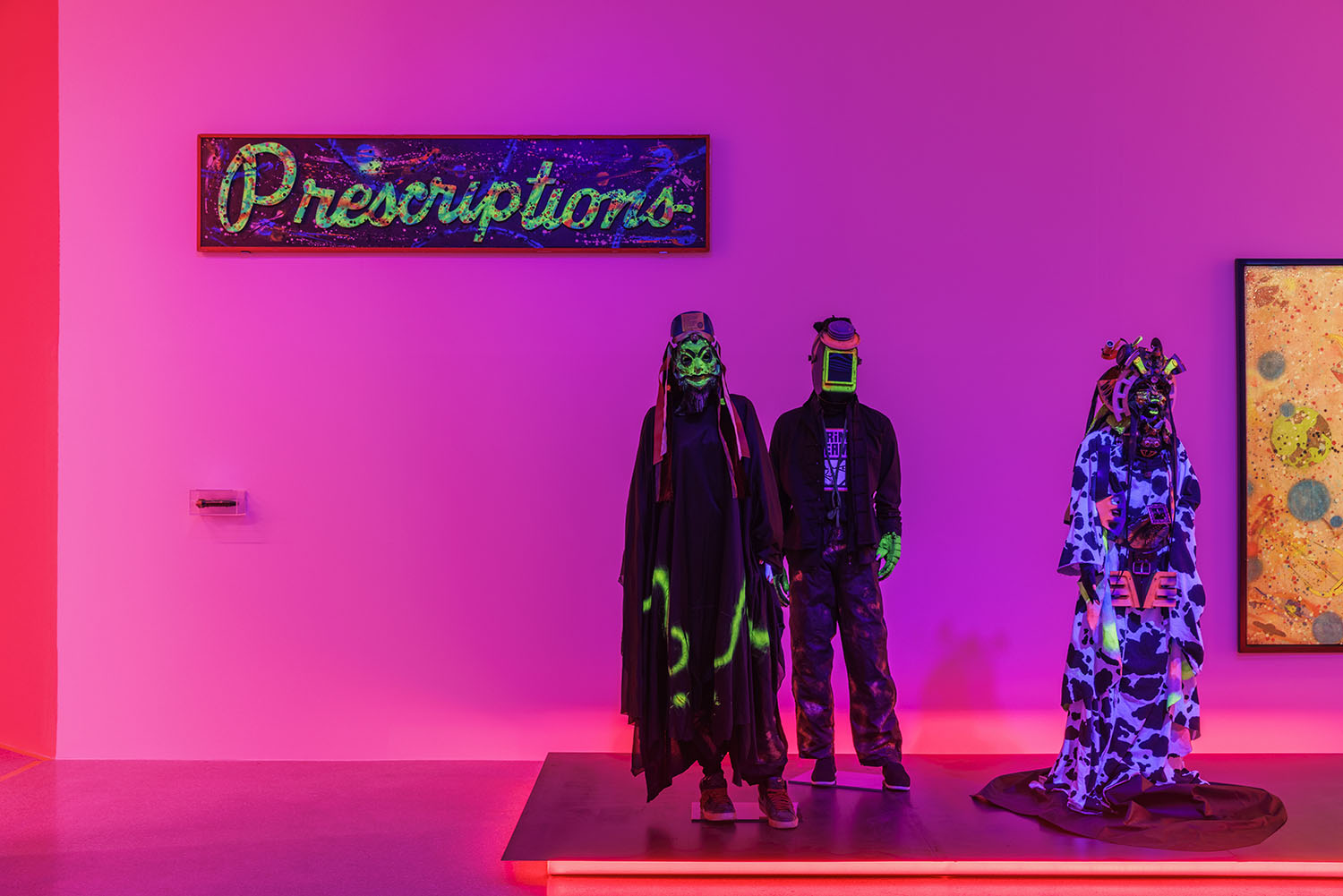
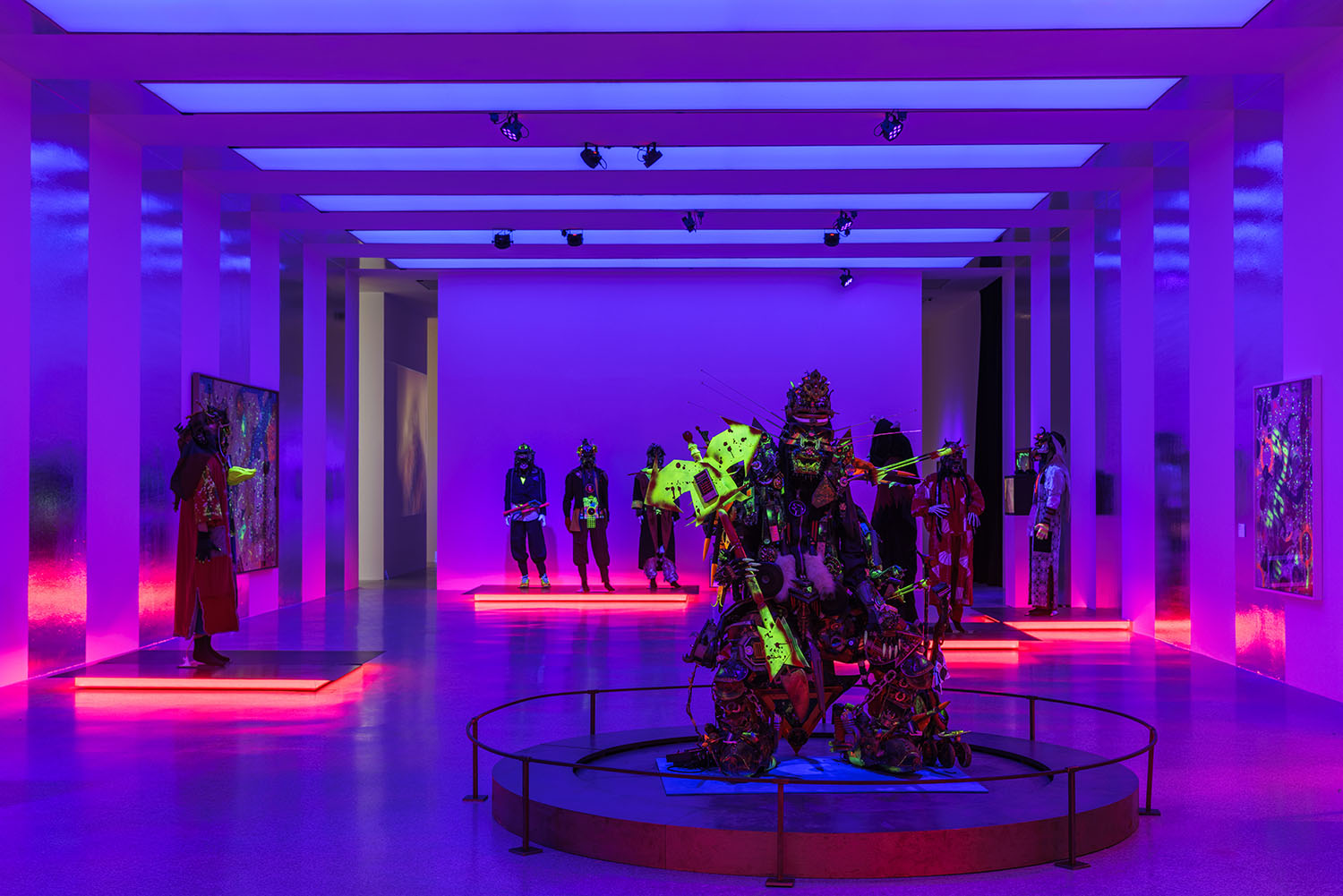
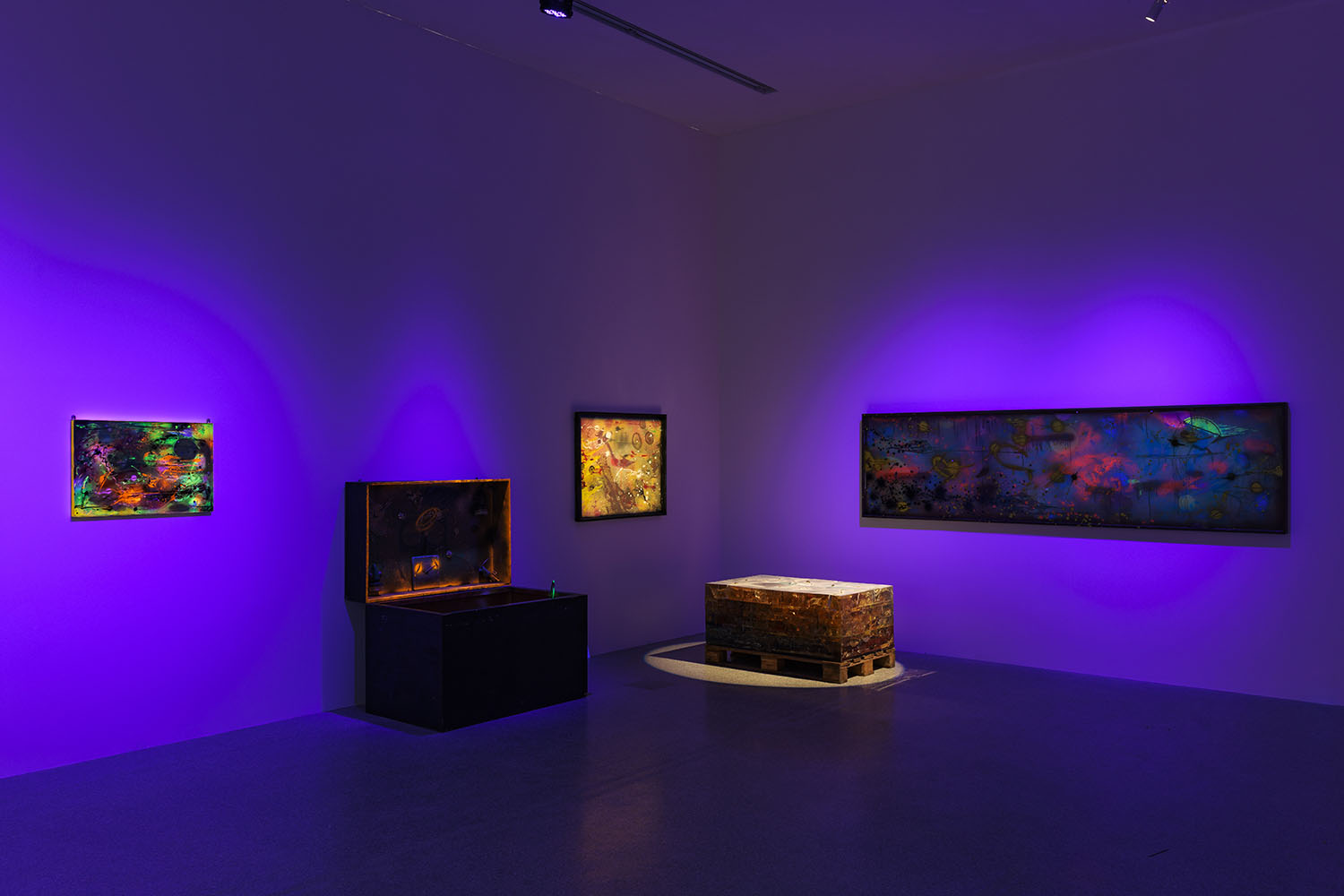
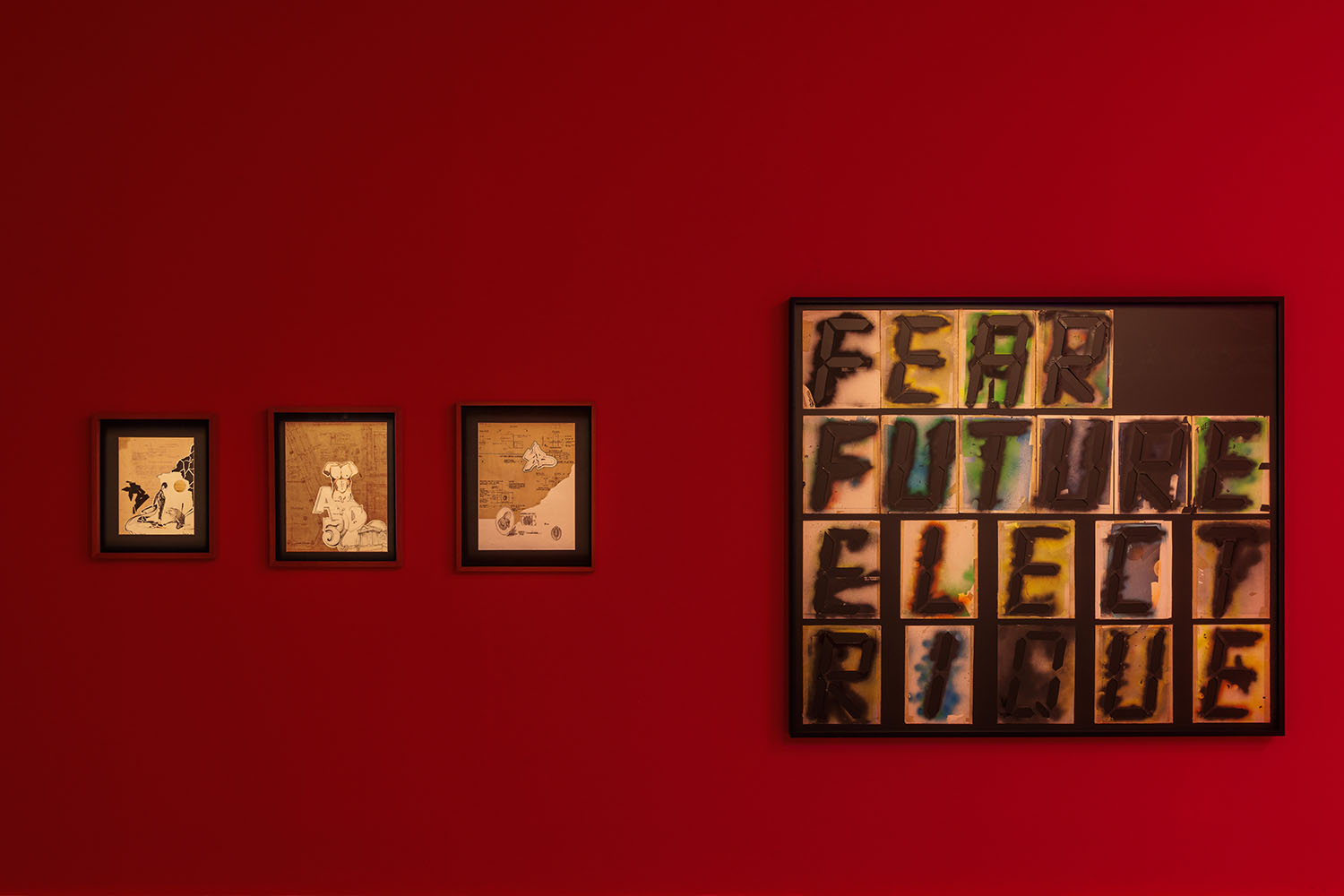
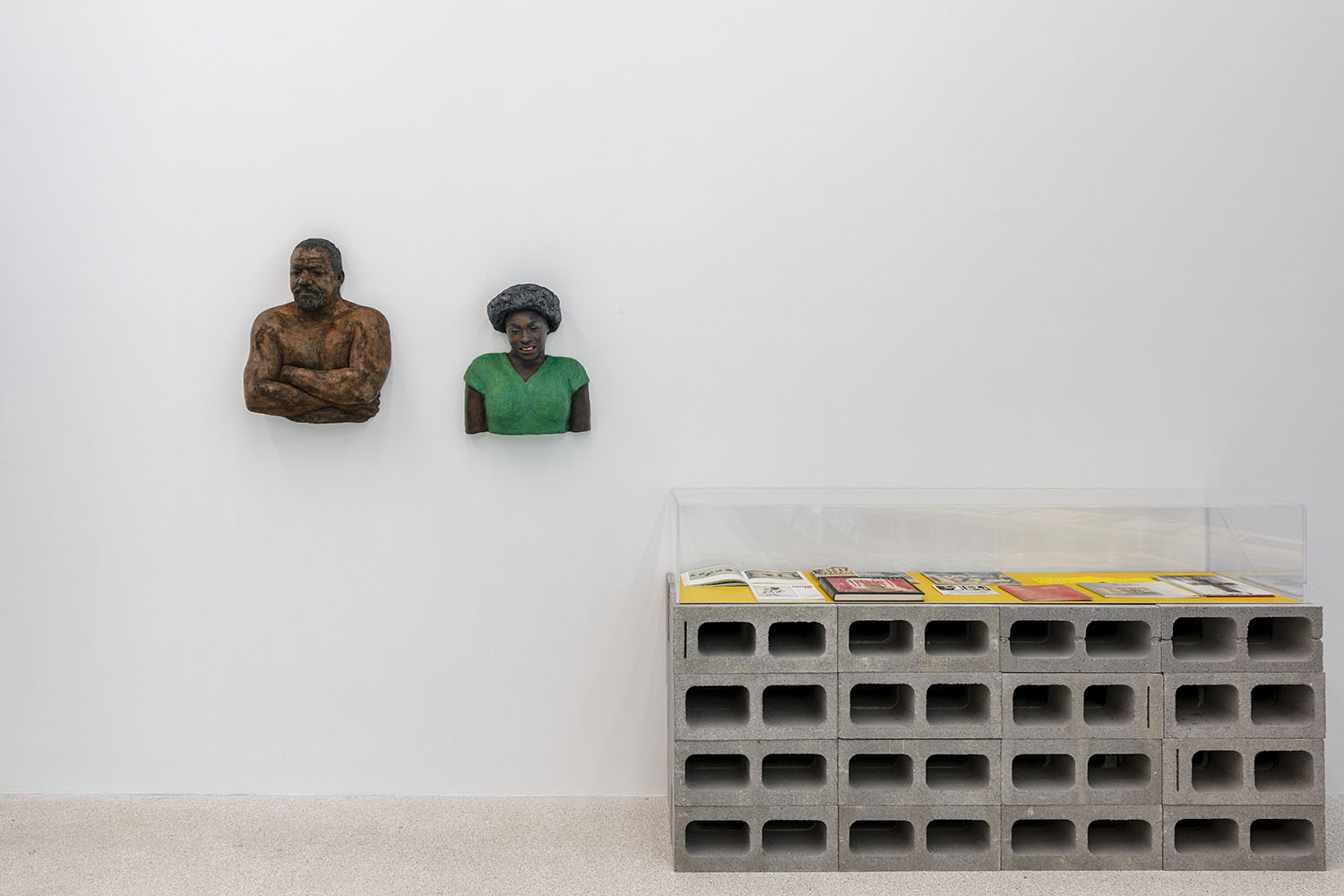
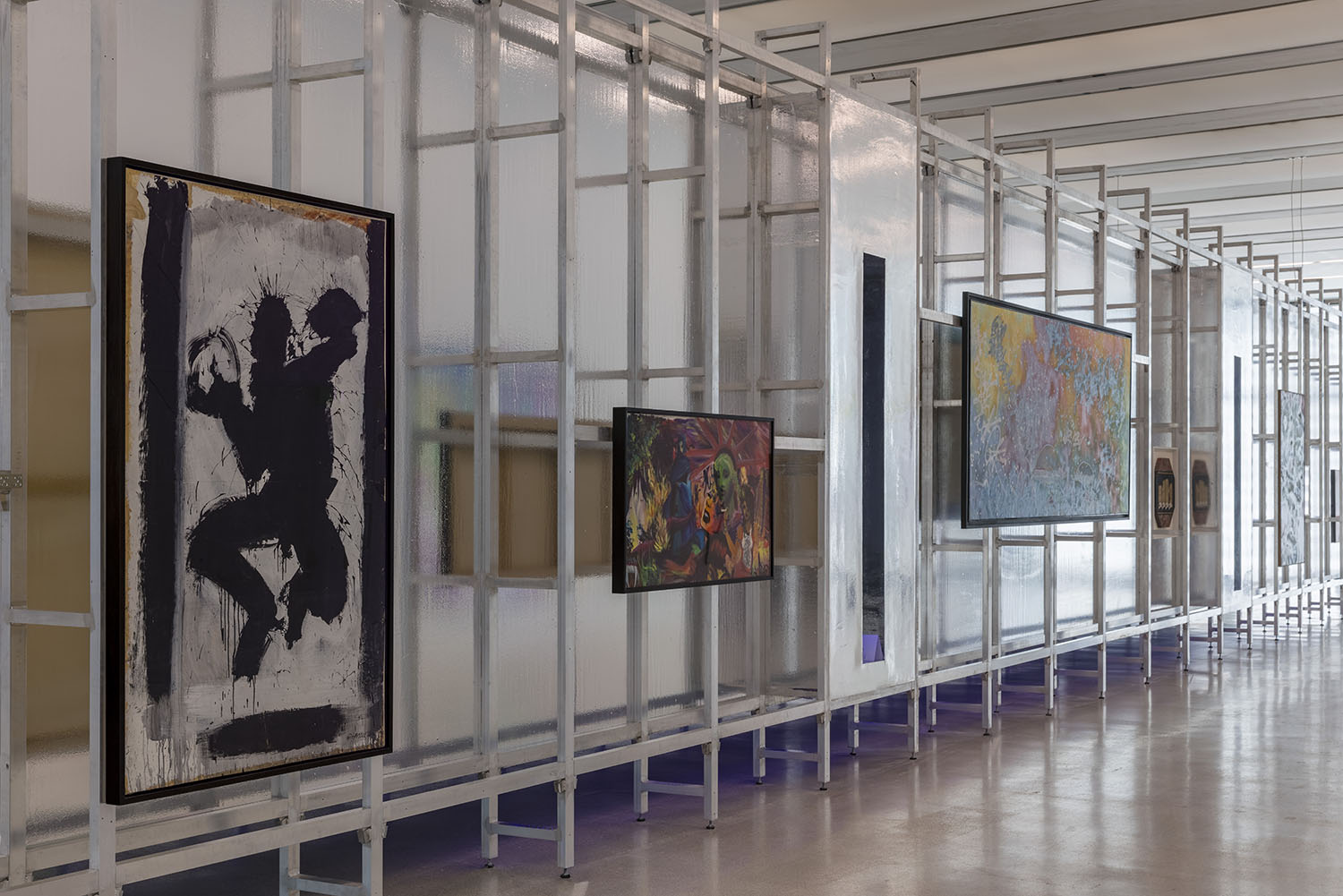
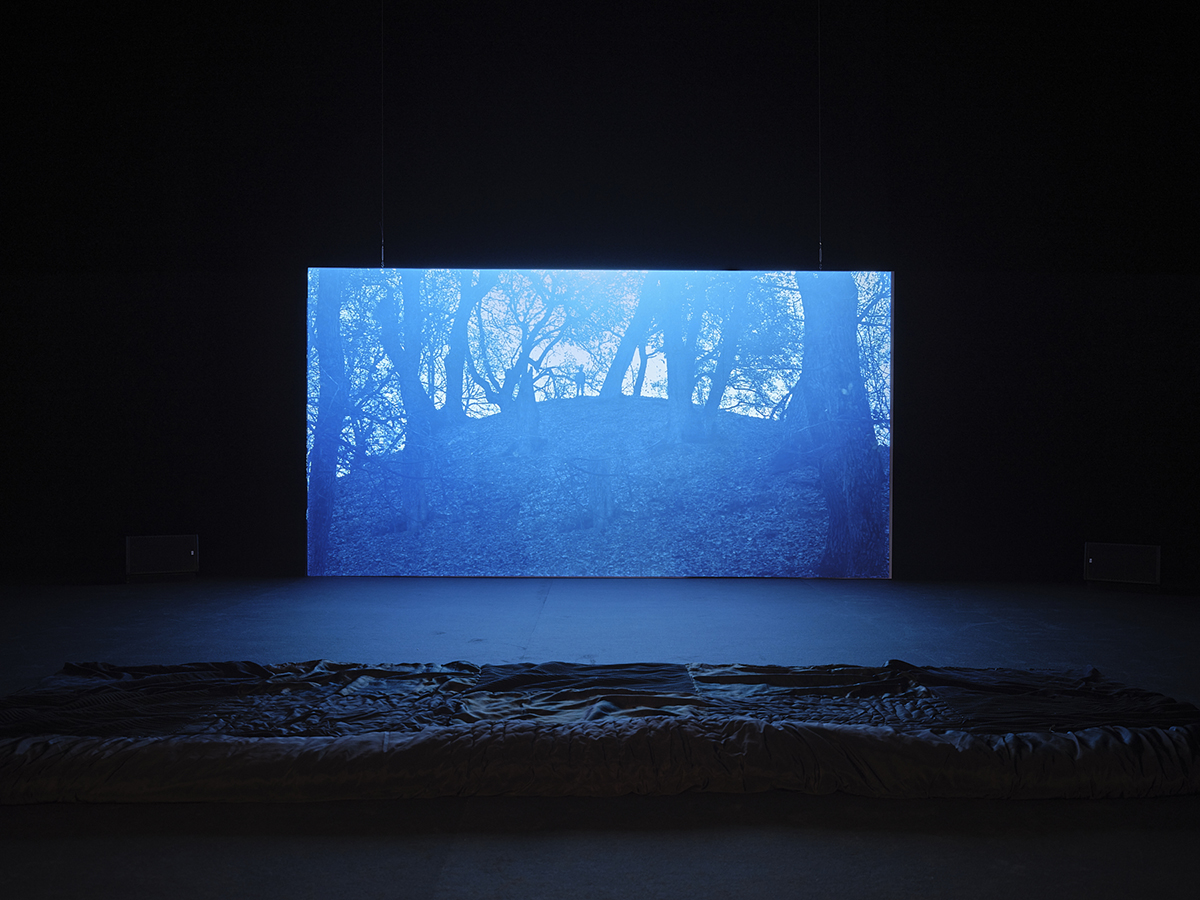
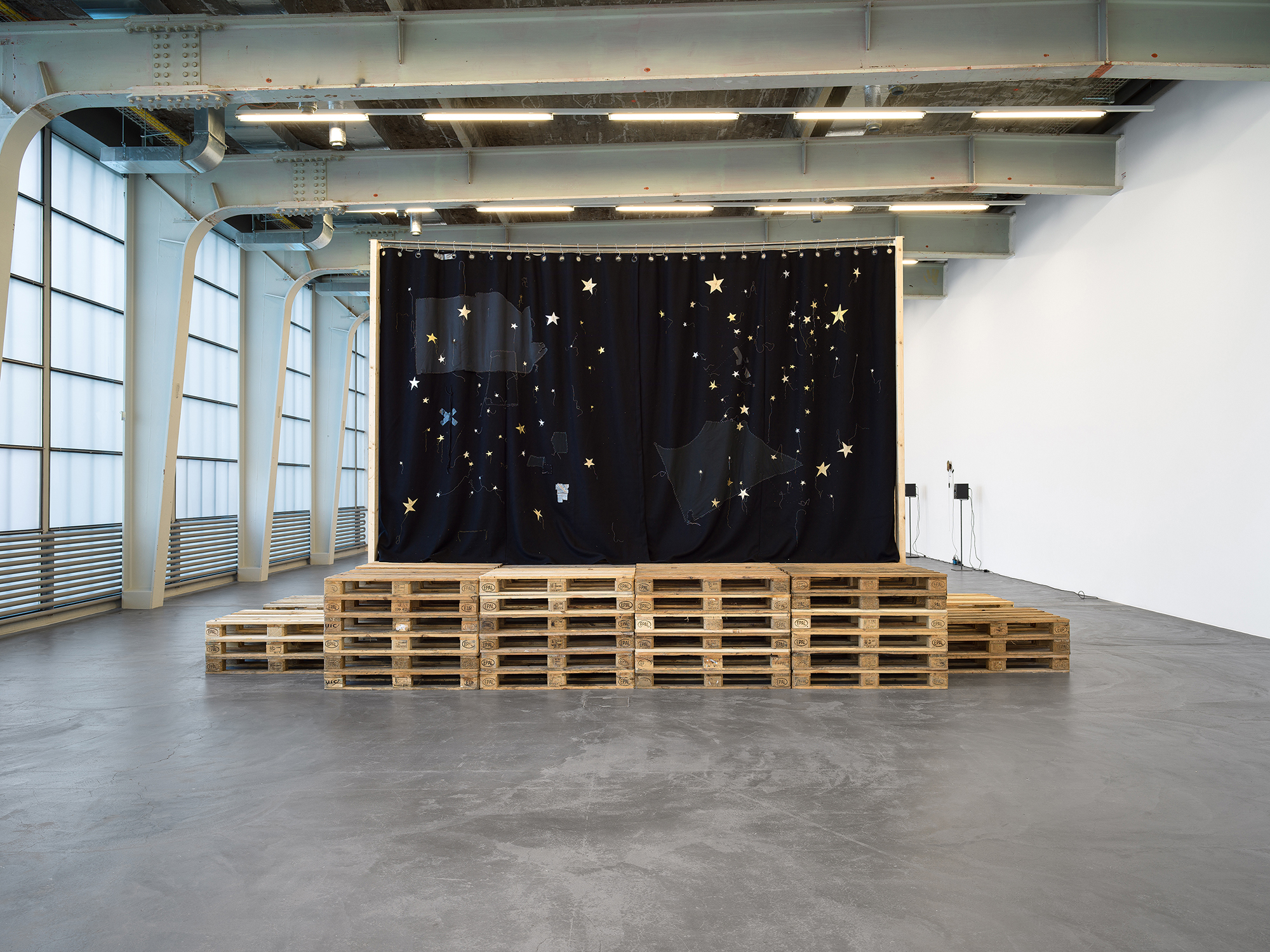
Pascal Rodriguez’s scenography brings a theatrical charge to RAMMELLZEE’s retrospective at MUSEION in Bolzano. Costumed figures gather on low platforms under violet and pink light, fluorescent details cutting across dark fabrics. Their arrangement suggests a cast awaiting its cue. The effect is particularly apt for someone whose assemblages required him to inhabit them. Curated by Hugo Vitrani and Cédric Fauq, this concluding chapter of a project developed with Palais de Tokyo and the CAPC in Bordeaux considers how to present an unruly practice after the person who animated it has gone.
Born in Far Rockaway in 1960, the artist approached graffiti as a struggle over who determines meaning. His theories of Gothic Futurism and Ikonoklast Panzerism proposed arming the alphabet against the authority exercised through language. Ornament could make a character difficult to decipher, loosening its attachment to an assigned function. What might initially resemble elaborate decoration consequently carries a confrontational purpose. The familiar demand that art be immediately understood becomes questionable when communication means accepting somebody else’s rules. Here, illegibility offers room to manoeuvre.
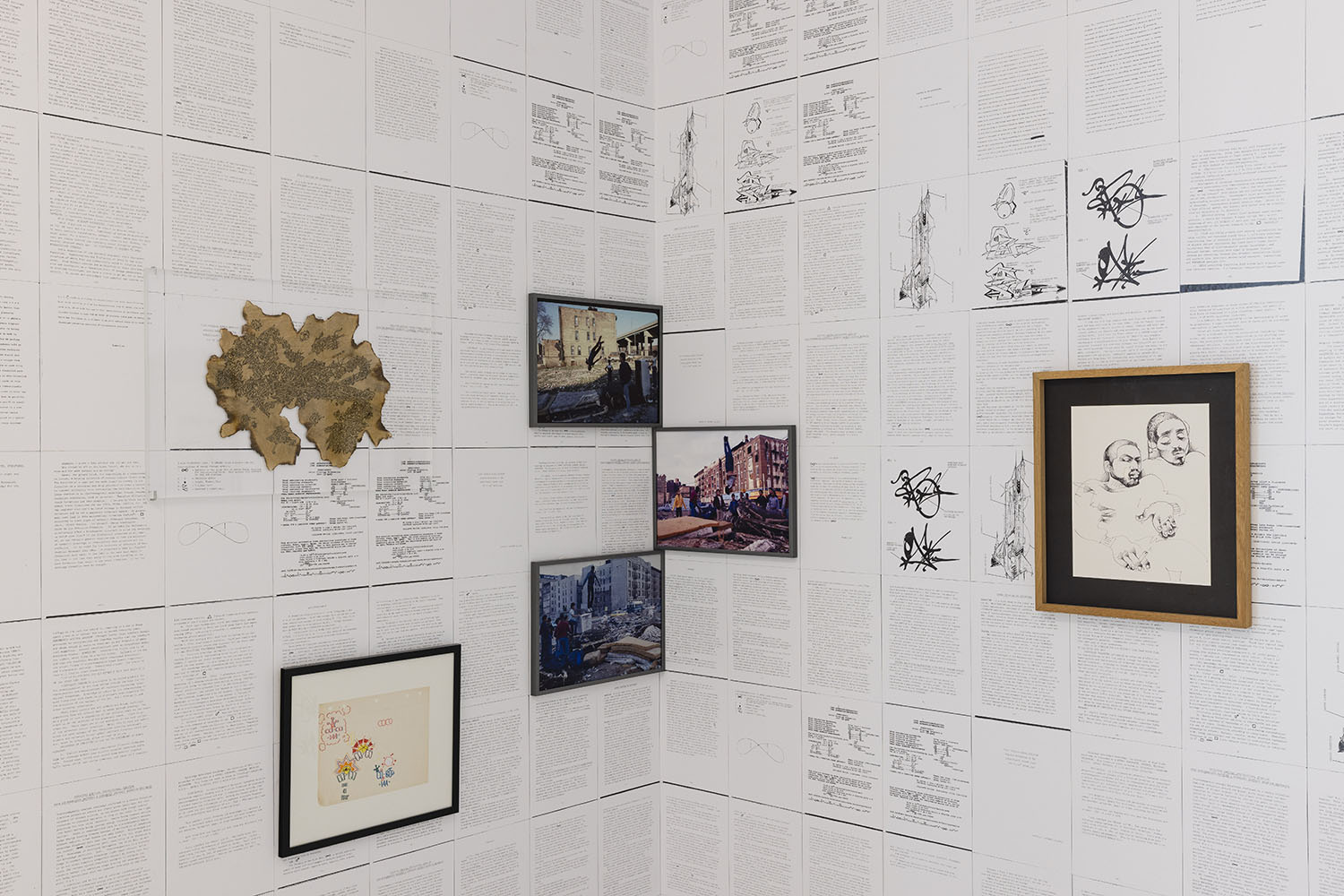
The exhibition expands this argument through an ambitious historical framework. Four parallel chronologies begin with the discovery of ultraviolet radiation in 1801, placing his biography alongside developments that made his experiments possible. Illuminated manuscripts borrowed from the Abbey of Novacella support the lineage he claimed between medieval scribes and subway writers. Works by Fortunato Depero introduce another affinity, although the political distinction matters: RAMMELLZEE redirected Futurist militancy towards resisting domination. These connections are productive where they sharpen differences. They would be less convincing as a search for respectable ancestors, as though institutional recognition depended on proving an allegiance to established traditions.
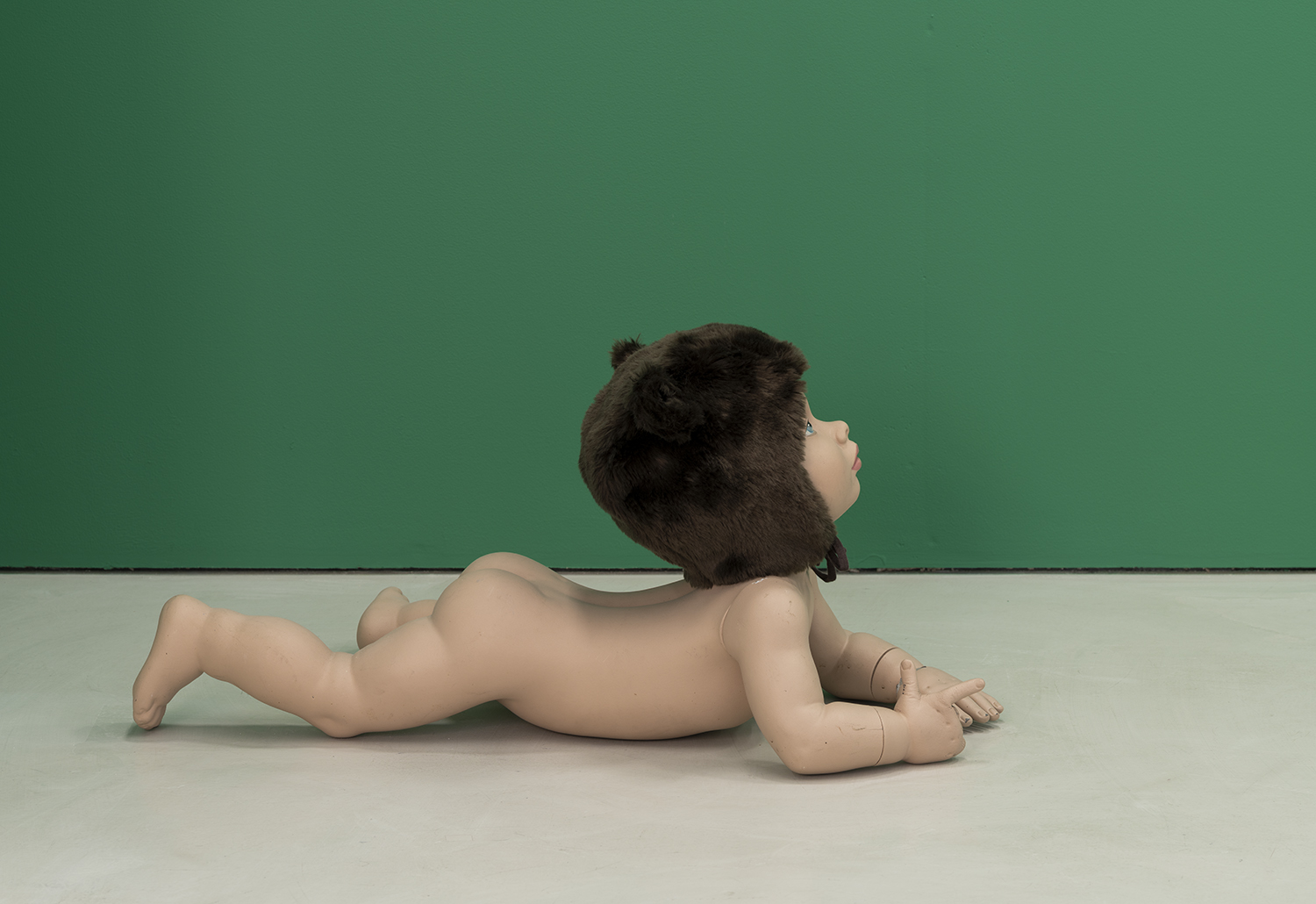
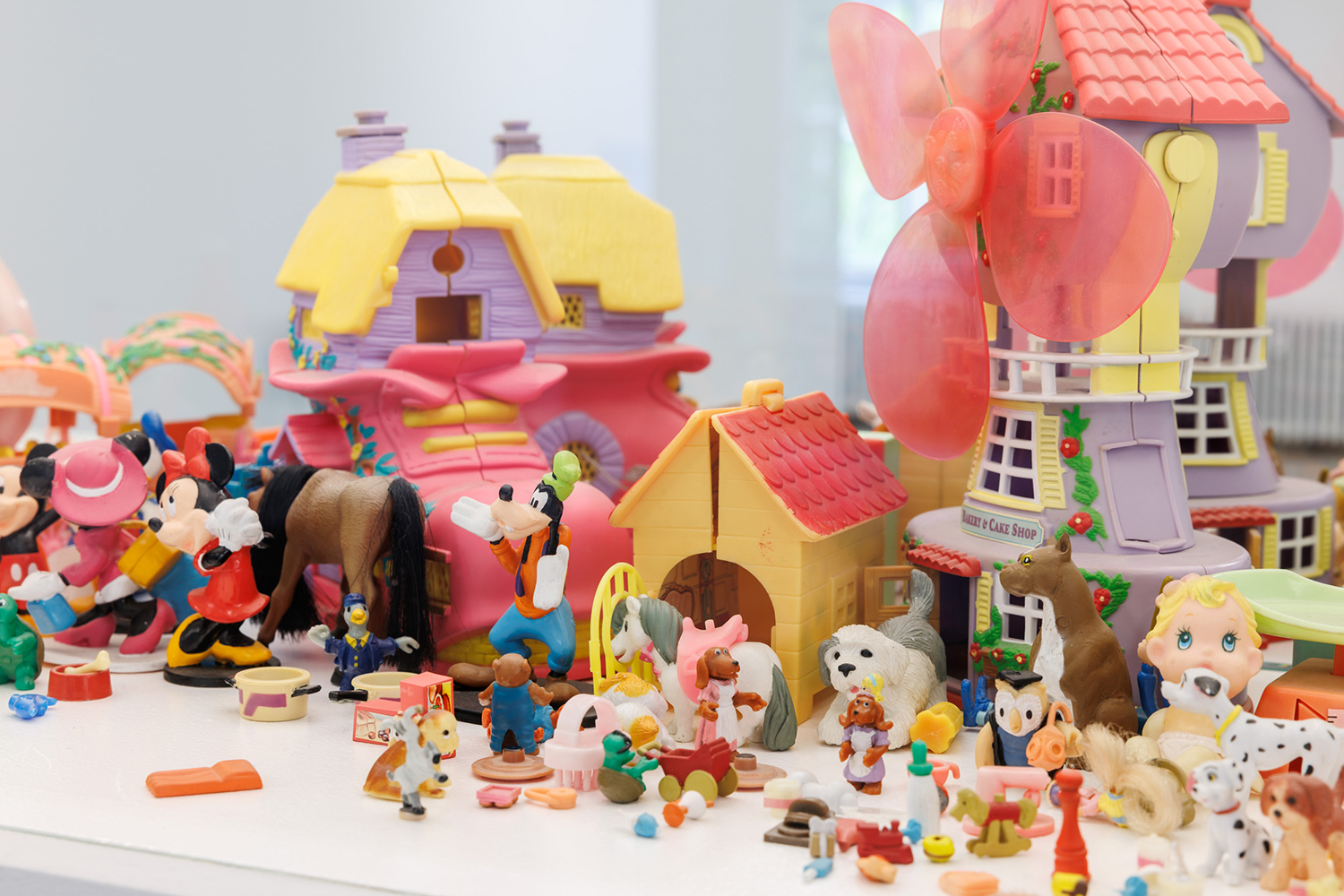
The sculptures resist being reduced to illustrations of this thinking. Presented as a complete group, the “Alphabiters” turn letters into hybrids occupied by human and animal forms. Salvaged toys supply parts for an aerial conflict whose combatants retain something mischievous about them. Within the “Garbage Gods,” materials recovered from New York’s streets acquire a scale closer to our own. I find this passage from imagined warfare to bodily transformation especially compelling. A mask changes how its wearer can be read; a vocoder unsettles the voice through which that identity might otherwise be confirmed. Performance was fundamental to the proposition, exposing the self to the same alterations imposed on writing.
“Gasholear,” constructed between 1987 and 1998, makes the physical stakes explicit. This wearable exoskeleton incorporated loudspeakers and strobe lighting, with weaponry extending its formidable silhouette. According to its creator, the ensemble weighed 150 kilograms. That burden complicates any easy fantasy of liberation: becoming another being also demanded extraordinary exertion. His death in 2010 lends a different gravity to the mirrored pyramid designed with his wife, Carmela Zagari Rammellzee, to contain his ashes. A sealed capsule protects the unrevealed solution to the equation behind his adopted name. After so much contextual explanation, this withheld answer feels fitting. The museum can trace a history around him, but the final terms of his invention remain beyond its reach.
RAMM:ELL:ZEE
TIME:LINE
Museion, Bolzano
October 17, 2026–March 14, 2027
Review by Nicolas Vamvouklis
Curated by Hugo Vitrani and Cédric Fauq
Exhibition organized in collaboration with Palais de Tokyo (Paris)
and Capc – Musée d’art contemporain de Bordeaux
RAMM:ELL:ZEE TIME:LINE, exhibition view, 2026, Museion. Photo: Luca Guadagnini.