Amanat – As We Sleep
Kunsthalle Bern
Review by Caterina Avataneo
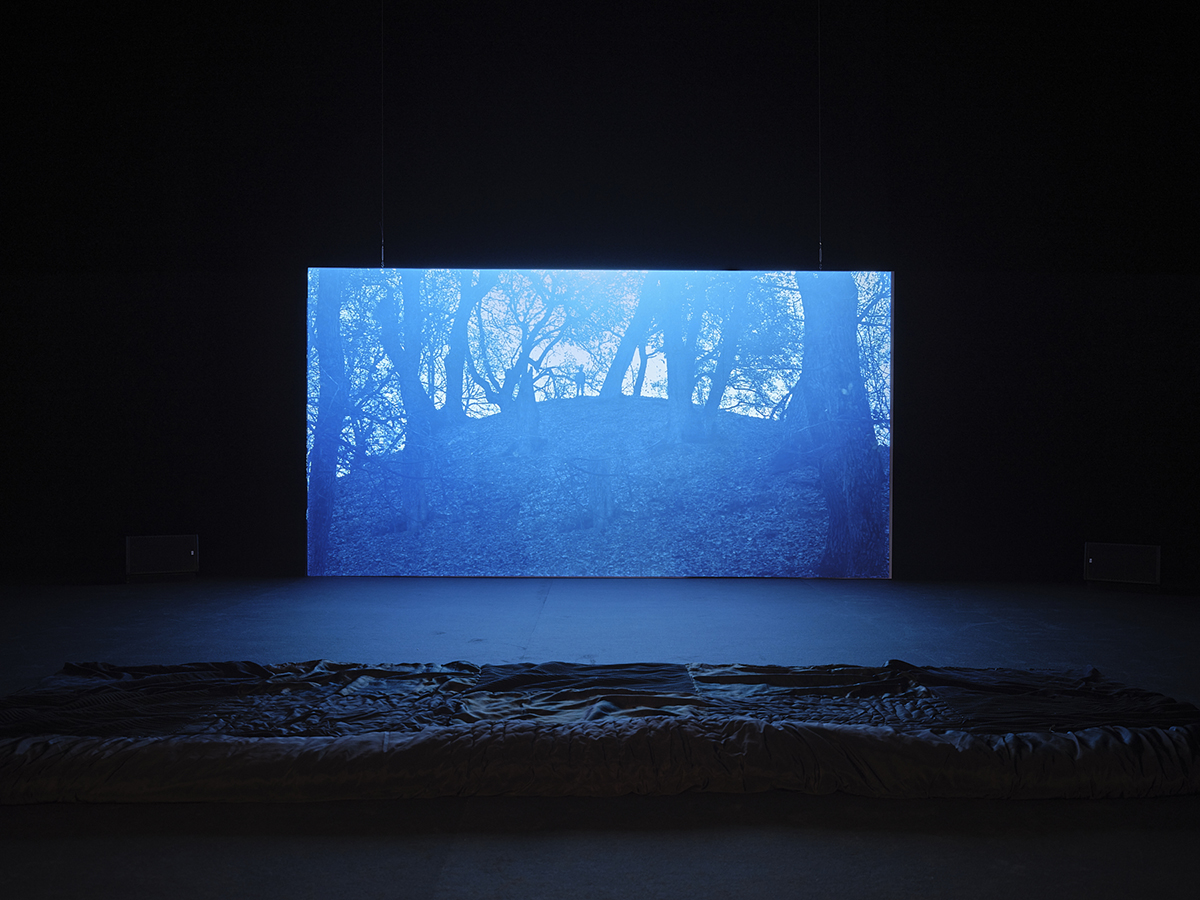
Amanat, 2026
Produced by Swiss Institute, New York; LUMA Foundation; Kunsthalle Bern
Photo: David Aebi Courtesy: the artist
Sleep often recurs throughout Saodat Ismailova’s films as a means of accessing what lies beneath the surface of historical time. In the suspended state between wakefulness and dreaming, individual experience opens onto collective memory, where ancestral knowledge persists through myth and landscape. The oneiric, with Ismailova, is not just an atmosphere, but rather a threshold through which deep temporalities that precede and exceed human history become perceptible. And if sleep is the threshold through which these temporalities become perceptible, transmission of knowledge is what the sleeper carries back.
The passage between historical and primordial time, as well as its transmission, run throughout the films brought together at Kunsthalle Bern. Amanat (2026) —the newest film in the show, appositely co-commissioned for the occasion— was born out of Ismailova’s visits since 2022 to Arslanbob, a vast walnut forest in southern Kyrgyzstan. Through her slow-earned trust with the Muslim villagers of Arslanbob, Ismailova learned about the Sufi mystic Ahmad Yasawi who is linked to the origin of the walnut forest, as well as the admonition which she herself knew from childhood, against sleeping beneath the walnut trees whose toxins are said to bring anxious, hallucinogenic dreams. In the film, a man collects walnuts from the forest floor before eventually falling asleep beneath the canopy. Three male figures, corresponding to childhood, adulthood and old age, appear to enact different stages of a life, although the film’s languid pace leaves open the possibility that they are one person encountered at different moments in time. Not surprisingly perhaps, it’s the boy who becomes at one with nature, carrying its mysteries and becoming himself myth: the seed before the forest. “I speak with you from bottomless time”, we hear at the beginning of the film; a place without gravity, where human existence as we know it might cease. Breathing recurs throughout the soundscape, indistinguishable from the respiration of the trees, with their foliage moving animated by wind. Amanat, an Arabic word adopted into Central Asian usage, denotes something entrusted to one’s care, like a legacy or a responsibility to preserve and pass on. Ismailova’s own artistic method mirrors such conscientiousness. She forged intimate relationships over time, allowing local oral traditions to shape the film itself, which in turn creates the conditions for their persistence.
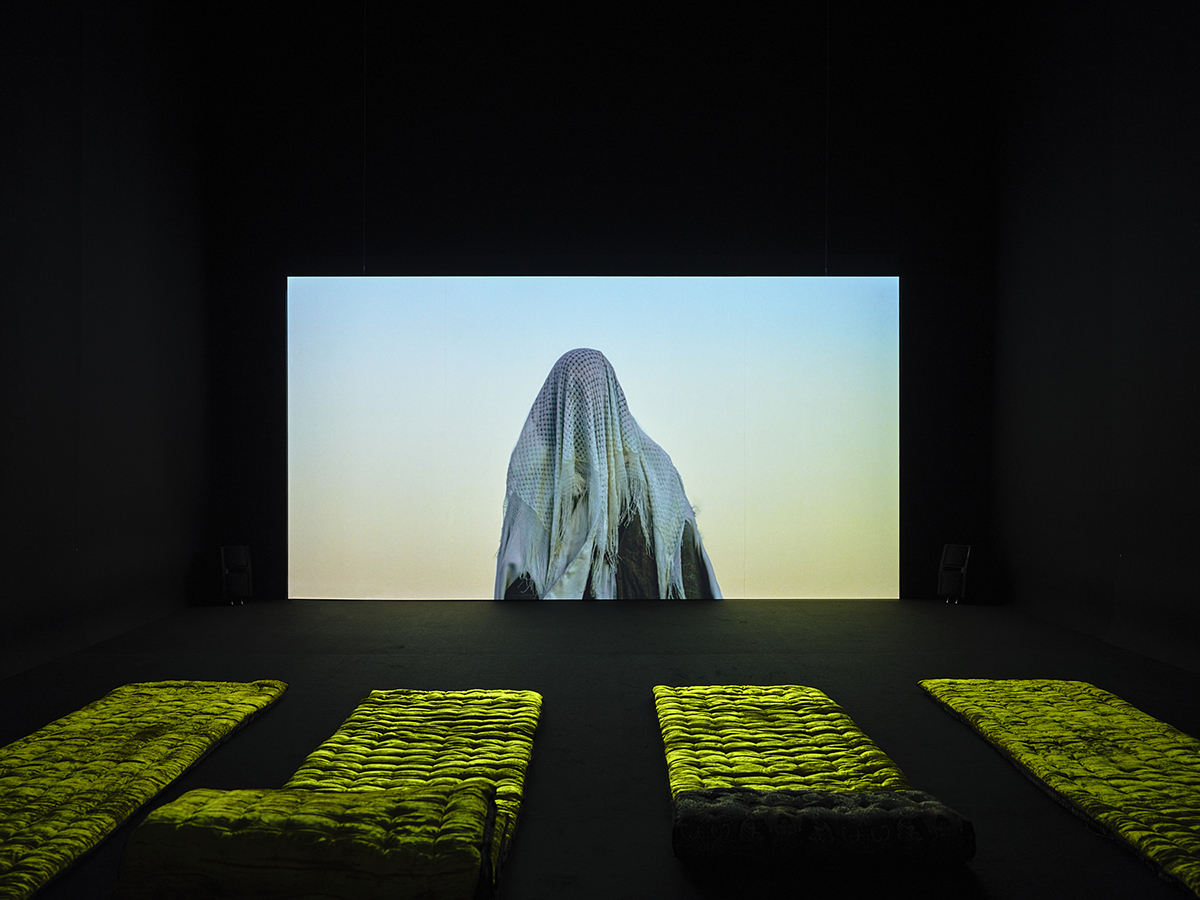
Melted into the Sun, 2024
Commissioned by Fondazione In Between Art and Film, Bathalha Centro de Cinema
Photo: David Aebi Courtesy: the artist
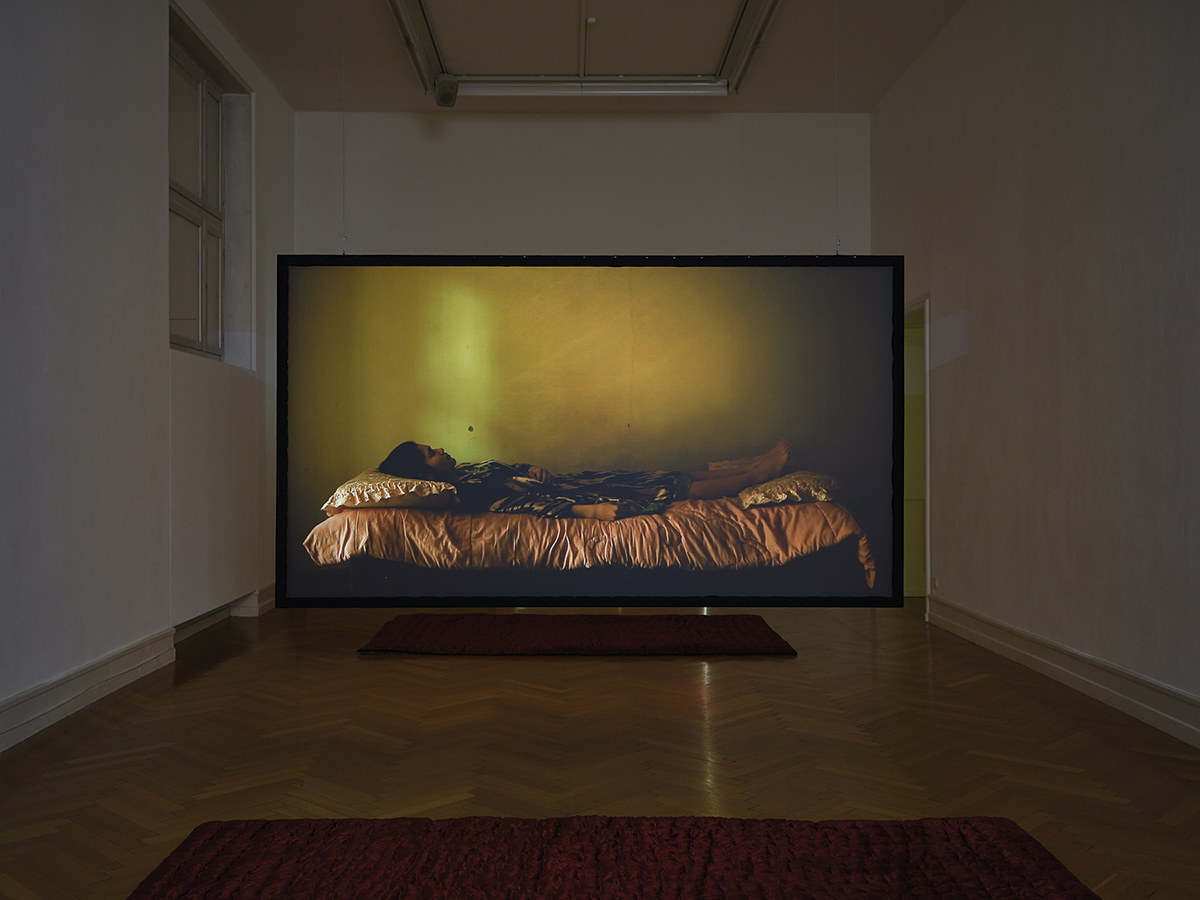
Zukhra (Venus), 2013
With the support of Central Asian Pavillion, 55th Venice Biennale of Arts, 2013
Photo: David Aebi Courtesy: the artist
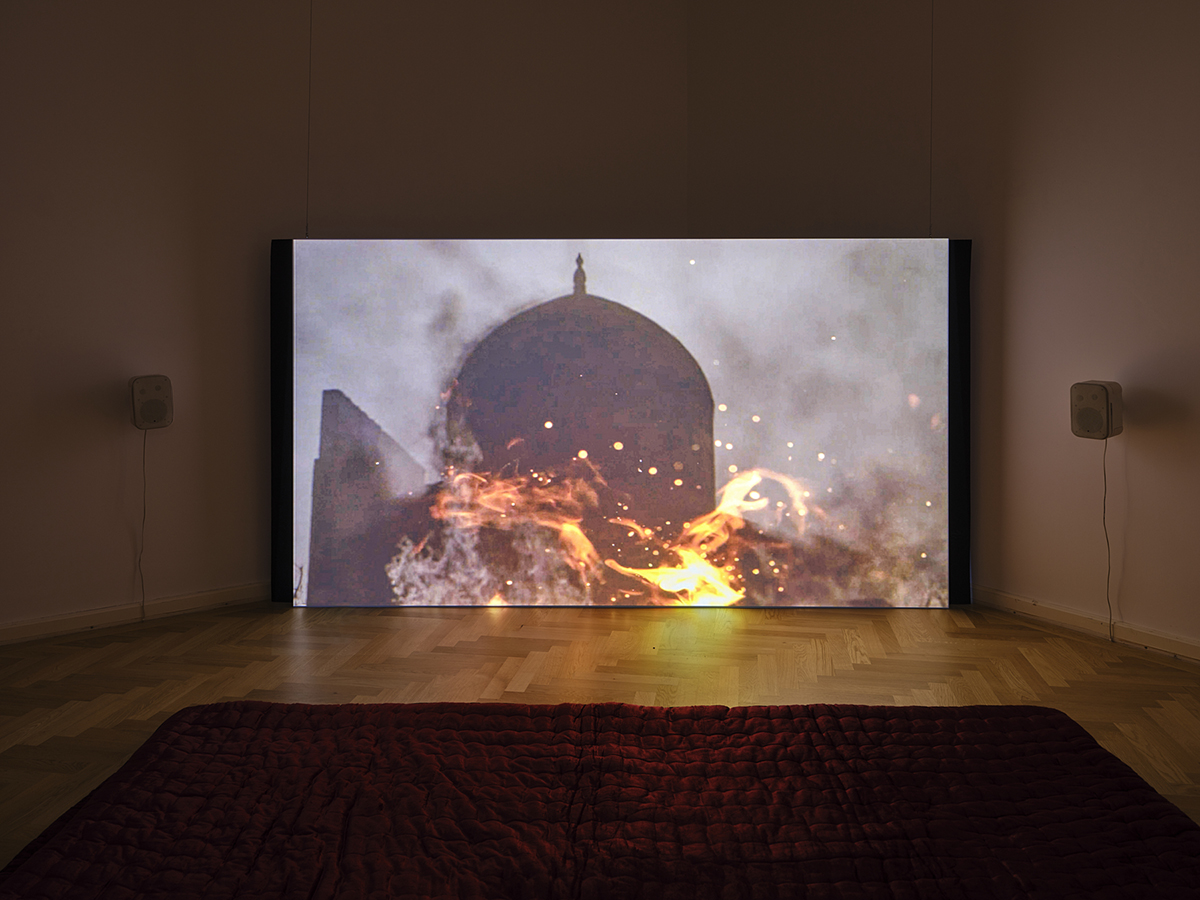
18,000 Worlds, 2023
With the support of Eye Art & Film prize, 2022
Photo: David Aebi. Courtesy: the artist
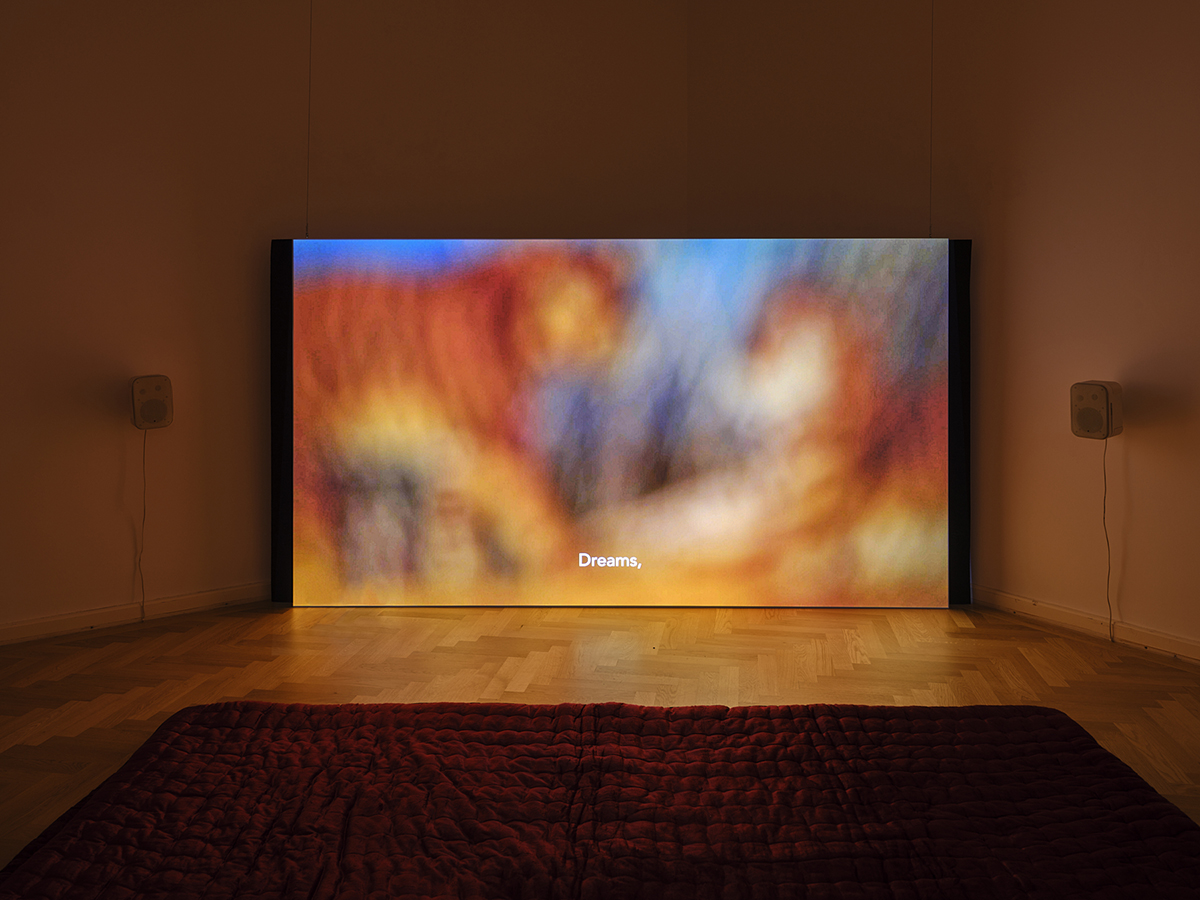
18,000 Worlds, 2023
With the support of Eye Art & Film prize, 2022
Photo: David Aebi. Courtesy: the artist
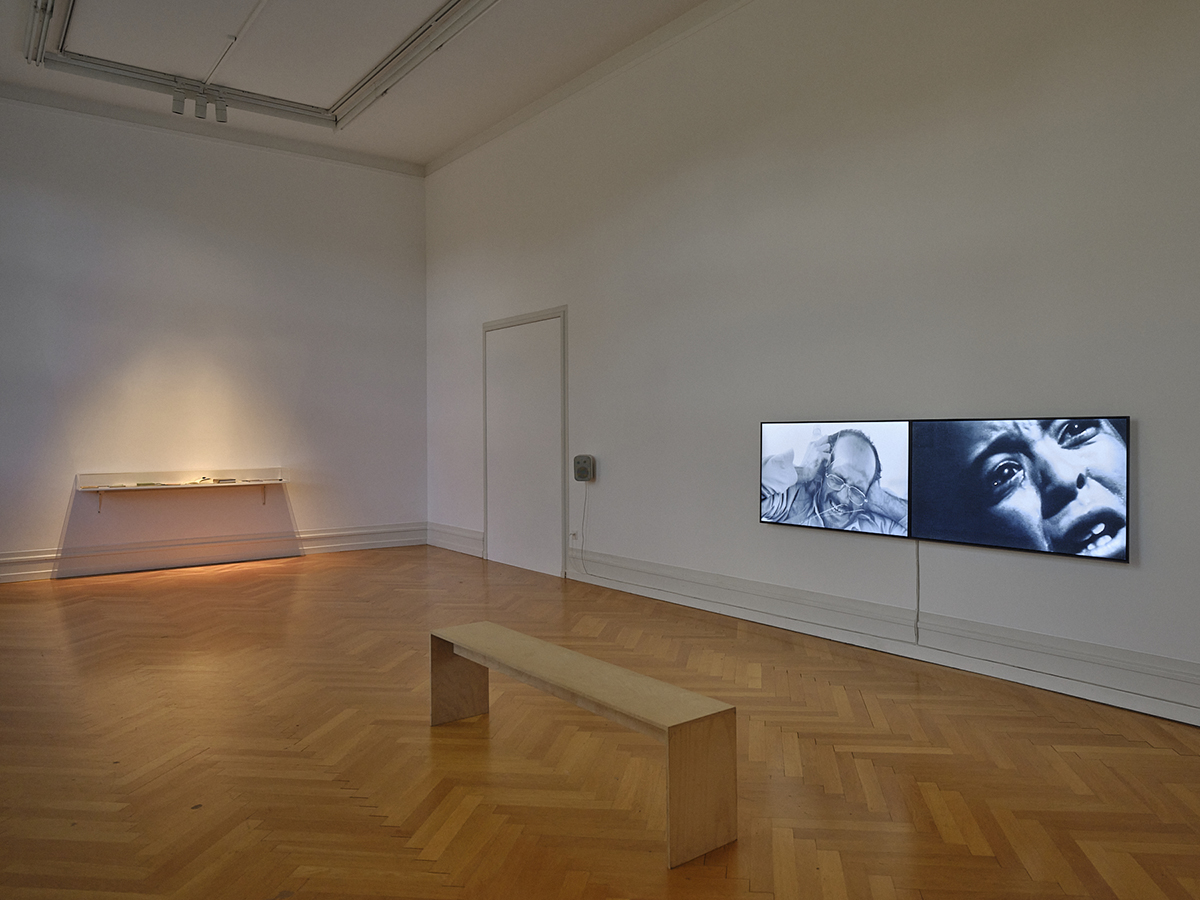
Swan Lake, 2025
Produced by Kunstenfestivaldesarts; SAVA; Baltic Centre for Contemporary Art
Photo: David Aebi. Courtesy: the artist
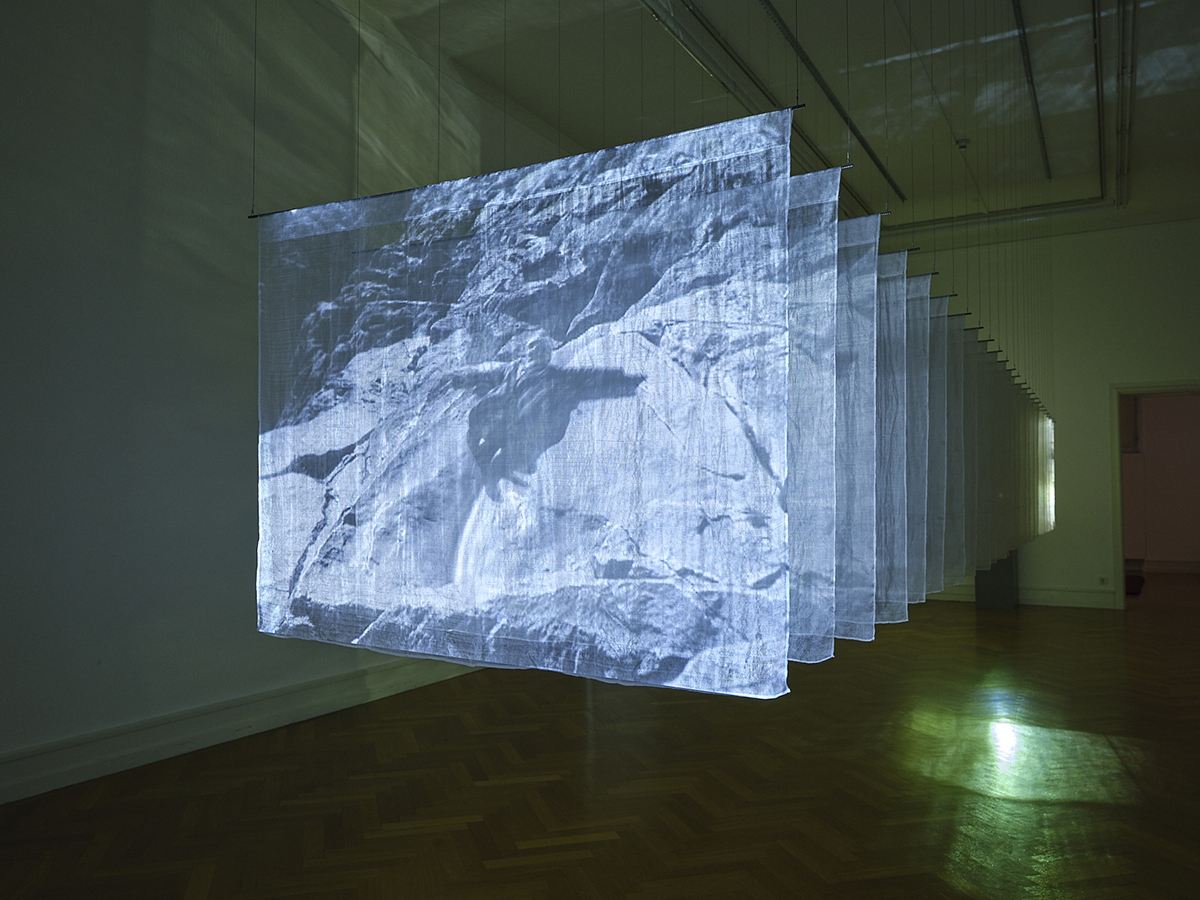
As We Fade 2024
Produced by Pirelli HangarBicocca, Milan; Kunsthalle Bern
Photo: David Aebi. Courtesy: the artist
Also included in the show is Swan Lake (2025) which the artist herself has previously described as complementary to Amanat —one exploring the beauty, power and mysticism of the forest, the other unfolding like a historical nightmare induced by it. This two-channel video gathers footage from Central Asian cinema and television around the decade preceding and following the collapse of the Soviet Union, thus expanding the familiar visual history of the Soviet collapse beyond the dominant Moscow-centred narrative. Long queues, television healers, hypnotists and Tchaikovsky’s ballet appear in a fragmented montage. Swan Lake famously occupied Soviet television screens during moments of political crisis, including the 1991 coup attempt, when the ballet’s repeated broadcast became a sign of a state struggling to maintain control. The breaking down of the Soviet Union, in this sense, becomes the end of a collective hallucination and, seen together, the two films trace the line between myth and politics. The canopy of Arslanbob also appears in Seven Sleepers (2026) where different people sleep in broad daylight, evoking the legend of the People of the Cave, whose miraculous centuries-long slumber symbolises protection. Here, the nocturnal palette often employed by the artist gives way to bright pink and psychedelic colours. The images appear almost motionless; and only after a moment of distraction does one notice that something has changed. These subtle displacements make the film and its extreme slowness feel like an encounter with a time that operates according to a rhythm yet unknown to the human. As for Amanat, who gains access to this becomes myth. Transmission, with Ismailova, is prophetic; embedded in landscapes and carried through stories and bodies. Emblematic is Melted into the Sun (2024), inspired by the figure of al-Muqanna, also known as “The Veiled One”: an eighth-century mystic and revolutionary from Khorasan who challenged land extraction, centralised authority and established hierarchies of power. The film’s settings produce a disorientating collapse of historical periods and geographical spaces, while al-Muqanna’s legacy is complicated by its later appropriation by Soviet propaganda, which recast him as a proto-socialist hero of collective property. Having grown up in post-Soviet Uzbekistan, Ismailova approaches the politics of Central Asia obliquely, tracing power not only through historical events, but through the ways collective perception is shaped. To return to al-Muqanna is therefore to reclaim a figure from the state’s monopoly over historical meaning.
Across her films, the artist attends to forms of knowledge that resist ideological capture: dreams, oral legends, animistic beliefs. Her frequent attention to matrilineal lineages shifts the question of historical inheritance towards those who have traditionally been excluded from its official custodianship. The reverence for nature is presented as a way of inhabiting the world, whose persistence might itself be worth defending. “Emerging from Nature, why did we grow separate from it?” asks The Veiled One in Melted into the Sun. The film opens with a mesmerising image of shimmering magma. Only by the end does the viewer recognise the glimmers as reflections in mirrors held by figures in white, followers of al-Muqanna who allegedly wore a veil to conceal a radiant light emanating from his face. The primordial and the historical to converge once again as what initially appears to belong to the earth’s primordial depths is revealed as part of a human ritual. To watch Ismailova’s films really is like falling asleep beneath the walnut trees of Arslanbob, accepting an inheritance and, perhaps, becoming its next custodian.