Text by Ruba Katrib
CURA. 44
The Generational Issue
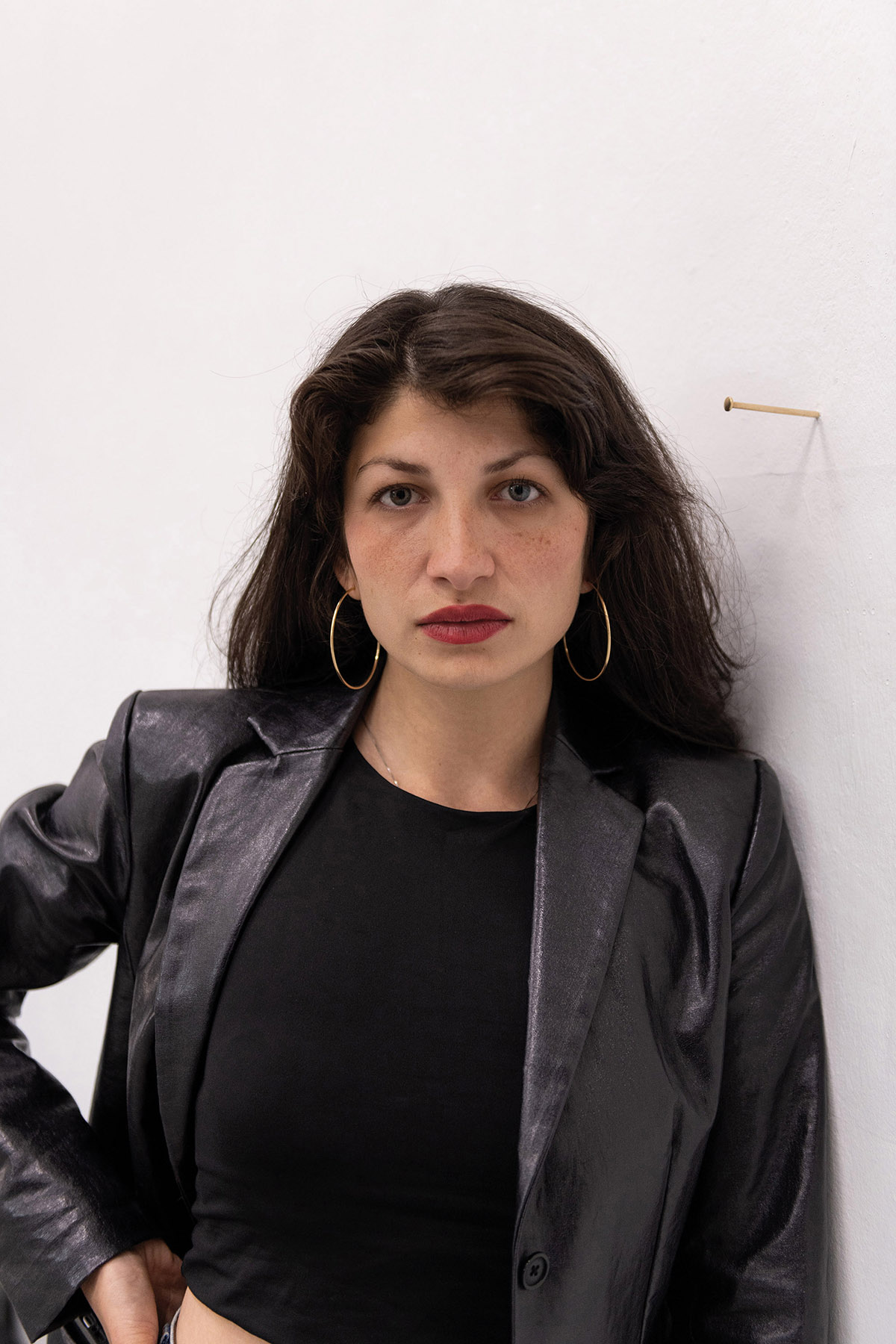
Portrait by Fabian Landewee
A gigantic satellite dish is scrawled with black painted letters reading: “God make me the most famous so I can leave this place.” The directness of this plea resonates with all of those who seek transcendence, in so many words and uttered under so many breaths. It touches those who want to break free from the hold of the perceived confines of being from a small town, of being poor, of being from somewhere where fate seems already sealed. A dream that is held in many hearts, yet in Selma Selman’s wry approach, she cuts to the chase. By inscribing this prayer on a satellite dish, Selman projects a wish outward into the universe through the vehicle that brings the world in. As if the dish could, just as it pipes information into homes, also relay her message into the cosmos.
Raised in a Roma community in a village in Bosnia and Herzegovina, Selman’s work emerges from her personal perspective in a practice that encompasses sculpture to drawing to performance. All of these approaches are intertwined however, because, for Selman, her entire oeuvre is directed by the force of her will, it is based in action. Her family’s scrap metal business is a central touchstone; a magical place where junk is remade, revalued, and takes on a new life. It is the spirit of this business, which is one of transformation, and even of transcendence, which allows for one thing to become another, that runs throughout her work. As does a certain practicality that undergirds any financial undertaking like a family business. For Selman, the stakes are real. In her performative pieces, she often collaborates with family members to take apart machines and extract the precious metals embedded in them. Wearing protective gear, in Motherboards (2023–ongoing) she and her male relatives hammer away at CPUs, pulling out the gold bits, which Selman later transforms again. Figuring out how to safely melt down the gold taken from the CPUs, Selman collects scraps otherwise rendered useless and forges them into 14-karat gold nails. Symbolically, the nail is a small and ubiquitous thing that holds many things together, an essential component for most types of building projects. Here, the piece of hardware is created through an alchemical move that flouts the perceived uselessness of what has been deemed garbage. Electronic trash is an enormous global problem, as is the mining for the precious metals that find their way into landfills. Selman’s act of salvage offers a way of resistance through resourcefulness. Indeed, she has taught others how to make this gold, sharing the information with her own community as well as with those elsewhere who are impacted by the two-fold issues of extractive mining and garbage dumping.
Digging in junkyards, Selman has also pulled out car body parts: doors, hoods, roofs, as canvases for her paintings. Portraits of women, family and friends, adorn the shiny surfaces, which are often shown in fragments. Bodies rendered on bodies. In these works, Selman plays with surface, skin, and exteriors. Humans are intertwined with machines, but not in a way that relates to the posthuman so much. Instead, her concern is very human, operating as less of a reminder of changing bodies and technologies, and more about the impacts of existing economic entanglements that shape our identities, lives, and selves. Social determinations of value circulate through these objects, through function and adornment, which exist alongside us. For instance, the Mercedes-Benz brand is a symbol that has importance for Selman. She often paints on parts of the car’s surfaces, has created a ring with its logo, and mentions it in her text-based works. In one work, Selman and her family dismantle one of the maker’s cars, an act of creation through destruction. Of course, around the world, the luxury car manufacturer signifies more than a mode of transport, it is primarily a status symbol. Selman plays with this aspect of meaning over function both by breaking down the car, its parts, and its symbolism, and recreates it. Additionally, she propagates it. When she and her family take apart the car, essentially breaking it into smaller pieces, they can also share it more widely. It becomes accessible in fragments. Indeed, it becomes something greater than the sum of its parts.
In a more recent work, Selman has taken a claw from a construction vehicle that would dig, or move around heavy objects, either to build something or demolish it. By taking the claw and putting it upside down, Selman maintains its machinic function, so that its arms now resemble petals. Slowly opening and closing, the claw is a bloom, aptly titled, Flower of Life (2024). On it, Selma has painted small eyes here and there, a further act of transformation that adds an anthropomorphic attribute to these moving machines. Venturing into junkyards, Selman emphasizes her comfort with such spaces, by endowing the objects she retrieves with an intimacy that betrays their hard edges. Their role in a bigger sense of relations is key, as objects that carry meaning and participate in customary interrelations between people. Indeed, the social aspect of these machines is critical to Selman’s explorations. Further, Selman explores the possibilities of her materials, how she can intervene into them and recreate, reclaim, and recast things like a satellite dish, a Mercedes, a piece of construction equipment as devices that can also carry dreams, and that have the potential to produce beauty in unexpected ways.
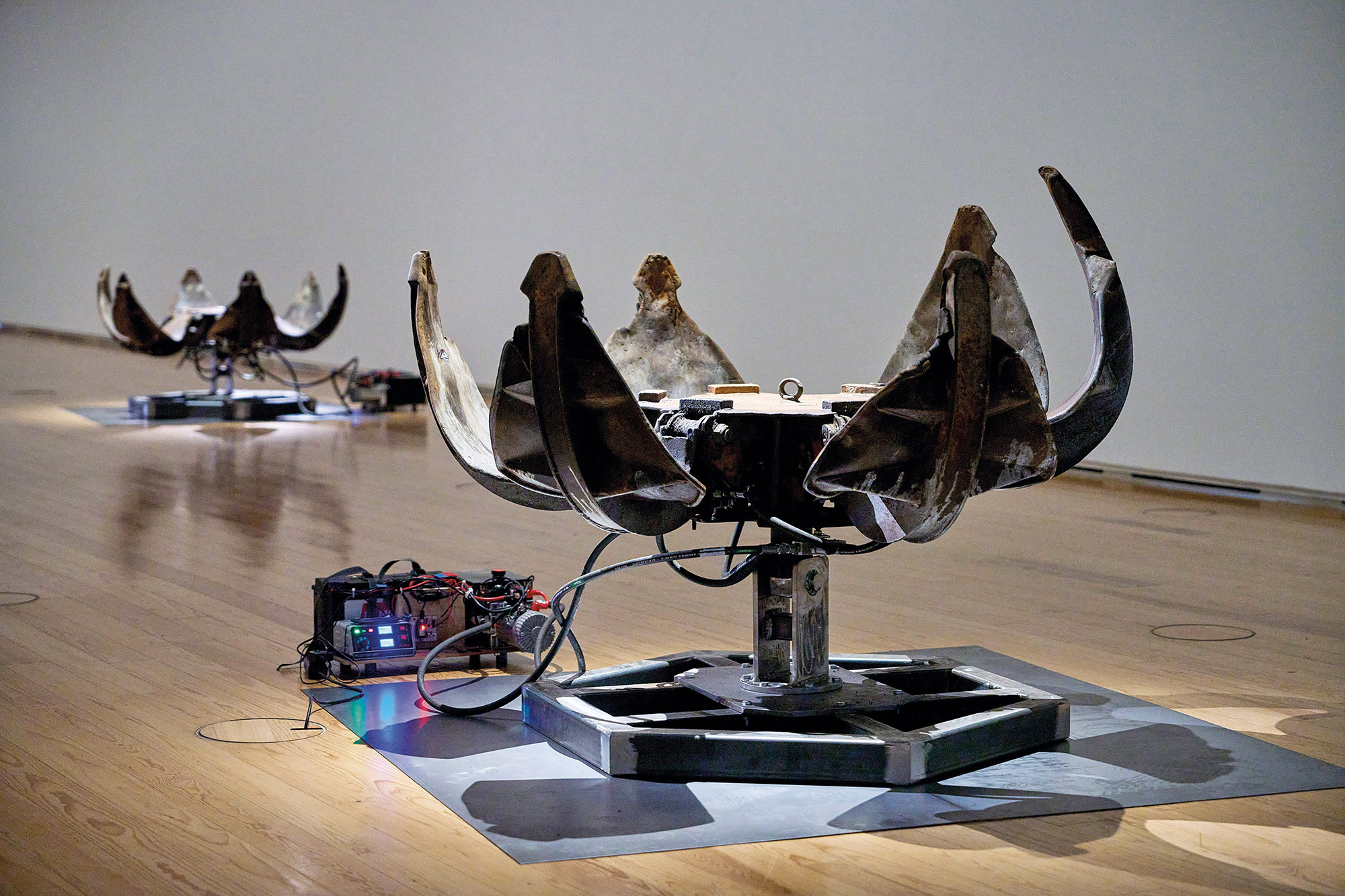
Flowers of Life, installation view, Schirn Kunsthalle, Frankfurt, 2024 Photo: Norbert Miguletz Courtesy: the artist and Schirn Kunsthalle Frankfurt
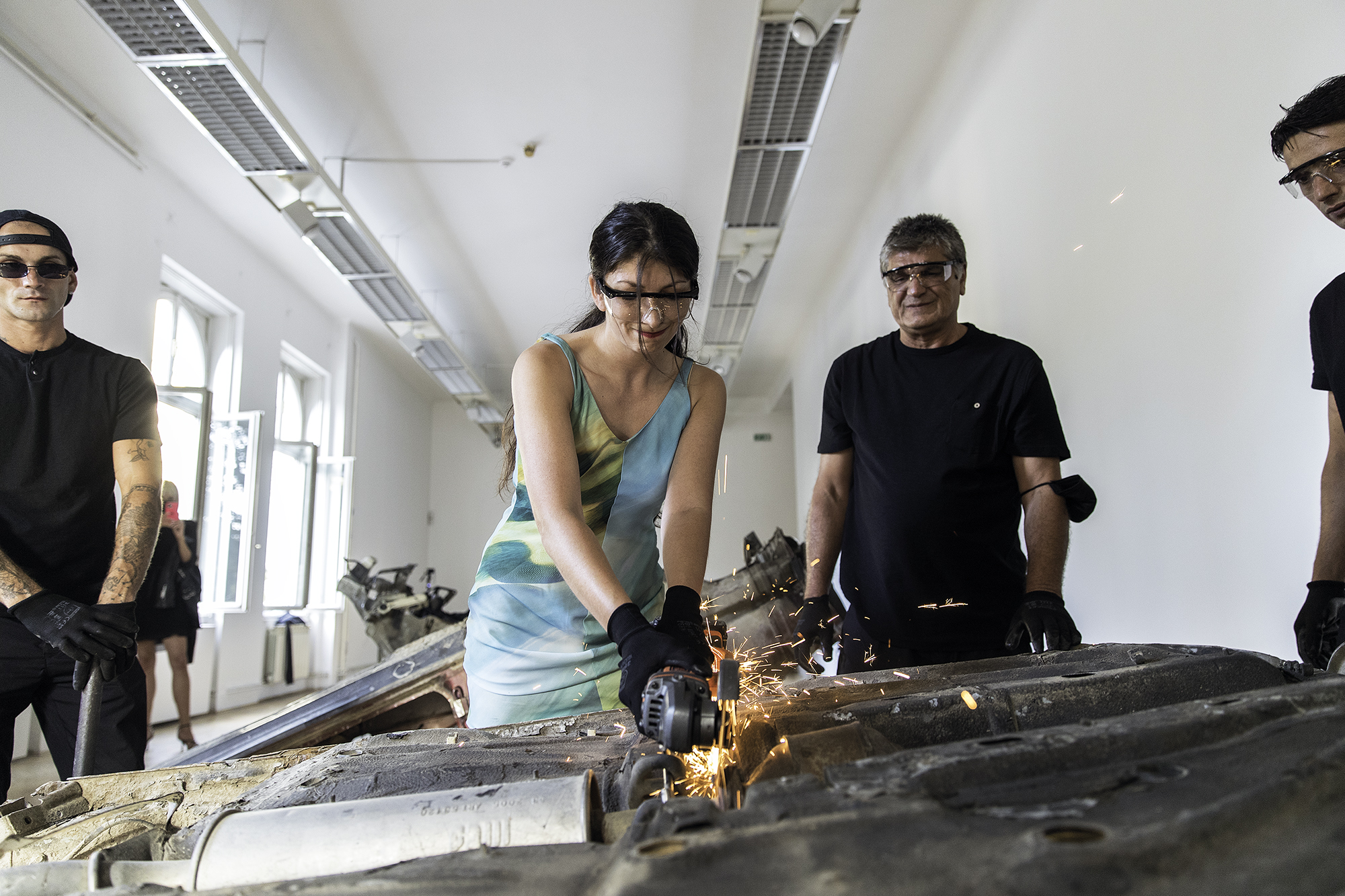
Platinum, performance and installation view, The National Gallery of Bosnia
and Herzegovina, Sarajevo, 2021 Photo: Damir Šagolj Courtesy: the artist
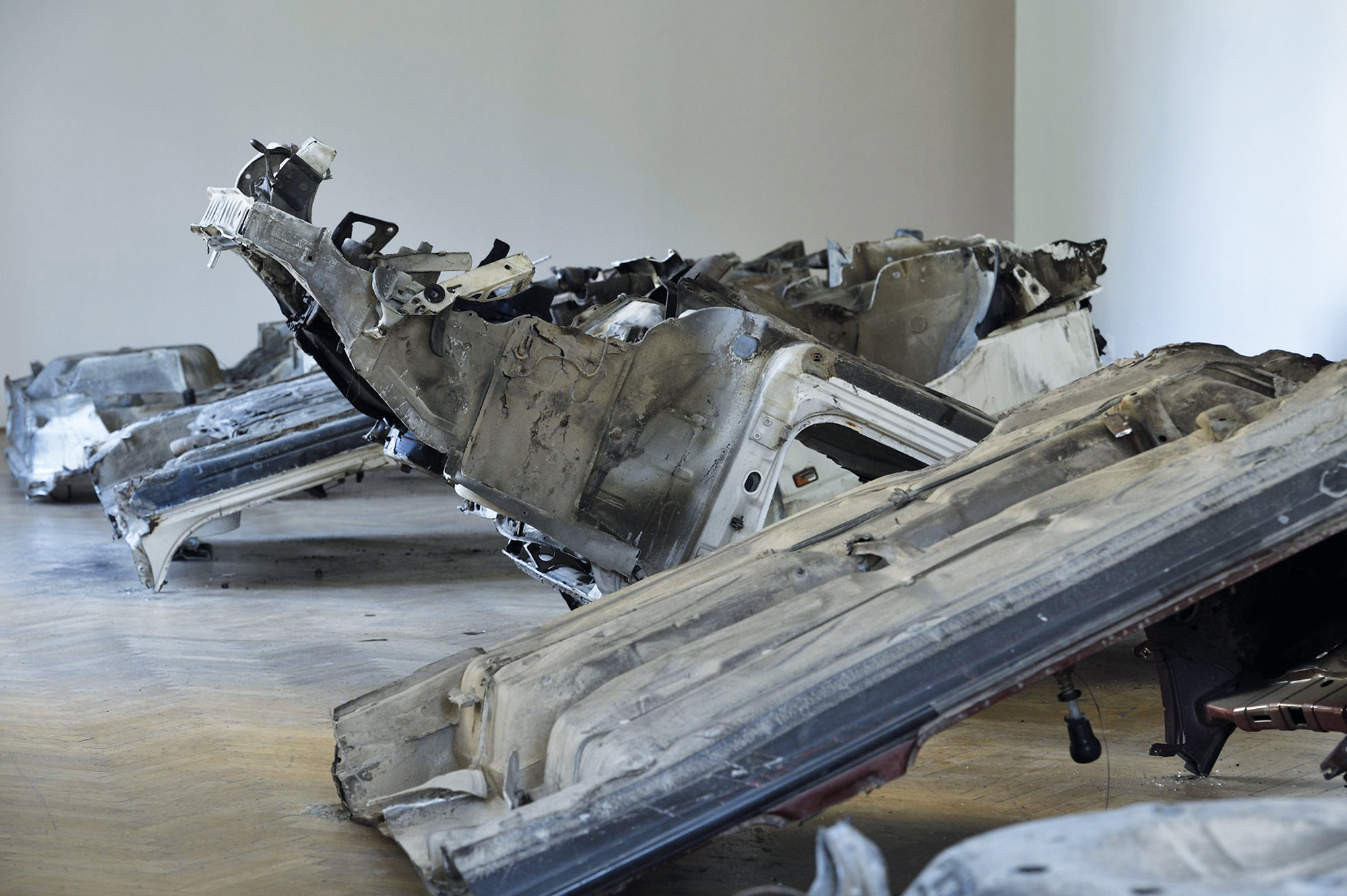
Platinum, performance and installation view, The National Gallery of Bosnia
and Herzegovina, Sarajevo, 2021 Photo: Damir Šagolj Courtesy: the artist
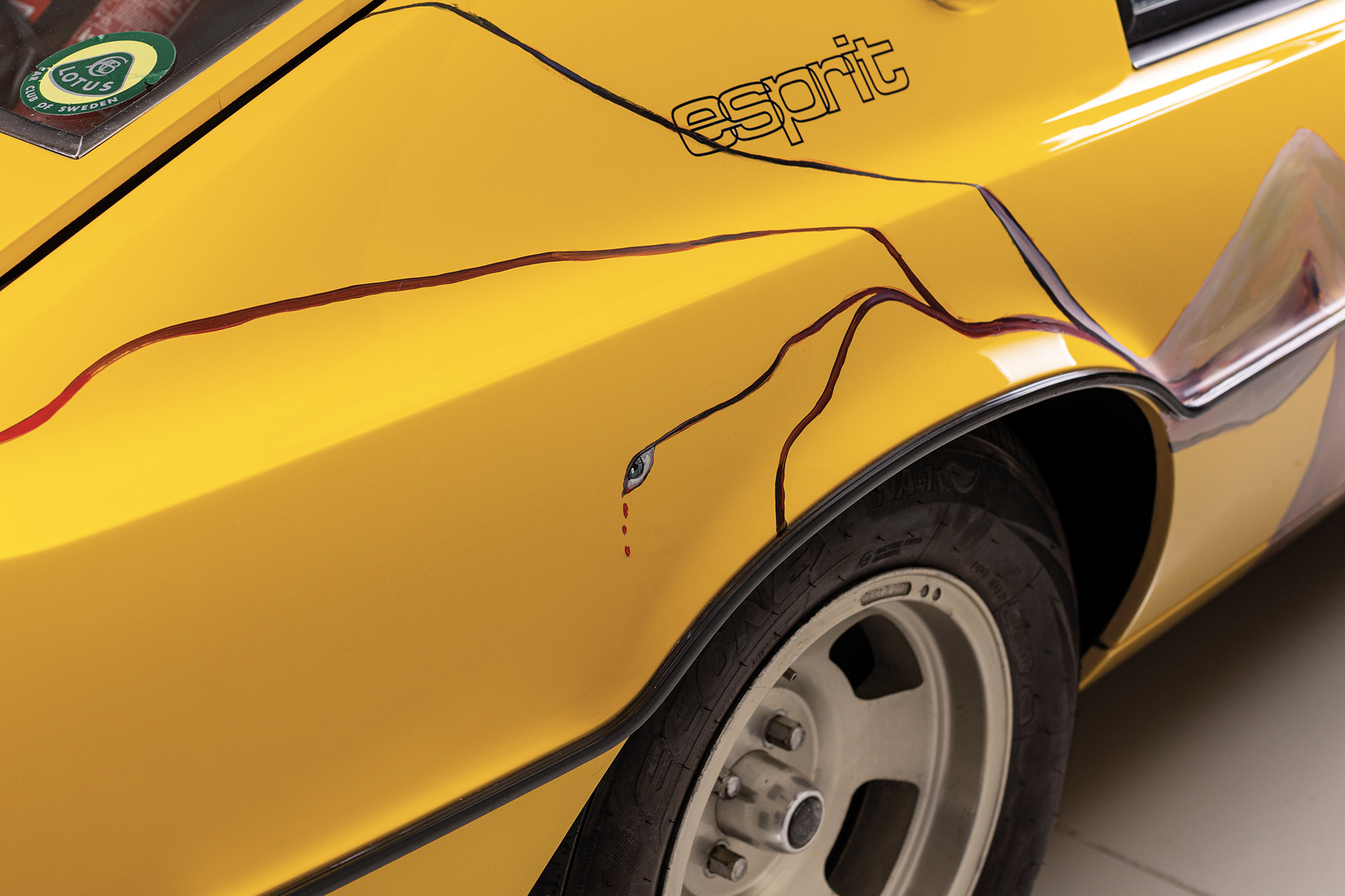
Ophelia’s Awakening, 2024 (detail) Photo: Dávid Tóth Courtesy: the artist and acb Gallery
Selma Selman
Text by Ruba Katrib
CURA.44
The Generational Issue
Selma Selman (b. 1991, Bihać, Bosnia and Herzegovina) is a visual artist and activist of Roma origin. In her practice, she strives to protect and enable female bodies and foster a multifaceted approach to the collective self-emancipation of oppressed women. Selman is also the founder of the organization “Get the Heck to School”, which aims to empower Roma girls across the globe who face social ostracization and poverty. Recent solo exhibitions took place at: Stedelijk Museum, Amsterdam (2025); Schirn Kunsthalle, Frankfurt (2024); Röda Sten Konsthall, Gothenburg (2024); and Martin Gropius Bau, Berlin (2023). Her work was also included in documenta fifteen, Kassel (2022), and Manifesta 14, Priština (2022).
Ruba Katrib is the Chief Curator and Director of Curatorial Affairs at MoMA PS1, New York.