Romain Best, Guendalina Cerruti, Grichka Commaret, Audrey Couppé de Kermadec, Anders Dickson, Adrien Genty, Lucas Erin et Hatice Pinarbaşi
CAC Brétigny
April 11 — May 30, 2026
Press release
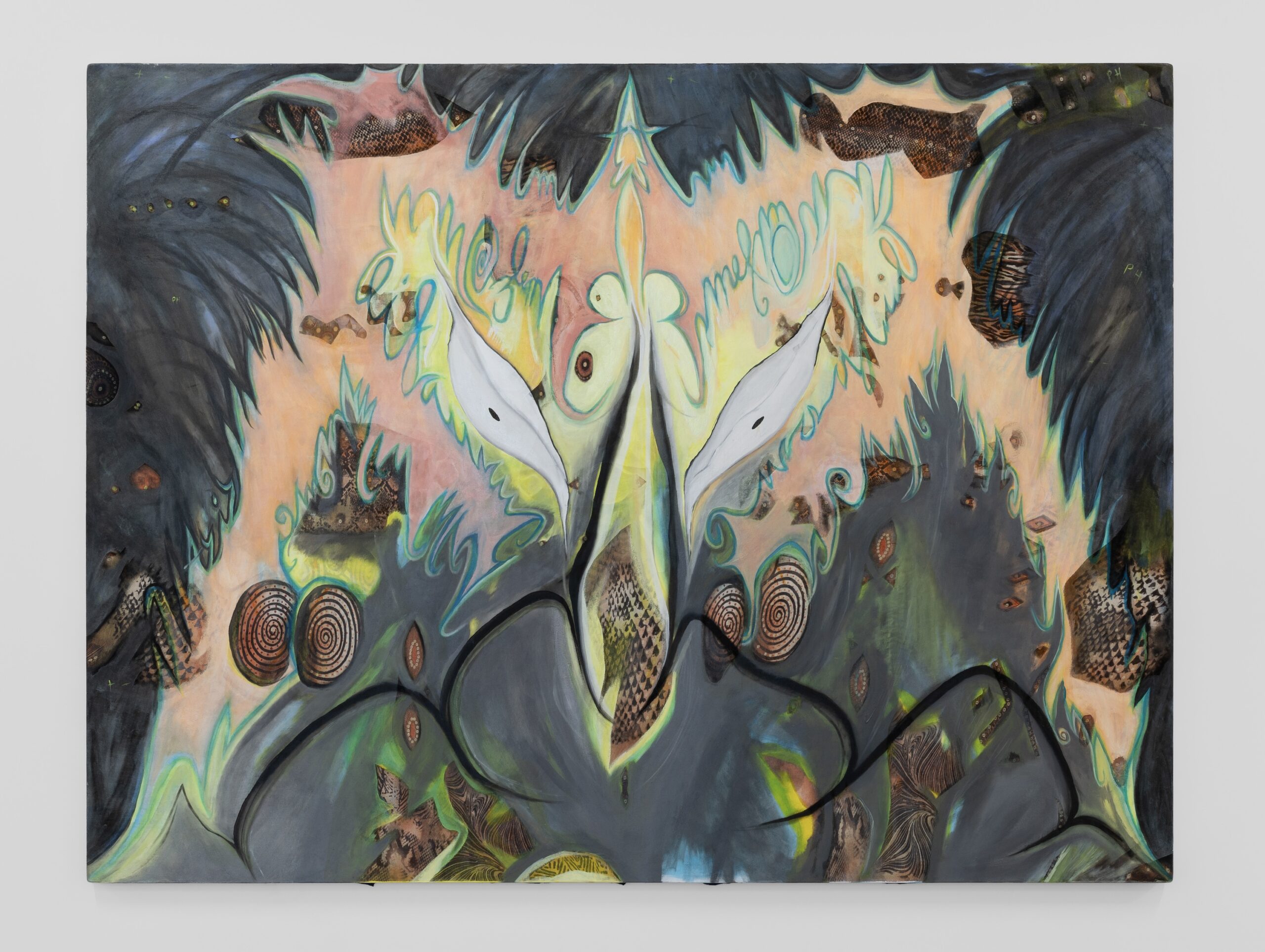
Hatice Pinarbaşi, “Fantastic Féromones”, 2021. Photo: Laura Lemery
Magicians are everywhere in contemporary culture. They represent ambivalent figures, capable of both good and bad, somewhere between charlatanism and miracle. Fascinating characters, their duality seems particularly illuminating in a time when it is difficult to distinguish real from fake. At the end of the 19th and beginning of the 20th century, illusionists and spirit mediums began inventing tricks. Harry Houdini became famous for his spectacular escape acts. He notably defied the Chicago police by escaping from a locked cell and left a lasting impression with his trick in which he shut himself, chained, in a tank full of water before freeing himself as a stunned audience looked on. This tension between appearance and disappearance is central to magic from this period. It questions — just as art does — our gaze and its reliability.
While many recent exhibitions have explored magic through the prism of the figure of the witch or invisible forces, “ Show d’Houdini” returns to a context of performance and explores the figure of the show magician. The aim is to examine how the figure of the magician — who manipulates, deceives the eye or, on the contrary, reveals other potential worlds — traverses contemporary artistic practices. The scenography created by the Italian artist Guendalina Cerruti features a metallic framework enamelled with shiny and colourful beads. These architectural structure simultaneously bring to mind cages, exhibition installations and the world of stage illusions, referencing as much magic as the figure of Harry Houdini. They house the work of seven other French and international artists and seem to simultaneously evoke spaces of confinement, display plinths and staging, between exhibition and show.
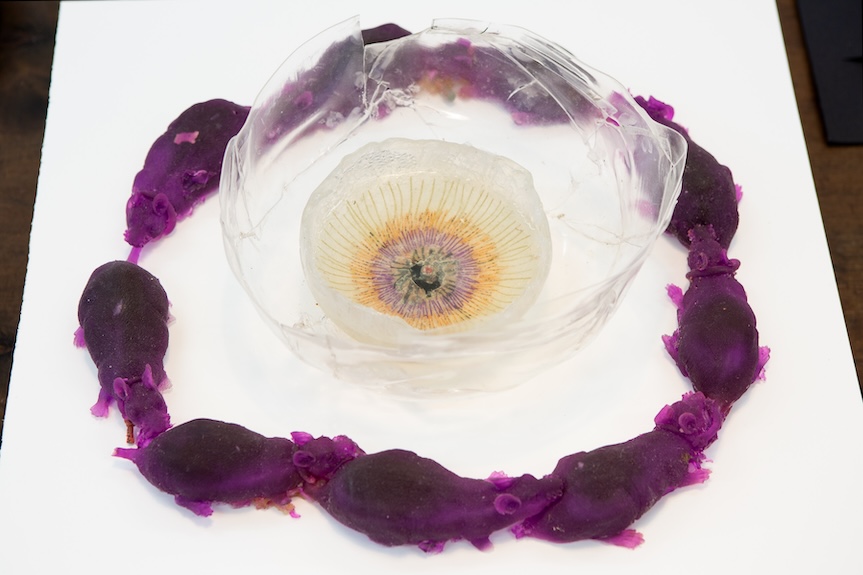
Anders Dickson, “Circular logic around nutrition”, 2020. Installation in Vienna, Izacaia. Photo: Sophia Mairer
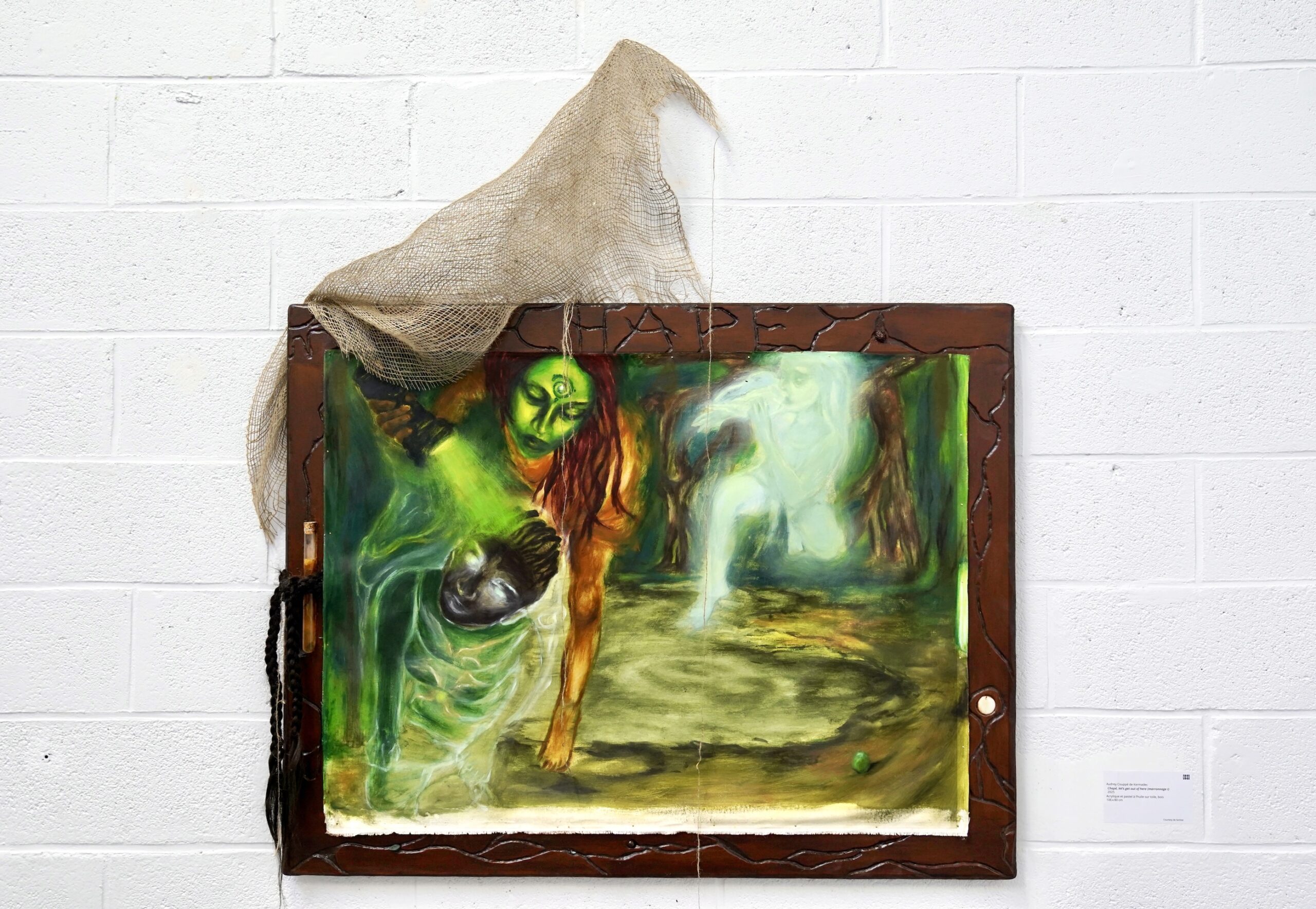
Audrey Couppé de Kermadec, “Chapé, let’s get out of here (marronnage I)”, 2025. Photo: Suture Zéro
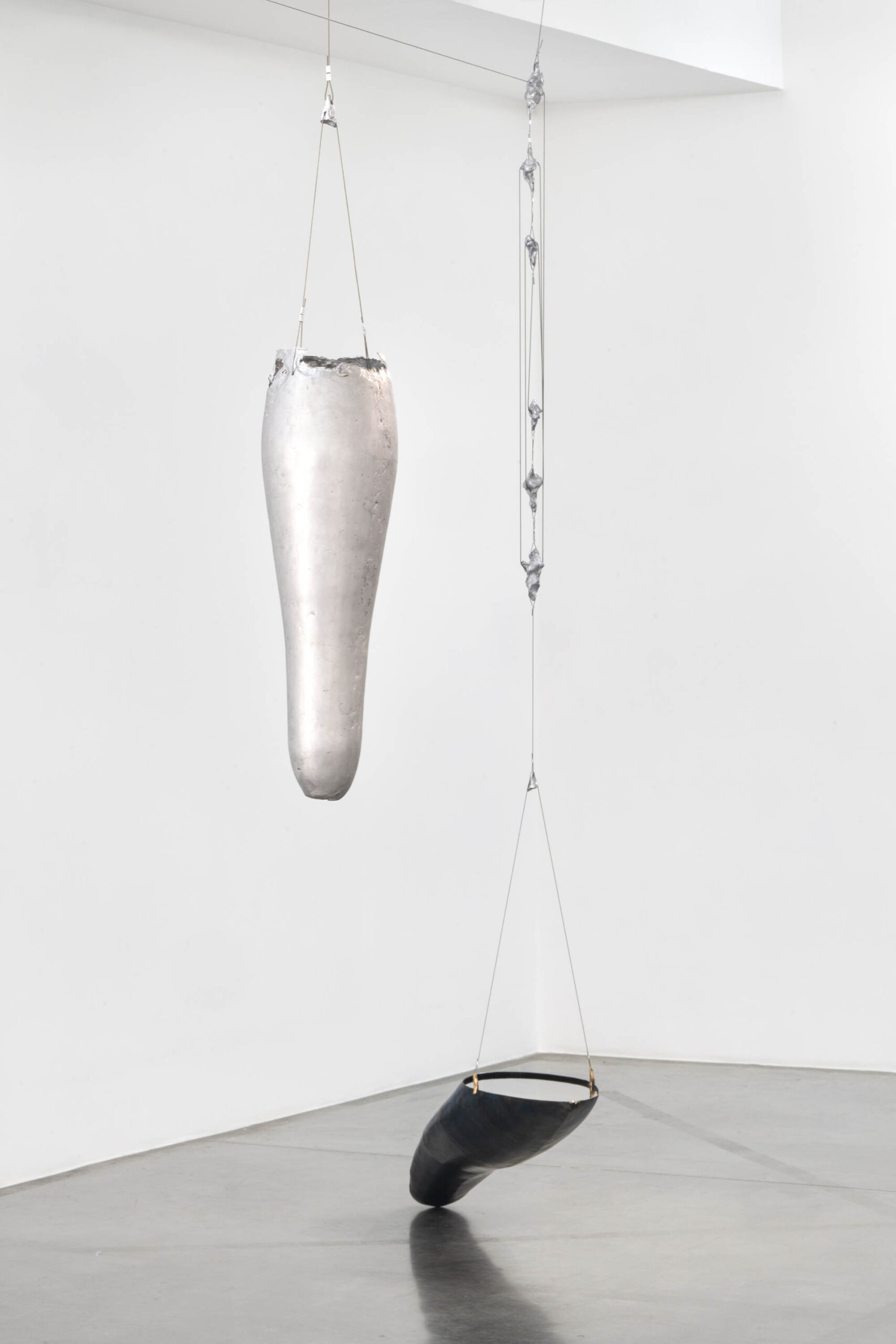
Romain Best, “Coulissements par frictions”, 2023. Photo: Martin Argyroglo
The exhibition explores the power of magic as an ambivalent tool: an instrument of manipulation or persuasion, but also a force for emancipation. The magician works with everyday objects — coins, cards, hats — rooted in a reality that is both material and economic. Money is undoubtedly the most magical object in our societies: it circulates like a promise, disappearing and reappearing in abstract forms, according to market fluctuations. Adrien Genty presents a work inspired by the tricks of small-time street scammers whose mechanisms he replicates, while also reminding us of the practice of close-up magic.
In Lucas Erin’s piece, an actual wallet placed at eye level — borrowed from a friend and containing all his identity papers — suggests the possibility of a theft, whether it be theft of money or an identity. The viewers find themselves faced with a genuine temptation: the illusion shifts to a concrete situation where the line between game and crime is unclear. The figure of the show magician converges, then, with that of the thief. The playing cards featured in Anders Dickson’s work expand on this reflection. Like banknotes or coins, they are ideal tools of manipulation. They pass from hand to hand, disappear, reappear, and multiply. They are at once playful objects, instruments of chance and tools of trickery. Through them, the artists address the systems of value, chance and power that structure our societies. Even before modern currency and card tricks, the figure of the alchemist was already promising to transform metals into gold. This symbolic transformation f inds an echo in the work of Romain Best, who salvages metals from abandoned sites, melting them down and reconfiguring them. The artistic act itself becomes an alchemical operation, where waste is transformed into artwork.
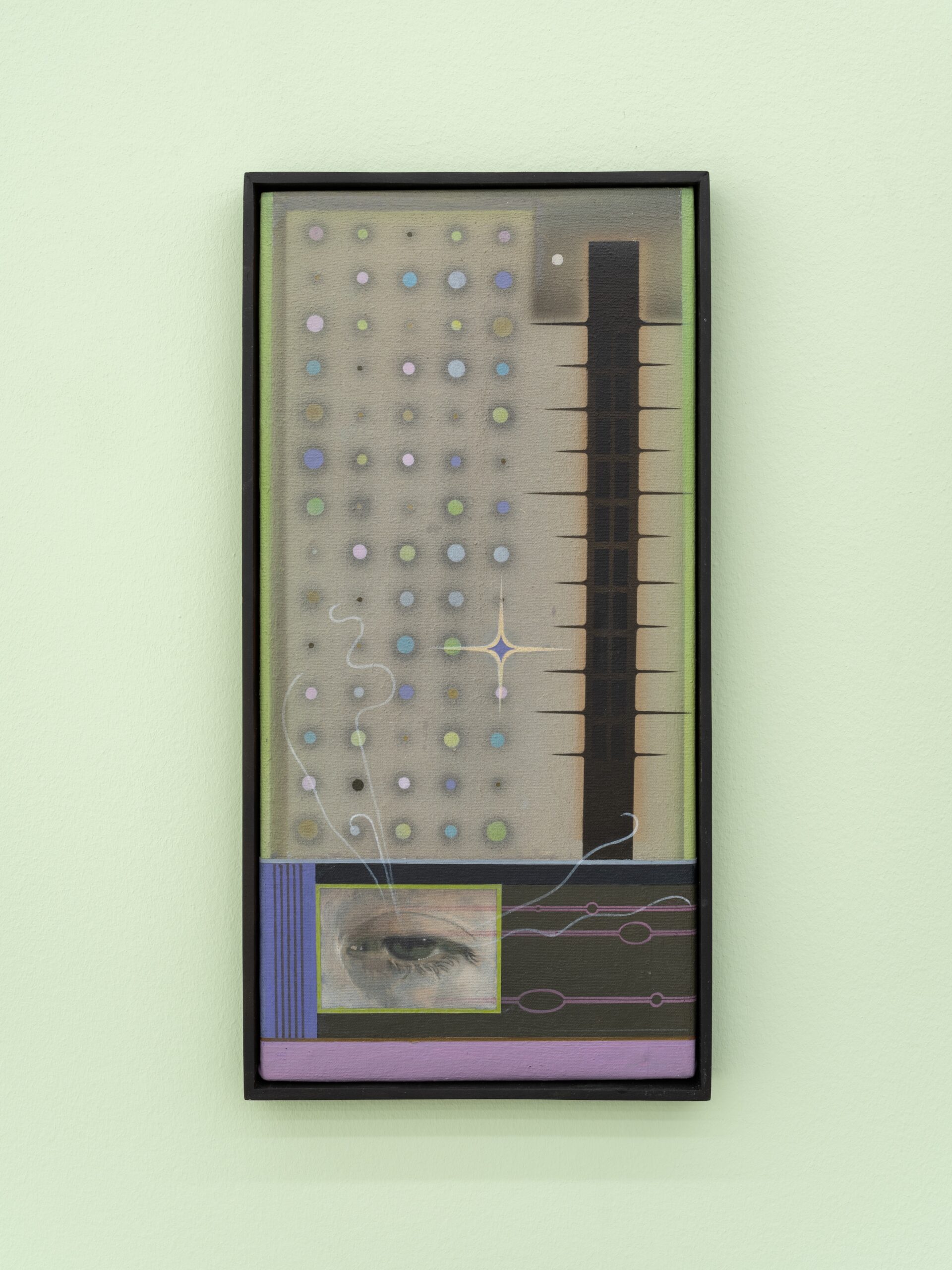
Grichka Commaret, “Grande tour (éveil en progrès)”, 2024. Photo: Martin Argyroglo
Magic is not, however, limited to the visible economy. For some artists, it manifests itself through a collection of symbols present in their work that give rise to other value systems. The three painters in the exhibition, Grichka Commaret, Audrey Couppé de Kermadec and Hatice Pinarbaşi, slip symbols of magic into their paintings, imbued both with their cultures and their everyday environments. In Hatice Pinarbaşi’s work, coffee — used for its divinatory properties, the grounds notably employed in Kurdish culture to read a person’s future or past — becomes marks on the canvas, like a pattern from which figures appear and vanish. Certain signs and images remain deliberately concealed, left to the artists’ discretion like secretformulas. This is particularly true of the work by Audrey Couppé de Kermadec, who presents in this exhibition a mobile-like installation composed of different ritual objects. The figure of the double, present in the two artworks by Grichka Commaret, also reinforces this relationship with perception: have I already seen what I am looking at? Painting, like magic, thus becomes a vehicle for the imagination and a tool for emancipation. These signs constitute another language, a magical vocabulary opening portals to other possible worlds.
Artists and magicians share an often-unspoken desire to transform the world through our perception of it. While in the world of magic shows this transformation is confined to the stage, with the artists it extends beyond by offering possibilities to imagine collectively. By revealing the strategies through which magicians divert our gaze, the exhibition invites us to go beyond what is immediately visible —at least to the eye — to activate other modes of perception. It offers the opportunity to explore other realities: richer, more complex and perhaps also more promising.
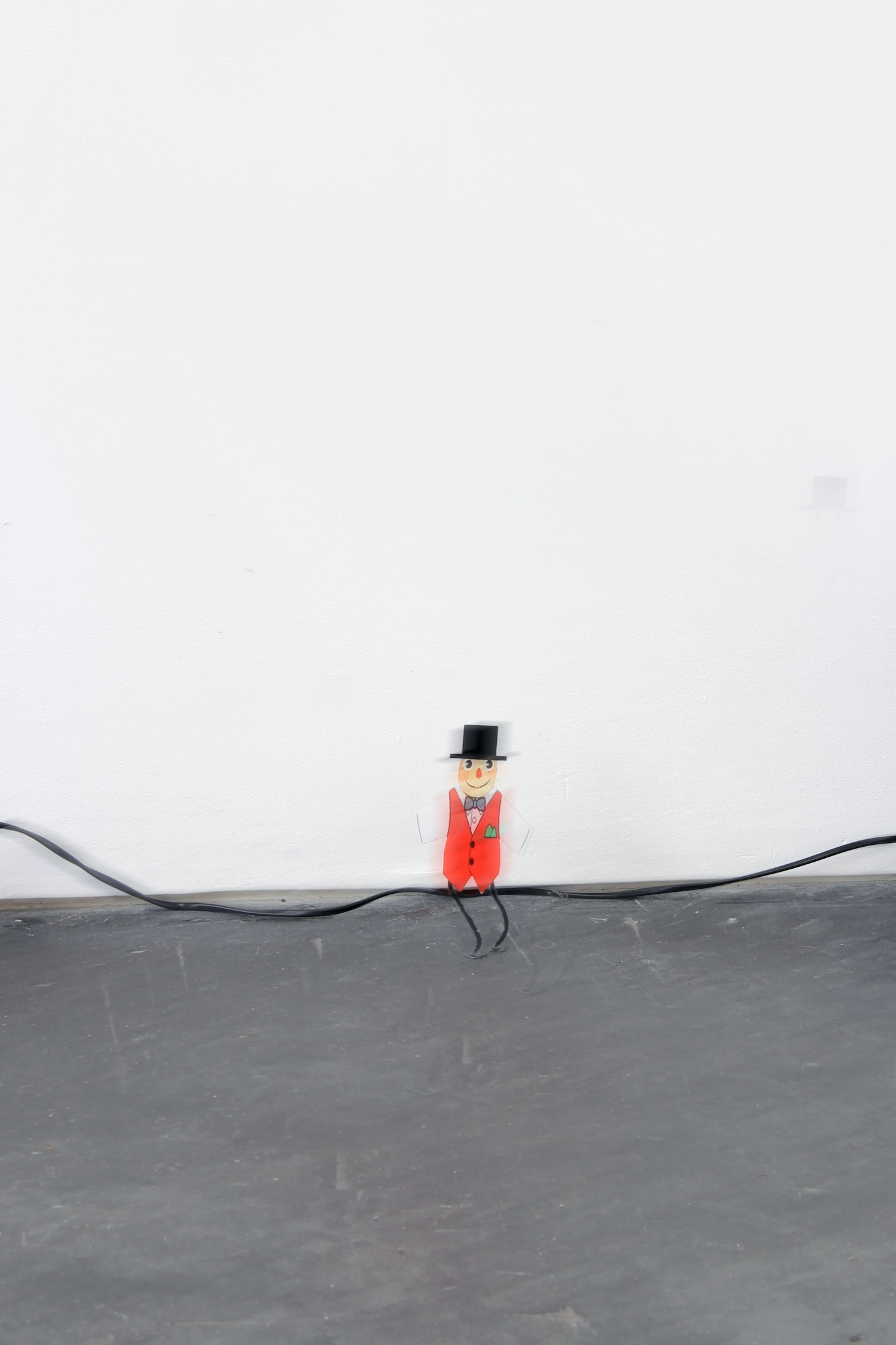
Adrien Genty, “Don’t be deceived”, 2013. Photo: Bagnoler
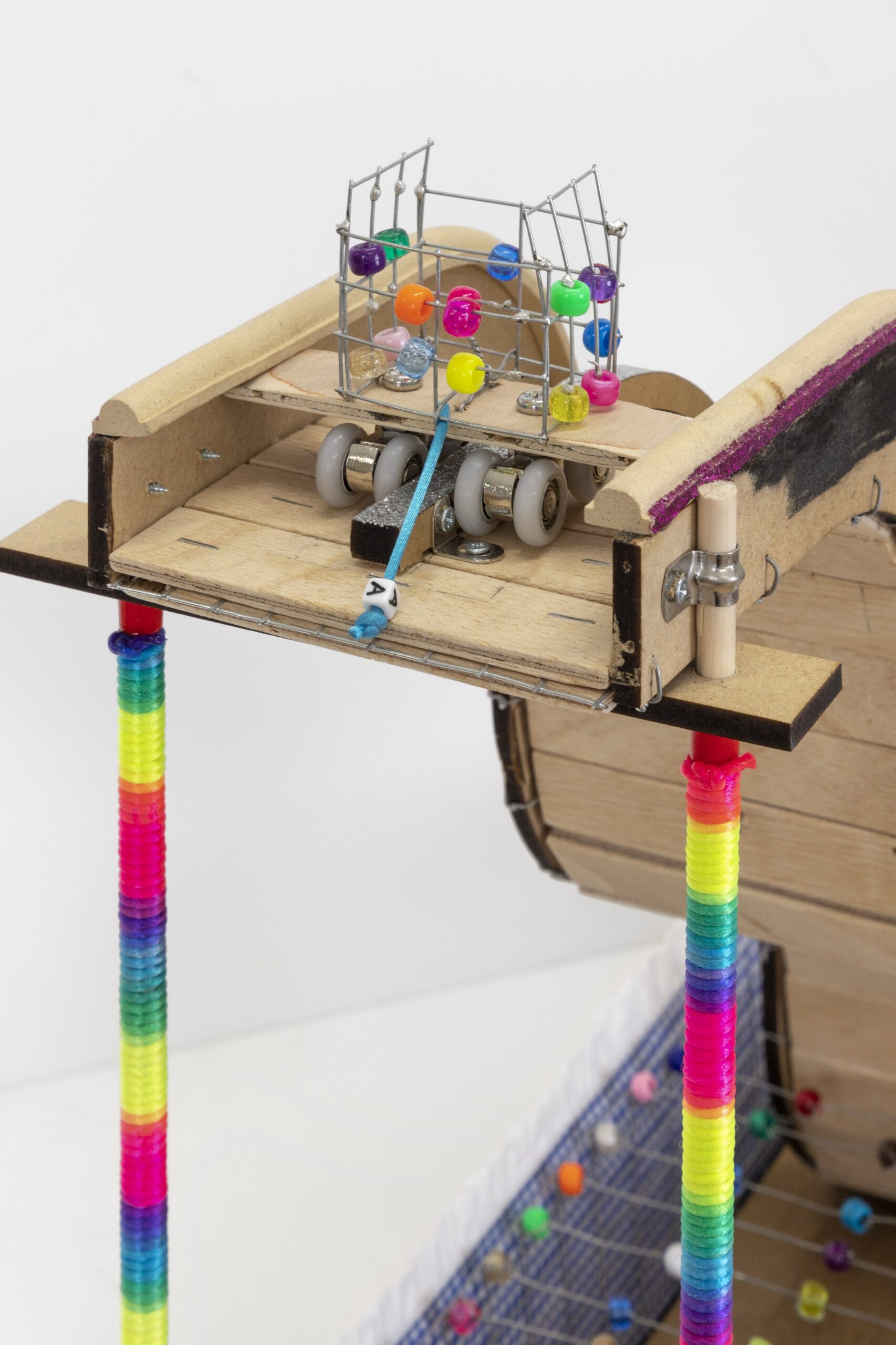
Guendalina Cerruti, “Life is a Rollercoaster”, 2023. Photo: Daria Blum
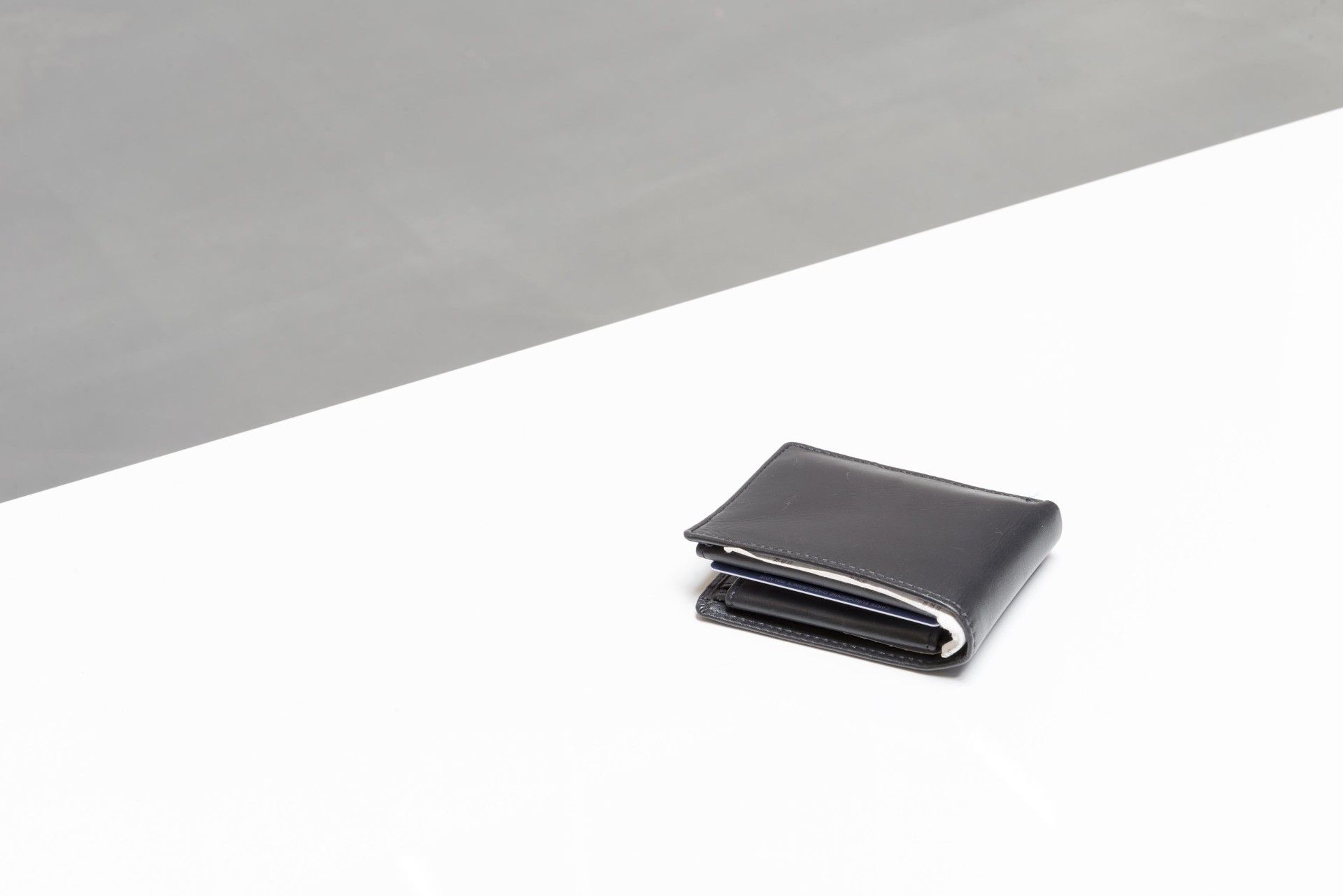
Lucas Erin, “Darren”, 2016. Courtesy: the artist
Show d’Houdini
with: Romain Best, Guendalina Cerruti, Grichka Commaret, Audrey Couppé de Kermadec, Anders Dickson, Adrien Genty, Lucas Erin et Hatice Pinarbaşi
CAC Brétigny
Curated by Marion Vasseur Raluy
April 11 — May 30, 2026


