Tangible Kinships
Vistamare Milano
April 18 — June 20, 2026
Review by Annalisa Inzana
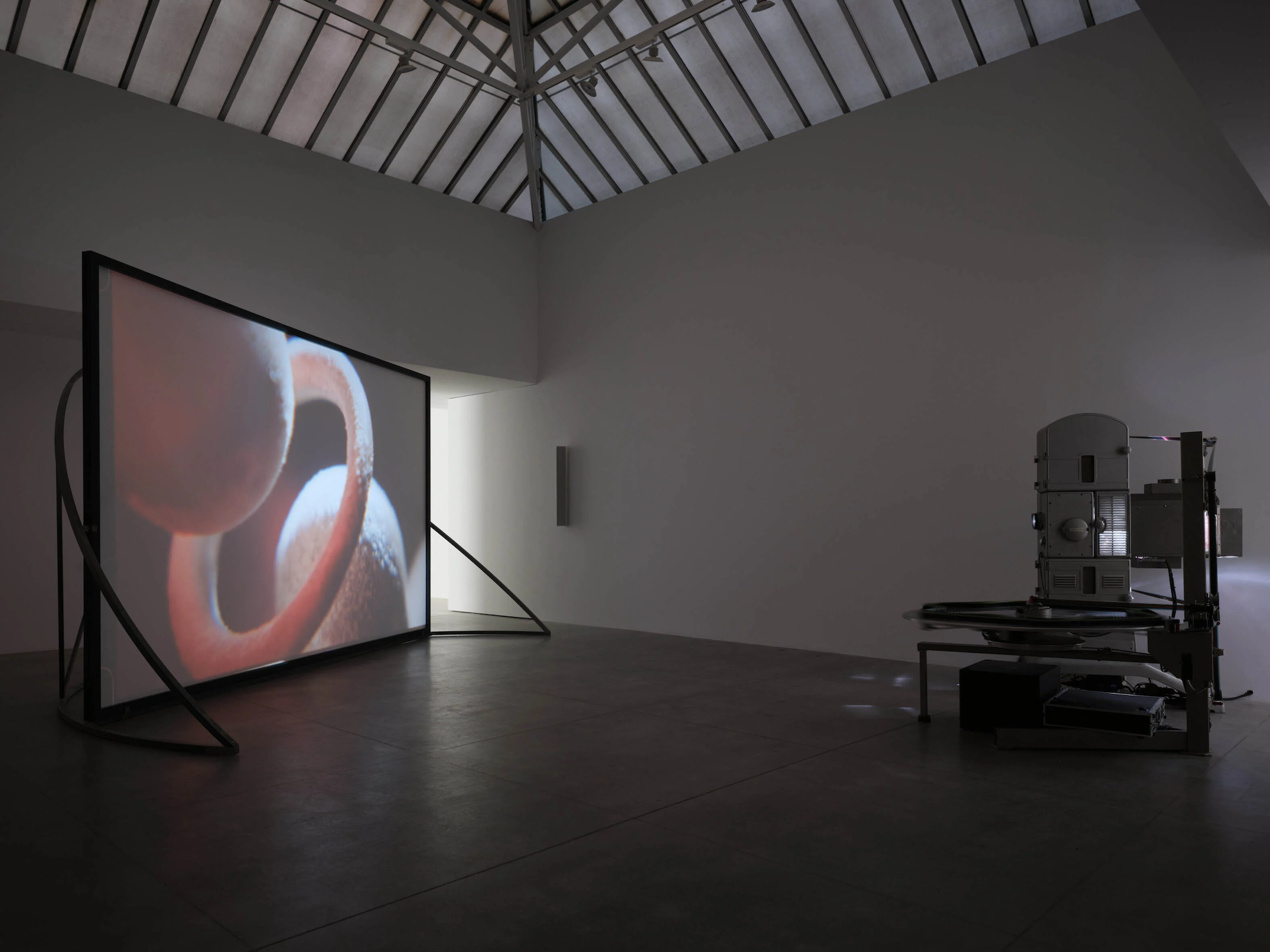
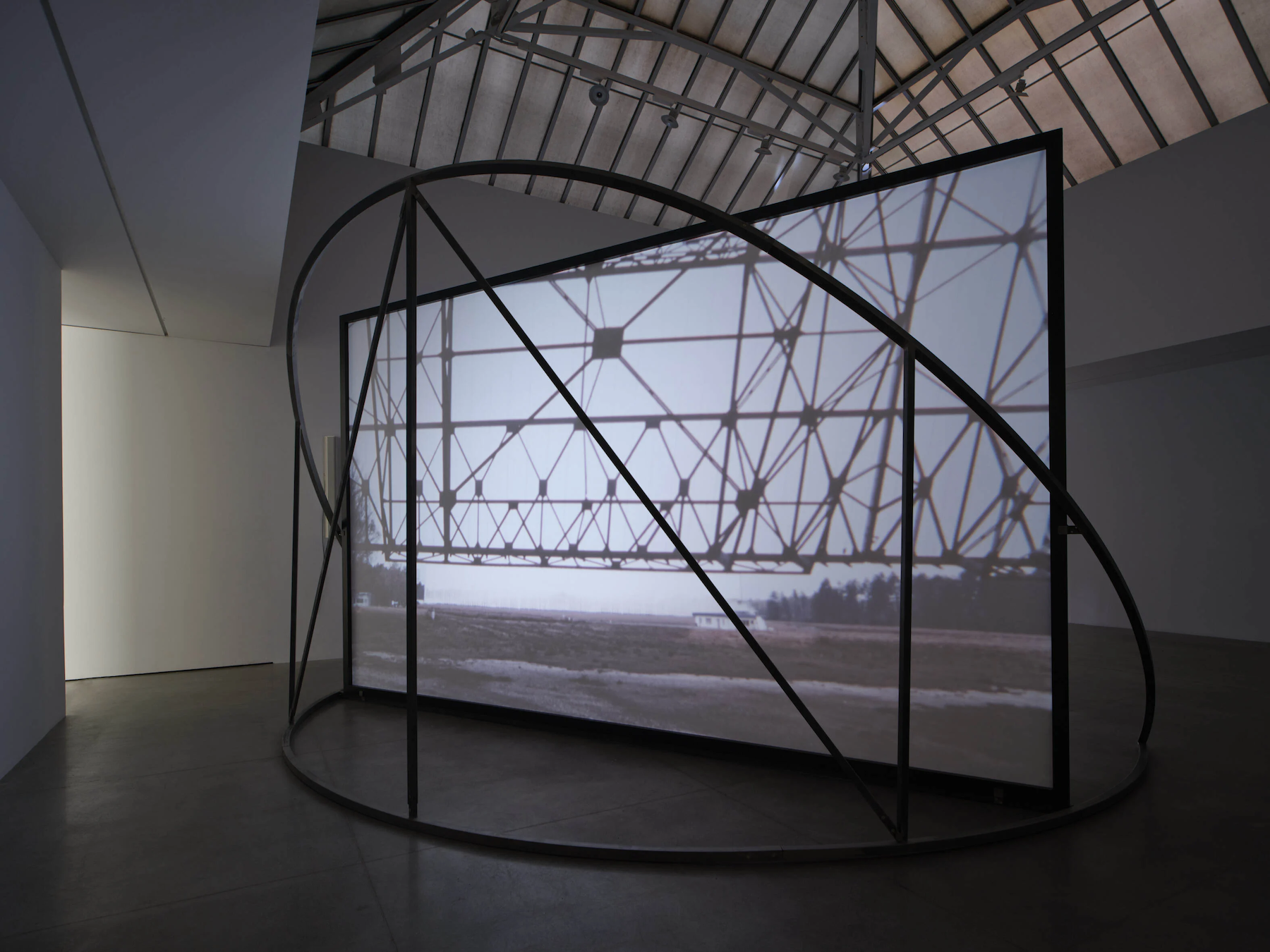
I keep thinking about this. About when, as a child, you take apart a toy to understand how it works, or cut a doll’s hair and, following this change, invent new games with it. This is what Rosa Barba does with Cinema, understood both conceptually, as a means of creating images, and as a physical system made of light, projection, and space. She takes it apart, puts it back together, and increases its communicative potential by expanding our very interpretative ability. She invents new games.
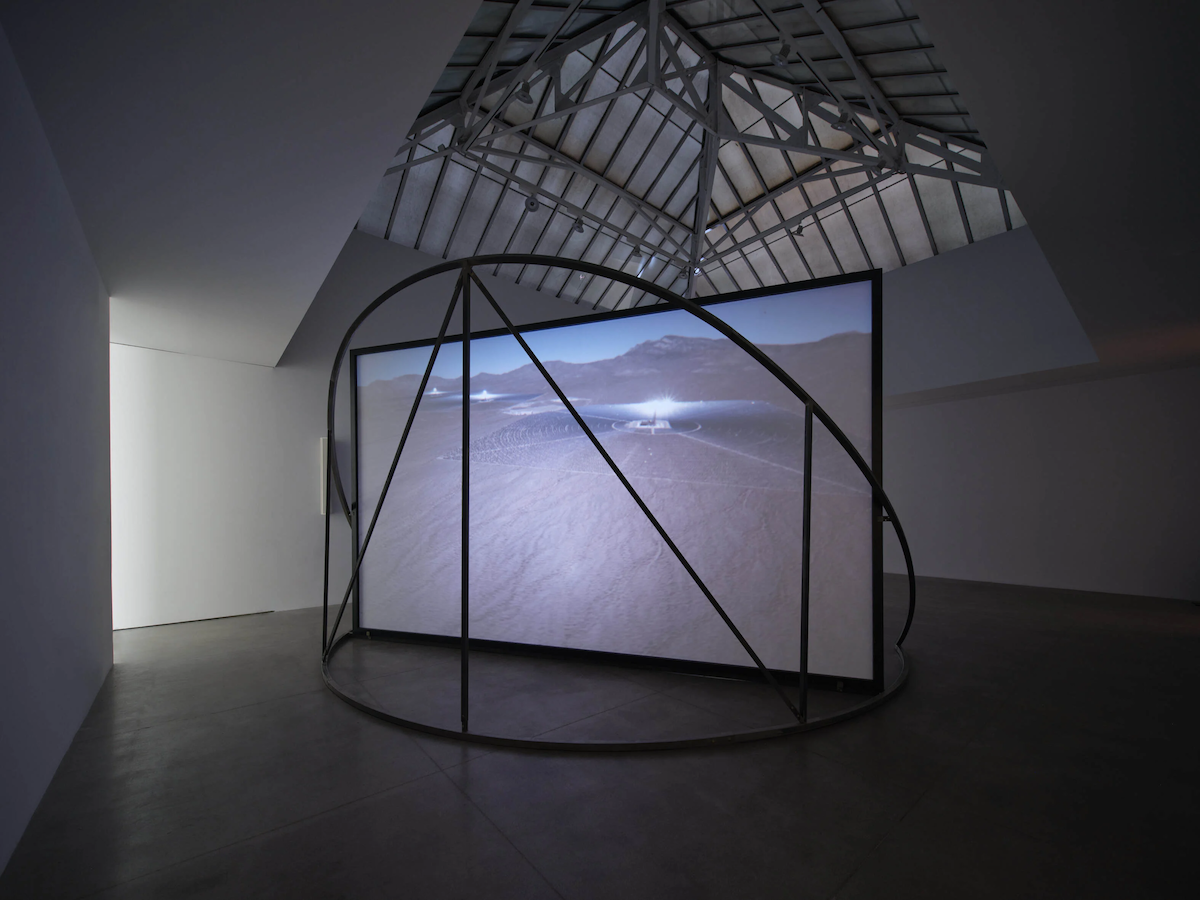
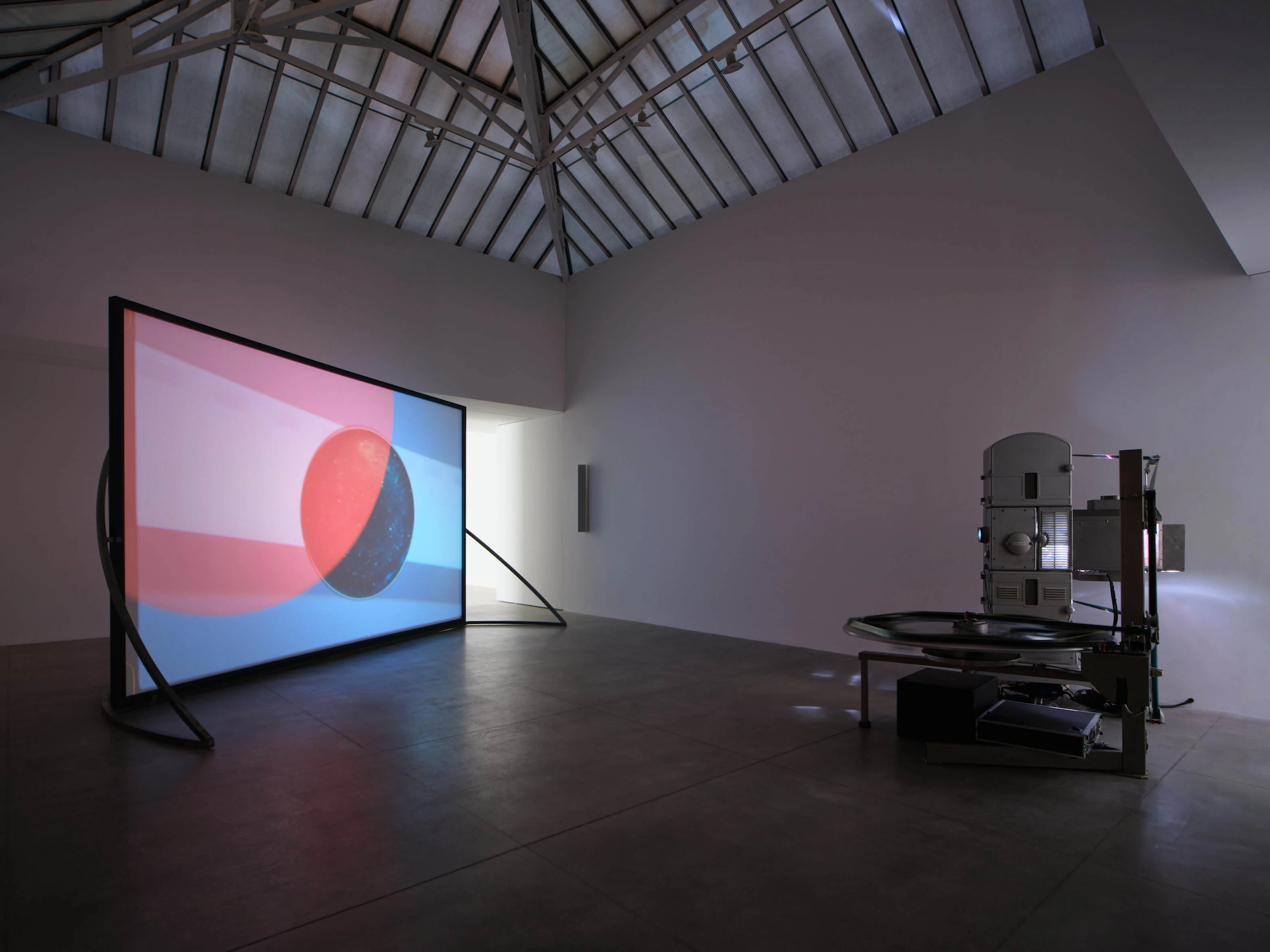
In the large central hall of the gallery, the centerpiece of the Tangible Kinships exhibition (ending June 20), Charge (2025), a 35mm film that depicts landscapes shaped by large technological infrastructures, reflects on the encounter between natural systems and human activity and, more broadly, on how light – of which the work itself is made – influences the way we understand and shape the world. Observing the large projector, the screen on which the images shine, the film racing through its gears, we realize that the key to understanding the entire exhibition lies here. There are all the elements: we are watching a story made of light modulated by celluloid, and this celluloid, together with the devices that make it work, are parts of a large sculpture.
The other works exhibited alongside Charge are but further declinations of a poetics that, by dismantling the ‘cinema machine,’ reveals its essence as a space-time device, a measure of the space we traverse and of time understood as an accumulation of events. This is further confirmed by They Are Taking All My Letters (2025), a large wall-mounted work composed of 34 backlit 70mm film strips, on which, written in black and white, are excerpts from texts by American poets Susan Howe (Boston, 1937), Charles Olson (1910-1970), and Robert Creeley (1926-2005), as well as quotes from the artist herself. The strips, which very slowly flow from top to bottom, mix the sentences, generating ever-new language combinations, suggesting a new reading of time, of the translation of language into image, and, once again, of the structural components of cinema: film and light.
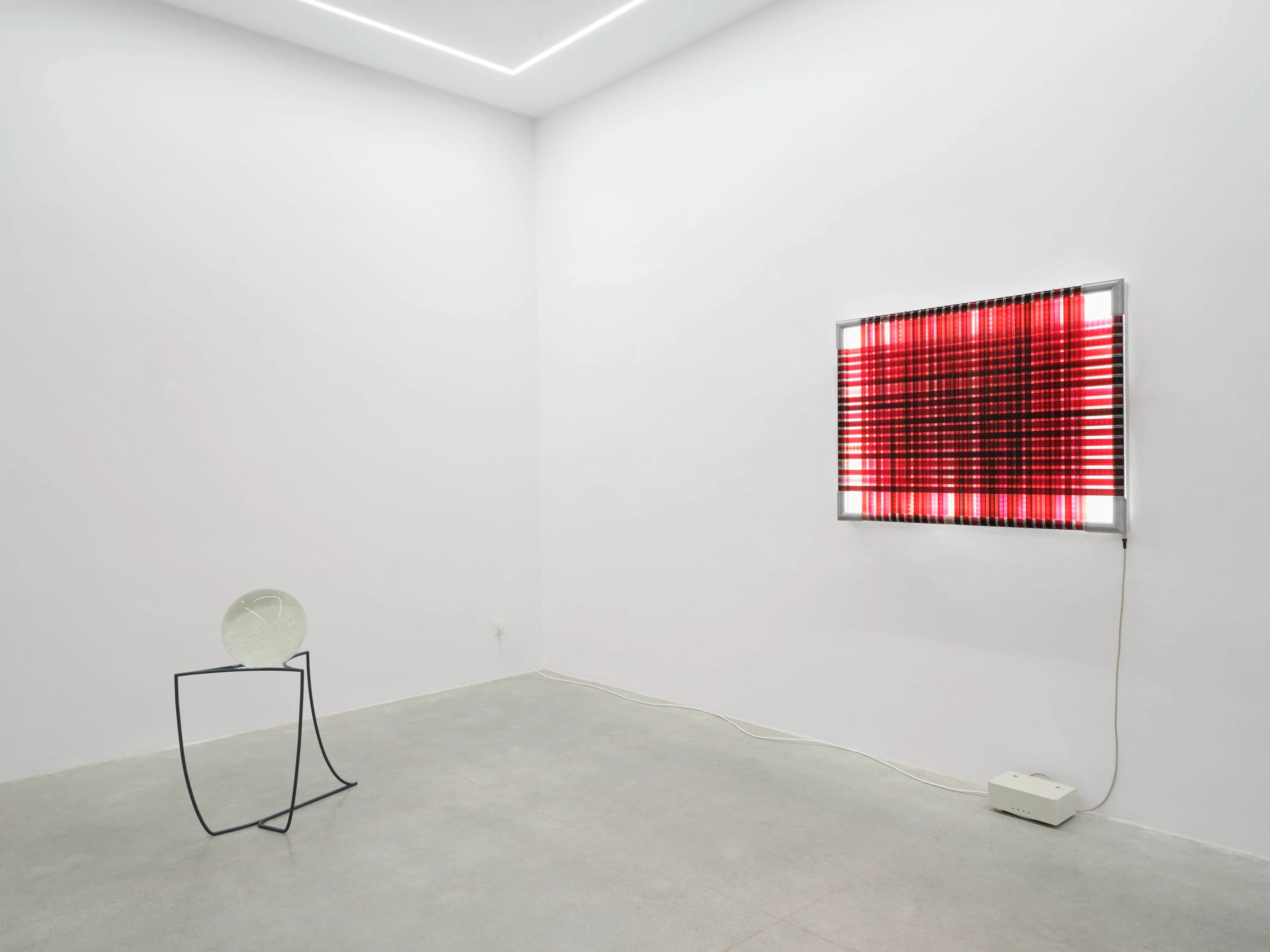
Rosa Barba’s ‘new game’ continues with the other six works that complete the installation, from Twilight Volume of Poetry (2026), a sculpture composed of an iron pedestal and a large transparent glass sphere, a distorting and luminous filter of our gaze, to Colors with Phonetic Similarities (2025), in which a slowly moving 35mm red film texture is backlit by LEDs, and finally Tangible Kinships (2026), in which two 16mm film projectors face each other in front of a screen on which the lit traces of the film become delicate geometric abstractions.
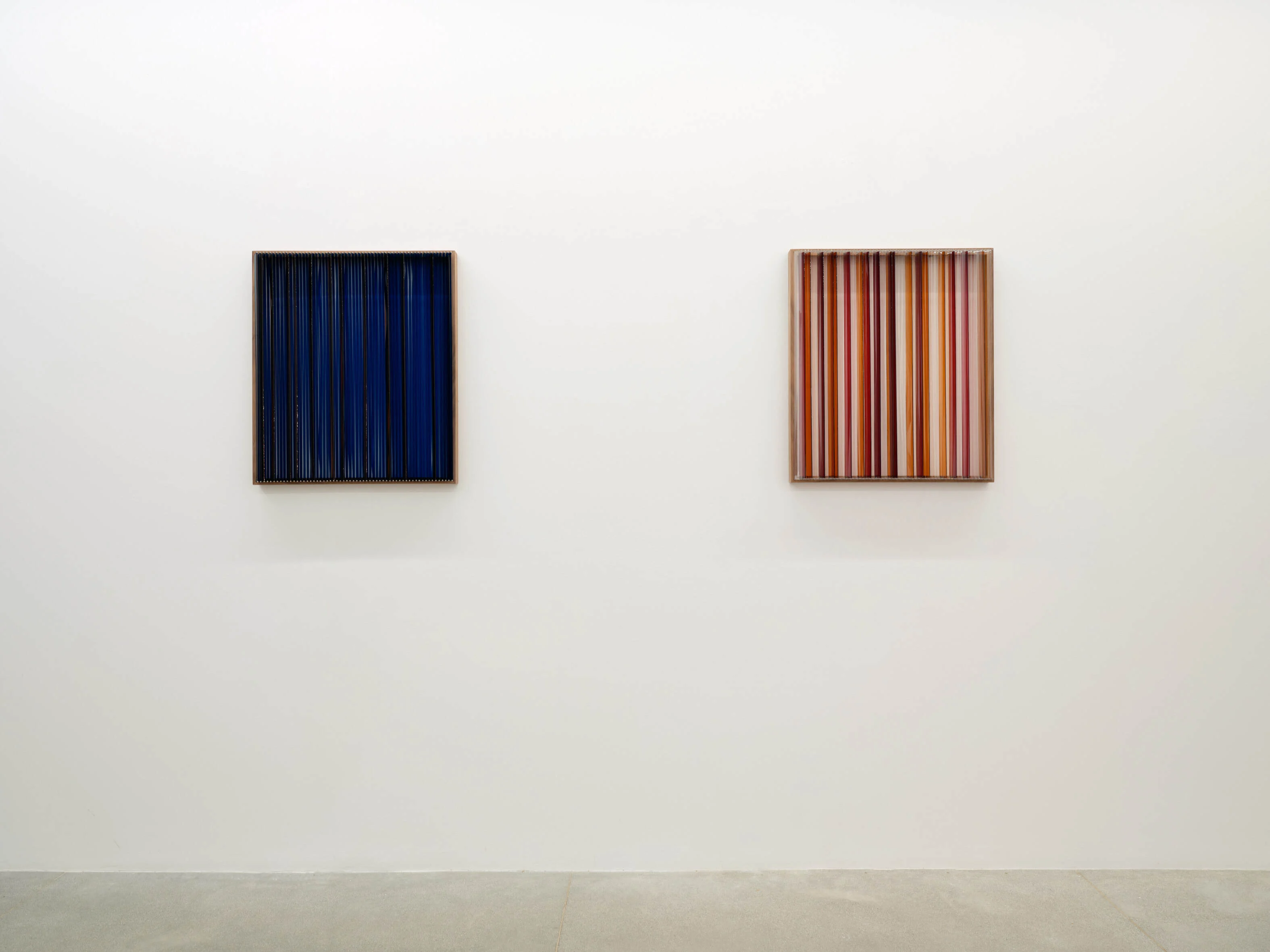
Finally, in front of three versions of Weavers – paintings made with transparent, blue and red 16mm film – I am reminded of Broadway Boogie-Woogie (1940–44) by Piet Mondrian, another artist who loved to take apart another game: that of painting. In these works, which represent the last phase of his painting, Mondrian gets rid of the rigid black grids of the works that had made him famous, directly juxtaposing colored squares designed to reproduce the rhythm of dance, the vitality of Broadway, the grid of its streets, the whizzing of its taxis. Mondrian had dismantled pictorial figuration into its elements, which, once reassembled, still worked – perhaps even better –, just like Rosa Barba who, by dismantling cinema into its basic elements, shows us that it still works, and teaches us much more.
Rosa Barba
Tangible Kinships
Vistamare
April 18 — June 20, 2026
Credits:
Installation views by Agostino Osio
Courtesy the artist and Vistamare Milano/Pescara