Text by Ruba Katrib
CURA. 46
Soft Power
FOCUS
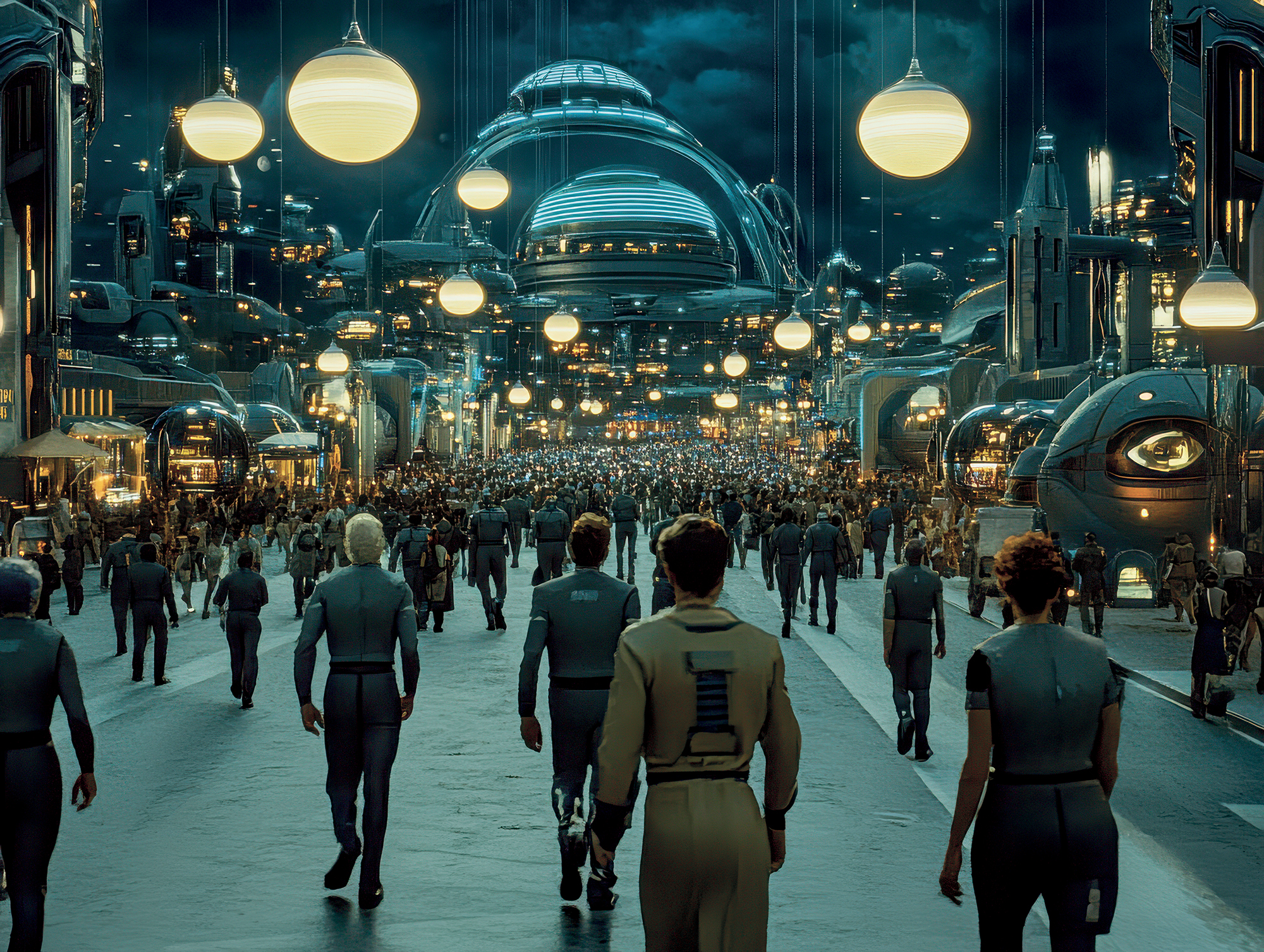
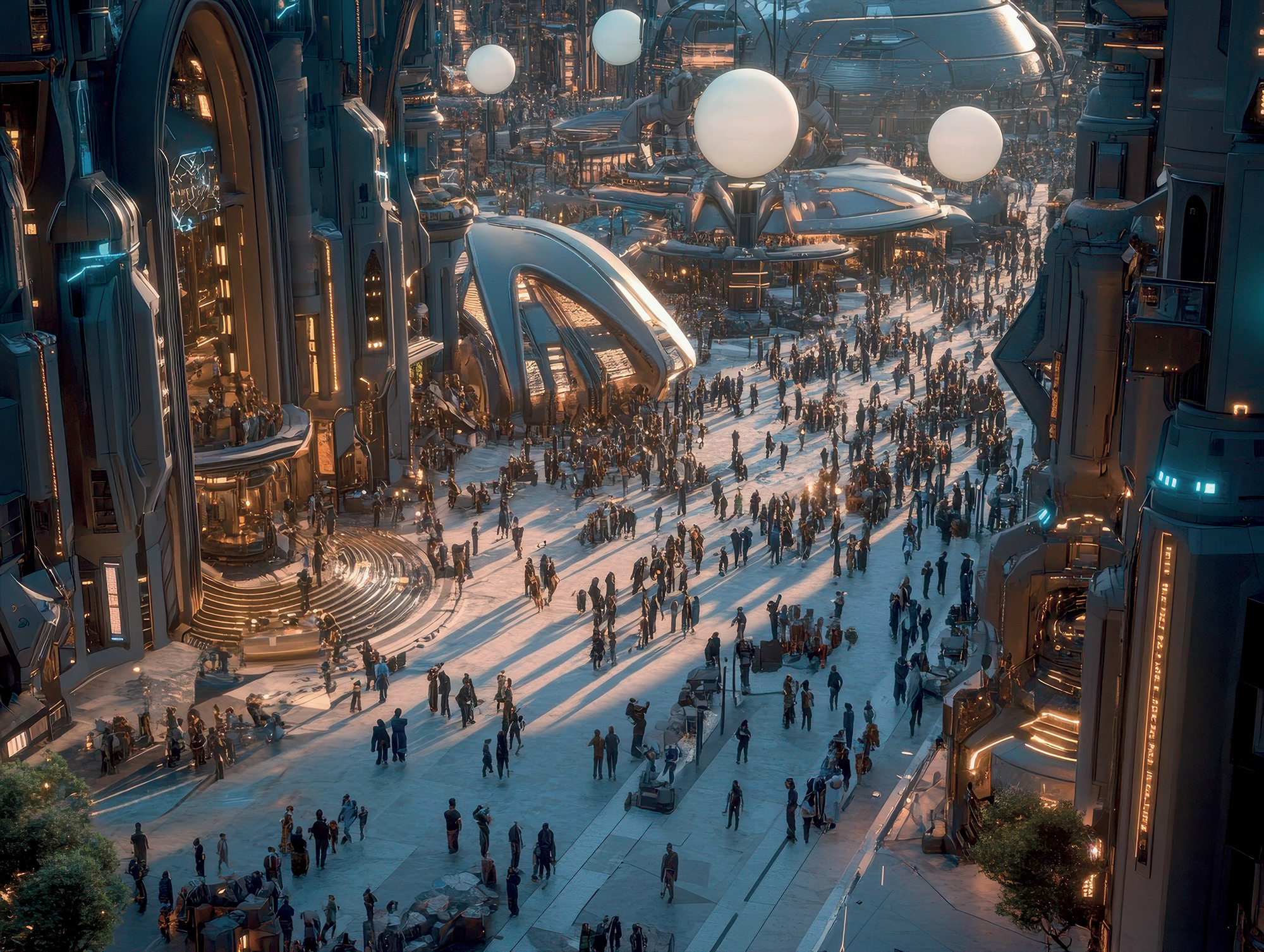
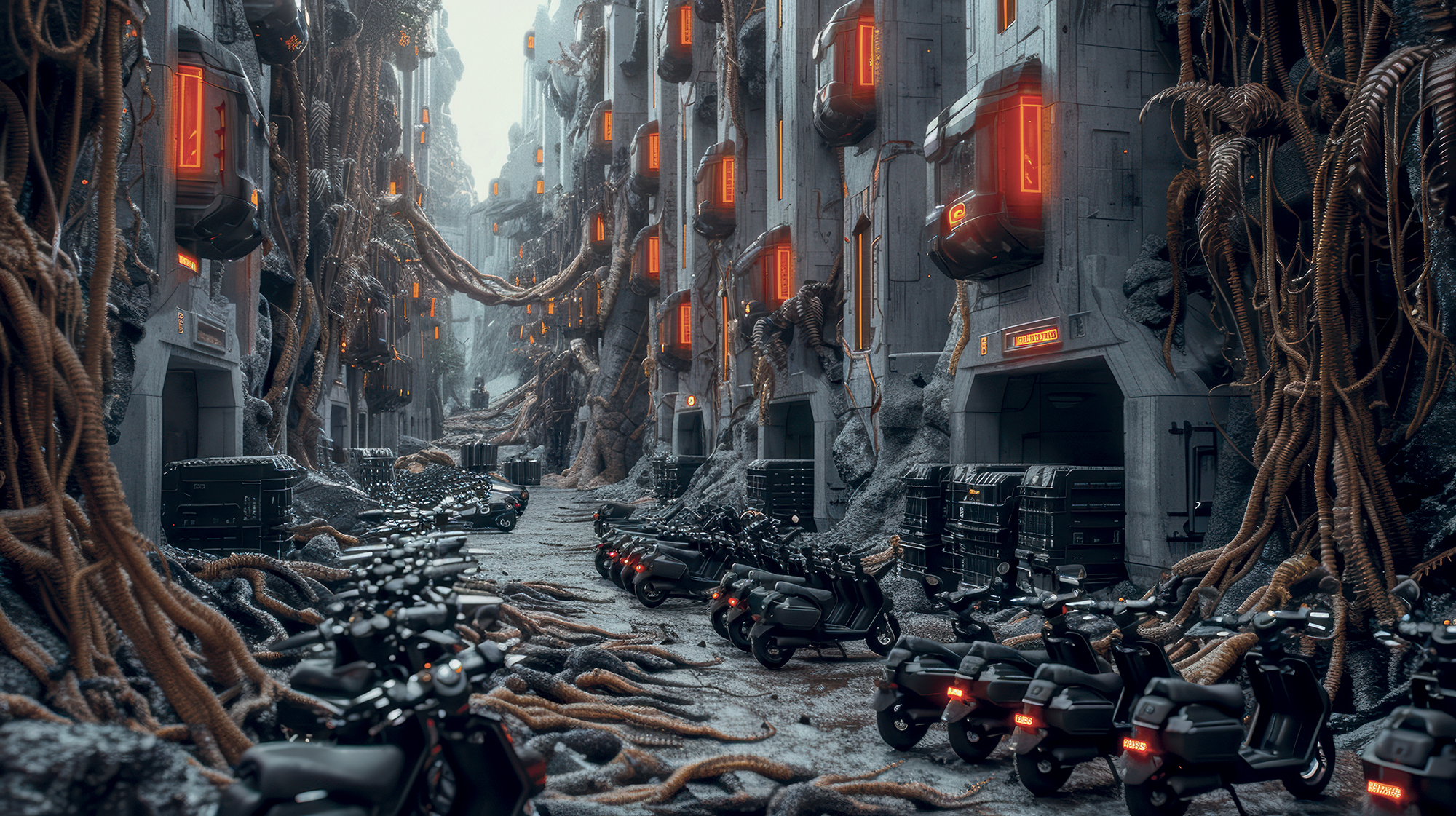
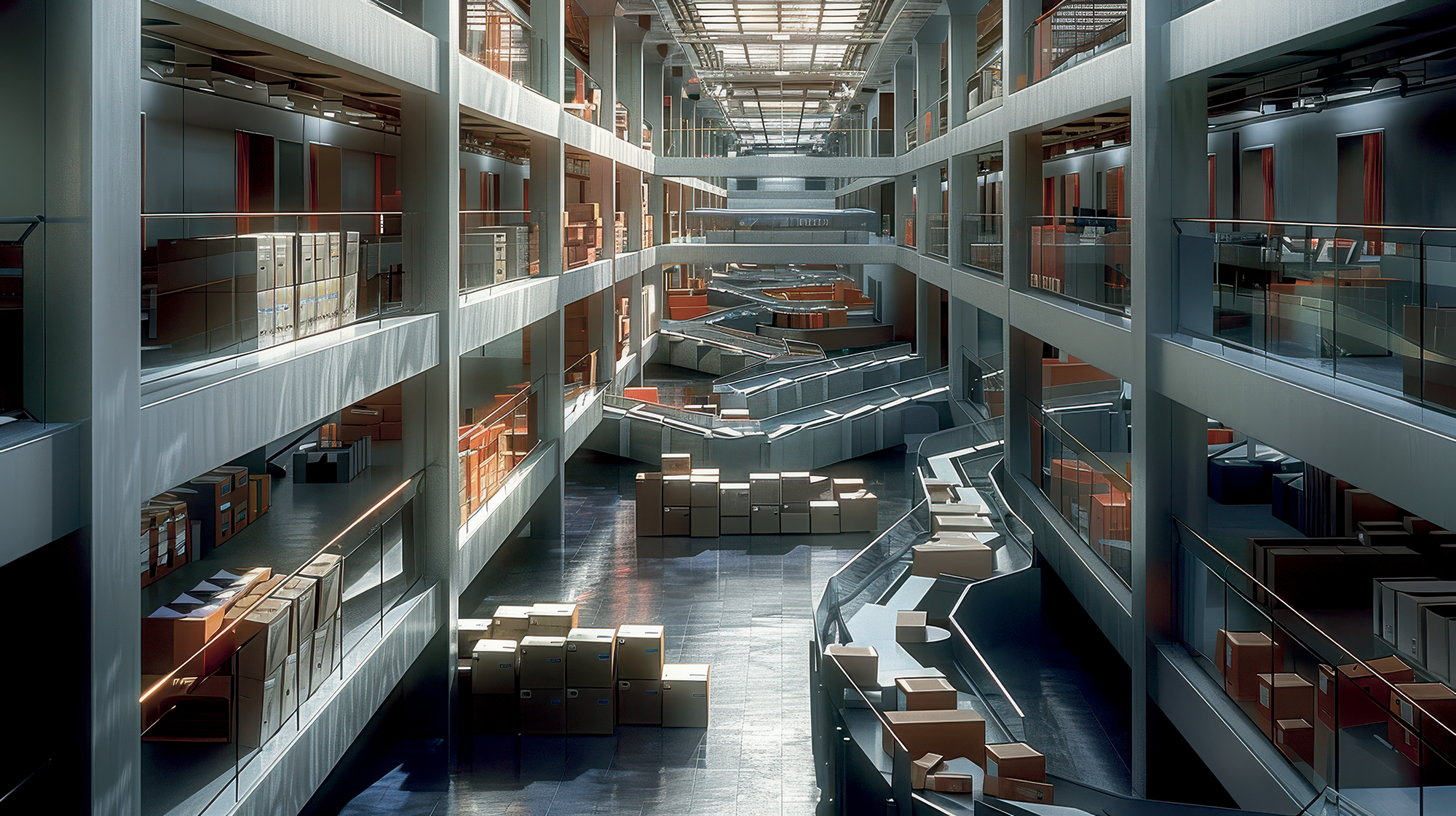
The spark for Ayoung Kim’s Delivery Dancer series came during the lockdown in Seoul during the early days of the Covid-19 pandemic. Kim has always been attuned to sociopolitical dynamics as impacted by events in science and technology, often focusing on little-known moments of interconnection. Past works included science fiction-inflected investigations of the sea, global trade, and petroleum politics. However, as she, like many of us around the world, ordered food and supplies via delivery service apps, Kim became curious about the drivers who remained anonymous—they weren’t allowed to be physically present when you opened the door for health concerns—but who had run of the city while almost everyone else had to stay at home. The grip of gamification and app-ification tightened in those early years of the 2020s. That moment in the recent past marked a turning point where advancements that were already in place ramped up into a future that we perhaps weren’t quite ready for. It also meant there was no turning back.
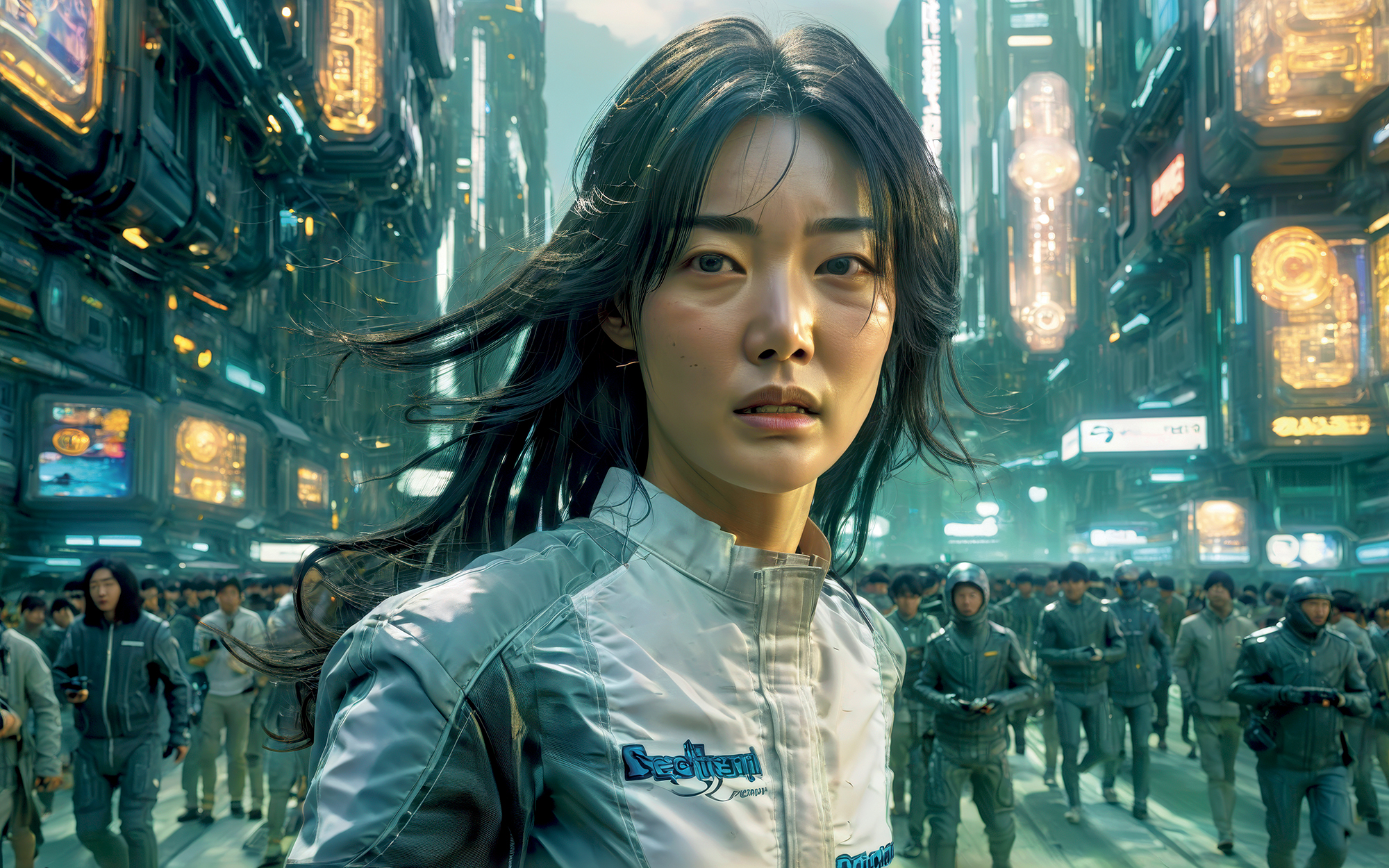
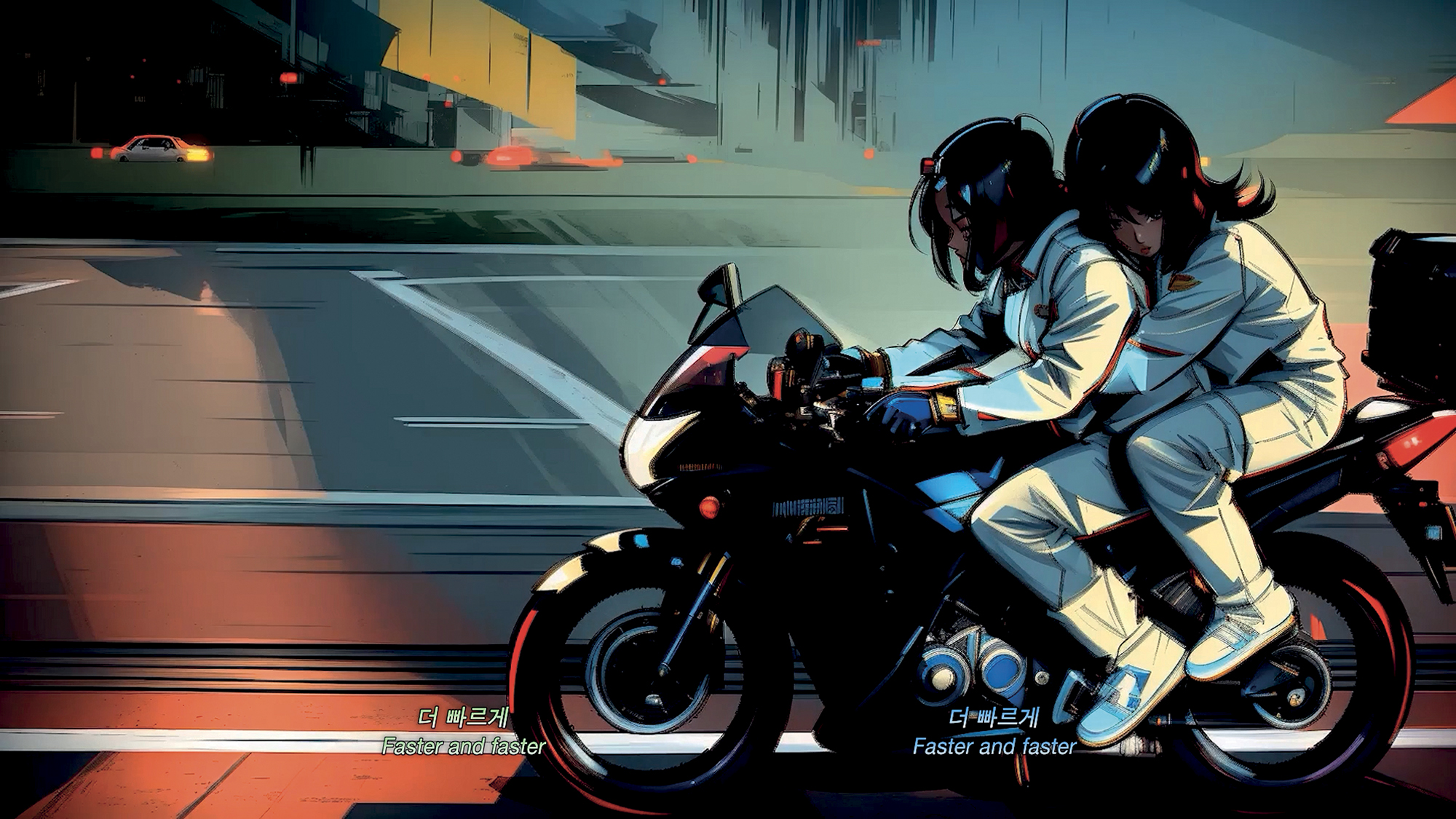
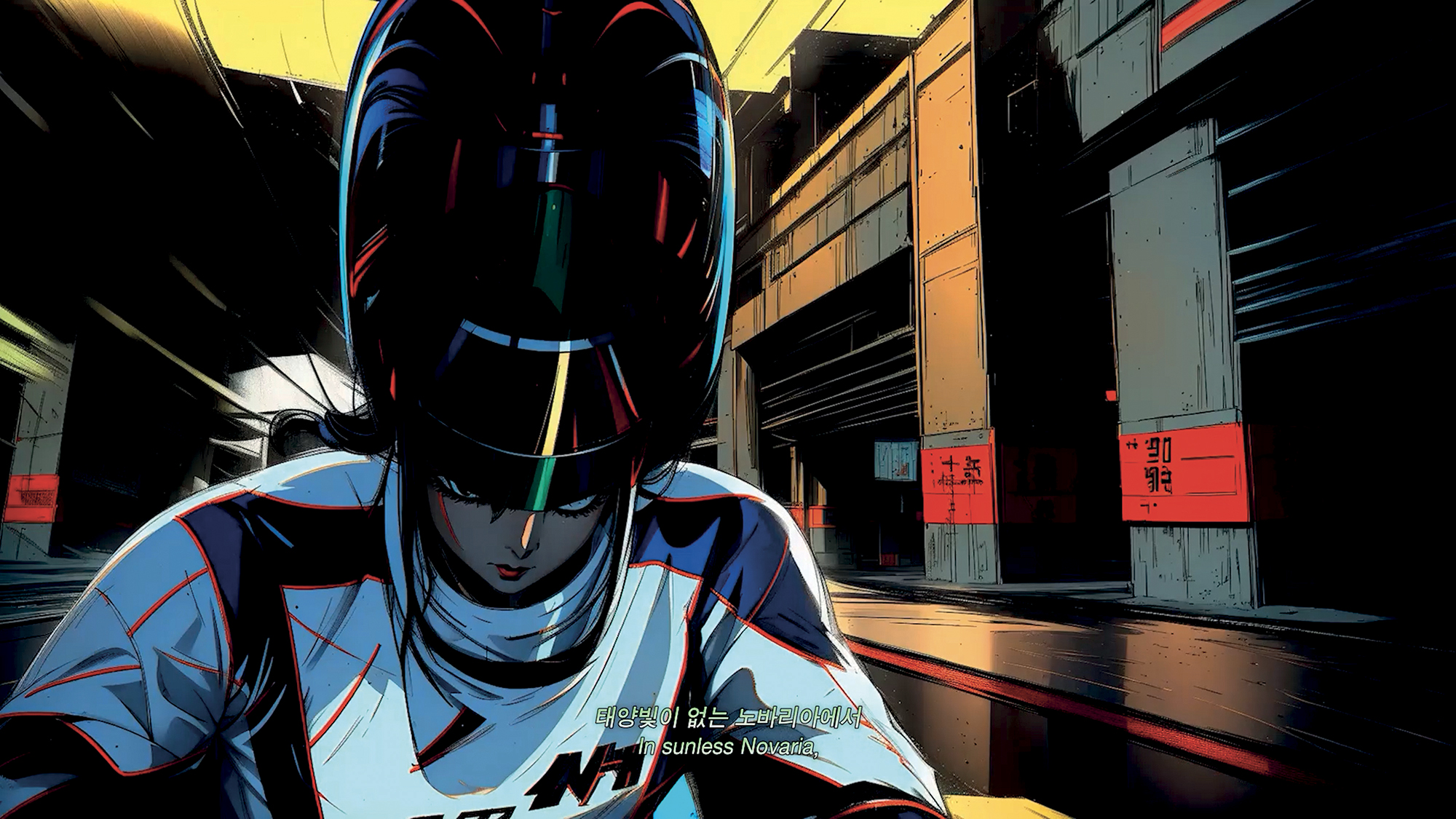
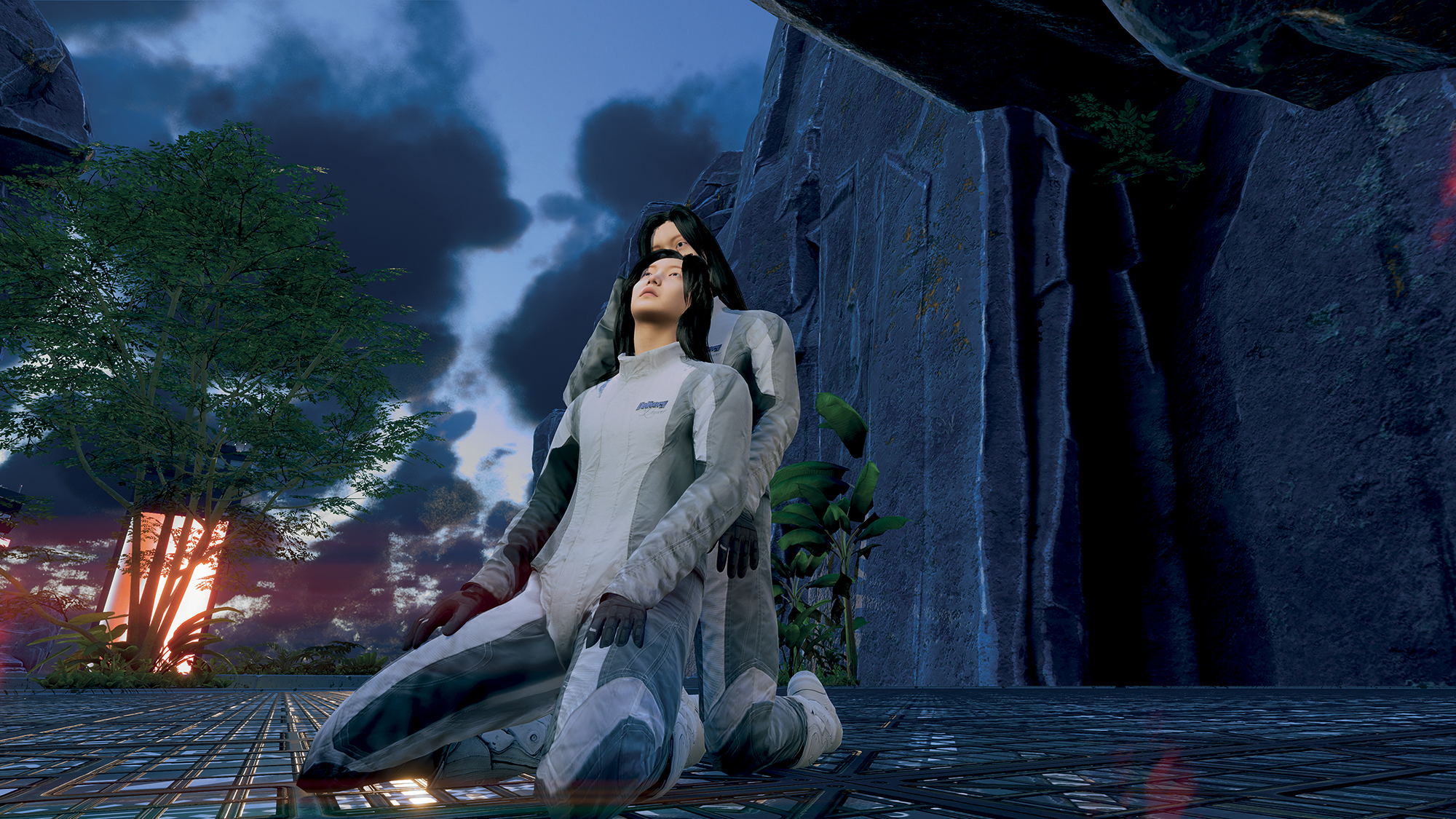
As Kim considered the exterior world that she was suddenly locked out of, she started developing the narrative of Ernst Mo, a female delivery driver who, while doing her job zooming around the city on a motorbike, accidentally fractures the matrix. The break in her reality comes through an encounter with another delivery driver, En Storm, who works for the same Delivery Dancer company. En Storm is Ernst Mo’s double; both of their names are anagrams of the word monster. She is a rebellious twin who is also an “other” and a potential love interest. These two gig workers now don’t just make deliveries on time—they are suddenly swept into a fast-pulsing circular narrative in which they become increasingly entangled as they enter other worlds and realities, pursued by an outside authority called the Timekeepers. The nature of their relationship is one of “heated rivalry,” they fight and compete, but also navigate a romantic attraction that propels them towards one another. In one scene in Delivery Dancer’s Arc: Inverse (2024), En Storm explains how their relationship unfolds in different times and worlds. In some worlds, she says, they enter simultaneously and meet; in others Ernst Mo arrives first; in some she comes after. Their synchronicity evolves and changes, yet they are still somehow intertwined.
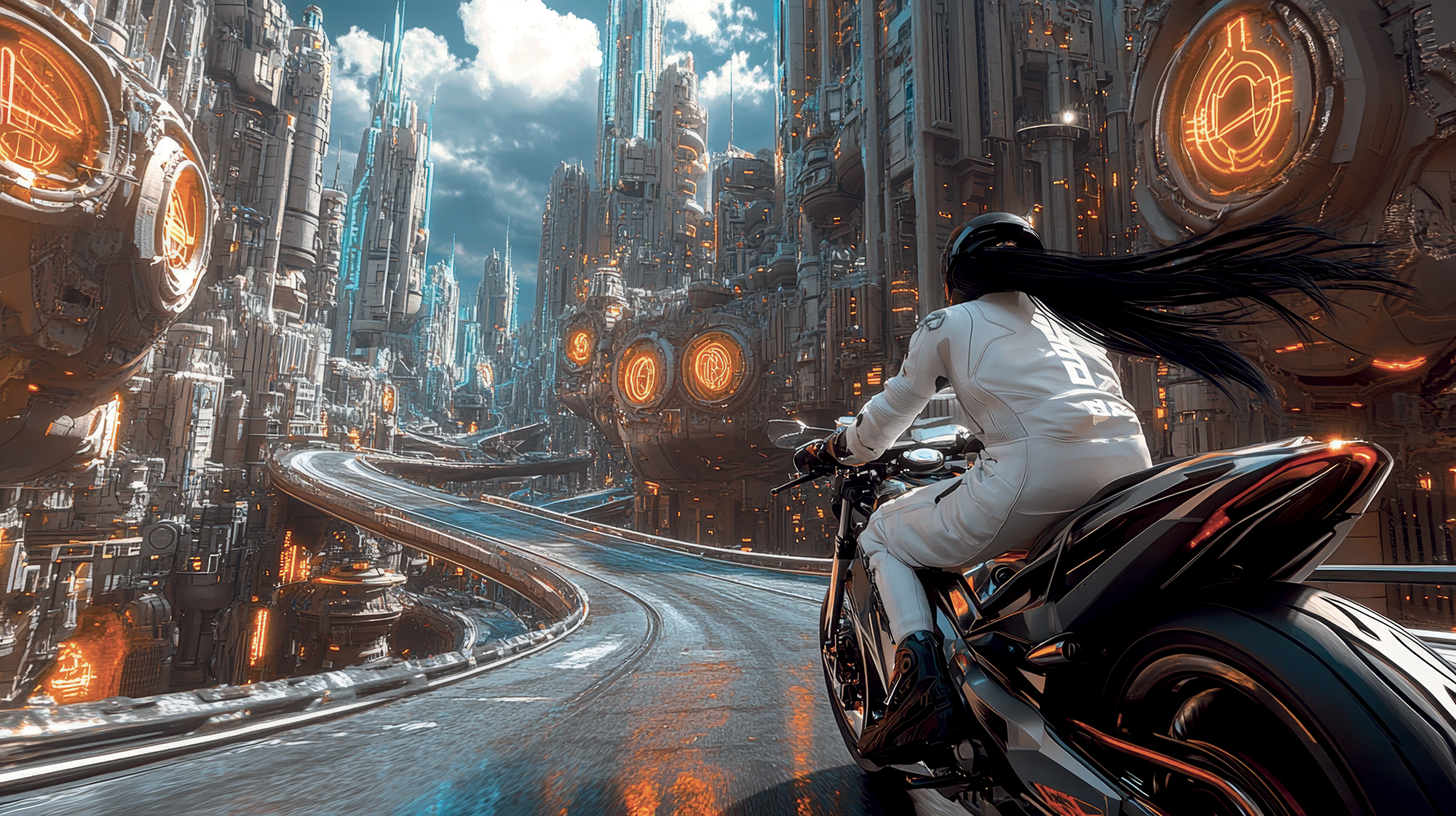
Critical to this series of works is this unclear, mutable, and perhaps muted relationship that turns the world upside down for these two women. Ernst Mo, at least, never intended to rebel. She worries in Delivery Dancer’s Sphere (2022) that her rating is going down on the app after she goes missing during escapades with En Storm. Throughout the three different video works in the series made thus far, Delivery Dancer’s Sphere, Delivery Dancer’s Arc: Inverse, and Delivery Dancer’s Arc: 0° Receiver (2024), Ernst Mo struggles against her love interest, seemingly desiring to return to work more than break off the grid to follow her heart. She not only fights with En Storm, but with herself. The struggle is internal as much as external, and maybe more so. This framing of the narrative is quite specific on Kim’s part. The Hollywood version would see Ernst Mo fighting the Timekeepers to run away with her girlfriend in an alternate universe. Kim’s version is more restrained, and perhaps more aligned with the realities and pull of our obligations under technoprecarity. Labor has no end; its gamification has led to its usurpation of personal time in which such relationships could unfold. There is something unnerving and relatably pragmatic about Ernst Mo’s conflict: she has to get back to work even while she slips out of the spatial limits of Novaria, the enclosed underground city where she lives, into other realms. For example, in the labyrinthine stair structures in desert landscapes featured in Delivery Dancer’s Arc: 0° Receiver that exist in some unknown realm outside, or when she travels undetected at the speed of light, entering “ghost mode” on her motorbike. Many of the spatialized environments she navigates are maze-like and repetitive—an effect of the game engine used to develop the world, but also an element that mirrors the claustrophobic aspect of the narrative. But ultimately, this is her world, where she feels most comfortable, even if her labor and time are extracted via an app and she is under constant surveillance.
Kim’s Delivery Dancer series elaborates and makes fantastical something incredibly quotidian and deeply established. In one sculptural work, she includes a sequence from the Delivery Dancer app playing on an iPhone. In the films, the voice we hear speaking to Ernst Mo via her phone, sending directions and timings for her deliveries, is a sort of disembodied boss—an algorithm programmed to give her instructions and keep her on the move. At several points, the pitch of the voice takes on urgency: Ernst Mo, you haven’t been moving, what is the delay? And the driver has to make excuses for her lapses in time. When the Timekeepers get involved, Ernst Mo has transgressed far enough to warrant her overlords searching for her. Otherwise, the app is the middle manager keeping things in order. This experience extends to many workers around the world today. Further, Kim freely employs the new technologies that ensnare her characters. The mediums of digital technology, AI and video-game engines mix with illustration and live action are not only the material but the message. The real and simulated are blended, something that is more and more apparent in daily life as it is evident in Kim’s fantastical narrative, which mirrors what is, in fact, increasingly quotidian.
The collective Precarity Lab writes in their 2020 manifesto around technoprecarity: “For us, digital networks signal not novel dystopias but old paradigms of domination (the plantation, the colony, the prison, the military-industrial complex, the laboratory, and the special economic zone).”[1] In these spaces, they also point out, people can presumably be replaced by machines or are treated as disposable by the algorithm. Additionally, the veneer of efficiency is not only misleading. The lure of the interface increases voluntary participation in areas where social media platforms and other intermediaries between worker and customer take a cut and automate the management of relations. The persistence of “old paradigms of domination” in new technologies amounts to new clothes for old modes of exploitation.
While Kim doesn’t directly address the topicality of such issues in her work, it is of course essential to the backdrop and the worlds she has developed. Further, while in Korea the app drivers are typically Korean, the class elements at play can be seen in parallel with other cities and countries where drivers come from lower-income and immigrant backgrounds. In this sense, the app can often provide cover for workers who may face socioeconomic challenges getting work elsewhere, but also repeats the same form of domination imposed on precarious populations by other structures. In her telling, love is a reversal of labor that, in this order, cannot be prioritized not only because it can’t be remunerated, but because it is disruptive to economic regimes.
In Kim’s work, this sociopolitical reality as shaped by technologies is turned into fantasy that isn’t so far afield from the current moment. By injecting suggestions of queer love into the world of the delivery driver, Kim amplifies the margins as a space of possibility, even if limited. In the ways that Ernst Mo has emerged from an anonymous driver into an unwitting protagonist of an action romance film, she also knows that there is no escape. This underlies the tragedy that inflects the work. The romantic union is never fulfilled because of societal structures that keep them bound to other clocks and orders. Thus, Ernst Mo makes her deliveries in never-ending time loops, sometimes meeting her double, at other times never knowing she exists.
Ayoung Kim
Text by Ruba Katrib
CURA. 46
Soft Power
All Images
Delivery Dancer’s Arc: Inverse, 2024 (video stills) ©Ayoung Kim
Courtesy: the artist
AYOUNG KIM (b. 1979, South Korea) currently lives and works in Seoul. Kim’s works have been presented at: MoMA PS1, New York (2025); Performa Biennial, New York (2025); M+, Hong Kong (2025, 2024); Hamburger Bahnhof, Berlin (2025); Tate Modern, London (2025); The National Museum of Art, Osaka (2025); Atelier Hermès, Seoul (2025); Copenhagen Contemporary, Copenhagen (2025); Mori Art Museum, Tokyo (2025); ACMI, Melbourne (2024); MoMA, New York (2024), among others.
RUBA KATRIB is Chief Curator and Director of Curatorial Affairs at MoMA PS1, New York, where she oversees the museum’s curatorial program and serves on its leadership team. At PS1, she has organized major solo exhibitions and surveys, including Greater New York. Previously Curator at SculptureCenter, she co-curated the 2018 SITE Santa Fe Biennial.