CURA. 46
Artist + Artist
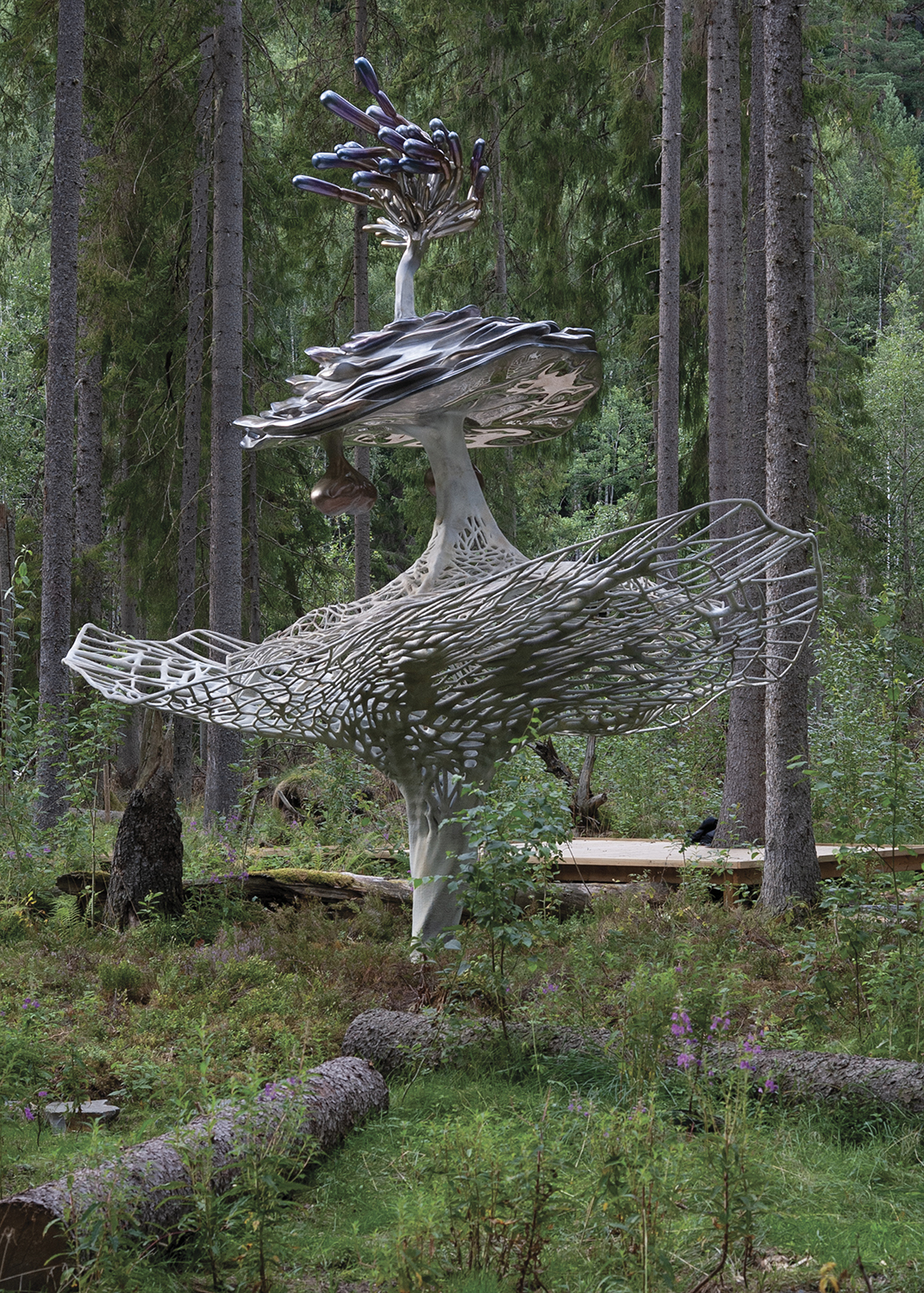
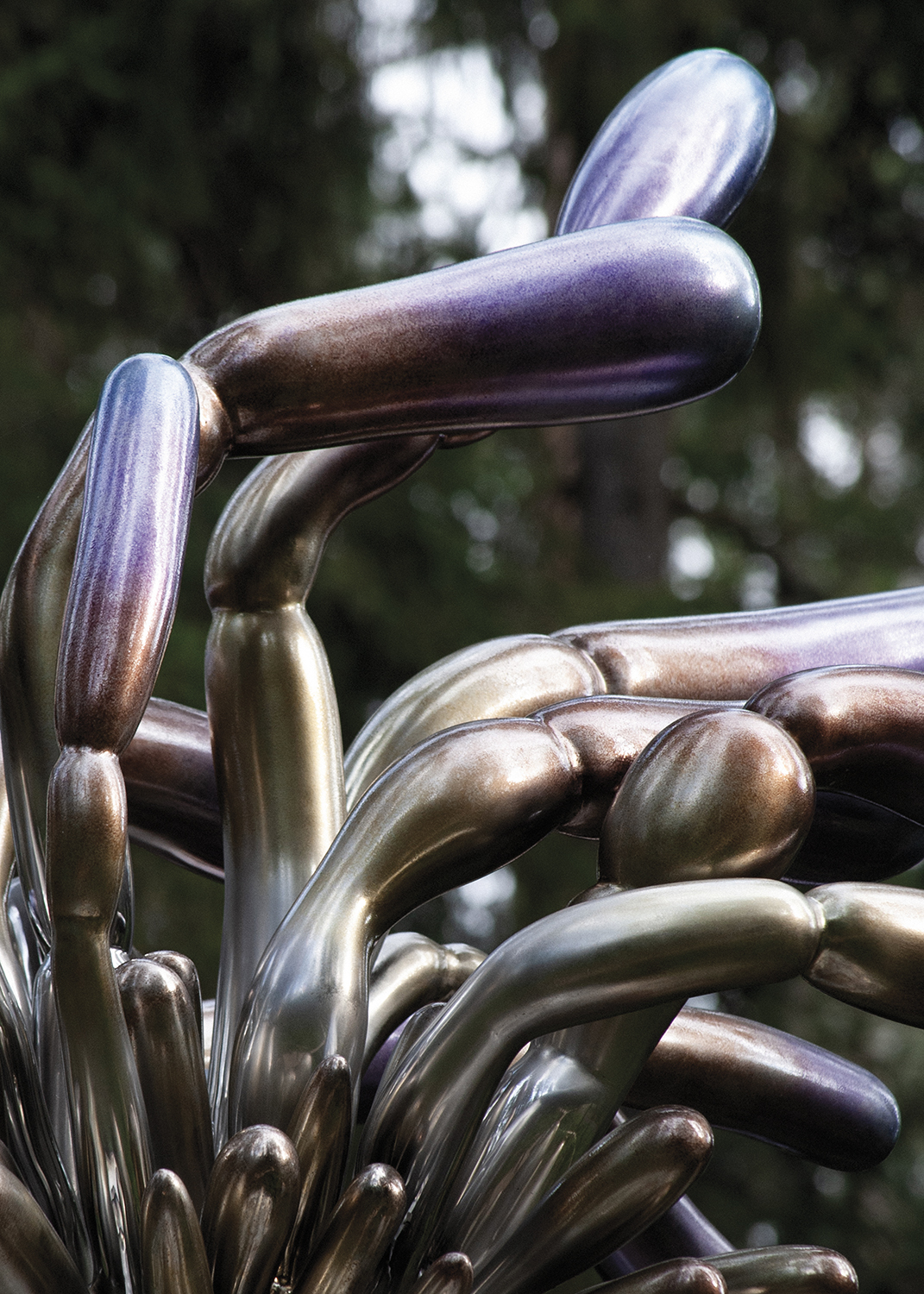
I feel that we share an interest in the big mysteries of human existence and the relationship with new technologies and how they connect to spirituality and transcendence. But I realized we have much more in common than I even thought, especially because of your interest in landscapes and how they connect to the sublime. For example, my current project for Kistefos sculpture park in Norway is anchored in the story of the place. It was a paper mill, the whole forest was planted just to make paper. Recently there was a storm and many trees fell. My project is about resuscitating the paper, bringing it back to the forest, like a journey of the dead, where it will become a new kind of tree made of its own parasites and symbiotic species. There’s going to be a sculpture of a tree that’s six meters tall, and then we’ve been reorganizing or rather intensifying the forest. It’s not really designing a landscape, but it’s more like shifting things around, in order to create a journey where you follow the path of this roll of paper that materializes through benches to a productive garden that emerges from the forest. I also collaborated with a forager who taught me about local plants and their medicinal properties and I asked her to create an elixir that embodies the spirit of the forest. The work is a landscape, a set of sculptures, a garden with fireweed, yarrow, raspberries, and various mushroom cultures, but most importantly the recipe for this elixir that will be also passed through generations. In a way, by entering the landscape and drinking the elixir, you become the forest itself. As always, I’m excited to create an artwork that’s not just fixed in time, but that will constantly evolve, be reinterpreted through natural evolution and oral traditions. It’s a garden of decomposition and resuscitation, in which life, death, and in-between states coexist. Decomposition is not an ending, but a process of transformation through which new rituals, stories, and mythologies emerge.
Can you walk me through some of the images, so I can visualize the distinct episodes of what you’re describing?
I didn’t want to damage the landscape, so I’m creating these boardwalks that you can walk on, almost like prosthetics for the landscape, and then there is that sculpture of the resuscitated tree that’s made of parasites and symbiotic species.
There’s something about it that reminds me of the tree in Avatar.
Yes, true. This is a piece of paper I found in the bin at the paper factory, it’s like paper pulp. At the beginning, you have this really smooth paper, and I thought maybe if I unfolded it, it could become a bench, and then the paper started creasing and becoming more and more like bark. The benches are cast in aluminum and they’re dispersed all across the landscape. There are also dispensers that were blown in glass, in which the elixir will be served. The whole forest becomes the artwork. When I visited the forest first, it wasn’t damaged. And then last year there was a massive storm. I went there, I did a map of all the fallen trees, and I asked to keep them all, all the stumps. As you walk through this land, you cross all these different conditions, you’re witnessing the story of the forest: its industrial history, natural events, human histories... So, it’s also a journey in time, you’re witnessing its past and its future. You’re also witnessing death, cadavers, decomposing states, and intense bursts of life.
Can you tell me about the other projects you are currently working on?
I’m working on a project for the city of Helsinki. When they invited me, I wasn’t sure, because it’s a new development area near a train station. Then I started to think about the beginning of a new human community, about all the different kinds of spheres of human life. If we think of ourselves as cells, constituting a larger megaorganism, what ties us together? What are all the different circles that define us all the way from the individual to the community to the school to the local state to national culture, etc.? What are the values that bind each of these different spheres as you scale up? I was thinking about a sculpture that would be made of the sum of its parts. I looked at reindeers in Finland. Especially in the north, reindeers and humans have evolved together to follow cycles of migrations. Reindeers have tendons in their legs that click, so it means that when they walk together they can hear each other. There are lots of stories in Finland about the albino reindeers, because they’re deaf. It means they can’t really hear the clicks of the rest of the group, so sometimes they get lost. I was researching all these stories about reindeers, and then I was thinking about their bells, and how they also create new sound landscapes. I was looking at bell costumes around the world, and at foxgloves, and how they are connected to the heart. Do you know about the Doctrine of Signatures?
No, tell me more about it.
It’s a very old oral body of knowledge that decodes the natural world, and it’s looking at the structure of plants, their color, their behavior, and how they relate to their environment. How many petals do flowers have? What time of the day do they open up or do they close? The most famous one is the lungwort, whose leaves look like an infected lung, which is why they were given to people who had respiratory diseases. Basically it’s about looking at plants and decoding from their appearance how we humans can collaborate with them. The foxglove is usually considered as being very good for the heart, because its structure is vertical, and you can read the way the flowers grow as a heartbeat.
That is so beautiful!
Yes, I love it. So, the work is a ritual anchored around a sculpture. I’m inviting a composer to write a score for 200 bells that will be gifted to the community and it will be a dance and sound piece, and a ritual will be performed yearly around the sculpture that’s a sort of bell creature.
How did you arrive at doing what you do?
I studied design, actually. I was rejected from all the art schools I applied to. But then I entered a design course at the Royal College of Art, which was quite experimental, it was all about creating scenarios for our human futures in relation to new technologies, and I learned a lot there. I learned how to build stuff by myself, but also with my classmates and the technicians at the workshop, but at the beginning I was pretty much a neophyte. I like the process, it’s learning driven by curiosity. I think you have a lot of this too. I was wondering about what’s your core drive. What is it really that drives you? I know what your interests are, but I would like to know what your deeper quest is.
I think, in a way, I have a therapeutic view of art, that what I’m feeling is probably not only mine; that making work is a way of building a container for that feeling, and for whatever it’s connected to outside of me, so that someone else can hold it too.
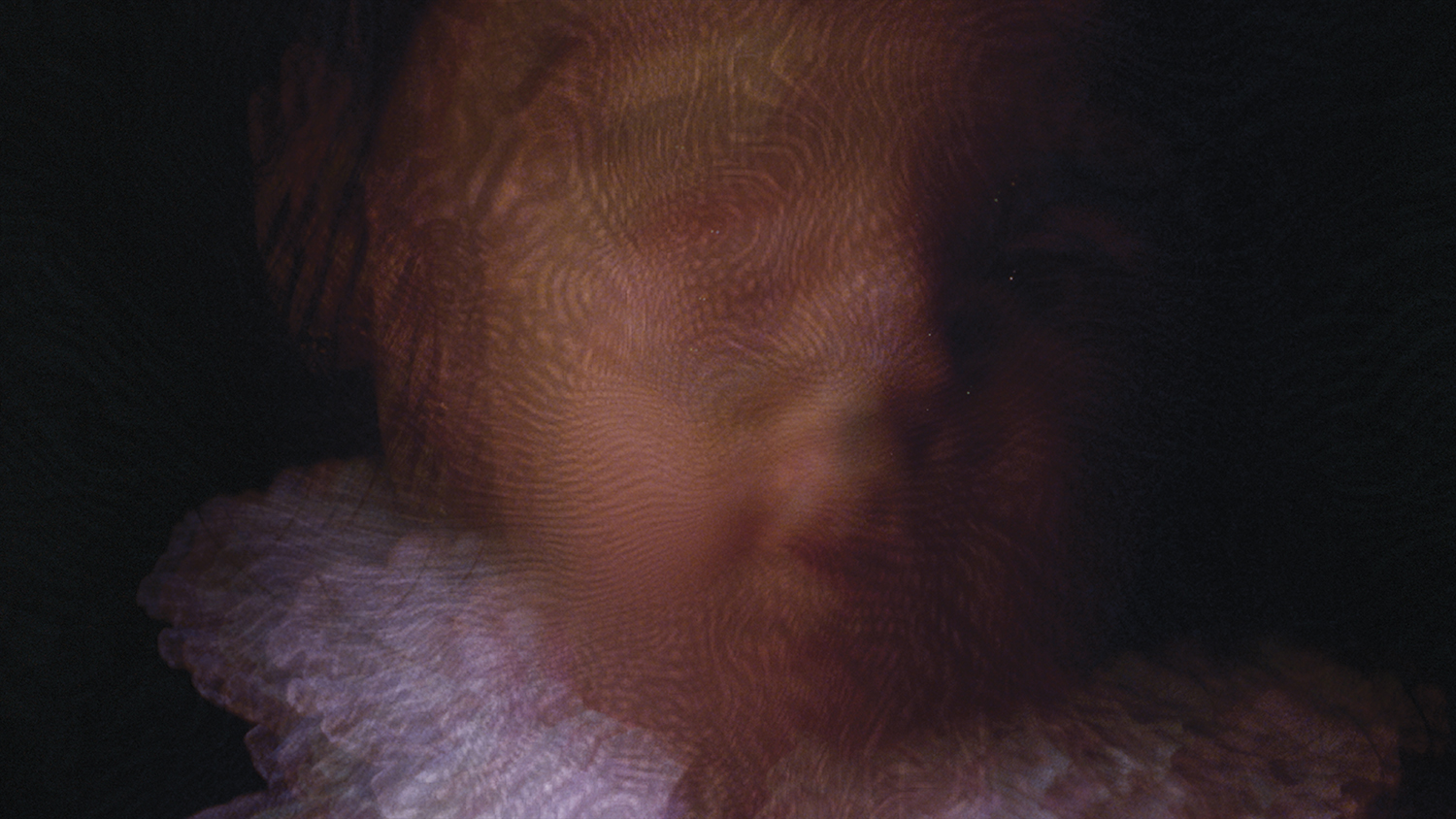
Rachel Rose, Wil-o-Wisp, 2018 (still)
Courtesy: the artist, Gladstone Gallery, and Pilar Corrias, London
Rachel Rose, Wil-o-Wisp, 2018 (still)
Courtesy: the artist, Gladstone Gallery, and Pilar Corrias, London
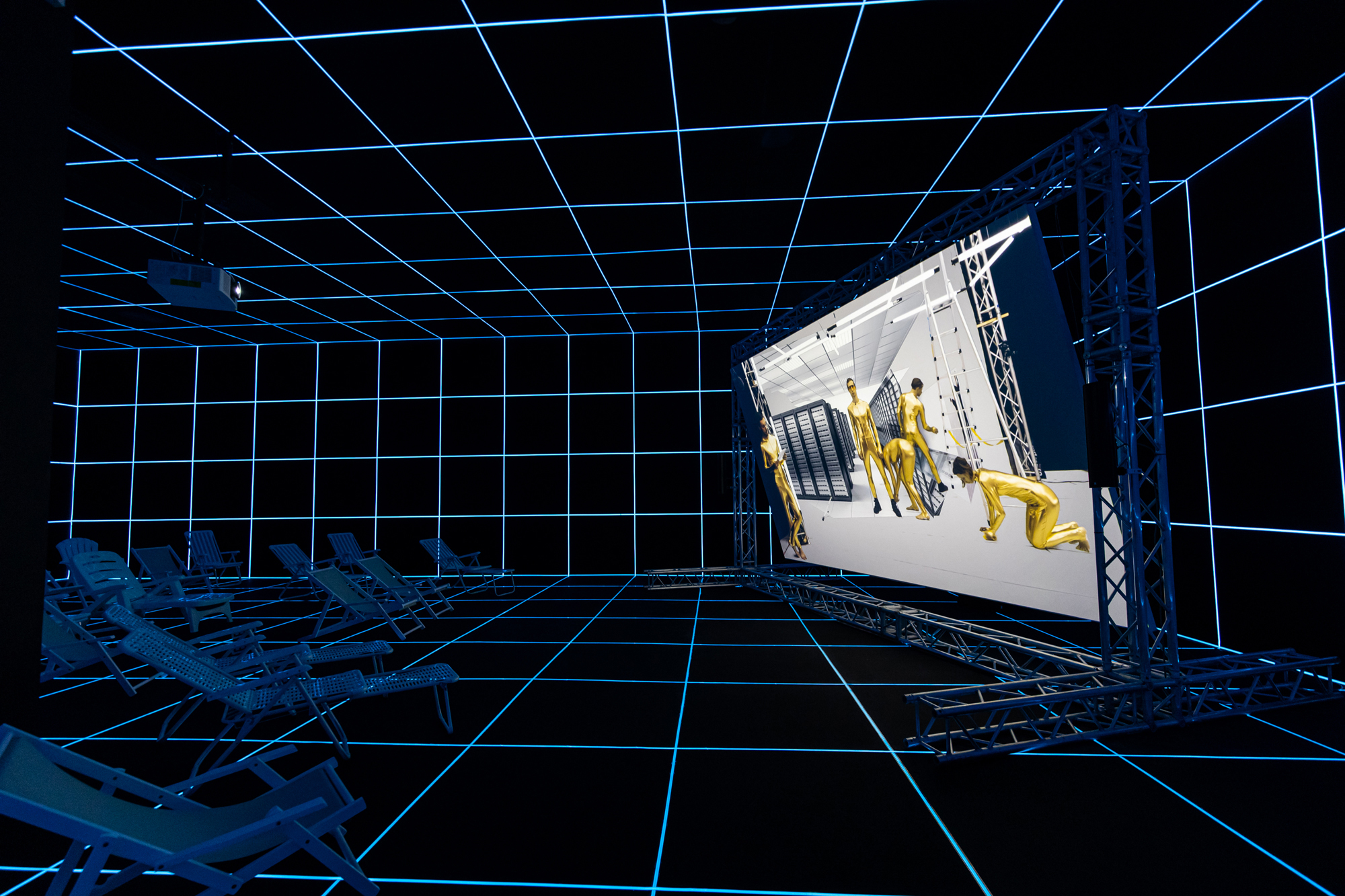
Rachel Rose, Wil-o-Wisp, 2018, Lafayette Anticipations, Paris, 2020 (installation view)
Photo: Andrea Rossetti Courtesy: the artist, Gladstone Gallery, and Pilar Corrias, London
Marguerite Humeau, The Garden of Resuscitation, Kistefos Museum, Norway, 2026
© Marguerite Humeau Photo: Julia Andréone Courtesy: the artist
Marguerite Humeau, The Garden of Resuscitation, Kistefos Museum, Norway, 2026
© Marguerite Humeau Photo: Julia Andréone Courtesy: the artist
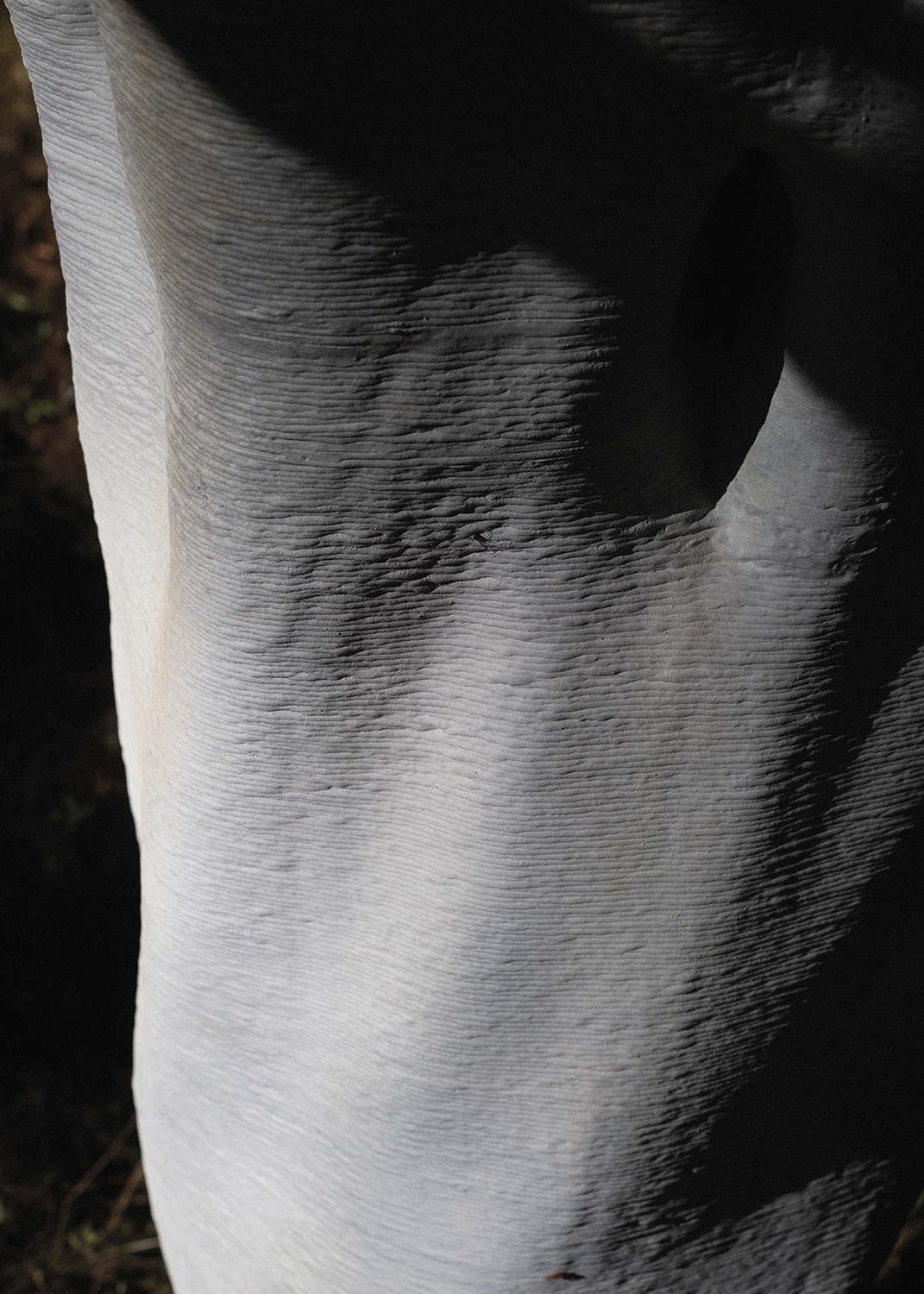
Marguerite Humeau, The Garden of Resuscitation, Kistefos Museum, Norway, 2026
© Marguerite Humeau Photo: Julia Andréone Courtesy: the artist
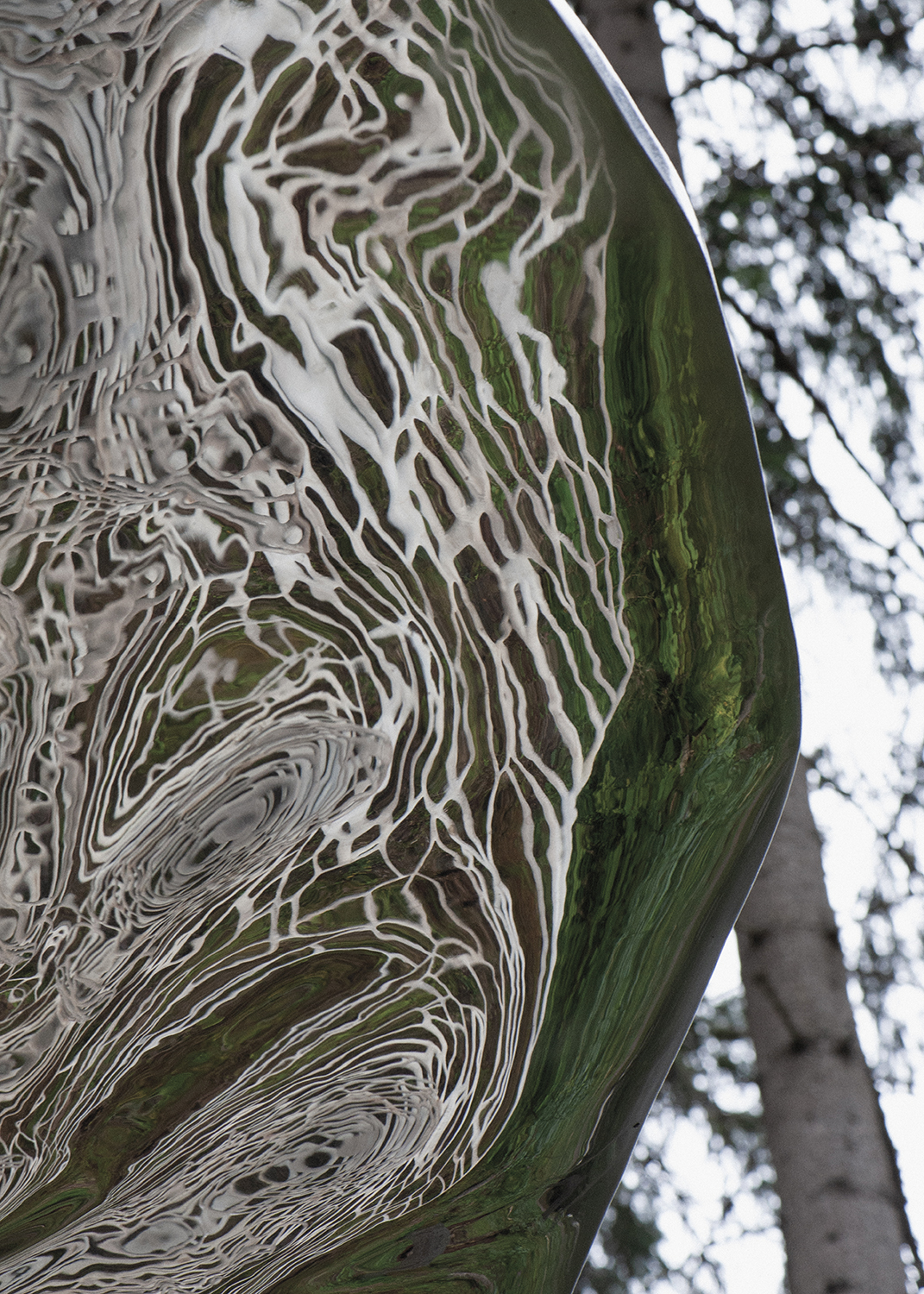
Marguerite Humeau, The Garden of Resuscitation, Kistefos Museum, Norway, 2026
© Marguerite Humeau Photo: Julia Andréone Courtesy: the artist
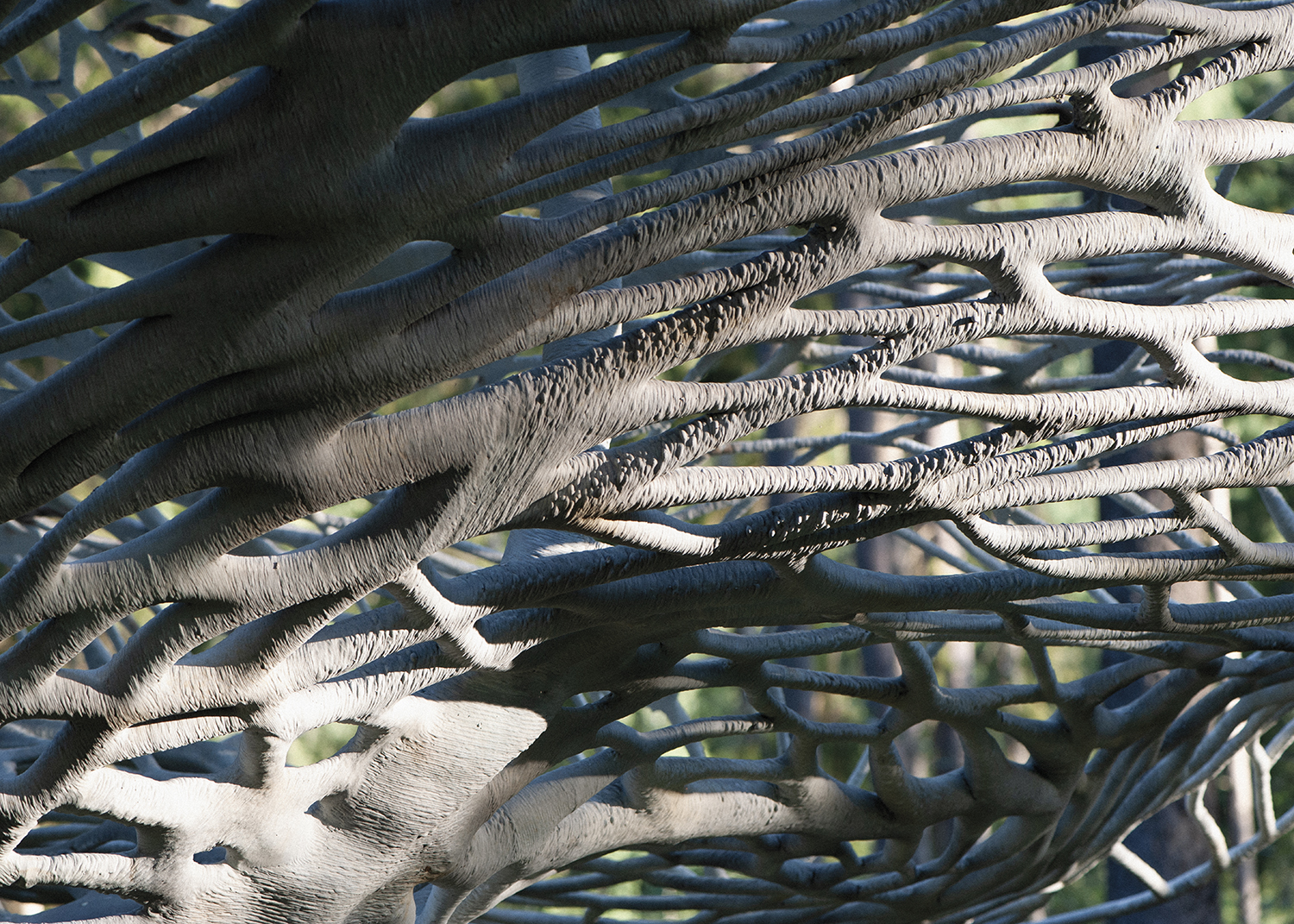
Marguerite Humeau, The Garden of Resuscitation, Kistefos Museum, Norway, 2026
© Marguerite Humeau Photo: Julia Andréone Courtesy: the artist
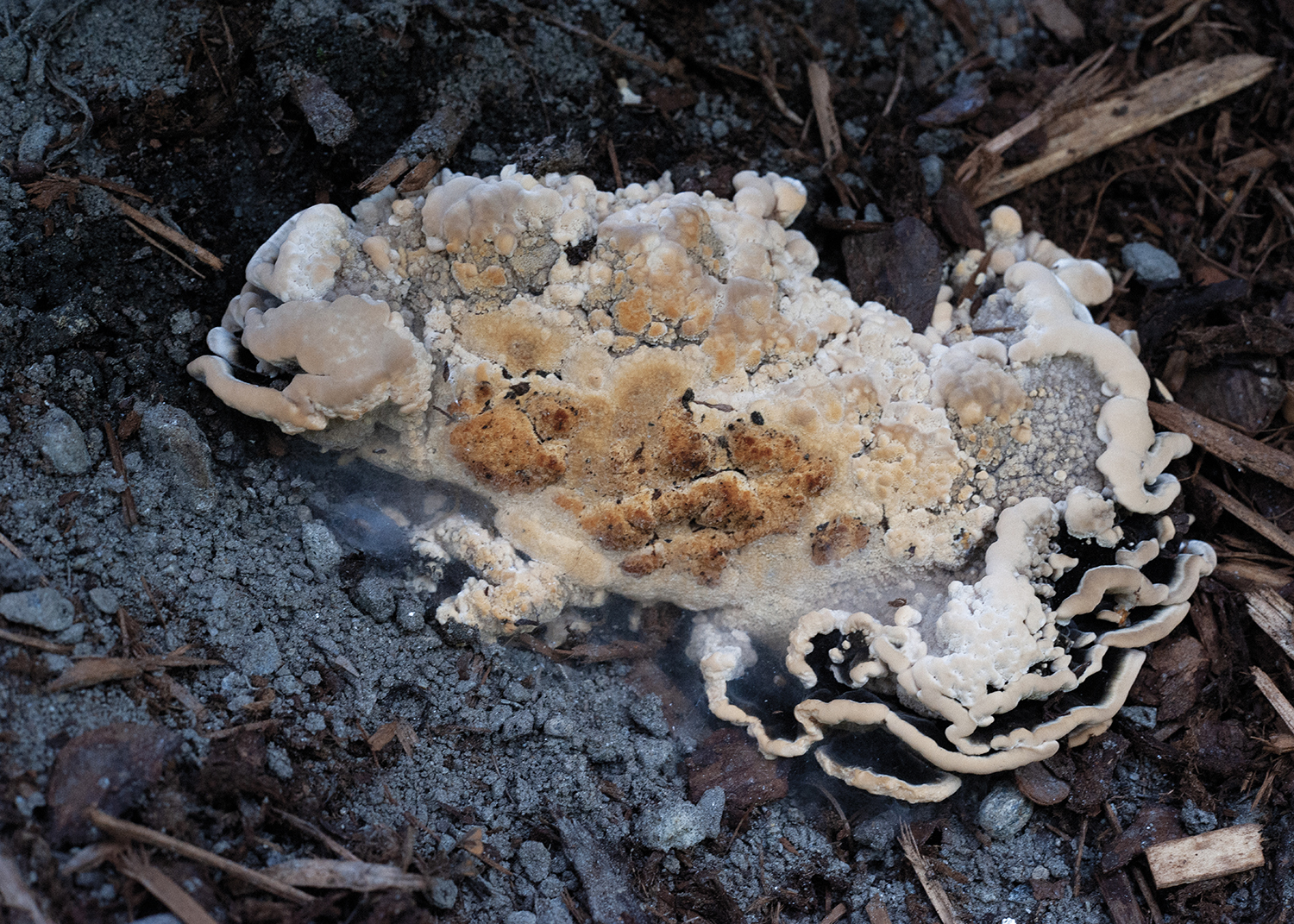
Marguerite Humeau, The Garden of Resuscitation, Kistefos Museum, Norway, 2026
© Marguerite Humeau Photo: Julia Andréone Courtesy: the artist
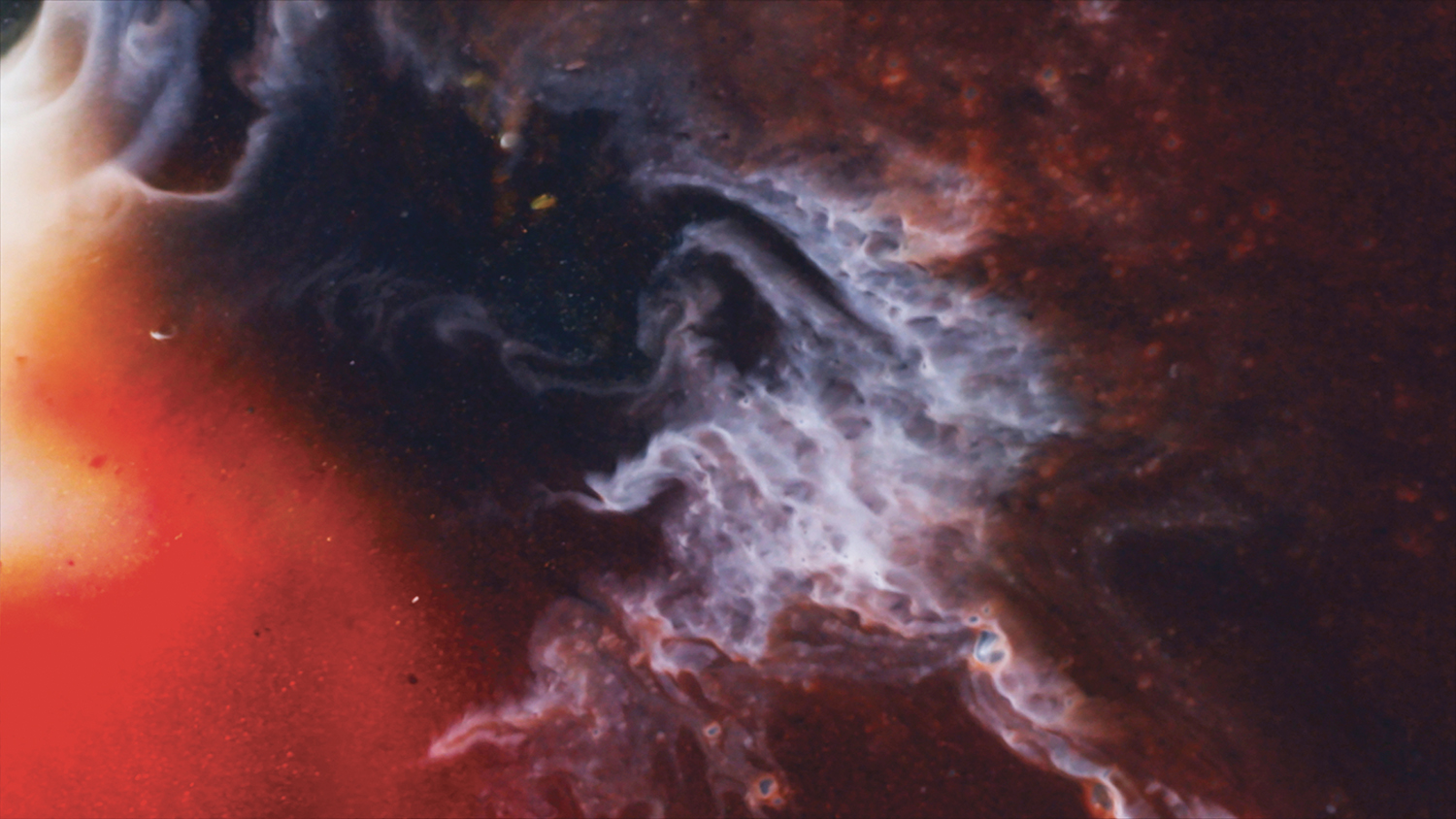
Rachel Rose, Everything and More, 2015 (still)
Courtesy: the artist, Gladstone Gallery, and Pilar Corrias, London
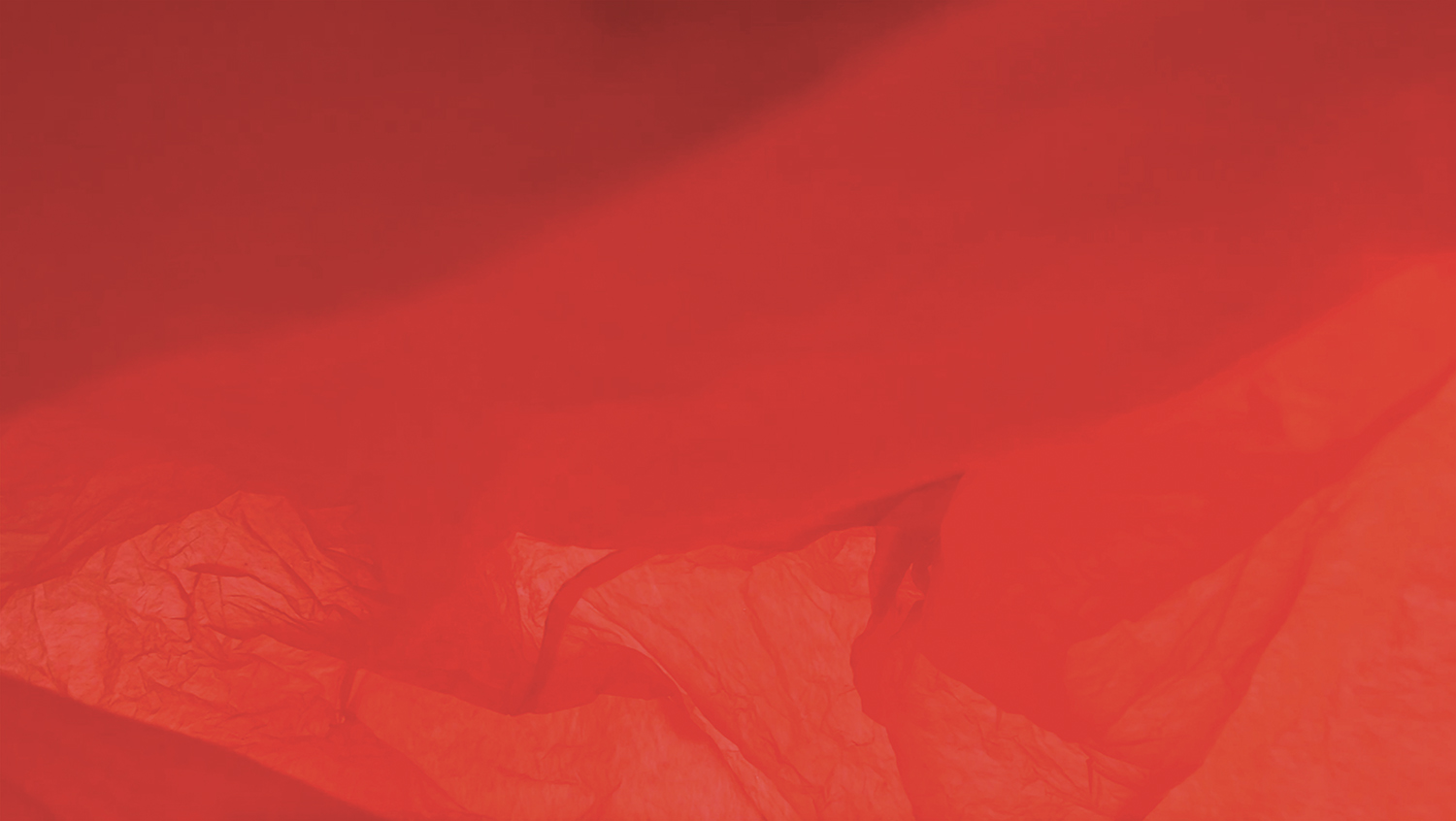
Rachel Rose, Palisades in Palisades, 2014 (still)
Courtesy: the artist, Gladstone Gallery, and Pilar Corrias, London
I feel you have a desire to transcend, I feel there’s something about trying to understand what we become beyond our physical bodies. Where do you think it comes from, this kind of quest to go beyond? There seems to be a relationship to the sublime that keeps coming back under different forms, and I was wondering if that came from a specific experience in your life.
I grew up in the countryside, but my parents’ life was deeply embedded in a Buddhist community, so I grew up with a lot of spiritual rituals about transcending the limits of the body and mind from a young age and I wonder if there’s some connection there, but I don’t know if that’s true. When you describe your work in Norway, I think about this kind of interconnection that you’re making between our insides and the rest of the world’s outsides. We’re not what we think we are, or there’s a higher force at play that’s forming all of us, or all of everything. Where does that come from for you? Is that just like following the science, or does it come from something else?
No, I’m not following the science. It’s clear that scientific knowledge has so many limits, and I’m interested in it, but I’m more fascinated by other bodies of knowledge. I grew up in a Catholic environment in the countryside, and I think quite quickly, when I was a teenager, I realized that I didn’t really understand these stories they were telling me. There were so many questions I had about the world, the universe, and our origins, and I wasn’t really getting enough answers from this context. So, I thought I needed to make my own stories to be able to explain these mysteries to myself. Then, when I was in my 20s, I became deaf in one ear, and from one day to another I lost my balance. I lost cells in my inner ear that died and for a month I couldn’t walk. For some people hearing comes back, but for me it became permanent. I had to do MRIs to figure out if it was a brain tumor, and during that time I just felt I was going to die, I couldn’t walk, I was spinning. That’s why the film you did with the astronaut moved me so much: I could feel the way it describes darkness and these new fields of color, and how all of his senses are completely shattered, it almost feels like you need to relearn how to be a human in an environment that’s totally unsuitable for you. It could also feel like it was describing the experience of dying, that’s kind of how I felt about it, and also maybe the way you edited it reminded me of when I lost my balance. Since that time, I feel I’ve seen a glimpse of what could come after, and it led me to think that once you’ve experienced this kind of open door to another form of existence, beyond your physical body in this life, then it opens up the big question, which is for me, is there a consciousness that we all share with all forms of past and future life on Earth?
What’s interesting about your work is that often your sculptures feel like they’re in motion, I’ve never seen you make a sculpture that’s imagining static behavior, and I wonder if that is connected to this idea of everything being interconnected.
For me, sculptures are more like shells, manifestations, almost like ghosts. I’m making sculpture, but in a way, I don’t really want to make sculpture. I want them to feel like moving images.
Moving image in a three-dimensional form.
Yes, exactly. That’s why I totally obsess about materials. How do you create this sensation that things are fleeting, appearing and disappearing? This is totally contradictory with the very gesture of making physical sculptures.
Your Migrations pieces just feel like they’re flying. It doesn’t feel like sculpture. It feels like its own uncanny form or something.
Maybe like a hologram.
Yeah, exactly, they don’t feel real. I’m sad I haven’t seen them in real life, because I think that the experience of being next to one would feel like you’re shocked out of reality, and suddenly you’re in a different story, a story where that form is a part of life. It’s not quite surreal. I somehow think of Matthew Barney as a precursor in this trajectory, and I’m curious to hear if you think about him at all. I think about some of his sculptures, for example those related to the Cremaster cycle, where you have multiple materials that don’t belong together, merging together in these uncanny but totally natural ways.
I looked at his work early on… Maybe surrealism is about creating something that follows the laws of gravity, the laws of physics of our specific world, but that tries to bend them, whereas maybe Barney is going a step further, it doesn’t even belong to this world. It’s more about trying to create something that could exist but in different conditions.
The other thing I think about when I look at your sculpture is drugs.
My work puts me in trance. I spend a lot of time world-building, like I’m sure you do as well. How does life evolve there? How do they breathe? How do they talk? How do they communicate? How do they move around? You’re entering into this world where specific parameters have been set out that obviously are not explained to you, but you can just feel them because you know they’ve been created for this world to evolve. Ernest Hemingway was talking about it as the “iceberg theory.” What you read is actually just the tip of the iceberg, but the writer always has to create the entire iceberg in order for you to be able to see its tip. I really love this metaphor. How much of the iceberg is hidden, and how much is appearing? I am quite curious, you’re now working on proper feature films, right?
Yeah.
How do you even start building these grand narratives?
It’s a leap of faith. A film isn’t like an exhibition, where you know the deadline and know you have an audience. So, the order is: first I write the script, until I can feel the purpose and shape of it. Without that, nothing else can attach to it. Then it’s sharing it, and inch by inch finding collaborators the story resonates with, and reworking the script around what they bring. This film took three years, and that’s fast. I think being an artist exercises our self-belief, no one tells us this is the important thing to do, so do it. We make up our own stories for why something should exist. We make grand narratives in that way already, and making films is the same, but because the barriers to actually making them are so much higher, I think the argument for why they have to exist has to be crystal clear and has to resonate strongly with others, in order to build anything. We have more wiggle room in art.
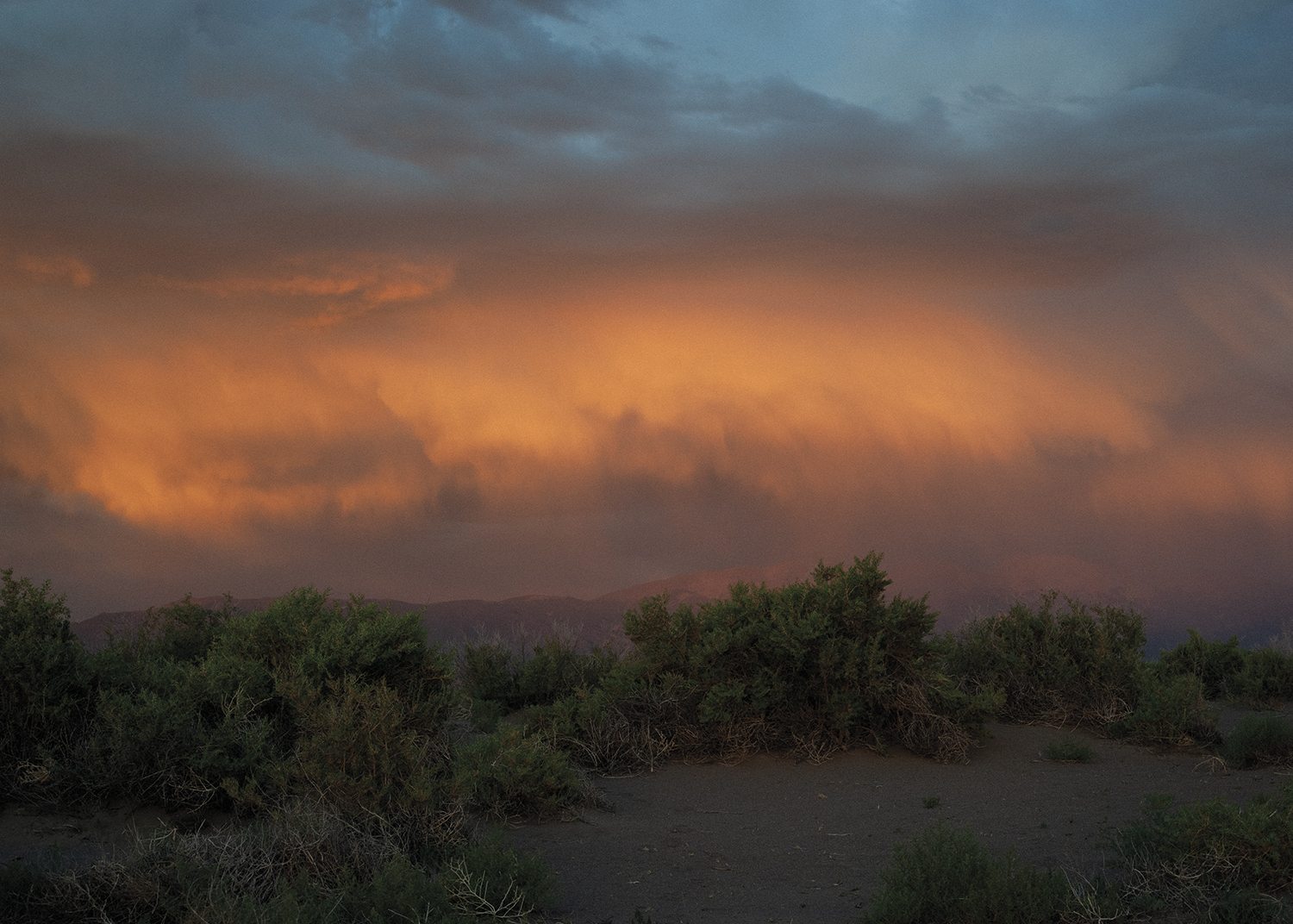
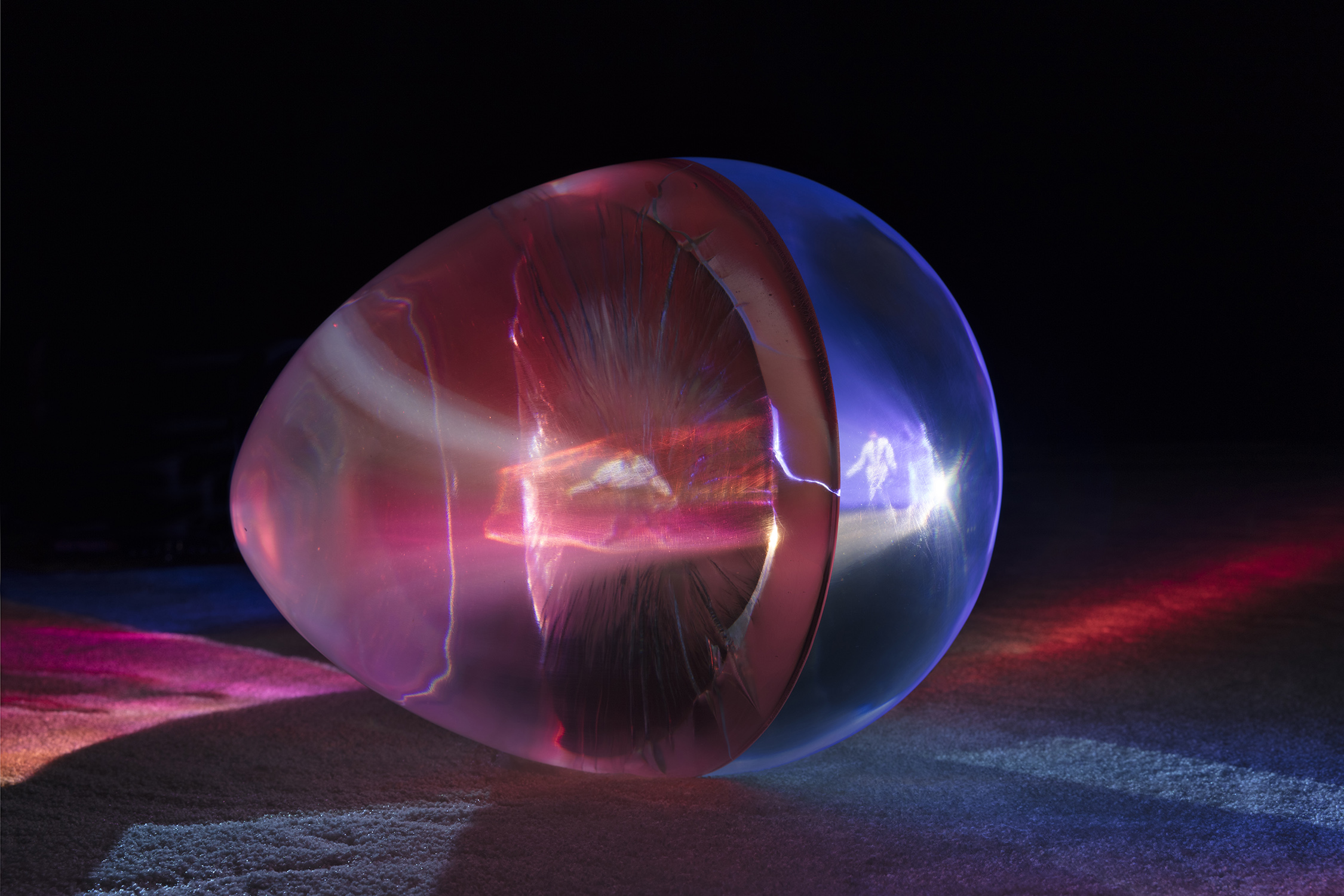
Marguerite Humeau, Orisons, 2023 curated and produced by Black Cube, A Nomadic Art Museum
Photo: Julia Andréone and Florine Bonaventure Courtesy: the artist and Black Cube Nomadic Art Museum
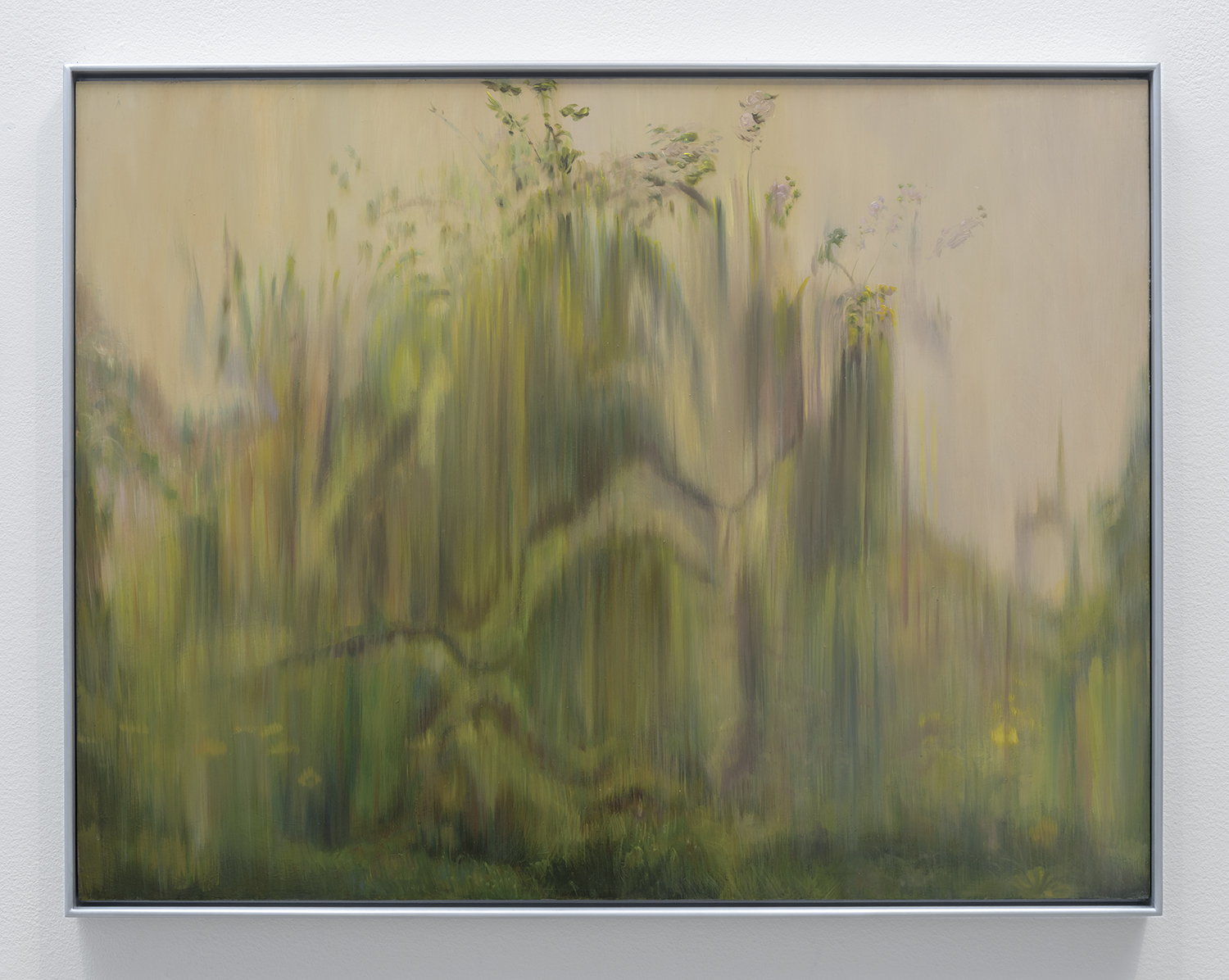
Rachel Rose, The Rest, 4:30pm, 2026 Courtesy: the artist and Gladstone Gallery
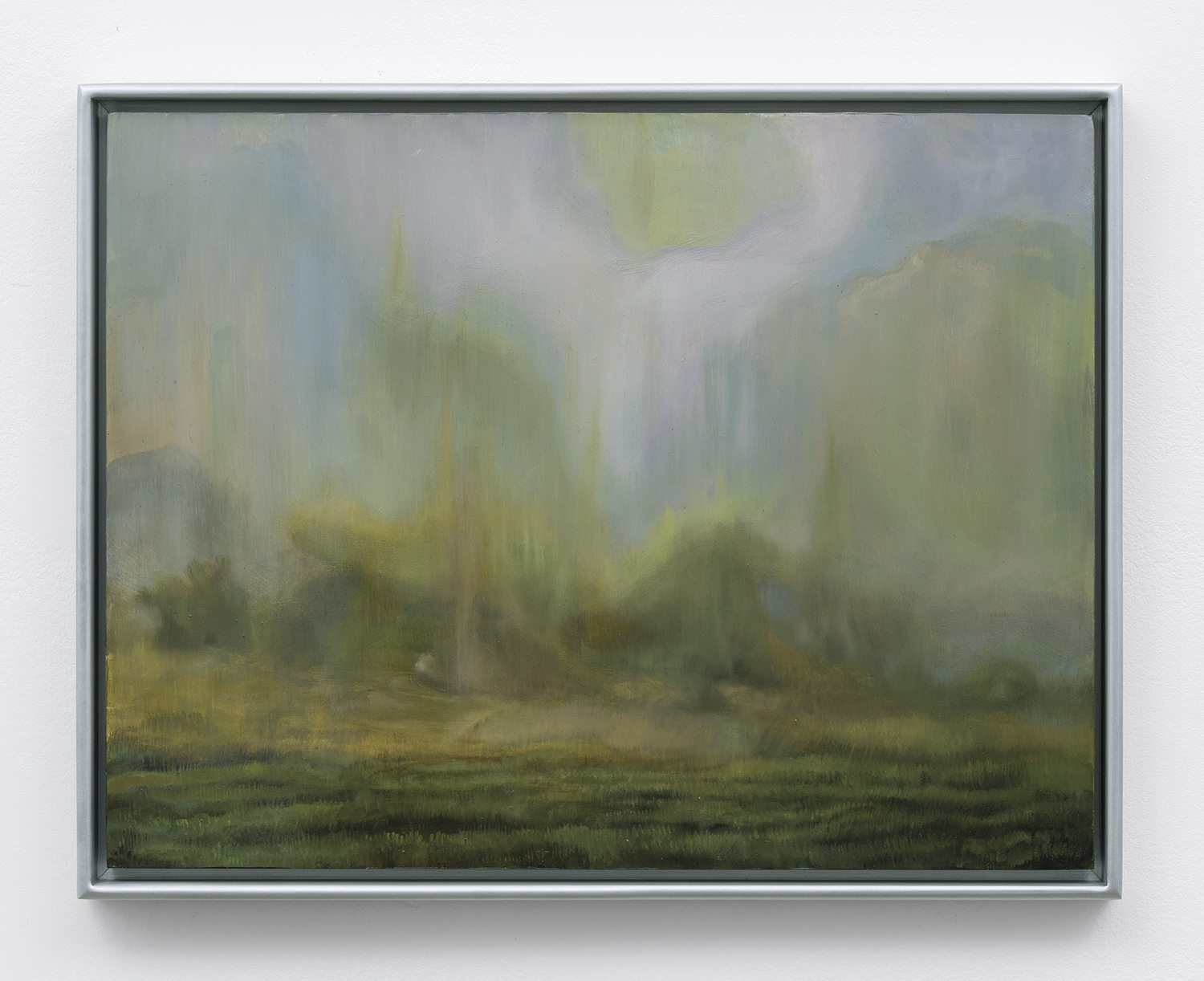
Rachel Rose, The Rest, 7:30am, 2026 Courtesy: the artist and Gladstone Gallery
How did you start writing? Did you just start recently or were you always writing?
I was always writing, every project has had some version of a script since I started making videos at 25. With each project, I tried to increasingly exercise how to do them in the art context, up through the video I made about five years ago for the Park Avenue Armory, which was my second video artwork with actors. But I had written that with a partner, and whenever dialogue was present, I always wrote with someone else because I didn’t think I knew how to write dialogue. It was a real weakness and leap of faith to try it when I did about four years ago. When I sat down to write the script that became this film, I set myself a time limit and sat down; the first seven pages of that script are the first seven pages of dialogue I’d ever written. I’ve written a few scripts since, and it feels like my medium now, I love it so much. Right now, I’m working on an adaptation of a sci-fi book I love so much and was lucky to get the rights to, and I’m probably on the twentieth draft of that internally, I haven’t yet shown it to anyone. When it’s good enough, I will, but that might be a couple more months before I know it’s ready. Do you write much around your work?
A little bit. I write stories, actually, I define characters. In all my projects there’s a group of characters set in a specific environment, so it’s more like descriptions that help me develop each element. But then I cannot really write proper fiction stories, I try sometimes, but I wouldn’t be able to write a dialog, or maybe I should try.
The most sculptural form of art I’ve found is screenwriting, you’re thinking about how to put something internal into external form through space, characters, light, landscape, set. A sculpture expresses itself in space, and that’s what a script is doing, expressing a story in space.
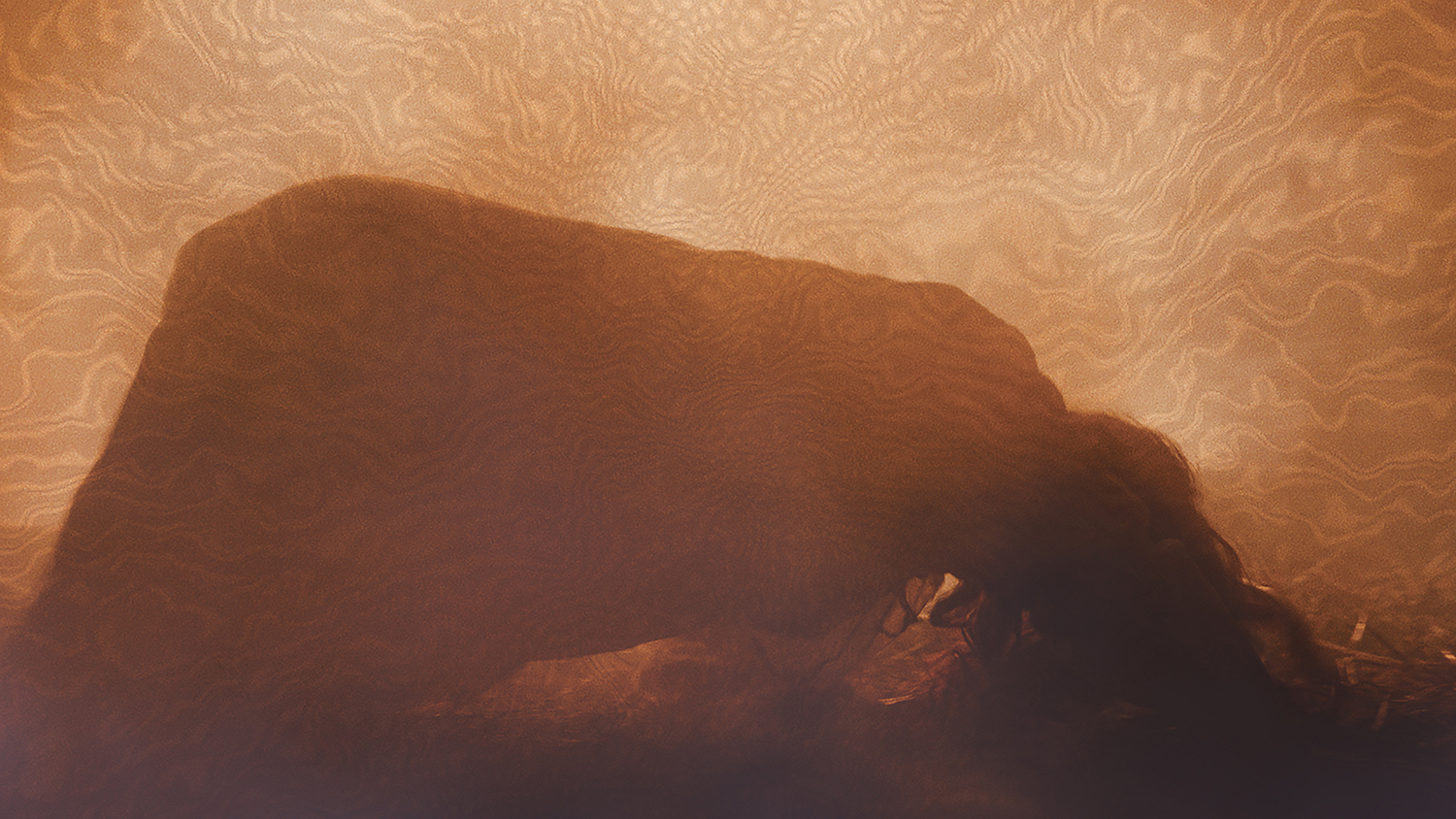
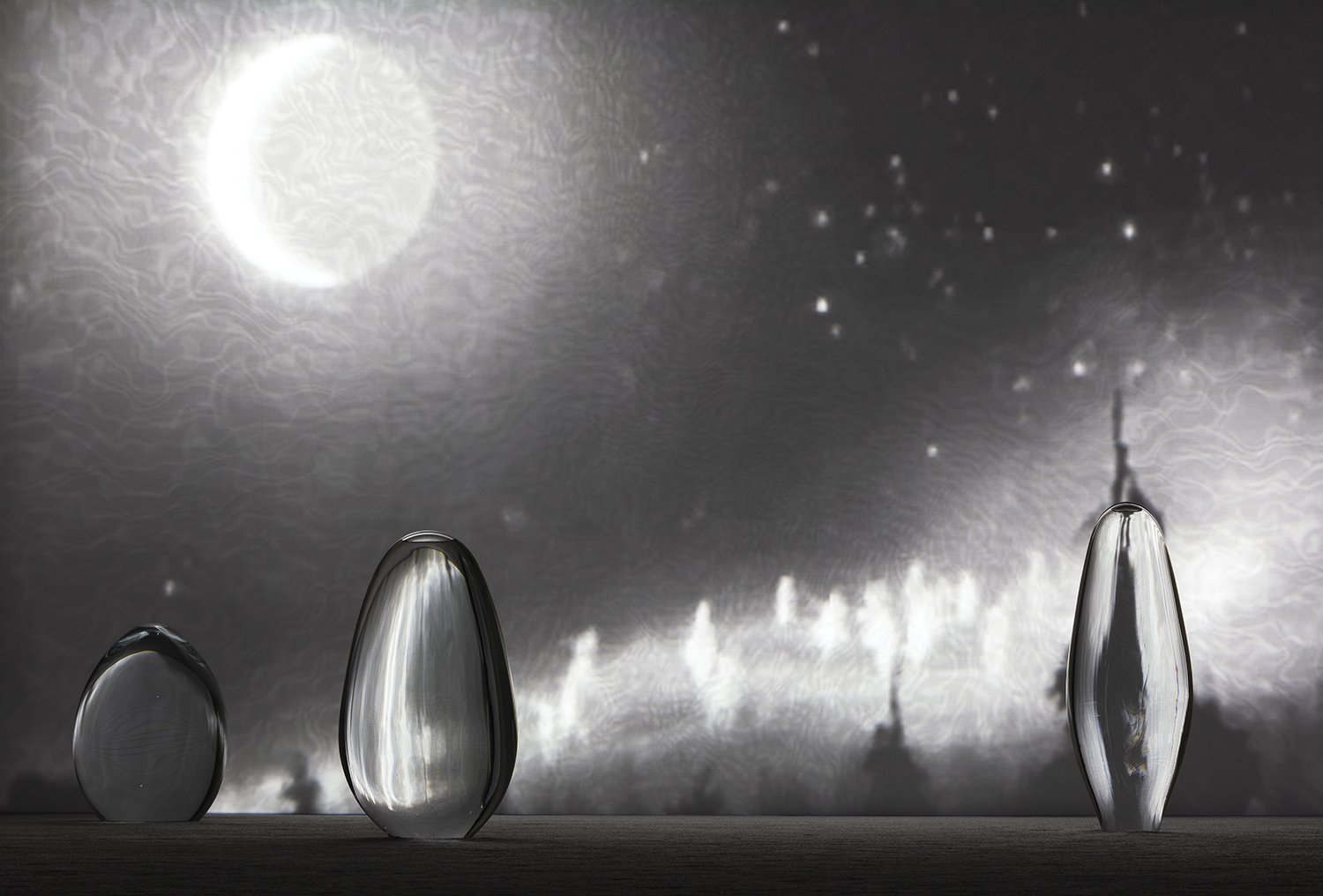
It seems to me that there was a bit of a shift in your work, with your film Wil-o-Wisp. Since then, you’ve been really focusing on landscapes, and I was wondering how it came about, what triggered it, and if you feel you have more to explore in that direction.
Landscape came into the videos and into the paintings from two different directions, though they end up in the same place. In Wil-o-Wisp and Enclosure it started with reading a Shakespeare biography by chance. There was a description of him commuting between London and Stratford-upon-Avon, and passing by refugees. That led me into researching why, and I came to discover the Enclosure Acts: when common land in England was turned into private property it caused mass displacement, setting the stage for the agricultural and industrial revolution. So the Shakespeare story was intimately connected to this change in the landscape. The paintings I started making came later, and began when I was asked to do a show in Brussels. I wanted to know about the local history of painting and came across Joachim Patinir, a Flemish painter who made only about fourteen paintings, but was considered the first landscape painter because he moved the point of view from aerial and fantastical toward realism, and once again, at the same moment land there was being divided, bought up, becoming property. So, the same shift that was affecting storytelling in England, was changing how people saw and imaged the landscape in Brussels.
What was the link between your story with the astronaut and the animation film you did? How do you choose your next project, how do they interrelate? They look like quite different topics, but I can feel there’s a link.
They all come from personal experiences. I had just made Everything and More, and when I made Lake Valley, I had a question about childhood. What it actually means to be an adult and to be a child. My research turned out to connect the industrial revolution, the invention of the children’s book, the division of labor in the family, and the idea of childcare. I was feeling a lot of empathy for this creature I’d made up, an animal who perceives time and space differently from the adults in the room. Most of the film is about expressing that. In Everything and More, the astronaut goes to space and comes back describing time, color, taste, light as different. Both are about how our perception is a direct effect of how we’ve evolved, which is what you’re looking at in all your work. Every project turns out to be a kind of sensory expansion, asking what the limits of our perception mean about us and about the world.
What I see is that you start from a very grounded human feeling, and then you expand it. It seems that there’s always a bigger historical context now. When you found this story from Shakespeare, what was your feeling at the time? You understood that there was this kind of big historical moment, and in a way, you were starting to look at it from a new angle. What was the more personal human feeling that you were then trying to discover with the works that followed?
I wanted to subsume myself and create work from this moment of a new kind of alienation, the end of magic, etc., and look at its resonant effects in the alienation I experience today in our chopped up and massively privatized world, but if I’m honest about those works, I think I devoted so much attention to the historical accuracy and world-building of their creation, and didn’t develop the feeling to the extent that I should have. For that reason I find both those works somewhat ungrounded. The film I just made comes out of a real experience, and when you can build something around the honesty of a feeling, the work is grounded, no matter how good or bad it is.
That’s how I judge my work as well. I want all of my works to come from a true place, like my graduation work, which was an opera of prehistoric creatures. I was trying to resuscitate their songs, and to me it really came from that experience of becoming deaf and connecting to this kind of void, this kind of post-life or afterlife. So, I feel that work is really true to a very personal experience. I feel the same about a work I did a few years later, which revolved around the death of a matriarch elephant. To me this was the reenactment of my grandfather’s death, who had just passed away that year. It’s a story of loss, about how you come out of it, and what new feelings might emerge. But I think you’re quite harsh on yourself, because I don’t think those works are ungrounded. I see some of my works, and I think some are more grounded in theory, too, than in a feeling. But we are humans, right? There might be moments in our lives where there are personal experiences that are more powerful than others.
I’d like to hear from you a little bit about how you work every day, how you structure your time, how you structure the relationship that you have to the people that you work with.
My favorite thing in the world is to put an alarm on at 4 or 5am and start working in the middle of the night. That’s when I am able to do all my creative work without any interruption. You can only do that for a certain amount of days, because at some point you start to feel a bit isolated. I like to wake up early, I start working straight away, and then there are different kinds of days. I have days in the studio where I’m doing research and lots of admin, and then I have lots of days when I’m traveling, because I collaborate with people who help me produce my work. Especially for the sculptures, I really like to be on site. Then I have lots of other collaborators, like musicians, gardeners, or architects, it’s lots of discussions and meetings, and I like to keep things open. I’ve become much more attentive to who I pick in the first place, because of course it’s my project, but it’s their voice within it. I let them free, so I don’t need to input too much. And then also, like you, I started to paint a bit, this is quite recent as well, I started to work with soft pastels, and I think I need to reorganize my time. You have to be very authoritarian about your creative time, it’s difficult to manage it, to be able to not have anyone asking you questions, calling you. Some days I put my phone on airplane mode, and that’s it.
It’s the only way, you have to shut the world out. What is your relationship to deadlines?
I’ve been thinking for a long time that I should have a more continuous practice. But deadlines motivate me. I need to picture the thing in my head in a specific location or at a specific time, so I can really get to work. I’ve realized that I need to be more authoritarian with my personal time, actually. Otherwise, I never get time to dream, think, or read. So, if I’m not authoritarian with this, then it means that everything leaks all the time, and it doesn’t become really fun. Also given the scale of my projects, and because I rely on other people, they have their own timelines as well.
Do you have a relationship to drawings? You’ve never shown your drawings, have you?
Yes, actually, I draw all the time, it’s always been the question, should I show them or not? I guess you sketch as well, no?
Not really, I’m really bad at it. I can see in your hand, I can see that you are a real draftsman. You think through your drawing. I don’t.
So, how do you visualize? When you have a scene in mind, is it mostly in the writing?
Yeah, and then in making this film, I sat down with Eric, my DP, and we did an extensive shot list, which took over 100 hours over the course of weeks, and we only storyboarded what we really needed to. But for certain works, like Lake Valley, every scene is fully storyboarded before I even start production, but I’m not someone that can storyboard myself, like you. I think that you should show your drawings…
When I draw, it’s still fluid, you know? I don’t really have a specific view on how the actual thing is going to look like, it’s more like drawing the spirit of the piece, as opposed to the piece itself. Usually I would have sketches, and then I’d have lots of reference images, and I would send them to my closest collaborator, the 3D designer I work with. He would make lots of different bits and pieces, and then I would rearrange them, it’s like a ping pong between him and I. He makes parts, and then I assemble them, and then he re-arranges, puts them together and glues them together, and sends them back to me, and I re-explore this model. It’s quite organic like that. When I’m just sketching, everything is still possible, everything is open, it’s just a black line, it’s still shifting. And then as we start to become very specific, I feel I have to mute the spirit or rather channel it to create the real work. I guess I’m losing some of the openness, but I’m also gaining in definition. You need to accept it for what it is. I’m always super anxious before I go to install to discover how the works are actually going to feel like in the space or in the landscape. And then I know I only have a few days to adapt things, okay, and then that’s it, that’s what it’s going to be like, and I need to be fine with that. I don’t know how you feel about it, you’ve had this scene in your head, and then you see it on camera.
It’s a little bit different, because in making a feature film, every second of it is a collaboration, you have a feeling of expanding your position through the constraints of reality. You’re moving with a mission statement, but it’s morphing as you move, even until the last breath of the edit, it’s porous.
Marguerite Humeau + Rachel Rose
CURA. 47
Artist + Artist
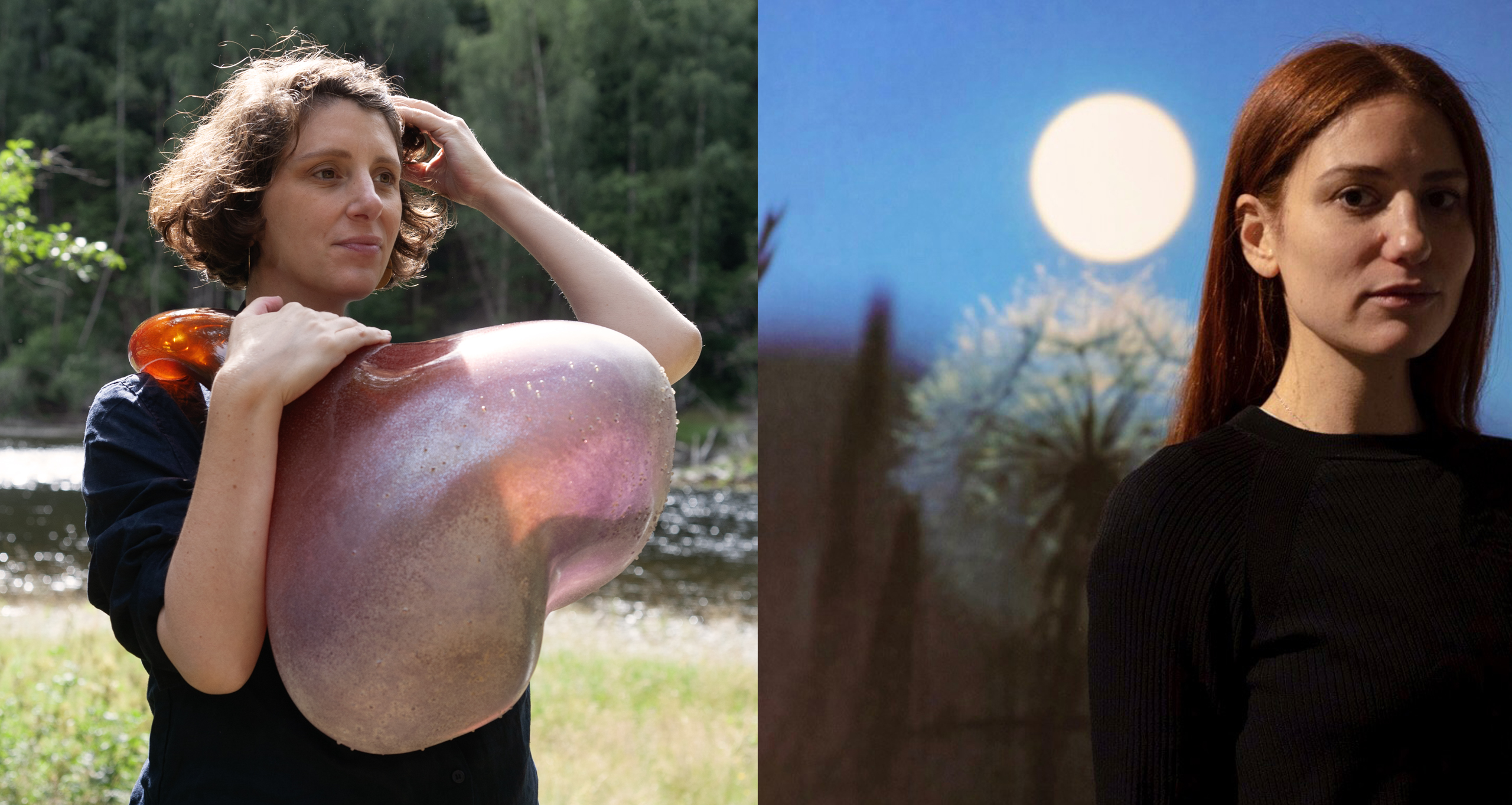
MARGUERITE HUMEAU (b. 1986, Cholet, France) lives and works in London. Solo exhibitions of her work have been held at: Kistefos Sculpture Park, Norway (2026); Helsinki Art Museum (HAM) (2025); Arken Museum (2025); ICA Miami (2024); Lafayette Anticipations, Paris (2021); Kunstverein Hamburg (2019); Museion, Bolzano (2019); New Museum, New York (2018); Tate Britain, London (2017), among others. Humeau’s work has been featured in numerous group exhibitions, including at: Somerset House, London (2025); The Warehouse, Dallas (2025); 15th Gwangju Biennale (2024); Hayward Gallery, London (2024); Louisiana Museum of Modern Art, Humlebæk (2023); 59th Venice Biennale (2022); 23rd Biennale of Sydney (2022).
RACHEL ROSE (b. 1986, USA) lives and works in New York. She works in film, painting, sculpture, and drawing, exploring how landscapes shape stories and how thin the boundary between everyday life and the sublime is. She has held solo exhibitions internationally, and her work is in collections including Tate Modern, Whitney Museum of American Art, LACMA, Musée d’Art Moderne de Paris, LUMA, and Dallas Museum of Art. Rose has participated in the Venice, São Paulo, and Jeju biennials, as well as the Carnegie International.