Women Upstairs and Men at Work
Women Upstairs at Overgaden, Copenhagen
Men at Work at HFKD, Holstebro, Denmark
Review by Cecilia Bien
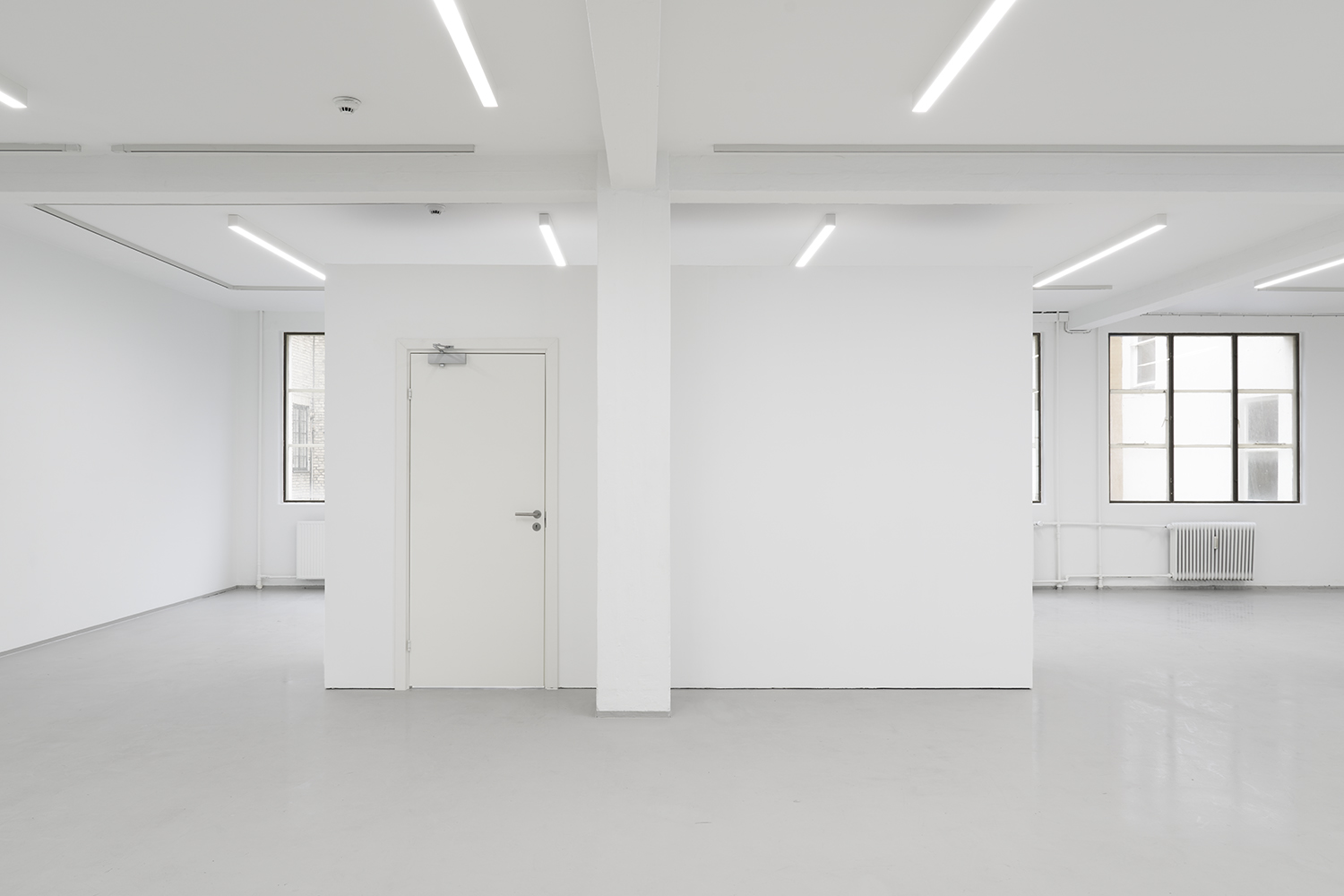
Baby Exit, 2026. O—Overgaden. Photo by Brian Kure
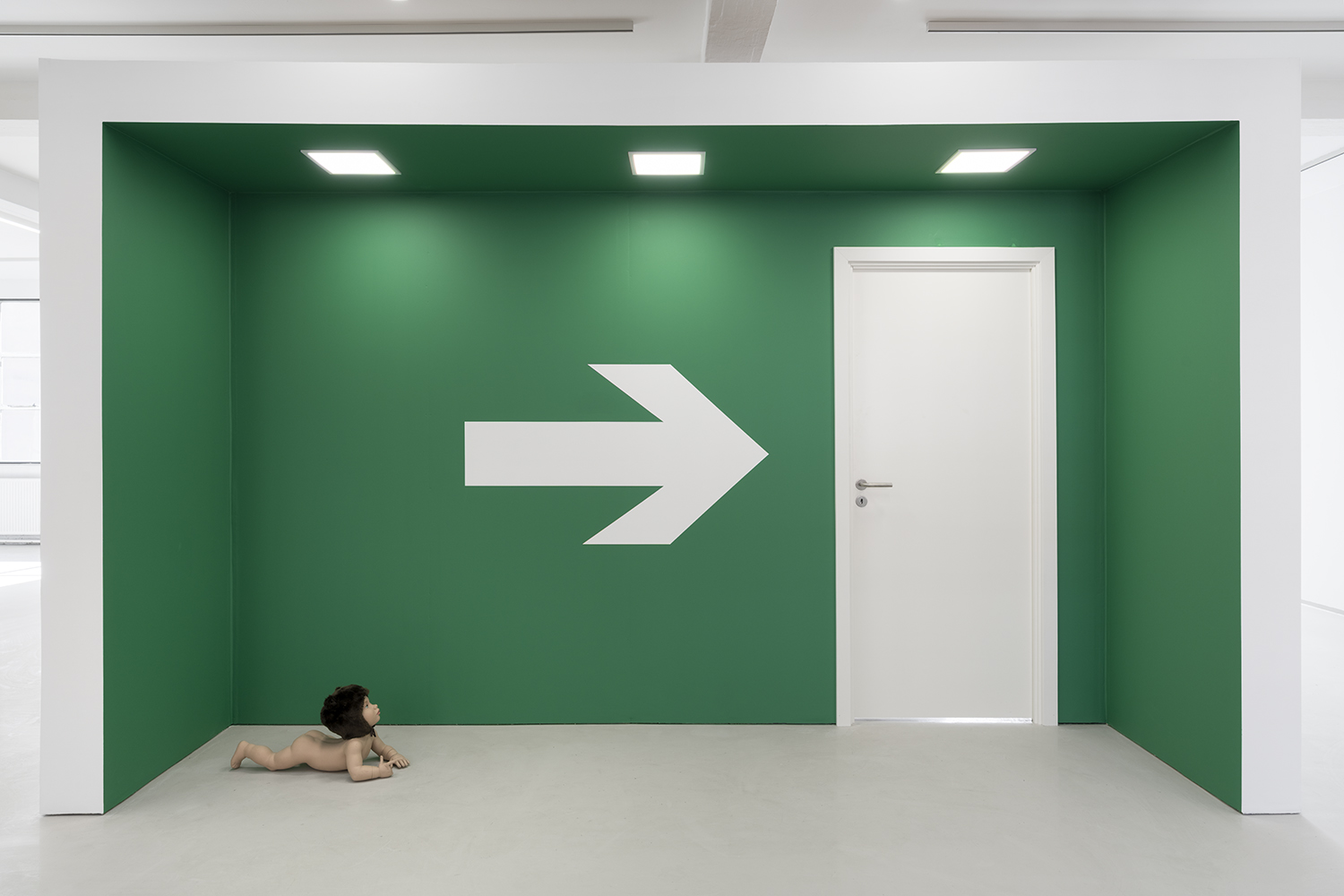
Baby Exit, 2026. O—Overgaden. Photo by David Stjernholm
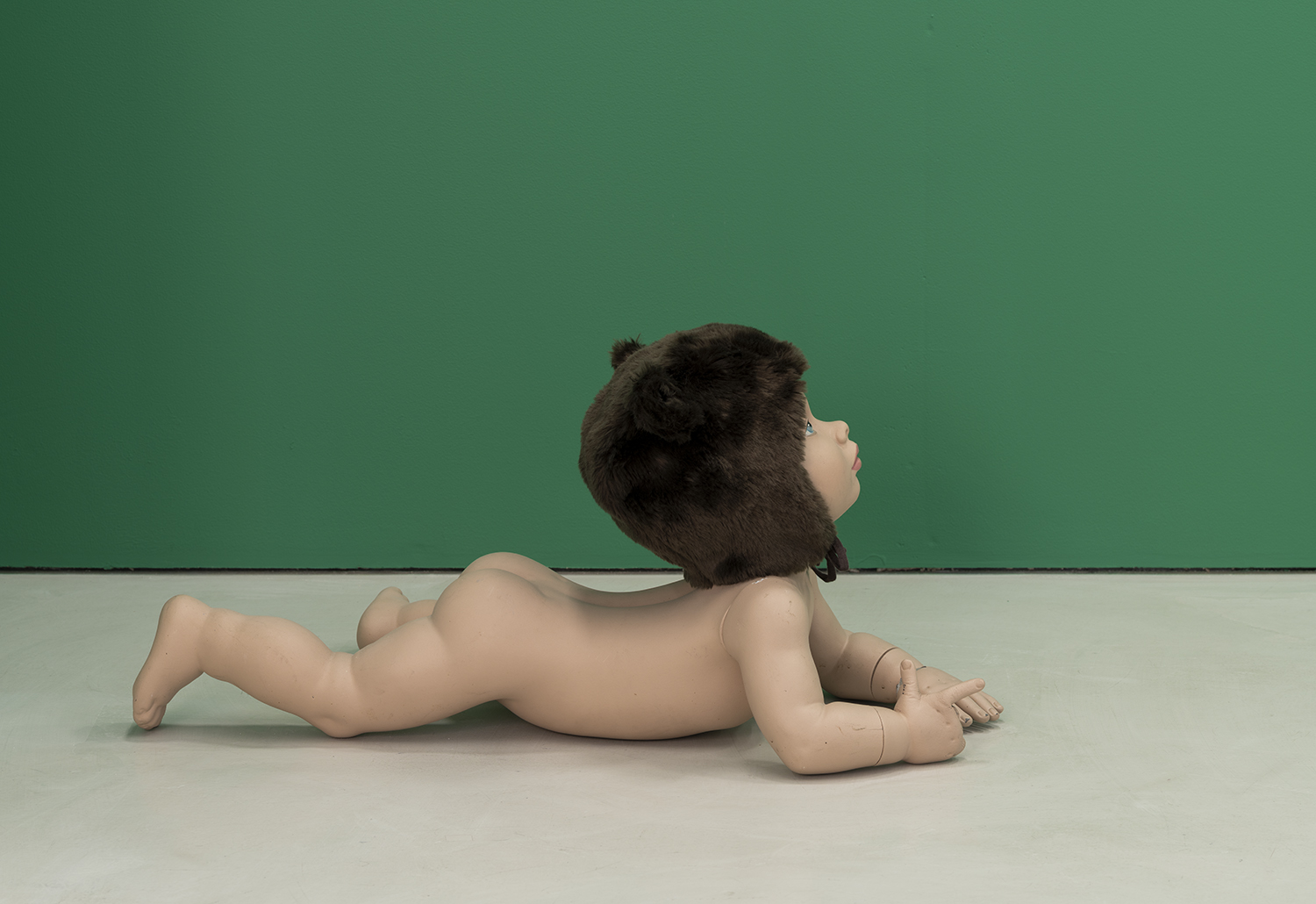
Baby Exit, 2026. O—Overgaden. Photo by David Stjernholm
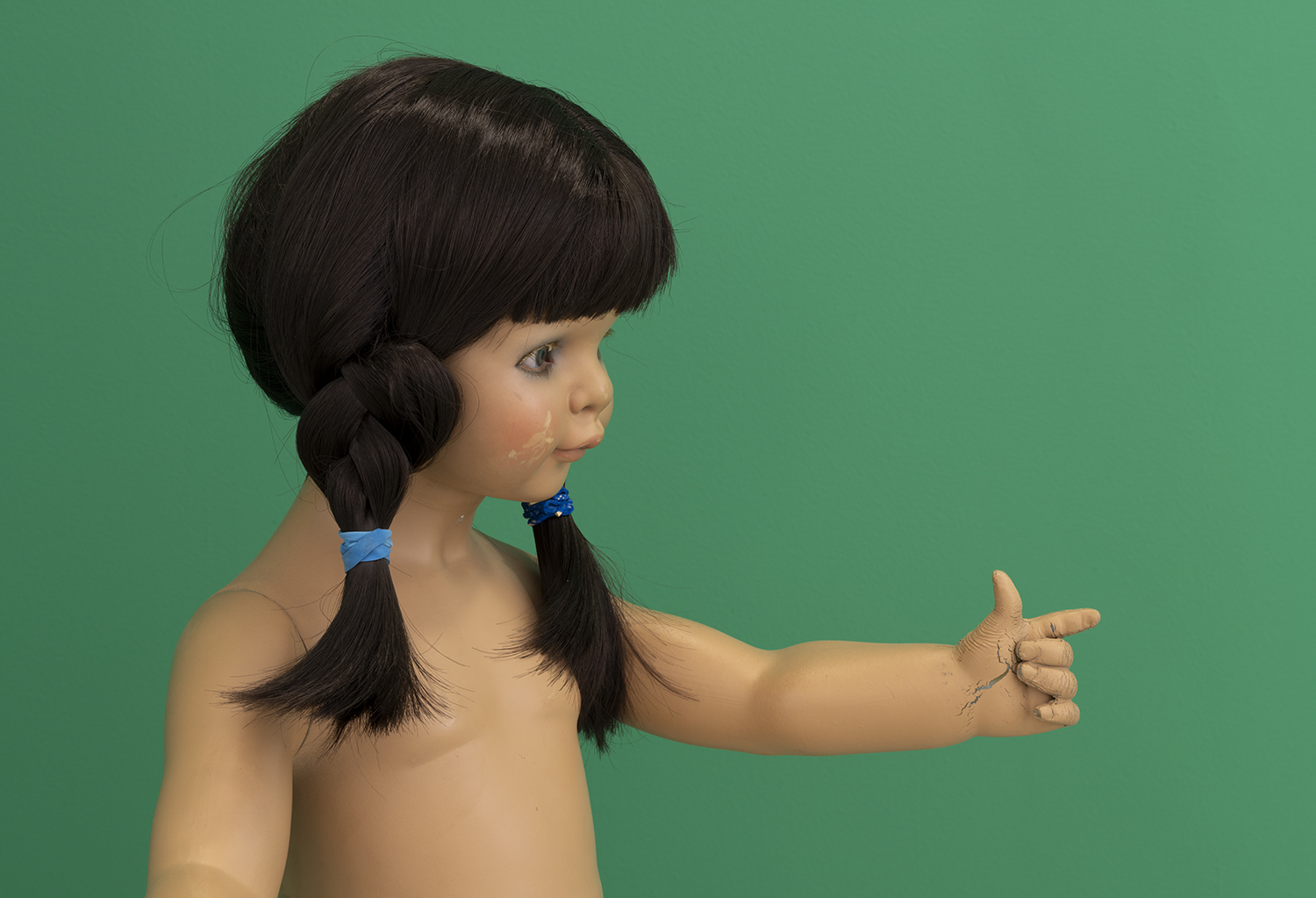
Child Exit, 2026. O—Overgaden. Photo by David Stjernholm
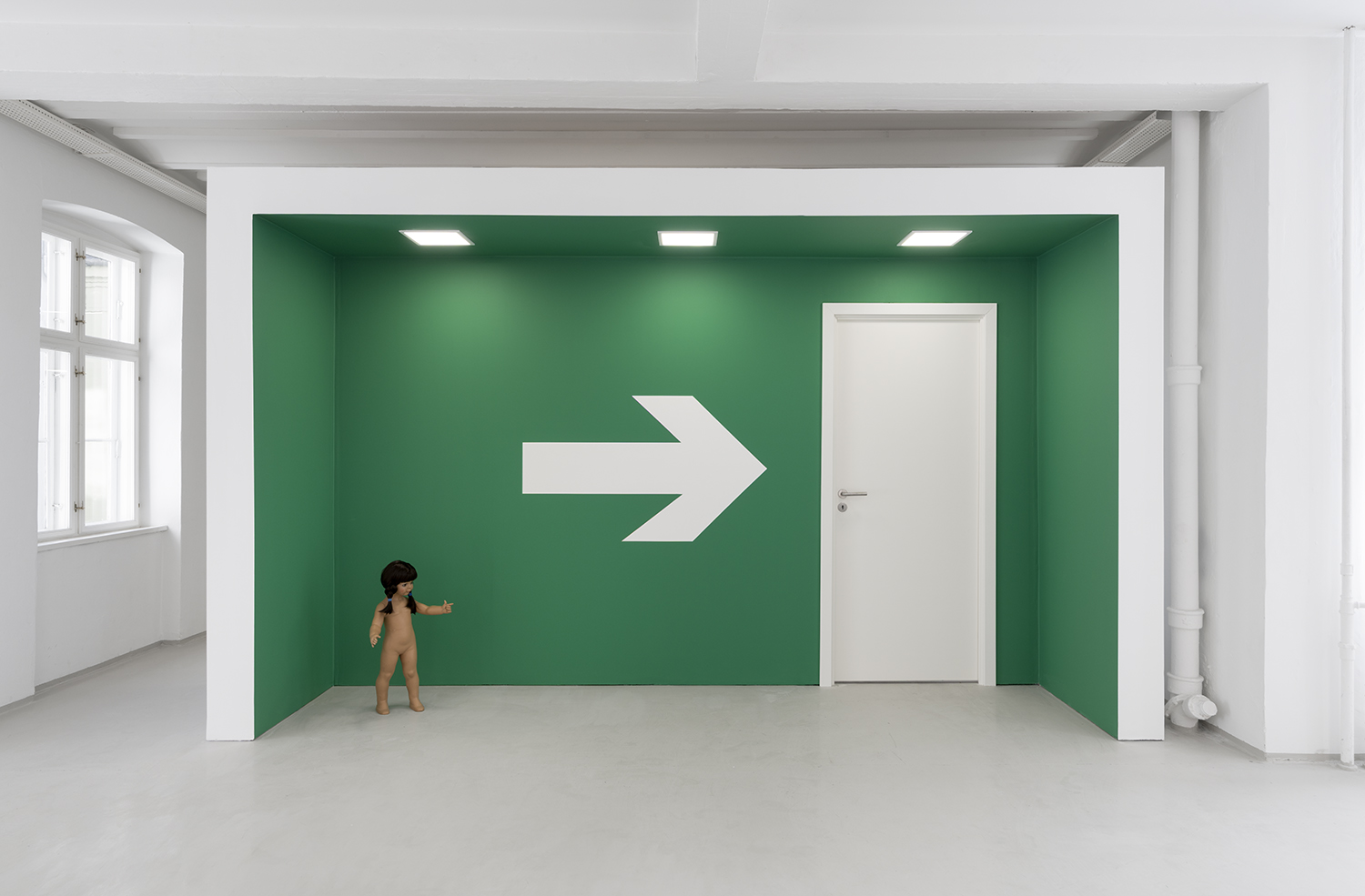
Child Exit, 2026. O—Overgaden. Photo by David Stjernholm
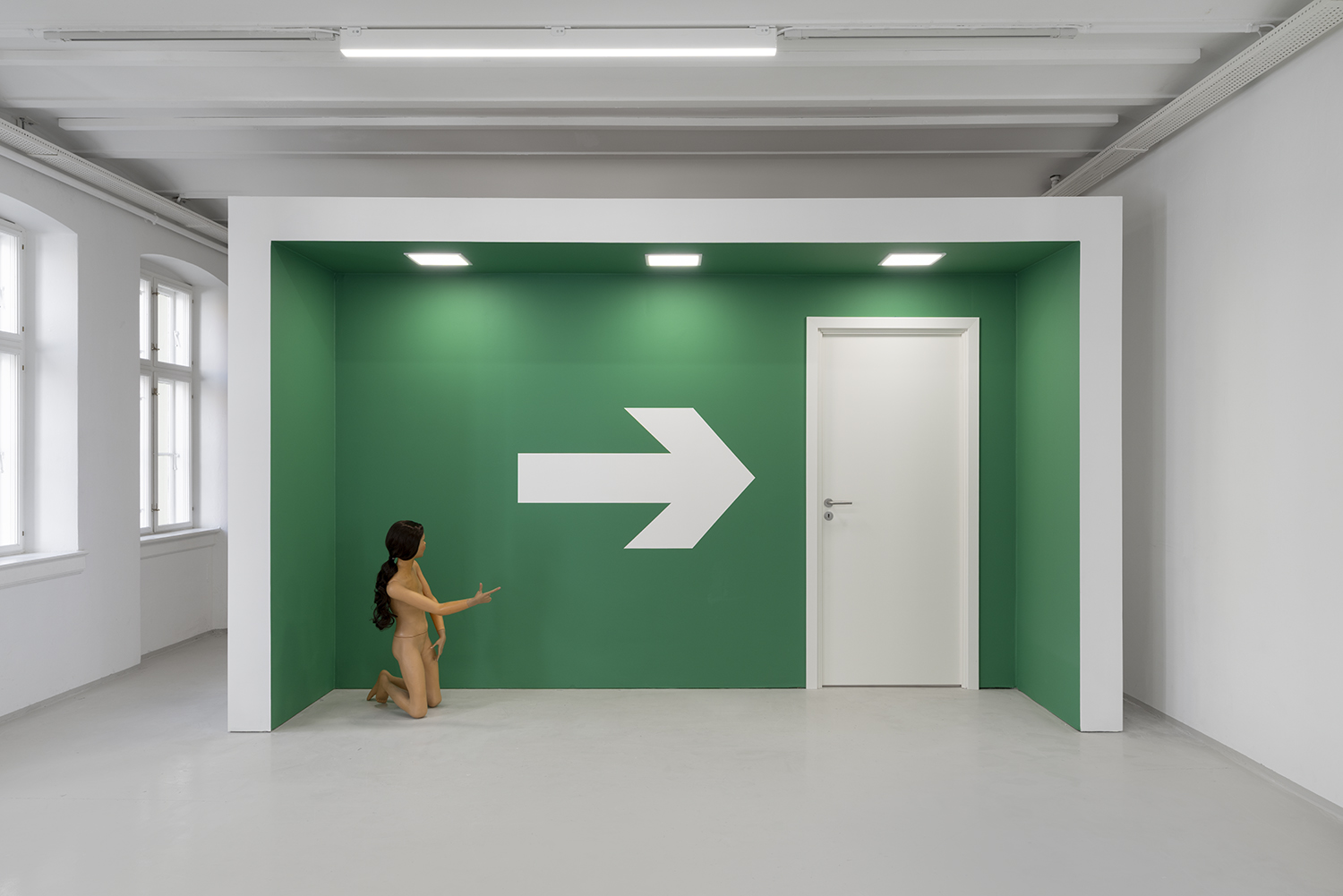
Teen Exit, 2026. O—Overgaden. Photo by David Stjernholm
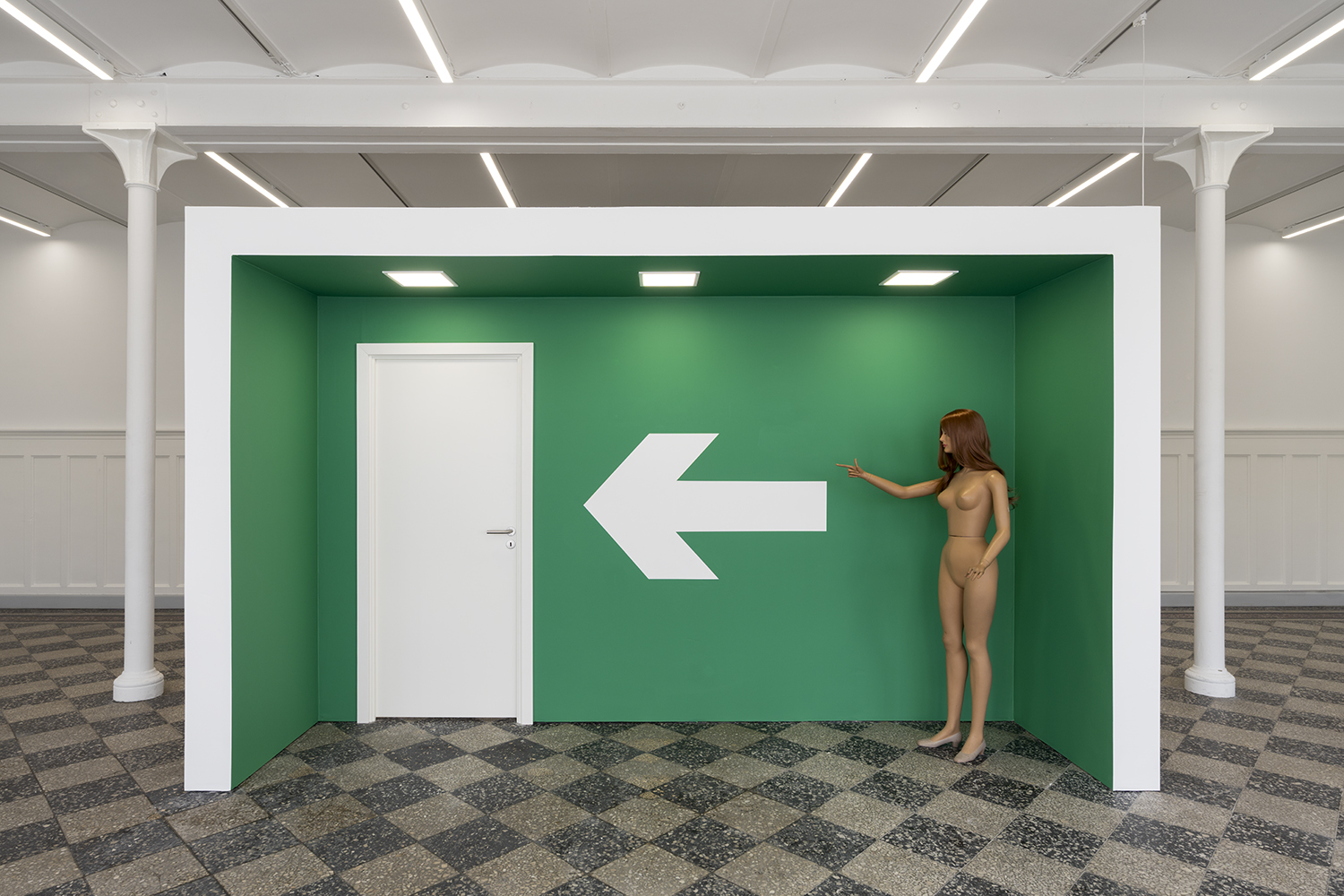
Adult Exit, 2026. O—Overgaden. Photo by David Stjernholm
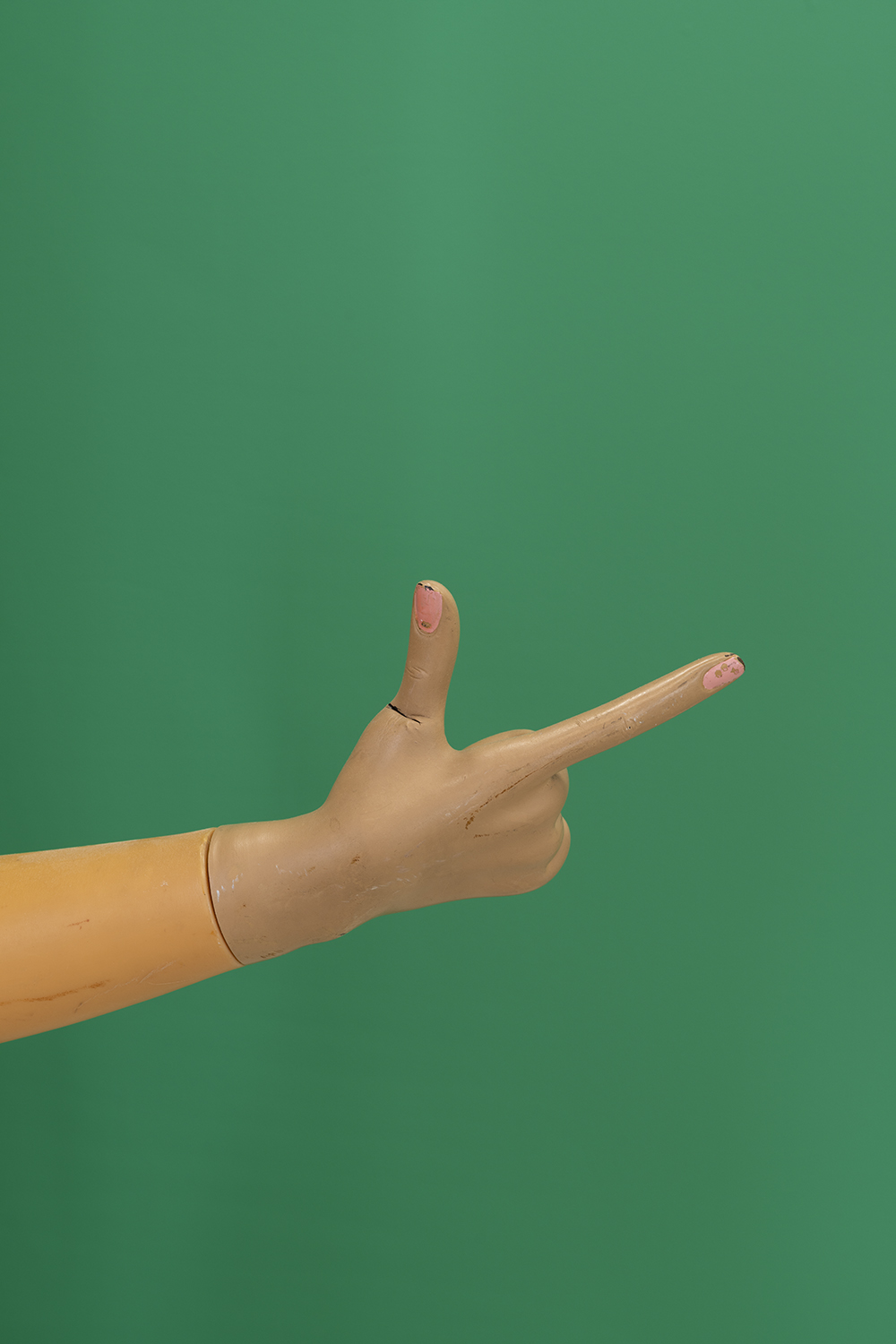
Teen Exit, 2026. O—Overgaden. Photo by David Stjernholm
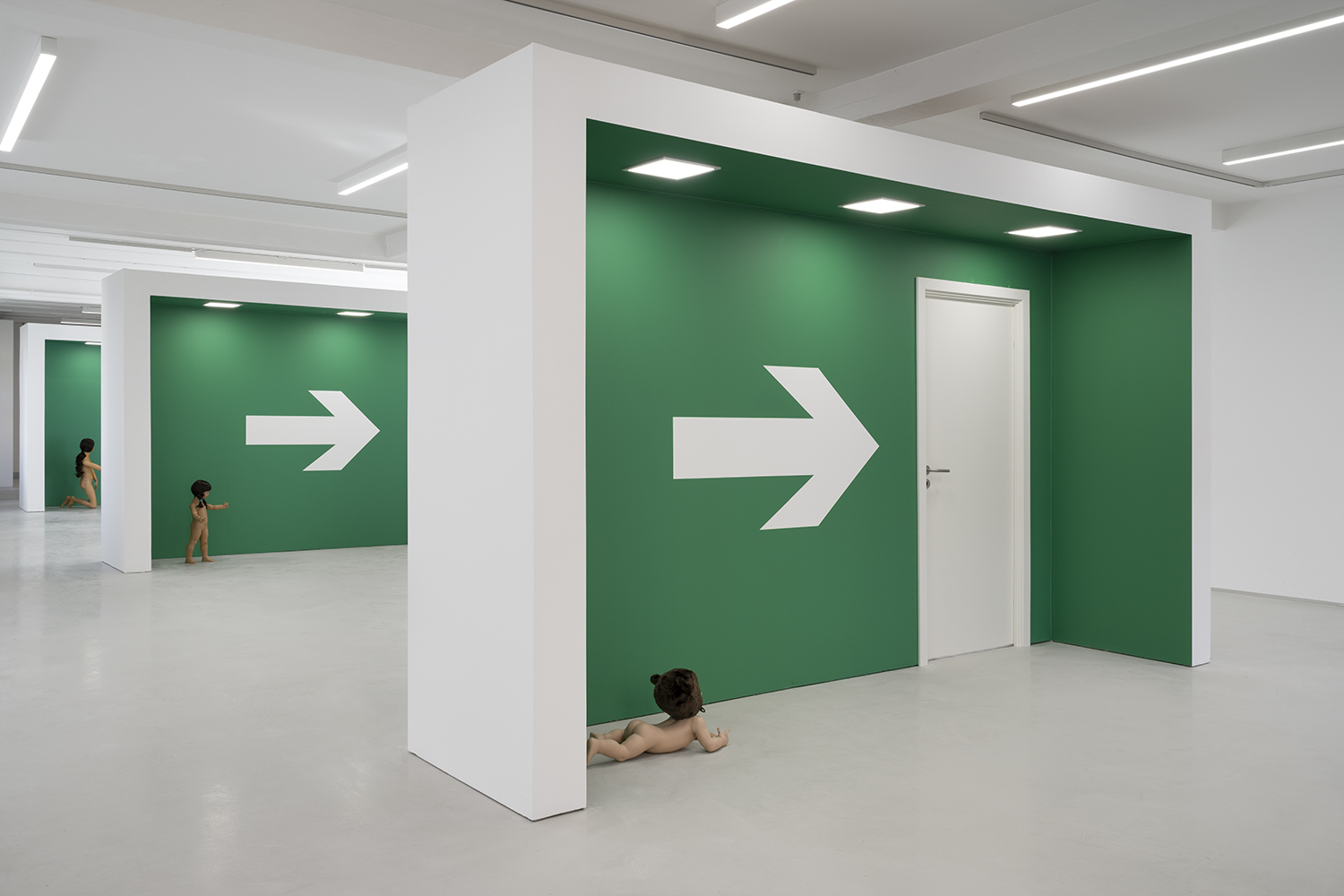
Women Upstairs, 2026. O—Overgaden. Photo by David Stjernholm
Entering Bruno Zhu’s Women Upstairs in Copenhagen, one encounters white institutional doors installed in freestanding partitions painted white. Turning one stainless-steel handle opens into a diorama, where a nude female-passing vintage mannequin of idealized proportions is immediately present, passively confrontational in her short heels. Her brassy wig gleams, her face gently smug with no evident malice. The fingers on her left hand have been molded with a heat gun to imitate a demure posture, while her right hand aggressively points toward the exit using the finger-gun gesture. The interior of the diorama is painted entirely in the same green shade as the universal exit logo that politely signals the direction for avoiding the wrong direction, or worse, death. A giant, white vinyl arrow mimicking the exit sign’s serves as a semiotic backdrop.
Opposite, identical doors open to three identical dioramic situations. Undressed mannequins wear equally complacent expressions and point with finger guns. Through each door, they regress in age, their retro figures exposing the perverse expectations of gender that shaped cultural attitudes only a few decades ago. A teen with a pre-adolescent physique kneels, her fake, grotesque eyelashes beginning to detach. Through the next door is a wide-eyed youth, her cherub cheeks smudged with ambiguous powder, wig brushed and braided into pigtails. In the last diorama, a baby with blue eyes dons a furry brown teddy-bear hat in lieu of a wig, her bottom erect in crawl position. The baby, too, points her finger toward the door in the direction of the exit sign. Allegiance to the world order starts at a young age.
Down the literal highway, Zhu drives home the proverbial binary with Men at Work, a parallel exhibition in Holstebro. Here, sandwich boards feature male models sourced from Dolce and Gabbana fashion campaigns between 2005 and 2010. At once aspirational yet also lusted-after, slick, toned men are objectified in images of their pants dropped to the ankles, or unzipped at the crotch, their subjectivity erased through a literal flattening of an image on cardboard, reduced to a representation of masculinity with no other role than to sell as sex symbols. On the other side of the boards are glossy blown-up images of the ubiquitous orange-and-white traffic cone. Adhered to a quintessentially Danish wrapping paper covering the boards, the combination of the hunks and cones at first comes across as indiscriminate or merely there to fulfill the cliché of the exhibition title. Yet Zhu is deliberately exploiting the assumptions he expects viewers to bring to the exhibition, inviting our culturally-coded projections onto the global hunk and the traffic cone.
Zhu explicitly separates his art from theory and autobiography. His rigorous editorial practice exists in parallel to his art instead of attempting to explain it, to preserve the complexity of texts that pull the postcolonial condition away from the identity politics it is so often reduced to while ignoring proletarian experiences of daily racisms. In his art practice, Zhu uses fashion as a concise medium to expose the disgust, awe, and insecurity toward the other by redirecting these responses toward recognizable group signifiers, implicating the viewer rather than allowing the comfortable distance of detached analysis or moral positioning. Zhu provocatively points to our patterns of consumption, and the objects and images by which we are seduced or repulsed, challenging our professed convictions by asking how far we are willing to relinquish benefits associated with signs we may condemn intellectually, or suffer the consequences of aligning with the signs we claim to uphold.
Opposition or affirmation of certain signifiers may merely be a way of organizing ideological belonging around the binary of right or wrong, good or bad. Women Upstairs and Men at Work demonstrate Zhu’s fluency in contemporary art as the perfectly precarious space to take revenge on identity politics by naming the superficial signs we falsely rely on to navigate contemporary life. Every formal decision has been thoroughly considered and precisely approached, leaving the viewer to their own vices, to respond to human-sized dolls and studmuffin cutouts paired with universal visual codes. Uncomfortable audiences might yearn for such incisiveness to simultaneously evoke something profound. But fashion is not there to do that. And fashion as art certainly is not. Vulgar suggestion may be the only exit strategy from the safe and redundant space of discursive production.
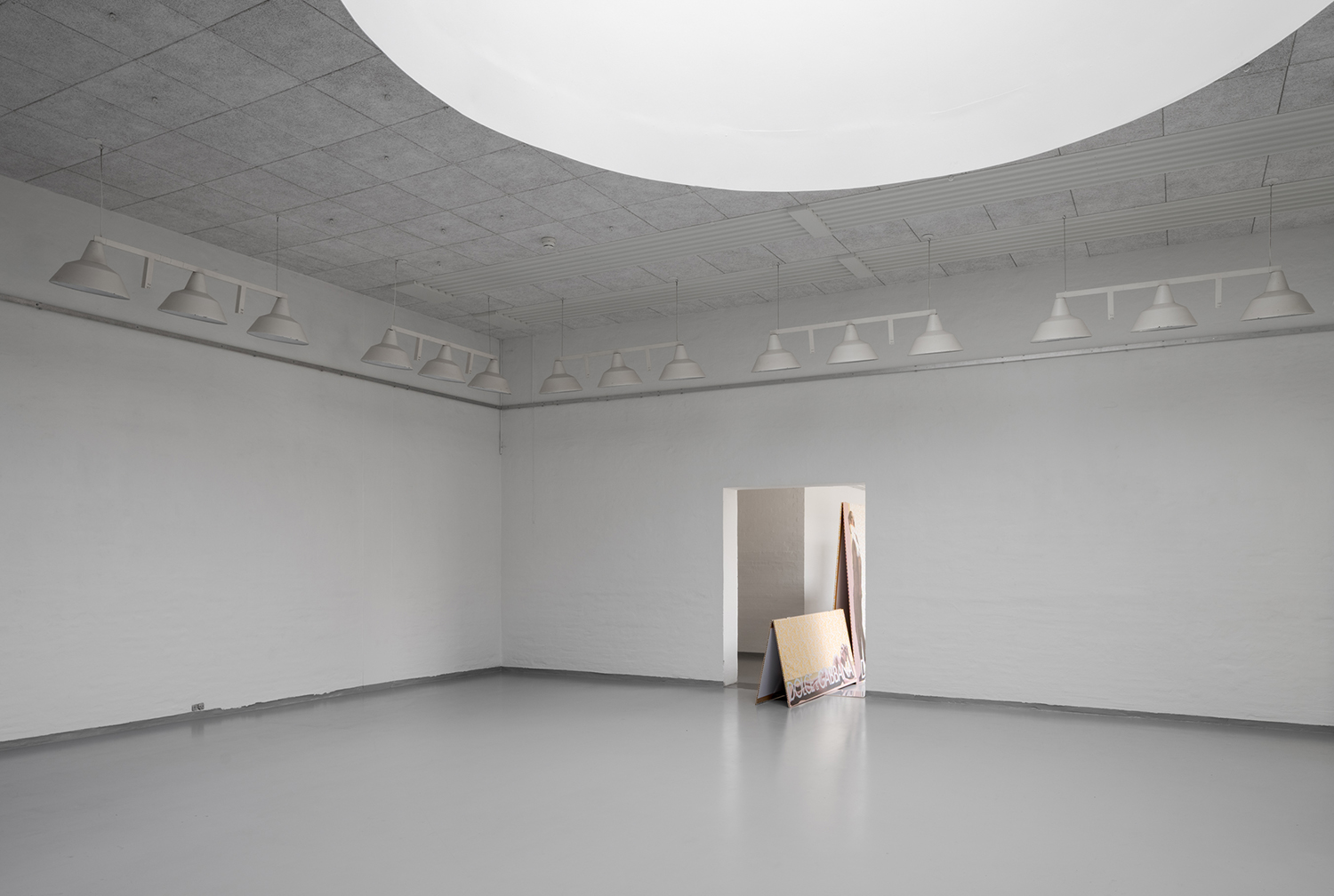
Men at Work, 2026. HFKD, Holstebro. Photo by David Stjernholm
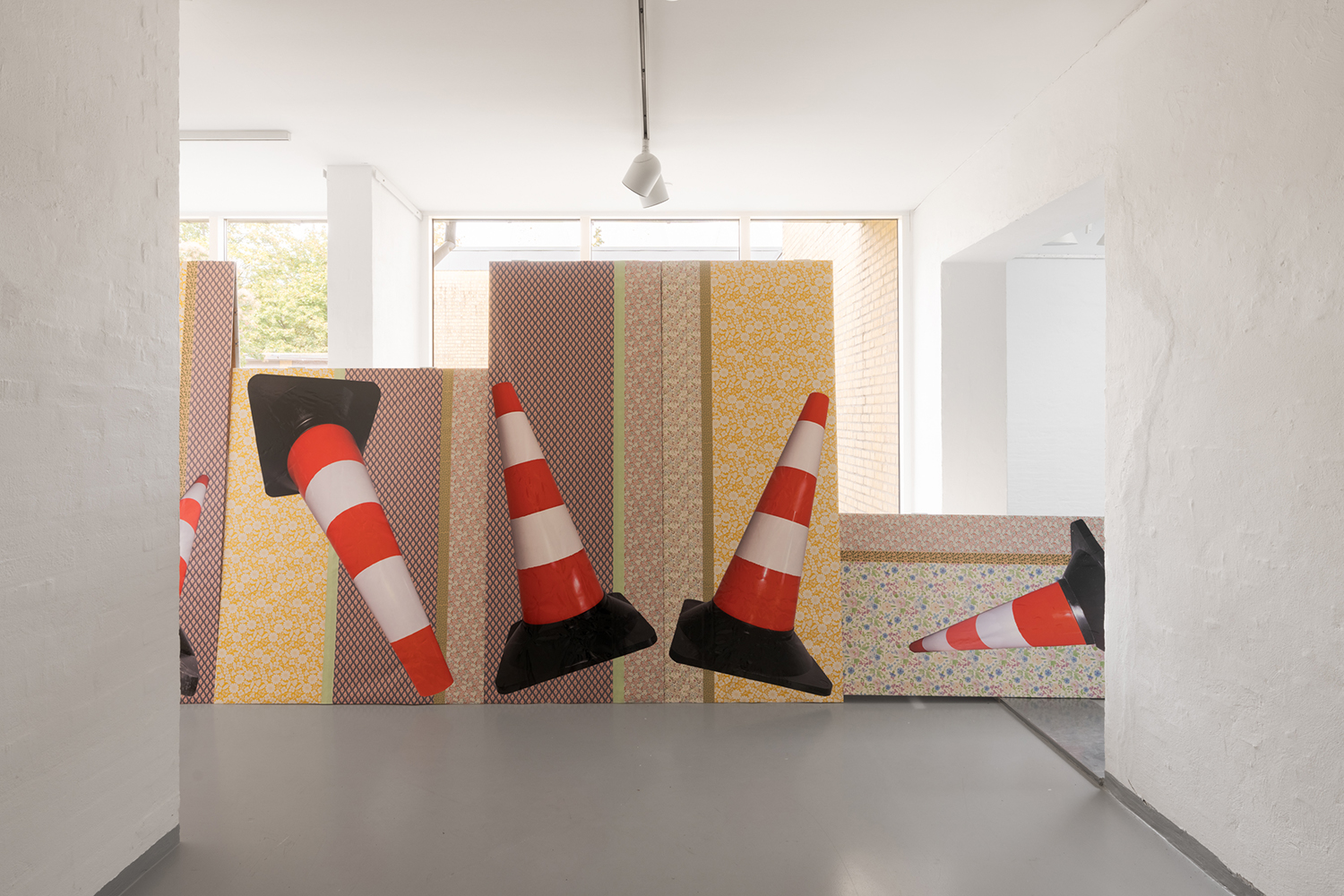
Men at Work, 2026. HFKD, Holstebro. Photo by David Stjernholm
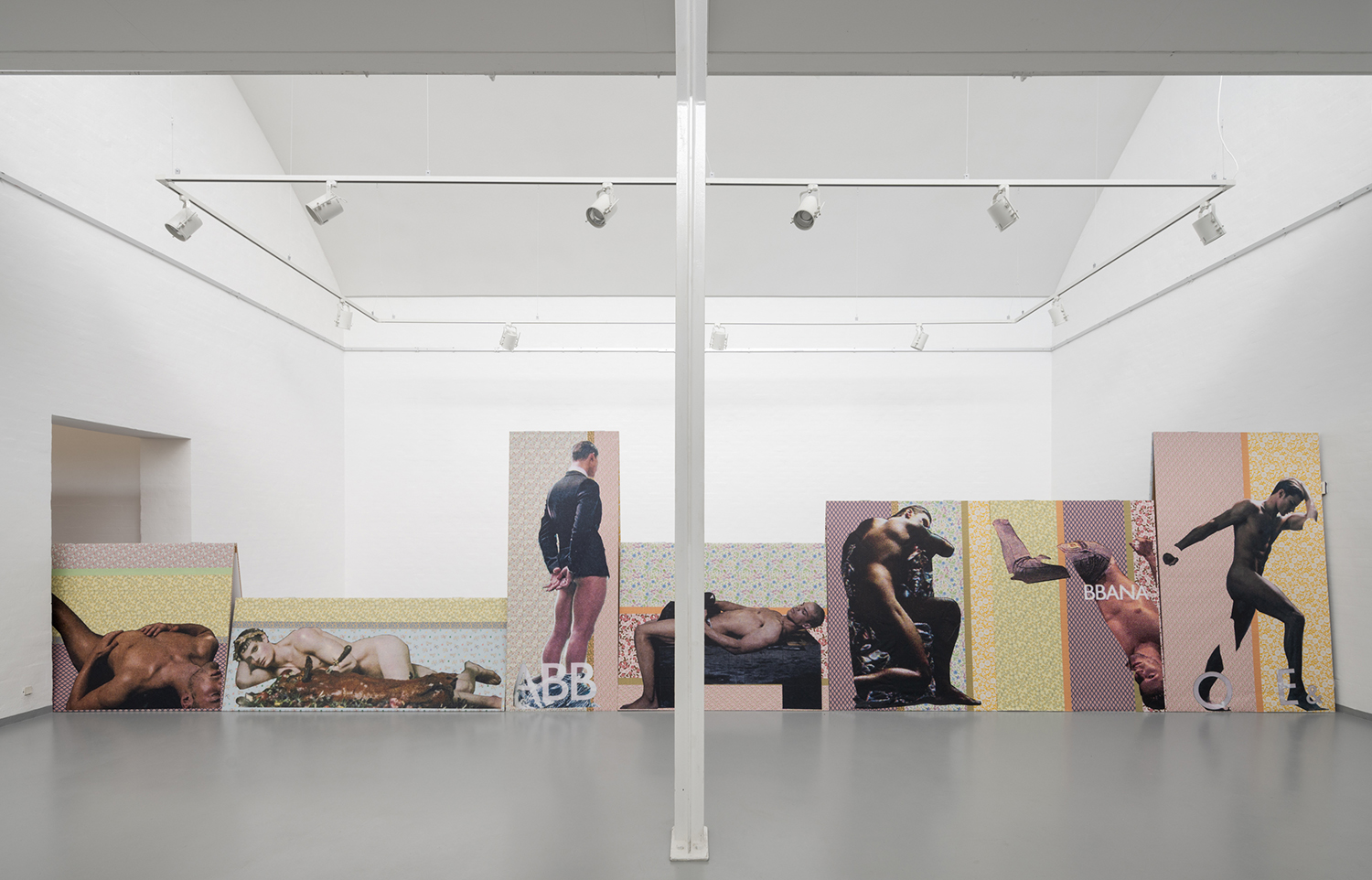
Men at Work, 2026. HFKD, Holstebro. Photo by David Stjernholm
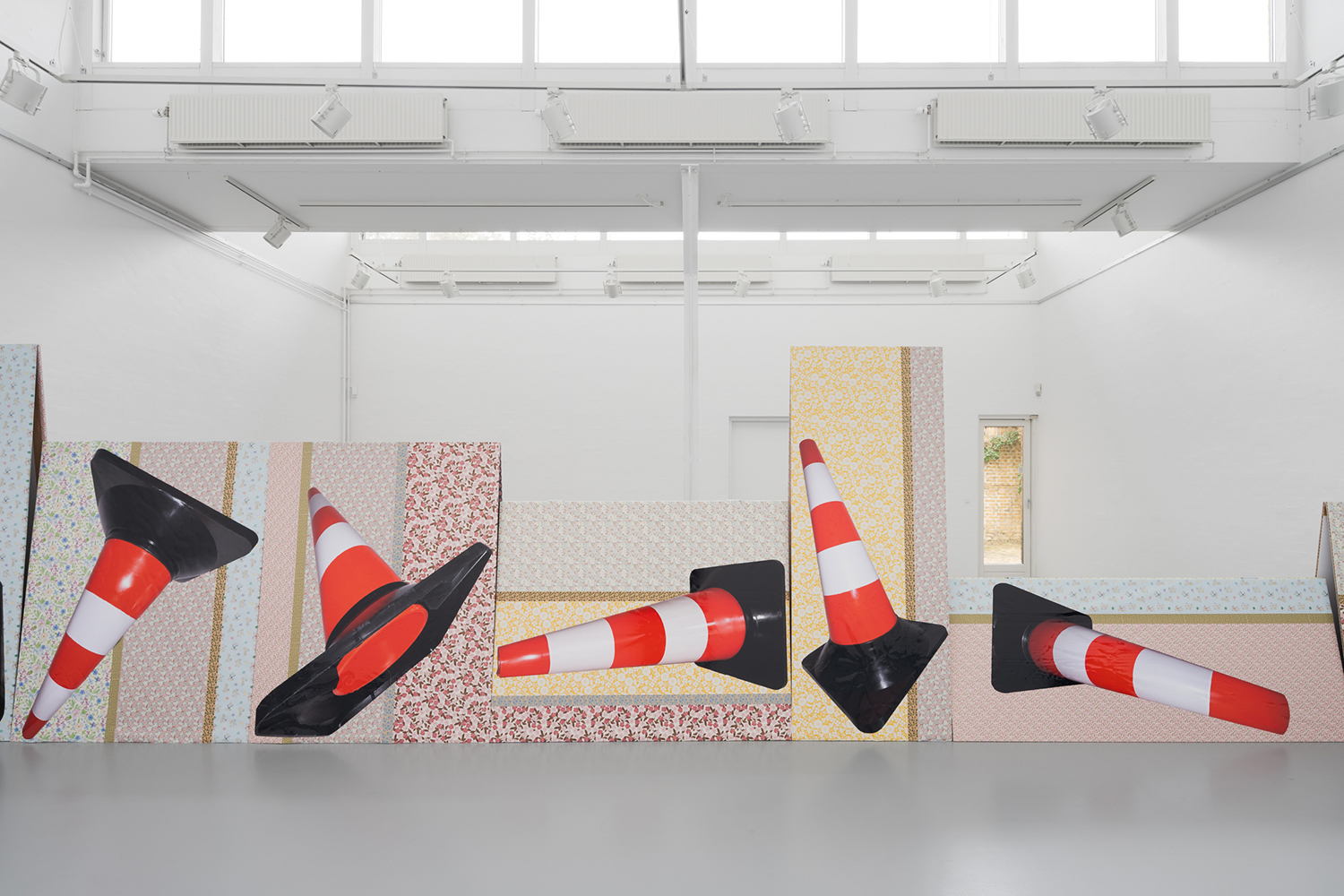
Men at Work, 2026. HFKD, Holstebro. Photo by David Stjernholm
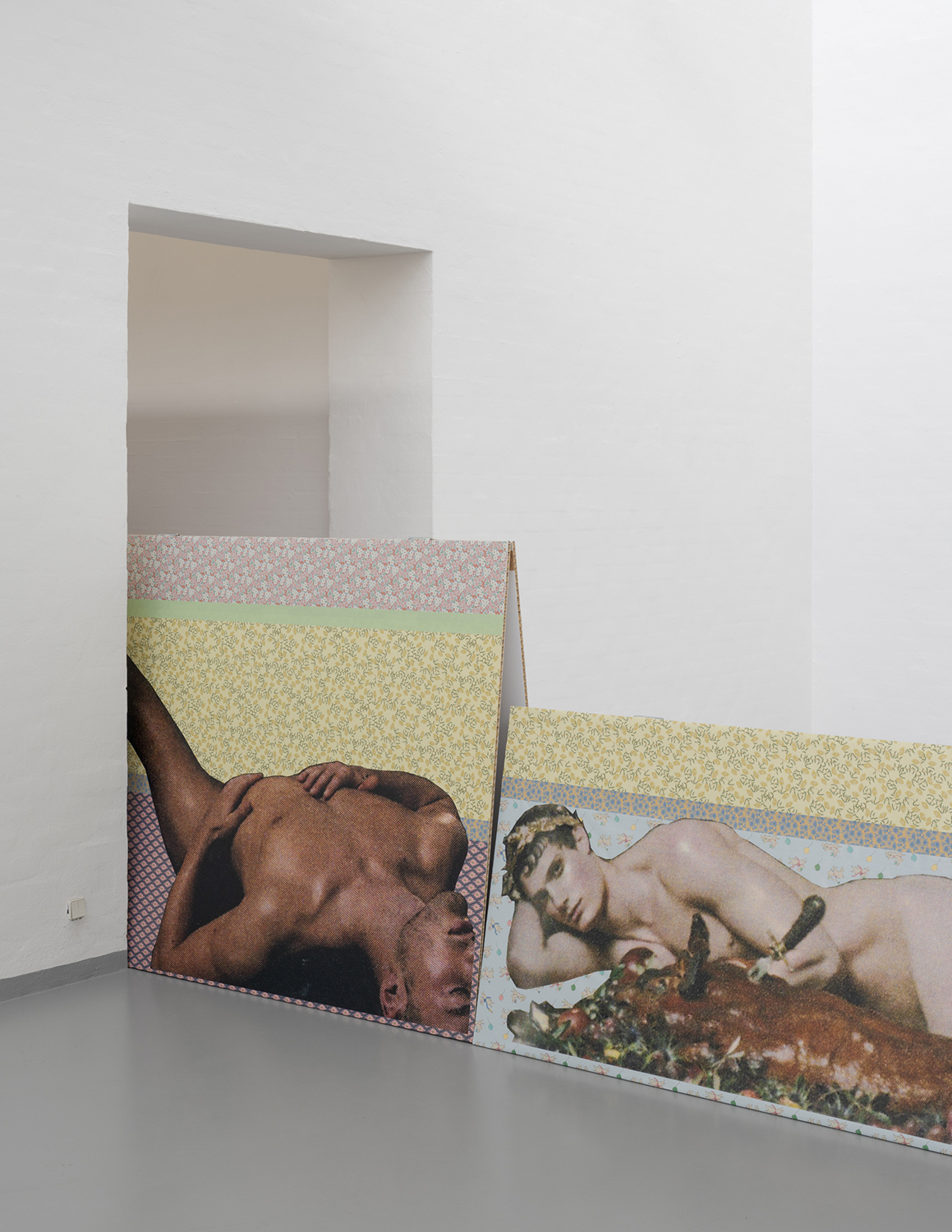
Men at Work, 2026. HFKD, Holstebro. Photo by David Stjernholm
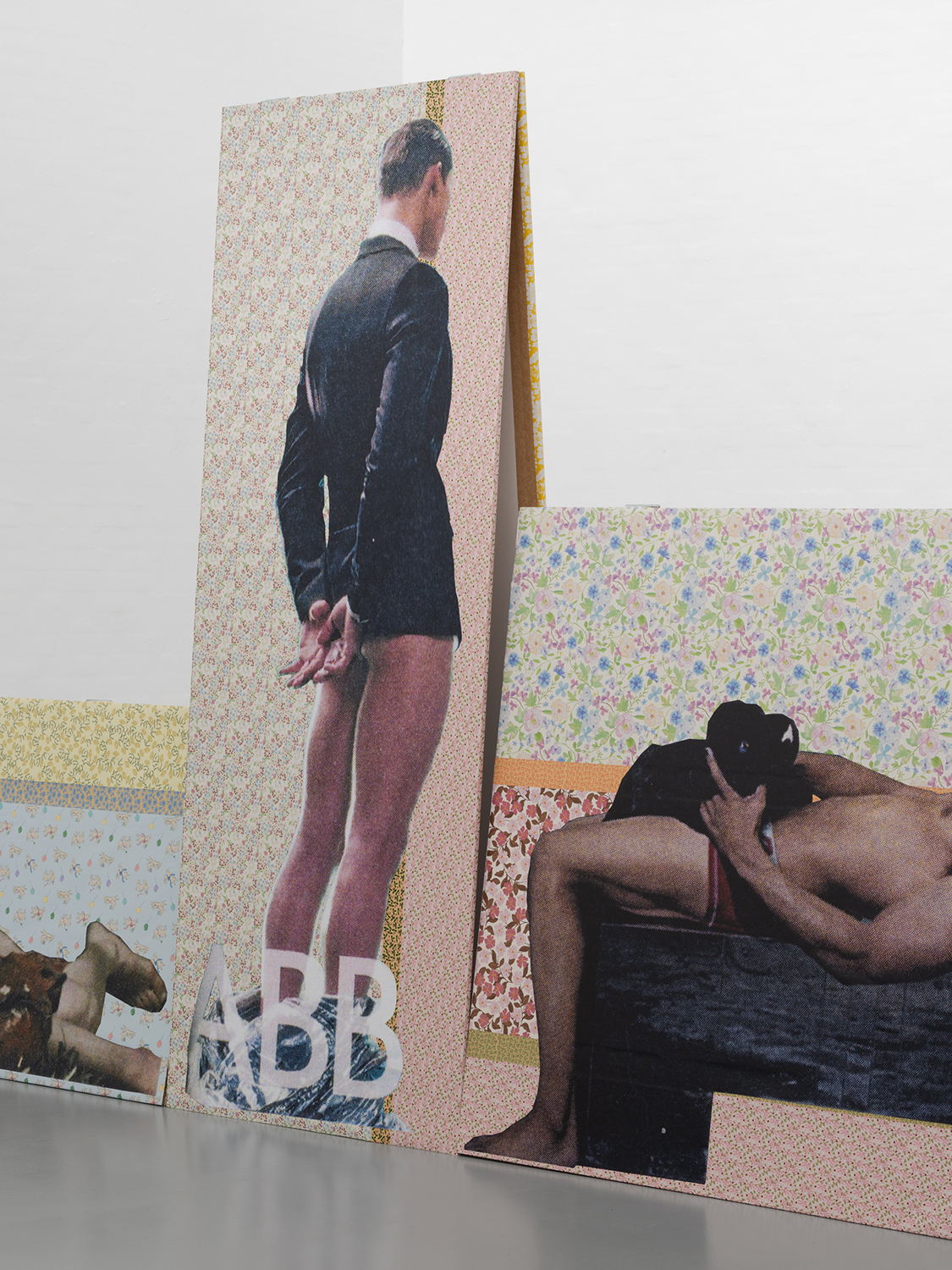
Men at Work, 2026. HFKD, Holstebro. Photo by David Stjernholm
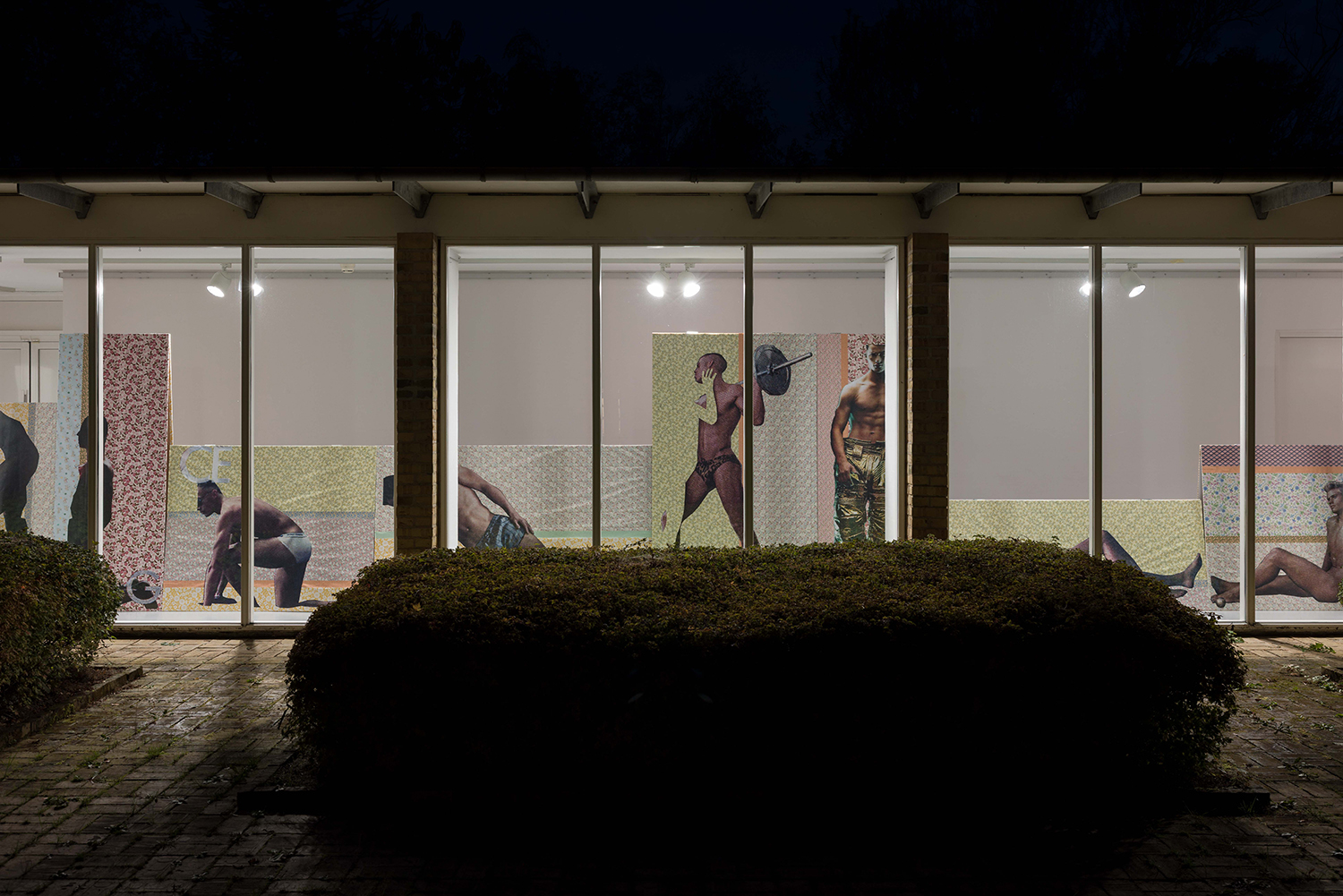
Men at Work, 2026. HFKD, Holstebro. Photo by Mikkel Kaldal
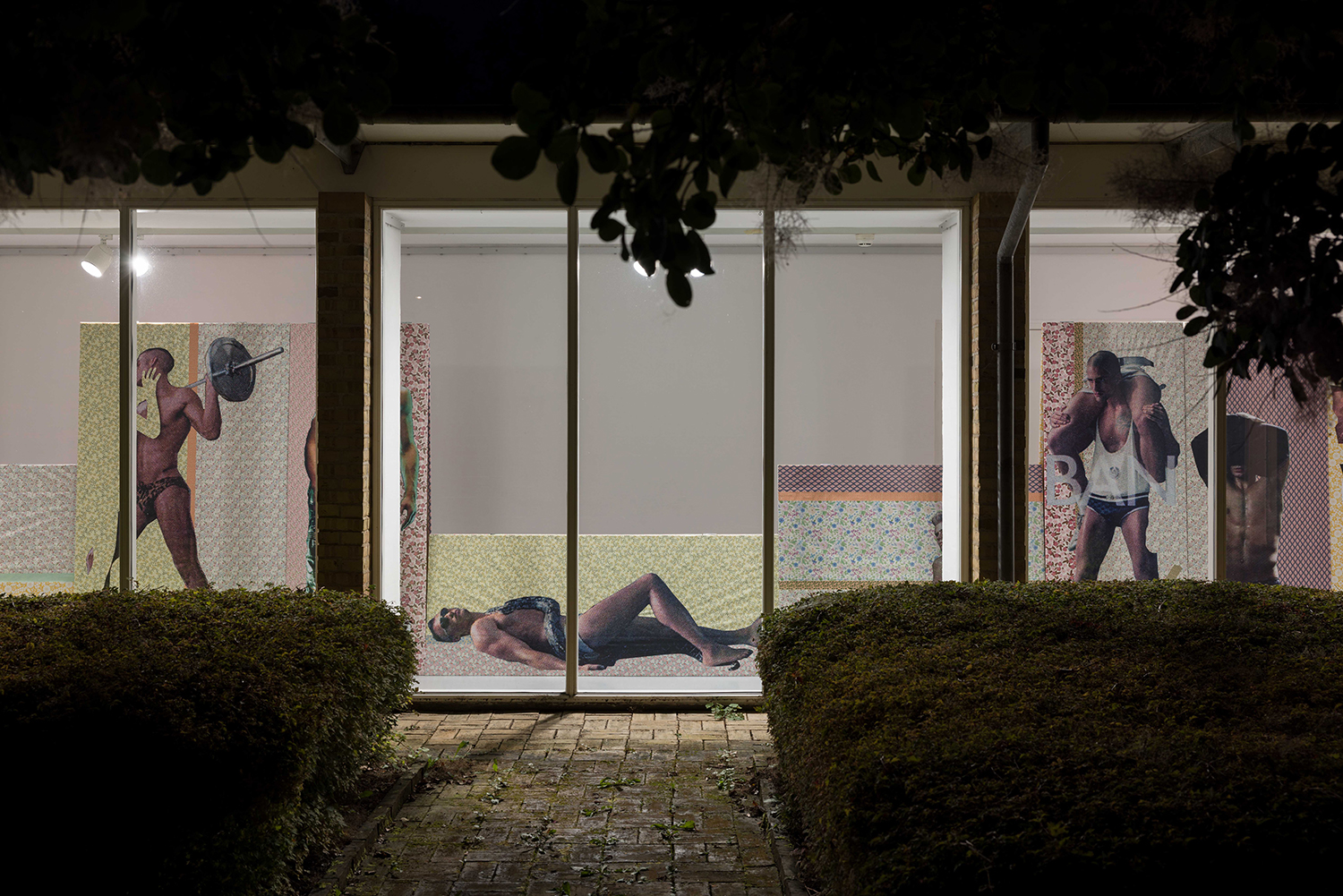
Men at Work, 2026. HFKD, Holstebro. Photo by Mikkel Kaldal
Bruno Zhu
Women Upstairs
Overgaden, Copenhagen
September 12 – October 25, 2026
Men at Work
HFKD, Holstebro, Denmark
September 12, 2026 – February 14, 2027
Review by Cecilia Bien