It rests to the bones
Cyprus Pavilion
La Biennale di Venezia 2026
Curated by Kyle Dancewicz
Special Venice Biennale 2026
Review by Giulia Colletti
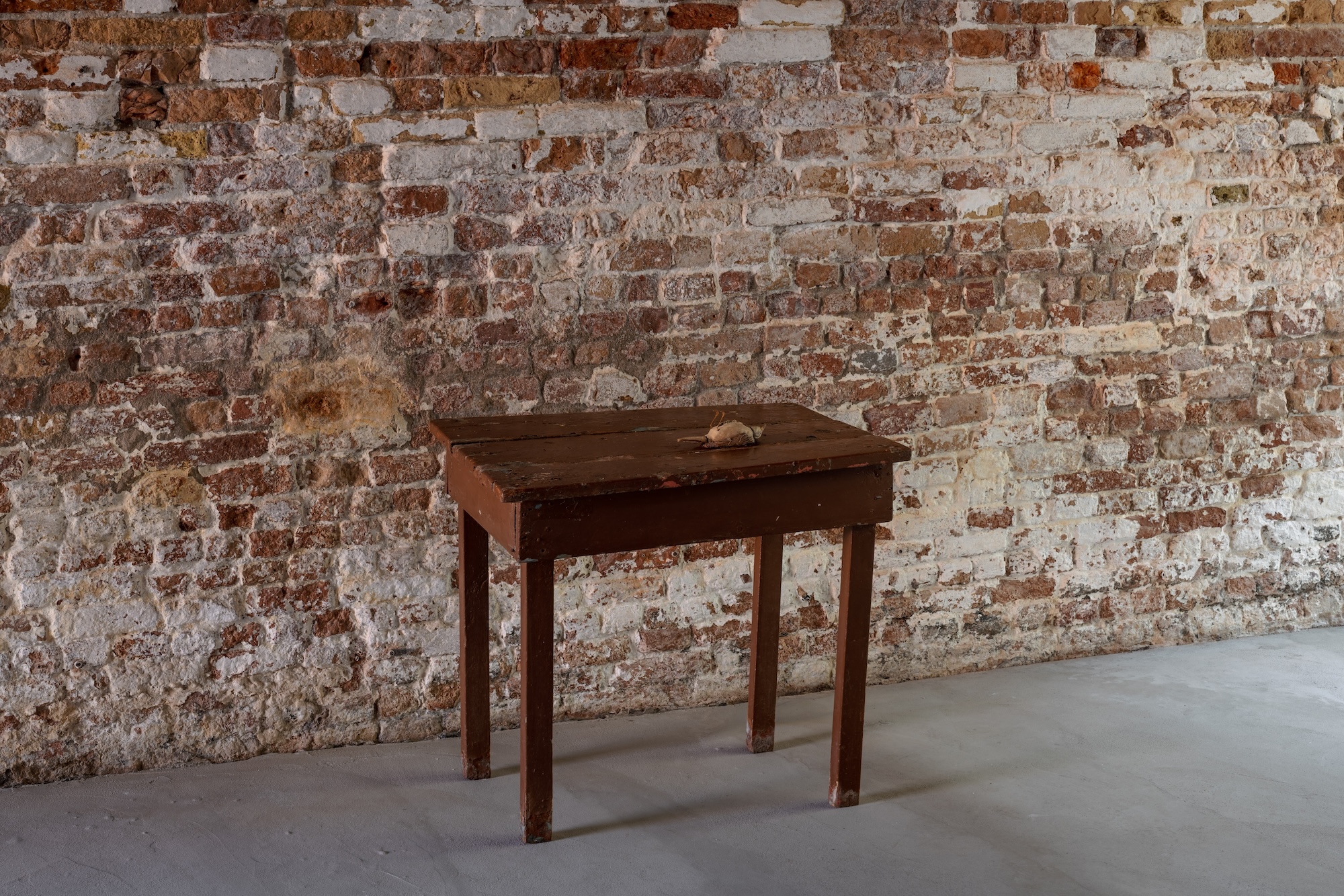
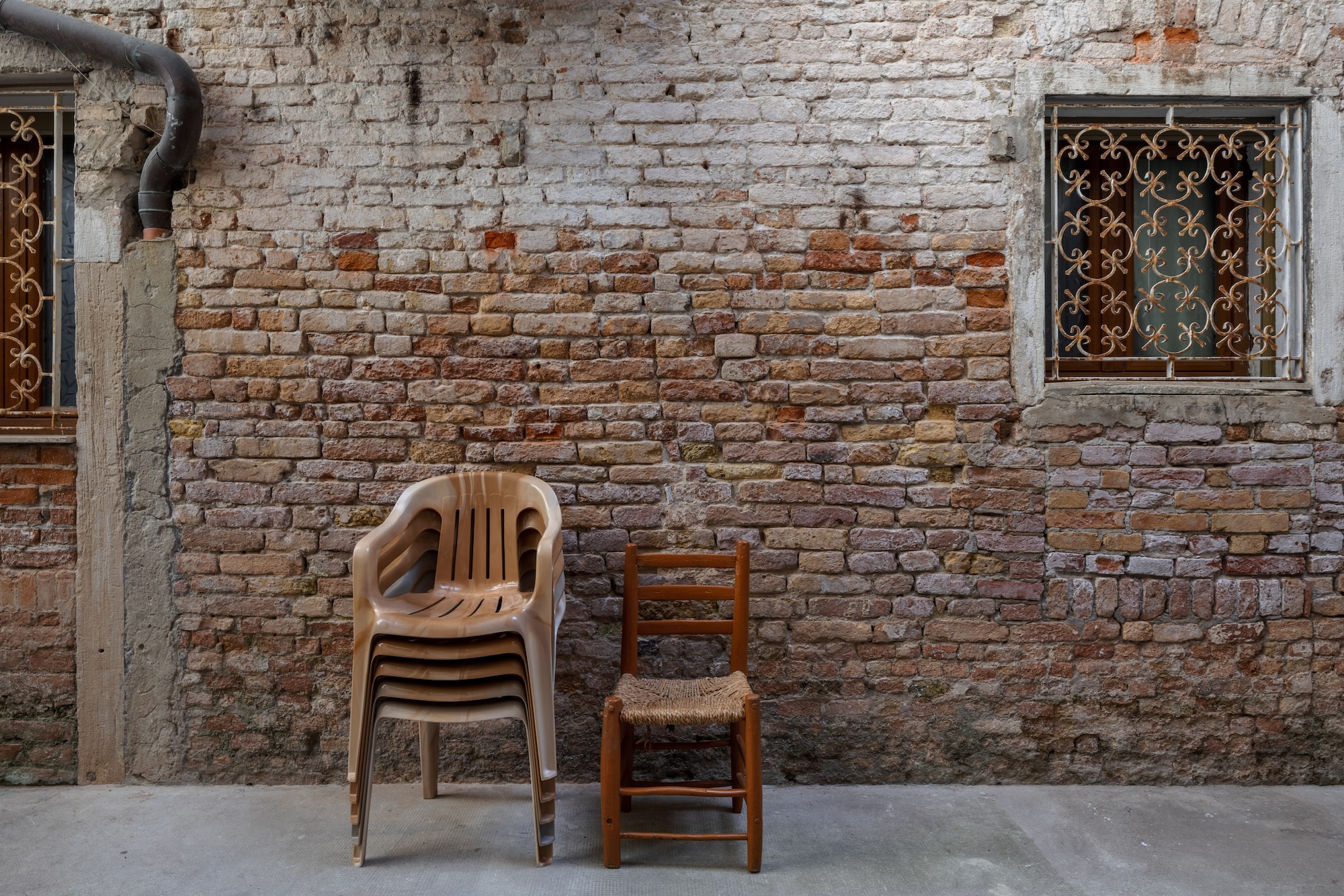
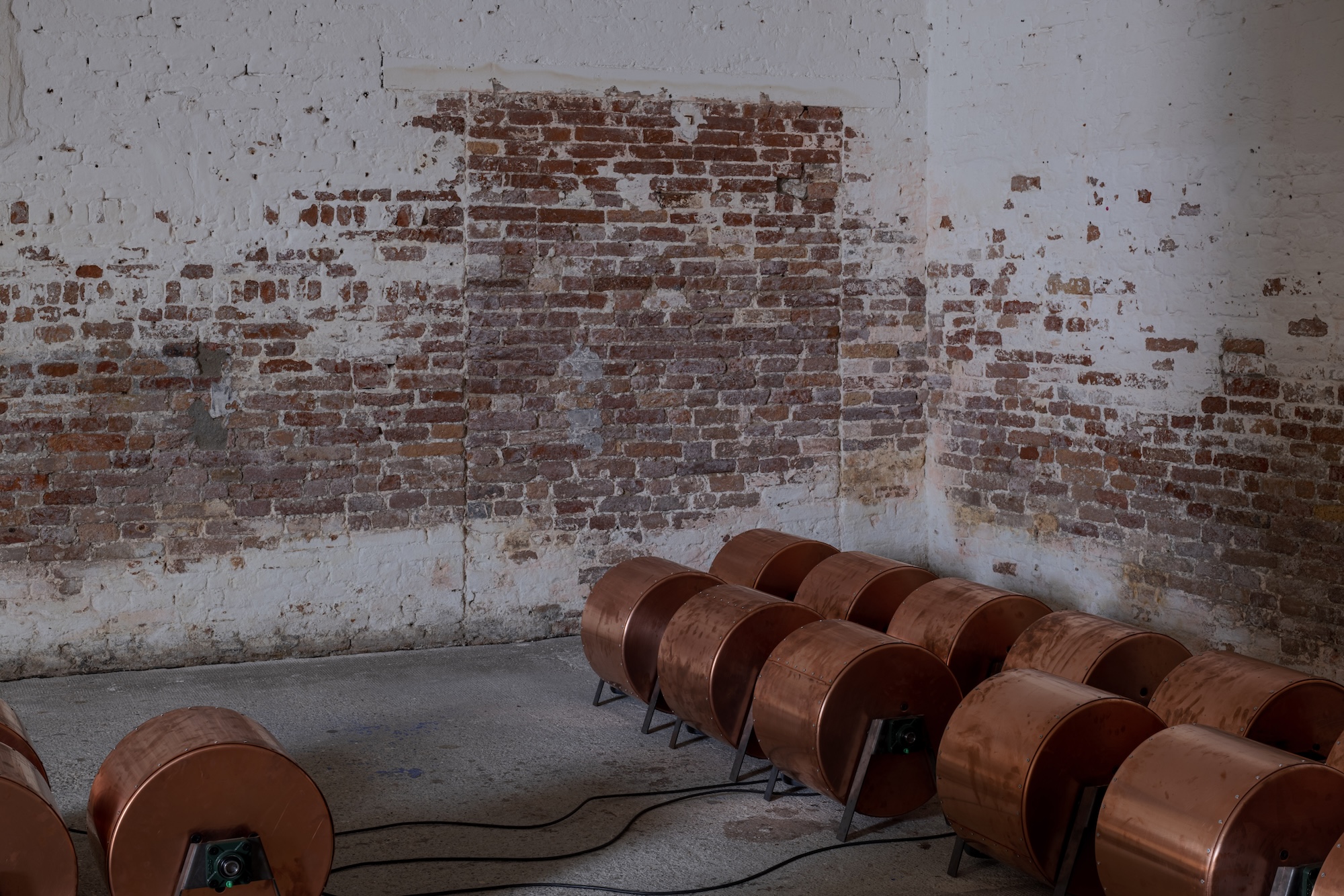
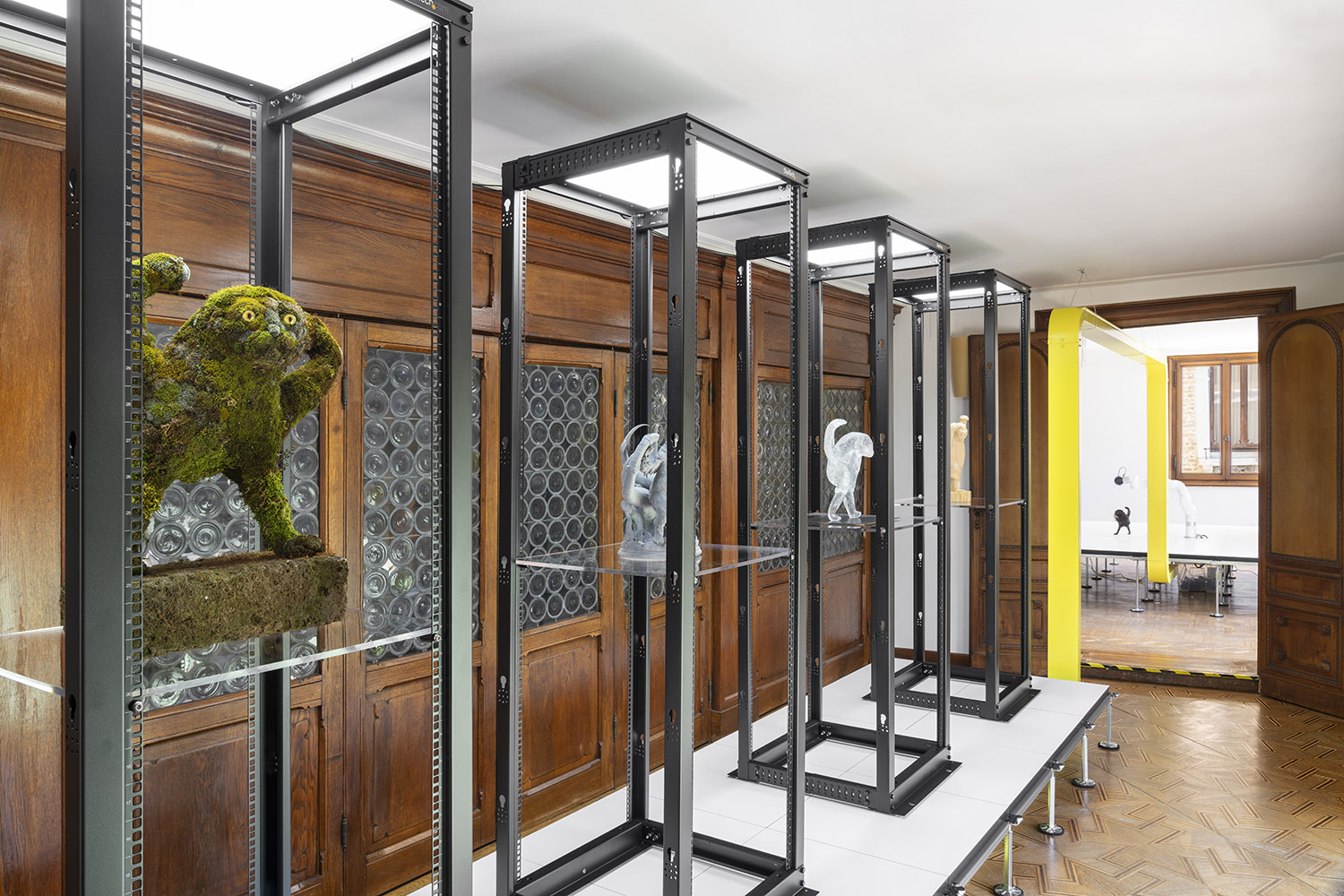
Anyone familiar with Marina Xenofontos’ work recognizes It rests to the bones before deciphering it. The copper cylinders turn slowly on their axes. The pull toward disused industrial infrastructure, the automata salvaged from another time, and the lexicon of monobloc plastic chairs and urban detritus have run through her artistic path for over a decade. It is a vocabulary that meets the freighted frame of a national pavilion and holds to the register of suggestion.
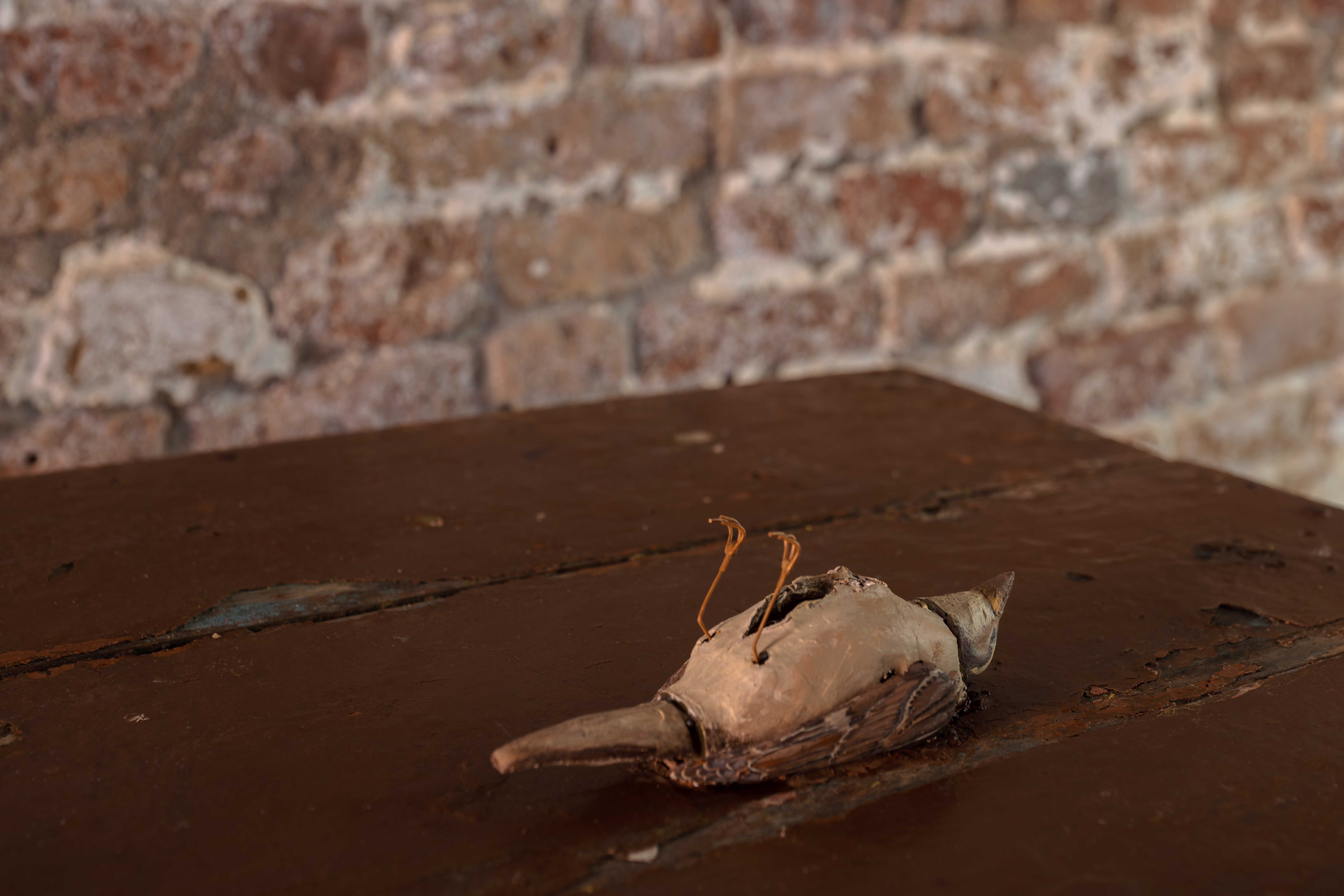
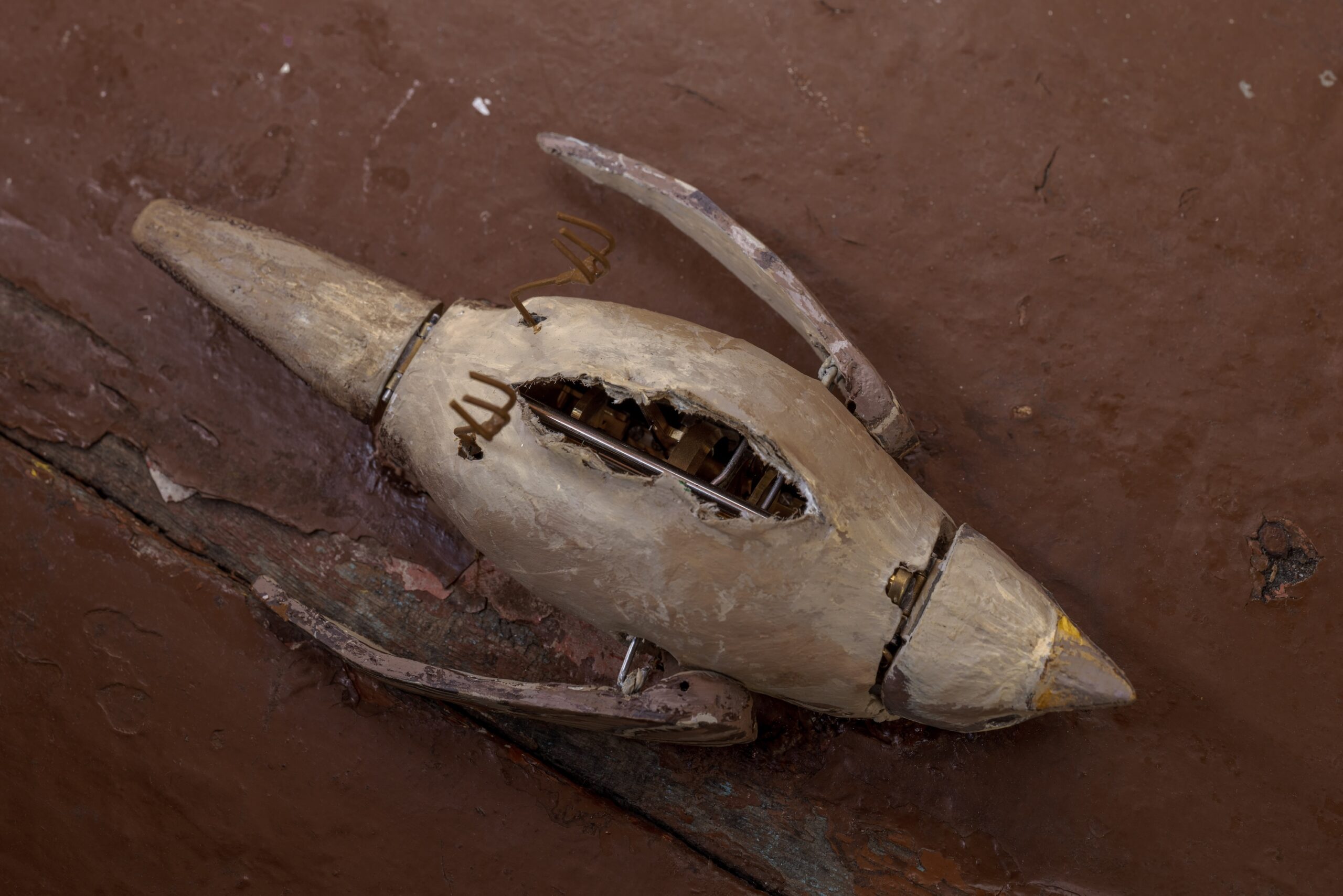
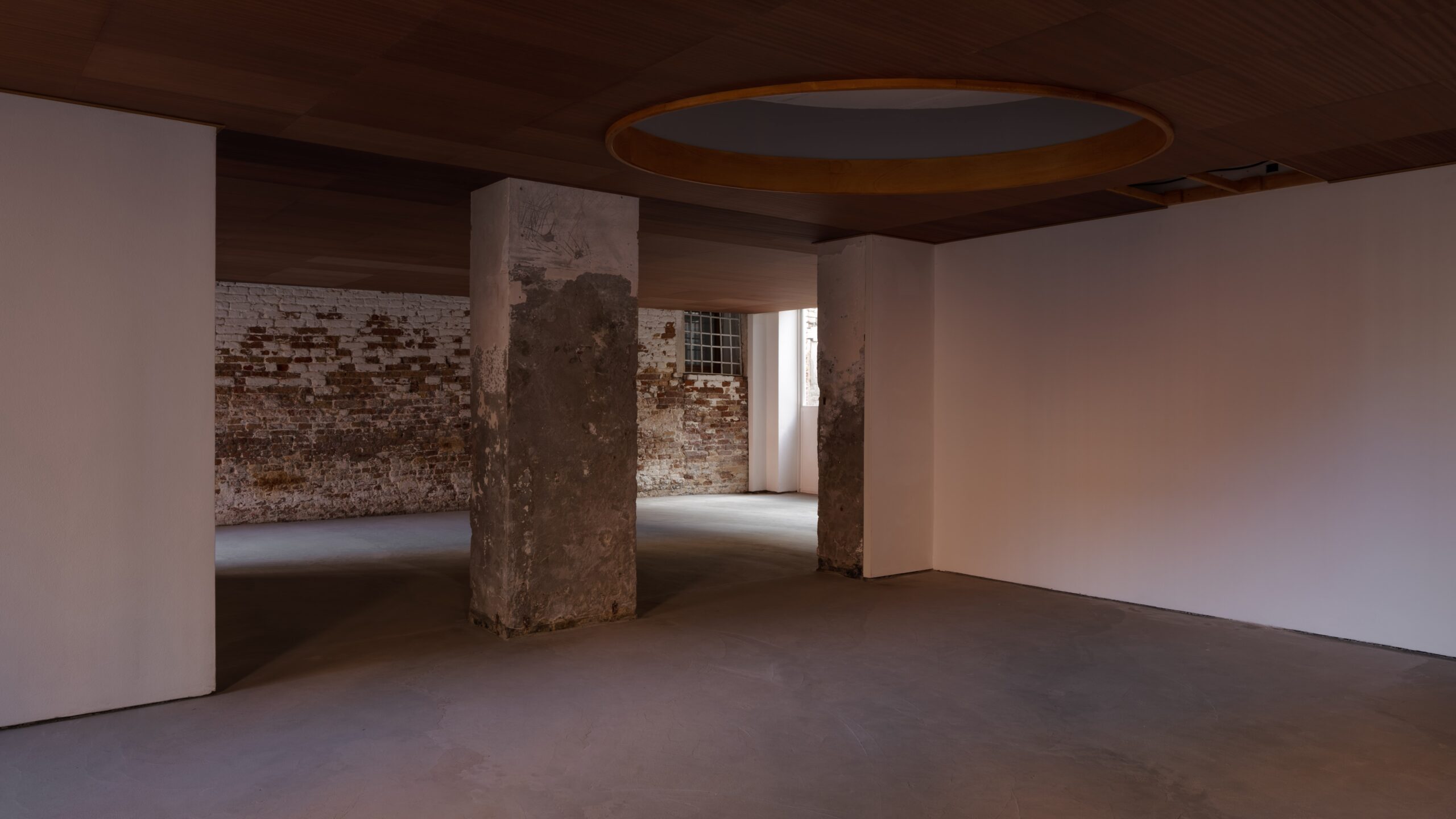
The pavilion opens upward. Interior of a Nightclub reproduces the ceiling of the Perroquet, a nightspot that once embodied Cyprus’ cosmopolitan, postcolonial promise and that has lain sealed since 1974 in the ghost quarter of Varosha, in Famagusta. From that ceiling-as-photograph descends the affect that runs through the whole show. It carries the same melancholy as the specters that have always populated the artist’s practice. One of these is the animatronic dinosaur taken from the Municipal Gardens of Limassol and recast as an archaeological relic of modernity. It returns within these walls as Passer, a fragile automaton-sparrow that repeats the gestures of a creature clinging to life.
Beneath the apparent continuity, though, something shifts. Earlier works let a Cypriot identity surface obliquely, as the evocation of a labyrinthine landscape, which was an atmosphere more than a position. Here the island’s political history becomes explicit. Xenofontos describes her practice as an “unconditional archive” of ideas, sites, and conditions that underpin the present. In It rests to the bones such an archive turns from metaphor into dated mourning.
The living heart of the show is sonic. The installation is threaded with folk and ecclesiastical songs sung by the Ayisilaou sisters, the artist’s grandmother and her sisters, recorded in 2020 in their village near Limassol, shortly before the eldest’s death, and reworked by Panagiotis Mina. Sung across Greek Cypriot and Turkish Cypriot dialects, they restore an idea of Cyprus that geopolitics flattens into an island “divided and frozen.” What they offer instead is a place under constant negotiation. Beneath their sweetness lies a quiet protest against conservatism.
The machines work along the same thread. Threads sets copper cylinders turning. Copper is at once the artist’s signature and a cipher of the island famed in antiquity for this very metal. It takes up the long genealogy of her kinetic sculpture, from Sequence 1 to Data Storage of a True Spectrum. Where the historical automaton sought to breathe life into matter, something more unsettling occurs in this case, as the machines render life in its exhausted version. It is a principle that grazes the eternal return, where existence reiterates itself, at once identical and endlessly other.
On the way out, what remains is the passage the title promises, namely something that reaches the bones. Be it a family, a generation or an era known in fragments, Xenofontos takes this secondhand loss and makes it a matter of the present. It is perhaps her most avowedly elegiac work, and for that reason her most exposed. Melancholy, once it becomes a program, risks stiffening. But as long as the Ayisilaou sisters’ songs sound and the sparrow keeps its stubborn beat, the show holds with grace what it is losing. It rests to the bones is a reminder that in Xenofontos’ minor key, the minor rings large.
Marina Xenofontos
It rests to the bones
Cyprus Pavilion
61st International Art Exhibition – La Biennale di Venezia
Commissioner: Ioanna Hadjicosti
Curator: Kyle Dancewicz
Venue: Associazione Culturale Spiazzi Castello 3865
Credits:
Photo: Jacopo La Forgia
© Marina Xenofontos. Courtesy the artist