Sweet Landscape
Museion
April 25 — November 8, 2026
Review by Giulia Colletti
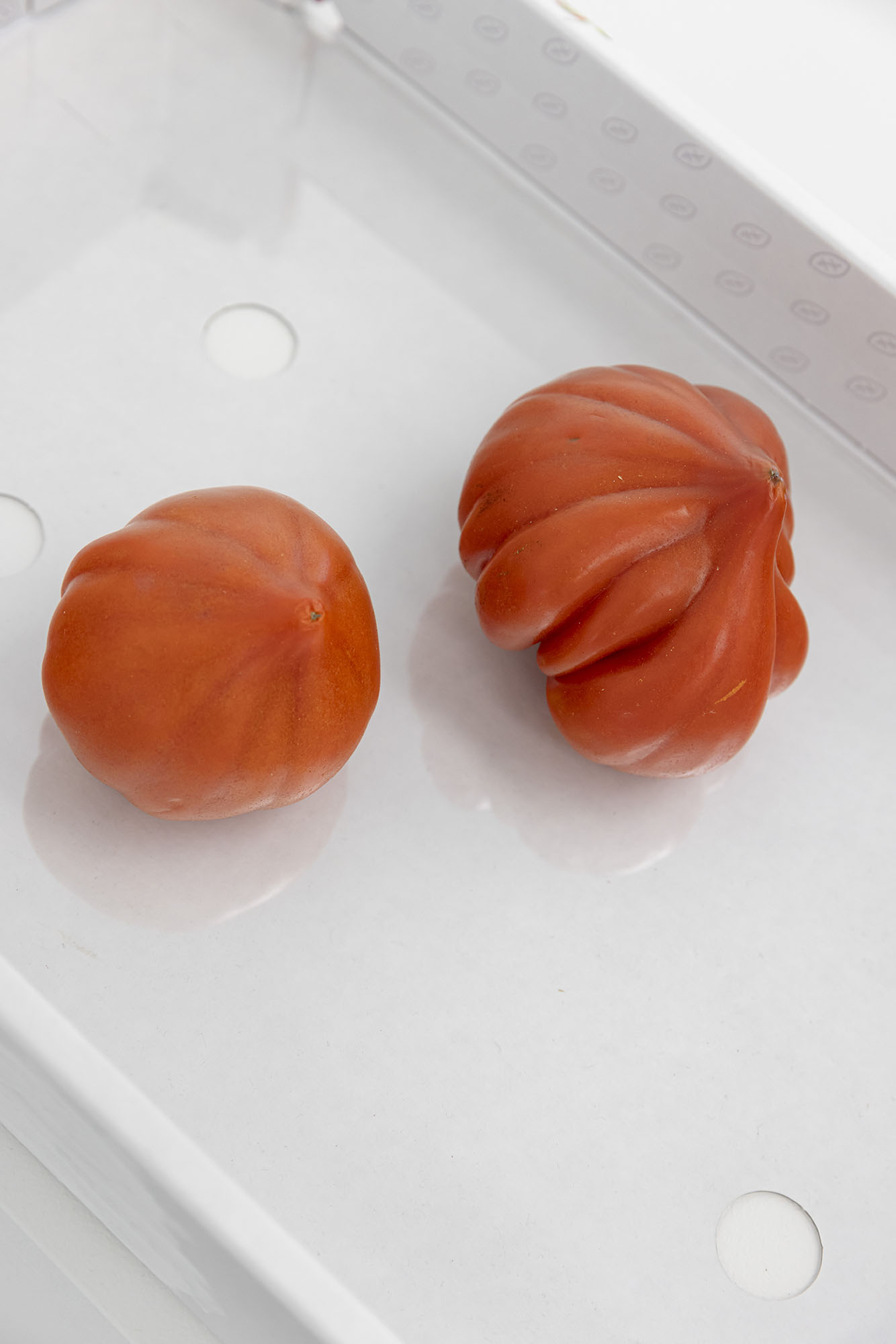
Ancient Roman bust for Sale, 2026 (detail).
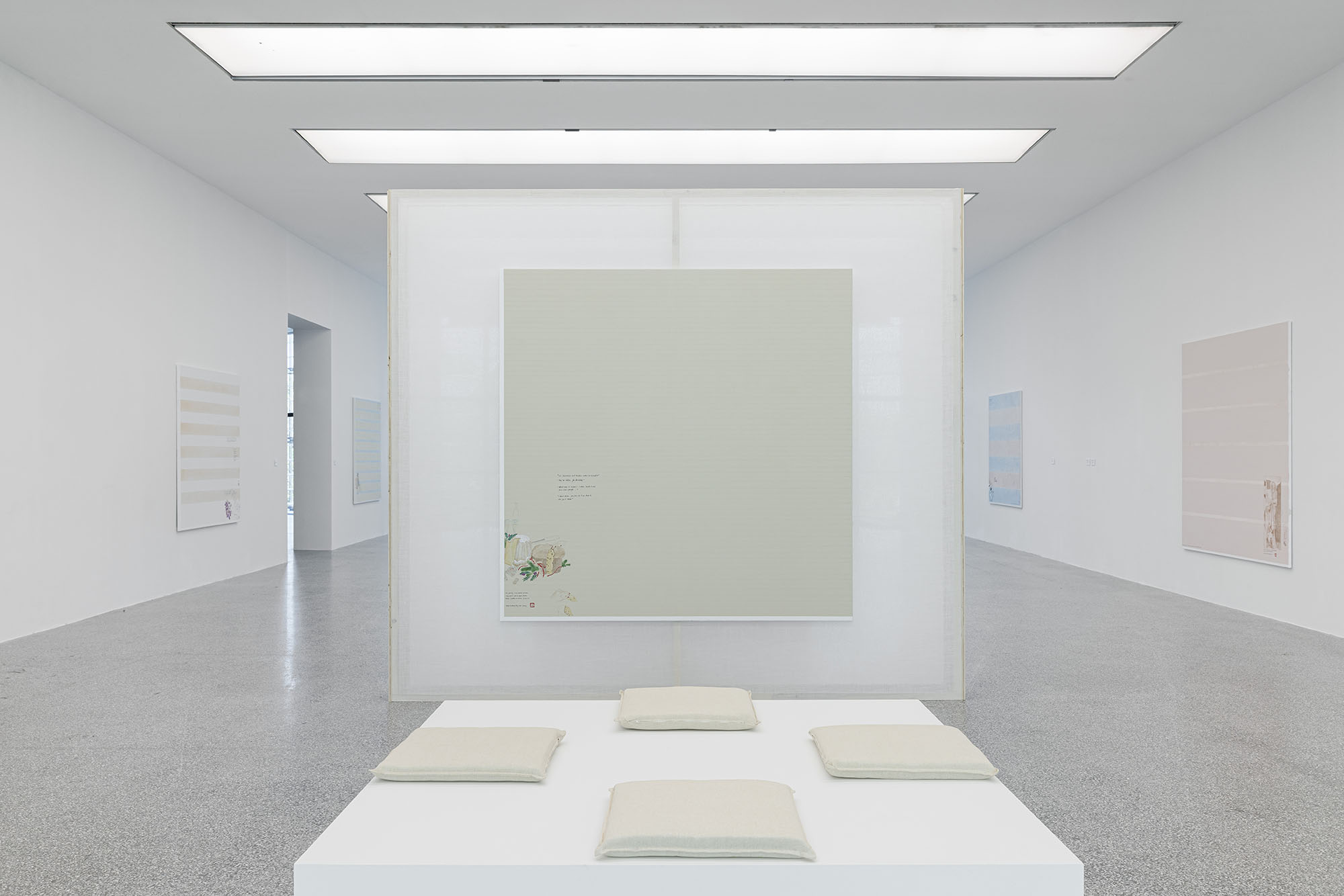
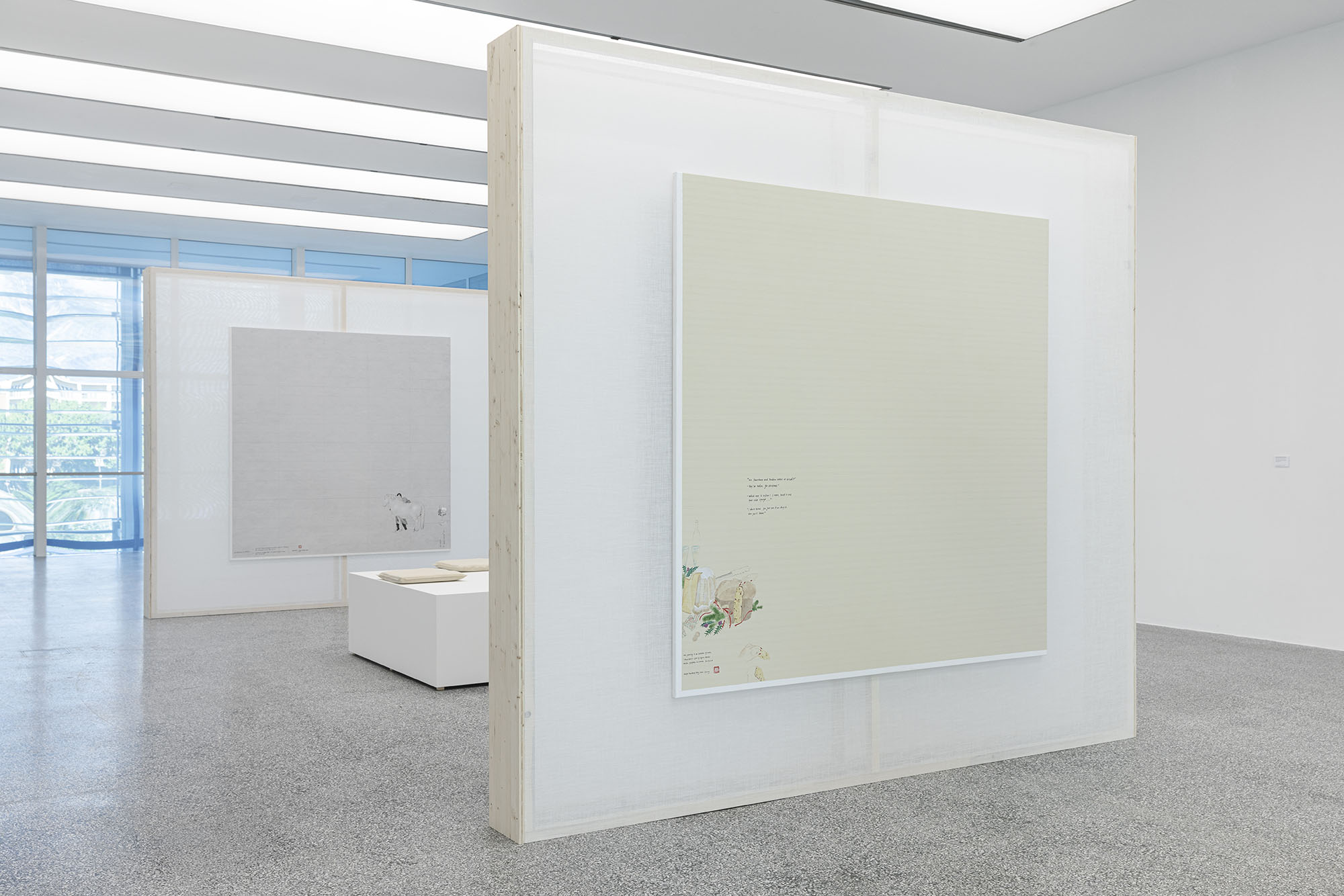
Lining Painting of Bolzano Veggie, 2026Lining Painting of Bolzano Veggie and Snow Mountains, 2026
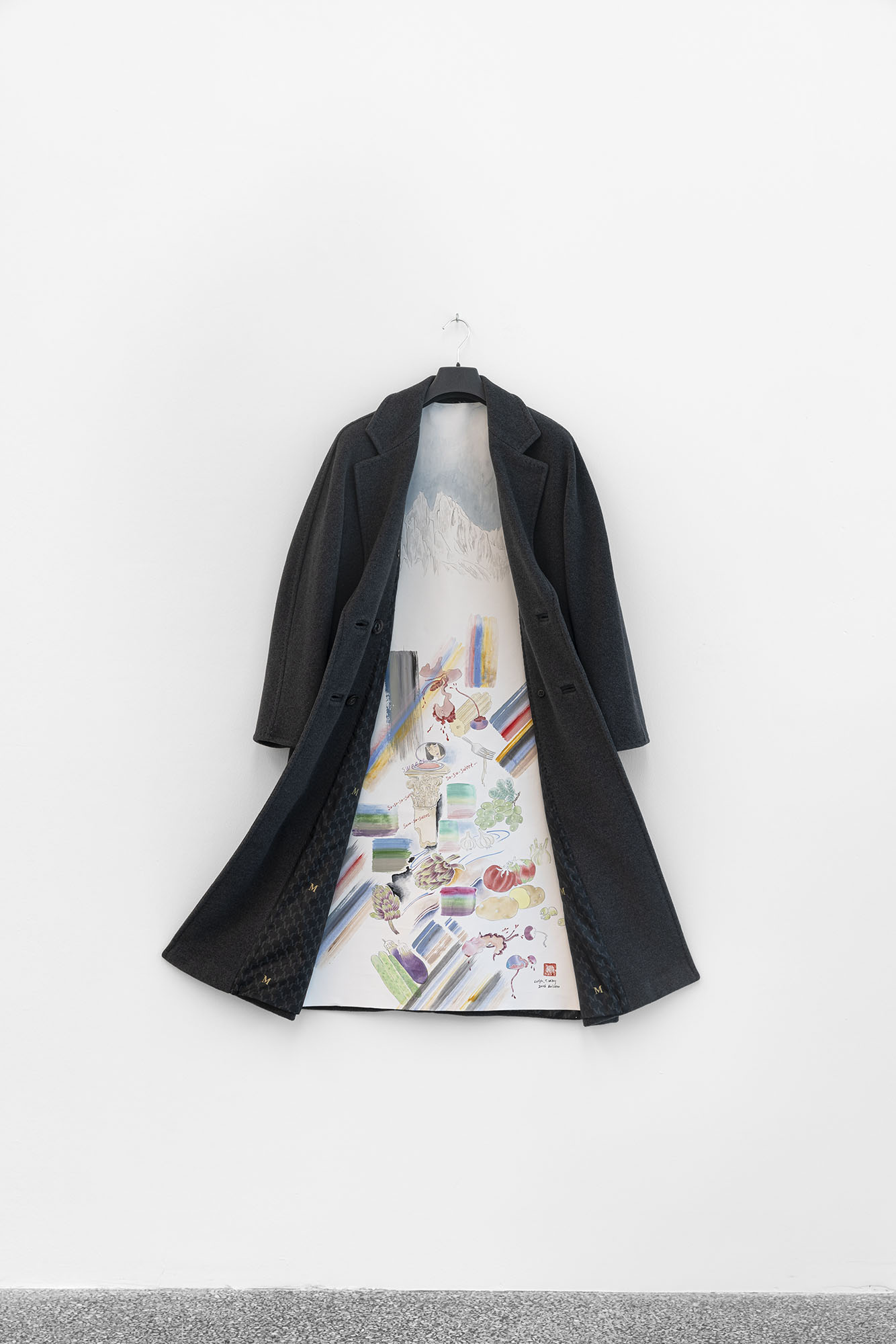
Lining Painting of Bolzano Veggie and Snow Mountains, 2026
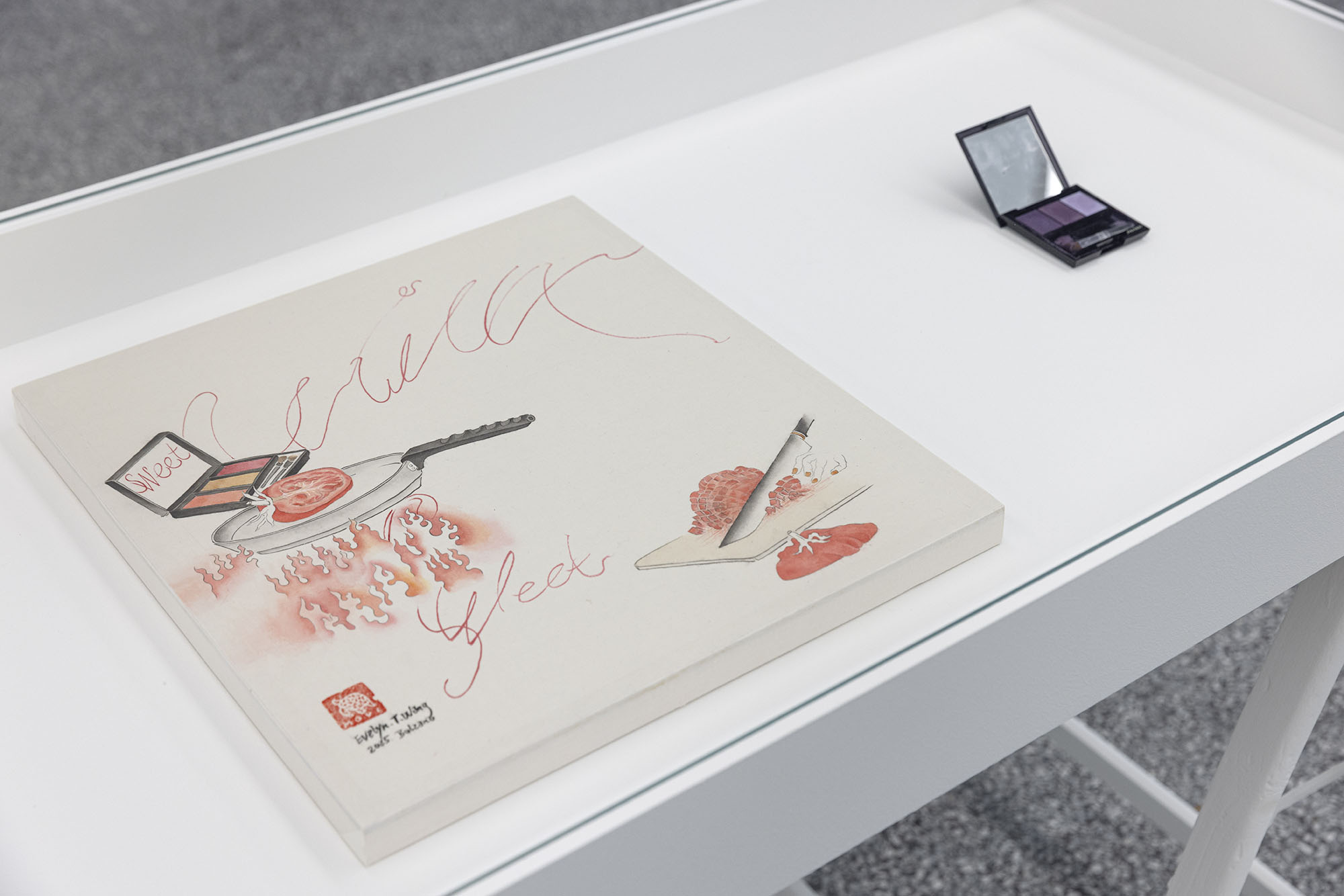
Bolzano Chopped Tomato and Eyeshadow, 2025
Evelyn Taocheng Wang’s exhibition at Museion is conceived around acts of partial visibility. Windows, coats, painted grids, fragments of text, vegetables, fairy-tale figures, nothing here fully reveals itself at once. Wang develops a sequence of unstable surfaces through which cultural belonging and self-representation remain unresolved. The second floor of the Museum becomes a spatial condition of hesitation, where interior and exterior overlap without ever coinciding.
Developed through a series of visits to Bolzano, the exhibition absorbs fragments of the city into Wang’s visual vocabulary. Local references appear intermittently throughout the works, always displaced through projection and autobiographical filtering. Bolzano is metabolised into a language already marked by dislocation.
This logic becomes graspable in Wang’s reworkings of Agnes Martin. The geometric grid, which is historically associated with neutrality and transcendence within Western modernism, loses its supposed autonomy here. Wang painstakingly reproduces Martin’s compositions by hand using techniques derived from Chinese calligraphy, then interrupts their formal restraint with decorative motifs and mundane references. What appears initially as imitation reveals itself as contamination. The questions raised by these paintings expose the asymmetry embedded within the history of artistic legitimacy itself. What does it mean for a Chinese artist to reproduce the language of Euro-American abstraction while inserting elements that exceed its codes of purity? Copying, in Wang’s hands, is a way of inhabiting dominant visual traditions without fully submitting to them.
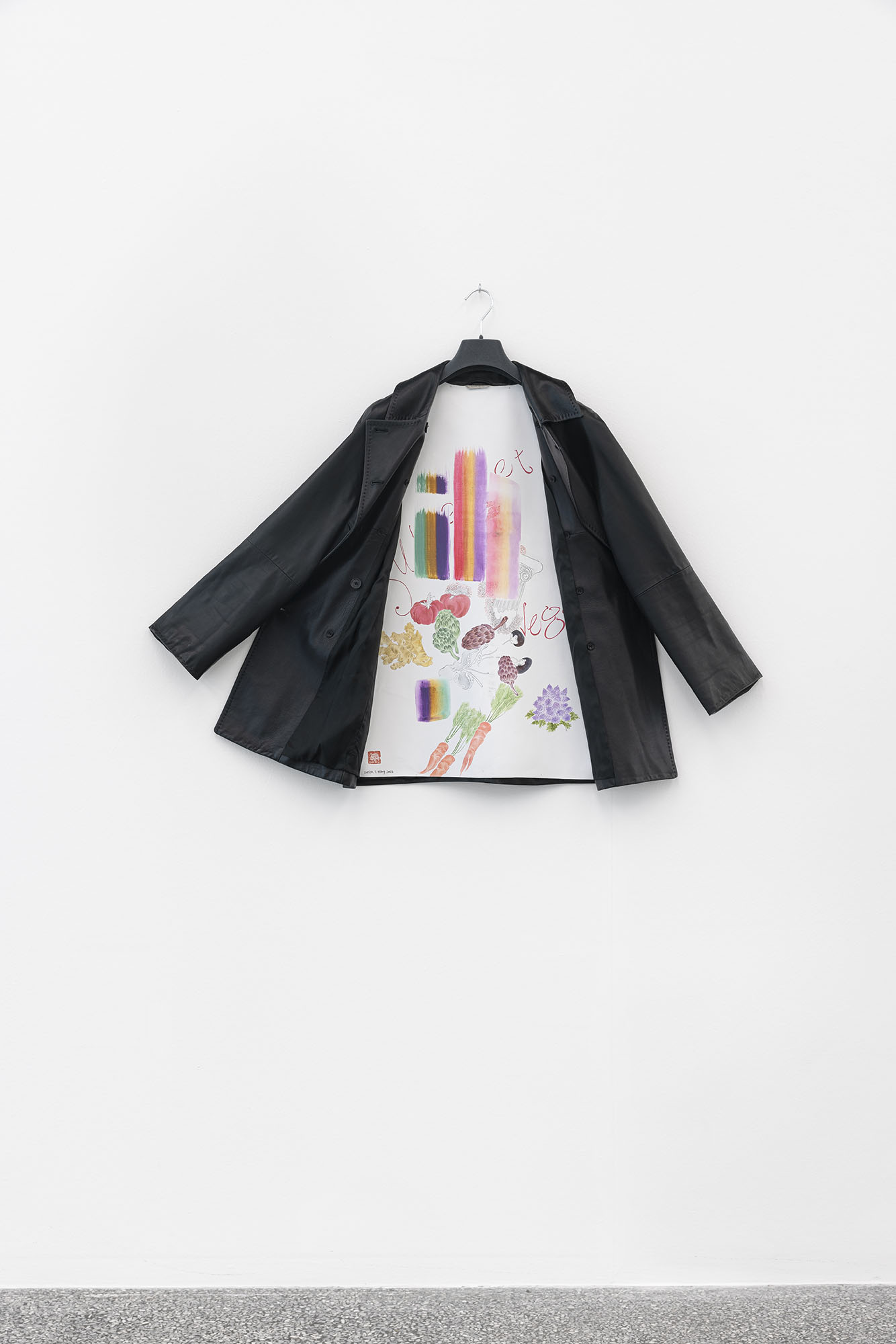
Among the strongest works are two coats from Wang’s own wardrobe. Their inner linings contain delicate painted scenes, such as fragments of bodies and architectural ruins, visible only when the garments are opened. The coat becomes a structure of doubled perception. Concealment is the condition of meaning.
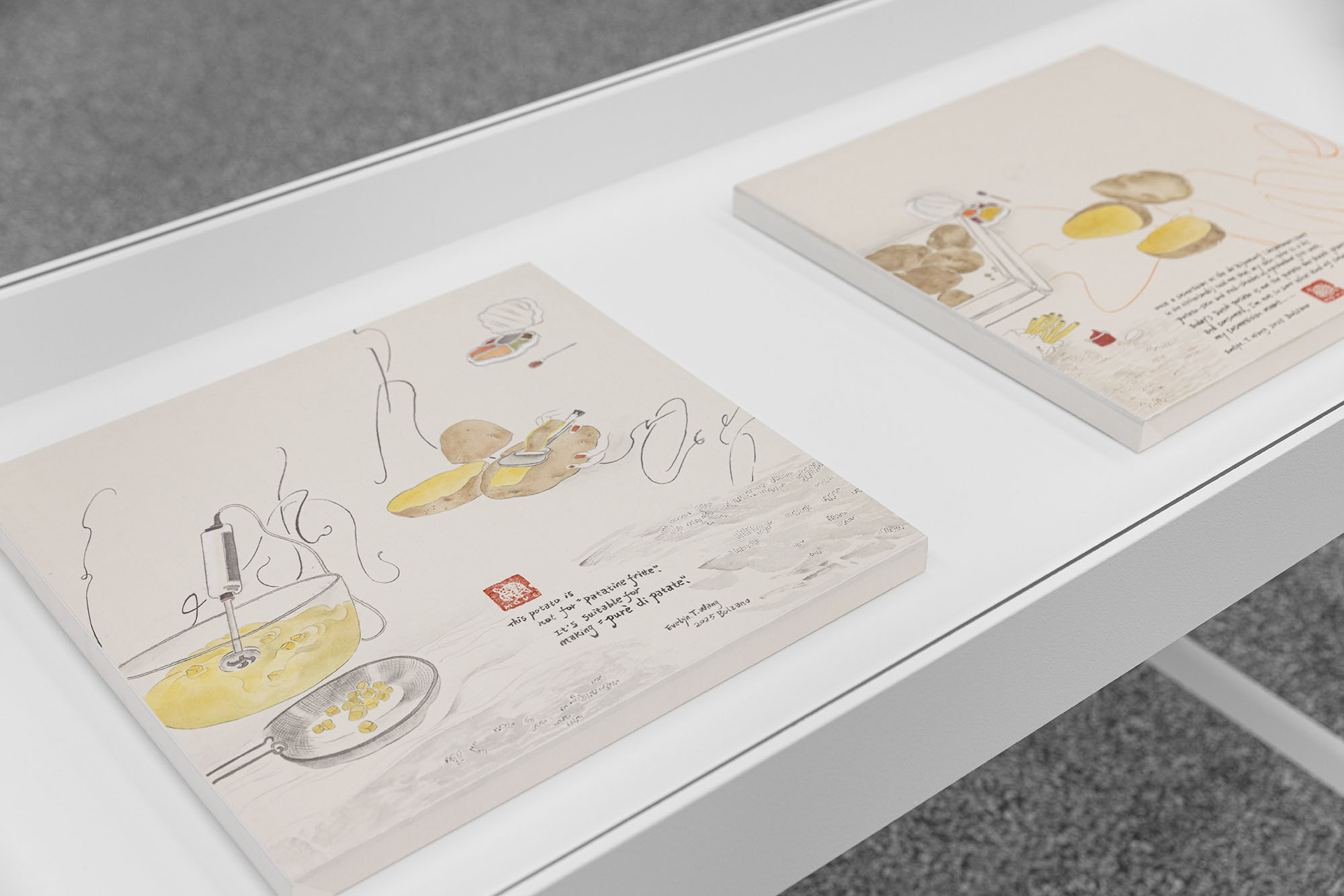
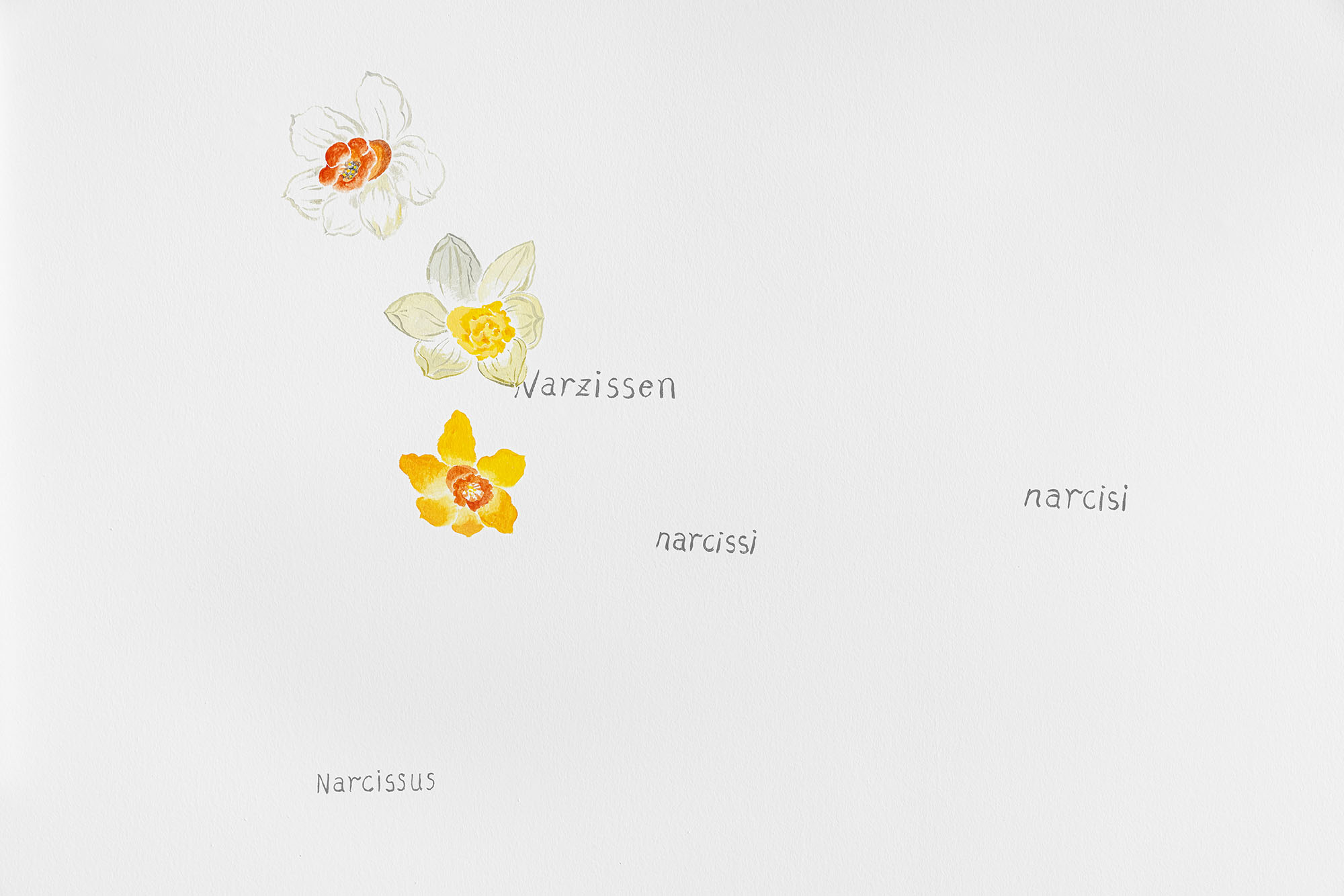
This tension between visible appearance and inner life runs throughout Wang’s practice, though here it acquires unusual clarity. The body emerges as a threshold shaped by continuous negotiation. The recurring figure of the Frog Princess in its suspension somewhere between fairy tale and migrant allegory, does not transform in order to assimilate. Instead, it persists in its difference while moving through unfamiliar cultural landscapes. In fact, Wang has spoken openly about the years she worked as a masseuse in Amsterdam while studying at De Ateliers, during which gender presentation became inseparable from economic survival and social legibility. The exhibition never approaches autobiography through confession. Yet lived experience quietly structures many of its formal decisions. The same undercurrent surfaces in the silk paintings juxtaposing potatoes and tomatoes with eyeshadow palettes. Beauty is treated as a cultural system of discipline and performance. Wang’s intentionally imperfect multilingual texts extend this further, as grammatical mistakes are preserved so that language itself appears as a site of friction.
What gives Sweet Landscape its force is precisely this refusal to offer a unique image of selfhood.
Evelyn Taocheng Wang
Sweet Landscape
Curated by Leonie Radine
Museion
April 25 — November 8, 2026
Credits:
Evelyn Taocheng Wang. Sweet Landscape, exhibition view, 2026, Museion.
© Evelyn Taocheng Wang 2026
Courtesy the artist; Antenna Space, Shanghai; Carlos/Ishikawa, London.
Photo: Luca Guadagnini