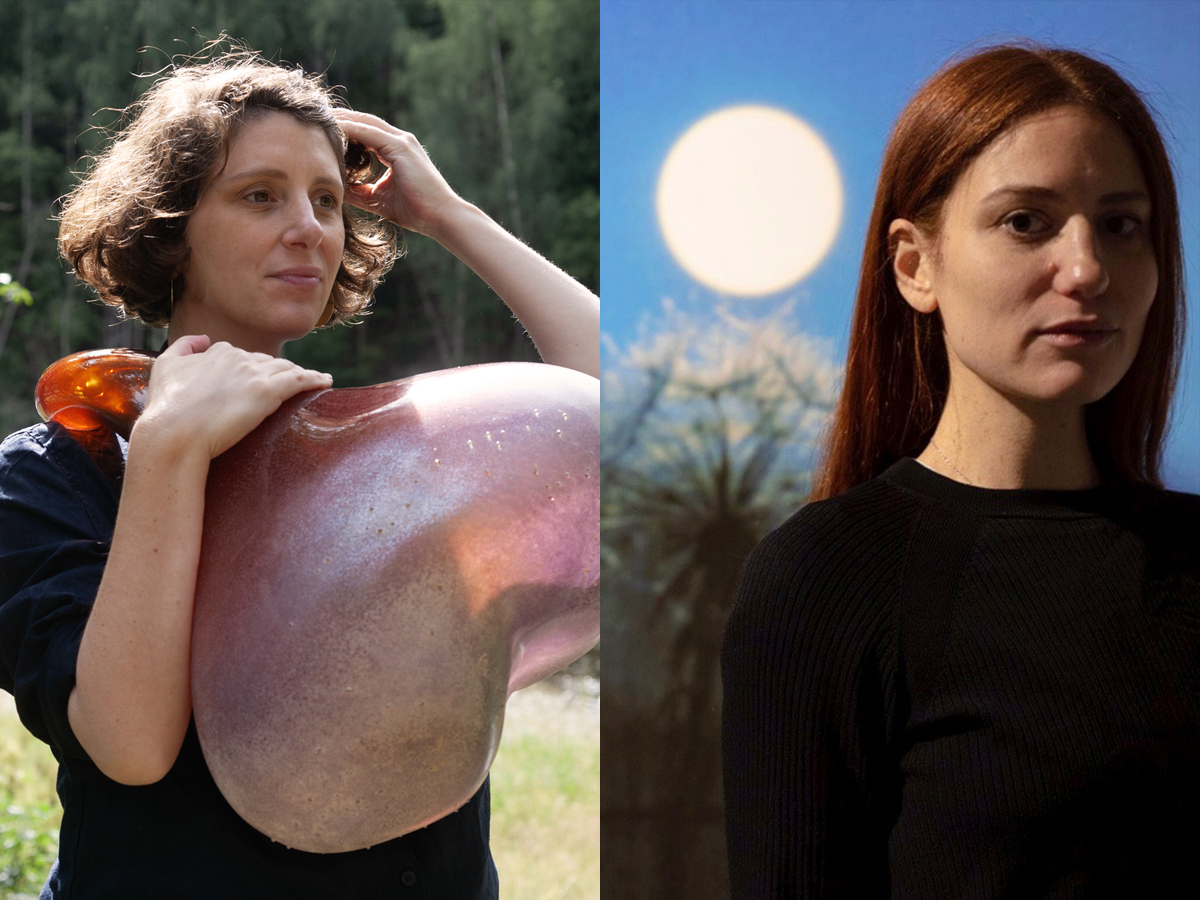
CURA. 46
Artist + Artist
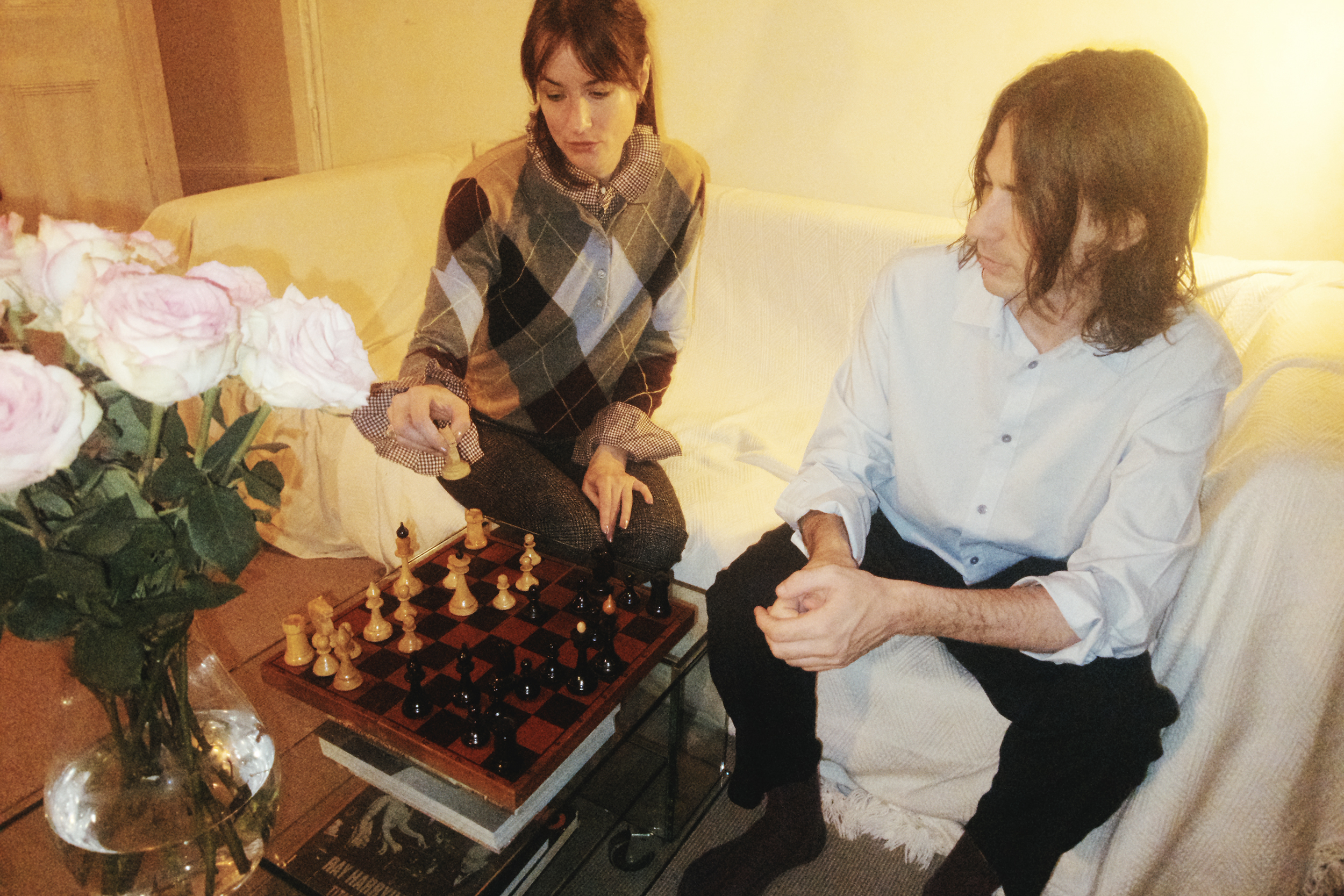
MC: You started out in theater, right?
JM: I did, yes. I actually started in Buenos Aires, Argentina where there’s a really active theater scene. Then I moved to Paris and I worked in Strasbourg in a theater company. I was put in a show as an actor and a puppeteer with a Russian company when I was around 19 years old. After that I trained with Jacques Lecoq in Paris and I worked for a year with Ariane Mnouchkine, the legendary director of Théâtre du Soleil. I was always fascinated by storytelling, it was a real passion but I struggled to be on stage as an actor. I wanted to be behind the scenes. I ended up quitting when I was part of a troupe of clowns touring in France doing Twelfth Night by Shakespeare. I was one of the main characters, Olivia, and I had to open up the show crying. One day I woke up and I was like, “I really can’t do this anymore.” I ran away. And I never again got on stage after that.
MC: You didn’t run away to the circus, you ran away from the circus.
JM: For me, theater was a way to learn things. After studying at high school and university, I needed to do something that felt real.
MC: Yeah, it’s interesting because the art school experience is really different. I went to the Slade in London, and it mainly comprised informal discussions. There was nothing tangible about it. Whereas with learning in theater there is a level of objectivity with the audience. I think, especially when you’re starting out as an artist, you put things out there in the world, and you don’t have much of a sense of response. Maybe back in the day, when art journalism was more powerful, you did but now you only get a sense of response much later on.
JM: When it’s you on stage you can feel the audience. It exists in that moment, the famous here and now, but it doesn’t exist so much afterwards. It stays in the memory, and maybe in a review here and there, but there’s no fair way to record it. That’s where part of my crisis started. I was giving so much of my emotional source and I needed to record it, to capture the moment, to project it materially in the future. At that time I went to Vienna and saw a Francis Bacon and Egon Schiele show, and when I left the exhibition all I wanted to do was to paint.
MC: I think that’s the yin-yang of art and theater. The greatness of theater at its highest level is all about liveness.
JM: The ephemeral.
MC: And it’s so profound when that works, because it feels so high-stakes. And art at its worst feels dead and museum-ified.
JM: It’s exactly the opposite.
MC: On the flip side, as you say, theater passes you by, and there’s not so much to hold on to. I know theater history pretty well but so much of it is lost.
JM: No one really knows who Peter Brook is anymore.
MC: Which is crazy because he is undoubtedly one of the great artists of recent times. The playwrights and their words last much more but it’s not just about them, it’s a truly collaborative medium. That friction between theater and art is the key to everything I’m always trying to do. I’m always trying to capture that sense of high-stakes, the liveness within art. That’s why I’m interested in forms and materials that speak to being in the present tense in some way, to the visceral experience of engaging with a work but at the same time can hold a form. I think a lot of my favorite art achieves that.
JM: When I worked with Ariane Mnouchkine—she was so brilliant—she often described things as being “juste”, which is not the same as “right.” “C’est juste” means “in the right place” but not in the sense of right or wrong. It’s almost like a thermometer… And this can be found in art too. When I arrived to the art world, there was a lot of emptiness that was supposed to be cool, a sort of formalism and all this. And the emptier it was, the safer. But I never actually really understood why would you only play with just the form of things? Coming from theater, I was not into that formalism, but I don’t mean Modernism itself.
MC: Yeah. One of the problems in art from Modernism onwards is the idea of purity. A purity or a reduction of form which somehow distills an attitude. But it’s really all about the mythologizing around the art, the storytelling outside of it.
JM: Exactly.
MC: I think that’s where we cross-over by saying: why not just invite the storytelling into the work itself? Why not make something that’s less pure? I don’t want to make things that are pure because the world isn’t. And another thing about theater is that drama stems from conflict.
JM: The symbol of drama is the laughing face and the crying face so it’s mixed emotions.
MC: Exactly. It’s when two things rub up against one another that you have that spark that we’re talking about, that “art” thing.
JM: The contradictions.
MC: That’s the transcendental bit, not an image of a golden pyramid, not the image of purity.
JM: The spark that comes from the contradiction. I embrace Modernism in the idea that we need to reinvent ourselves and not to repeat a dead form. I think that’s very important today, because we lost a little bit of this idea in the last 10 years, especially in painting. The market and the system around the demand of a certain type of work corrupted it. I think it’s really important to bring back many vital aspects of Modernism that are not merely formal but subversive. Surrealism was a modernist movement too.
MC: There’s also this political idea that newness is bad because it relates to some conceit of progress, which is the whole issue of the world right now because that’s a capitalist lie. But I think that if you conceive art like that, then you don’t really like art. The reason why newness is important in art is because of its magic and mystery. As a human being, as a spectator, I want to see something I’ve never seen before, because that’s going to be more alien to me. I want unknowability. Whereas something that exists in reference to the past and is subservient to a retro aesthetics is so known to us that it’s deeply conservative, even if it claims to have some radical politics within it. I think that’s a massive issue, not just within art, actually. Right now, it’s a wider issue of the world that we’re living in, culturally retro times. For me the role of art is to combine the contemporary and the mythological.
JM: I do believe that, in a way, time doesn’t exist. Things align and repeat as cycles. If something happened in 20 years, or in 2 days, why can’t it happen in 200 years? Time is more like a spiral than a straight line and I think art also subscribes to that. I don’t think retro aesthetics is negative in itself, I think what can be negative is to not let the door open to change, an uncertainty in the future.
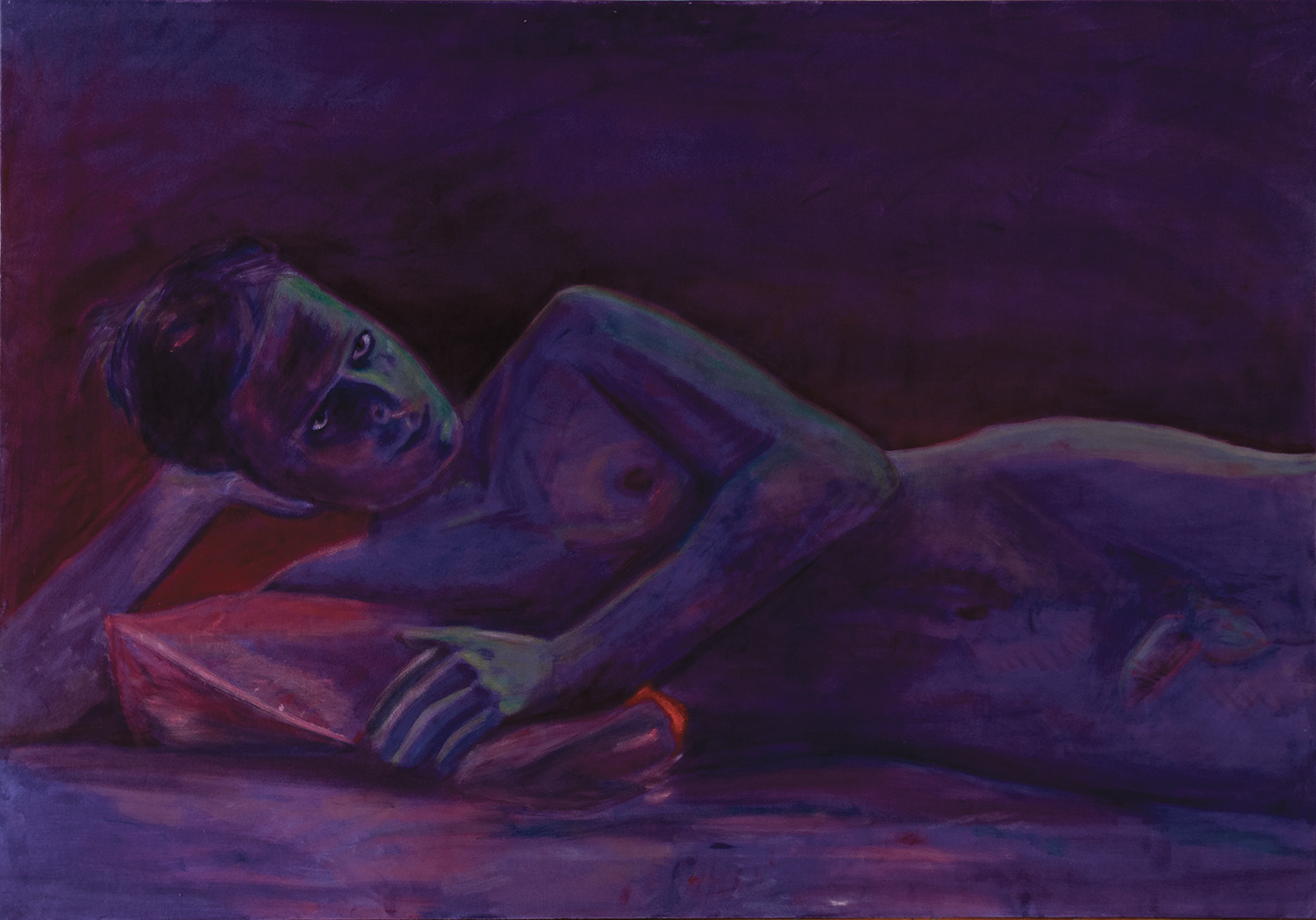
Jill Mulleady, The Hermaphrodite, 2025 © Jill Mulleady
Courtesy: the artist and Gladstone Gallery
The George Economou Collection
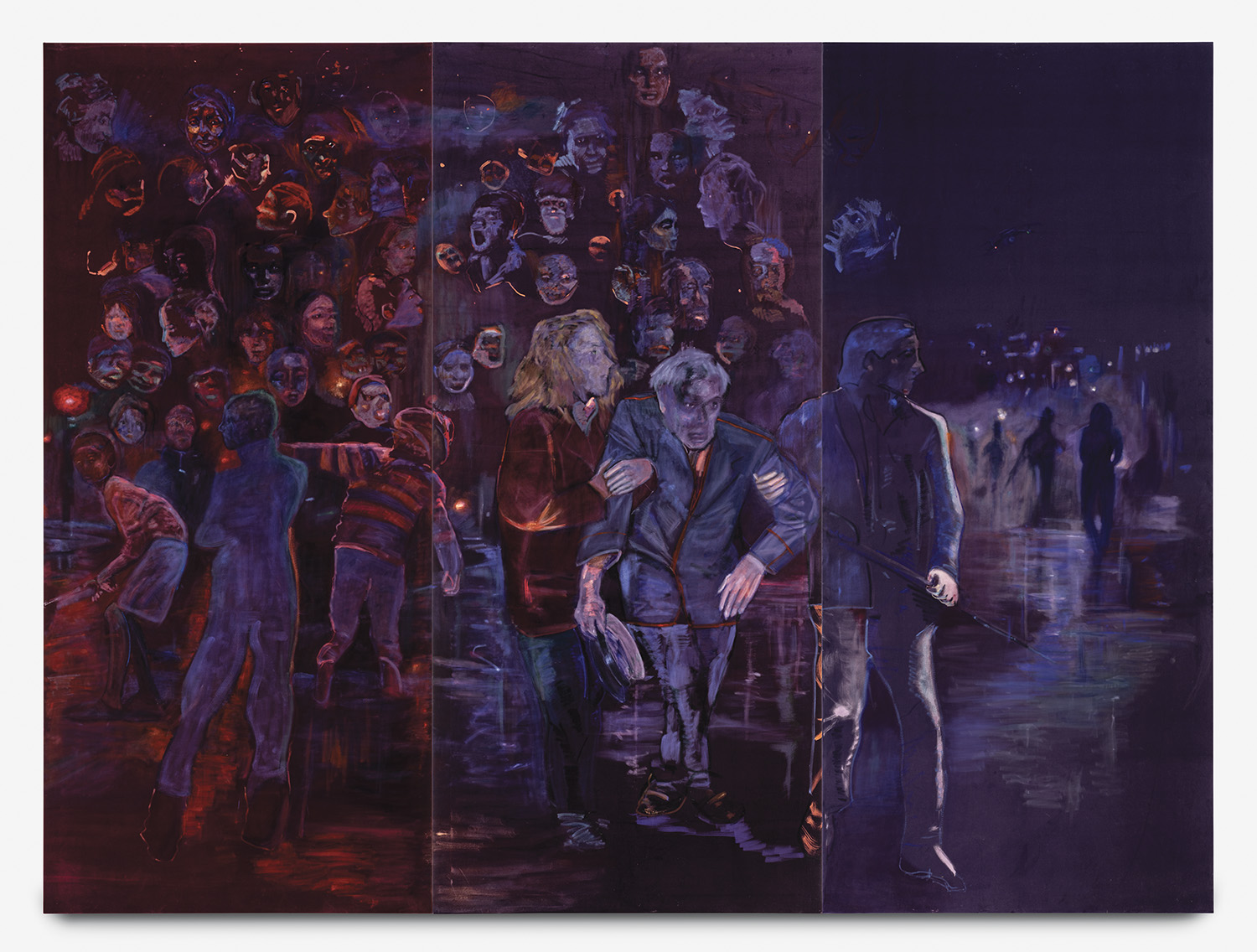
Jill Mulleady, The Passenger, 2026 © Jill Mulleady Photo: Nicolas Brasseur
Courtesy: the artist and Gladstone Gallery
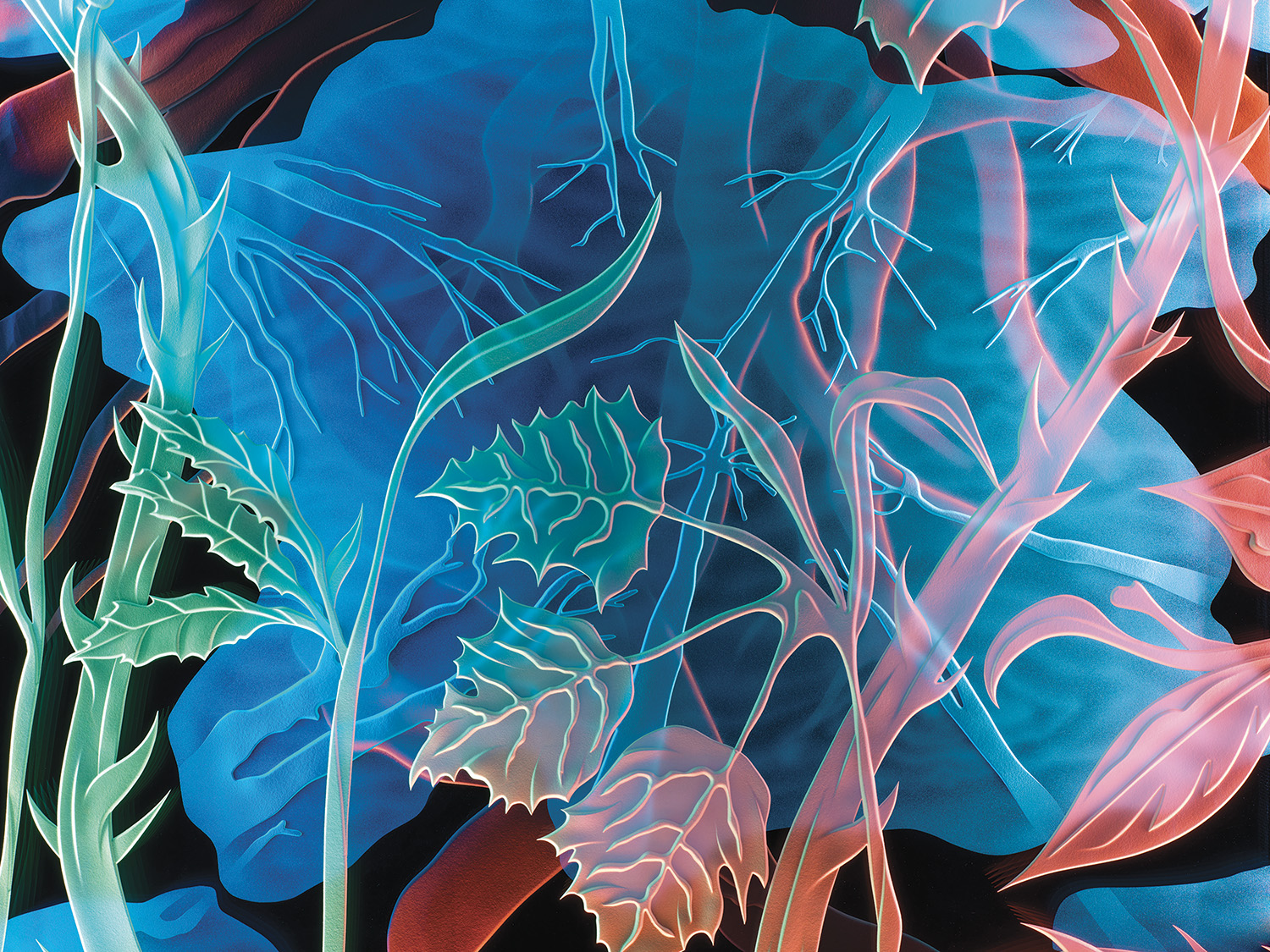
Matt Copson, Stand Straight Betwixt Impossible Knowledge and Knotted Feet, 2023 (details)
Courtesy: the artist and Lodovico Corsini, Brussels
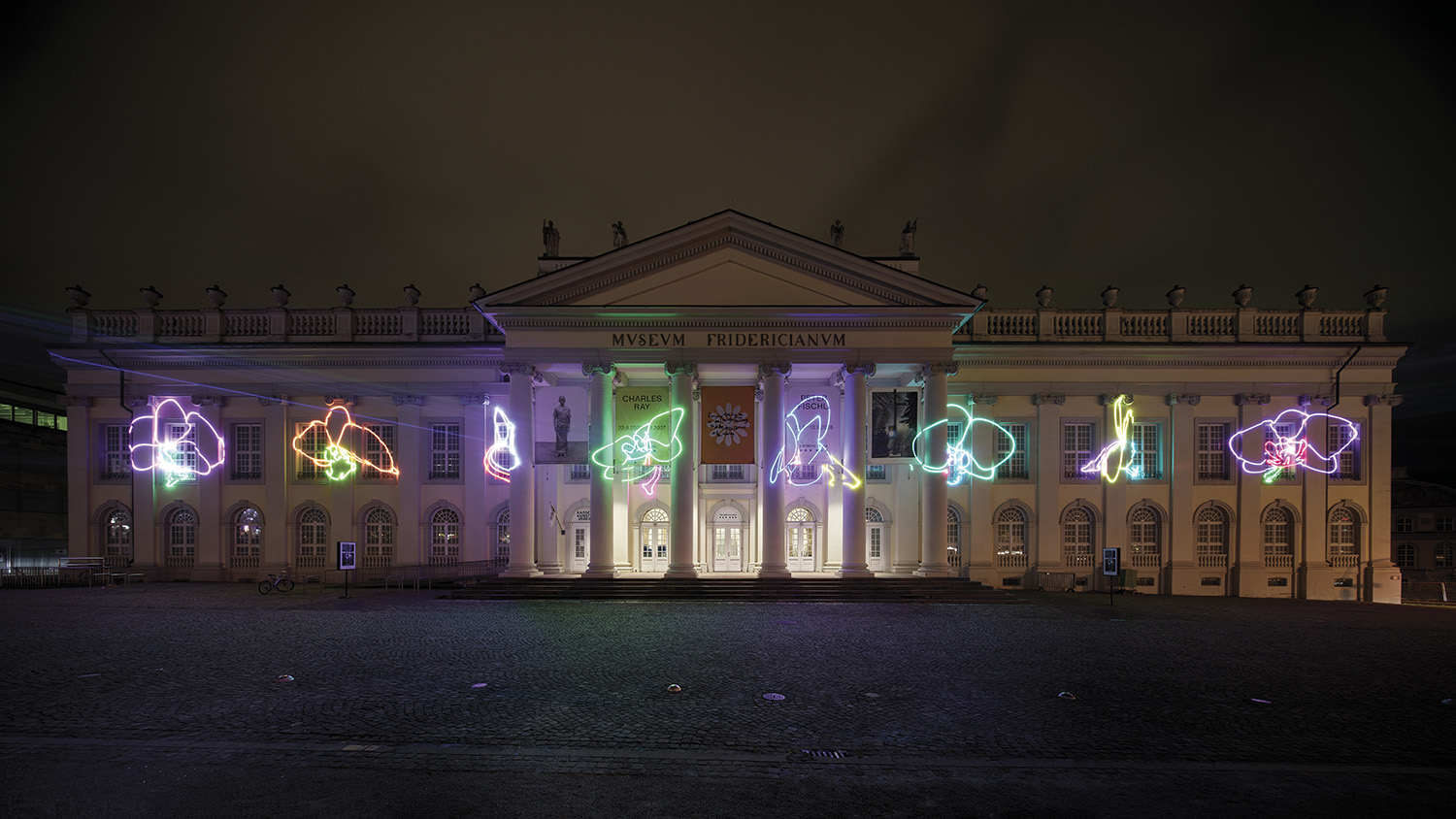
Matt Copson, Flowers, 2026, Fridericianum, Kassel (installation view) Photo: Nicolas Wefers
Courtesy: © Matt Copson, documenta, and Museum Fridericianum gGmbH
MC: What’s new changes. I was in the Archaeological Museum in Athens yesterday.
JM: Oh, I was there one month ago.
MC: I was looking at the Mask of Agamemnon and it’s obvious to say, but you look at these things which are ancient yet they look really modern. It’s interesting what you say about time because when you look at a crumbling sculpture carved from rock, for instance, you see so much time in it. In its bent nose, you see all of the things that are influenced by its ruined form like Cubism but you also know that the crumbled face isn’t how it originally looked and it was probably garishly painted. So, you’re playing all of these versions of history from the same object. The role of art has shifted in huge ways. Art served God for a long time before we entered into something that’s more akin to the role that art plays for us now.
JM: Who is God now? Who is your God?
MC: I always think that the essential components of the human condition are three elements, the past, the present, and the future. Being alive comprises a constant navigation between those three things. I touch my computer keyboard in front of me right now, and I’m within the present. I can feel the visceral world around me. But speaking to you, I’m thinking about what I’m going to say after you. I’m constantly thinking about the future, but then I’m quickly triggered into thinking about my death. At the same time, I’m also constantly replaying memories, ideas or stories from the past. Being alive is a psychedelic back and forth between those things, jotting around all the time. And some of them are fictions in my mind, some of them are my dreams.
JM: Don’t you find that fiction is a way to put a bit of order in that chaos?
MC: Definitely. That’s what narrative is. It’s impossible for us not to exist without fictionalizing things in a certain way.
JM: When you go to sleep, dreams are like fictions, and it’s what you actually couldn’t process during the day. You manage to “control” that situation in your dreams somehow.
MC: It’s how we try to make sense of the world that we’ve been into. Returning to your question, I don’t know what my God is, but I think about that experience all the time, and it’s deeply profound, and that’s what I think art’s role should be.
JM: At the time of the Egyptians, gods were made at the scale of humans. They had sins—murder, rape, abduction. Then with Christianity, God became an entity that was superior to everyone. With morality included in mortality and the afterlife.
MC: What a terrible invention! What a terrible very human literalization of things to need to have this master figure. I really love that in older mythology gods are kind of fallible, and also this idea that people’s fate isn’t a predestined path but much more like Commedia dell’arte where character’s psychologies will play themselves out. You know, my background in theater was not as prestigious as yours.
JM: Tell me, what’s your background in theater?
MC: I grew up in Oxford, and I’ve played pretty much every single youth character in Shakespeare. Name one, and I got there. My background in theater, just doing all these Shakespearean things, makes sense to me. My work has lots of language in it most of the time. It’s interesting that you’re involved in a lot of French theater. You talked about puppetry, and it makes so much sense for your work. I look at your recent paintings. For example, in Malodor there is a sense of a puppet show going on.
JM: Yeah, that’s the underworld going up. But to be honest, I went into theater because I already had that thing in my mind, in a way. When I was a child, I had a very strict mother, she didn’t allow me to go out of the house, and I would just be in my room with plasticine, making stop motion films. I played the piano, so I would make the music—it was total DIY. In general, they were love stories between animals or creatures, and the curtains were the background of the scenes. I was between 12 and 16 when I did that, and then I decided to study film and make theater. But storytelling was always inside me somehow.
MC: I think art’s a really good form for storytelling.
JM: A friend once told me that to make a film or to make a painting is the same, even if it’s so much easier to make a painting in terms of economy. Do you think that the fictions that you write, that you recreate, that you shape are linked to your living life?
MC: Invariably, yes, but I don’t think that I’m the best person to comprehend or to analyze that. The narratives that I’m drawn to tend to involve some kind of archetypal characters who have an irresolvable conflict within them. For instance, in my work Last Days, there’s this tension of suicide and oblivion. In a lot of the artworks I’ve made, there’s a desire for some kind of escape or freedom. I’m creating a cage, I’m putting a character in there, and I’m watching them smack their head against the walls and see what happens. I think there’s some kind of beauty in that. It comes from my subjective desires or fears about the world, but it’s hard for me to psychoanalyze it too much, I guess.
JM: Psychoanalysis can be very deceiving. You say that there’s always a main character and in general it is a male character, but in Last Days the protagonist was played by a woman. Where did that decision come from?
MC: I wanted to tell the audience that the character they were watching was not an attempt at a simulation in the same way that you get in an average biopic.
JM: You wanted to create a sort of friction, right?
MC: A distancing effect. Kurt Cobain as a person was really androgynous and was often wearing dresses. I wanted to have somebody on screen and on stage who you were trying to understand and failing to understand. Is that a man or is that a woman? I can’t even tell the gender of this person very easily. And I also thought that the archetype I was dealing with went beyond masculinity as well. The masculinity of Kurt Cobain has wider resonance in the contemporary. I wanted to blow up that idea. The other characters in my works are often male because, when you’re an artist, you use what you have around you. When I was at art school, I needed a voice for my work and I used mine. Sometimes it’s less of an issue to use yourself, your own body, your own voice, because you’re already authoring the thing as yourself, and so it stops a lot of questions by doing that. For those reasons, I naturally ended up in that register. For my baby character I found a lot of boys, who were on the cusp of losing their singing voices. I like the friction in this moment, when the real delineation of masculinity in a voice hasn’t kicked in fully, and so there’s a sort of uncanniness.
JM: There’s something about the aesthetics of the film and the saturated colors, which is very ‘90s. Another interesting aspect is related to the use of props. There is almost a pleasure, a consumerism in the aesthetics. There’s a contradiction: someone who doesn’t want to attach to life and at the same time is surrounded by all these objects that are relating to life very closely.
MC: Exactly. I had this rule that the only intimate relationships he would have with the objects and the people was as distanced as possible, hence why they’re singing operatically. The ending of the film is a montage of all the objects that he’s used, but saturated in green light. These discarded everyday objects that are left behind after us say probably more about us than any conversation could ever do.
JM: I’ve seen recordings of Kurt Cobain saying that he goes to a thrift shop and the way how he relates to objects and invented a whole aesthetics for us when we were teenagers. The value of things passed through discovering things that were already used, and to attach to a culture from a place where everyone would have access.
MC: He was representing the final hurrah of rebellion in a mainstream context. Grunge is all about that DIY aesthetics. You know, buy a broken doll in a thrift shop and draw on its face with a sharpie marker and make it your own. Customize things. In the film, as I was saying to my cinematographer, I wanted to shoot his body like he’s dead from the beginning. You have these macro close-up shots of his body at some points, while others are singing, and it’s almost just like inspecting the dead body already. I wanted to ask you about a specific aspect of your paintings. There’s like actually quite a few cities in your works. You’ve actually lived in more cities than most people I know.
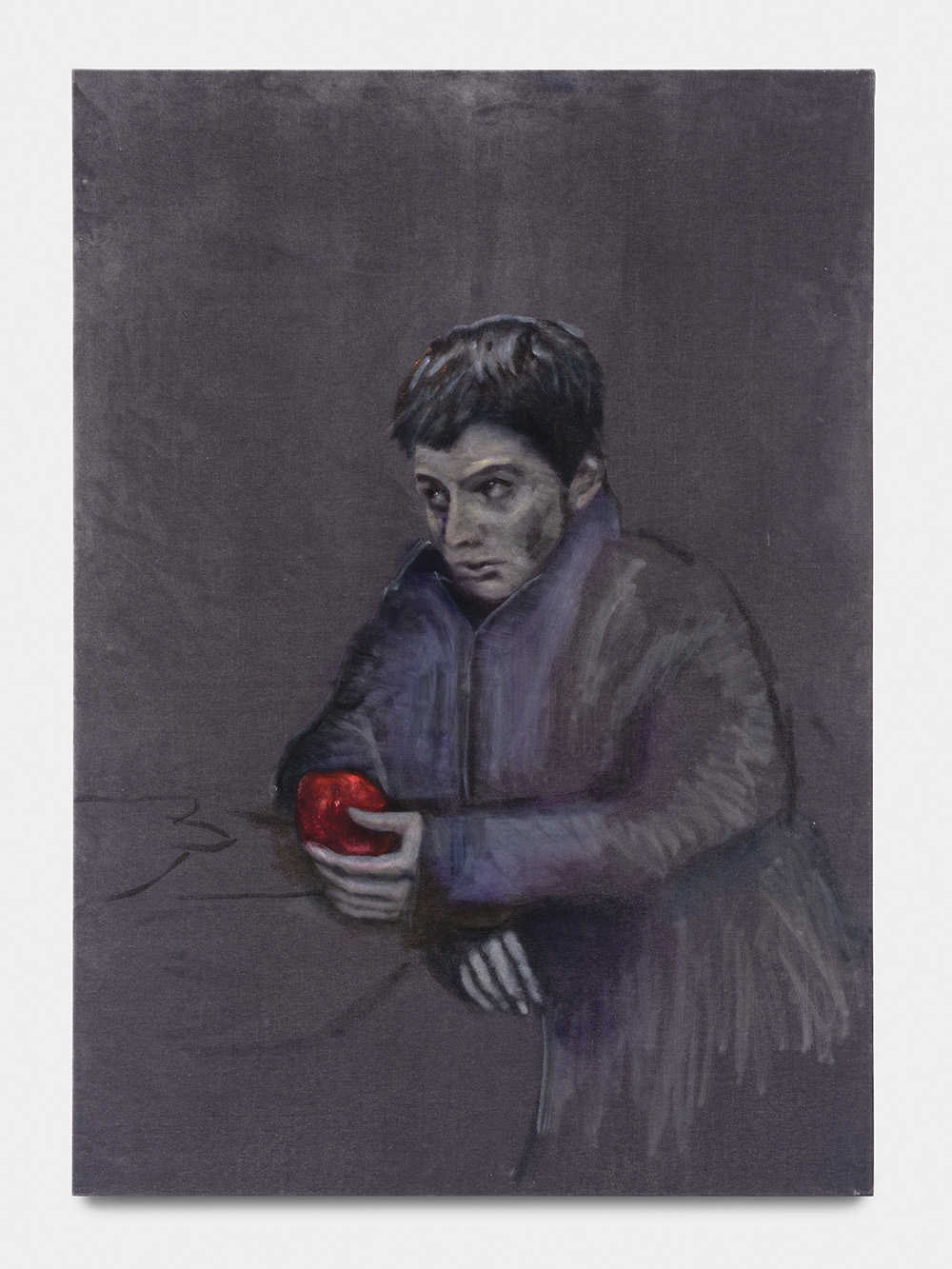
Jill Mulleady, L’Enfant, 2025 © Jill Mulleady
Photo: Nicolas Brasseur Courtesy: the artist and Gladstone Gallery
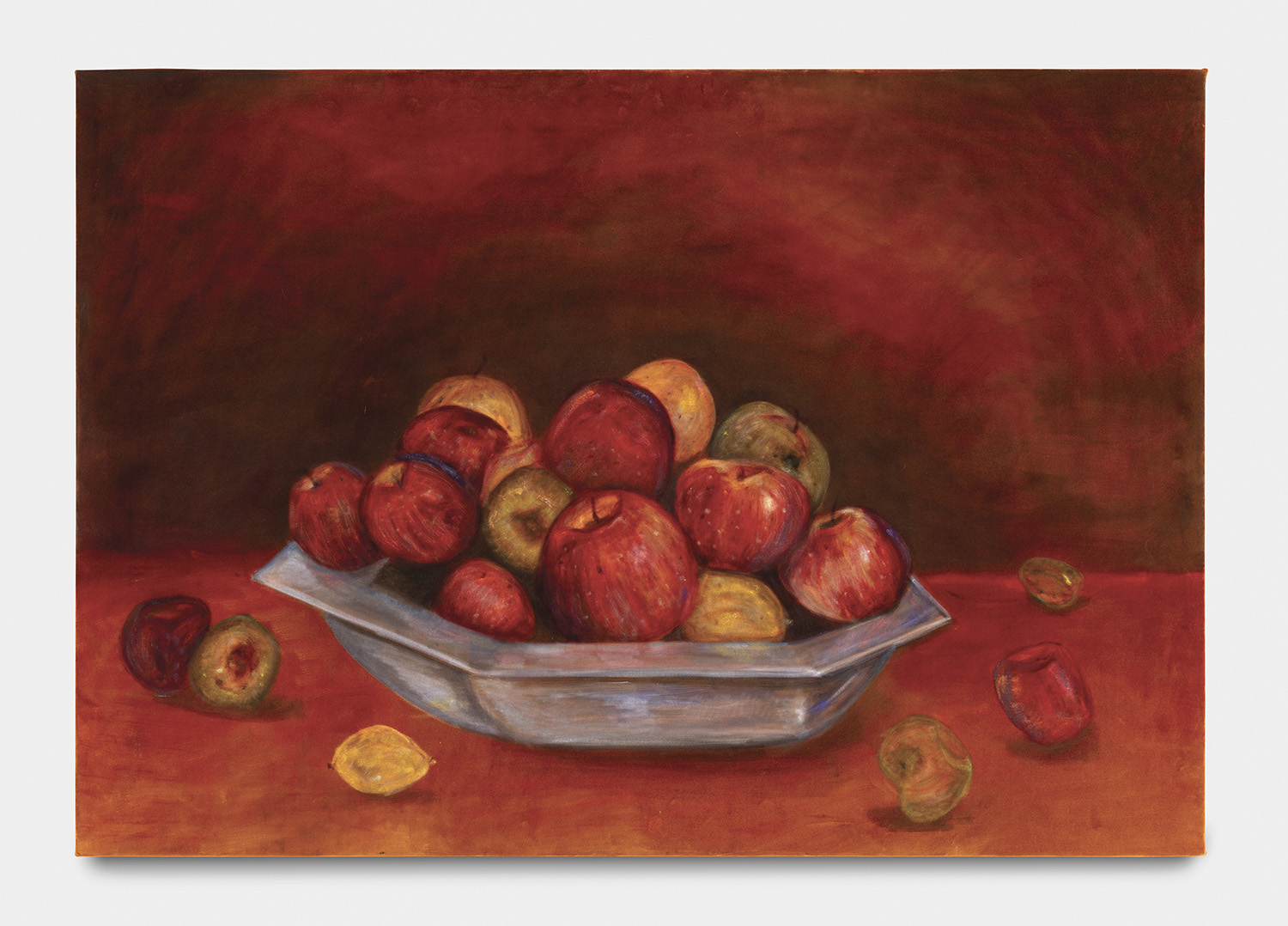
Jill Mulleady, Still Life with Green and Red Apples, 2025 © Jill Mulleady
Photo: Nicolas Brasseur Courtesy: the artist and Gladstone Gallery
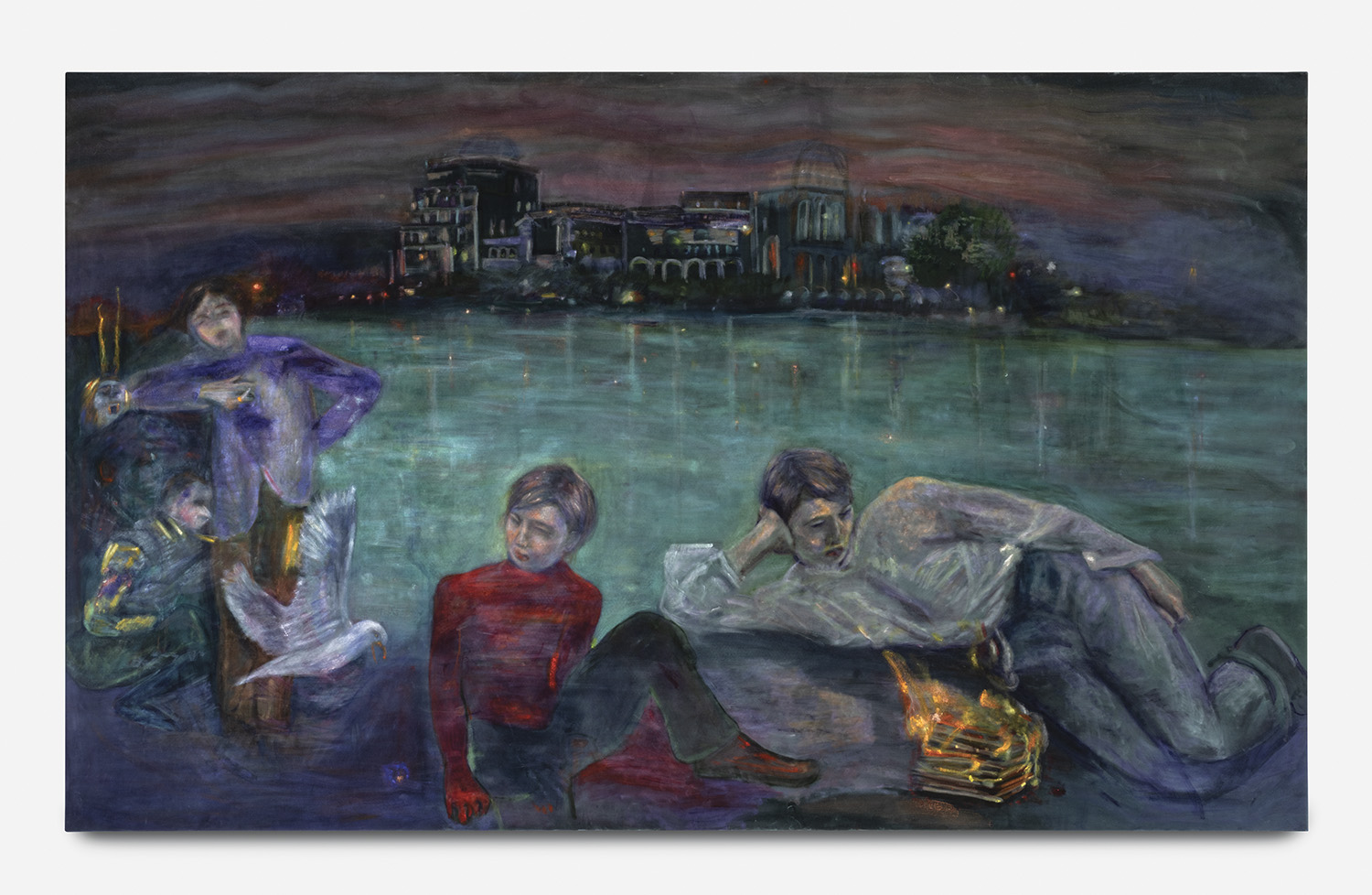
Jill Mulleady, Venice or Las Vegas, 2025 © Jill Mulleady
Photo: Nicolas Brasseur Courtesy: the artist and Gladstone Gallery
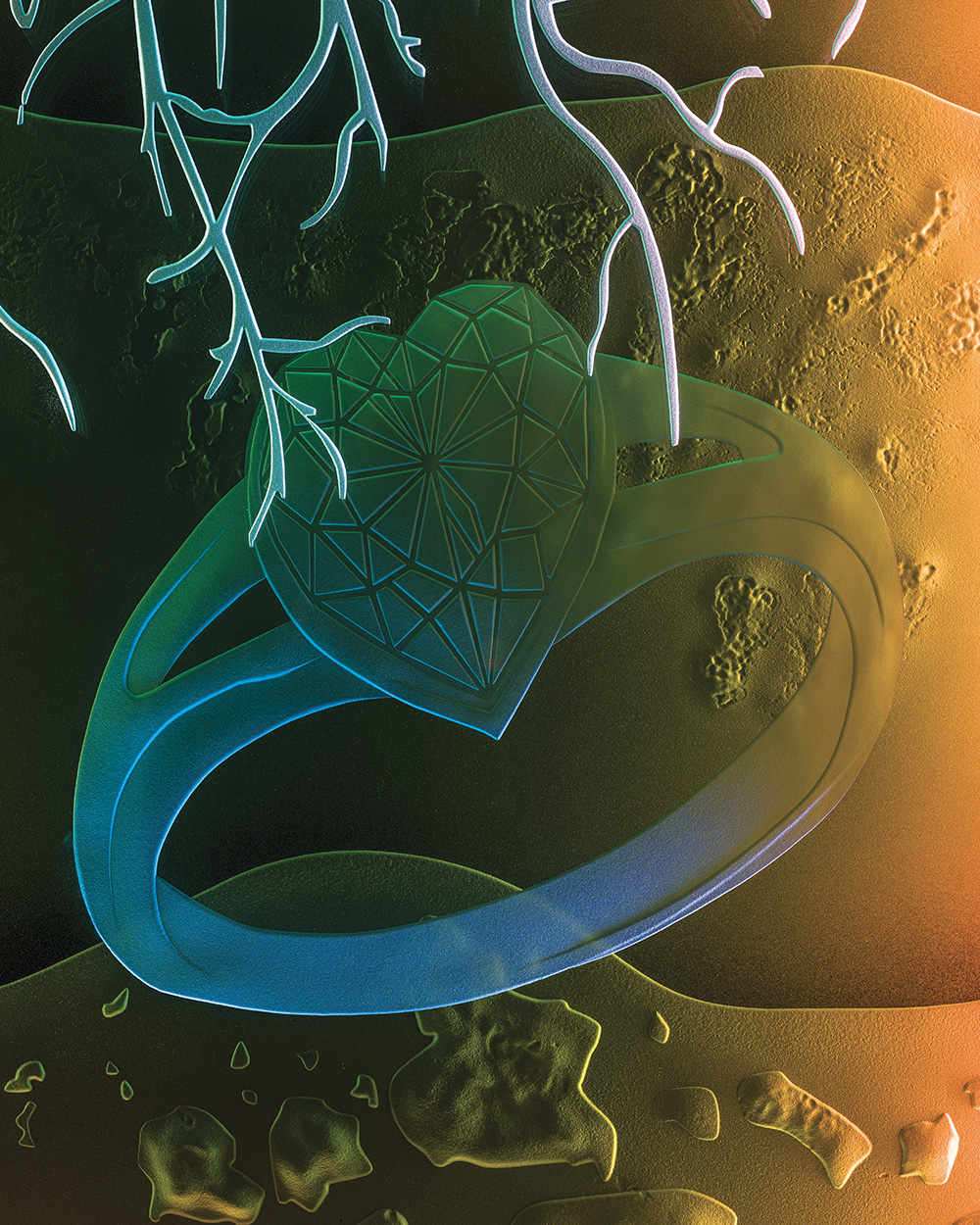
Matt Copson, Love’s growth in Argatha’s grasp, 2022 (detail)
Courtesy: the artist and Lodovico Corsini, Brussels
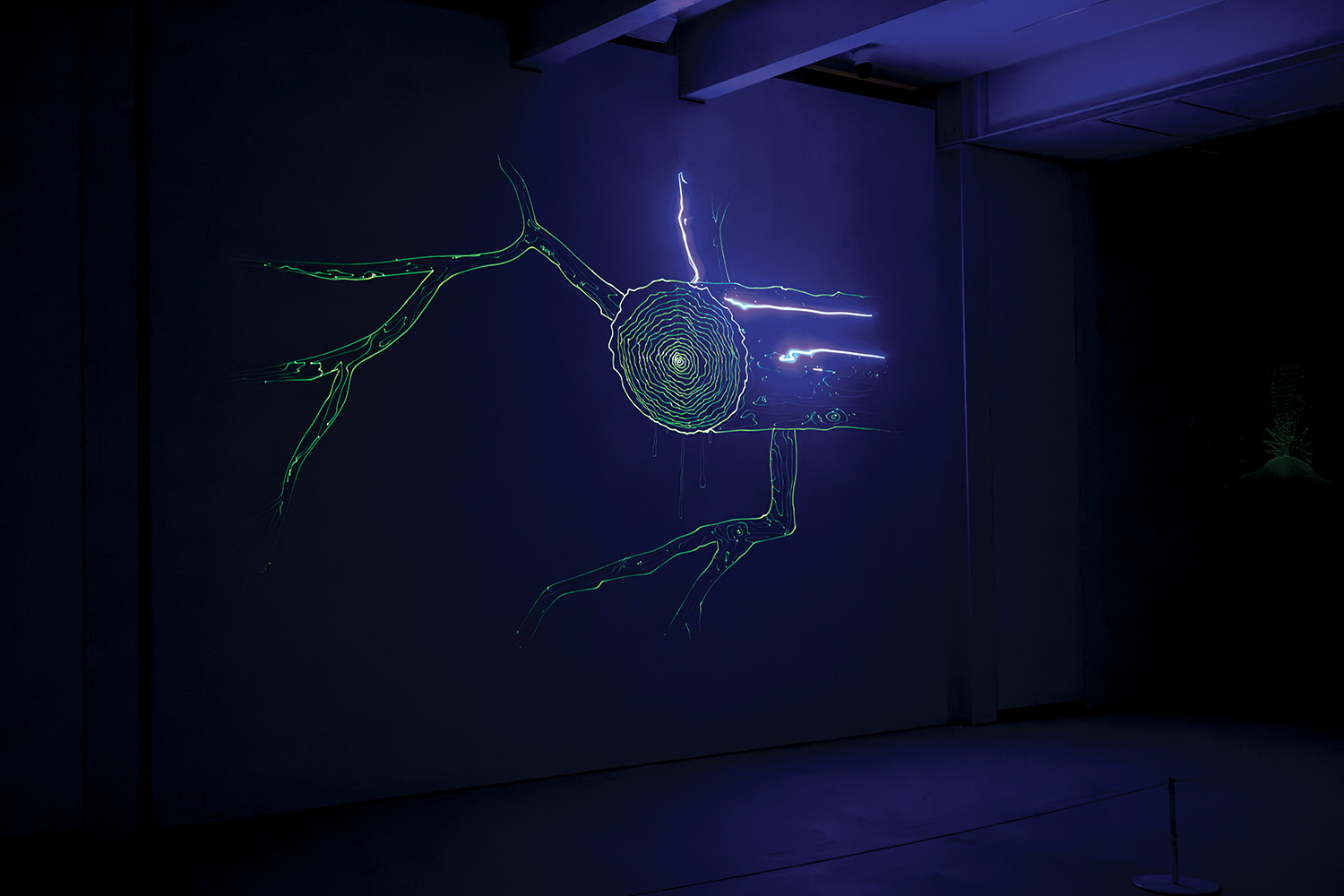
Matt Copson, Lake Hollywood, 2026 Photo: Jacopo Trabuio
Courtesy: the artist and Lodovico Corsini, Brussels
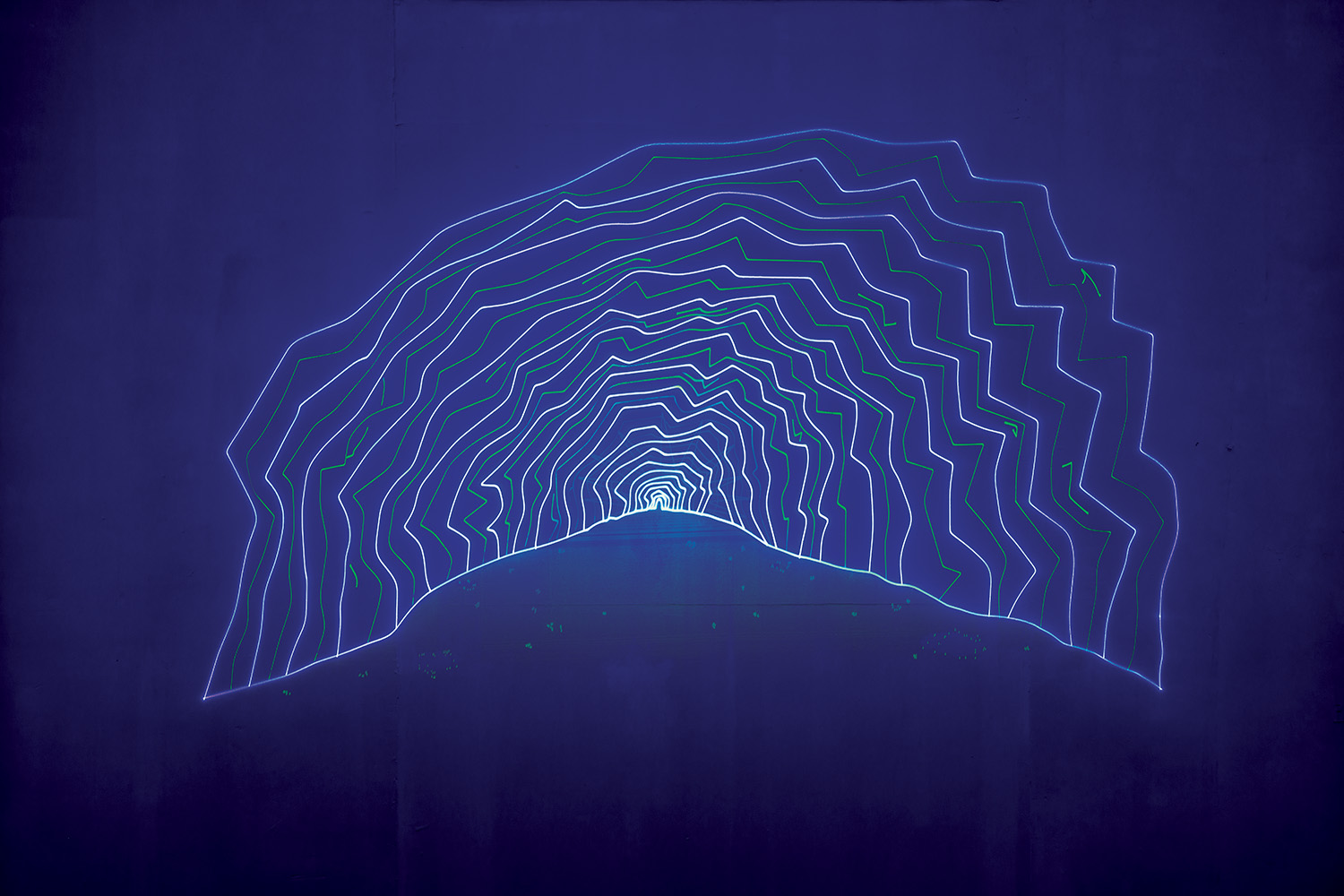
Matt Copson, Creation Myth, 2026 Photo: Jacopo Trabuio
Courtesy: the artist and Lodovico Corsini, Brussels
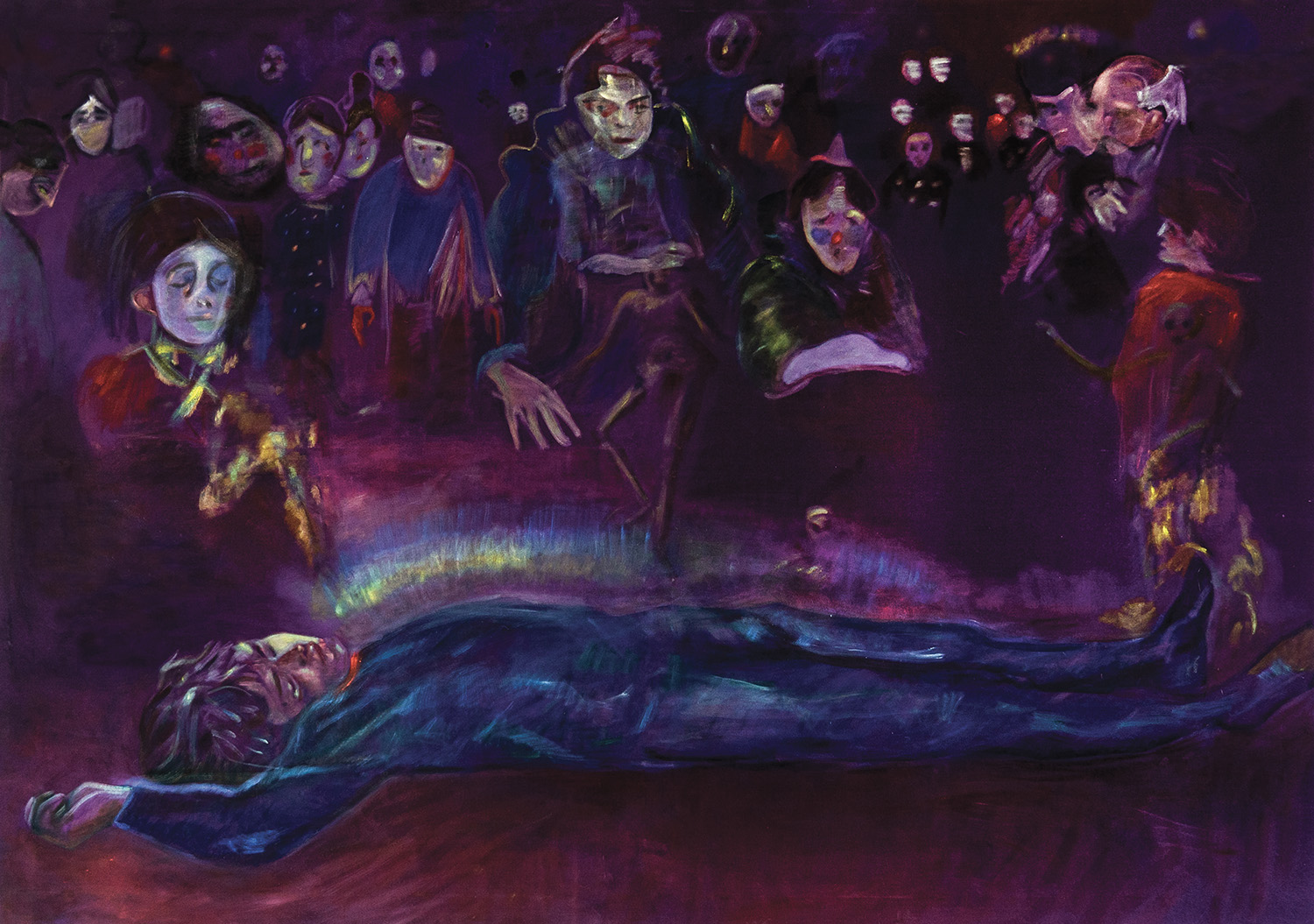
Jill Mulleady, Maldoror, 2025 © Jill Mulleady
Courtesy: the artist and Gladstone Gallery
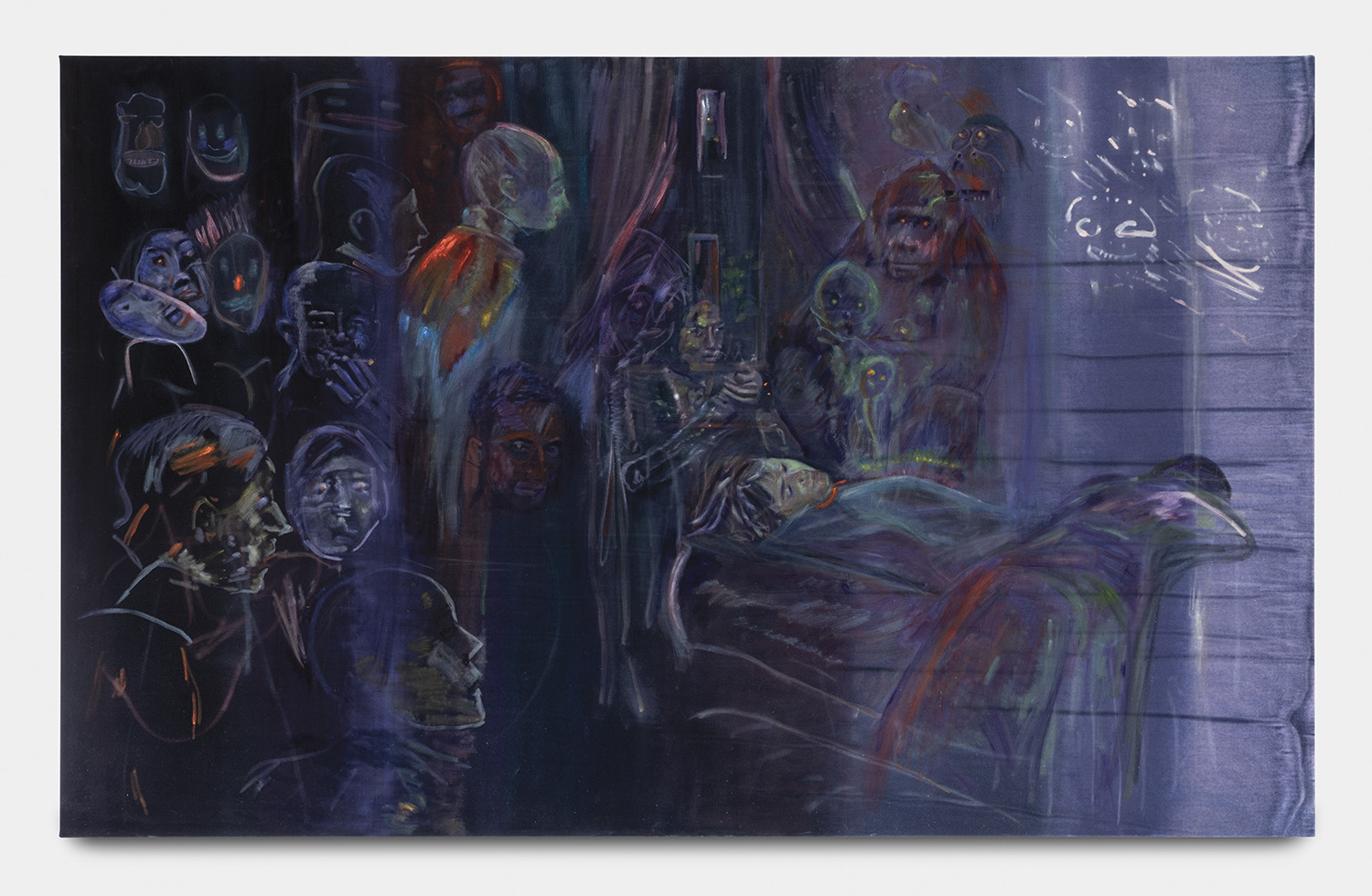
Jill Mulleady, Incubus, 2026 © Jill Mulleady
Photo: Nicolas Brasseur Courtesy: the artist and Gladstone Gallery
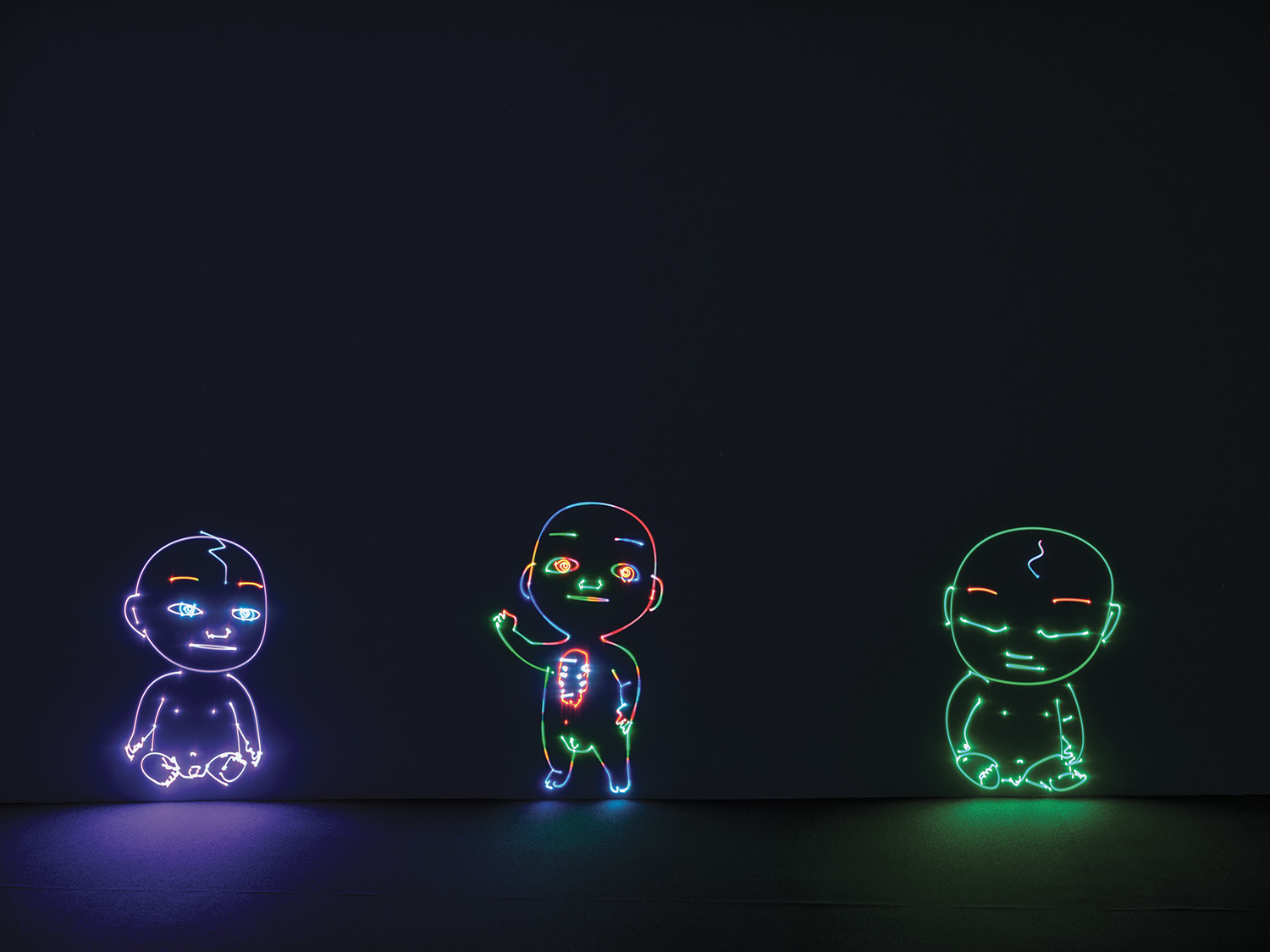
Matt Copson, Coming of Age (Trilogy), 2020-2025, Luma Westbau, Zurich, 2025 (installation view) Photo: Philip Schaub Courtesy: the artist, Lodovico Corsini, Brussels, and High Art, Paris
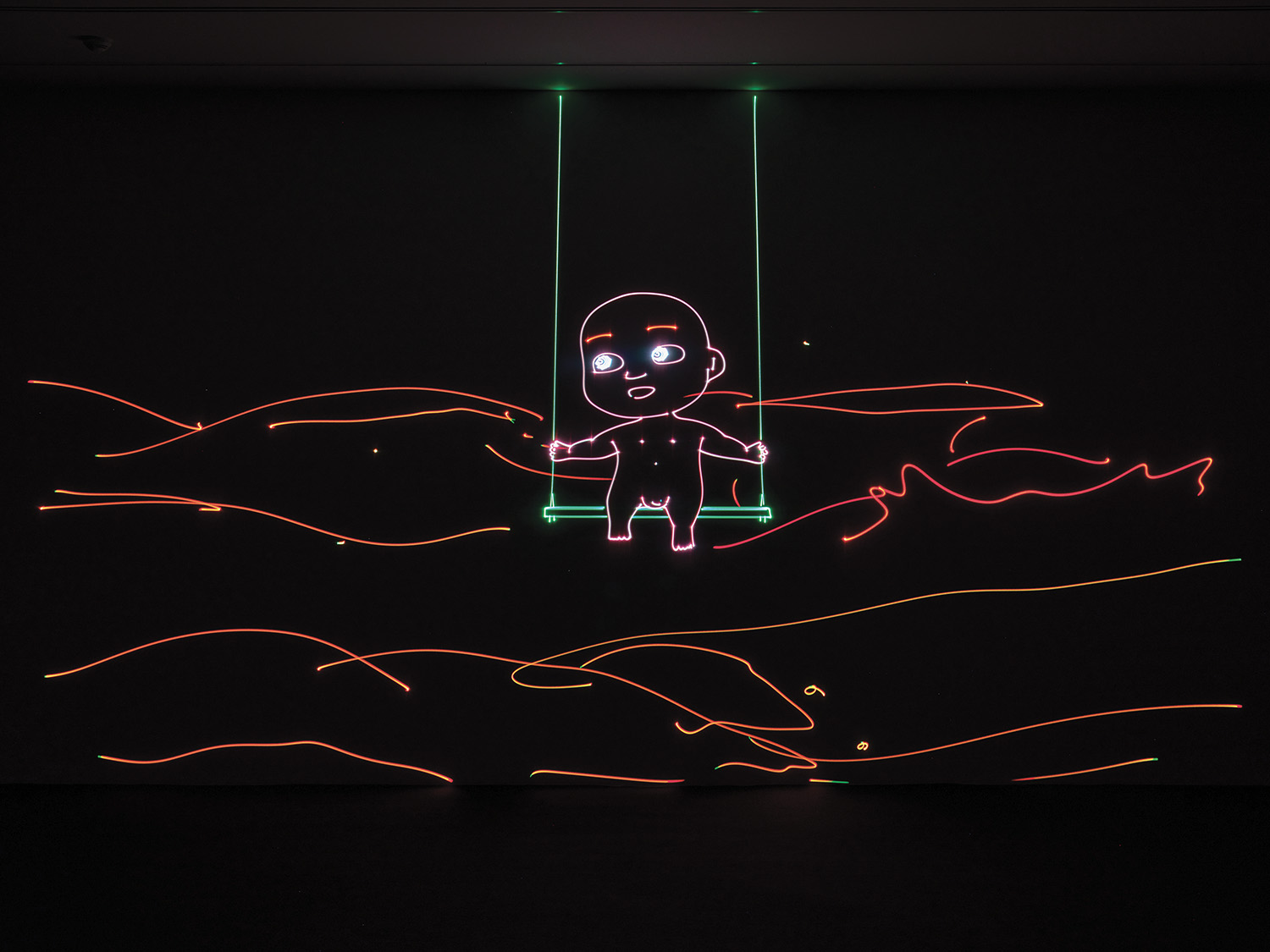
Matt Copson, Coming of Age (Trilogy), 2020-2025
Courtesy: the artist and Lodovico Corsini, Brussels
JM: There are places where I cannot work in the way I want.
MC: Yeah, funny how that goes. Some places are not built for it.
JM: I think maybe it’s because of the light. LA was a good place somehow.
MC: I think LA is a really good place to be as an artist because it is boring sometimes.
JM: It is boring, and there’s lots of contradictions in the air.
MC: Also, you have to drive to get anywhere, and you have these very contemplative moments driving along the street, when you can just see the mountains, often covered in snow, and you’re in the heat over there. There’s something that creates a very contemplative state that can be extremely productive. Whereas, if you stay there for too long, it lacks the stimulation that places like Paris and London can give you. But London is hard, it’s a highly stimulating environment to be in. You almost don’t need art sometimes.
JM: Exactly. I was there for five years, when I was at university. I was painting a lot, but I was not able to find my voice, I don’t know how to explain the reason.
MC: You also create environments. This is the thing I like about having made a film and working in theater. You have this group of people and you’re kind of locked in a sort of space together, and that’s very generative and productive. I’m not a kind of natural studio artist myself, in the sense that I really find conversation to be highly productive for making things. I enjoy the social stimulation. I find it a highly creative part of my practice. A large part of my process is through telling, speaking to people about things, and from there a story evolves.You just made a short film as well. Did you enjoy the process of having a team?
JM: I really loved the process. While we were doing it, we didn’t have a lot of time because we had 12 days to make a short film.
MC: Oh, that’s longer than I had for a feature film.
JM: It was really intense. But I was under the mastermind of Werner Herzog, I learned so much, it was mostly the best experience I’ve ever had. In large part this was because of his dedication and philosophy. I felt as if I was hypnotized and making a dream into a film. I played and directed it but he had an eye and a word on every aspect of it. He’s a wonderful mentor. I’m working on a new film now, and what I learned from him gave me a lot of courage to do it.
MC: I think a huge amount of stepping into those zones is the courage required to do it.
JM: It is the courage. I told Werner when I saw him in LA last time. Making a film is so hard because you need to write the script first, then you have to find the actors, then you have to find the budget, then you have to film it, then you have to edit it, and then, once the film is over, you have to sell it. Once you sell it, you need to resist the critics, and there’s so many processes that you can just die in any of them. And he was like, “stop whining, we anyway have to live”. That’s courage.
MC: As an artist, you’re so used to a sort of immediacy as well. I don’t finish all of my works before installing, because I leave a possibility of a directness that goes on in the actual space. I’m working on another opera right now. I’ve been working on it for a few years now. It takes so much time, so many steps.
JM: I think it’s important that, in a film or in any idea, you take the time to really understand what’s driving you because during the process you will have to fight a lot for it, like a soldier.
MC: How close do you feel with your work? How close is your life to your work?
JM: In a strange way, my work often comes before I can rationally understand what’s happening in my life. I turn it into fiction, channeling the emotions onto the canvas. When I feel emotions, I know I’m losing control. But once they’re on the canvas, it somehow feels completely safe. I feel free to lose control.
MC: Exactly. When you put really heightened things into work, it does feel like ridding yourself of them sometimes.
JM: As an English person, you are educated on the idea that emotions are not right to express openly. We are taught to repress them, but when they go into the work, they are appreciated for what they are.
MC: I’ve made a lot of works recently dealing very explicitly with suicide, and I’ve known lot of people who’ve killed themselves. I know what that feels like to be around it. But I’ve never had a suicidal thought in my life. I’m fascinated by the concept of death for sure, and it comes up a lot in my work. A lot of it does feel like a ridding of oneself there. You have a lot of works that have clear scenes going on. There’s a real sense of storytelling going on. There’s a legibility to the actions. How did those scenes come about? How do you write their script?
JM: There’s no rule. It starts with one character. Even though, at the end, there is no center in my scenes. Do you feel you need to define yourself? Would you think that in the next 20 years you would choose one medium?
MC: It’s funny. Whenever I do something in a different sphere, people are like, “oh, so you’re like not making art anymore, you’re going to be a film director, or you are making operas now.” When people ask me what I do, I say I’m an artist because I love that art is the only truly undefined practice. An artist could literally be anything. I love the fact that art is unquantifiable, and I think, as long as it remains that way, it holds a certain social power. Going into the film or the opera world, people take me seriously in a certain way, and allow me to explore things. I hope to expand further and I think that these things crossbreed with one another. Sometimes, when I’m making an installation in a gallery or museum, I feel like I’m making a piece of theater, and sometimes, when I’m behind the lighting desk on a stage, I feel like I’m making a sculpture. I feel like I’m only really going to make art if it can operate in the ways I like. I’ve never been very good at making an artwork for an art fair, and it’s just not how I think. If there’s a big project, an idea, and art is the environment for it, then great. But I also fundamentally think that, if you are a great artist now, then you clearly wouldn’t just operate in the art world. It’s too narrow, and it’s really insane that the institutional stuff around us has created a world that has actually narrowed art rather than expand it. That’s really sad, and it has led to a brain drain of young people. But I also feel a responsibility to try and blow it up again as well with what I’m doing and to expand it again. I can imagine there’s no way you’re not going to continue making films and I can imagine you branching out into other spheres as well.
JM: I paint as I breathe, you know. So that’s almost like a craft, it’s a natural thing that I’ve always had. I think that comes really naturally and I will do that forever. But I need to shift among different mediums, while staying very loyal to the crafty part of it, the DIY.
MC: Another thing I noticed in your work is that you’re constantly experimenting with different supports for your paintings, such as velvet, mirror, glass, etc.
JM: When I paint onto a found object it’s also because I like how that object can reflect a world and I ask myself, “why shouldn’t I do a painting of it?”
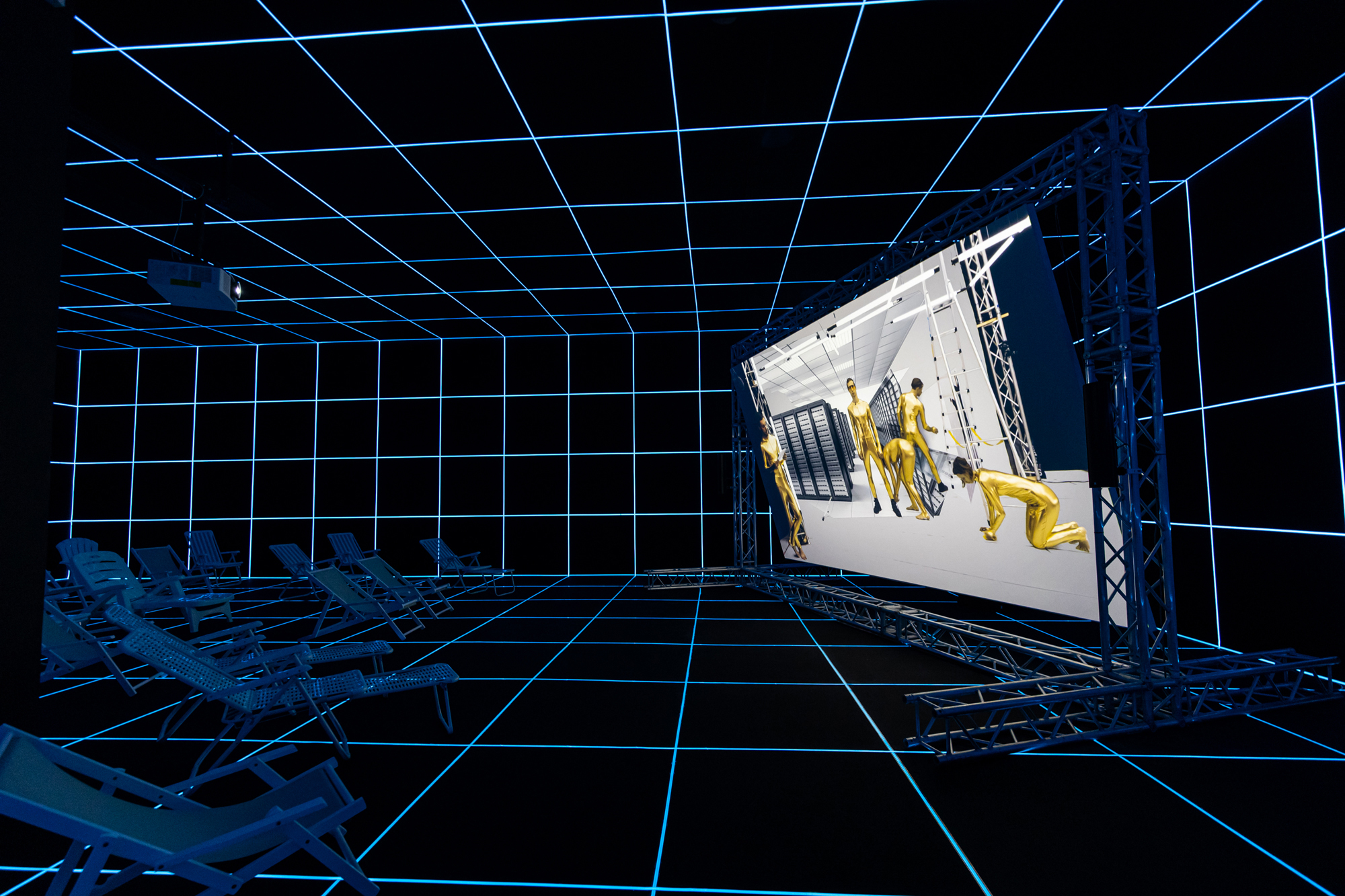
MC: That’s why I’m using laser projections. I just presented a project of laser projections on the exterior facade of the Fridericianum. I love projecting onto the corner of a wall where it’s going to blow it out. There’s almost a fight going on between the pictorial space and the three-dimensional space. I see that so much in your work, especially in the velvet paintings. I’m so attracted by the way the paint sits on the top of the fabric. It’s capturing the light in such a specific way that it goes beyond the pictorial surface, which is what all great painting does.
JM: It’s material that challenges me to find a way to make the light come from within. It’s very strange. For example, right now I’m using bleach to see how the velvet can become as bright as possible, within the opacity of the painting.
MC: You mentioned the craftiness of your practice. In my works, I use technology very much, but it’s not cutting-edge technology. I have no interest in that. I’m interested in the tangibility in the world. It’s the same with the objects in the film. It’s the joy of life. Actually, it’s a great lie that 2026 is only about AI and drones and everything.
JM: I think we’re totally shifting back. Aging was the only thing that technology couldn’t beat, and they say that this is the last generation that will be aging because they managed to trigger the DNA, and they’re also developing little tiny human brains in labs. They’re not humans. They’re just using the brains, so they can inject those brains in devices. And then AI will be outdated because now they have real brains that work as chips somehow. I don’t even know anymore what’s real or not in the news.
MC: What is the role of art now? Just once again redefining beauty.
JM: I think there should be a big aesthetician coming into politics to redefine the beauty of the world.
MC: Yeah, the people who have the most power in the world have no understanding of aesthetics. It’s unbelievable. And with no understanding of aesthetics, you have no understanding of anything.
JM: Aesthetics and ethics—they go together.
MC: Of course, exactly. That’s the real politics. That’s poetry. Vive la poésie.
Matt Copson + Jill Mulleady
CURA. 47
Artist + Artist
MATT COPSON (b. 1992, Oxford, UK) lives and works in London. Solo shows of his work have taken place at: Sandretto Re Rebaudengo Foundation, Venice; KW Institute for Contemporary Art, Berlin; Louis Vuitton Foundation, Paris; Aspen Art Museum; Swiss Institute, New York; LUMA Foundation, Zurich; Reena Spaulings, New York; CLEARING, Brussels and High Art, Paris. He has been part of several group exhibitions at, among other venues: Nottingham Contemporary; Dhaka Art Summit; Zabludowicz Collection, London; CAPC, Bordeaux; Centro de Arte Dos de Mayo, Madrid; Baltic Triennal 14, Vilnius; Belgrade Biennale 2021; National Gallery of Victoria, Melbourne; Ca’ Pesaro Galleria Internazionale d’Arte Moderna, Venice.
JILL MULLEADY (b. 1980, Montevideo, Uruguay) lives and works between Los Angeles and Paris. She works primarily in painting and often intervenes in the spaces where she exhibits, staging the paintings with readymades, sculptures, and architectural installations. Her practice shifts between close observations of everyday reality and highly elaborated imaginary worlds. She has had solo exhibitions at: Sant’Andrea de Scaphis, Rome (2024); LUMA Arles (2024); Gladstone Gallery, New York (2022); Le Consortium, Dijon (2021); Gladstone Gallery, Brussels (2020); The Whitney Museum, New York (2020); Swiss Institute, New York (2019). She has been involved in Made in L.A. 2020 at the Hammer Museum in 2021 and the 58th Venice Biennale in 2019.