Sole crushing
Lafayette Anticipations
November 22, 2025 – February 8, 2026
Review by Hugo Bausch Belbachir
Meriem Bennani is an artist who probes the very notion of the universal through the lens of the personal, tracing a path from the experience of the individual towards the consciousness of the collective. Engaged with the dynamics of belonging and communal formation, Bennani articulates reflections on protest, collective gathering, and the architectures of family, friendship, and group intimacy: all that compels us, time and again, to find ourselves inexhaustibly in relation to one another. In this, music, voices, and sound have played reference points for a broader reflection on the dynamics of the synergistic, with each of them operating—throught sculptures and films—as systems for the distribution of speech and its agency; circulating and sometimes overlapping. The sonic becomes both an index and a testing ground for the group’s varying capacities and sometimes incapacities to exist together: loudness and quietness, leadership and withdrawal, collectivity and individuality. Through these oscillations, Bennani exposes how togetherness is continuously negotiated, not only through what is seen, but through what is heard, shared, and withheld.
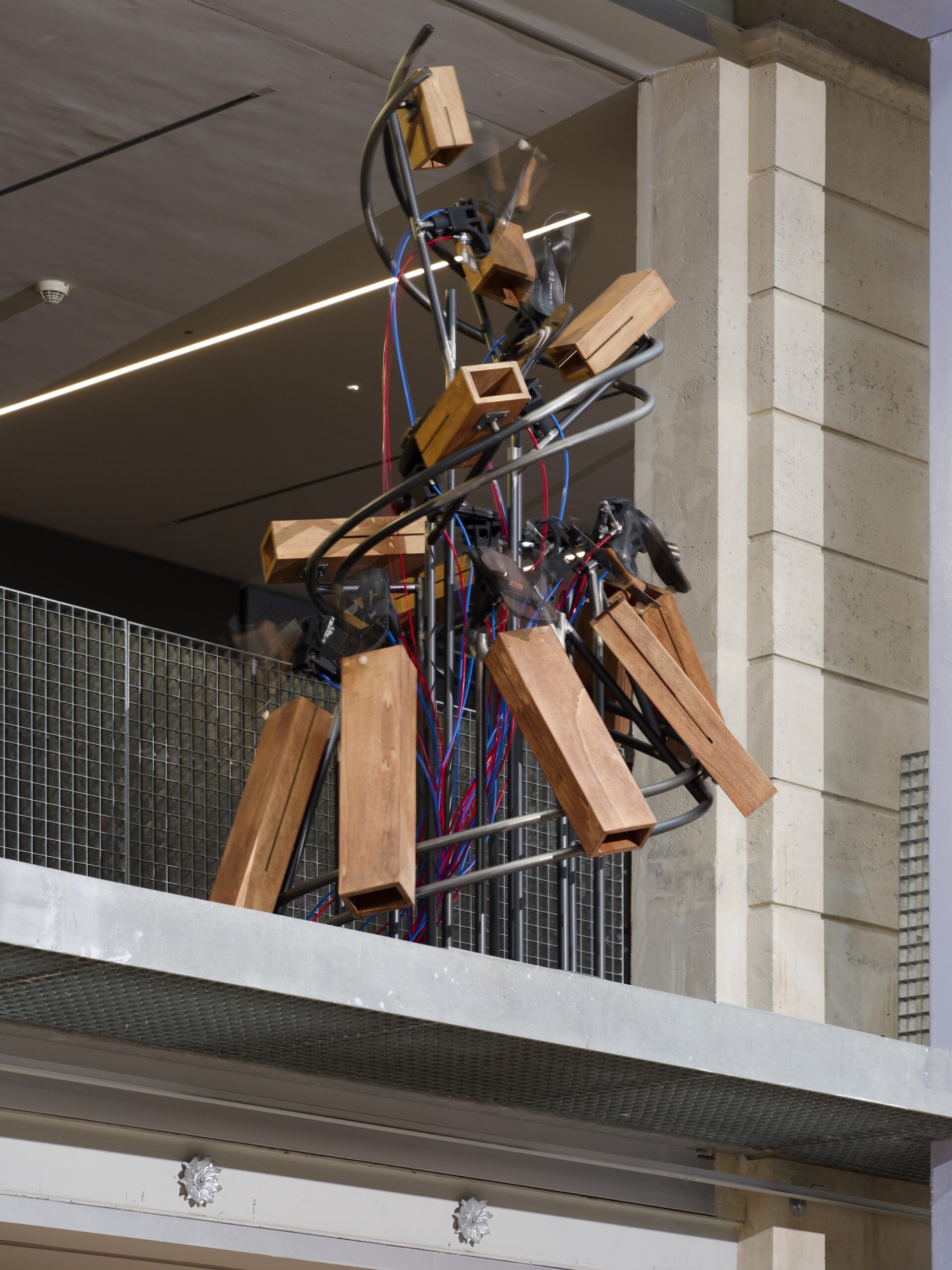
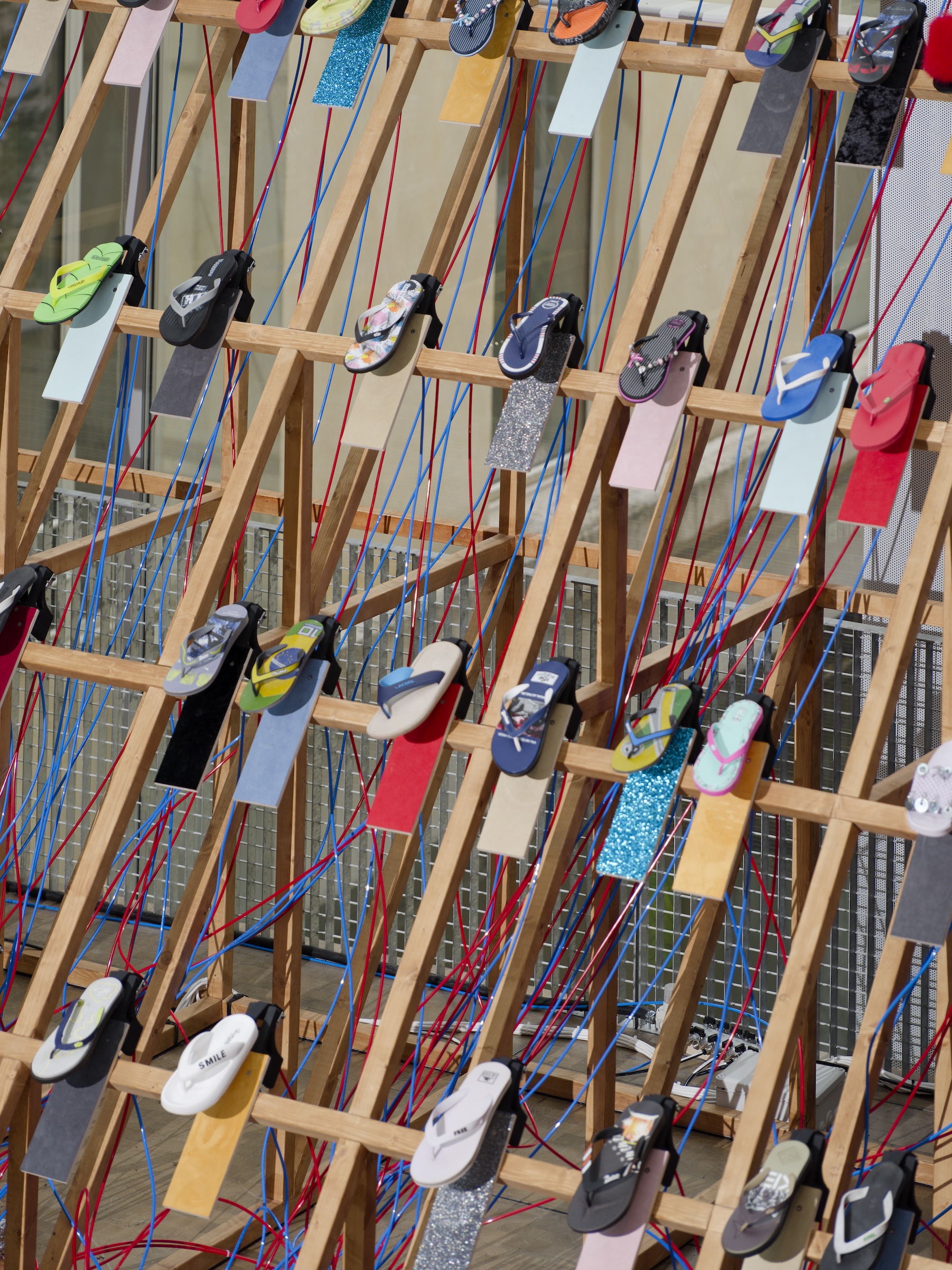
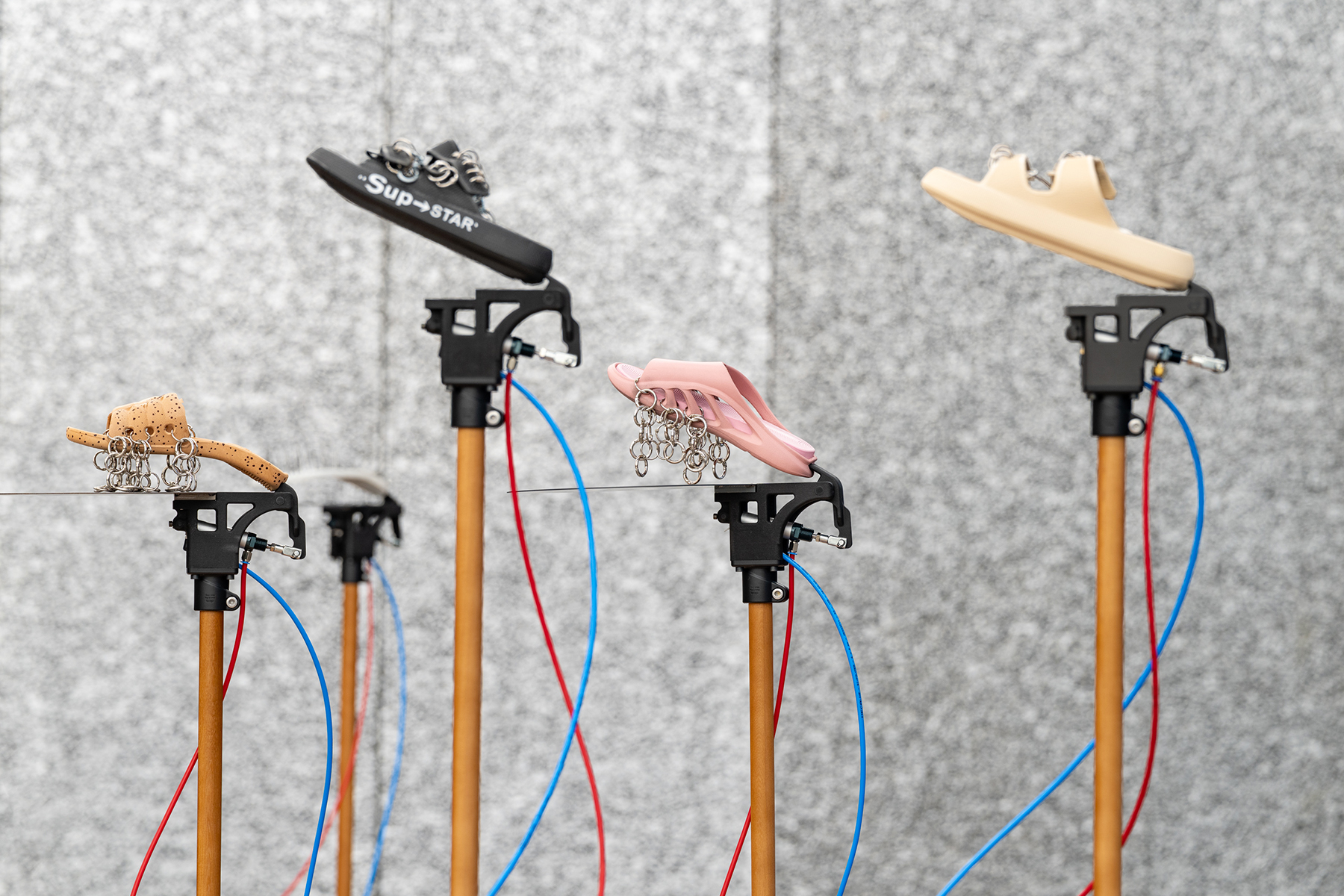
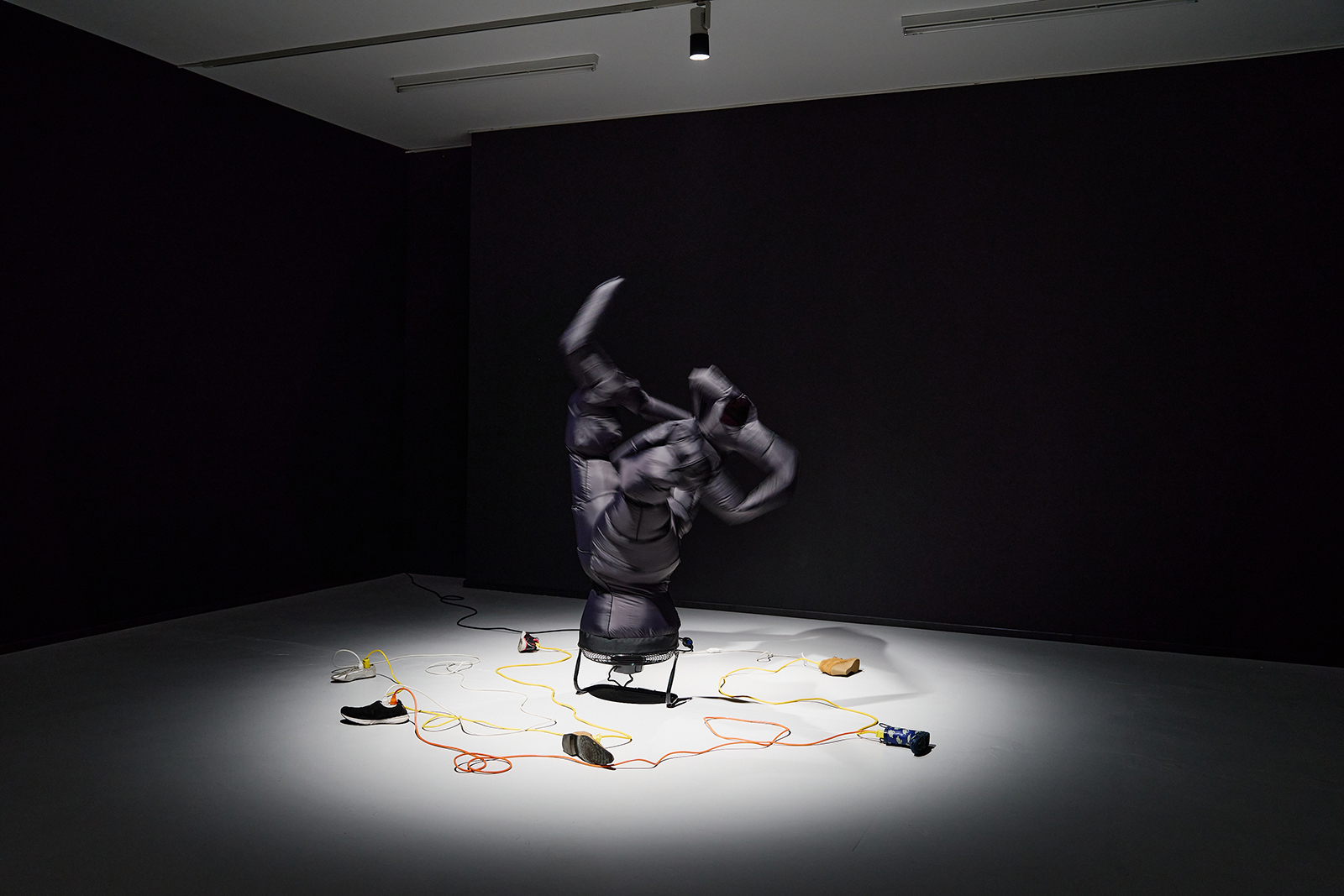
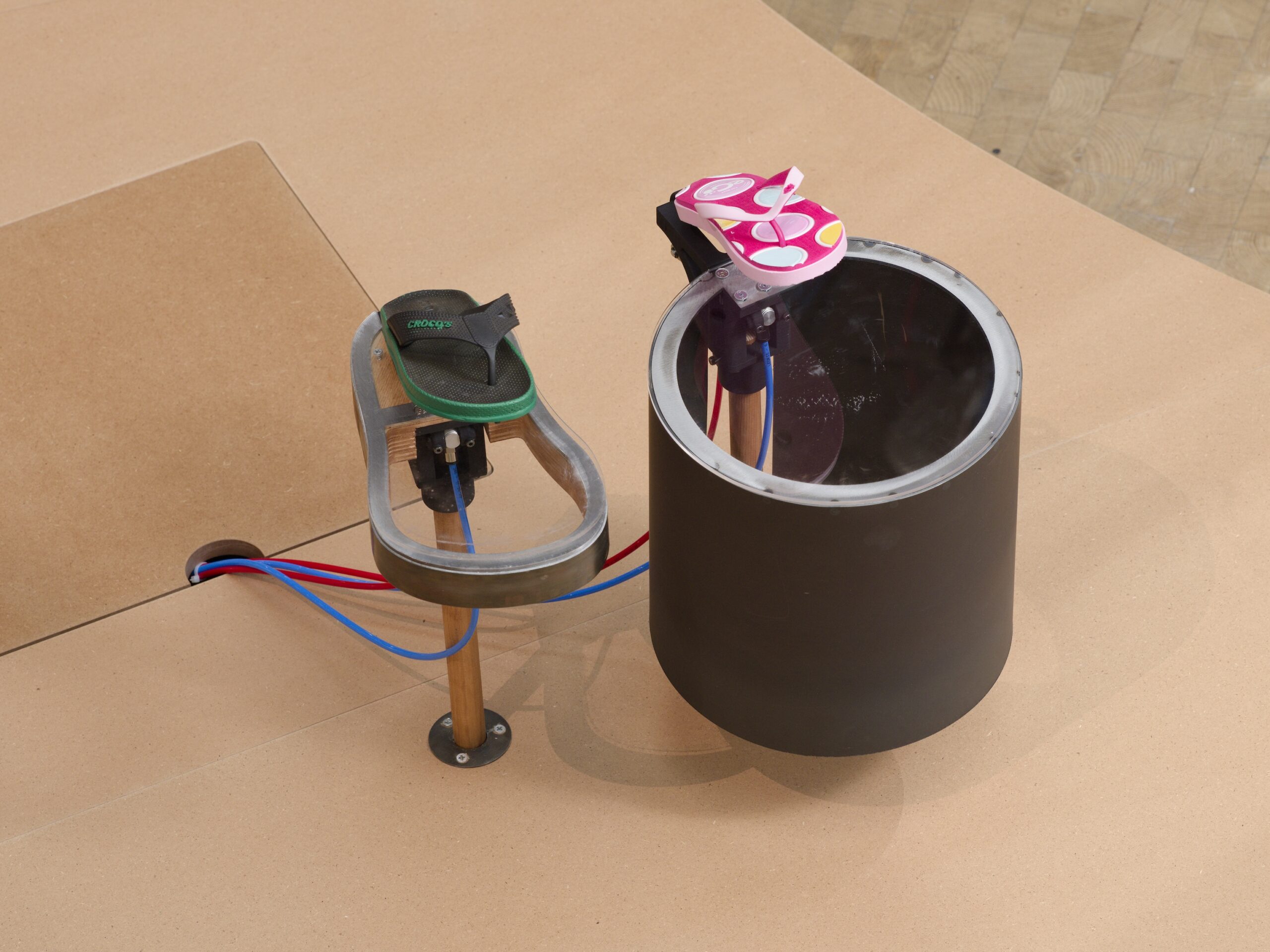
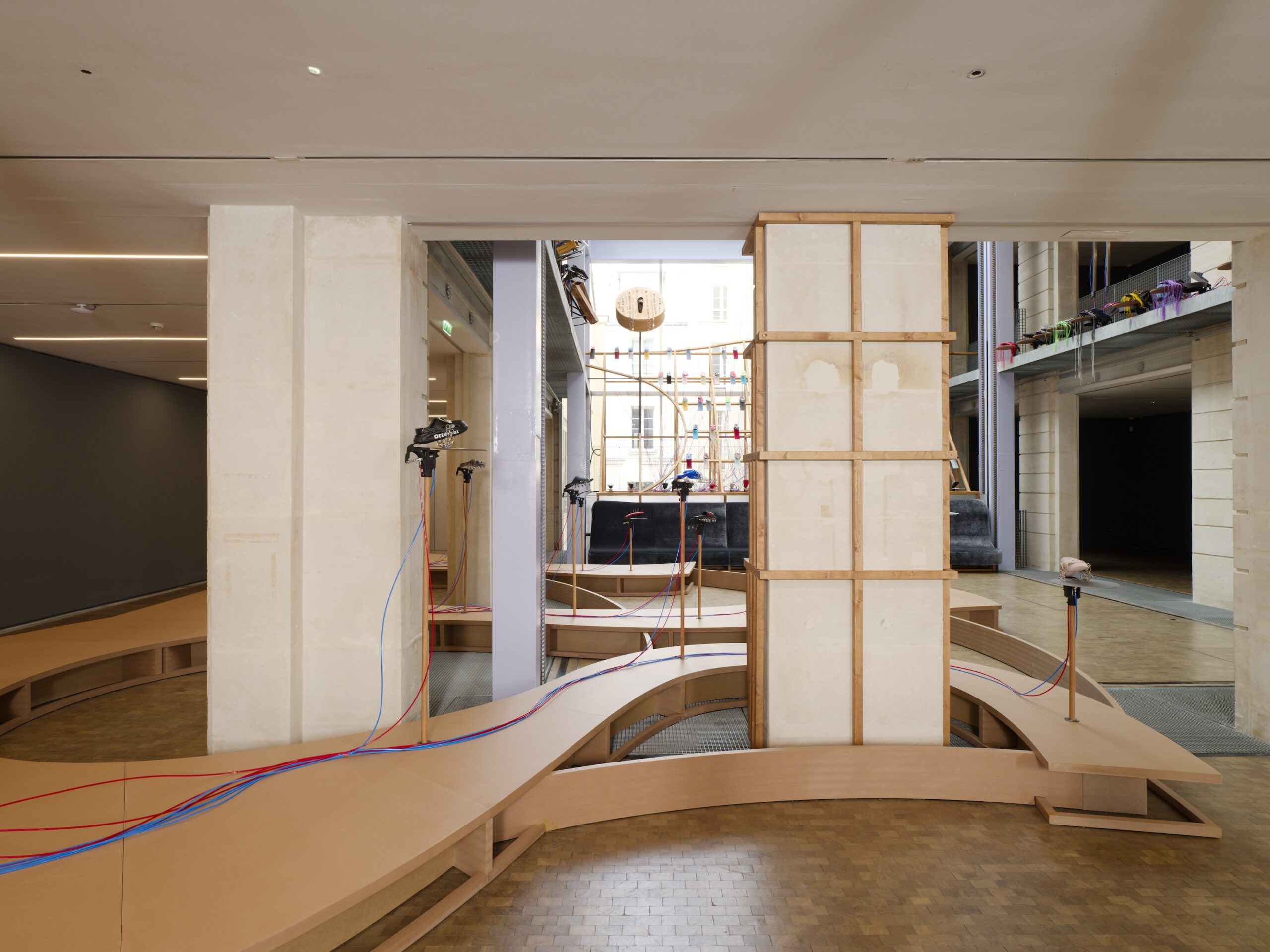
Sole Crushing, Bennani’s second institutional solo exhibition in France, revisits the artist’s large-scale, site-responsive installation previously presented in For My Best Family, her recent solo show at Fondazione Prada in Milan. Installed within the soaring interior of Lafayette Anticipations, Sole Crushing brings together more than two hundred flip-flops and slippers, interconnected within a single mechanical network that sets them in motion toward their metallic and wooden bases below, producing a series of percussive sounds. The installation emerges from Bennani’s collaboration with Moroccan musician Reda Senhaji (Cheb Runner), whose engagement with electronic music genres—such as Gabber, EDM, and Trance—is deeply intertwined with an awareness of traditional musical forms from Morocco and North Africa, including chaâbi, melhoun, and Berber chants. As such, Sole Crushing unfolds as a kinetic and intricately orchestrated system, conceived as an archipelago of polyphonic formations, with hundreds of flip-flops organized into distinct arrangements. Each element is animated by a pneumatic mechanism that renders it mobile, seemingly alive, and rhythmically breathing, evoking moments of collective catharsis and rituals—echoing traditional Moroccan sound practices such as deqqa marrakchia, the experience of spectacles in stadiums, weddings, celebrations, and protests.
Like my paternal family, Meriem Bennani was born and raised in the northwest of Morocco. Similarly, during Bennani’s childhood, the sandala—the sandal—served as a primary tool of negotiation through force wielded by the matriarch and patriarch in every Moroccan household. Easily within reach, the foot could be freed so that the body leaned downward toward the sandal, which was then used to discipline the child who refused to comply. Like Meriem, I knew that, as a child, when my father bent down to grab his sandala, I had to run! In Bennani’s Sole Crushing, this sandal transcends its role as a mere everyday garment to become a universal symbol, through which every Moroccan can recognize both a humorous weapon and an emblem of family life, as well as a joy rooted in childhood (“sole” insinuating “soul”): in what occurs within my memory, yours, ours, and which gives rise to a collective one.
The specificities inherent to locality lie at the core of Bennani’s work, beginning with the intimacy of her own family, friends, and immediate circle—whom she often employs as subjects in her films, or from whom she fashions others—thus drawing upon her proximate memory and the intimate context of her own existence. This notion of locality is also a distinctly situated geography, Bennani mobilizing cultural referents that are distinctly Moroccan, French, and American, the latter corresponding to the country where she currently lives and works. These three locations—of which the second, France, was historically constructed within Morocco through a colonial system that continues to persist in contemporary Moroccan society, as in many formerly colonized African countries—give rise, through a lived experience of intimacy, to a collective awareness of historical and political power relations at every scale (macro and micro; proximate and distant; past and present, and so forth). In 2019, on the occasion of the Whitney Biennial, Bennani presented on the museum’s balconies a series of sculptures housing video works composed of views of bourgeois homes in certain districts of Rabat (the capital of Morocco, and thus the center of political power) singing about themselves: “Oh I’m a fancy house in Rabat, I was bought by an ambassador.” The work underscored the radical disparities between modes of life across Moroccan localities—whose traditions of living are historically antithetical to those of the Western world—and highlighted how, for a portion of Moroccans, the experience of wealth is performed through the emulation of a so-called Fransiya (“French”) way of life. Another film, presented in the same exhibition, highlighted the everyday discourse of young Moroccan students enrolled in a French private school—a setting that, in contemporary Morocco, has become the ultimate symbol of academic success, as educational excellence is now largely measured through participation in the French school system. In this, Bennani’s use of Moroccan Darija (dialect) and French—the country’s second language—perpetually underscores the persistent contradictions produced by the enduring consequences of colonialism in the very construction of the self.
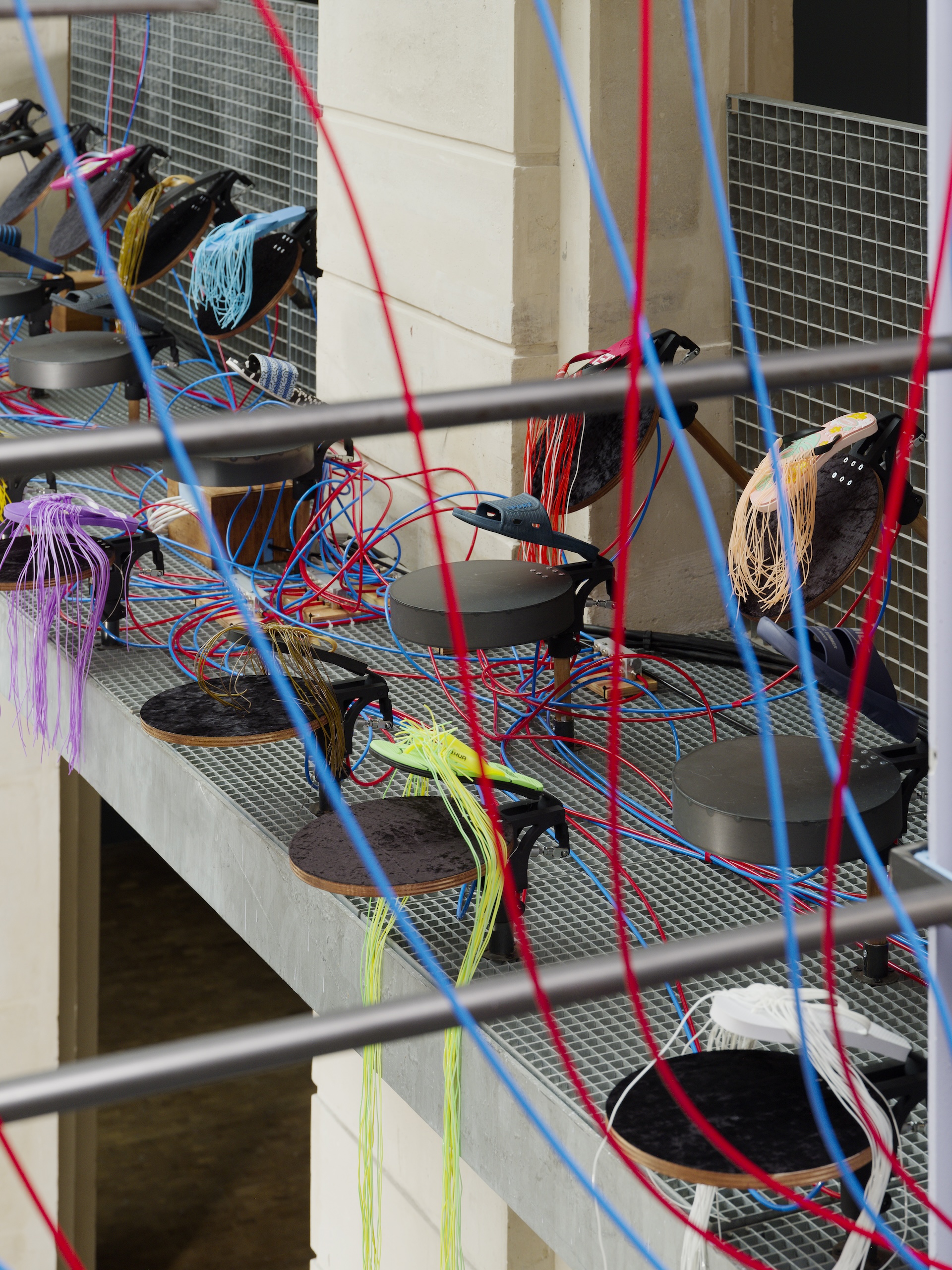
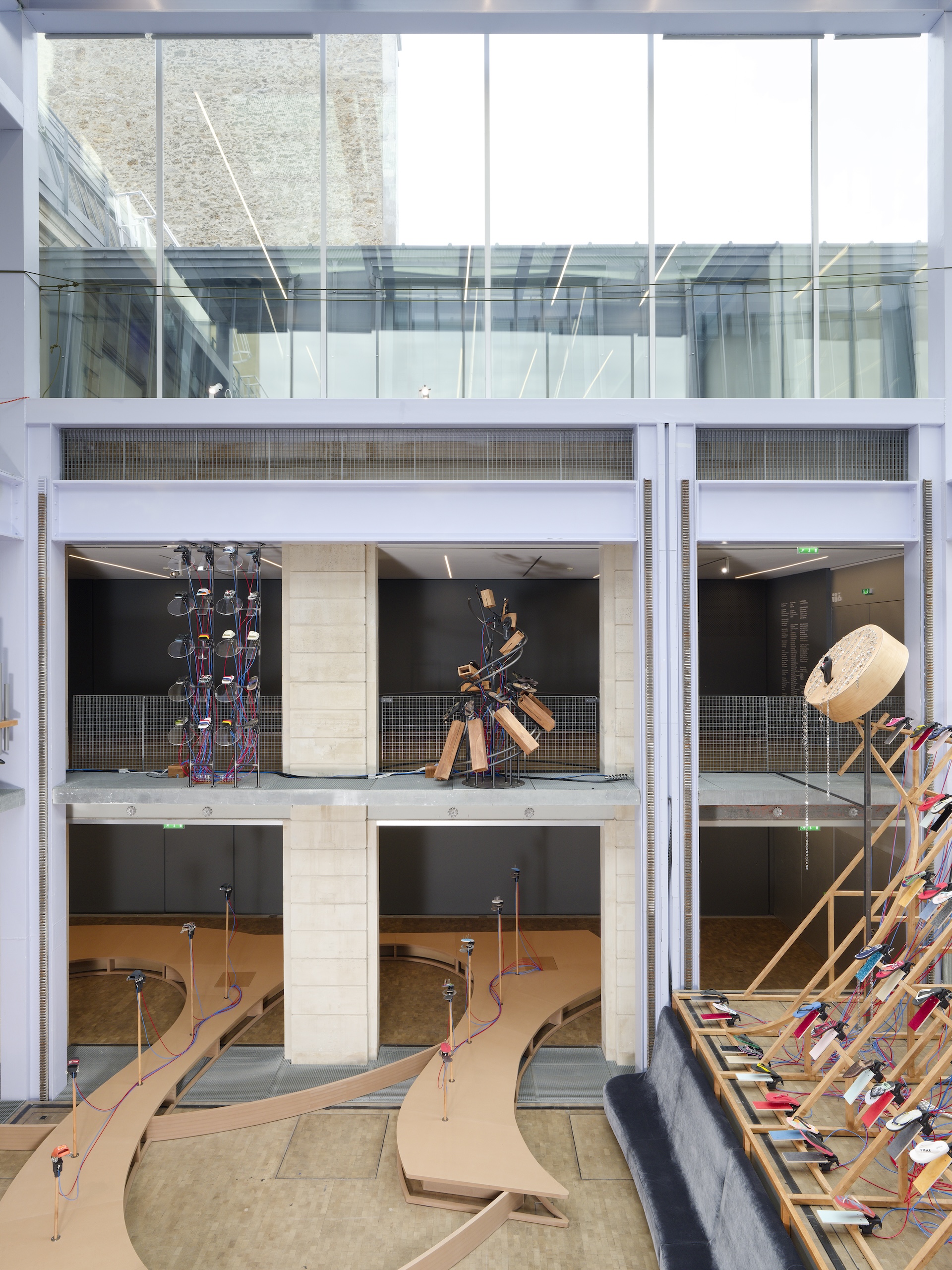
In Sole Crushing, this sense of locality—manifested through traditional Moroccan items (the sandals), sounds, and rhythms—is organized according to a horizontal, non-hierarchical logic. It diverges from the classical orchestral symphony, which relies on a singular conductor to guide performance. The installation, here, asserts its own autonomy in structuring the ensemble: its collective force emerging through a shared, communal experience of the group, as each flip-flop interacts and performs in relation to the others. In this lies a force in the individuality of each participant, and in what the artist calls the “hyperactivity of genres.” The artist notes: “Fashion is full of signifiers, whether they convey gender, social class, or a particular style. As for flip-flops, they evoke a certain lifestyle: healthy, neoliberal, and Californian; some are genuinely feminine. I actually got them in Morocco, not from an official store but from a market that sells them wholesale to those who resell them at other markets. They are all counterfeit. In short, even the design of flip-flops can allow someone to mimic a certain lifestyle or a way of presenting themselves to others. But these flip-flops are imitations of an imitation, because they resemble certain brands.”
In the same way that Bennani employs the figure of the animal—the lizard, the donkey, the fly, and so forth—in her films to bring forth, within a character’s narrative, the intimate experiences lived and expressed by the artist from her immediate reality, the flip-flops in Sole Crushing trace a similar genealogy of autonomous individuals within their shared experience. Togetherness, here, serves as a means to emphasize the individual’s own autonomy and to affirm, within the strength of the collective, who we are in the world.
Meriem Bennani
Sole crushing
Lafayette Anticipations
November 22, 2025 – February 8, 2026
All images: Meriem Bennani “Sole crushing” at Lafayette Anticipations, Paris, 2025. Courtesy: the artist and the galleries François Ghebaly (Los Angeles), Lodovico Corsini (Brussels) and Sadie Coles (London). Photo: Aurélien Mole, Lafayette Anticipations