Ongoing
Onassis Ready
May 17 – June 28, 2026
Review by Nicolas Vamvouklis
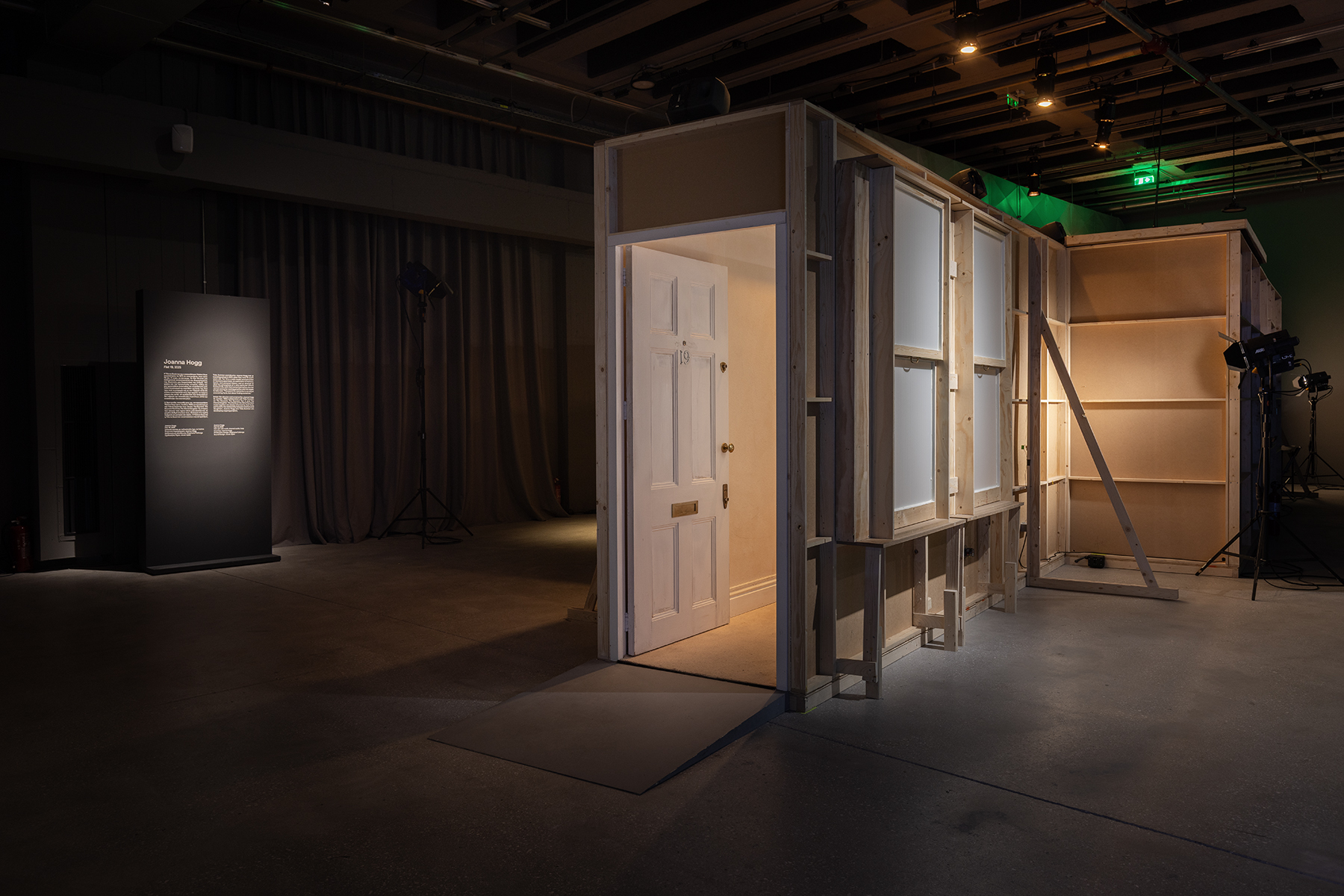
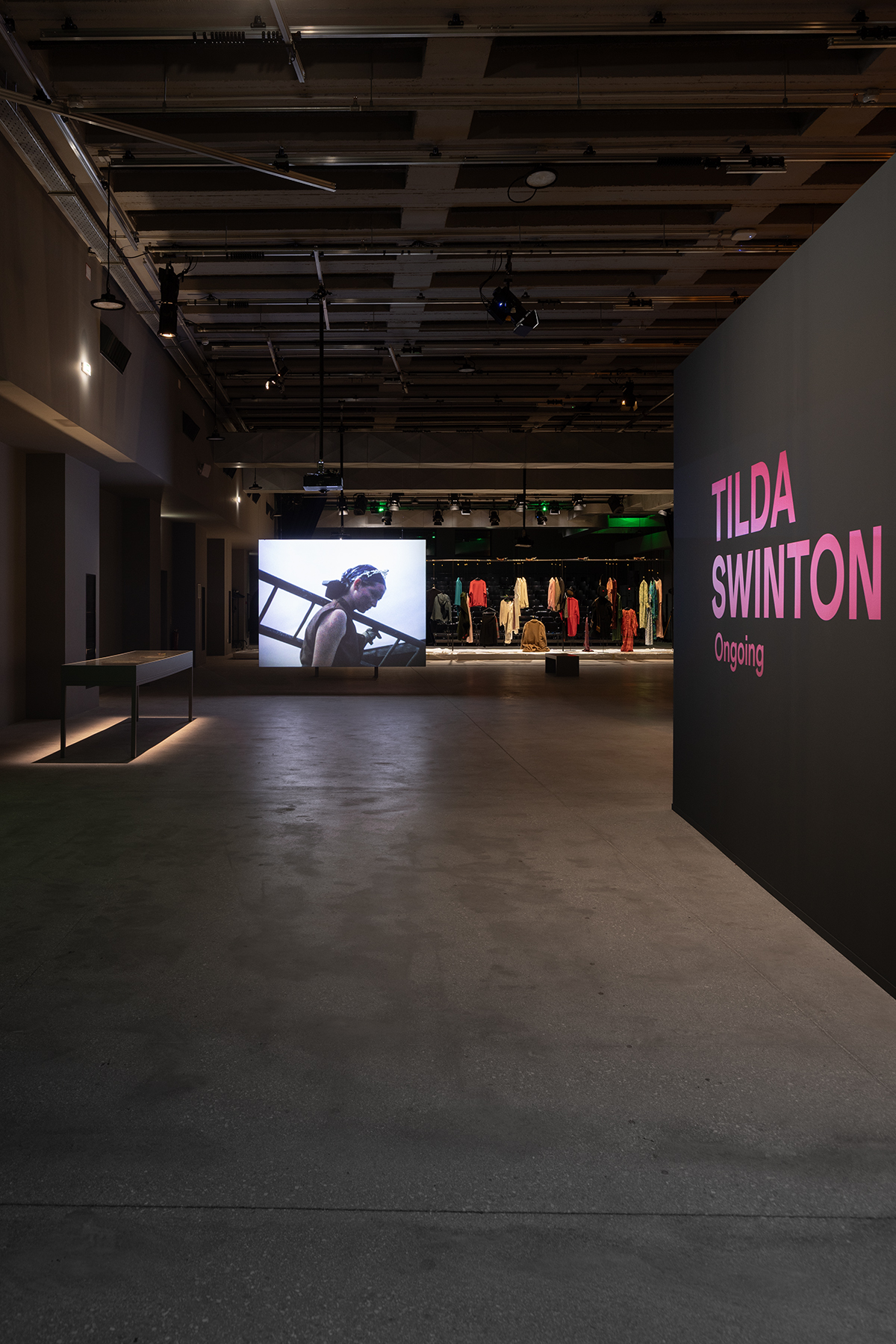
At Onassis Ready, the foundation’s new cultural site in the industrial area of Renti, Athens, the name carries an echo. Ready sounds close to Renti, yet it suggests a state of alertness, a body prepared for encounter. Ongoing by Tilda Swinton occupies the underground level, and the descent already feels part of the work: a slow passage into a field where clothes and cinema behave like memory.
Swinton’s face is among the most recognizable in contemporary film, but here it refuses celebrity’s usual economy of exposure. It appears less as an image to consume than as a surface through which affinities take form. Organized around creative alliances, the exhibition brings together new commissions and pieces by collaborators who have shaped her practice across four decades. Instead of staging a retrospective, it proposes a likeness made by others. It is a show about authorship as devotion and attention. Nothing here asks to become definitive, either.
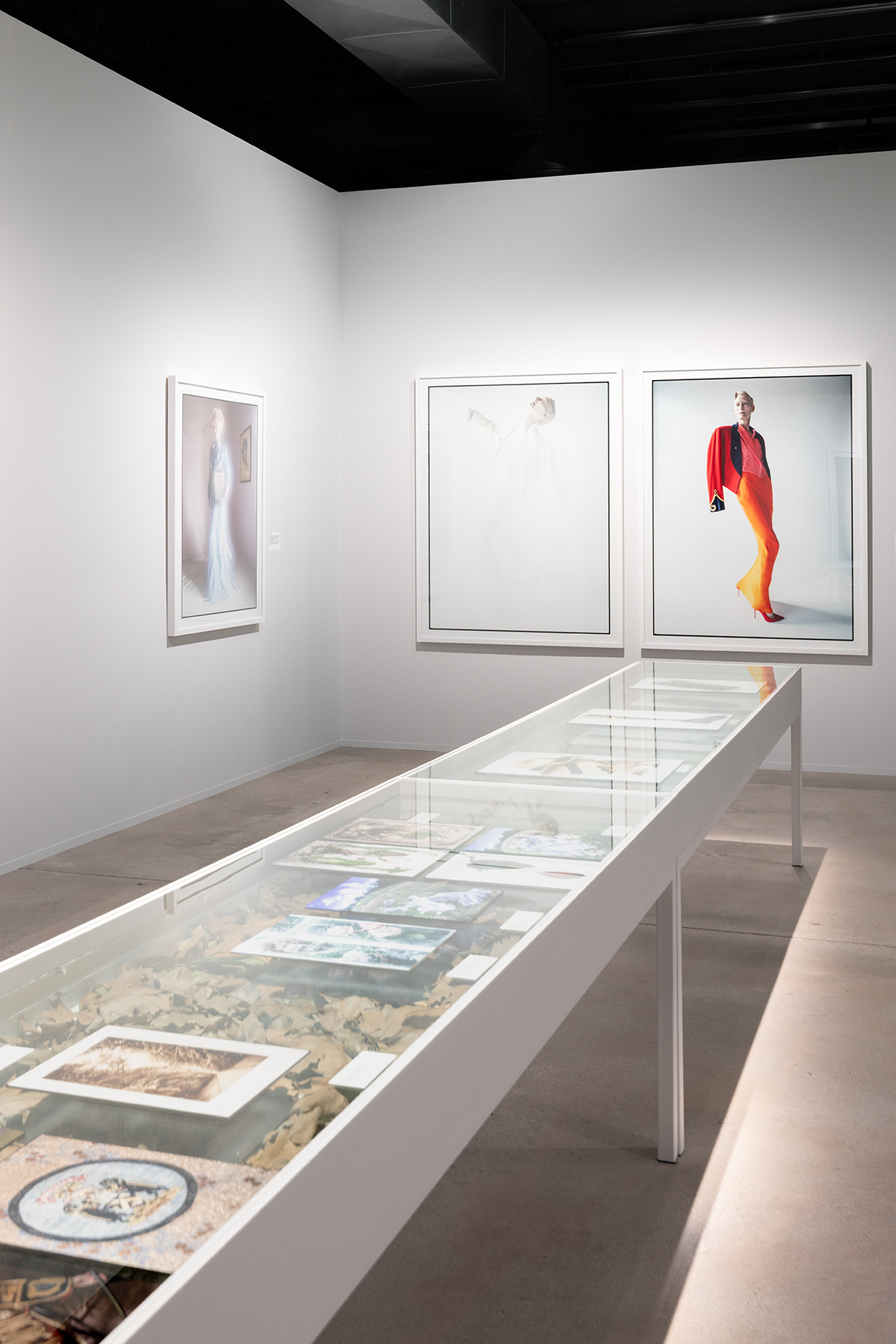
In the opening room, Olivier Saillard’s A Biographical Wardrobe (2025) turns garments into biography without reducing them to anecdote. Saillard and Swinton have long explored clothing as a performative archive, with her acting as a living socle. Here, private heirlooms meet the costumes and public attire of a lifetime. A Chanel jacket sits near a heraldic tabard; a beret and shoes are linked to her great-grandfather, Lord Lyon King of Arms. These objects speak of lineage and ceremonial role-play. Their afterimage returns later in Tim Walker’s atmospheric photographs, where ancestry hovers as apparition, no longer a settled fact.
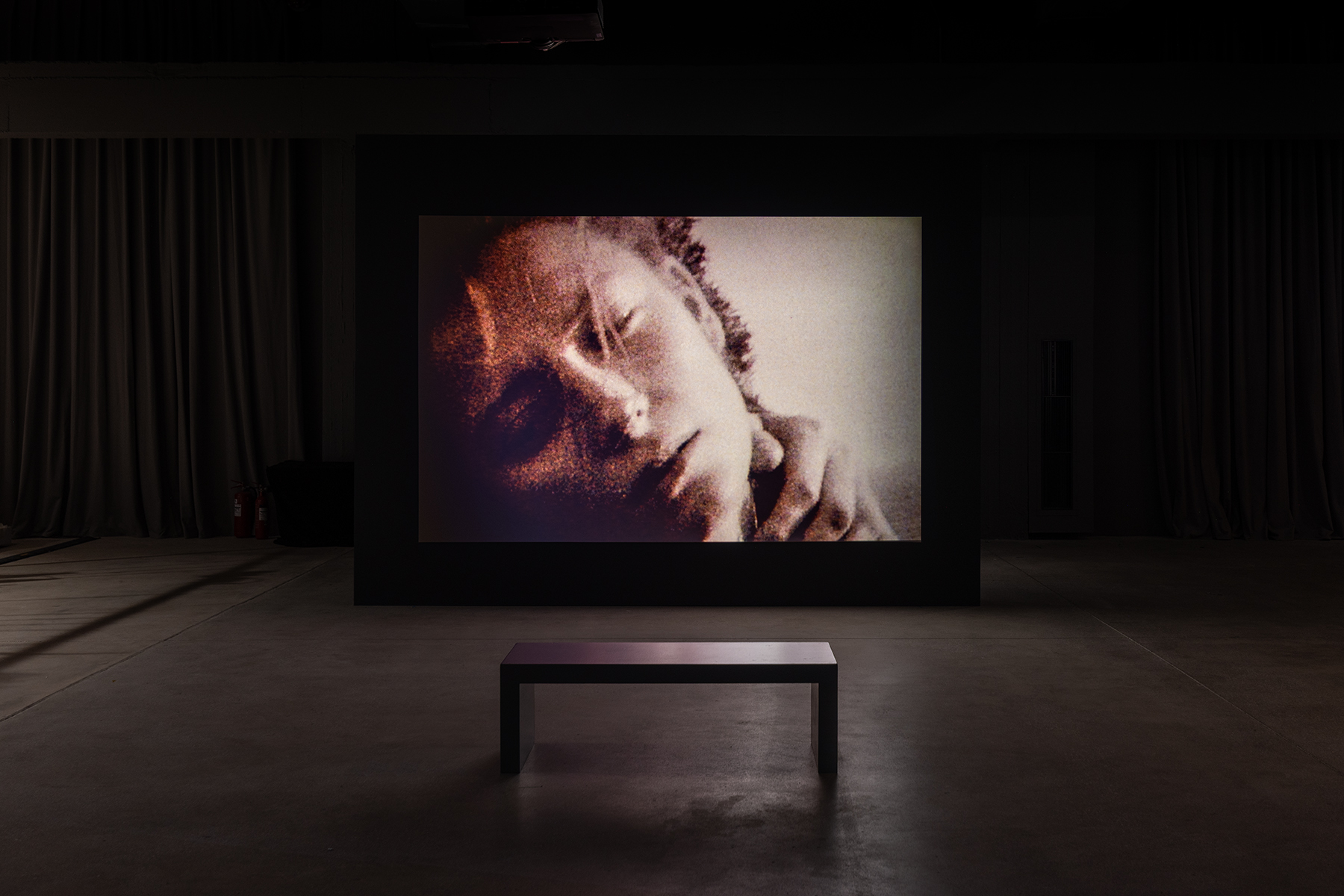
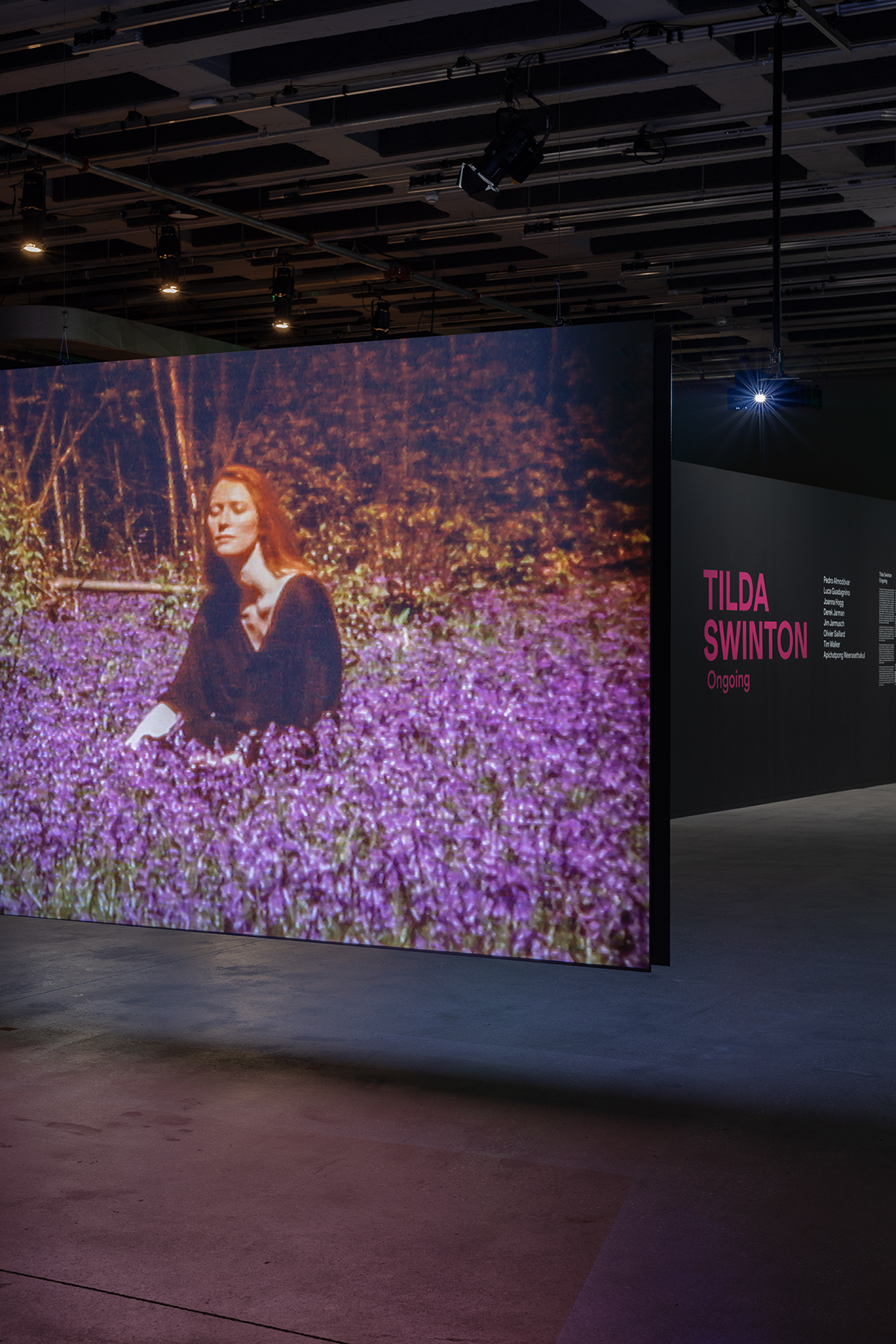
The section dedicated to Derek Jarman sets the affective ground. Swinton has described their collaboration as a kind of kindergarten: nine years in which experimentation became education. Archival fragments culminate in unseen Super 8 footage and the ending scene of The Last of England (1987), presenting Jarman not as influence alone, but as the origin of a method built on trust and shared invention. In a nearby vitrine, a gifted hand mirror and Polaroids hold friendship at the scale of relic.
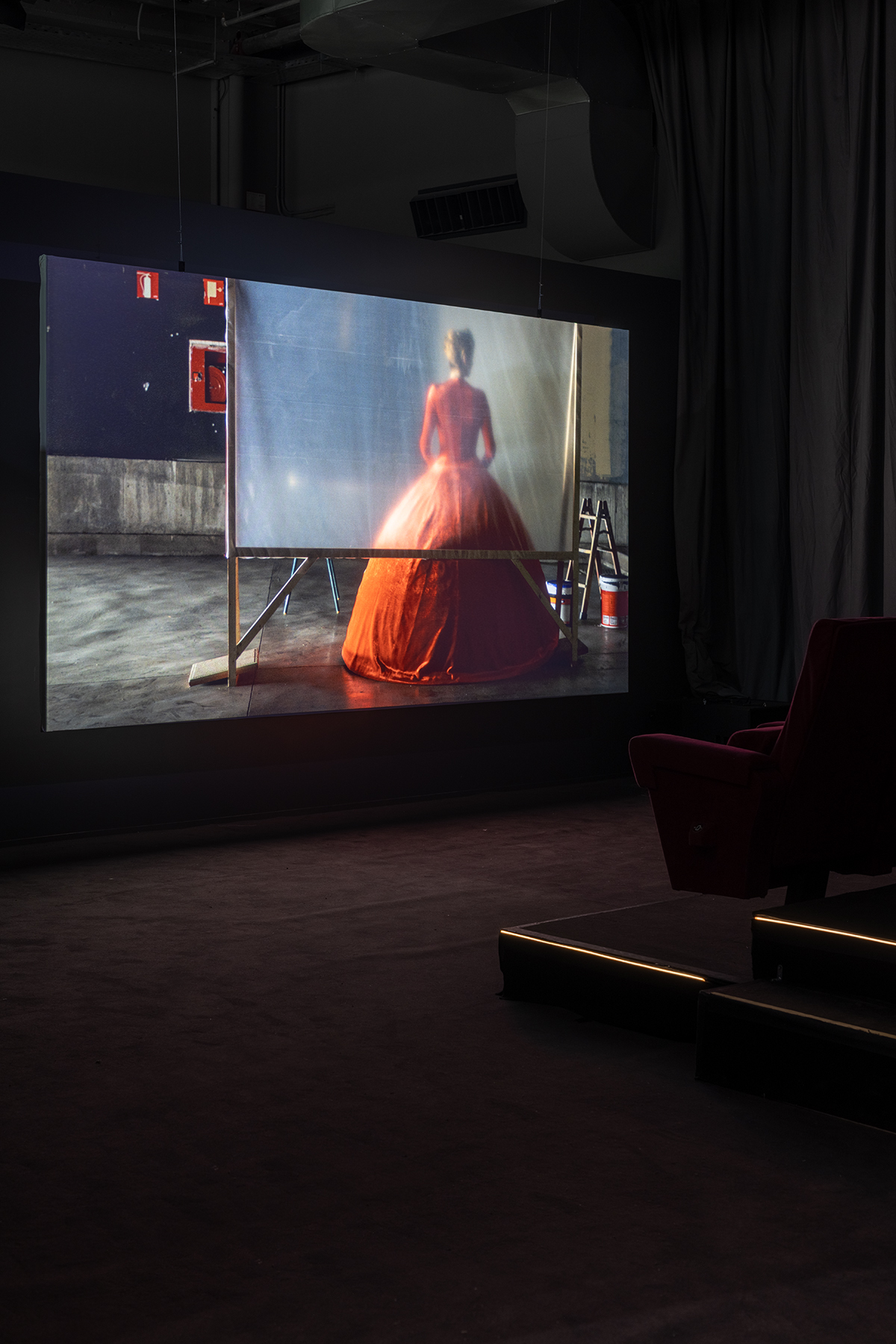
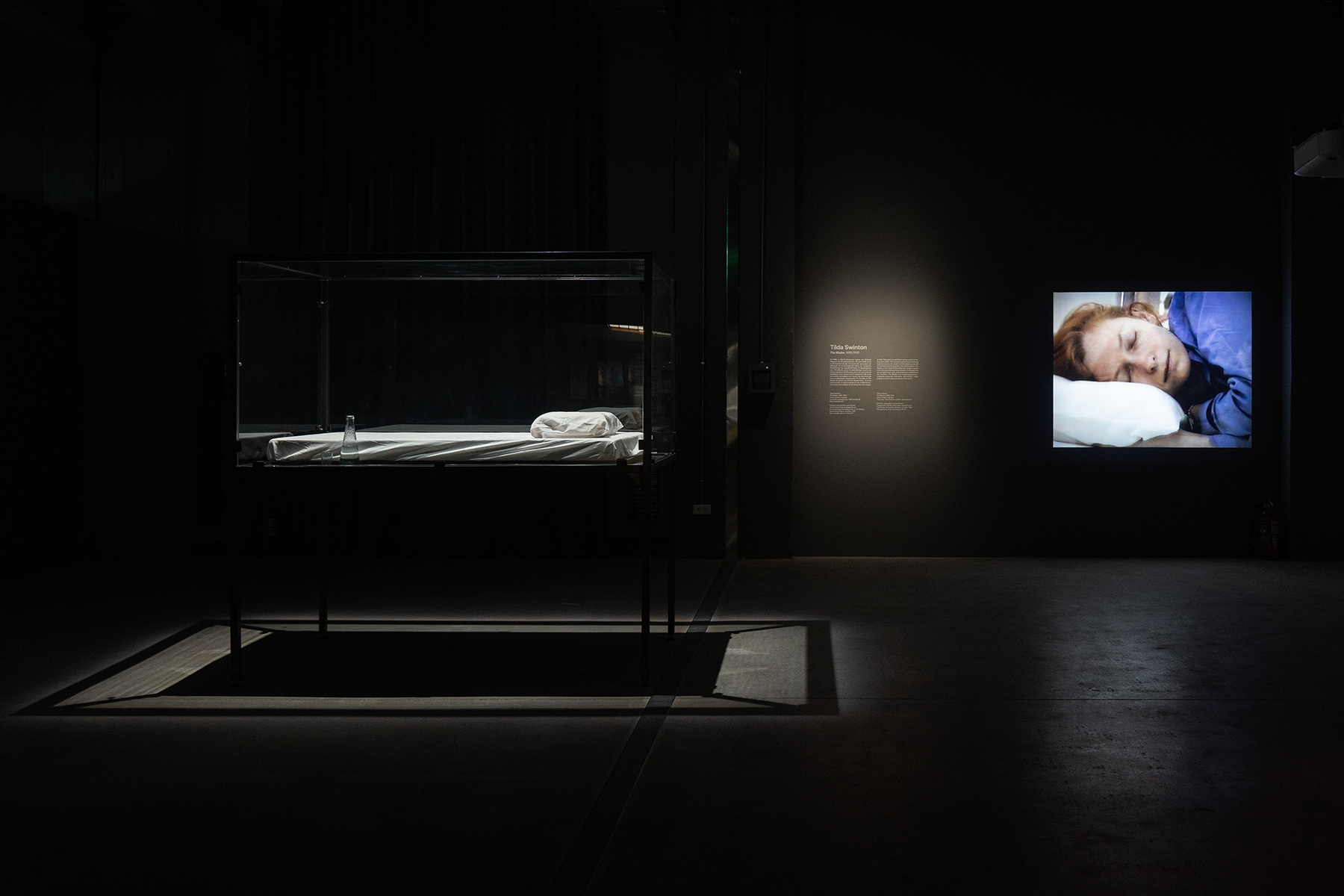
After Jarman’s death in 1994 and the devastating loss of many friends to AIDS, Swinton made The Maybe (1995-2013). The empty glass case included here is almost more affecting than documentation could be. A mattress waits, marked by her glasses and a bottle of water. The piece condenses mourning into duration, making visibility indistinguishable from distance. Near the end, Pedro Almodóvar’s The Human Voice (2020) works as a charged interval. Staged as a cinematic installation, its emotional collapse sharpens the visitor’s own sense of release. It brings catharsis, a sudden change in temperature.
The final room belongs to Sandro Kopp’s A Bright Horizon (2025), a vast eye portrait made from life. Reflected in the iris is Jura, the Scottish island viewed by Kopp and Swinton over years. It recalls Byzantine icons whose gaze follows the viewer, yet its force is intimate rather than sacred. The eye looks back, but not to fix us in place. It leaves the exhibition open, as if Swinton were quietly closing one eye, keeping the other on everything still to come.
Tilda Swinton
Ongoing
Onassis Ready
May 17 – June 28, 2026
All photos:
© Margarita Yoko Nikitaki for Onassis Stegi