Comme Saturne
French Pavillon, 61st International Biennale di Venezia
Curated by Myriam Ben Salah
Special Venice Bieannale 2026
Review by Hugo Bausch Belbachir

There is no true beginning to Yto Barrada’s work. Rooted in a family legacy shaped by both philosophies and practices of political disobedience – her grandfather was abducted in 1958 during the Moroccan independence movements; her father, an influential opponent of King Hassan II and, following the disappearance of Mehdi Ben Barka, the second leading figure of the Third-Worldist and Pan-Africanist movement in the 1960s; and her uncle, founder of the Moroccan Socialist Movement – Barrada intertwines historical, documentary, and conceptual narratives concerned with urban politics, the anthropology of colonialism, and the aftermath of cultural and political ideologies of the post–Cold War era, as experienced through the cultures of Morocco, North Africa, and the Arab worlds.
Early on, after studying social and historical sciences in Paris, she became involved, alongside Fouad Elkoury, Samer Mohdad, and Akram Zaatari, in the Arab Image Foundation in Beirut, where she worked on the collection, preservation, and study of thousands of photographs from Southwest Asia, North Africa, and their diasporas. Bringing forth narratives of the Arab image that had remained absent from political discourse in the decades following the decolonial movements in North Africa, Barrada connected and assembled family archives alongside industrial and administrative documents, identifying sites of histories long silenced both within local narratives and those of the West, thereby tracing a trajectory unfolding precisely along the borders where such places and narratives fail to persist. The notion of the border – understood here from a biographical center extending toward its multiple peripheries – is essential to apprehending the entirety of the artist’s practice, and her refusal of oblivion. Barrada undertakes a process of reopening questions of repossession and reappropriation: of materials, words, objects, and traditions reclaimed by an artist who herself understands, experiences, and exists from within these very sites. She evokes what she describes as a “distance,” playing upon the duality of the presence and absence of her own body, and upon that which binds the individual to the collective through thinking the common. In doing so, she underscores the centrality of the self moving toward the together, returning into the hands of the dispossessed, and exorcising a historical and colonial violence long left unspoken, whose repercussions continue to endure within the layered structures of systems still in place across formerly colonized nations.
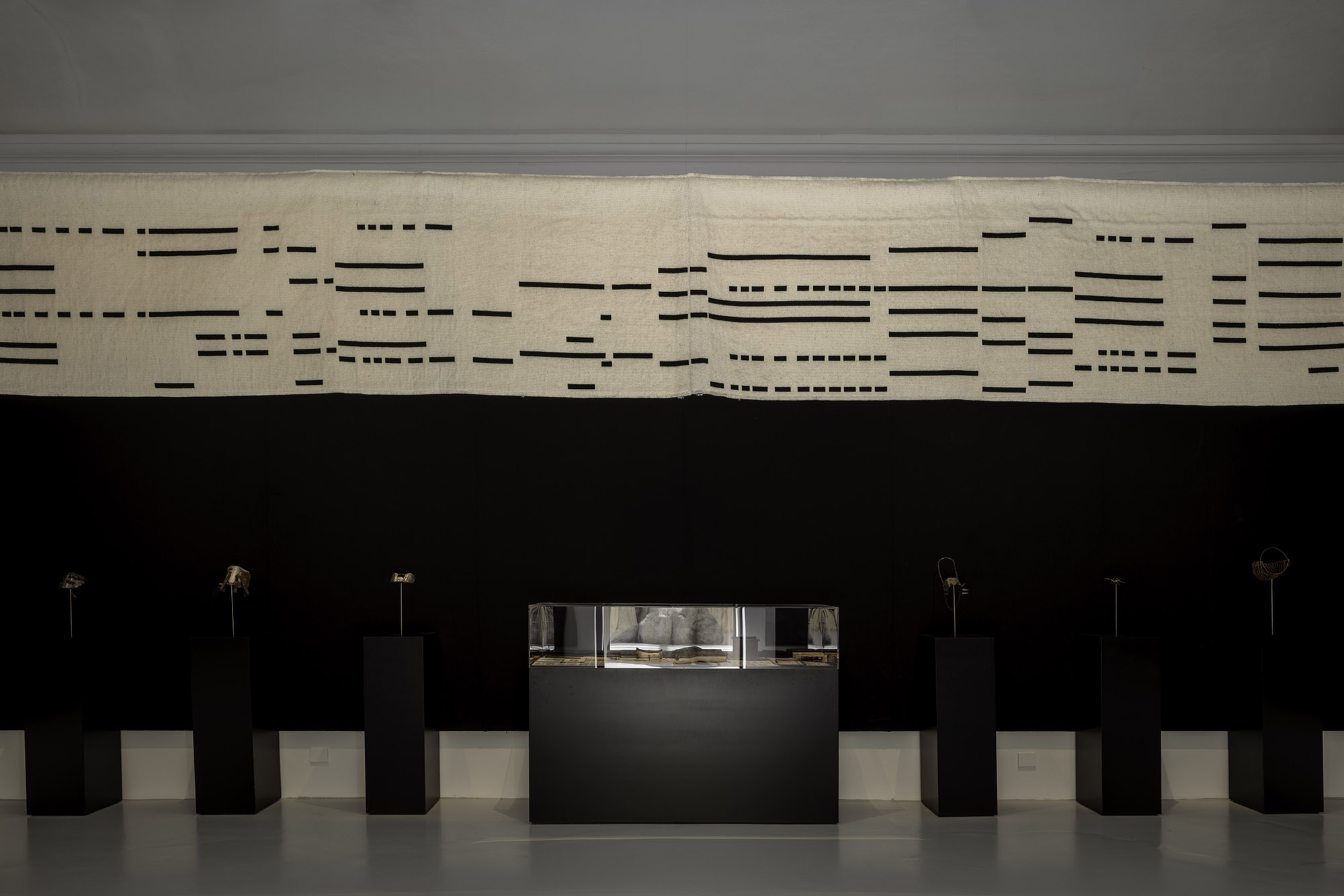
Comme Saturne, the artist’s exhibition at the French Pavilion of the 61st Venice Biennale, curated by Myriam Ben Salah – whose title recalls Pierre-Victurnien Vergniaud, a leading figure of the French Revolution who, during his trial in 1793 and shortly before his execution, declared: “Like Saturn, the revolution devours its children” – the exhibition unfolds across several temporal and spatial sequences. The Salle de travail investigates the Saturnalia, those ritualized moments in which social roles and hierarchies are inverted, exposing structures of power in their most fragile and theatrical form; the Salle des études turns instead toward the ethics and collective labour embedded within natural pigments, positioning them against the logics of industrial production and synthetic colour; and in the Salle du dévoré, Yto Barrada stages an economy of the fragment, where erosion, abrasion, and formlessness emerge.
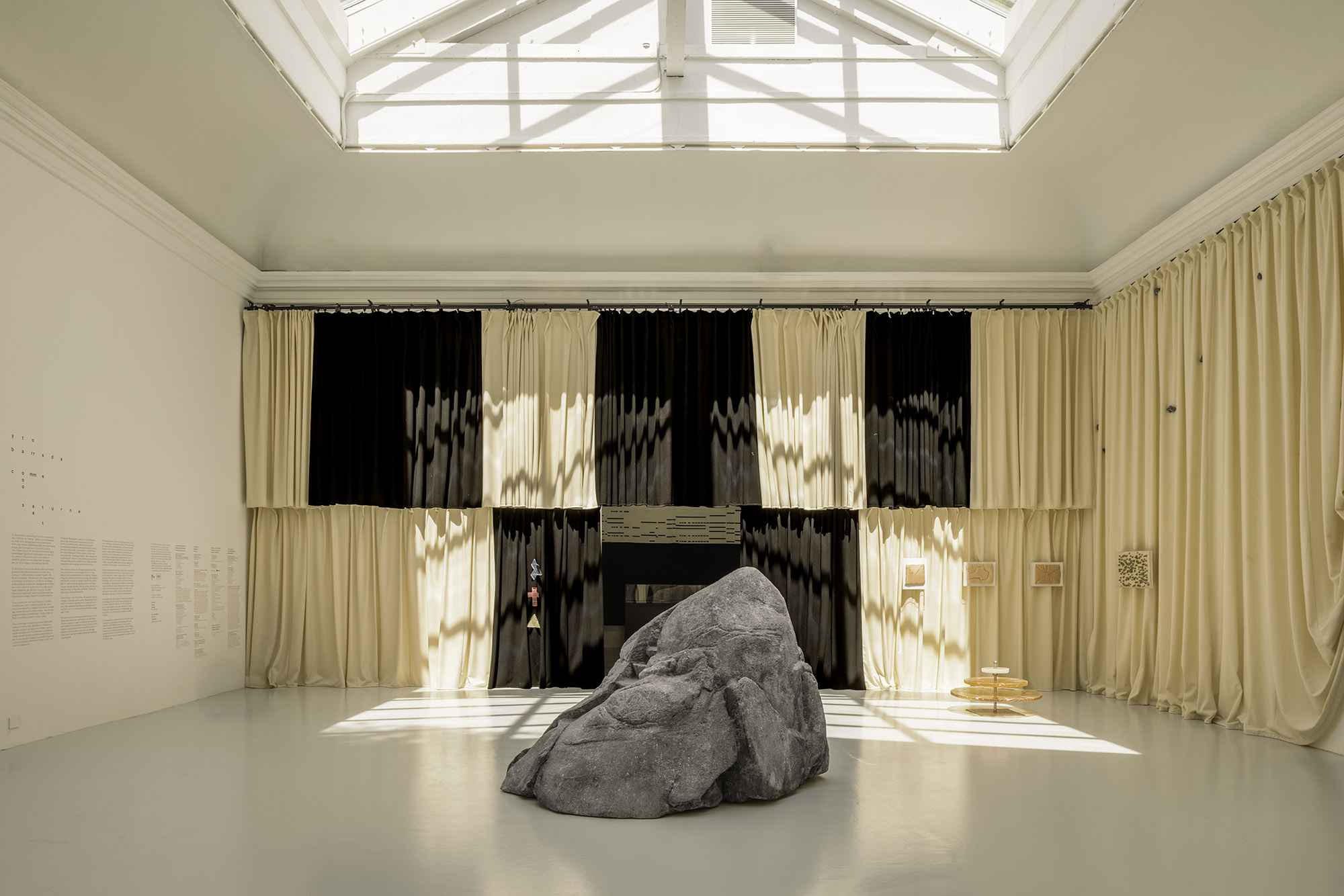
In Venice, Barrada extends an ecofeminist mode of thought from Mothership, an eco-campus founded by the artist on the slopes of the Old Mountain, just minutes from the centre of Tangier — the city of her childhood — overlooking the Strait of Gibraltar. Centered on a reflection on practices of dyeing rooted in indigenous traditions in North Africa, Mothership is structured around the cultivation, production, and transmission of natural dyes, and the politics of colour itself. The site functions as a space for reflection and collective sharing of this knowledge through an experimental and practical engagement with dyeing from local plants cultivated for generations by gardeners of the region: eucalyptus, local pines, walnut trees, acacias, palms, Portuguese laurels, ferns, and Rif oaks, as well as a one-hundred-and-fifty-year-old Moreton Bay fig tree. Lengths of dyed fabric produced as part of Mothership cover the walls of the pavillon, unfolding in multiple configurations, and juxtaposing distinct sequences of space and temporality. Over the course of the exhibition, they will bear the marks of changing lights, which will naturally alter their appearance, gradually undoing them from within. In this, Barrada conceives the presence of the object and the material through the memory embedded within them, in an awareness of their organism as coexisting within a larger constellation of elements influencing their potential mutations and disappearance. Adjacent spheres — some mirrored, others made of fabric — alongside cylindrical surfaces, exist precisely through this consciousness of alterity: that of one space living within another, and then within another still, endlessly. Barrada interrogates the notions of macro and micro, above and below, the individual and the collective, as well as the force of coexistence across shared political and social experiences.
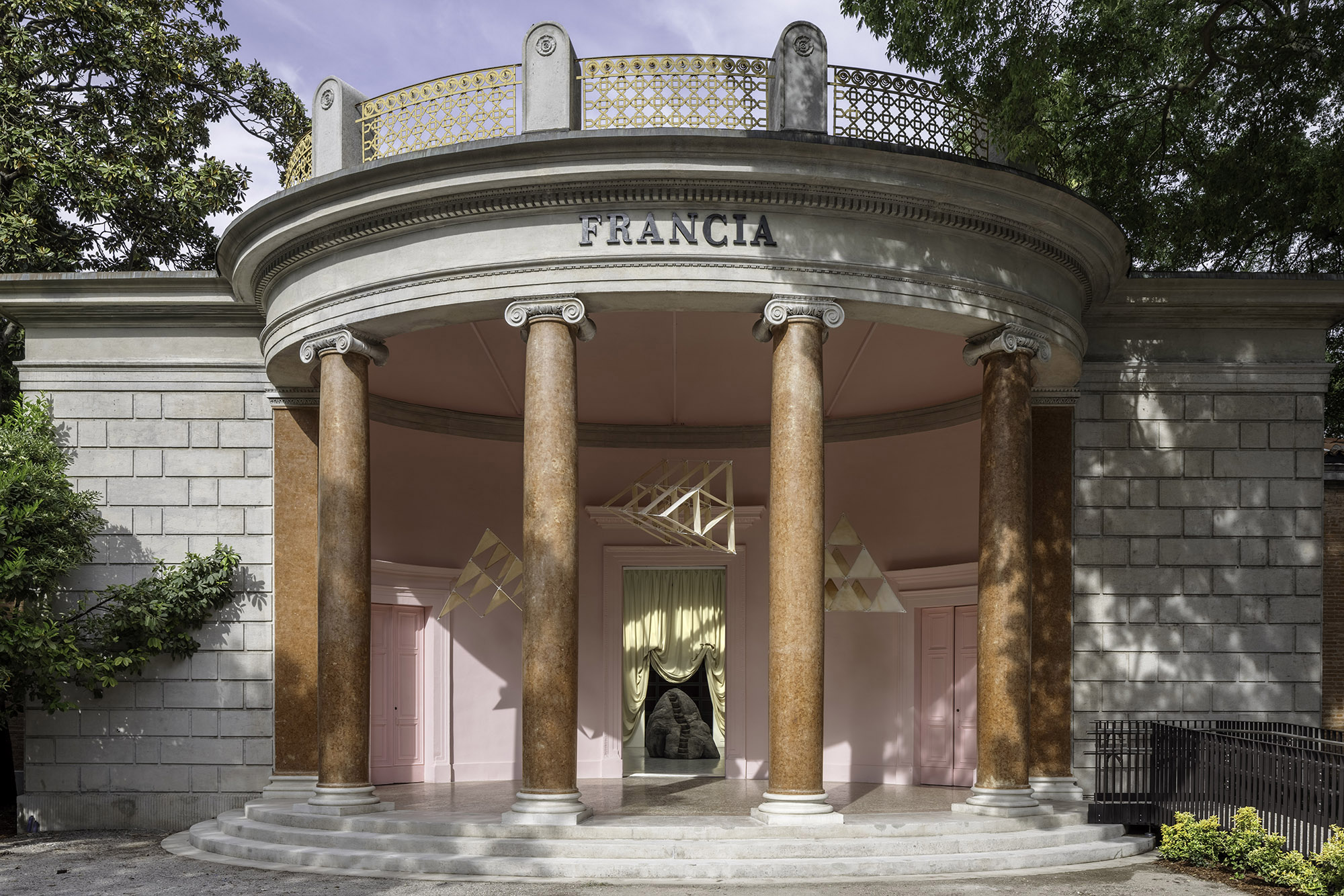
Politics of scale are manifested from the very entrance of the exhibition: a series of triangular sculptures is suspended from the ceiling of the facade’s loggia, each of their peripheries connected to another triangular structure, forming spaces nested within one another in a self-sustaining ecosystem, autonomous precisely because of its multiplicity. Upon entering the space, the visitor encounters a stone into which stair-like steps have been carved. Every element, here, exists in a state of autonomy immediately contradicted by the presence of another, giving rise to an experience of discursive constellations: a series of textiles assembled in triptych-like planes compose distinct conditions for the coexistence of colours, progressing from light to dark, and influencing the perceptions of one and another – yellow, pink, red, violet, blue, black. Colour becomes the site of a reflection on the labour of Indigenous women and the histories that emerge from it; on the gendered dichotomies embedded within colonial history, but also on a paradigm through which the experience of life may be repossessed beyond the colonial system, whose philosophy remains fundamentally patriarchal. Colour constitutes a syntax in the formation of both the self and the collective.
Yto Barrada works while walking, without pen or computer, conceiving of this process as a form of resistance. Reflecting primarily on the architecture of hierarchies – from centres to their margins –, the philosophy of Mothership is grounded in an awareness of the untameable nature of time. To dye is to acknowledge the superior force of nature over the individual who depends upon it: droughts, cycles, and soils differ from one year to the next, while plants and seeds transform and mutate according to the ways in which they are treated; the care they are given. From this dissonance emerges, in the artist’s words, a knowledge of the temporality of plants and of education itself. Colours are extracted directly from the roots of plants, from bark, and at times from leaves. It is from these raw sources that every pigment is subsequently produced, giving rise to painting. Embedded within this process is an oral knowledge and an ancestral language.
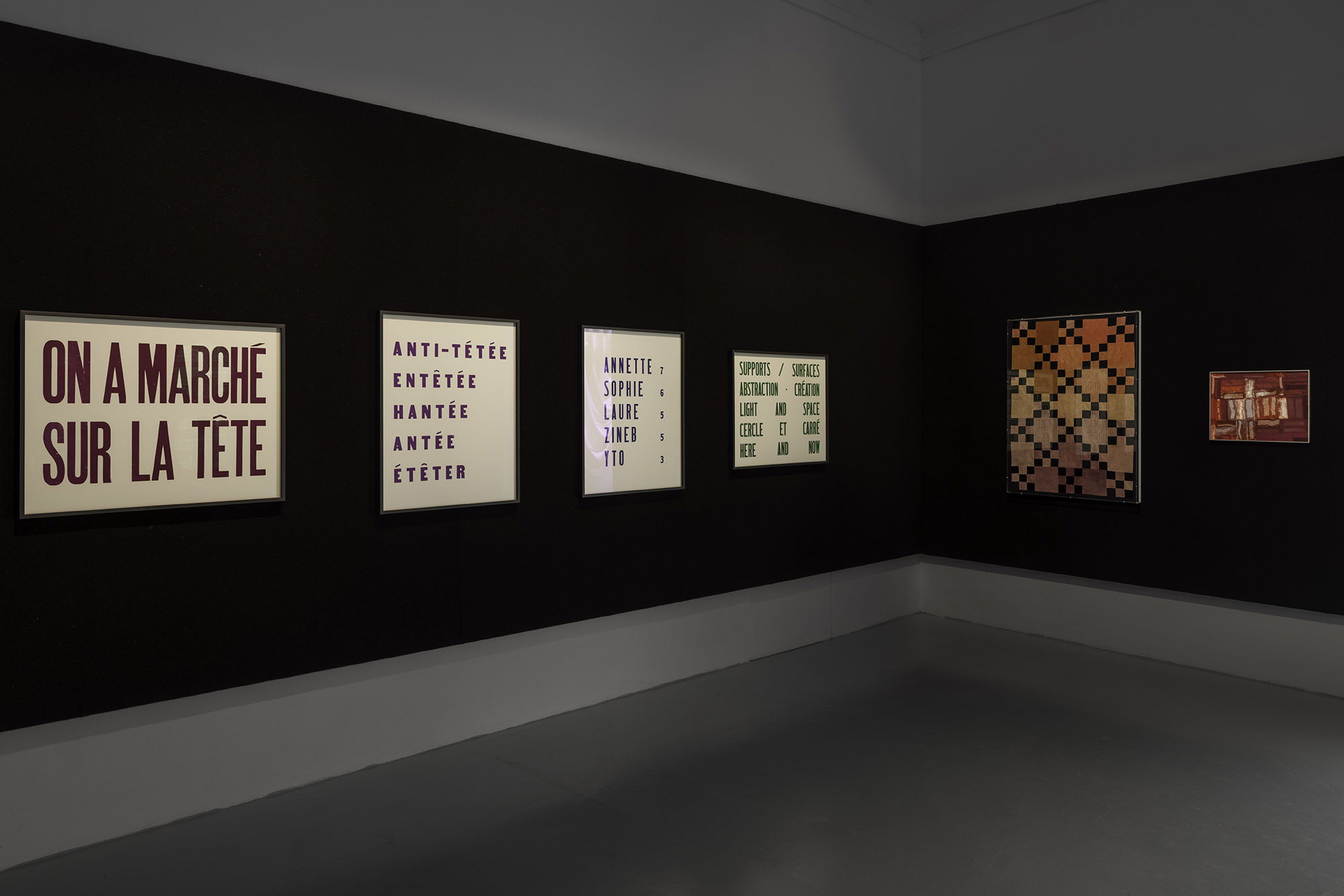
Barrada evokes Comme Saturne through the image of a wasps’ nest, the kind she would discover, upon returning to Tangier after long absences, nestled among her folded clothes: small earthen structures shaped by solitary female wasps to shelter a single egg. From this, she proposes a methodology grounded in the accumulation of ideas, words, and solitary practices directed toward the collective, within a materiality of birth and gestation. The wasps take the form of words in the French language (a language still taught in Morocco, even after the country’s independence, and representative of a certain elite, modern education): souvenir, lettre, chapitre, phénomène, page, mot, and others, arranged on white rectangular sheets of paper placed upon cylindrical surfaces; elsewhere, in another room: On a marché sur la tête (We walked on our heads); anti-tétée (anti-suckling), entêtée (headstrong), hantée (haunted), antée (Antaean), étêter (beheaded), playing upon the sonic repetition of each term and the ambiguities through which one meaning slips into another; and in yet another space: Supports/Surfaces, Abstraction-Création, Light and Space, Cercle et Carré, Here and Now. Through these constellations of language, Barrada constructs a poetics of association in which words function simultaneously as forms, echoes, historical residues, and living organisms.
Comme Saturne – named after Saturn, God of time and agriculture who devours his children, and a planet long associated, during the Renaissance, with artistic inspiration (it was said that artists were born under its influence: of melancholy, withdrawal, and slow thought) – is composed of different elements that accumulate and absorb one another, disobeying the ideology of sameness in order instead to construct a constellation of multiplicities, each informed by its own history and body of knowledge, and carrying a distinct desire for transmission, languages of resistance, and living forms of knowledge. Yto Barrada is an artist who thinks through the force of the wind – to borrow the words of a celebrated text by the Mexican architect Luis Barragán, whose work profoundly informs her own – moving not against natural forces, but alongside them; alongside the underlying logics of each living element in transformation, and of the transmissions they enact toward others. Learning through the hand, through sensation, desire, and fear. These various spaces are themselves against stratifications, defined not against one another but beside one another, and which Barrada seeks to make coexist within a shared memory: that of a constellation of planets, among them Saturn. Barrada understands that it is together that we will heal.
A few days after the opening of the 61st Venice Biennale, Yto Barrada’s French Pavilion joined 25 other pavilions and venues across Venice in temporarily closing their doors in support of Palestinian demands for sovereignty and historical recognition within their territories, and in opposition to the genocide carried out by the Israeli government since 2023, itself sustained by more than seventy years of colonial rule.
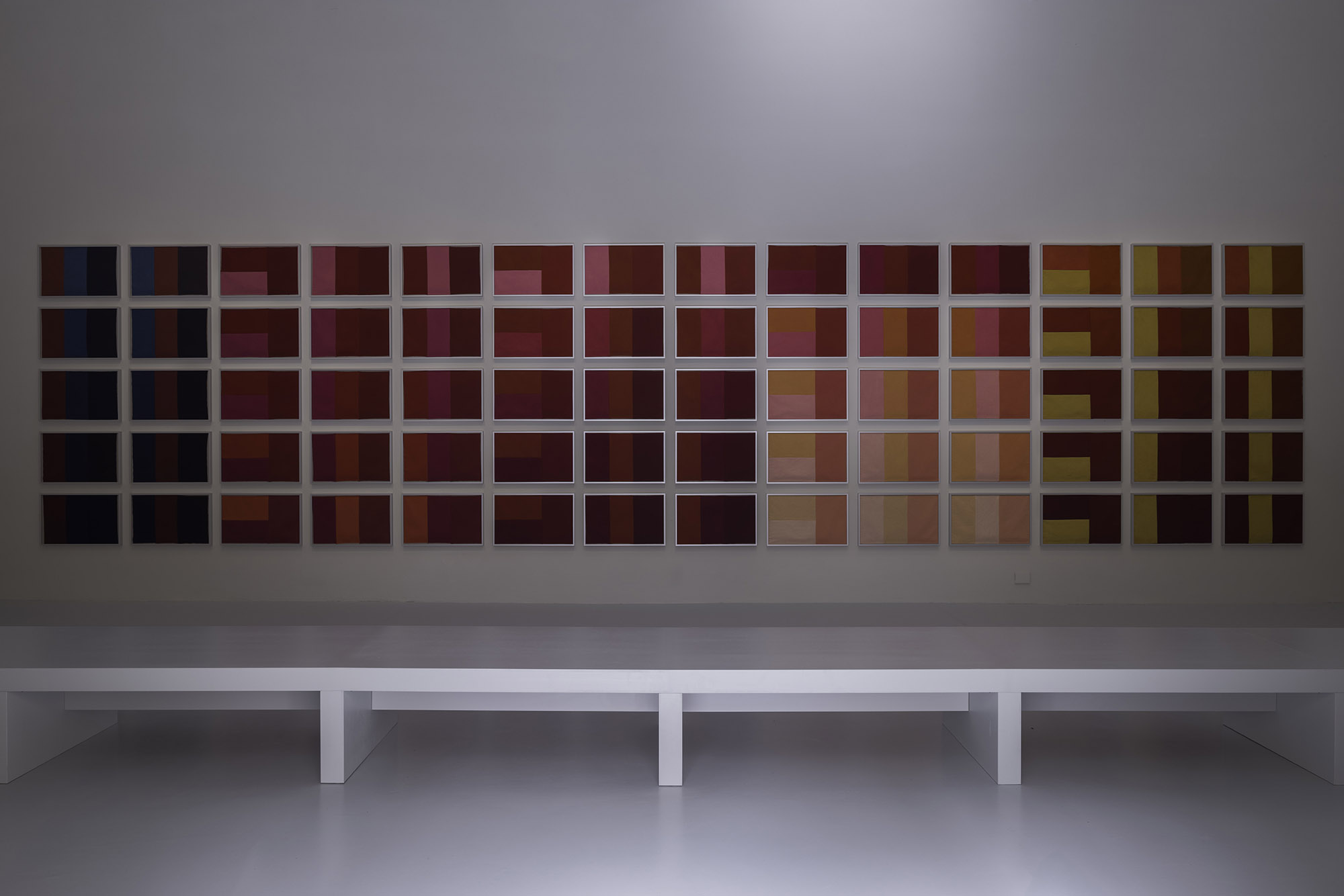
Yto Barrada: Comme Saturne
French Pavillon, 61st International Biennale di Venezia
Curated by Myriam Ben Salah