In Minor Keys
La Biennale di Venezia 2026
Special Venice Biannle 2026
In conversation with Linnéa Ruiz Mutikainen
On the occasion of the opening of the 61st Venice Biennale, In Minor Keys, CURA. meets participating Irish artist Alice Maher. In conversation with writer Linnéa Ruiz Mutikainen, Maher delves into her creative process, un-picked narratives and the continued scrutiny of nature and mythology.
I’d like to ask about the nature and landscapes in your work. While we are used to seeing both depicted as flourishing and idyllic through art, you portray them through a lens of colonisation or control. How did you arrive at these perspectives?
Landscape isn’t something on the outside, I carry it with me. I was a rural child so the landscape was a place of labour and of struggle while at the same time story and folktale were living parts of our daily experience. So you might say I have a non-romantic relationship to landscape, but a deeply connected one. The generational trauma of intermittent conflict in order to obtain and retain land over the centuries is also a part of my collective history.
In another interview, you mentioned that you started working with materials drawn from the earth, like insects, following a realisation that you were attracted to the marginalised and detested. Why the “earthy” and what did these forms allow you to explore?
Well, I guess rural Ireland itself was a marginalised community where the lives and narratives of country people were considered unimportant. I wanted to challenge that, as well as tearing open our post-colonial shame at the loss of land and language. Add to that the patriarchal structures of the Catholic church and you have a veritable cauldron that needed boiling and overturning. The use of organic materials taken directly from the hedges and ditches, like nettles and thorns or bees and berries, harkens to folk practices but also emphasises the temporal, the overlooked and the despised, and seeks to bring these into alignment with high art practice.
There’s an almost excavating essence to your work. It’s a bit pseudo-archaeological in its method of observing and analysing findings, be it images or myths, to enable new narratives and reference points. Like giving them a new body without reenactment. How would you describe the process?
I would describe it as entering the imaginative space of myth and story in order to un-pick the narratives. Especially ones in which the central theme is a lesson in moral or social control. Myths may be formative, but they don’t need to be determinative, they can be reprised and reconstructed in their essence, played with and retold. I am attracted to “troubled” figures of the archaic world, like Cassandra who was granted the gift of prophecy by Apollo but then got cursed by the same god to never be believed. For me, figures like Cassandra reflect vital and contemporary debates concerning how the identity and agency of female bodies – the female voice in particular – are regulated and controlled by society.
Speaking of mythology. It’s often framed as old or irrelevant, but there’s an enduring aspect to it: peel the layers and there’s something there, like an active language. What does it mean to you to keep the narratives open and in circulation?
All stories change in the telling. Each time they are spoken, a new voice, a subtle change, attaches to the original, making it an ever evolving, metamorphing narrative. This is why vernacular tales are so rich and full of potential: they are forever in a state of becoming. Our own Irish language was banned and almost wiped out yet we speak English through that ancient lens, re-branching it into a hybrid form that is wide open to the imagination of its ancient roots. And this is where I like to work, unmaking and remaking, where boundaries are fluid, joining past and future in an raggy hybrid garment that always has room for the other and the unseen.
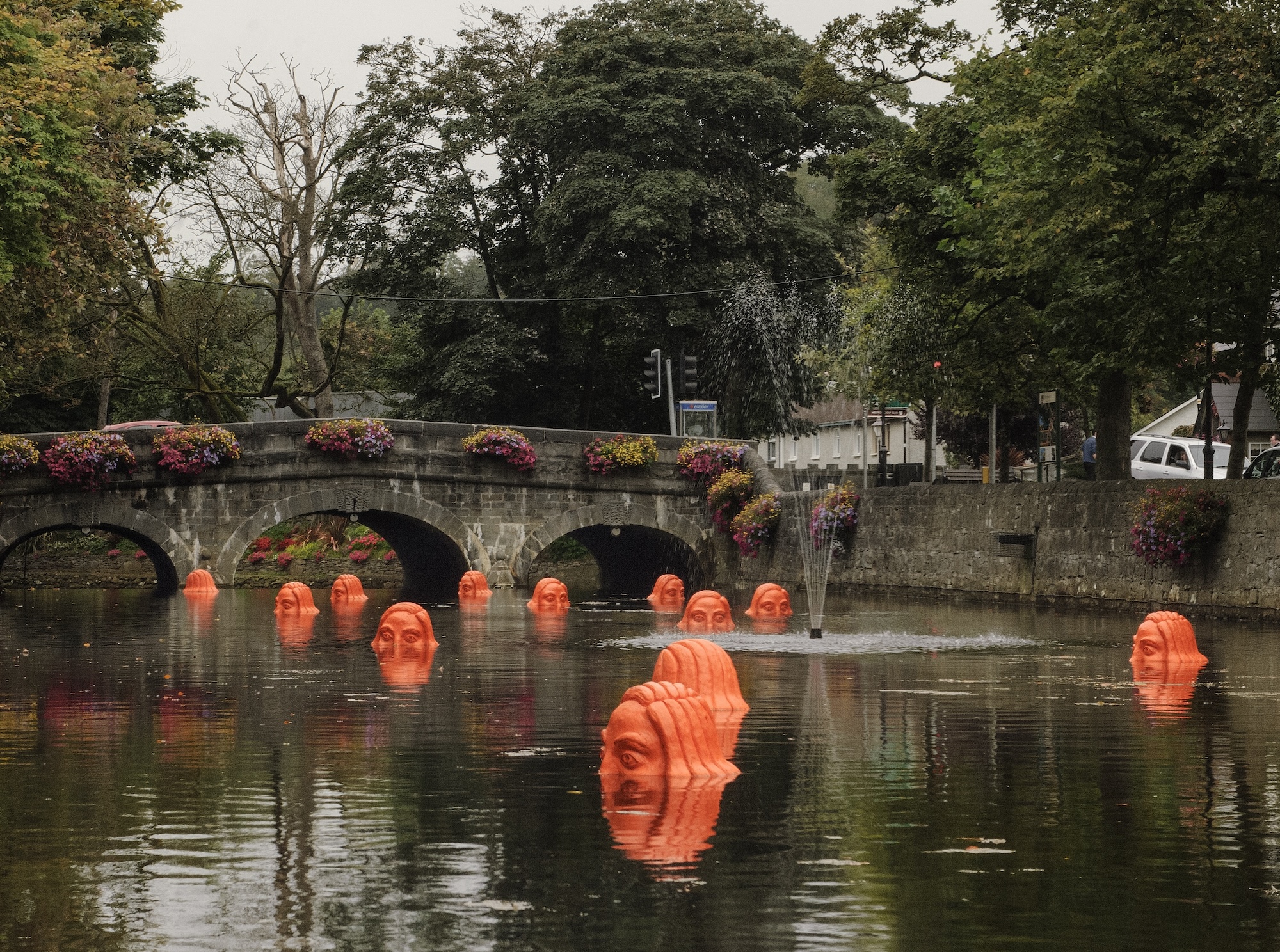
Les Filles d’Ouranos
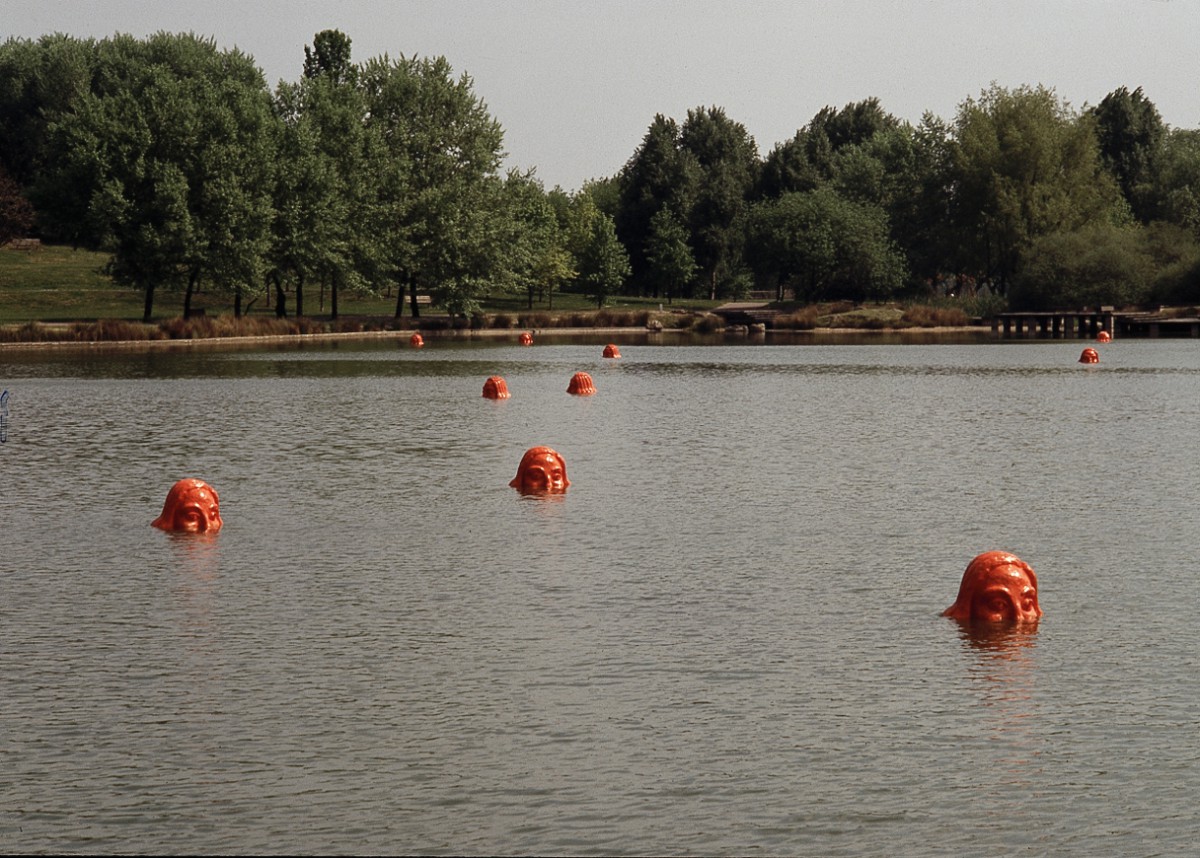
Les Filles d’Ouranos
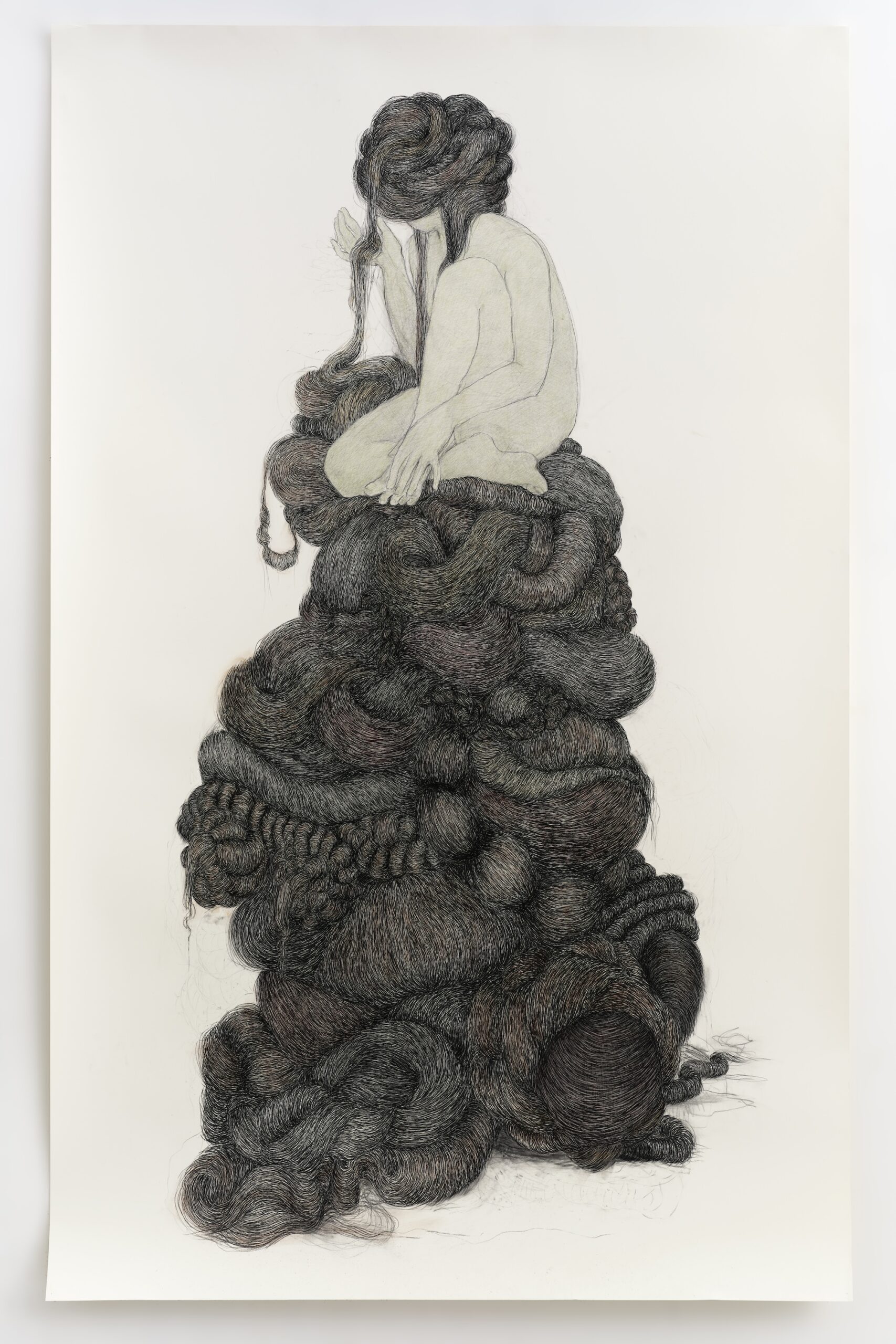
Sybil
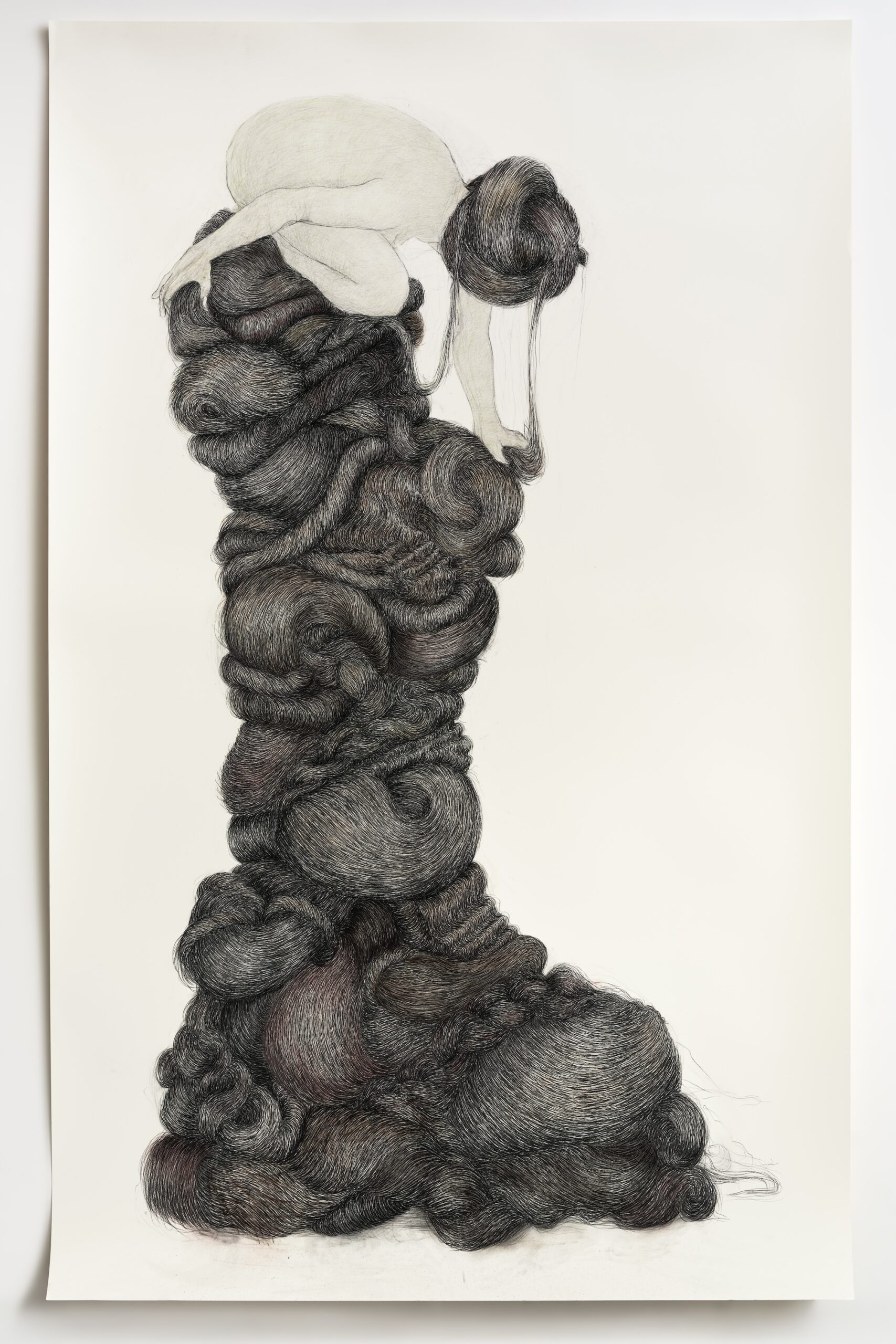
Sybil
I wonder about your drawings. You’ve said that you need to find the image within you when drawing. How does that work in practice?
I use my own body as reference when it comes to figuration of any kind. I don’t mean to look at myself in the mirror or take pictures. What I mean is I get into that position myself to understand what it feels like, where the weight is: the lightness, the difficulty or strangeness. I might stay in that position for a long time before I begin to draw what it feels like to be that body from the inside out. I might not get the proportions or the perspective right but I get the feeling right. That’s why I love medieval art over Renaissance painting – no measuring, just belief!
I’d like to return to the religious dimension, like the incorporation of figures like the Virgin Mary or Mary Magdalene. The latter, at the centre of your collaborative textile sculpture The Map, which reimagined her life and legacy. What draws you to these presences and what prompted that project?
Mary Magdalene is a contested and often despised biblical figure, with a story filtered through a legacy of shame and misogyny down through the centuries. This collaborative project, made with artist Rachel Fallon, was first commissioned as part of a series of exhibitions around the theme of The Magdalene for Rua Red in Dublin. Early on in our collaboration, Rachel and I decided that we would use cartography as a kind of conceptual structure around which to build our Mappa Mundi. It’s a monumental textile sewn by hand over a three year period that uses humour and wit to counter history’s legacy. The features and topography of our map denote the different stories, iconography, and systems associated with the legacy of the Magdalene for us, and especially the psychic wound left by the incarceration of what were called fallen women in the institutions in our own state. The Map bears witness to that wound, but also to the power of resistance and the ability to transform.
Hair has been frequent in your work for a long time. Recent example, the series of drawings titled The Sibyls, where a number of female figures are stuck in long, endless amounts of hair. What first drew you to it? You’ve also incorporated actual human hair into your works, correct?
I have used human hair in the past, braiding ropes of hair from both ends of the island to make a tower called Keep in 1992. Hair is a language: culturally coded as the site of human desire and fear, it marks the boundary of the body and connects it to the world around it. Hair is deeply connected to identity, especially that of the feminine and that is why hair appears in so many tales and myths as an agent of excess and emotion. It connects the personal and the political in a physical way. The Sibyls were the oracles of ancient times to whom people went to for direction in times of upheaval and chaos. That is why they appear in my new drawings, struggling and straining to impart their message through their coils of living hair. Personally, I see these Sibyls not simply as foretellers of the doom and mourning in which we live today, but as figures who embody physical strength, beauty, and a kind of stubborn opposition to the overpowering nature of destiny and the weight of history.
You’re participating in the 61st International Art Exhibition at La Biennale di Venezia. What can we expect to see there?
You will see The Map installed in the Arsenale. Approached first from the obverse, it’s a monumental sculpture textile work rather than a wall hanging. The back lit through like a scan or x-ray shows the islands and features almost like internal organs. As you navigate around to the front, the many coloured constellations and islands come into view, all challenging the archaic misogyny through which Mary Magdalene is historically presented through their wit and beauty. Outside in the waters of the Gaggiandre, there’s Les Filles d’Ouranos, with their round orange heads peeping from the green surface of the sea and moving slightly in the breeze to watch you as you pass. The birth of Venus from water as the mythical epitome of beauty incarnate is here subverted as she morphs into a squadron of female protagonists, at home in their liquid element, yet ready to rise when the situation requires it. The Giardini Pavilion houses The Sibyls, four large drawings show naked female figures, entangled in or twisting free from mounds and coils of their own hair. At their feet sit four dark mirrors with a number of chrome plated bronze “gobs” placed on them. The overall message is one of struggle to impart knowledge, of language misunderstood and expression thwarted and a future reflected in darkness.
Alice Maher
61st International Art Exhibition
La Biennale di Venezia
In Minor Keys
Curated by Koyo Kouoh
May 09 – November 22, 2026
All images:
Courtesy the artist, David Nolan Gallery, Kevin Kavanagh Gallery and Purdy Hicks Gallery