Text by Whitney Mallett
CURA. 44
The Generational Issue

Portrait by Devlin Caro
The enclosure and the cavity are two forms Isaiah Davis calls into being with his sculptural practice—the container and the absence, both welded out of steel. The enclosures are industrial, adopting the language of machines. Some of the structures more explicitly resemble cages (about dog-sized), an unmistakable emblem of the dispossession of freedom. Others evoke tactical defensive architecture, fortification that speaks to resilience and protection. Yet whether evoking captivity or defense, all gesture toward the regulatory functions of containment. The cavities, in turn, have a more organic resonance, both in how they resemble body parts, but also in their elegiac frenetic urgency that betrays the inimitable mark of the hand. They are very much human rather than machine, voids resisting capture, soft parts made hard, lingering somewhere between abstraction and representation. Both these series and Davis’s larger practice, which spans sculpture as well as video, call to mind Fred Moten’s theoretical concept of fugitivity. “We owe each other the indeterminate,” Moten and Stefano Harney write in The Undercommons: Fugitive Planning & Black Study. “We can’t be represented.”
The leather jacket plays a central role in Davis’s 13-minute film Marlow Fazon Featuring Yesterday (2025), which premiered at the Museum of Modern Art’s Doc Fortnight Festival in March. Five of the six men who appear on screen are all styled in black biker jackets, and not just any jackets, what you could confidently describe as the Platonic ideal of the leather jacket. Each is boxy and cropped at the waist, featuring structured epaulets, a wide-notched collar, and a diagonal closure with a heavy-duty zipper. Davis wore a similar one when he presented the film, but with a mutton collar. It’s the style of jacket James Dean made infamous in the 1950s, forever linked since to a performance of toughness and archetypes like the outlaw and rebel. However, by framing one of the film’s performers to prominently feature an NYPD patch on his jacket’s upper sleeve (the jacket was part of the transit officer’s uniform until the mid-1980s, its heavy horsehide engineered to withstand knife attacks), Davis quietly complicates any reading of the jacket as a closed signifier. The police insignia, though small, gestures towards how the leather jacket has been a uniform of both the outlaw and his antithesis, the lawman. This apparent contradiction fades when you remember that the NYPD is itself another gang—this revelation, however, more of an aside than the point. This is an artwork which is above all else about signification. That it’s a Black man recounting being embroiled in Bronx gang violence who’s wearing the NYPD insignia, one comes to the conclusion that these styling cues are intentionally hard to read. Symbols and words are containers. Davis is evading containment as he makes undeniable the vulnerabilities of premature death in Blackness. The violence of containerization is understood to anyone descended from people who were shipped as cargo across the Atlantic Ocean.
The version of the film which premiered this year at the MoMA is a theatrical reworking of two installations from Davis’s 2021 exhibition at Participant Inc, New York, I HAVE NO MOUTH AND I MUST SCREAM. The first half—adapted from White American Flag, which was originally projected onto a white leather American flag sculpture—consists of footage from two interviews the artist conducted with two of his cousins. The new title, Marlow Fazon Featuring Yesterday, refers to an online alter ego, “Marlow Fazon,” one cousin created during adolescence. It’s an identity that was borrowed and shared over the years, between the cousin, Davis, and his best friend, the late Tyree Green, whose premature death left an indelible mark on Davis’s work. The artist explains the moniker is “like The Sisterhood of the Traveling Pants but for three Black men.” The central focus of the interview in Marlow Fazon is a violent encounter. There’s a deliberate effort to frame the subjects in a way that obscures their identities, focusing instead on the leather jackets they’ve been styled in. As one man recounts being the victim of a near fatal stabbing—an experience that fueled his anger and sense of invincibility during a second encounter—there’s a reveal of a scar on the top of his head. The closest thing to resolution comes when the subject recognizes that he was directing his feelings from being attacked onto someone who didn’t necessarily deserve it.
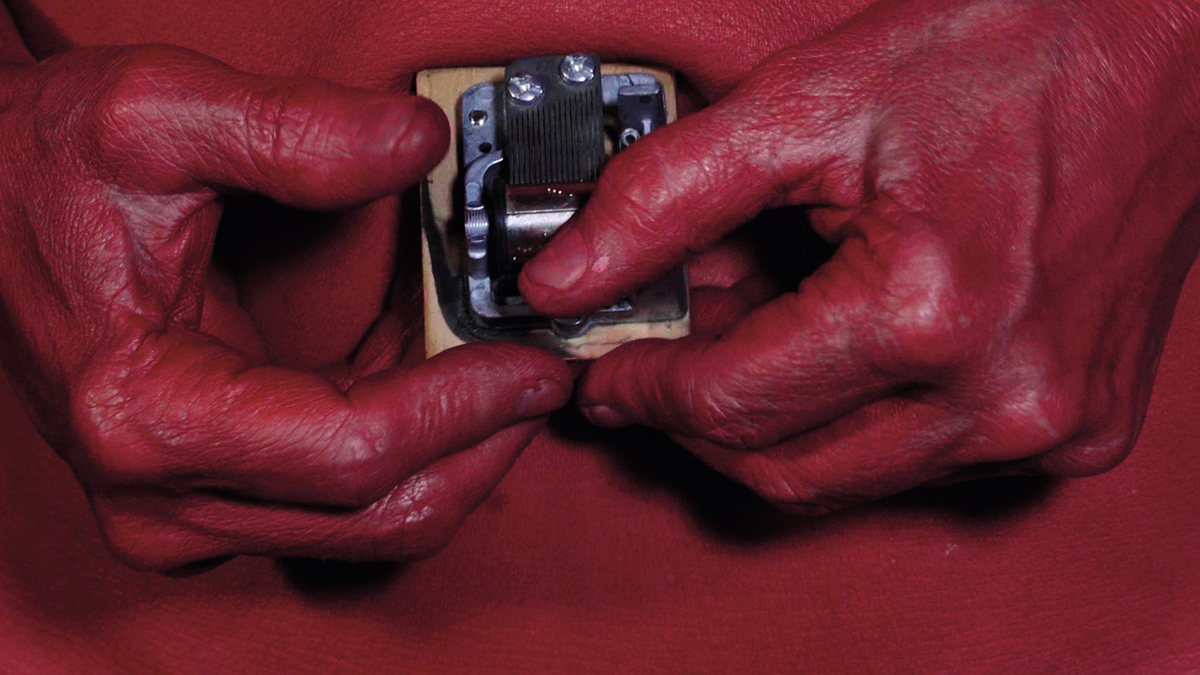
Hungry For Trash, 2023 (video stills)
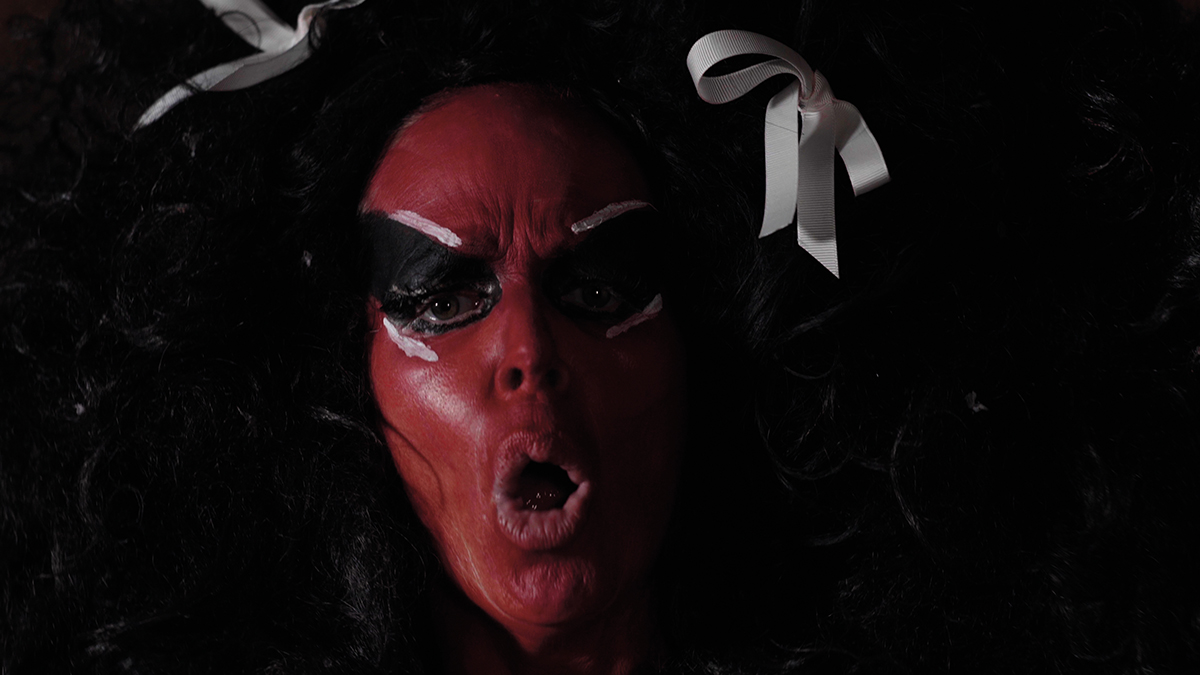
Hungry For Trash, 2023 (video stills)
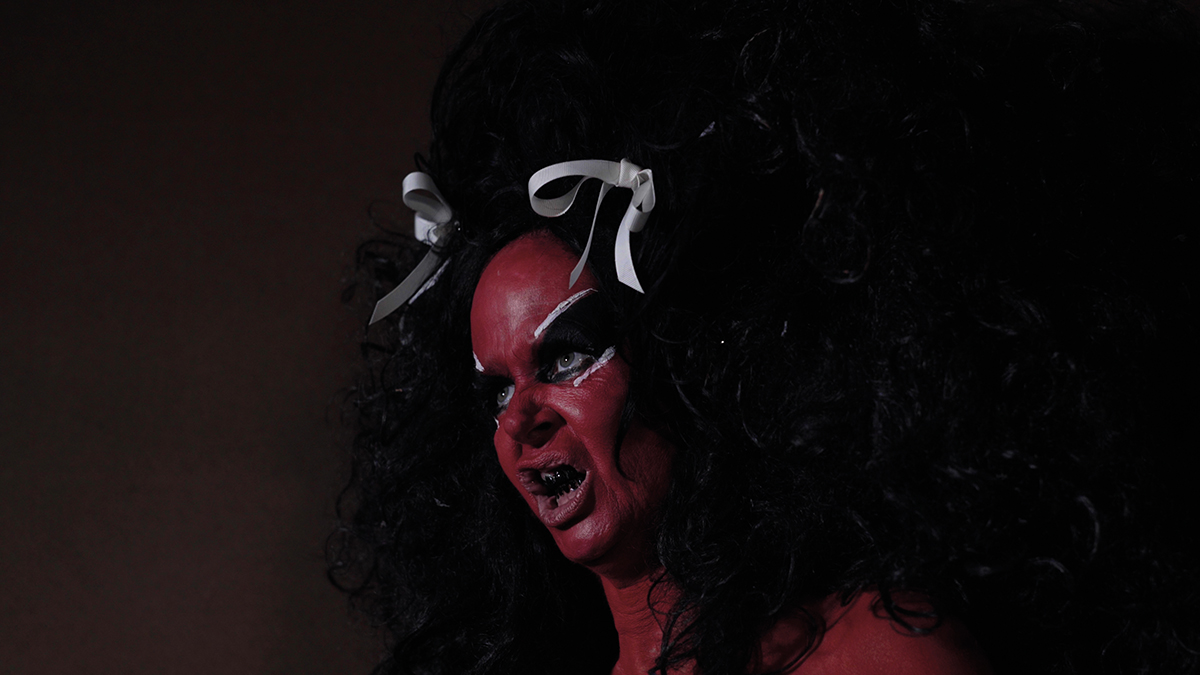
Hungry For Trash, 2023 (video stills)
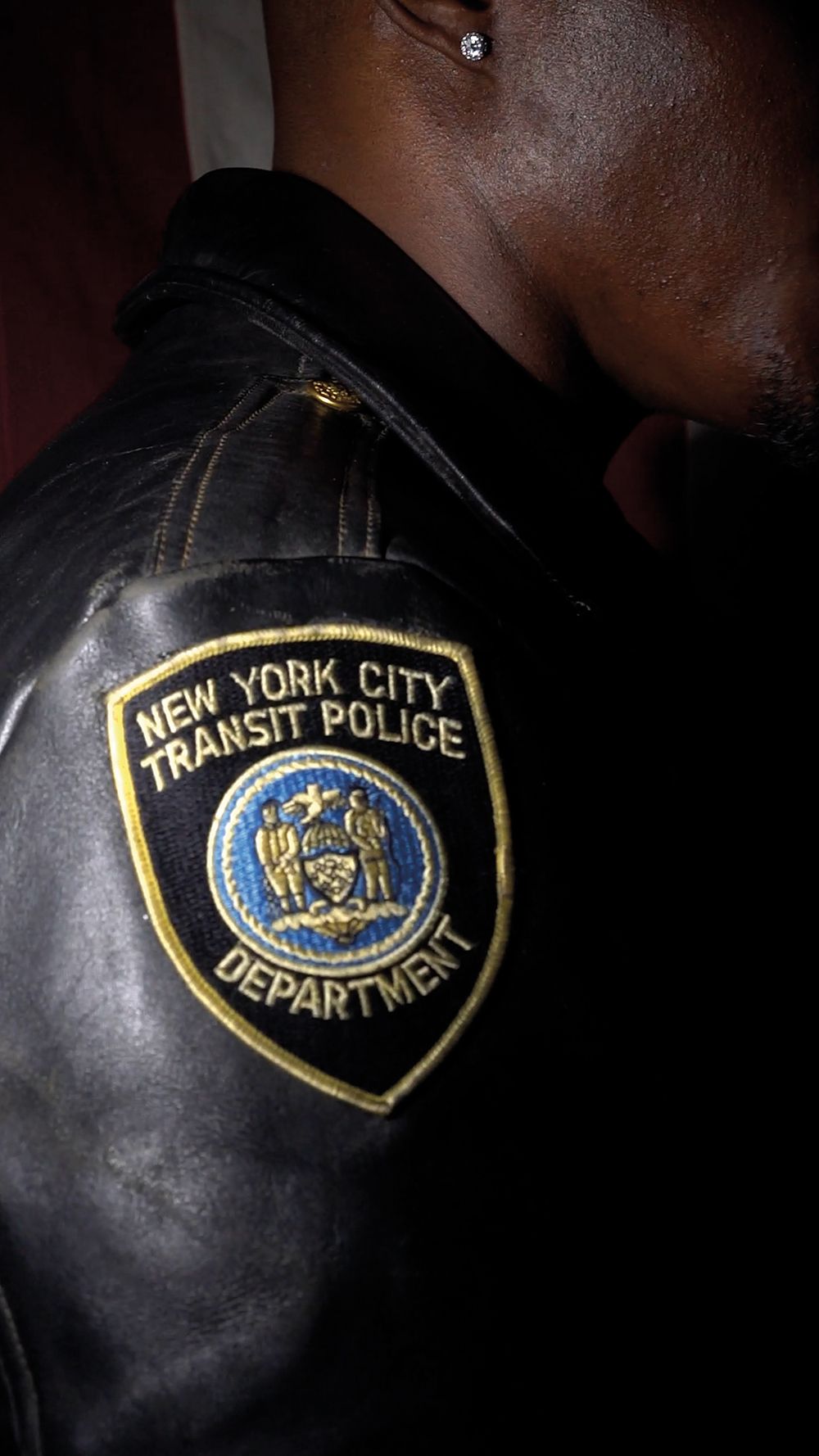
Marlow Fazon, 2021 (video still)
The second half of the film—adapted from Yesterday by Boyz II Men, Performed by C.L.I.T.—offers an emotionally affected catharsis distanced by its own spectacle. The scene features a lip sync by a band of multiracial leather-clad men performing in front of an American flag, a vocal pantomime of the 1990s R&B group Boyz II Men’s cover of the Beatles song Yesterday. The song carries a deep sense of loss, regret, and yearning. The emotional content of the scene is undeniable, but it’s also deflected by the artifice and theatricality of the lip sync’s mimetic structure. The heavy content of the interview which precedes this musical section prepared us to anticipate catharsis, but this release is also circumvented by the arrangement of surface, context, and meaning. The scattershot references embedded include the postmodern homoerotics of Kenneth Anger’s Scorpio Rising, but which Davis has updated for the neoliberal idpol era. The film premiered at MoMA just six weeks after a scandal shook the aspirational folx who’d believed in a DEI-aligned Tom of Finland Foundation. While Davis’s film had of course been produced prior to these events, the news added an extra layer of context for those familiar with the situation. In this light, it became even clearer how, with his boy band, Davis transforms the racial politics of power into camp.
While through the film’s styling, Davis engages performances of masculinity—for example, both the greaser and the cop aspire to project dominance and strength—there’s something more elusive going on in how he exposes the tensions of these false binaries and dichotomies. His approach unsettles, introducing a sense of instability to the symbolic order. The artist himself is one of six bodies on screen, the only one, however, not dressed in a biker jacket, yet still clad in black leather. His vest and muir cap unmistakably reference fetish wear, a visual cue that complicates the narrative of toughness by drawing from an aesthetic that both amplifies and subverts traditional power dynamics. The costuming asks, what is leather, who wears it, and why? And what does it mean as a visual signifier when there are many different answers to these questions? There is a uniform of nonconformity; in fact, there are many uniforms of nonconformity. The film, however, isn’t interested in condemning the gentrification of identity consumption. It offers instead disordered semiotics that function like an open text you can get inside. Davis is interested in leather as a symbol but also in symbols as containers and meanings that can be re-routed. At the heart of his practice is a refusal to be determined and defined, and also an interest in legacies and lineages of refusal, where the pressure points of control and dispossession are met with insurgent imagination.
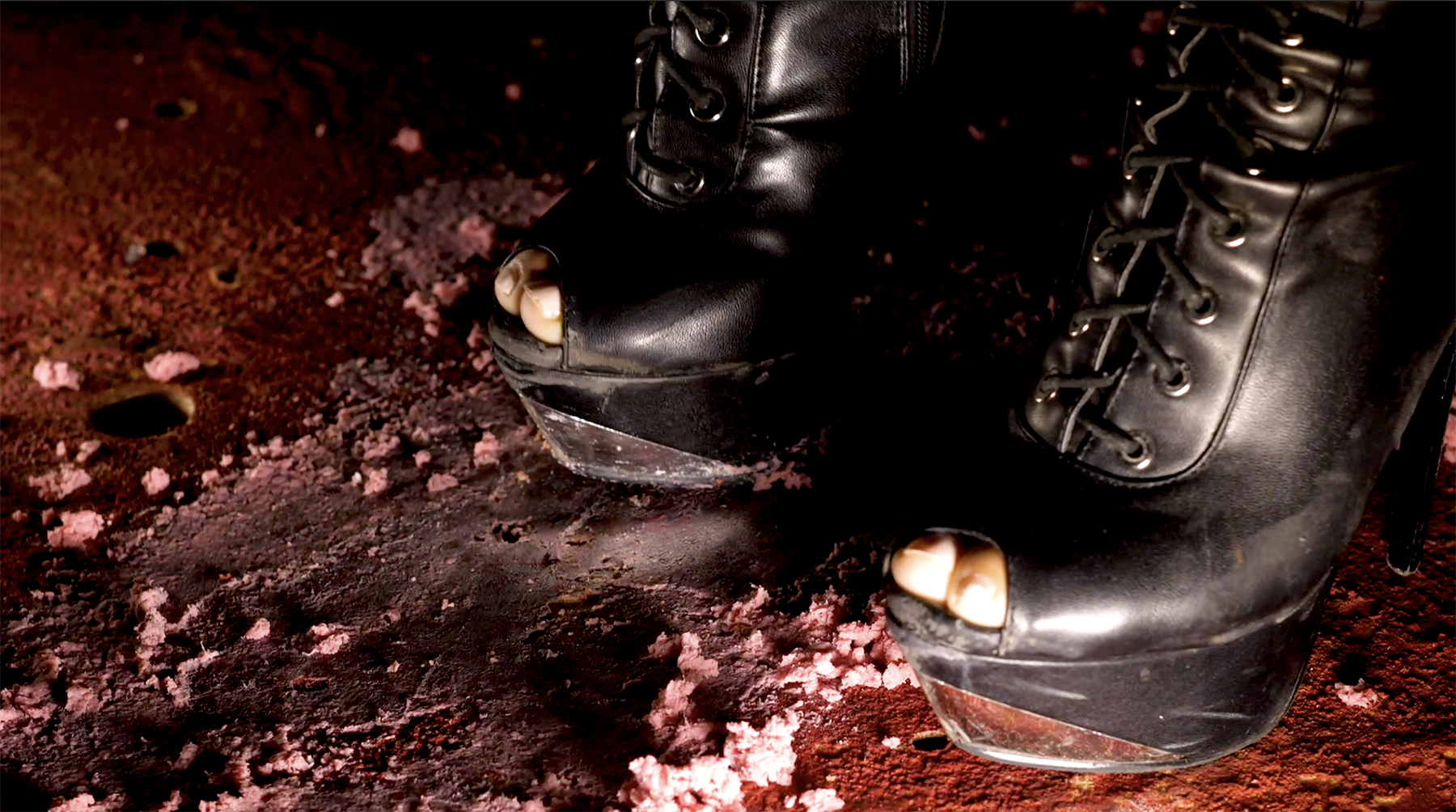
Sex Machine, 2021
ISAIAH DAVIS (b. 1992, Bronx, NY, USA) is a sculptor and video artist. He has exhibited at Kings Leap, Participant Inc., and MoMA’s Doc Fortnight festival. He is a 2023 Rema Hort Mann Foundation Emerging Artist Grant recipient.
WHITNEY MALLETT is the founding editor of The Whitney Review of New Writing, a biannual print journal of literary criticism, and the co-editor of the book Barbie Dreamhouse: An Architectural Survey. She has presented work at MoMA PS1, the Baltimore Museum of Art, and Performance Space New York.