Aeolian Suite
Pavilion of Finland at the 61st International Art Exhibition
La Biennale di Venezia 2026
Curated by Stefanie Hessler
Special Venice Bieannale 2026
Review by Caterina Avataneo
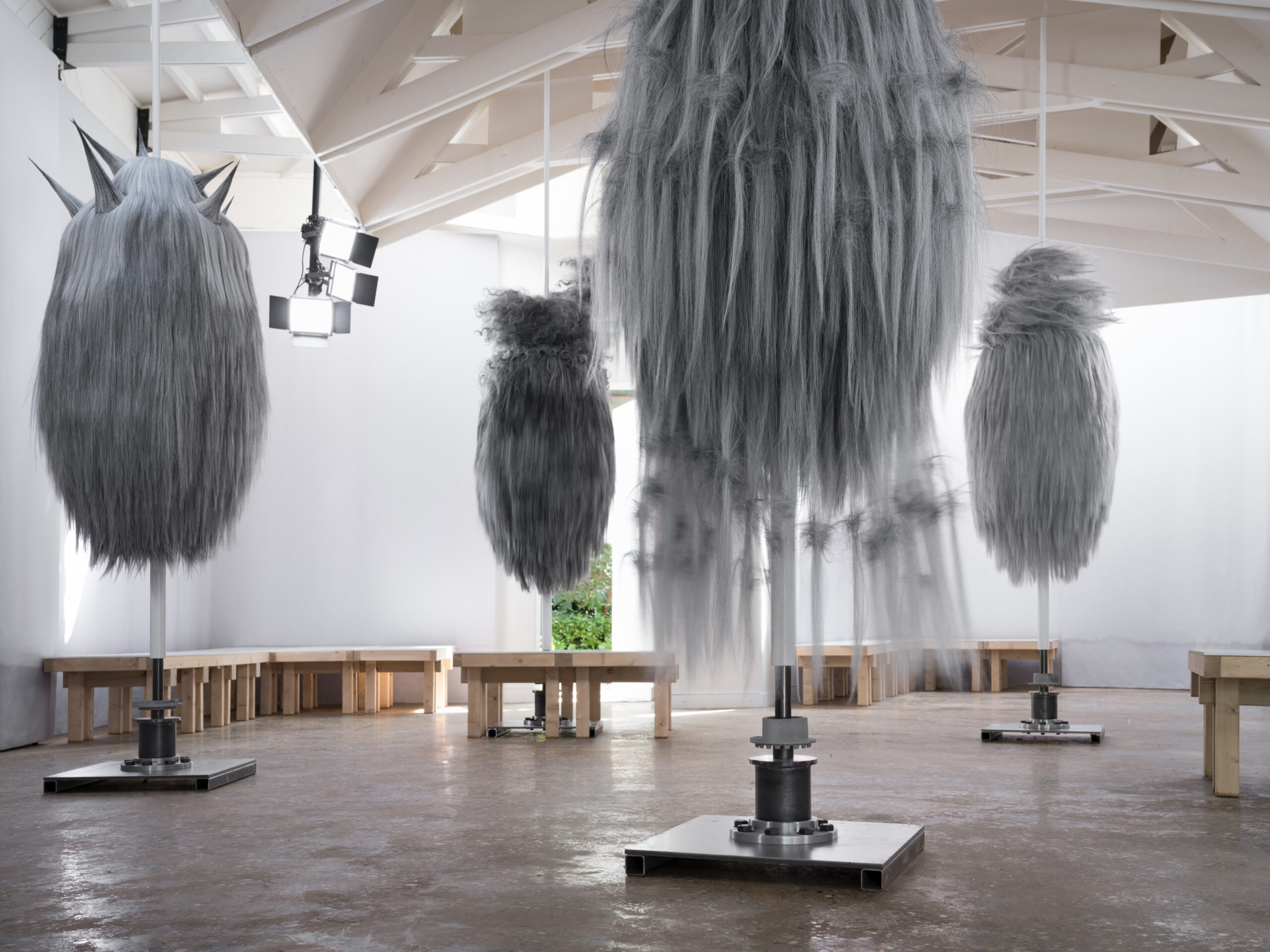
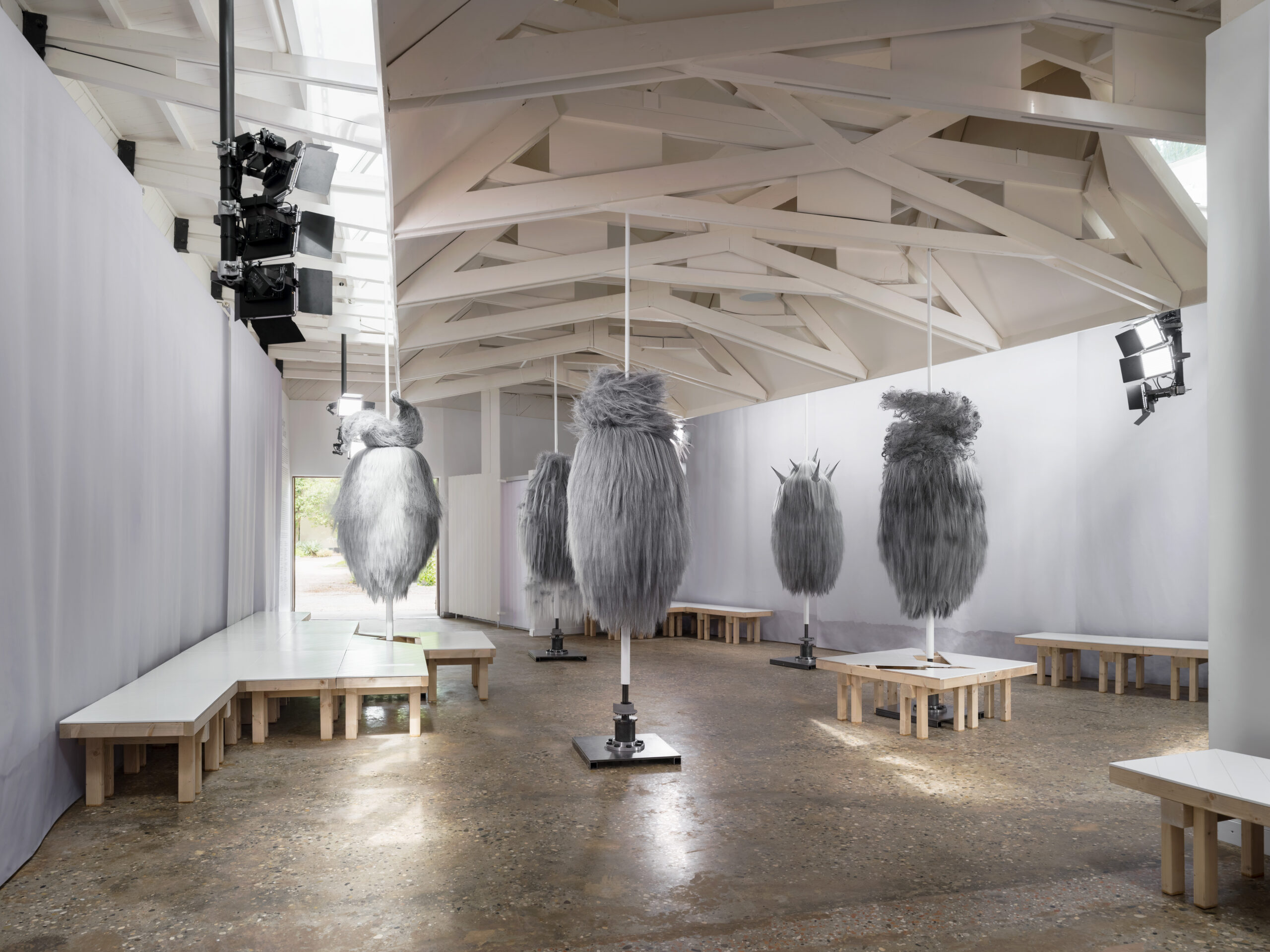
Wind has character at the 61st International Art Exhibition – La Biennale di Venezia. Jenna Sutela has transformed the Pavilion of Finland into a stage where five Venetian winds — Tramontana, Scirocco, Garbin and two Boras — emerge as temperamental types, each with a distinct style. Arranged in a circular formation that recalls medieval wind rose diagrams, five oversized sculptures inspired by microphone muffs reveal their personality through silver wigs and spasmodic movements, but most of all through a delicate sound composition that gives them voice. Forget Vivaldi and Debussy: in Sutela’s installation the weather is no longer pastoral subject matter. As the artist tunes into what is usually regarded in sound recordings as atmospheric interference to minimise, wind becomes both co-author and performer.
Such permeability has long been central to Sutela’s practice. Across sound, performances and living installations, the artist has repeatedly involved the nonhuman as collaborator. Earlier projects involved bacteria, slime molds and neural networks, often blurring distinctions between biological, machinic and linguistic systems. In her recurring performanceMany-Headed Reading, for example, Sutela ingests Physarum polycephalum spores before reciting a speech, allowing the organism to speak though her own body. As Elvia Wilk suggests in her beautifully written text accompayinging the vinyl record of Aeolian Suite, one could understand this installation as a séance where atmospheric disturbance becomes both voice and score. To allow space, embodiment and listening to an agent that moves across borders with little regard for identity, or territorial logic feels like a gesture particularly on point in the context of the Biennale’s national pavilion organisation.
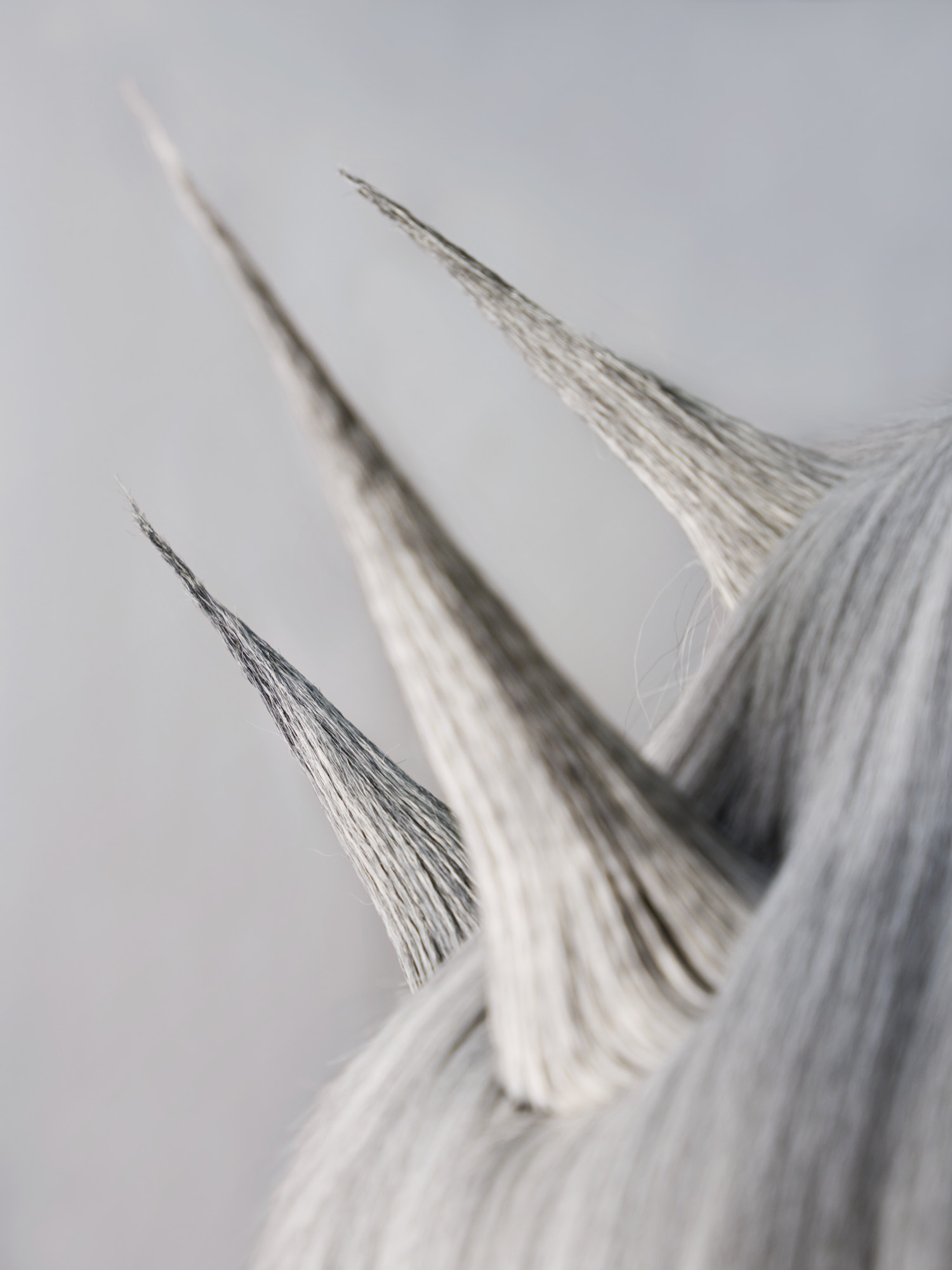
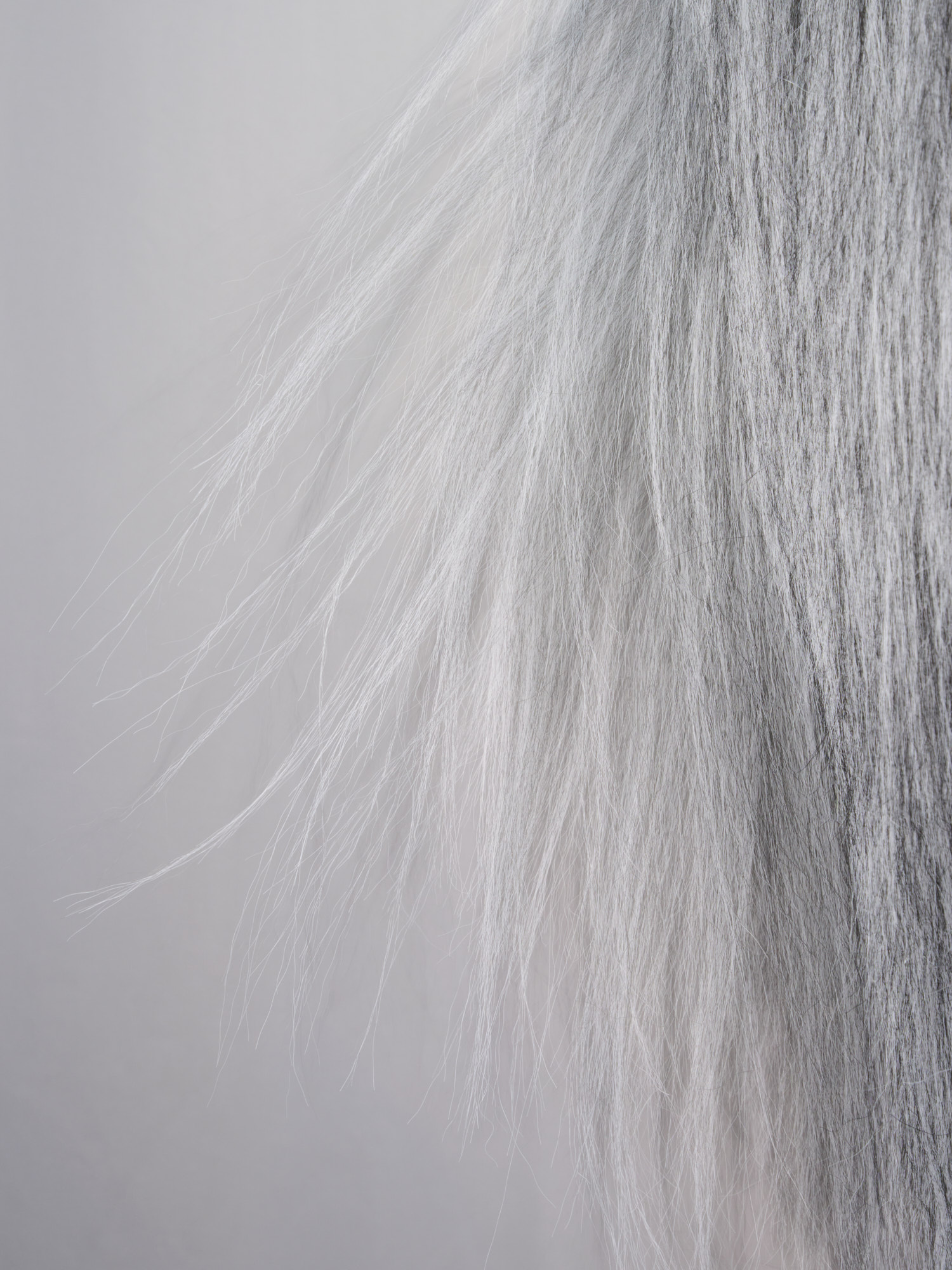
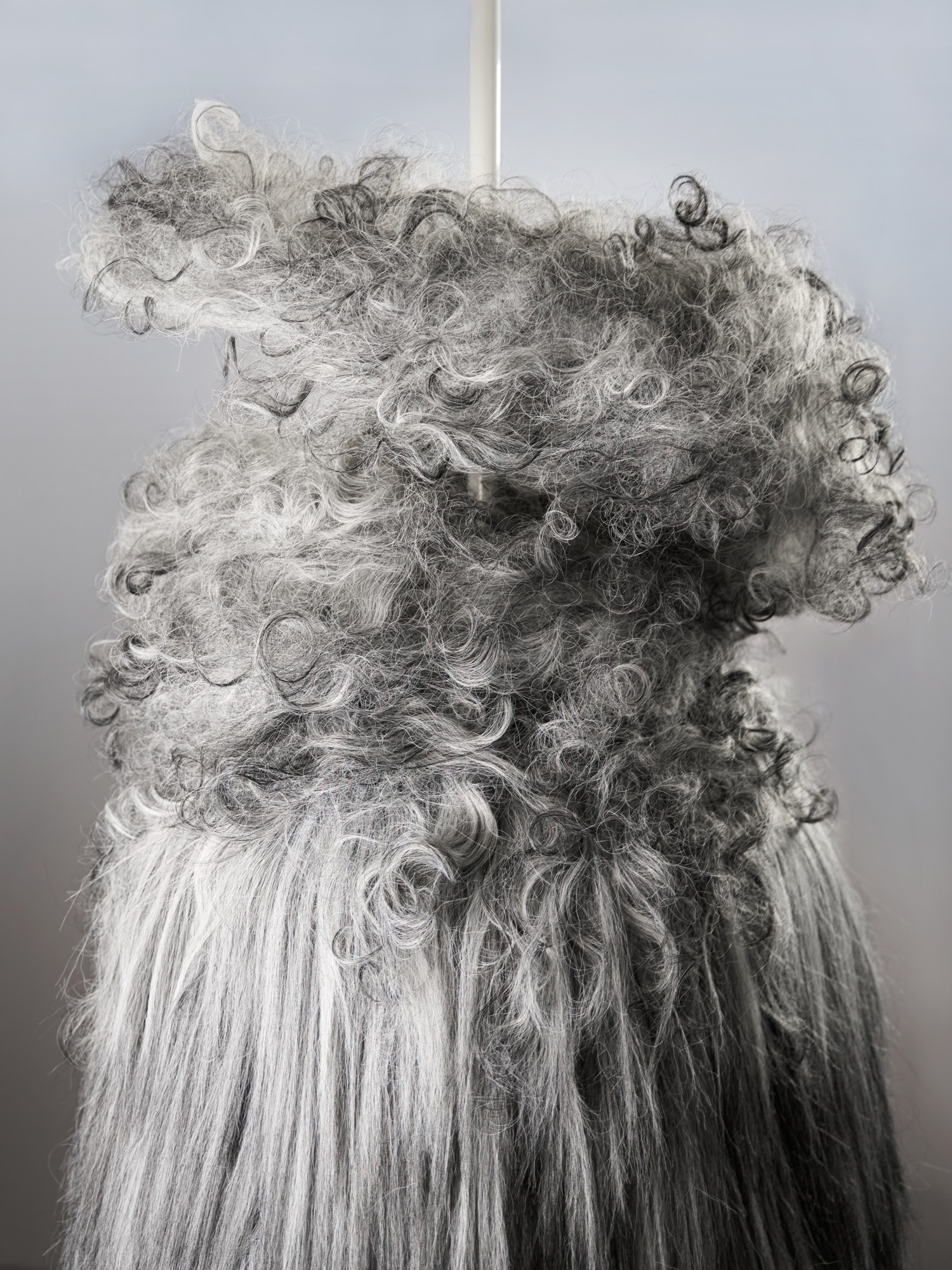
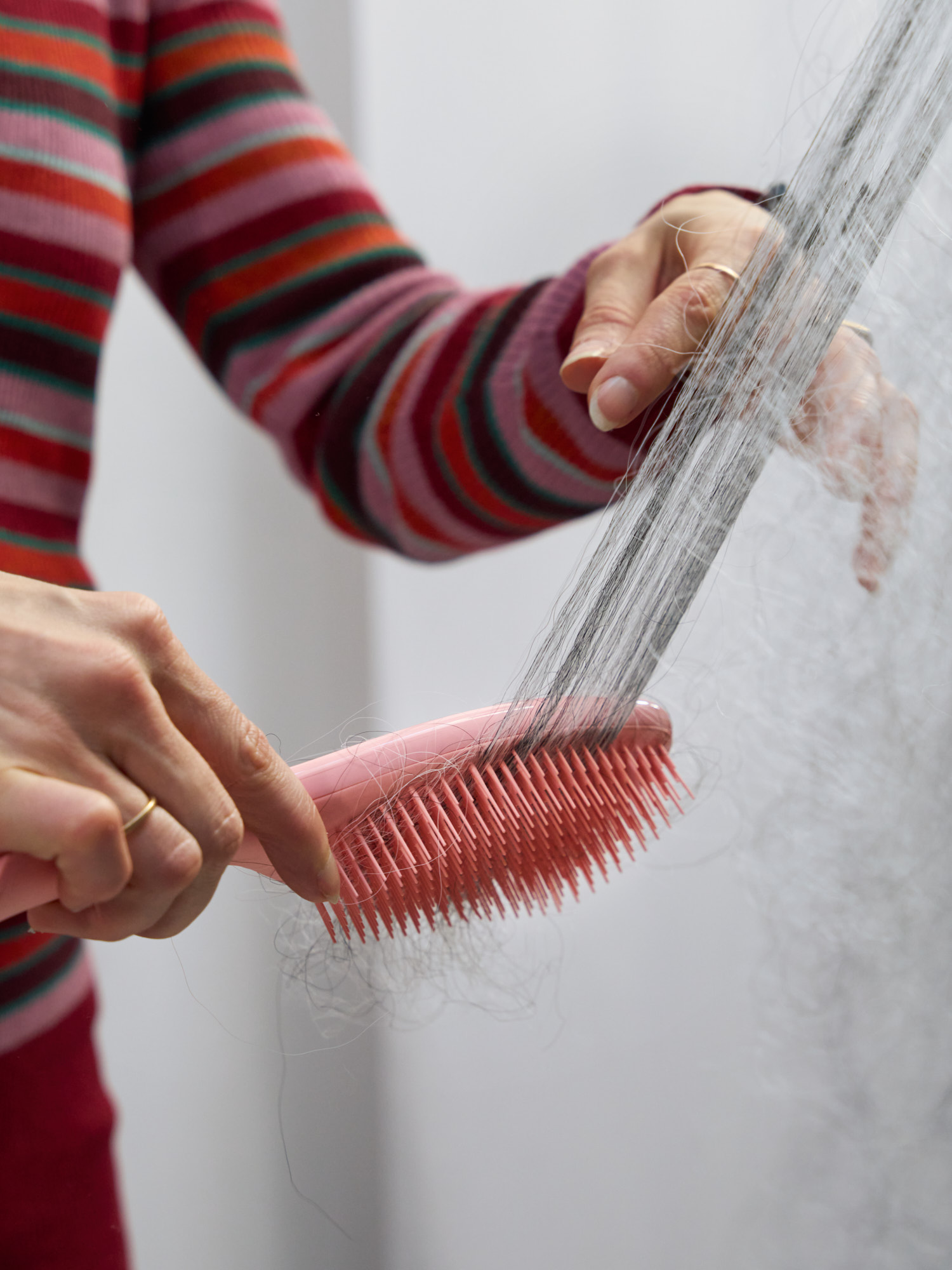
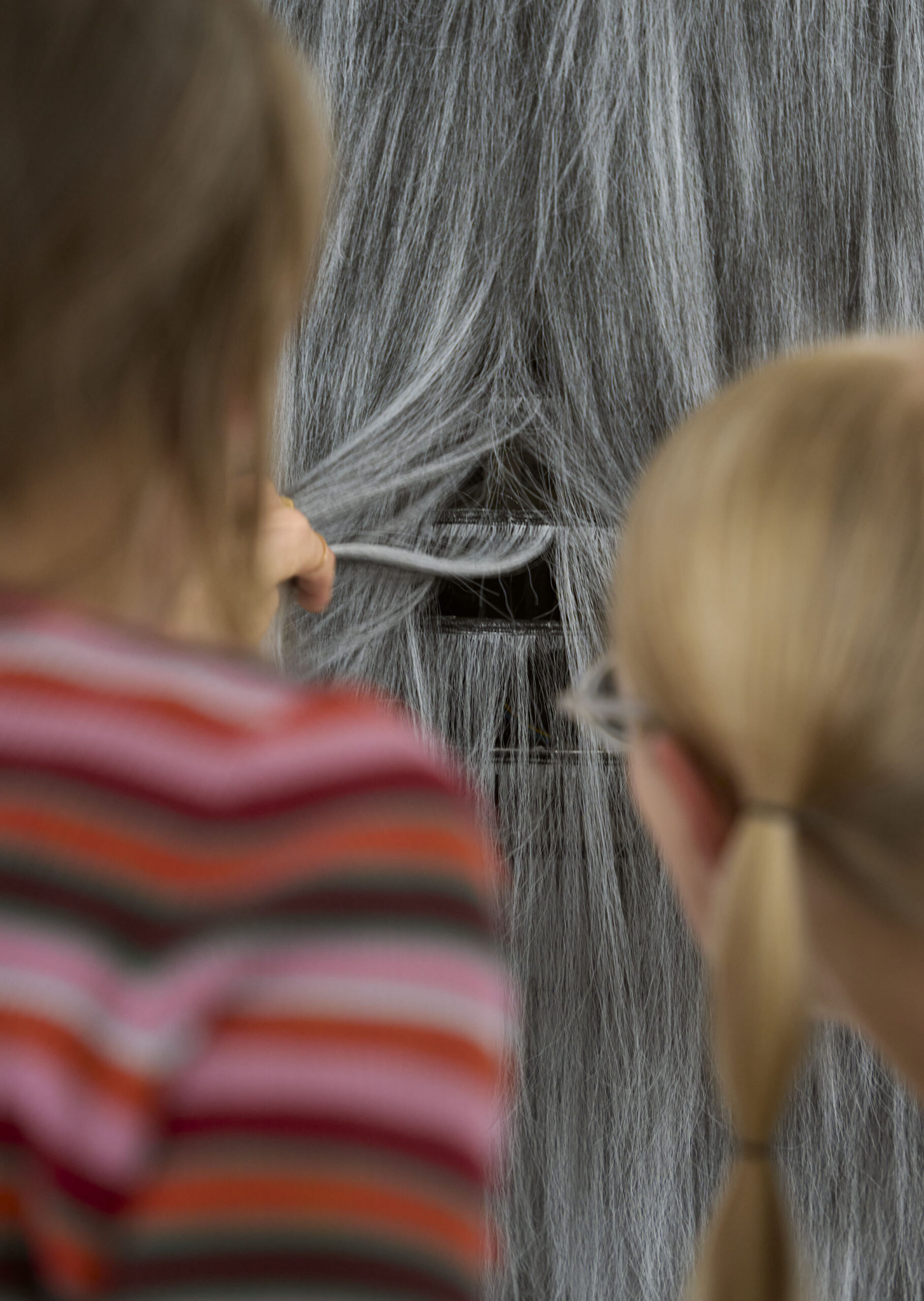
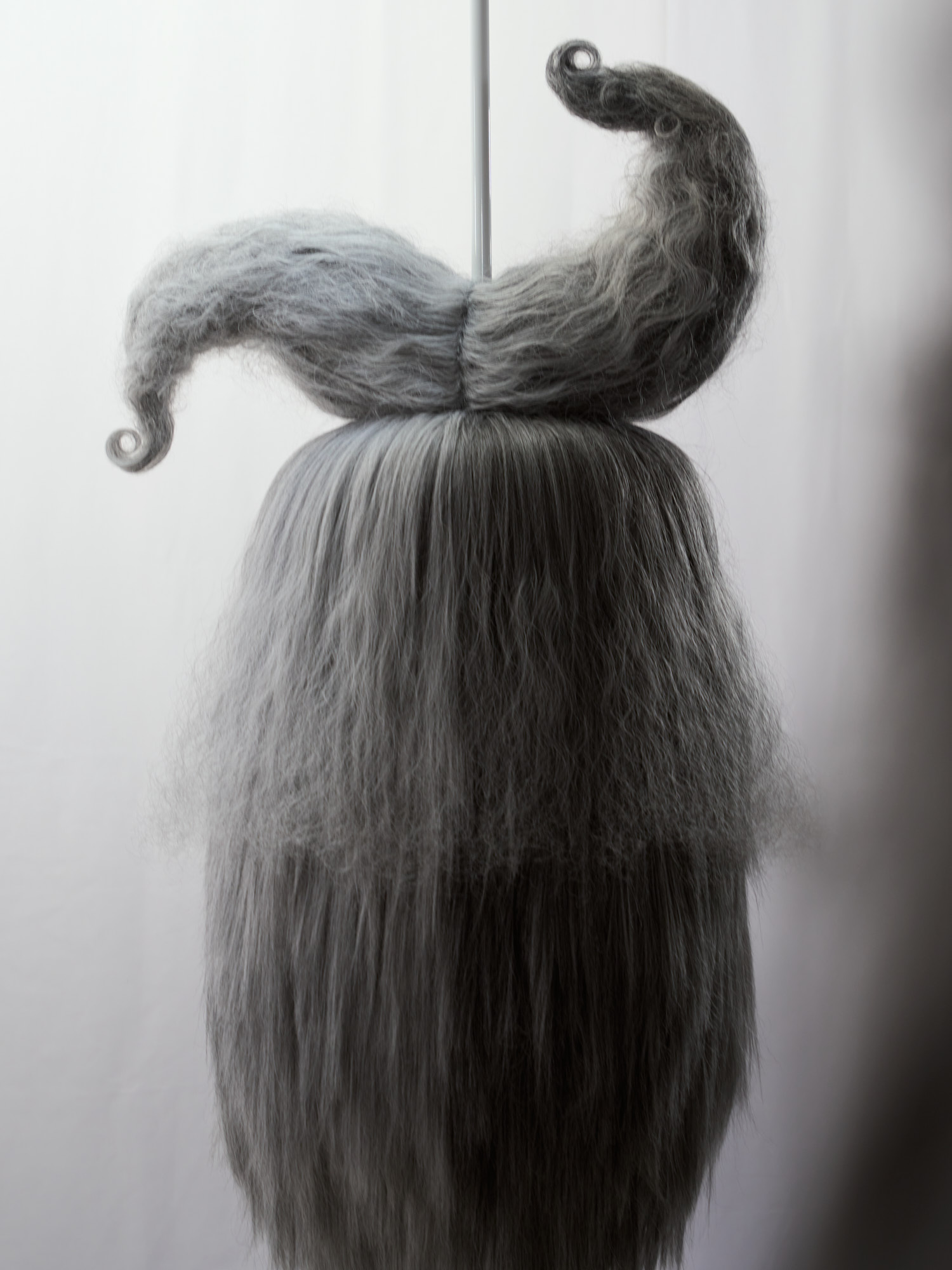
Curated by Stefanie Hessler, the installation also draws from the nomadic tradition of commedia dell’arte. This is noticeable both in the sculptural styling of the silver wigs, designed by Sara Mathiasson, and in the display choice, which includes an adjustable stage homaging Alvar and Elissa Aalto’s pavilion architecture itself, originally conceived as a transportable structure intended to travel across the Mediterranean before permanently settling in Venice. The soundscape functions like a grammelot: that typical theatre technique of semi-nonsensical speech built through cadence, intonation, and made-up multilingual slippages where meaning is evoked and embodi past semantic clarity. If historically grammelot allowed performers to communicate across linguistic boundaries, Sutela extends this principle beyond the human altogether, allowing the wind’s own syntax to take centre stage.
Do not expect sonic bombardment nor meditative immersion though. The soundscape is built from recordings of winds captured across Venice and Helsinki, children’s woodwind orchestras, alto and contrabass recorders, wind machines and meteorological data, all translated into composition. It drifts quietly through the space and its sculptures, aligning with Pauline Oliveros’ notion of deep listening — a longstanding reference for Sutela — and allowing noise to carry meaning even if this remains beyond human grasp. Atmospheric disturbance becomes a signal in itself, inviting to pay attention to secondary voices while pointing both to its own incalculability and to the paradox of contemporary forecasting systems in which the very technologies designed to predict and stabilise the world are often also implicated in producing ecological and political instability.
Like its title, Aeolian Suite moves simultaneously through the multiple registers of music, meteorology, and architecture. The result is a multisensory choreography in which porosity emerges as a method. Relation is the pavilion’s underlying condition.
Jenna Sutela
Aeolian Suite
Pavilion of Finland
61st International Art Exhibition – La Biennale di Venezia.
9 May – 22 November, 2026
Curated by Stefanie Hessler
All installation Images:
Jenna Sutela, Aeolian Suite, 2026, installation view. Photo: Ugo Carmeni. Courtesy of Frame
Contemporary Art Finland.